
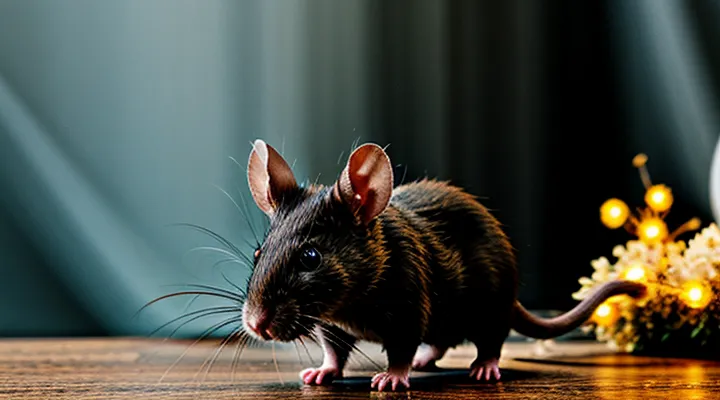
Understanding Rat Symbolism in Dreams
General Interpretations of Rats in Dreams
Negative Connotations: Disease, Betrayal, Fear
Dreams in which one captures a rat often signal underlying anxieties. The act of seizing the creature compresses concerns about health, trust, and emotional stability into a single vivid image.
- Disease: The rat’s association with filth translates into subconscious alerts about possible illness, poor hygiene, or exposure to germs. The dream may prompt attention to personal health habits or recent symptoms that have been neglected.
- Betrayal: Rats symbolize deceit in many cultural narratives. Capturing one suggests that the dreamer perceives a hidden disloyalty, either from a close associate or within a professional setting. The image serves as a mental cue to evaluate relationships for signs of manipulation or concealed motives.
- Fear: The visceral reaction to a rat—squeamishness, disgust, or terror—mirrors deep‑seated dread. The dream amplifies this emotion, indicating that the sleeper is confronting a situation that triggers intense apprehension, perhaps a looming decision or an unresolved conflict.
Interpretation of the rat‑catching scenario points to a need for proactive measures: review health indicators, scrutinize trust dynamics, and address sources of persistent fear. Acting on these signals can transform the unsettling vision into a catalyst for personal security and psychological resilience.
Positive Connotations: Resourcefulness, Survival, Adaptability
Dreams in which a rat is captured often signal personal strengths rather than ominous warnings. The act of catching the animal reflects an active response to a challenging situation, revealing the dreamer’s capacity to turn obstacles into opportunities.
- Resourcefulness: The pursuit and capture demonstrate clever problem‑solving, indicating that the sleeper can devise unconventional methods to achieve goals.
- Survival: Securing the rat suggests an instinctual drive to protect oneself, highlighting an ability to endure adversity and maintain stability.
- Adaptability: The successful catch illustrates flexibility, showing the individual can adjust tactics when circumstances shift unexpectedly.
These positive aspects underscore a subconscious endorsement of the dreamer’s competence in navigating complex environments and emerging stronger from conflict.
Interpreting the Act of Catching a Rat
The Context of the Catch
Effortless Capture: Overcoming Challenges
The image of securing a rat in a dream often signals the subconscious mind’s assessment of personal obstacles. When the capture occurs without strain, it suggests that the dreamer possesses latent strategies that neutralize difficulties before they become burdensome. This effortless outcome reflects confidence in problem‑solving abilities and an inner readiness to confront hidden threats.
Key implications of a smooth rat capture include:
- Recognition of hidden issues: The rat symbolizes problems that linger beneath the surface; a painless capture indicates that these issues have already been identified and contained.
- Activation of innate resources: The dream demonstrates that the individual can draw upon instinctual or learned skills to resolve challenges without excessive effort.
- Shift in power dynamics: Overcoming the rodent without struggle reveals a reversal of control, where the dreamer moves from being pursued to becoming the pursuer.
Practical application of this insight involves reinforcing the mental habits that enable effortless resolution:
- Maintain vigilance: Regularly scan environments—both literal and figurative—for signs of emerging difficulties.
- Cultivate adaptive routines: Develop flexible methods that can be deployed quickly when a problem appears.
- Trust intuitive cues: Allow gut reactions to guide initial responses, as they often signal the most efficient path to resolution.
By internalizing these principles, the dreamer translates the symbolic success of a rat capture into real‑world competence, turning latent potential into a reliable tool for navigating complex situations.
Difficult Capture: Persistent Problems
Dreams in which one attempts to seize a rat yet repeatedly fails point to ongoing challenges that resist resolution. The rat functions as a symbol of hidden threats, undesirable habits, or unresolved conflicts; the inability to capture it reflects a pattern of persistent obstacles that remain beyond immediate control.
The recurring difficulty suggests several psychological mechanisms:
- Avoidance reinforcement – repeated failure reinforces a belief that the issue is unmanageable, discouraging further effort.
- Unconscious resistance – the mind protects uncomfortable material, allowing the rat to slip away as a defense against confronting the source of distress.
- Resource depletion – mental energy directed toward the chase may be insufficient, indicating that the individual’s current coping capacity is overstretched.
When the dream appears, it often coincides with real‑world situations such as chronic workplace stress, recurring interpersonal disputes, or persistent health concerns. The rat’s elusiveness mirrors the feeling that solutions are fleeting or that the problem reappears after each attempt at resolution.
Practical interpretation advises the following steps:
- Identify the specific area where effort feels repeatedly thwarted.
- Break the larger issue into smaller, measurable tasks to reduce perceived overwhelm.
- Seek external perspectives—therapists, mentors, or colleagues—to uncover blind spots that keep the “rat” out of reach.
- Monitor emotional responses during the chase; heightened anxiety may signal deeper attachment to the problem’s symbolism.
By recognizing the dream’s representation of stubborn difficulties, individuals can transform the elusive rat from a source of frustration into a diagnostic tool for strategic problem‑solving.
Trapping a Rat: Control and Strategy
Dreams that feature the act of catching a rat often symbolize an attempt to assert control over a problematic situation. The image of a trapped rodent reflects a deliberate strategy to neutralize hidden threats, unresolved emotions, or persistent anxieties. By focusing on the mechanics of the capture, the subconscious highlights the dreamer’s capacity to plan, isolate, and eliminate disruptive influences.
The process of trapping a rat conveys several specific messages:
- Identification of the source – recognizing the presence of a nuisance that has been operating unseen.
- Implementation of a method – choosing a concrete approach (e.g., setting a bait, using a snare) demonstrates the dreamer’s willingness to act rather than remain passive.
- Containment – securing the animal within a confined space mirrors the desire to limit the spread of negative thoughts or behaviors.
- Resolution – the moment of capture indicates a turning point where the problem is no longer threatening but manageable.
These elements collectively suggest that the dreamer is developing a systematic response to challenges. The emphasis on strategy, rather than brute force, points to a preference for thoughtful planning. Success in the dream, represented by a successfully trapped rat, reinforces confidence in the ability to confront and resolve difficulties. Failure or escape of the animal, conversely, signals a need to reassess tactics, perhaps by altering the bait or adjusting the timing of the effort.
In practical terms, the dream advises the following actions:
- Map the problem – pinpoint exact sources of stress or conflict.
- Select appropriate tools – adopt methods that align with personal strengths and resources.
- Monitor progress – observe whether the issue remains contained or begins to reappear.
- Adapt if necessary – modify the approach when resistance persists.
Overall, the motif of rat containment serves as a metaphor for disciplined problem‑solving. It encourages the dreamer to maintain clear objectives, employ measured tactics, and recognize that effective control emerges from strategic planning rather than impulsive reaction.
The Emotional Response to Catching
Feeling Satisfied: Resolution and Victory
Catching a rat in a dream often signals the end of a persistent problem. The act of seizing the animal represents a decisive confrontation with an issue that has caused anxiety or frustration. When the dream concludes with the rat in hand, the sleeper typically experiences a clear sense of fulfillment, indicating that the conflict has been resolved.
The feeling of satisfaction emerges from three distinct elements:
- Completion of a task – the pursuit ends successfully, confirming that effort was not wasted.
- Restoration of control – the captured rat symbolizes mastery over a previously chaotic situation.
- Recognition of competence – the ability to trap the creature reflects confidence in personal problem‑solving skills.
These components combine to produce a victorious emotional tone. The dream’s resolution reinforces self‑efficacy, encouraging the individual to approach future challenges with a similar decisive mindset.
Feeling Disgusted: Acknowledging Unpleasantness
Dreams that involve seizing a rat often trigger a visceral reaction of disgust. This emotional response signals that the sleeper is confronting an aspect of life that feels repulsive, contaminated, or morally troubling. Psychologists interpret the feeling as a cue to recognize and name the unpleasant element rather than suppress it, because acknowledgment creates the conditions for mental integration.
When the disgust is intense, it typically points to hidden guilt, fear of disease, or anxiety about personal boundaries being breached. The mind uses the rat as a metaphor for something perceived as dirty or invasive; catching it forces the dreamer to face the source of revulsion directly. By labeling the sensation as disgust, the individual gains a clear reference point for further analysis and potential behavioral adjustment.
Practical steps for processing the feeling include:
- Identifying the situation in waking life that evokes similar revulsion.
- Describing the specific qualities that cause the disgust (odor, texture, symbolism).
- Exploring whether avoidance or acceptance would reduce the underlying tension.
Accurate recognition of disgust in the rat‑catching scenario enables the dreamer to transform a fleeting emotional spike into actionable insight.
Feeling Afraid: Confronting Deep-Seated Fears
Dreams about pursuing a rat often surface when subconscious anxiety seeks expression. The act of chasing a vermin symbolizes an attempt to control a hidden threat, and the accompanying fear signals a deep‑rooted unease that has been suppressed.
When the dreamer feels terror while hunting the creature, the emotion reflects an internal alarm system. It points to specific anxieties—such as fear of failure, loss of control, or exposure of personal flaws—that have been avoided in waking life. Recognizing the fear as a signal rather than a random reaction is the first step toward resolution.
Practical methods for confronting these ingrained fears include:
- Identifying the precise trigger (e.g., a recent stressor or recurring thought pattern).
- Documenting the emotional response in a journal to track intensity and context.
- Engaging in gradual exposure: visualize the rat, then gradually increase interaction in a safe environment.
- Applying cognitive restructuring to replace catastrophic predictions with realistic assessments.
- Seeking professional guidance when the fear interferes with daily functioning.
By systematically addressing the underlying dread revealed in the rat‑chasing scenario, the individual transforms a distressing nocturnal image into a catalyst for personal growth and emotional resilience.
Common Dream Scenarios and Their Meanings
Catching Multiple Rats
Dreaming of seizing several rats at once signals a heightened drive to confront numerous hidden problems. The act of capturing multiple rodents suggests that the subconscious mind is alert to several threats, deceptions, or undesirable habits that require immediate attention.
Such a vision often reflects an urge to regain control over chaotic aspects of life. By physically restraining the creatures, the dreamer demonstrates a willingness to take decisive action, indicating confidence in handling complex situations that involve more than one source of difficulty.
Typical interpretations include:
- Recognition of multiple sources of stress that have been ignored.
- An indication that the individual is capable of managing several challenges simultaneously.
- A warning that unresolved issues may multiply if not addressed promptly.
- A sign of personal empowerment, as the dreamer proves the ability to neutralize threats in a collective manner.
The presence of many rats may also point to feelings of being overwhelmed by minor annoyances that together create a significant burden. The dream encourages systematic elimination of each problem rather than a scattered approach.
In summary, capturing several rats in a dream conveys a message of proactive problem‑solving, urging the sleeper to identify and resolve multiple hidden issues before they compound.
Catching a Specific Type of Rat
Dreams in which the dreamer catches a rat often focus on the specific characteristics of the animal, suggesting distinct psychological messages. The species, size, color, and behavior observed during capture shape the interpretation.
- Black rat (Rattus rattus) – association with secrecy, hidden threats, or unresolved conflicts that have been suppressed. Capture indicates an attempt to confront covert issues.
- Brown rat (Rattus norvegicus) – symbol of pervasive, ordinary problems such as stress at work or routine anxieties. Seizing this rat reflects a proactive stance toward everyday challenges.
- White laboratory rat – represents controlled environments, experiments, or a desire for precision. Grabbing a white rat may signal a need to impose order on a chaotic situation.
- Fancy or domesticated rat – conveys personal relationships, affection, or nurtured aspects of the self. Capturing such a rat can denote a willingness to acknowledge and integrate tender emotions.
The context of the capture—whether the rat is dead, alive, or escaping—further refines meaning. A dead rat suggests resolution, while a live, struggling rat points to ongoing effort. An escaping rat signals unfinished business and the necessity for continued attention.
Overall, the act of catching a particular rat type translates into a focused effort to address the precise area of life that the animal’s attributes represent. Recognizing these nuances enables the dreamer to target corrective actions with clarity.
Catching a Rat in a Specific Location
Dreams in which you seize a rat convey messages about hidden threats, personal control, and unresolved issues. The specific setting of the capture sharpens the interpretation by linking the symbolism to distinct areas of waking life.
-
Home environment – Capturing the rodent inside a house or apartment signals confrontation with domestic tensions, such as family discord, financial worries, or habits that undermine security. The act of catching the animal suggests an effort to restore order within the personal sphere.
-
Workplace – Seizing a rat in an office, factory, or laboratory points to challenges in professional relationships, competition, or unethical behavior. The dream reflects a desire to expose deceit, eliminate sabotage, or assert authority over a problematic colleague.
-
Public space – Grabbing a rat on a street, park, or market indicates anxiety about societal judgments, public reputation, or exposure to undesirable influences. The capture demonstrates a proactive stance toward maintaining personal integrity in communal settings.
-
Underground or basement – Encountering a rat beneath the surface, such as in a cellar or subway tunnel, highlights subconscious fears, suppressed memories, or deep‑seated anxieties. The act of catching the creature represents an attempt to bring hidden concerns to conscious awareness.
-
Outdoor wilderness – Trapping a rat in a forest, field, or rural area suggests a connection to primal instincts, survival pressures, or environmental stressors. The dream underscores a need to manage instinctual drives that threaten stability.
Each location aligns the rat’s symbolic meaning with a particular domain of life, allowing the dreamer to identify where control is being exercised or where hidden problems require attention. Recognizing the setting enhances the accuracy of the interpretation and guides practical steps for resolution.
Psychological Perspectives
Shadow Self and Unconscious Aspects
The shadow self represents the parts of personality that remain hidden from conscious awareness, often containing repressed impulses, fears, and instincts. These elements emerge in dreams when the psyche seeks to balance the overt self with neglected inner material.
Rats commonly symbolize survival instincts, resourcefulness, and the capacity to thrive in adverse conditions. In nocturnal narratives, a rat may embody aspects of the unconscious that the dreamer perceives as undesirable or threatening.
Catching a rat in a dream signals an active confrontation with the shadow. The act of seizing the creature demonstrates a willingness to acknowledge, examine, and possibly integrate the suppressed traits it represents. This gesture can indicate progress toward psychological wholeness, as the dreamer moves from avoidance to direct engagement with inner conflicts.
Practical implications for interpretation:
- Recognize the rat as a metaphor for a specific hidden behavior or emotion.
- Assess the emotional tone during the capture; fear suggests resistance, confidence suggests acceptance.
- Reflect on recent life situations that may have triggered the need to address concealed aspects.
- Incorporate the insight into conscious decision‑making, allowing the previously ignored qualities to inform personal growth.
Personal Weaknesses and Anxieties
Dreaming about seizing a rat often signals an internal assessment of one’s own shortcomings. The act of capture represents an attempt to confront elements that feel out of control, translating hidden self‑critique into a vivid scenario.
Personal weaknesses revealed by this image include:
- Reluctance to address unpleasant tasks; the rat embodies chores or responsibilities the dreamer avoids.
- Tendency to procrastinate; the chase illustrates delayed action that now demands attention.
- Overreliance on external validation; catching the creature suggests a need to prove competence to others.
Anxieties manifest through the same motif. The rat’s reputation for disease and contamination mirrors fears of personal contamination—whether emotional, moral, or professional. Specific concerns often surface as:
- Fear of failure, expressed by the urgency to trap the rat before it escapes.
- Worry about reputation damage, symbolized by the rodent’s association with uncleanliness.
- Anxiety over loss of control, reflected in the struggle to restrain a swift, elusive animal.
The dream therefore functions as a mental audit, urging the sleeper to identify and address these internal vulnerabilities before they undermine performance or well‑being.
Spiritual and Cultural Interpretations
Different Cultural Beliefs
Dreams featuring the act of seizing a rat reflect distinct cultural symbolism. Across societies, the rat embodies both negative and protective qualities, and the act of catching it amplifies these meanings.
In East Asian traditions, the rat is linked to prosperity and cunning. Chinese folklore interprets capturing a rat as a sign of forthcoming financial gain or successful negotiation. Japanese belief associates the rat with resourcefulness; a dream of trapping one suggests the dreamer will overcome a hidden obstacle through cleverness.
European folklore assigns the rat a more ominous role. In medieval English superstition, catching a rat foretells the resolution of a lingering disease or the removal of a pestilential influence from the household. Slavic narratives view the rat as a messenger of misfortune; securing it in a dream indicates the dreamer’s ability to confront and neutralize impending danger.
African and Indigenous perspectives often emphasize communal well-being. Among the Yoruba, the rat represents a trickster spirit; capturing it signals the community’s collective effort to restore balance after social discord. Native American tribes, such as the Hopi, regard the rat as a symbol of survival; a dream of catching one highlights personal resilience and the capacity to protect one’s family.
- China: financial opportunity, successful bargaining
- Japan: clever resolution of hidden challenges
- England (medieval): elimination of disease or harmful influence
- Slavic regions: neutralization of looming misfortune
- Yoruba (West Africa): communal restoration of harmony
- Hopi (North America): personal resilience, family protection
These interpretations illustrate how the same dream motif acquires divergent meanings shaped by regional mythologies, social values, and historical contexts.
Spiritual Cleansing and Renewal
Dreams that feature the act of capturing a rat convey a clear message about inner purification. The rat, often linked to hidden contamination, represents aspects of life that have become stagnant or toxic. Seizing the creature signals a decisive effort to eliminate those elements.
The capture itself functions as a ritual of spiritual cleansing. By confronting the unwanted presence, the dreamer initiates a process that removes emotional debris, disrupts patterns of negativity, and restores equilibrium within the subconscious. This act mirrors traditional practices where confronting a pest signifies the removal of impurity.
Renewal follows the cleansing phase. Once the rat is restrained, the mind registers an opening for fresh energy, allowing new intentions to take root. The dream encourages the individual to:
- Release lingering doubts that have accumulated alongside the rat’s symbolism.
- Adopt habits that reinforce clarity, such as meditation or mindful breathing.
- Establish boundaries that prevent future intrusion of harmful influences.
In summary, the image of catching a rat in a dream serves as a concise directive: purge hidden contamination, then cultivate an environment conducive to personal growth and spiritual revitalization.