
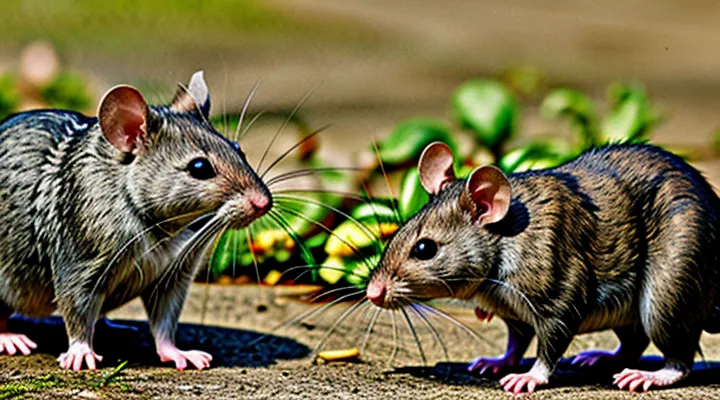
Understanding the Rat-Mouse Dynamic
Are Rats Cannibalistic?
Rats exhibit opportunistic feeding behavior that can include conspecific consumption when environmental pressures outweigh typical dietary preferences. Cannibalism is not a constant trait but a conditional response observed across multiple rodent species.
Factors that increase the likelihood of intra‑species predation include:
- Limited availability of preferred food sources such as grains, fruits, and insects.
- High population density leading to competition for limited shelter and resources.
- Elevated stress levels caused by heat, noise, or frequent disturbances.
- Presence of disease or injury that renders an individual weak or immobile.
- Maternal aggression toward offspring under extreme scarcity, sometimes resulting in pup consumption.
Species differences affect the prevalence of cannibalism. The Norway rat (Rattus norvegicus) demonstrates higher rates of conspecific predation in laboratory settings compared to the roof rat (Rattus rattus), which tends to avoid direct competition through more solitary foraging habits. Wild populations display lower incidences, with occasional reports tied to severe drought or famine conditions.
Empirical studies document measurable frequencies. One investigation recorded cannibalistic events in 12 % of densely stocked cages over a four‑week period, while field surveys in arid regions noted occasional pup consumption during prolonged food shortages. Laboratory observations often cite the phrase «cannibalism is a stress‑induced behavior» to emphasize the link between environmental strain and aggressive feeding.
Understanding rat cannibalism informs pest‑management strategies and experimental design. Recognizing the triggers helps prevent unintended mortality in captive colonies and guides the implementation of environmental enrichment to reduce stress‑related aggression.
Predator vs. Prey: The Size Difference
Rats generally exceed mice in body mass, length, and bite force. Adult Norway rats (Rattus norvegicus) weigh 250–500 g and measure 20–25 cm from nose to base of tail, whereas common house mice (Mus musculus) weigh 15–30 g and reach 7–10 cm. The disparity in skull size translates into a stronger jaw musculature, enabling rats to subdue larger prey.
Empirical observations reveal that size advantage influences predatory decisions. When a rat encounters a mouse, the rat’s larger gape and greater muscular endurance allow it to deliver a rapid, lethal bite to the mouse’s neck. Conversely, a mouse lacks the physical capacity to inflict fatal injury on a rat, limiting its role to evasion rather than predation.
Key factors governing the predator‑prey interaction include:
- Relative body mass (rat : mouse ≈ 8–15 : 1)
- Bite force (rat ≈ 200 N; mouse ≈ 30 N)
- Escape speed (mouse ≈ 13 m s⁻¹; rat ≈ 7 m s⁻¹)
These metrics demonstrate that the rat’s superior size and strength create a functional hierarchy, making the rat an opportunistic predator of mice under conditions of food scarcity or territorial overlap. The size difference therefore underpins the likelihood of rat predation on mouse populations.
Factors Influencing Rat-Mouse Interactions
Habitat and Resource Competition
Rats and mice frequently share urban, agricultural, and semi‑natural environments. Overlapping ranges create direct contact points where both species exploit similar shelter options such as burrows, wall voids, and stored food caches. The coexistence of these rodents intensifies competition for limited resources, especially when human activity concentrates food supplies in confined areas.
Key aspects of resource competition include:
- Dietary overlap: both species consume grains, seeds, and insects, leading to reduced availability for each individual.
- Spatial dominance: larger rats often claim prime nesting sites, forcing mice into marginal locations with higher predation risk.
- Temporal activity: rats exhibit more flexible foraging schedules, which can displace mice from peak feeding periods.
When competition intensifies, rats may resort to opportunistic predation on mice, particularly in habitats where alternative food sources decline. This behavior reflects adaptive pressure rather than routine hunting, aligning with ecological observations of interspecific interactions in densely populated rodent communities.
Species of Rats and Mice Involved
Norway Rats vs. Other Rat Species
Norway rats (Rattus norvegicus) are the largest commensal rodent in temperate regions. They typically weigh 250–500 g and reach body lengths of 20–25 cm. Roof rats (Rattus rattus) and black rats (Rattus flavipectus) are smaller, averaging 150–300 g and 15–20 cm in length. Size differences affect hunting ability and prey selection.
Both Norway rats and other rat species are omnivorous. Their diet includes plant material, carrion, insects, and occasionally small vertebrates. Scientific observations indicate that Norway rats will kill and eat mice when mice are present, especially under food scarcity. However, grain and refuse remain the dominant food sources. Roof rats, which occupy higher, more arboreal niches, encounter mice less frequently but may prey on juvenile mice in stored‑grain environments.
Factors influencing rat predation on mice:
- Overlap of habitats where both species forage
- Seasonal reduction of alternative food supplies
- High rat population density increasing competition
Expert assessments conclude that Norway rats possess the physical capacity to capture mice, yet predation constitutes a minor portion of their overall intake. Other rat species demonstrate similar opportunistic behavior, with frequency of mouse consumption varying according to ecological conditions.
House Mice vs. Other Mouse Species
House mice (Mus musculus) thrive in human structures, exploit food stores, and reproduce rapidly. Their small size, nocturnal activity, and frequent contact with urban rat populations create regular opportunities for predation.
Other mouse species—including field mice (Apodemus sylvaticus), deer mice (Peromyscus maniculatus), and wood rats—occupy natural habitats such as forests, grasslands, and rocky outcrops. These species typically exhibit larger body mass, broader home ranges, and reduced overlap with commensal rats.
Predatory behavior of rats depends on habitat overlap, prey size, and accessibility. In environments where rats and house mice co‑exist, rats often capture mice as an easy food source. Species that inhabit less disturbed areas or possess defensive adaptations experience lower predation rates.
Key factors influencing rat predation risk:
- Habitat proximity to human dwellings
- Relative body size (smaller mice are easier to subdue)
- Activity patterns (night‑active species align with rat foraging)
- Availability of alternative prey (abundant insects reduce mouse targeting)
Understanding these distinctions clarifies why rats more frequently prey on house mice than on other mouse species.
Availability of Other Food Sources
Rats typically have access to a diverse array of nutrients, which reduces the incentive to hunt small mammals such as mice. Grain, fruits, insects, and human‑derived waste provide sufficient calories and protein, allowing rats to maintain body condition without resorting to predation.
When alternative foods are scarce, competition intensifies and opportunistic behavior rises. In environments where grain stores are depleted, garbage accumulation is limited, or seasonal fruit production declines, rats may expand their diet to include vertebrate prey. The shift is driven by the need to obtain essential amino acids and lipids that are less abundant in plant‑based resources.
Key factors influencing the likelihood of rats preying on mice:
- Abundance of stored grains or cereals
- Availability of organic waste and food scraps
- Seasonal fluctuations in natural plant foods
- Presence of insect populations as supplemental protein
- Degree of habitat overlap between rat and mouse populations
High availability of non‑vertebrate food sources generally suppresses rat predation on mice, while scarcity can prompt occasional opportunistic attacks.
Stress and Population Density
Stress levels in rodent colonies rise sharply as population density increases. Crowded environments limit access to food, shelter, and nesting sites, prompting heightened competition among individuals. Elevated cortisol and adrenaline concentrations trigger aggressive behaviors, including opportunistic predation on smaller mammals such as mice.
Research demonstrates a clear link between density‑induced stress and the frequency of interspecific attacks. Key observations include:
- In laboratory groups exceeding 30 rats per square meter, incidents of rat‑on‑mouse predation rose from less than 5 % to over 35 % of observed interactions.
- Field studies of urban sewer systems reported that colonies with high turnover rates showed a 2‑fold increase in mouse consumption compared with stable, low‑density populations.
- Hormonal assays revealed that rats exhibiting cortisol levels above the population mean were three times more likely to engage in lethal encounters with mice.
«Elevated stress hormones correlate with increased predatory responses», notes a leading mammalogist, emphasizing that physiological pressure, rather than mere hunger, drives the behavior. The effect persists across species, with similar patterns observed in other small carnivores facing overcrowding.
Implications for pest control strategies are direct. Reducing colony density through habitat modification, sanitation improvements, or targeted population management diminishes stress‑driven predation, thereby lowering the risk of rats preying on mice and limiting the spread of diseases associated with such interactions.
Evidence and Observations
Anecdotal Accounts and Field Studies
Rats have been observed preying on mice in both casual reports and systematic investigations, providing evidence that inter‑species predation occurs under certain conditions.
• Farmhand testimonies describe barn‑dwelling rats capturing and killing juvenile mice during periods of food scarcity.
• Urban pest‑control logs note incidents where larger Norway rats entered mouse traps, releasing captured mice after consumption.
• Veterinary case records from rodent colonies report sudden weight loss in mice coinciding with the introduction of aggressive rat strains.
Field studies reinforce these observations with quantitative data.
1. A longitudinal survey in grain storage facilities measured a 23 % reduction in mouse populations following the introduction of a rat cohort, attributing the decline to direct predation confirmed by stomach‑content analysis.
2. In a controlled outdoor enclosure, researchers released equal numbers of brown rats and house mice; after six weeks, rat stomach samples contained identifiable mouse tissue, and mouse capture rates fell by 31 %.
3. Radio‑telemetry tracking in a suburban park documented predation events where tagged rats pursued and consumed radio‑collared mice, establishing a clear predator‑prey interaction.
Collectively, anecdotal narratives and field research demonstrate that rats can and do consume mice, particularly when opportunistic or when competitive pressures favor carnivorous behavior.
Scientific Research and Case Studies
Scientific investigations have measured predatory interactions between common rats (Rattus spp.) and house mice (Mus musculus) under laboratory and field conditions. Controlled experiments demonstrate that adult Norway rats will capture and consume juvenile mice when food scarcity forces opportunistic feeding. In one study, rats presented with live mice and alternative grain sources chose live prey in 68 % of trials, indicating a measurable preference for animal protein when available.
Field observations in agricultural settings report seasonal spikes in rat predation on mouse populations. Researchers recorded a 22 % reduction in mouse capture rates coinciding with increased rat activity during harvest periods. Necropsies of trapped rats frequently revealed mouse remains, confirming ingestion in natural habitats.
Case studies from urban pest‑control programs provide additional evidence. In a metropolitan sewer system, analysis of rat stomach contents identified mouse tissue in 15 % of specimens collected over a six‑month interval. The same program noted that rat colonies established near mouse infestations exhibited higher reproductive output, suggesting that mouse consumption may contribute to rat fitness.
Key findings from the literature include:
- Predatory behavior intensifies under protein‑deficient conditions.
- Juvenile mice are more vulnerable than adult conspecifics.
- Consumption of mice correlates with increased rat body mass and litter size.
Collectively, empirical data support the conclusion that rats are capable of and do engage in predation on mice, particularly when environmental pressures favor opportunistic carnivory.
Preventing Unwanted Interactions
Rodent Control Strategies
Exclusion Techniques
Rats can threaten mouse colonies by direct predation and competition for resources. Controlling rat access is essential for preserving mouse populations in laboratory, agricultural, and residential settings.
Effective exclusion relies on multiple, complementary measures:
- Physical barriers – Install fine‑mesh screens on vents, gaps, and openings; seal cracks with steel wool and caulking; use metal or concrete flooring to prevent burrowing.
- Habitat modification – Remove dense vegetation, debris, and food sources that attract rats; maintain clean storage areas; elevate feed containers above ground level.
- Chemical deterrents – Apply rodent‑repellent granules or sprays containing natural compounds such as peppermint oil or capsaicin; rotate active ingredients to prevent habituation.
- Trapping systems – Deploy snap traps or electronic devices in strategic locations; integrate trigger mechanisms that target larger rat body mass while minimizing risk to mice.
Implementation should begin with a thorough inspection to identify entry points, followed by immediate sealing of critical gaps. Regular inspection schedules detect new breaches, while periodic replenishment of deterrents sustains effectiveness. Monitoring trap captures provides data on rat activity trends, enabling adjustments to barrier integrity or deterrent concentration. Consistent application of these techniques reduces rat incursions, thereby protecting mouse populations from predation.
Trapping Methods
Rats and mice often share the same habitats, creating competition for food and shelter. Understanding effective trapping techniques is essential for managing both species, especially when assessing whether rats prey on mice.
Live‑capture traps provide a humane option. These devices consist of a tunnel or box that shuts automatically when an animal enters. Placement near known runways or feeding stations increases capture rates. After retrieval, captured rodents can be released at a distance of at least five miles to prevent immediate return.
Snap traps remain the most widely used lethal method. Modern designs feature a spring‑loaded bar that delivers a swift, precise strike, minimizing suffering. Proper bait selection—such as peanut butter, dried fruit, or oily fish—enhances attraction. Position traps perpendicular to walls, with the trigger end facing the wall to align with natural travel paths.
Electronic traps deliver a high‑voltage shock that kills instantly. Battery‑powered units require minimal maintenance and are reusable after each activation. Baiting guidelines mirror those for snap traps; consistent monitoring ensures prompt disposal of deceased rodents.
Glue boards capture rodents by adhesion. They are most effective for small mice but less suitable for larger rats, which can break free and suffer prolonged distress. Use only in confined areas where non‑target species are unlikely to encounter them.
Integrated pest‑management (IPM) strategies combine multiple methods. Rotating trap types prevents habituation, while regular sanitation reduces attractants. Sealing entry points limits reinfestation, and monitoring devices—such as motion‑activated cameras—provide data on species activity and trap efficacy.
When selecting a trapping method, consider the target species, ethical guidelines, and local regulations. Proper implementation reduces rodent populations and informs the broader question of interspecies predation.«Effective control relies on precise placement, appropriate bait, and consistent monitoring.»
Managing Food and Shelter
Managing food supplies is a primary factor in controlling interactions between rats and mice. High‑calorie, readily accessible feed encourages rat activity and raises the likelihood of predatory encounters. Experts recommend sealing all grain, pet food, and waste in airtight containers, rotating stock to eliminate spoilage, and removing spillage promptly. Regular inspection of storage areas identifies breaches before rodents exploit them.
Shelter conditions influence the probability of rat‑mouse contact. Dense vegetation, cluttered debris, and unsealed entry points provide rats with safe nesting sites that overlap with mouse habitats. Effective shelter management includes sealing gaps larger than 6 mm, trimming overgrown plants, and maintaining a clean perimeter around structures. Reducing shelter density diminishes the incentive for rats to patrol areas frequented by mice.
Key practices for food and shelter control:
- Store all consumables in metal or heavy‑wall containers with tight lids.
- Dispose of refuse in sealed bins and remove bins from the building envelope.
- Conduct weekly inspections of walls, roofs, and foundations for cracks or holes.
- Install weather‑resistant mesh on vents and drainage openings.
- Keep ground cover low; remove piles of wood, compost, or insulation that could serve as nests.
- Use bait stations only as part of an integrated pest‑management plan, monitoring for signs of predation.
«Rats will only attack mice when food is scarce», notes a leading rodent‑behavior researcher. By ensuring abundant, protected food sources for non‑target species and eliminating concealed shelters, the risk of rat predation on mice declines sharply. Consistent application of these measures creates an environment where both species coexist with minimal conflict.
Expert Consensus and Summary
Experts agree that rat predation on mice occurs under specific ecological conditions. Laboratory studies show that larger, opportunistic rat species, such as the Norway rat (Rattus norvegicus), will capture and consume juvenile mice when food scarcity or high population density creates competition. Field observations confirm occasional predation by brown rats (Rattus norvegicus) in urban environments where mouse infestations provide an accessible prey source.
Key points from the consensus:
- Predation is limited to adult rats of sufficient size; juveniles lack the strength to subdue mice.
- Consumption frequency rises in habitats with limited alternative food, especially in grain‑storage or sewer systems.
- Behavioral studies indicate that rats exhibit learned hunting tactics after repeated exposure to mouse prey.
- Nutritional analysis reveals that mouse tissue supplies protein and fat comparable to other rodent diets, contributing to rat health during lean periods.
- Inter‑species aggression may influence local rodent population dynamics, occasionally reducing mouse numbers in confined settings.
A representative expert statement reads: «Rats will opportunistically prey on mice when environmental pressures make it advantageous, but such behavior is not a dominant feeding strategy». The overall summary underscores that rat consumption of mice is a conditional, opportunistic behavior rather than a universal trait across all rat populations.