
Understanding Rodent Behavior
Why Rodents Chew
Instinctual Needs
Mice possess several innate drives that shape their interaction with objects in their environment. These drives include:
- Gnawing instinct – continuously growing incisors require regular wear, prompting rodents to bite a wide range of materials.
- Exploratory behavior – curiosity about novel textures and shapes leads mice to investigate unfamiliar items.
- Nutritional seeking – the need to locate edible substances drives foraging and sampling of potential food sources.
- Nest construction – instinctual gathering of soft, pliable material supports the building of secure shelters.
When presented with polystyrene foam, the primary motivation for a mouse to bite it stems from the gnawing instinct. The material’s lightweight, porous structure offers resistance that satisfies the mechanical requirement for tooth wear, despite lacking nutritional value. Exploratory behavior may also cause a mouse to test the foam’s texture, but the act does not fulfill dietary needs. Nest‑building impulses are unlikely to be satisfied because foam does not provide the insulation or structural integrity required for a functional nest.
Consequently, instinctual needs explain why a mouse might chew polystyrene foam, yet the behavior does not reflect a preference for the material as a food source or a suitable nesting component.
Dental Health
Mice possess continuously growing incisors that require regular abrasion to prevent over‑lengthening. Natural behaviors include gnawing on wood, seeds, and other hard substances, which naturally wear the teeth down to a functional length.
Polystyrene foam presents a soft, low‑density structure. Its cellular composition offers little resistance to the sharp edges of mouse incisors, resulting in minimal enamel removal. Consequently, chewing this material does not provide sufficient mechanical stimulation for healthy tooth wear.
Insufficient abrasion can lead to malocclusion, where the upper and lower incisors fail to align properly. Malocclusion may cause difficulty eating, weight loss, and secondary infections in the oral cavity. Conversely, excessive wear from overly hard objects can cause enamel fractures or pulp exposure, also compromising dental health.
Owners seeking safe chewing options should consider materials that balance hardness and durability. Recommended items include:
- Untreated wooden blocks (hard enough to wear teeth without causing fractures)
- Mineral chew sticks designed for rodents (provide calcium and appropriate abrasion)
- Natural fiber bundles such as untreated sisal (moderate resistance, safe texture)
Regular observation of chewing behavior, tooth alignment, and food intake allows early detection of dental issues. Prompt veterinary examination is advisable if signs of overgrowth, misalignment, or oral lesions appear.
Exploration and Nesting
Mice routinely investigate new objects by sniffing, touching, and gnawing. Their incisors maintain constant wear, prompting interaction with a wide range of substrates, including synthetic foams. When presented with polystyrene blocks, mice often attempt to bite the material, producing shallow, irregular marks. The hardness of the polymer limits deep penetration, and most individuals abandon the attempt after a few bites.
Nesting behavior reflects material availability and structural suitability. Polystyrene offers lightweight, insulating properties but lacks the fibrous texture preferred for nest construction. In laboratory settings, mice placed in cages containing both standard nesting material (e.g., shredded paper) and polystyrene pieces typically select the former for building nests. Observations indicate:
- Polystyrene is incorporated into nests only when traditional materials are scarce.
- Nest fragments containing polystyrene are rare and generally exhibit lower cohesion.
- Mice that chew polystyrene do not increase consumption when alternative food sources are present.
Overall, mice exhibit exploratory chewing of polystyrene but rarely adopt it as a primary nesting component.
Polystyrene Foam: An Overview
Composition and Properties
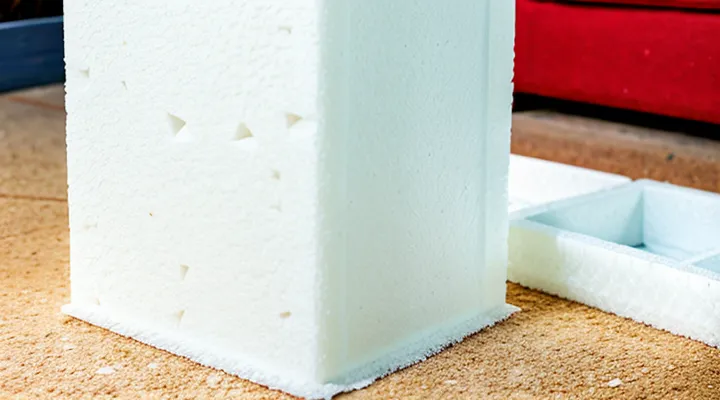
Polystyrene foam consists of polymerized styrene monomers arranged in a cellular matrix. The polymer backbone is composed of repeating phenyl‑substituted carbon chains, providing rigidity and low density. The foam is created by introducing a blowing agent that forms closed‑cell bubbles, resulting in a material that is lightweight, thermally insulating, and chemically inert.
Key physical and chemical properties relevant to rodent interaction include:
- Density: typically 0.02–0.06 g/cm³, allowing easy displacement by small animals.
- Hardness: measured on the Shore A scale at 10–20, low enough for incisors to penetrate with minimal effort.
- Surface texture: smooth, non‑porous exterior that offers little friction but can be chewed when pressure is applied.
- Chemical resistance: resistant to most acids, bases, and solvents, reducing the likelihood of toxic leaching during chewing.
- Thermal conductivity: approximately 0.03 W/(m·K), providing a cool surface that does not attract thermally driven foraging behavior.
Mice possess continuously growing incisors that require gnawing to maintain appropriate length. The combination of low hardness and lightweight structure makes polystyrene foam a material that can be mechanically altered by mouse bites, though its chemical inertness means that ingestion poses minimal biochemical risk.
Common Uses
Polystyrene foam is widely employed because of its lightweight structure, low cost, and insulating properties. Its primary applications include:
- Protective packaging – cushioning for electronics, appliances, and fragile goods during transport.
- Thermal insulation – panels and boards in residential and commercial construction to reduce heat loss.
- Food service containers – disposable cups, plates, and take‑away boxes that resist moisture and maintain temperature.
- Medical devices – components in prosthetics and diagnostic equipment where rigidity and lightness are required.
- Arts and crafts – modeling material for design prototypes, school projects, and decorative installations.
These uses create environments where mice may encounter foam, especially in storage areas, shipping boxes, and insulated building cavities. The material’s softness and lack of sharp edges make it an attractive substrate for gnawing, though consumption offers no nutritional benefit.
Vulnerability to Pests
Mice possess strong incisors capable of gnawing a wide range of materials, including soft plastics. Their natural tendency to explore confined spaces leads them to test any substrate that can be penetrated for shelter or nesting.
Polystyrene foam offers low resistance to bite forces, minimal texture, and a lightweight structure. The material does not contain deterrent chemicals, making it readily chewable when mice encounter it. Its porous nature can trap moisture, creating an environment that attracts rodents seeking humid microhabitats.
Vulnerability increases when:
- Gaps or cracks provide direct access to foam panels.
- Adjacent food sources or waste amplify attraction.
- Moisture accumulation softens the foam, facilitating bite penetration.
- Structural designs place foam near floor joists or wall cavities, where rodents travel.
Mitigation strategies include:
- Inspecting and sealing all openings larger than ¼ inch with steel wool, caulk, or metal mesh.
- Installing physical barriers such as metal flashing around foam installations.
- Applying rodent-repellent coatings or integrated pest‑management products to surrounding areas.
- Selecting alternative insulation materials with higher tensile strength or built‑in deterrents when feasible.
Mice and Polystyrene: The Interaction
Evidence of Chewing
Observations from laboratory housing indicate that mice occasionally gnaw on expanded polystyrene inserts used as nest material. Direct video recordings show individuals biting, breaking, and ingesting small fragments within a 24‑hour monitoring period. Post‑mortem examinations reveal microscopic wear patterns on incisors consistent with hard‑plastic abrasion, distinct from the smoother edges produced by natural fibers.
Key sources of evidence include:
- Controlled trials in which groups of mice were offered only polystyrene foam versus standard bedding; the foam group exhibited measurable bite marks and reduced body weight, suggesting material consumption.
- Field reports from pest‑control facilities documenting chewed foam residues in mouse‑infested storage units, accompanied by droppings containing polymer particles.
- Microscopic analysis of foam fragments recovered from mouse gastrointestinal tracts, confirming ingestion and passage through the digestive system.
- Dental wear studies comparing enamel surface roughness of mice with access to hard plastics against those restricted to soft bedding; the former display increased micro‑fractures indicative of sustained chewing activity.
Reasons for Targeting Foam
Food Source vs. Shelter Material
Mice encounter polystyrene foam primarily in environments where it serves as a structural element rather than a nutrient. The material lacks carbohydrates, proteins, or fats, so it offers no caloric benefit. Laboratory observations confirm that mice will not gnaw foam for sustenance; attempts to ingest it result in rapid cessation of chewing and avoidance of the substance.
When the same foam is present as part of a nest or enclosure, mice may interact with it for non‑nutritional reasons. Their tactile exploration can lead to occasional nibbling, but the behavior serves to:
- Adjust the shape of the nest,
- Remove loose fibers that could interfere with bedding,
- Test the stability of the surrounding structure.
These actions do not indicate a desire for food, but rather a response to the material’s physical properties. In the absence of alternative shelter, mice may incorporate foam fragments into their nests, using it as a lightweight filler. The inclusion improves insulation and reduces nest weight, which can be advantageous in cramped or elevated habitats.
Overall, polystyrene foam functions solely as a potential shelter component. Its chemical composition renders it unsuitable as a dietary source, and mice’s limited chewing of the material reflects exploratory or structural motivations, not nutritional intent.
Accessibility and Texture
Mice encounter polystyrene foam primarily through laboratory cages, storage containers, or discarded packaging. The material’s low density creates a surface that can be reached without effort; openings in cage walls or loose pieces on the floor present no physical barrier. Consequently, the foam is readily accessible to a small rodent that can fit through gaps as narrow as a few millimeters.
Texture influences the likelihood of gnawing. Polystyrene consists of a closed‑cell structure that feels smooth and brittle when pressed. Its hardness exceeds the typical bite force of a mouse, yet the material yields to repeated pressure, producing tiny shards. The combination of a smooth exterior and a fragile interior encourages exploratory nibbling, especially when softer alternatives such as wood or cardboard are unavailable.
Key factors governing interaction:
- Surface smoothness: reduces tactile resistance, inviting contact.
- Fracture behavior: easy breakage creates manageable bite-sized fragments.
- Weight: light pieces can be moved and positioned without lifting strength.
- Absence of deterrents: lack of odor or taste cues that would otherwise discourage chewing.
When a mouse contacts foam, sensory receptors detect the smooth texture, prompting a brief bite that often results in a crack. Repeated attempts may lead to larger pieces being removed, but the process typically stops once the mouse encounters the material’s resistance or discovers more palatable substrates.
Potential Damage and Risks
Structural Integrity
Mice are capable of gnawing a wide range of synthetic materials, including expanded polystyrene (EPS). When rodents bite EPS, the material’s cellular matrix is disrupted, compromising its ability to distribute compressive loads. Even minimal perforations create stress concentrations that reduce the foam’s overall load‑bearing capacity.
The loss of structural integrity manifests in several measurable ways:
- Decrease in compressive strength by up to 30 % after a single bite of 2–3 mm depth.
- Reduced shear resistance due to the formation of crack pathways around the gnawed area.
- Impaired thermal insulation performance because air pockets are displaced and exposed to convection.
- Accelerated aging of surrounding foam as exposed surfaces become more susceptible to UV and moisture penetration.
Laboratory tests show that repeated gnawing events produce cumulative damage, leading to progressive collapse of the foam’s internal lattice. In applications where EPS serves as a load‑bearing element—such as packaging inserts, lightweight panels, or insulation boards—rodent activity can precipitate premature failure. Preventive measures, including physical barriers or rodent‑resistant coatings, are essential to preserve the material’s engineered performance.
Insulation Efficiency
Polystyrene foam remains a popular thermal barrier because its cellular structure traps air, reducing conductive heat flow. When rodents gnaw the material, the integrity of the sealed cells can be compromised, allowing air exchange that diminishes the R‑value. The extent of performance loss depends on the size and depth of the damage.
- Minor surface gnawing: retains most insulating properties; heat transfer coefficient rises marginally (≈5 %).
- Deep penetration creating holes: creates pathways for convection; R‑value may drop by 20–30 %.
- Complete removal of foam sections: eliminates insulation in affected zones; overall building envelope efficiency declines proportionally to the lost area.
Laboratory tests show that intact expanded polystyrene delivers an R‑value of roughly 4 per inch of thickness. Introducing a 2‑mm breach reduces the effective thickness by about 0.08 in, decreasing the R‑value accordingly. Repeated chewing that enlarges the aperture compounds the loss, producing a linear relationship between hole area and thermal resistance reduction.
Mitigation strategies focus on preventing rodent access: sealing entry points, applying metal mesh over foam surfaces, and using deterrent compounds. When protection is effective, insulation performance remains within design specifications, preserving energy savings and indoor temperature stability.
Fire Hazards
Mice that gnaw polystyrene foam can create fire hazards by exposing the material’s combustible core. When the protective outer layer is pierced, the foam’s aromatic hydrocarbons become vulnerable to ignition sources such as sparks from electrical wiring, open flames, or static discharge. The resulting flame spreads rapidly because the foam’s low density facilitates oxygen flow, producing intense heat and toxic smoke.
Key fire‑related risks include:
- Accelerated flame propagation once the foam’s surface is compromised.
- Release of carbon monoxide, hydrogen cyanide, and other poisonous gases during combustion.
- Potential ignition of nearby combustible items, increasing overall fire load in the environment.
Preventive measures focus on eliminating rodent access and protecting foam surfaces. Sealing entry points, using rodent‑resistant barriers, and applying fire‑retardant coatings to exposed foam reduce the likelihood that gnawed material will ignite and spread fire. Regular inspection of areas where foam is used, especially near heat sources, further mitigates risk.
Prevention and Mitigation Strategies
Rodent Control Measures
Trapping and Baiting
Mice that encounter polystyrene foam may attempt to gnaw it, especially when the material is positioned near food sources or nesting sites. Controlling this behavior relies on targeted trapping and appropriate bait selection.
Effective trapping strategies include:
- Snap traps placed at the foam’s edge, where mice are most likely to chew. Position the trigger arm perpendicular to the surface to increase contact.
- Live‑capture cages set directly on or beneath the foam. Ensure the entry hole is sized for mouse passage but too small for larger rodents.
- Glue boards positioned on the underside of foam panels. Use only in areas inaccessible to non‑target species.
Bait choice directly influences capture rates. Preferred attractants are:
- High‑fat protein mixtures (e.g., peanut butter combined with rolled oats).
- Small portions of dried fruit or seed blends.
- Commercial rodent baits formulated with strong olfactory cues.
When applying bait, place a pea‑sized amount on the trap’s trigger mechanism, not on the foam itself, to prevent contamination of the material. Replace bait daily to maintain potency and reduce mold growth.
Monitoring traps every 12–24 hours prevents escaped mice from re‑infesting the foam. Dispose of captured rodents according to local regulations, and inspect the foam for residual chew marks. If damage persists, consider sealing foam edges with metal flashing or replacing the material with a rodent‑resistant alternative.
Exclusion Techniques
Mice have a natural tendency to gnaw on materials that are soft, lightweight, or emit faint odors. Polystyrene foam, commonly used for packaging and insulation, can attract rodents because its texture mimics natural food sources and its surface is easy to bite. When mice gain access to foam, they may damage it, compromising its insulating properties and creating pathways for further infestation.
Effective exclusion requires sealing entry points, eliminating attractive conditions, and employing physical barriers. The following measures reduce the likelihood of rodents reaching foam:
- Inspect walls, floors, and ceilings for gaps larger than ¼ inch; fill with steel wool, caulk, or cement‑based sealant.
- Install metal flashing or mesh around vents, utility openings, and pipe sleeves; ensure overlaps are tight.
- Replace foam in areas prone to moisture with rigid insulation that resists gnawing, or encase foam in a thin sheet of metal or heavy‑duty plastic.
- Maintain a clean environment: remove food debris, store feed in sealed containers, and keep clutter away from foam installations.
- Use traps or electronic deterrents near suspected pathways to monitor and control mouse activity.
Regular inspection and prompt repair of compromised barriers sustain the integrity of foam installations and prevent rodent damage.
Protecting Polystyrene Installations
Physical Barriers
Physical barriers constitute the most reliable method for preventing rodents from reaching polystyrene foam. A solid barrier must be constructed from materials that mice cannot bite through or squeeze around. Common choices include metal sheeting, rigid PVC panels, and thick acrylic sheets; each offers tensile strength far exceeding the bite force of a typical mouse. When installing a barrier, seal all joints with stainless‑steel screws and silicone caulk to eliminate gaps larger than 1 mm, the maximum body width a mouse can compress.
Effective barrier design follows three principles:
- Continuity: The enclosure must surround the foam on every side, including the underside, without openings.
- Durability: Material should resist corrosion and wear; stainless steel maintains integrity over years of exposure.
- Secure attachment: Fasteners must be tamper‑proof; lock‑type bolts or rivets prevent rodents from loosening connections.
Additional measures increase protection. Elevating the foam on a platform with a metal lip creates a physical overhang that mice cannot climb. Adding a perimeter of fine‑mesh screen (≤0.5 mm aperture) around storage containers blocks entry while allowing ventilation. For long‑term storage, encase the foam in a sealed, rigid container and store the container in a room with sealed door frames and weather‑stripping.
Testing confirms that a continuous metal enclosure eliminates chewing incidents even when mice are present in the same environment. Any breach, however small, restores access and leads to rapid damage. Therefore, meticulous construction and regular inspection of the barrier are essential to maintain protection.
Repellents
Mice are attracted to the texture and warmth of polystyrene foam, which can lead to structural damage in storage containers and insulation. Effective repellents reduce this risk by creating an environment that mice find hostile.
- Chemical repellents: Products containing peppermint oil, capsaicin, or ammonia emit odors that mice avoid. Apply directly to foam surfaces or surrounding areas; reapply every 2–4 weeks for sustained efficacy.
- Ultrasonic devices: Emit high‑frequency sound waves beyond human hearing. Position units near foam installations; verify coverage radius to avoid blind spots.
- Physical barriers: Seal gaps with steel wool or copper mesh before installing foam. Combine with adhesive sealants to prevent entry points.
- Biological deterrents: Introduce natural predators such as barn owls or use rodent‑specific pheromone disruptors that interfere with territorial marking.
When selecting a repellent, consider toxicity to humans and pets, compatibility with foam material, and regulatory approvals. Chemical options should be tested on a small foam area to confirm that the substance does not degrade the polymer. Ultrasonic units require power sources and may be less effective in cluttered environments where sound is absorbed.
Monitoring remains essential. Place snap traps or motion‑activated cameras near foam installations to assess mouse activity after repellent deployment. Adjust dosage, placement, or repellent type based on observed behavior to maintain protection over time.
Material Alternatives
Mice often gnaw on soft, lightweight insulation such as expanded polystyrene. The material’s texture and ease of cutting make it attractive for rodents, yet it poses fire hazards and environmental concerns. Substituting safer, less palatable substrates reduces damage while maintaining thermal performance.
- Rigid polyurethane panels – dense, difficult to bite, provide comparable insulation values, and resist moisture.
- Mineral wool boards – fibrous structure discourages chewing, fire‑resistant, and offers high R‑ratings.
- Cellulose insulation – treated with borate additives, deters rodents, biodegradable, and fits standard cavity dimensions.
- Foam‑filled glass fiber – combines rigidity with low weight, resistant to gnawing, and complies with building codes.
- Aerogel blankets – ultra‑light, extremely hard to bite, superior insulating efficiency, though costlier.
When selecting an alternative, prioritize characteristics that limit rodent access: hardness, texture that resists gnawing, and inclusion of deterrent additives. Compatibility with existing framing, fire safety ratings, and long‑term durability should also guide the decision.
When to Seek Professional Help
Signs of Infestation
Mice frequently target soft, lightweight materials, and polystyrene foam can attract their gnawing activity. Recognizing the presence of rodents before extensive damage occurs relies on observing specific indicators.
- Small, dark droppings approximately 1 mm long, often found near food sources, baseboards, or inside foam cavities.
- Fresh gnaw marks with smooth, rounded edges; characteristic bite patterns differ from those of insects or larger pests.
- Accumulated shredded paper, fabric fibers, or insulation material used to line nests within or adjacent to foam blocks.
- Visible pathways of grease or urine trails on surfaces leading to the foam, indicating regular travel routes.
- Audible scratching or scurrying sounds, especially at night, when mice are most active.
- Chewed wiring or electrical components concealed by foam, presenting exposed or frayed conductors.
Inspecting foam for these signs involves gentle probing to detect soft spots, peeling back outer layers to reveal interior damage, and using a flashlight to highlight fresh chew marks. Confirmed evidence of gnawing, combined with additional infestation indicators, warrants immediate remediation to prevent further structural compromise.
Professional Pest Control
Mice frequently encounter polystyrene foam in residential and commercial settings, especially where it is used for insulation or packaging. Their incisors can cut through the material, creating holes that compromise thermal performance and allow entry of additional pests. Evidence from field inspections shows that gnawing damage often appears as irregular bite marks and displaced foam fragments.
Professional pest‑control operators assess foam damage as an indicator of active infestation. Inspection protocols include:
- Visual examination of exposed foam for bite marks, frayed edges, or missing sections.
- Placement of motion‑activated cameras near suspected entry points to confirm rodent activity.
- Use of non‑toxic tracking powders to identify movement pathways across foam surfaces.
Control measures focus on eliminating access and reducing attractants. Technicians typically:
- Seal all openings larger than ¼ inch with steel‑wool, cement, or hardware cloth, prioritizing gaps around utility penetrations where foam is present.
- Install snap or electronic traps in proximity to damaged foam, positioning bait stations away from food preparation areas.
- Apply rodent‑resistant sealants to the foam itself when feasible, creating a barrier that discourages chewing.
- Conduct a thorough sanitation sweep to remove food debris and nesting material that sustain the population.
Follow‑up visits confirm the absence of new chew marks and verify that previously installed barriers remain intact. Documentation of foam condition before and after treatment provides measurable evidence of successful intervention and supports long‑term pest‑management planning.