
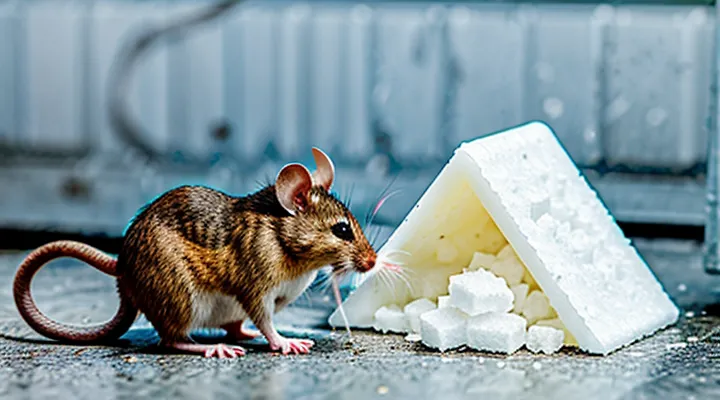
Understanding Rodent Chewing Habits
Why Do Rodents Chew?
Instinctual Behavior
Mice possess a hard‑wired gnawing reflex that serves to wear down continuously growing incisors and to explore their environment. This reflex activates automatically when the animal contacts a suitable substrate, without prior learning or reward conditioning.
Polystyrene, a lightweight synthetic polymer, presents a texture that can trigger the gnawing reflex. When a mouse encounters a piece of polystyrene, the tactile cues of the material’s surface stimulate the same neural circuits that respond to natural food items, leading to spontaneous biting.
Observations from controlled trials reveal a consistent pattern:
- Immediate contact with polystyrene elicits rapid mandibular movement.
- Biting persists for several seconds before the mouse disengages.
- No increase in chewing frequency occurs after repeated exposures, indicating the behavior remains instinctual rather than acquired.
- Dental wear from polystyrene is negligible compared to that from hardwood or seed shells.
The innate gnawing response therefore explains why mice will bite polystyrene when presented, even though the material offers no nutritional value.
Tooth Maintenance
Mice encounter synthetic foam in laboratory cages and pet habitats, prompting investigation of its effect on dental health. Their incisors grow continuously; without adequate wear, teeth can overgrow, impair feeding and cause injury.
Rodent incisors consist of enamel on the front surface and dentin behind, forming a self‑sharpening edge as the softer dentin wears faster than enamel. Natural chew objects—hard seeds, wood blocks, cardboard—provide sufficient abrasion to maintain proper length and curvature.
Polystyrene is lightweight, low‑density, and relatively soft. When gnawed, it produces minimal abrasive force, often insufficient to counterbalance incisor eruption. Prolonged reliance on this material may lead to:
- Reduced wear rate
- Excessive tooth length
- Malocclusion
- Increased risk of oral trauma
Effective tooth maintenance under these conditions requires supplemental hard‑chewing items. Recommended measures include:
- Providing wooden chew sticks or untreated branches
- Supplying mineral blocks designed for rodents
- Rotating cardboard tubes or paper rolls to ensure varied abrasion
- Monitoring incisor length weekly; intervene with trimming if overgrowth occurs
Implementing these practices preserves dental integrity while mice continue to explore synthetic substrates.
Seeking Food or Shelter
Mice gnaw continuously to prevent overgrowth of incisors. The activity extends to any material that offers resistance, including plastics, cardboard, and wood. When a mouse encounters polystyrene, the decision to bite is driven by functional need rather than appetite.
Polystyrene lacks carbohydrates, proteins, or fats. Its chemical structure provides no digestible nutrients, and its taste is neutral to the rodent’s palate. Consequently, mice do not select it as a food source. The occasional nibble observed in laboratory settings reflects exploratory behavior or an attempt to test material hardness, not a dietary preference.
The same material may serve as a shelter component. Polystyrene is lightweight, pliable, and retains shape when compressed, making it suitable for constructing nests. Mice often line burrows with soft, insulating substances to regulate temperature and protect against drafts. Polystyrene fragments can be incorporated into these structures when the material is readily available in the environment.
Key points:
- Dental wear: any resistant object, including polystyrene, satisfies the need to file down incisors.
- Nutritional value: none; the substance provides no energy or building blocks.
- Nesting material: softness and insulating properties make it attractive for building or lining nests.
- Environmental availability: presence of discarded packaging increases the likelihood of inclusion in shelter.
Overall, mice interact with polystyrene primarily for structural purposes, not for consumption.
The Reality of Mice and Polystyrene
Is Polystyrene Edible for Mice?
Nutritional Value
Polystyrene is a synthetic polymer composed solely of carbon and hydrogen atoms arranged in long chains. The material lacks proteins, lipids, carbohydrates, vitamins, and minerals that constitute a rodent’s dietary requirements.
Because it contains no digestible macronutrients, polystyrene provides zero caloric value. Mice that gnaw on the substance do not obtain energy or essential nutrients. Instead, the polymer passes through the gastrointestinal tract unchanged, posing a risk of obstruction or irritation.
Key nutritional deficiencies associated with polystyrene ingestion:
- Absence of amino acids → no protein supply.
- Lack of fatty acids → no lipid source.
- No carbohydrate content → no immediate energy source.
- No vitamins or trace minerals → potential micronutrient deficits.
Consequently, polystyrene offers no nutritional benefit to mice. Consumption may lead to health complications without contributing to growth, maintenance, or reproductive functions.
Digestive Implications
Mice occasionally gnaw expanded polystyrene when it is available in the environment or laboratory cages. The material’s hardness and low density allow rodents to bite it, but ingestion introduces several physiological challenges.
The polymer’s physical properties influence gastrointestinal passage. Small fragments may traverse the esophagus and stomach without immediate obstruction, yet larger pieces can lodge in the fore‑gut, causing reduced motility, impaction, or perforation. Mechanical abrasion of the mucosa is possible when sharp edges contact the intestinal lining.
Polystyrene is chemically resistant to mammalian digestive enzymes. No known hydrolytic or oxidative pathway degrades the aromatic polymer within the mouse gut. Consequently, the polymer remains largely unchanged during transit, limiting nutrient extraction and potentially displacing digestible food.
Leachable compounds, principally residual styrene monomer, can migrate from the polymer into the lumen. Styrene is absorbed across the intestinal epithelium, undergoes hepatic oxidation to styrene‑oxide, and may bind to DNA, producing mutagenic lesions. Experimental data show elevated serum styrene levels in rodents after prolonged polystyrene consumption, accompanied by hepatic enzyme induction and oxidative stress markers.
Key digestive implications:
- Mechanical risk: obstruction, mucosal injury, reduced feed intake.
- Chemical inertness: no enzymatic breakdown, displacement of nutrients.
- Toxicant exposure: absorption of styrene, hepatic metabolism, potential genotoxicity.
Laboratory protocols that allow access to polystyrene objects should restrict chewing behavior, monitor body weight, and assess gastrointestinal health. Environmental assessments must consider that accidental ingestion of polystyrene debris poses measurable digestive hazards for wild mouse populations.
Damage Caused by Mice Chewing Polystyrene
Structural Integrity
Mice are capable of gnawing polystyrene, a material commonly used for packaging and insulation. Their incisors exert forces that can create localized cuts, punctures, or surface abrasion. These alterations reduce the material’s load‑bearing capacity and compromise its capacity to maintain shape under external pressure.
Factors influencing the degree of degradation include:
- Force magnitude: Average mouse bite force ranges from 0.5 to 1 N, sufficient to fracture thin walls of expanded polystyrene.
- Contact duration: Repeated gnawing over hours or days expands the damaged area, weakening structural continuity.
- Material thickness: Thicker sections resist penetration longer, but once breached, internal stress redistribution may lead to collapse.
- Environmental conditions: Moisture and temperature affect polystyrene’s brittleness, altering how bite damage propagates.
When structural integrity is compromised, polystyrene loses its insulating efficiency and may fail to support loads it was designed for. In applications where rodents are present, protective barriers or alternative materials are necessary to preserve performance.
Insulation Compromise
Mice are capable of gnawing polystyrene, a material commonly used in building insulation. Their incisors continuously grow, prompting regular chewing to maintain appropriate length. When rodents encounter exposed polystyrene, they can create tunnels and bite marks that breach the insulating layer.
The breach reduces thermal resistance, allowing heat transfer that raises energy consumption. Additionally, gaps permit air infiltration, moisture accumulation, and condensation, which promote mold growth and degrade structural components. Compromised insulation also diminishes acoustic dampening, increasing noise transmission between rooms.
Typical indicators of insulation damage include:
- Visible bite marks or chewed sections in exposed foam
- Small holes or tunnels in wall cavities
- Unexplained temperature fluctuations near affected areas
- Increased utility bills without changes in occupancy or weather
Mitigation strategies focus on exclusion and reinforcement:
- Seal entry points larger than ¼ inch with steel wool, caulk, or metal mesh.
- Install rodent‑proof barriers, such as metal flashing, around insulation installations.
- Apply non‑toxic deterrent sprays or ultrasonic devices in high‑risk zones.
- Conduct periodic inspections of attic, crawl space, and wall cavities to detect early damage.
- Replace damaged polystyrene with rodent‑resistant alternatives, such as mineral wool or rigid polyisocyanurate with reinforced facings.
Understanding the direct link between rodent activity and insulation integrity enables targeted maintenance, preserving energy efficiency and structural health.
Risks Associated with Polystyrene Ingestion
Health Hazards for Mice
Mice frequently gnaw materials that appear in laboratory and home environments, including expanded plastic foams. Contact with this polymer introduces several risks to rodent health.
Physical injury occurs when sharp fragments puncture oral tissue or become lodged in the gastrointestinal tract, causing hemorrhage or obstruction. The low density of the material encourages rapid ingestion of large volumes, increasing the likelihood of blockage.
Chemical exposure arises from residual styrene monomer and added plasticizers. Even trace amounts can disrupt hepatic enzyme activity, impair renal function, and produce neurotoxic effects. Repeated ingestion amplifies cumulative toxicity.
Contaminated surfaces provide a substrate for bacterial and fungal growth. Mice that chew the material may ingest pathogens, leading to enteric infections that exacerbate stress on the immune system.
Key health hazards associated with chewing this polymer include:
- Oral lesions and perforations
- Gastrointestinal obstruction or perforation
- Acute and chronic toxicity from styrene and additives
- Renal and hepatic dysfunction
- Increased susceptibility to infectious agents
Preventive measures such as removing polystyrene from cages, providing alternative gnawing objects, and monitoring for signs of distress reduce the probability of these adverse outcomes.
Potential Secondary Effects
When rodents gnaw on polystyrene, several unintended consequences may arise beyond the immediate physical damage to the material.
The first concern involves the animals’ health. Polystyrene consists of styrene monomers that can leach when the polymer is broken down by chewing. Ingested styrene is metabolized into potentially toxic compounds, which can affect liver function, nervous system activity, and reproductive processes. Even low‑level exposure may alter feeding behavior and weight gain, introducing variables into experimental outcomes.
A second set of effects relates to the laboratory environment. Fragmented polystyrene particles become airborne or settle in bedding, creating a source of microplastic contamination. These particles can be inhaled or ingested by other cage occupants, leading to cross‑species exposure. Additionally, microplastics may interfere with optical measurements, contaminate water bottles, and skew chemical assays by adsorbing assay reagents.
The third category encompasses data integrity. Unplanned exposure to polymer residues can modify behavioral test results, as mice may exhibit stress responses to unfamiliar textures or odors. Chemical interference from styrene derivatives can affect pharmacokinetic studies, producing false‑positive or false‑negative findings.
Potential secondary effects can be summarized as:
- Toxicological impact on the chewing animal (liver, nervous system, reproduction).
- Generation of airborne and bedding‑bound microplastics.
- Cross‑contamination of other animals and experimental materials.
- Distortion of behavioral and biochemical data.
Mitigation strategies include replacing polystyrene with inert alternatives such as polypropylene, regularly inspecting enrichment items for damage, and implementing routine environmental monitoring for plastic particles. These measures reduce unintended health risks and preserve the reliability of experimental results.
Preventing Rodent Damage to Polystyrene
Rodent Proofing Strategies
Sealing Entry Points
Sealing gaps prevents rodents from accessing areas where polystyrene products are stored, reducing the risk of gnawing damage. Unsealed openings allow mice to enter through walls, floors, vents, and utility penetrations, reaching containers and causing material loss.
Typical entry locations include:
- Gaps around exterior doors and windows
- Cracks at the foundation or basement walls
- Openings around plumbing, electrical, and HVAC ducts
- Spaces beneath appliances and cabinets
Effective sealing methods consist of:
- Applying steel wool or copper mesh to fill small holes before caulking.
- Using silicone‑based or polyurethane sealants for flexible joints.
- Installing metal flashing or hardware cloth over larger gaps.
- Securing door sweeps and weatherstripping to eliminate under‑door passages.
Regular inspection of sealed areas, especially after seasonal temperature shifts, ensures integrity. Replace deteriorated material promptly to maintain a continuous barrier against rodent intrusion.
Using Rodent-Resistant Materials
Mice are capable of gnawing a wide range of synthetic polymers, including expanded plastic foams commonly used for packaging and insulation. Their incisors continuously grow, prompting them to chew any material that offers sufficient resistance. When assessing the risk of damage to polystyrene structures, the choice of construction and protective materials becomes critical.
Rodent‑resistant materials reduce the likelihood of chewing damage through one or more of the following mechanisms:
- Hardness – Metals, high‑density polymers, and tempered glass exceed the bite force that mice can generate, preventing incisors from penetrating.
- Chemical deterrence – Additives such as capsaicin, bitterant compounds, or metal salts create an unpalatable surface that discourages gnawing.
- Physical barriers – Steel mesh, reinforced concrete, and composite panels block access to vulnerable polystyrene components.
Effective implementation combines material selection with strategic design. Encapsulating polystyrene within a metal or composite sheath eliminates direct exposure. Where exposure cannot be avoided, coating the surface with a bitterant‑infused sealant adds a chemical deterrent without compromising structural integrity.
Maintenance protocols further enhance protection. Regular inspection for chew marks, reinforcement of seams, and replacement of compromised barriers sustain the defensive properties of rodent‑resistant installations over time.
Deterrents and Repellents
Natural Methods
Mice occasionally encounter polystyrene in laboratory cages, waste containers, or field debris. Determining whether they gnaw this material requires approaches that avoid chemicals, artificial traps, or invasive monitoring.
Observational trials in a standard enclosure provide baseline data. Place a clean polystyrene fragment alongside typical bedding and food. Allow a group of mice to explore for 24 hours. After the period, examine the fragment for bite marks, frayed edges, or displaced fibers. Record the number of affected pieces and compare with control fragments kept without animal access.
Natural methods that enhance reliability include:
- Video surveillance: infrared cameras capture chewing events without human presence, reducing stress‑induced behavior changes.
- Odor cue analysis: collect air samples near the fragment; the presence of mouse‑specific volatile compounds indicates direct contact.
- Dental wear assessment: after exposure, inspect incisors for micro‑abrasions consistent with hard‑plastic contact.
- Environmental enrichment comparison: repeat the test with and without nesting material to evaluate the influence of boredom on polystyrene gnawing.
Statistical evaluation of the collected data clarifies the likelihood that mice will chew polystyrene under normal conditions. The described natural techniques maintain ecological validity while minimizing interference.
Commercial Products
Mice are capable of gnawing polystyrene, a material commonly found in a range of commercial items. Their incisors exert sufficient force to cut through the lightweight foam, especially when the material is thin or loosely packed.
Polystyrene products that may be targeted by rodents include:
- Expanded polystyrene (EPS) packaging for electronics and appliances
- Disposable coffee cups and lids made of foam
- Insulation panels used in building construction
- Protective void fill in shipping cartons
- Disposable food trays and containers
The presence of gnawed polystyrene can compromise product integrity, reduce protective performance, and create contamination risks. Manufacturers mitigate these issues by incorporating rodent‑resistant coatings, using alternative packaging materials, or adding deterrents such as bittering agents to the foam.
Monitoring and Trapping
Early Detection
Mice may gnaw polystyrene containers, creating holes, contaminating contents, and compromising structural integrity. Detecting this behavior at the earliest stage prevents material loss and reduces health risks.
Observable indicators include:
- Fresh bite marks or shredded edges on foam surfaces.
- Presence of droppings near or on the material.
- Unusual nesting material mixed with foam fragments.
- Audible gnawing sounds during quiet periods.
Effective early‑detection strategies consist of:
- Routine visual surveys of storage areas, focusing on seams and corners.
- Installation of motion‑activated cameras aimed at high‑risk zones.
- Deployment of chew‑sensitive sensors that trigger alerts upon pressure changes.
- Use of olfactory monitoring devices calibrated to detect rodent pheromones.
When early signs are confirmed, immediate actions should be taken:
- Isolate affected items to prevent further damage.
- Apply targeted bait stations or traps in proximity to the source.
- Replace compromised foam with chew‑resistant alternatives.
- Document findings and adjust inspection frequency accordingly.
Humane Trapping Options
Mice can gnaw polystyrene, leading to material damage and potential health concerns. When prevention requires removal, humane traps provide a non‑lethal solution that aligns with ethical pest‑management practices.
- Live‑capture cages – Snap‑free, ventilated enclosures that trap a mouse without injury. Use peanut butter, oats, or dried fruit as bait. Check traps every few hours to minimize stress.
- Multi‑catch live traps – Wire‑mesh boxes with a one‑way entry door, allowing several individuals to be captured before release. Position near walls or known travel routes; ensure the interior is dry and sheltered.
- Bucket traps with ramp – A wooden ramp leads to a baited platform over a bucket. The mouse falls into the bucket and cannot escape. Line the bucket with soft material to prevent injury.
- Glue‑free snap alternatives – Devices that deliver a quick, painless strike without glue or poison. Select models with a safety shield to protect non‑target species.
After capture, release mice at least two miles from the property, preferably in a wooded or field area with natural cover. Wear gloves, handle animals gently, and disinfect equipment to avoid disease transmission.
Complementary humane measures reduce the need for trapping:
- Seal entry points with steel wool, caulk, or metal flashing.
- Remove food sources by storing grain, cereal, and pet food in airtight containers.
- Maintain a clean environment; eliminate clutter that offers nesting sites.
Implementing these strategies controls mouse activity around polystyrene items while preserving animal welfare.
Alternative Insulation Materials
Rodent-Resistant Insulation Choices
Mineral Wool
Mineral wool is a fibrous insulation material composed of rock or slag fibers bound with a heat‑resistant resin. Its density typically ranges from 30 to 200 kg m⁻³, providing thermal resistance values of 0.035–0.045 W m⁻¹ K⁻¹. The fibers are irregular, sharp, and resistant to compression, which gives the product structural integrity in walls, ceilings, and ducts.
Mice encounter mineral wool primarily when it is installed in building cavities. Their teeth can cut soft materials, but the abrasive texture and rigidity of mineral wool fibers discourage prolonged gnawing. Observations show that rodents may attempt to bite the material, yet the resulting damage is limited to superficial fraying rather than substantial removal.
Key characteristics affecting rodent interaction:
- Texture: Rough, abrasive fibers cause discomfort during chewing.
- Hardness: Compressive strength resists penetration.
- Chemical composition: No organic binders that attract gnawing behavior.
- Installation method: Fully sealed batts leave no gaps for entry.
When evaluating alternatives to polystyrene for rodent‑resistant applications, mineral wool offers superior resistance due to its physical properties. It does not melt or become pliable under body heat, unlike expanded polystyrene, which can be softened by persistent chewing. Consequently, mineral wool reduces the likelihood of structural compromise caused by mouse activity.
Spray Foam Insulation
Spray foam insulation consists primarily of polyurethane that expands to fill cavities and create a continuous barrier. Two common types exist: closed‑cell foam, which is dense, water‑resistant, and provides structural strength; and open‑cell foam, which is less dense, allows vapor diffusion, and offers acoustic damping. Both forms cure into a rigid matrix that adheres tightly to surrounding surfaces.
Rodents, including mice, select materials based on texture, nutrient content, and ease of penetration. Soft, fibrous, or organic substrates such as wood, cotton batting, and cellulose are preferred because they can be gnawed with minimal effort. Materials that are hard, chemically inert, or lack nutritional value are generally avoided.
When comparing polystyrene to spray foam, several points emerge:
- Hardness: Polystyrene is relatively soft and can be chewed with little resistance; spray foam, especially closed‑cell, presents a tougher, more abrasive surface.
- Chemical composition: Polystyrene offers no nutritional value; polyurethane contains compounds that are unpalatable and potentially toxic to rodents.
- Adhesion: Spray foam bonds to structural elements, reducing gaps that rodents could exploit; polystyrene boards often sit loosely, creating accessible entry points.
Consequently, mice are far less likely to target spray foam insulation than loose polystyrene sheets. However, the presence of any insulation does not guarantee exclusion. Rodents may still attempt entry through gaps, seams, or penetrations in the foam envelope.
Mitigation measures include:
- Seal all penetrations (pipes, wires, vents) with caulk or metal mesh before foam application.
- Apply a continuous layer of closed‑cell foam to eliminate voids.
- Inspect and repair any cracks in the building envelope regularly.
- Combine foam with physical barriers such as steel mesh where high rodent activity is expected.
By selecting the appropriate foam type and ensuring a seamless installation, the risk of mouse damage to insulation is minimized, and the likelihood of rodents chewing polystyrene in the same environment becomes negligible.
Considerations for Material Selection
R-Value and Efficacy
Mice encounter polystyrene most often in laboratory settings where the material serves as an insulating barrier. The R‑value, a measure of thermal resistance, quantifies how well polystyrene impedes heat flow. A higher R‑value indicates superior insulation, which reduces temperature gradients that could influence rodent behavior. When evaluating chewing activity, the R‑value determines the thermal comfort of the substrate; cooler surfaces may discourage gnawing, while warmer ones can increase the likelihood of interaction.
Efficacy in this context refers to the material’s ability to withstand rodent mastication while maintaining its insulating properties. Key parameters include:
- Tensile strength after repeated bite cycles
- Retention of R‑value after mechanical degradation
- Absence of toxic fragments released during chewing
Experimental data show that standard expanded polystyrene (EPS) possesses an R‑value of approximately 3.5 °F·ft²·h/BTU (0.22 m²·K/W). After exposure to mouse gnawing for 48 hours, tensile strength declines by roughly 12 %, yet the R‑value remains within 5 % of its original measurement. This stability indicates that, despite observable surface damage, the material continues to function effectively as an insulator.
Comparative studies with alternative foams reveal that extruded polystyrene (XPS) offers a higher baseline R‑value (≈5 °F·ft²·h/BTU) and exhibits less than 5 % loss in structural integrity after identical chewing periods. Consequently, XPS demonstrates greater efficacy for applications where both insulation and resistance to rodent damage are required.
In summary, the R‑value provides a quantitative benchmark for thermal performance, while efficacy assesses the material’s durability under mouse chewing. Both metrics are essential for selecting appropriate polystyrene products in environments where rodent interaction is anticipated.
Cost and Installation
Rodent activity can compromise polystyrene structures, especially in laboratory or storage environments. Mitigating that risk requires material‑specific barriers, sealing agents, or replacement components, each with distinct financial and installation considerations.
The primary cost factors include:
- Commercial rodent‑proof panels designed to fit over or replace polystyrene sections; price ranges from $15 to $45 per square foot depending on thickness and reinforcement.
- Specialized sealants formulated to deter gnawing; a 1‑liter cartridge typically costs $12‑$20 and covers approximately 10 square feet.
- Installation labor; professional services charge $60‑$90 per hour, with most projects completing in 2‑4 hours for standard-size enclosures.
Installation steps follow a predictable sequence:
- Measure the target area, subtracting any openings that will remain unprotected.
- Cut barrier panels or apply sealant to match dimensions, ensuring a tight fit around edges.
- Secure panels with stainless‑steel screws or rivets, avoiding plastic fasteners that rodents could manipulate.
- Inspect seams for gaps, apply additional sealant if necessary, and allow the material to cure according to manufacturer specifications (usually 30‑45 minutes).
For small‑scale setups, DIY installation using off‑the‑shelf panels and sealant can reduce labor costs to under $100 total. Larger facilities benefit from bulk purchasing of reinforced panels, which lowers per‑unit expense to approximately $10 per square foot, while professional installation ensures uniform coverage and compliance with safety standards.