
«Physical Characteristics»
«Size and Weight»
«Typical Mouse Dimensions»
Typical mouse dimensions provide a baseline for distinguishing this species from larger rodents. Adult house mice (Mus musculus) exhibit the following measurements:
- Body length (head‑to‑base of tail): 7 – 10 cm
- Tail length: 5 – 10 cm, often equal to or slightly shorter than body length
- Weight: 15 – 30 g, with females generally lighter than males
- Ear length: 1 – 1.5 cm, proportionally large relative to head size
- Hind‑foot length: 1.2 – 1.8 cm, supporting agile movement
These dimensions reflect a compact, lightweight build optimized for rapid navigation through tight spaces. In contrast, rats display substantially greater body and tail lengths, higher body mass, and proportionally larger hind limbs. Precise measurement of mouse size is essential for accurate species identification and for interpreting behavioral or physiological data within comparative rodent research.
«Typical Rat Dimensions»
Rats typically exceed mice in overall size, a factor that influences habitat selection, predator avoidance, and resource competition. Adult Norway rats (Rattus norvegicus) display the following dimensions:
- Body length: 20–25 cm (excluding tail)
- Tail length: 18–25 cm, often equal to or slightly shorter than body length
- Shoulder height: 9–10 cm
- Weight: 250–500 g, with occasional individuals reaching 600 g
Roof rats (Rattus rattus) present slightly different measurements:
- Body length: 16–20 cm
- Tail length: 19–25 cm, generally longer than body length
- Shoulder height: 8–9 cm
- Weight: 150–300 g
Juvenile rats reach adult proportions by approximately 10 weeks, whereas mice achieve maturity within 6–8 weeks, underscoring the accelerated growth trajectory of the smaller species. The pronounced size disparity contributes to divergent nesting preferences: rats favor burrows and sewers, while mice occupy cracks and stored grain. Consequently, size serves as a primary metric for distinguishing these rodents in field observations and pest‑management protocols.
«Tail Length and Appearance»
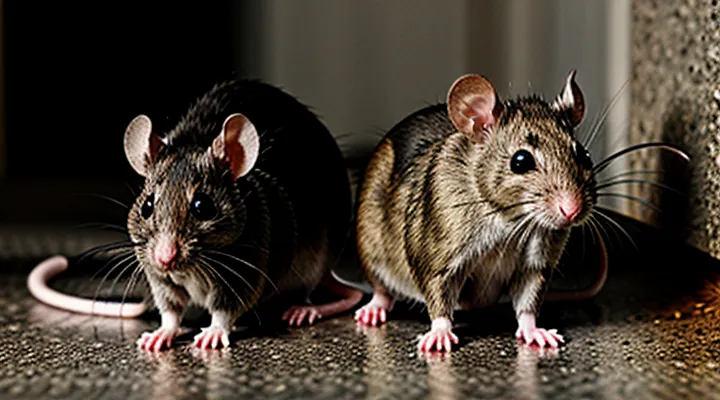
Mice possess tails that are typically as long as, or slightly longer than, their head‑body length. The tail is slender, tapering toward the tip, and largely hair‑free, exposing a smooth, scaly surface. In most species, the tail exhibits a uniform coloration matching the body, with occasional light‑colored rings near the base.
Rats display tails that are proportionally shorter than their head‑body length, though still substantial in absolute size. The tail is noticeably thicker, less tapered, and uniformly covered with coarse scales. A faint dorsal stripe or slight hair fringe may be present near the base, but the majority of the tail remains hairless and rugged.
Key distinctions in tail morphology:
- Length relative to body: mouse ≈ 100 % of body length; rat ≈ 70–80 % of body length.
- Thickness: mouse tail is thin and delicate; rat tail is robust and stout.
- Surface texture: both are scaly, yet the rat’s scales are larger and more pronounced.
- Tapering: mouse tail tapers gradually; rat tail tapers minimally, ending in a blunt tip.
These characteristics aid in rapid visual identification of the two rodents in field or laboratory settings.
«Ear and Snout Features»
The ear and snout morphology provide reliable criteria for distinguishing between the two most common rodent laboratory species.
Mice possess relatively large, rounded ears that extend beyond the head outline, with a thin, translucent cartilage visible at the edge. The ear pinna is mobile, allowing a wide range of motion. In contrast, rat ears are smaller in proportion to the skull, have a more triangular shape, and feature a thicker, opaque cartilage that limits flexibility. The ear canal of a rat is also longer, contributing to a deeper, less audible rustle when the animal moves.
The snout exhibits clear interspecific variation. Mice display a short, pointed snout with a distinct, sharp tapering toward the nose tip. The nasal bones are narrow, and the vibrissae (whiskers) emerge at a steep angle, forming a dense, forward‑projecting array. Rats have a longer, blunter snout; the nasal bones broaden toward the front, producing a more robust muzzle. Whiskers on a rat are spaced farther apart and project at a shallower angle, creating a broader sensory field.
Key distinctions can be summarized:
- Ear size: mouse > rat; ear shape: rounded (mouse) vs. triangular (rat).
- Ear cartilage: thin and translucent (mouse) vs. thick and opaque (rat).
- Snout length: short (mouse) vs. long (rat).
- Snout tip: sharp (mouse) vs. blunt (rat).
- Vibrissae arrangement: dense and forward‑projecting (mouse) vs. spaced and broader (rat).
These anatomical markers enable rapid, accurate identification without reliance on genetic testing or behavioral observation.
«Fur Color and Texture»
The comparative analysis of small rodents reveals distinct variations in «Fur Color and Texture». Mice typically display a limited palette of shades—soft brown, gray, white, and black—characterized by fine, silky hair that lies close to the body. Rat fur is generally coarser and denser, with colors ranging from dark brown and black to mottled gray and albino white, often accompanied by a noticeable sheen.
Key points of divergence include:
- Hair thickness: mouse hair measures 0.02–0.04 mm, rat hair averages 0.04–0.07 mm.
- Surface texture: mouse pelage feels smooth and pliable; rat pelage feels rougher and more resilient.
- Color distribution: mice frequently exhibit uniform coloration; rats often present gradient patterns, such as darker dorsal and lighter ventral regions.
- Shedding frequency: mice shed continuously throughout the year; rats display seasonal shedding peaks, particularly in spring and autumn.
These attributes affect visual identification, handling considerations, and habitat preferences across the two species.
«Behavioral Differences»
«Social Structure and Habits»
«Mice Social Dynamics»
Mice social dynamics shape group stability, reproductive success, and resource allocation. Within a colony, a linear dominance hierarchy emerges, with a single dominant individual exerting priority access to food and mating opportunities. Subordinate members display reduced aggression and increased grooming toward higher‑ranking conspecifics, reinforcing hierarchical order.
Communication relies on multiple channels. Ultrasonic vocalizations convey alarm, courtship, and territorial signals; frequencies exceed human hearing range but are detectable with specialized equipment. Scent marking, performed through urine and glandular secretions, establishes individual identity and territory boundaries. Grooming functions as both hygienic behavior and social bond reinforcement, often directed toward familiar cage mates. These mechanisms operate concurrently to maintain cohesion.
Typical group composition consists of a breeding pair and their offspring, forming a nuclear family that occupies a shared nest. Juveniles remain in the natal nest until weaning, after which they may disperse to establish new territories or integrate into existing groups. Seasonal variations influence litter size and weaning age, affecting population density and social interactions.
In contrast to rats, mice exhibit less pronounced territorial aggression and a more fluid hierarchy. Rats often develop stable, complex dominance structures with pronounced territorial patrols, whereas mice rely more heavily on vocal and olfactory cues to negotiate status. Consequently, mouse colonies display rapid turnover in hierarchical positions, reflecting a flexible social system adapted to high reproductive rates.
Key aspects of mouse social behavior include:
- Linear dominance hierarchy with a single alpha individual
- Ultrasonic vocalizations for alarm, courtship, and territorial signaling
- Scent marking for identity and boundary establishment
- Grooming as a primary affiliative interaction
- Family‑based group structure with limited long‑term territoriality
Understanding these dynamics provides insight into the broader comparative framework of rodent social organization, highlighting distinct strategies employed by mice relative to their larger counterparts.
«Rats Social Dynamics»
Rats exhibit complex social organization that distinguishes them from other rodents. In stable colonies, individuals form a clear dominance hierarchy, with senior members securing priority access to resources and preferred nesting sites. Subordinate rats adjust their behavior to avoid direct confrontation, reducing overall aggression within the group.
Communication relies on multiple channels. Ultrasonic vocalizations convey alarm signals and mating readiness, while scent marking with urine and glandular secretions defines territorial boundaries and individual identity. Grooming exchanges reinforce social bonds and signal affiliative intent, creating a network of reciprocal interactions.
Breeding groups typically consist of a dominant pair and several helpers. Helper rats contribute to pup care, nest maintenance, and food acquisition, enhancing offspring survival rates. This cooperative breeding model contrasts with the more solitary or loosely structured reproductive strategies observed in comparable species.
Key aspects of «Rats Social Dynamics»:
- Established dominance hierarchy regulates resource distribution.
- Multimodal communication integrates vocal, olfactory, and tactile cues.
- Cooperative breeding involves non‑reproductive individuals assisting the dominant pair.
- Stable group composition promotes reduced stress and increased longevity.
Understanding these characteristics provides essential context for comparative analyses of rodent behavior, highlighting the social complexity that sets rats apart from their smaller counterparts.
«Dietary Preferences»
«Mouse Foraging Habits»
Mouse foraging habits reflect a combination of nocturnal activity, opportunistic diet selection, and heightened environmental awareness. Nighttime foraging reduces exposure to diurnal predators, while the species’ small size enables entry into narrow crevices where seeds, insects, and plant material accumulate. Sensory reliance on olfaction and whisker‑mediated tactile feedback guides the identification of edible items and the avoidance of toxic substances.
Key aspects of mouse foraging include:
- Preference for high‑energy seeds and grains, supplemented by occasional insects, fruit pulp, and fungal spores.
- Utilization of spatial memory to revisit productive locations and to cache surplus food for future scarcity.
- Rapid assessment of predator cues, resulting in immediate retreat to burrows or concealed shelters.
- Seasonal adjustment of diet composition, with increased protein intake during breeding periods.
Comparative observations indicate that rats, larger and more adaptable, often exploit human‑derived waste and display reduced reliance on cache storage. Mouse foraging, by contrast, emphasizes precise resource selection and extensive use of temporary caches, reinforcing the ecological distinction between the two rodent groups.
«Rat Foraging Habits»
Rats exhibit opportunistic foraging strategies that differ markedly from those of mice. Their larger body size enables the handling of a broader range of food items, while heightened cognitive abilities support complex search patterns and adaptive decision‑making.
Key aspects of rat foraging behavior include:
- Preference for high‑calorie, nutrient‑dense resources such as grains, nuts, and discarded human food; occasional consumption of insects and small vertebrates supplements protein intake.
- Temporal activity peaks during nocturnal hours, with increased exploratory excursions at dusk and pre‑dawn when predator activity declines.
- Utilization of olfactory and auditory cues to locate concealed or buried food; whisker tactile feedback assists in assessing texture and edibility.
- Employment of spatial memory to revisit profitable sites; rats often create mental maps of their environment, enhancing efficiency over repeated foraging trips.
- Social transmission of foraging information within colonies; experienced individuals lead novices to abundant sources, reinforcing group cohesion and resource exploitation.
- Temporary caching of excess food in secure locations, especially in environments with intermittent supply; caches reduce starvation risk during scarcity periods.
These characteristics underscore the adaptability of rat foraging, contributing to their success in diverse habitats and distinguishing their ecological niche from that of smaller rodent species.
«Activity Patterns»
«Nocturnal Nature of Mice»
Mice exhibit a distinct nocturnal activity pattern, beginning shortly after sunset and persisting through the early hours of dawn. Their peak foraging and social interactions occur during darkness, reducing exposure to visual predators and exploiting cooler temperatures.
- Elevated rodent locomotion recorded between 1900 h and 0300 h.
- Enhanced auditory and olfactory sensitivity supports navigation in low‑light environments.
- Preference for concealed shelters aligns with nighttime emergence, minimizing daylight visibility.
Rats, by contrast, display a more flexible schedule, with significant activity at twilight and occasionally during daylight. This temporal divergence influences habitat use, competition for resources, and disease transmission dynamics. Understanding the nocturnal propensity of mice clarifies their ecological niche and informs pest‑management strategies that target activity windows when mice are most active.
«Nocturnal Nature of Rats»
Rats exhibit a pronounced nocturnal activity pattern, with peak foraging and social interactions occurring during the dark phase of the light‑dark cycle. Their circadian rhythm is synchronized to low‑light conditions, allowing exploitation of food sources and reduced exposure to diurnal predators.
Key characteristics of rat nocturnality include:
- Elevated locomotor activity between dusk and dawn, measured by increased wheel‑running and open‑field exploration.
- Enhanced olfactory and tactile sensitivity during night hours, supporting navigation in dim environments.
- Shifted hormone release, such as higher melatonin levels at night, which regulate sleep–wake cycles and metabolic processes.
- Preference for nesting in concealed locations during daylight, minimizing detection.
In contrast, mice display a more crepuscular tendency, with activity peaks at twilight rather than deep night. This distinction influences experimental design, pest control timing, and ecological impact assessments. Understanding rat nocturnal behavior informs accurate species identification and effective management strategies.
«Reproduction and Lifespan»
«Mouse Breeding Cycles»
The reproductive biology of laboratory mice provides a reliable metric for separating murine species from rat species in comparative studies. Understanding the timing and structure of the mouse reproductive cycle clarifies differences that affect breeding efficiency, experimental design, and population control.
Mice exhibit a rapid estrous cycle lasting approximately four to five days. The cycle comprises four sequential phases:
- Proestrus: 12–14 hours, marked by follicular development and rising estrogen levels.
- Estrus: 12–14 hours, the fertile window when ovulation occurs.
- Metestrus: 12–14 hours, characterized by corpus luteum formation and declining estrogen.
- Diestrus: 48–72 hours, a quiescent period dominated by progesterone secretion.
The brevity of each phase permits frequent breeding opportunities, with a typical inter‑litter interval of 21 days under optimal conditions. Gestation lasts 19–21 days, and litter sizes average 6–8 pups, though variation exists among strains.
In contrast, rats display a longer estrous cycle of four to five days, but each phase extends further, especially diestrus, which can occupy up to 48 hours. Rat gestation averages 21–23 days, and litter sizes are generally larger, ranging from 8 to 12 pups. These temporal distinctions influence colony turnover rates and experimental timelines.
Accurate knowledge of «mouse breeding cycles» supports precise scheduling of mating pairs, reduces genetic drift, and enhances reproducibility across studies that compare murine and rat models. Proper synchronization of estrous phases minimizes variability in offspring phenotypes, thereby strengthening the validity of interspecies comparisons.
«Rat Breeding Cycles»
The reproductive biology of rats follows a regular pattern that distinguishes them from other rodents. Female rats enter estrus every four to five days, with each estrous cycle lasting approximately 4‑5 days. Ovulation occurs spontaneously at the end of estrus, allowing mating without external cues.
Gestation in rats averages 21‑23 days. A single litter typically contains 6‑12 pups, although litter size can vary with strain, nutrition, and age of the dam. Neonates are born hairless and blind; they achieve weaning around 21 days of age.
Sexual maturity is reached rapidly. Males become fertile at 5‑6 weeks, while females can conceive as early as 5 weeks. After a successful litter, a female can become pregnant again within 24‑48 hours, enabling multiple litters per year. Under optimal conditions, a rat may produce 5‑7 litters annually.
Key parameters of the reproductive cycle:
- Estrous cycle length: 4‑5 days
- Gestation period: 21‑23 days
- Typical litter size: 6‑12 pups
- Age at sexual maturity: 5‑6 weeks
- Potential litters per year: up to 7
These characteristics contribute to the high reproductive output of rats, a factor that influences their population dynamics and management in research and pest control contexts. The precise timing of each phase provides predictable intervals for breeding programs and experimental scheduling.
«Habitat and Environment»
«Preferred Living Spaces for Mice»
Mice gravitate toward confined, hidden locations that provide shelter and easy access to food. Their small size allows occupation of gaps as narrow as a few millimeters, making structural imperfections ideal habitats.
- Cracks in foundations and walls
- Voids behind appliances and cabinetry
- Elevated nesting platforms in storage rooms
- Grain or seed containers with loose material
Environmental conditions influence site selection. Moderate temperatures, high humidity, and abundant nesting material increase suitability. Proximity to human activity supplies steady food sources, while low predator presence enhances survivability.
Rats exhibit opposite preferences. Larger body dimensions drive selection of spacious burrows, open sewers, and outdoor compost piles. Consequently, the habitats listed above serve as primary indicators for mouse presence, distinguishing their residential patterns from those of rats.
«Preferred Living Spaces for Rats»
Rats select habitats that provide continuous shelter, reliable food sources, access to water, and protection from predators. Their choices differ markedly from those of mice, reflecting larger body size, social structure, and foraging behavior.
- Underground utility tunnels and sewer systems: stable temperature, abundant refuse, limited human disturbance.
- Basements and crawl spaces of residential or commercial buildings: proximity to stored food, easy entry points, minimal light.
- Agricultural storage facilities: grain silos, feed bins, and barns offer high‑calorie resources and structural complexity for nesting.
- Natural burrow complexes in fields or riverbanks: soft soil, vegetation cover, and seasonal water availability.
Environmental factors shaping these preferences include ambient temperature regulation, availability of organic waste, and the presence of predator corridors. Dense structures that limit visual exposure and facilitate multiple escape routes receive priority.
Understanding «Preferred Living Spaces for Rats» informs targeted management strategies, emphasizing inspection of subterranean infrastructure, sealing of building entry points, and secure storage of foodstuffs.
«Implications for Pest Control»
«Detection Strategies for Mice»
Effective identification of mice requires methods that differentiate them from larger rodent species. Accurate detection supports targeted control measures and prevents misallocation of resources.
Common approaches include:
- Visual surveys of gnaw marks, droppings, and nesting material; mouse dropples are typically 3–5 mm long, softer, and contain less hair than rat feces.
- Tracking powders applied along walls and entry points; footprints reveal size and gait patterns distinct to mice.
- Motion‑activated sensors calibrated for low‑mass movement; sensitivity settings capture the rapid, light steps characteristic of mice.
- Bait stations equipped with species‑specific attractants; consumption rates and bait residue analysis help confirm mouse presence.
- Ultrasonic detectors tuned to frequencies between 30–50 kHz; mice emit vocalizations within this range, whereas rat calls occupy lower frequencies.
- Infrared camera traps positioned near suspected pathways; image analysis distinguishes body length and tail proportion.
- DNA swabs collected from gnaw marks or droppings; laboratory profiling provides definitive species verification.
Integrating multiple techniques reduces false positives and enhances confidence in identifying mouse activity, thereby informing precise management strategies. The focus on «Detection Strategies for Mice» aligns with broader efforts to distinguish these small rodents from their larger counterparts in comparative rodent studies.
«Detection Strategies for Rats»
The implementation of effective «Detection Strategies for Rats» requires precise identification of rodent presence before any control action. Accurate detection reduces unnecessary interventions and focuses resources on active infestation zones.
Key techniques include:
- Visual surveys of burrows, gnaw marks, and droppings in concealed areas.
- Tracking powders applied to known runways, revealing footprints during nocturnal activity.
- Infrared motion detectors calibrated to the size and speed typical of rats, triggering alerts upon movement.
- Acoustic sensors that capture characteristic squeaks and footfalls, processed through pattern‑recognition software.
- Trained scent‑detection dogs capable of locating hidden nests and food caches.
- Biochemical traps using attractants that trigger a color change when contacted, confirming presence without lethal outcome.
Selection of a method depends on habitat complexity, population density, and the time of day when rats are most active. Urban environments often favor motion and acoustic systems, whereas agricultural settings benefit from tracking powders and canine units.
Integrating detection data with targeted baiting, exclusion barriers, and sanitation measures creates a comprehensive management framework. Continuous monitoring ensures early detection of re‑infestation, allowing rapid response and sustained control.
«Effective Control Methods for Mice»
Effective mouse management relies on understanding the species’ specific habits, which differ from those of rats in terms of nesting preferences, foraging range, and tolerance for environmental conditions. Targeted control measures exploit these behavioral traits to achieve reliable results.
- Maintain strict sanitation: eliminate food residues, store perishables in sealed containers, and remove clutter that provides shelter.
- Implement structural exclusion: seal gaps larger than ¼ inch, repair cracks in foundations, and install metal mesh on vents and utility openings.
- Deploy mechanical traps: snap traps positioned along walls, live‑catch traps placed near active runways, and multi‑capture devices for high‑traffic zones.
- Apply bait stations: use anticoagulant or non‑anticoagulant formulations, position stations out of reach of non‑target wildlife, and replace bait regularly to sustain efficacy.
- Utilize electronic devices: ultrasonic emitters or electromagnetic systems installed in infested areas, monitored for consistent output.
- Consider biological agents: predatory insects or rodent‑specific pathogens applied under professional supervision, integrated with other tactics.
An integrated approach combines sanitation, exclusion, and targeted trapping, supplemented by bait and electronic methods when necessary. Regular inspection of activity signs enables timely adjustments, ensuring sustained reduction of mouse populations while minimizing impact on other fauna.
«Effective Control Methods for Rats»
Rats cause extensive damage to structures, food supplies, and public health, requiring targeted control strategies distinct from those used for mice. Effective management combines preventive measures, population reduction, and ongoing monitoring.
- Environmental sanitation: eliminate food sources, store waste in sealed containers, and remove clutter that provides shelter.
- Physical barriers: install steel mesh or concrete foundations around building perimeters; seal gaps larger than ¼ inch.
- Trapping: employ snap traps for immediate kill, placement along walls and near activity signs; use multiple traps to increase capture rates.
- Live‑capture devices: set cage traps, release captured rats far from the infestation zone, complying with local regulations.
- Rodenticides: apply anticoagulant baits in tamper‑proof stations; rotate active ingredients to mitigate resistance.
- Biological control: introduce predatory species such as barn owls or feral cats in suitable outdoor settings, ensuring ecological balance.
Integrated pest management (IPM) coordinates these tactics, emphasizing regular inspection, data‑driven adjustments, and documentation of outcomes. Consistent application of IPM reduces rat populations while minimizing non‑target impacts and long‑term reliance on chemicals.