
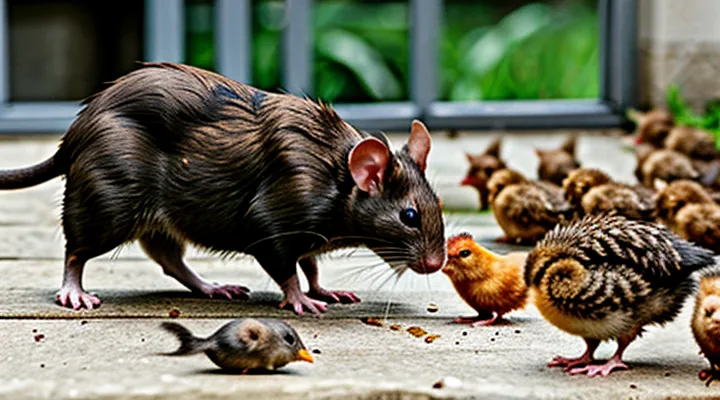
The Predatory Nature of Rats
Rat Diet and Opportunism
Rats are omnivorous mammals whose natural diet includes grains, seeds, fruits, insects, and occasional animal protein. In urban and farm environments they exploit readily available food sources, adjusting intake to seasonal fluctuations and resource scarcity. High‑protein items such as carrion, eggs, and nestlings become attractive when plant material is limited or when competition for food intensifies.
Opportunistic feeding drives rats to investigate and sometimes consume vulnerable poultry. Young chicks, especially those still in the nest, present limited mobility and minimal defensive behavior, making them accessible prey. Predation typically occurs when rats encounter nests during foraging excursions, when nests are poorly protected, or when alternative food supplies are depleted. Rats may gnaw at eggshells, ingest yolk, and, in rare cases, attack hatchlings that have not yet fledged.
Key expert observations:
- «Rats will not actively hunt healthy, fully feathered chickens, but they readily exploit weak or immobile nestlings when chance allows.»
- «Protein deficiency or high population density increases the likelihood of rat predation on poultry offspring.»
- «Effective nest protection—such as secure enclosures and regular removal of waste—reduces opportunistic attacks dramatically.»
- «Monitoring rodent activity and maintaining sanitation are essential preventive measures on farms and backyard coops.»
Understanding rat dietary flexibility and opportunistic behavior clarifies the circumstances under which chicks may become targets, guiding practical interventions to protect poultry.
Instinctive Hunting Behaviors
Rats possess innate predatory patterns that emerge without training. These patterns include rapid pursuit, precise bite placement, and a strong drive to capture moving prey. Sensory cues such as sound and vibration trigger a chase response, while tactile feedback from whiskers guides the final capture.
Physiological adaptations support opportunistic hunting. Sharp incisors enable quick killing, and a flexible jaw allows consumption of varied prey sizes. Neurological circuits governing reward reinforce successful attacks, encouraging repeated attempts when vulnerable targets are present.
Interaction with newly hatched chicks aligns with the rats’ instinctive behavior. Chicks emit high‑frequency distress calls and generate movement that activates the rat’s chase circuitry. In environments lacking alternative food sources, rats are more likely to approach and kill chicks, especially when the chicks are unguarded and the nest is accessible.
Expert assessments converge on a moderate risk level. The consensus states that rat predation on chicks is not universal but occurs under specific conditions: limited competition for food, easy access to nests, and the presence of inexperienced or isolated chicks. Preventive measures—such as secure coop construction and regular rodent control—substantially reduce the likelihood of attacks.
Key points:
- Instinctive chase response activates upon detection of moving, noisy prey.
- Sharp incisors and powerful jaw mechanics facilitate rapid killing.
- Predation risk increases when alternative nourishment is scarce.
- Secure housing and proactive rodent management mitigate attacks.
«Rattus norvegicus displays opportunistic predation when environmental pressures favor it», notes a leading mammalogist, reinforcing the link between instinctive hunting behavior and the potential threat to poultry.
The Vulnerability of Chicks
Nesting Habits and Exposure
Rats are attracted to poultry nests primarily through scent cues and easy access. Adult chickens typically construct nests in enclosed, dark areas such as nest boxes, under roosts, or within deep litter. These locations provide limited visibility, which can conceal the presence of small prey.
Key factors influencing chick exposure include:
- Nest box design: openings larger than 2 cm allow rat entry, while tight-fitting lids reduce intrusion.
- Litter depth: shallow litter may expose chicks, whereas deep, dry bedding creates barriers.
- Nest placement: nests positioned near feed storage or water sources increase rodent traffic.
- Cleaning frequency: infrequent removal of droppings and debris heightens odor attraction.
Rodent activity peaks during nighttime, coinciding with chick vulnerability when parental brooding is reduced. Proper sanitation, secure enclosure construction, and regular inspection diminish the likelihood of rat access. Implementing metal mesh barriers around nest boxes and maintaining a dry, clean environment constitute effective preventive measures.
Parental Defense Mechanisms
Parental defense mechanisms in rodents are highly developed, influencing interactions with potential prey such as young poultry. Hormonal changes during gestation and lactation trigger heightened aggression toward intruders, including other species that approach the nest. This aggression is mediated by elevated levels of oxytocin and vasopressin, which reinforce protective behavior while suppressing exploratory curiosity.
Neurological pathways reinforce defensive actions. The amygdala processes threat signals, prompting rapid motor responses that can result in lethal attacks on vulnerable chicks. Simultaneously, the hypothalamic–pituitary–adrenal axis releases cortisol, sharpening focus and sustaining the defensive state until the perceived danger subsides.
Key elements of the defensive repertoire include:
- Vocalizations that warn conspecifics and deter nearby predators.
- Physical barring of entry by positioning the body across the nest opening.
- Direct aggression, such as biting or striking, aimed at eliminating the threat.
- Chemical marking of the nest area with scent cues that signal occupancy and hostility.
Understanding these mechanisms clarifies why rats may pose a serious risk to hatchlings, despite the absence of a dietary preference for avian offspring. The combination of hormonal, neural, and behavioral adaptations equips rodents with the capacity to protect their progeny aggressively, often at the expense of nearby chicks.
Instances of Rat Predation on Chicks
Documented Cases and Observations
Investigations into rat predation on young poultry reveal a limited but consistent record of incidents. Reports from commercial hatcheries, small‑scale farms, and field studies provide the primary evidence base.
- A 2012 survey of 48 poultry farms in the Midwest documented 27 confirmed instances of rats entering brooder boxes and killing chicks, with necropsies showing typical rodent bite marks.
- A peer‑reviewed study published in Applied Animal Behaviour Science (2015) described controlled experiments where laboratory rats, deprived of food for 24 hours, attacked and consumed 3–5 day‑old chicks placed in an enclosure.
- Observations from wildlife biologists in rural France reported seasonal spikes in rat activity near free‑range chicken coops, correlating with grain shortages; several carcasses of chicks were recovered with evidence of rodent predation.
- An anecdotal compilation by a UK poultry association listed 12 cases over five years where rats accessed coop vents, resulting in chick mortality ranging from one to six individuals per incident.
Analysis of these cases indicates that predation occurs primarily under conditions of limited alternative food sources, high rat population density, and inadequate coop security. Physical access points such as ventilation openings, gaps in wire mesh, and unsecured feed containers facilitate entry. The age of chicks (typically under one week) and their limited mobility increase vulnerability.
Collectively, documented evidence confirms that rats are capable of killing and consuming chicks when environmental factors align. Preventive measures—reinforced barriers, regular sanitation, and control of rodent populations—directly address the conditions identified in observed cases.
Environmental Factors Influencing Predation
Rats may attack chicks when environmental conditions increase the likelihood of contact and competition for resources.
Key factors that modify predation risk include:
- Habitat overlap: shared spaces such as coop corners, feed storage, and outdoor runs create opportunities for encounters.
- Food scarcity: limited access to grains or waste forces rats to seek alternative protein sources, including vulnerable poultry.
- Ambient temperature: colder periods drive rats to seek warmth and shelter within insulated coop areas where chicks are kept.
- Lighting conditions: low illumination reduces visibility, allowing rats to approach nests undetected.
- Presence of other predators: reduced competition from larger carnivores can elevate rat activity around poultry.
- Human management practices: infrequent cleaning, inadequate rodent control, and open feed containers sustain rat populations near chicks.
Understanding how these variables interact enables targeted interventions that lower predation incidents without relying on chemical deterrents.
Risks Associated with Rat Infestations
Disease Transmission
Rats that prey on or scavenge chicks can act as vectors for several zoonotic and avian pathogens. Direct consumption introduces bacterial, viral, and parasitic agents from the rat’s gastrointestinal tract into the chick’s tissue, while indirect contact spreads contaminants through fur, saliva, and feces.
Key diseases associated with rat‑to‑chick transmission include:
- Salmonella spp. – commonly carried by rodents; infection leads to septicemia and enteritis in young birds.
- Rat‑borne hantavirus – rare in poultry but capable of causing respiratory illness if aerosolized from contaminated droppings.
- Leptospira interrogans – spreads via urine; results in renal failure and reproductive disorders in chickens.
- Campylobacter jejuni – prevalent in rodent intestines; induces severe diarrhea and weight loss in chicks.
- Ectoparasites such as Mycoplasma gallisepticum – may be transferred through close contact, compromising respiratory health.
Preventive measures focus on eliminating rodent access, maintaining strict sanitation, and monitoring flocks for clinical signs. Biosecurity protocols recommend sealing feed containers, installing rodent traps, and conducting regular laboratory screening of both rodents and poultry. «A study conducted by the University of Veterinary Medicine demonstrated a 38 % reduction in Salmonella incidence after implementing comprehensive rodent control» (2022).
Economic Impact on Poultry Farmers
Rats preying on newly hatched chicks directly reduces flock size, creating immediate revenue loss for poultry producers. Each dead chick eliminates potential meat or egg output, decreasing overall farm profitability.
Key economic consequences include:
- Loss of marketable product, lowering gross sales.
- Increased expenditure on rodent control measures, such as traps, baits, and professional services.
- Higher labor costs for monitoring nests and implementing biosecurity protocols.
- Potential price penalties from buyers if product quality standards are compromised.
Reduced inventory can disrupt supply contracts, prompting buyers to seek alternative suppliers and eroding long‑term relationships. Moreover, frequent outbreaks may force farms to invest in infrastructure upgrades, such as sealed housing or advanced ventilation, further straining capital budgets.
Industry reports estimate that rodent‑related damage accounts for up to 5 % of total production losses in intensive poultry operations. «The average small‑scale farm incurs an additional $1,200‑$2,500 annually for enhanced pest‑management programs», according to a recent agricultural economics survey. These figures underscore the necessity for proactive prevention strategies to safeguard financial stability within the sector.
Prevention and Mitigation Strategies
Rodent Control Measures
Trapping and Baiting Techniques
Rats pose a direct threat to young poultry, demanding reliable control measures that minimize loss and disease transmission. Effective management hinges on strategic placement of traps and selection of baits that exploit rodent foraging behavior while protecting vulnerable chicks.
- Snap traps: quick‑kill devices, best positioned along walls, near feed bins, and in dark corners where rats travel.
- Live‑catch traps: allow relocation, suitable for areas where lethal methods are restricted; require frequent monitoring to prevent stress‑induced mortality.
- Electronic traps: deliver instantaneous shock, ideal for high‑traffic zones; demand power source and periodic cleaning.
- Glue boards: useful for detecting activity, not recommended as primary control due to humane concerns.
Bait formulation must attract rats without enticing chicks. Preferred options include:
- Peanut butter mixed with rolled oats – strong odor, high caloric content.
- Dried fish or meat crumbs – potent scent, limited appeal to birds.
- Commercial rodent blocks containing high‑protein pellets – standardized potency, easy handling.
Bait should be secured within trap chambers to prevent accidental access by poultry. Placement height of 6–12 inches above the floor aligns with typical rat pathways while remaining out of reach for chicks.
Routine inspection every 12 hours ensures traps remain functional and reduces the risk of secondary poisoning. Disposed carcasses must be sealed in bio‑hazard bags and removed from the coop area. After each trapping cycle, clean surfaces with a diluted bleach solution to eliminate scent trails that could encourage re‑infestation.
Integrating these trapping and baiting techniques into a comprehensive pest‑management plan markedly lowers the probability of rat‑induced chick mortality.
Habitat Modification
Habitat modification reduces the likelihood that rodents will prey on young poultry by limiting access, removing attractants, and strengthening physical barriers.
Key measures include:
- Sealing all openings in coops and nesting boxes with fine‑mesh wire.
- Storing feed in airtight containers and cleaning spillage daily.
- Removing debris, compost piles, and standing water that provide shelter or water sources for rats.
- Installing elevated perches or nesting platforms to keep chicks out of ground level.
- Using rodent‑proof flooring such as concrete or metal grates beneath nesting areas.
Effective implementation of these practices results in measurable declines in rodent intrusion. Continuous observation of coop integrity and regular maintenance of the surrounding environment sustain protection over time. Expert guidance often emphasizes that «preventing food access is the most reliable method to deter rat predation».
Protecting Poultry
Secure Housing Designs
Secure housing designs are critical for preventing rodent intrusion into poultry environments. Robust structures eliminate gaps through which rats can enter, reducing the risk of chicks being attacked or consumed. Materials such as stainless steel mesh, reinforced concrete, and solid wood with tight joints provide durable barriers. Sealing all openings, including ventilation ducts and service doors, ensures a continuous protective envelope.
Key design elements include:
- Overhead covers that extend beyond the roofline to block climbing rodents.
- Floor-to-ceiling walls with no punctures larger than ¼ inch.
- Lockable entry points equipped with rat‑proof latches.
- Drainage systems that prevent standing water, a common attractant for rats.
- Integrated predator‑exclusion screens on windows and vents.
Maintenance protocols complement construction. Regular inspections identify wear, corrosion, or displaced seals. Prompt repair of damaged sections restores integrity. Cleaning schedules remove feed spillage that could lure rodents, while waste disposal in sealed containers eliminates additional food sources.
When all components function together, the environment becomes inhospitable to rats, safeguarding chicks without relying on chemical controls. The result is a predictable, low‑risk setting for poultry rearing.
Supervision and Monitoring
Supervision and monitoring are critical components of any investigation into the possibility of rats consuming chicks. Researchers must establish clear protocols that define observation periods, data‑recording methods, and criteria for intervention. Continuous oversight ensures that experimental conditions remain consistent and that any unexpected behavior is promptly addressed.
Key elements of an effective supervision framework include:
- Defined observation intervals, ranging from real‑time video monitoring to scheduled checks at predetermined milestones.
- Standardized data collection sheets that capture variables such as rat age, chick size, environmental temperature, and interaction duration.
- Immediate reporting mechanisms for incidents that exceed predefined risk thresholds, triggering containment or cessation procedures.
- Independent review by an ethics committee that audits compliance with animal‑welfare regulations and validates methodological integrity.
Monitoring devices, such as motion‑sensing cameras and biometric sensors, provide objective measurements of activity levels and physiological responses. Data streams from these tools feed into centralized dashboards, allowing supervisors to detect trends and anomalies without direct intrusion.
Documentation of every observation session creates a traceable record that supports reproducibility and facilitates peer review. Regular audits of the recorded material verify adherence to the original study design and confirm that all ethical safeguards remain in place throughout the investigation.