
Taxonomy and Classification
Scientific Name and Family
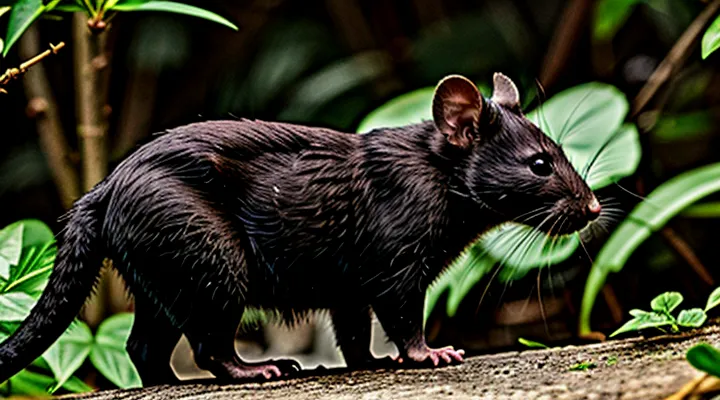
The wild black rat is classified under the species Rattus rattus and belongs to the family Muridae. This taxonomic placement reflects its evolutionary relationships within the order Rodentia.
- Kingdom: Animalia
- Phylum: Chordata
- Class: Mammalia
- Order: Rodentia
- Family: Muridae
- Genus: Rattus
- Species: Rattus rattus
Rattus rattus shares the Muridae family with other rats, mice, and close relatives, all characterized by a single pair of continuously growing incisors in each jaw. The family Muridae represents the largest group of mammals, encompassing over 700 species worldwide.
Common Names and Synonyms
The species commonly referred to as the wild black rat is known by several vernacular names across different regions and scientific literature.
- Black rat
- Roof rat
- Ship rat
- Rattus rattus (scientific designation)
- House rat (when found in domestic settings)
- Nile rat (historical reference in Africa)
- Bombay rat (used in parts of South Asia)
These synonyms appear in taxonomic catalogs, pest‑control manuals, and ecological studies, reflecting the animal’s broad distribution and varied interactions with human environments.
Physical Description
Size and Weight
The wild black rat (Rattus rattus) exhibits considerable variation in body dimensions across its geographic range. Adult head‑body length typically falls between 16 and 23 cm, with tail length extending from 18 to 26 cm, often surpassing the body length. Hindfoot measurement ranges from 2.5 to 3.5 cm, and ear length averages 1.5 to 2.0 cm.
Weight parameters reflect the species’ adaptability to diverse environments:
- Minimum recorded mass: 120 g
- Common adult mass: 150–250 g
- Maximum recorded mass: 350 g
Individuals inhabiting resource‑rich areas tend toward the upper end of the weight spectrum, while those in arid or competitive habitats often remain lighter.
Fur Color and Texture
The wild black rat displays a uniform, glossy coat that ranges from deep ebony to a slightly muted charcoal, depending on age and regional exposure. Newborns often possess a softer, lighter fur that darkens within weeks as melanin production increases.
Key aspects of the fur’s texture include:
- Density: The pelage is exceptionally dense, providing insulation against temperature fluctuations and moisture.
- Silkiness: Individual hairs exhibit a smooth, silk‑like surface, reducing friction during rapid movement through vegetation and burrows.
- Durability: The outer layer contains a higher concentration of keratin, granting resistance to wear from abrasive substrates such as soil and foliage.
- Shedding pattern: Seasonal molting occurs twice yearly, with a brief increase in shedding during the transition to warmer months, facilitating thermoregulation.
These characteristics contribute directly to the rat’s ability to navigate diverse habitats, maintain body heat, and evade predators through silent, swift locomotion.
Tail Characteristics
The tail of the wild black rat exhibits several distinctive features that aid in identification and behavior. It measures approximately 70–85 % of the head‑body length, extending from 12 cm in smaller adults to over 18 cm in larger specimens. The dorsal surface displays a uniform dark brown to black pigmentation, while the ventral side is slightly lighter, reflecting the overall coat coloration.
Scale arrangement follows a regular pattern of overlapping keratinous plates, each bearing a fine, darkened ridge that enhances flexibility. These scales are densely packed near the base, providing structural support, and become more loosely arranged toward the tip, allowing increased maneuverability.
Functional attributes include:
- Thermoregulation: The extensive vascular network beneath the tail skin dissipates heat during active periods and conserves warmth when the animal is at rest.
- Balance: Muscular attachment points enable rapid adjustments, stabilizing the rat during climbing, leaping, and rapid directional changes.
- Sensory input: Numerous mechanoreceptors along the tail margin detect air currents and substrate vibrations, contributing to predator avoidance and foraging efficiency.
- Communication: Tail posture and movement convey social signals such as aggression, submission, and alertness among conspecifics.
The tail’s tip terminates in a tapered point lacking fur, which reduces drag and facilitates precise positioning when the rat navigates narrow gaps or grasps slender objects. Overall, the tail’s morphology integrates structural, physiological, and behavioral functions essential to the species’ ecological success.
Ear and Eye Features
The wild black rat possesses distinctive ear and eye structures that support its nocturnal foraging and predator avoidance.
-
Ears are proportionally large, positioned laterally on the skull to maximize sound capture.
-
Pinnae are thin, pliable, and covered with sparse fur, allowing rapid movement for directional hearing.
-
Auditory canals are straight and open, facilitating the transmission of high‑frequency sounds typical of insect prey.
-
Muscles controlling ear rotation enable independent adjustment, enhancing spatial resolution.
-
Eyes are relatively small but feature a well‑developed retina rich in rod cells, optimizing low‑light vision.
-
Pupils are vertical, capable of constricting sharply during daylight to protect retinal tissue.
-
Corneal surface is smooth and clear, reducing light scattering and improving image sharpness.
-
Visual field extends nearly 300 degrees horizontally, providing extensive peripheral awareness.
These anatomical adaptations allow the rat to detect subtle acoustic cues and navigate dim environments efficiently, contributing to its success in diverse habitats.
Habitat and Distribution
Native Range
The wild black rat (Rattus rattus) originates from the tropical and subtropical zones of the Indian subcontinent, extending through the Middle East and into parts of Southeast Asia. Its core distribution includes:
- Southern India and Sri Lanka
- Afghanistan, Pakistan, and Iran
- Myanmar, Thailand, Vietnam, and the Malay Peninsula
- Coastal regions of China, including Guangdong and Fujian
From these areas the species has expanded into the Mediterranean basin, northern Africa, and various oceanic islands, primarily through maritime trade routes. Populations now thrive in urban centers, agricultural fields, and coastal mangroves, where warm temperatures and abundant food sources support year‑round breeding. The rat’s tolerance for humidity and its ability to exploit human‑modified habitats have facilitated its persistence across diverse ecological zones within its native range.
Current Global Distribution
The wild black rat (Rattus rattus) occupies a broad, predominantly tropical and subtropical range, extending from its origin in Southeast Asia to most inhabited continents. Human activity, particularly maritime trade, has facilitated its spread, allowing the species to thrive in environments where food storage and shelter are readily available.
- Africa: widespread in coastal and inland urban centers from Morocco to South Africa, with notable populations in Kenya, Tanzania, and Nigeria.
- Asia: native strongholds in India, Thailand, Vietnam, Indonesia, and the Philippines; established colonies in Japan, South Korea, and the Middle East.
- Americas: present in Central America (Guatemala, Panama), the Caribbean islands, and South American nations such as Brazil, Colombia, and Argentina; limited but growing presence in the southern United States, especially Florida and Texas.
- Oceania: introduced to Australia’s northern territories and many Pacific islands, including Fiji, Samoa, and Papua New Guinea.
- Europe: confined mainly to port cities and surrounding suburbs in the United Kingdom, Spain, Italy, and Greece; occasional sightings in the Balkans and the Black Sea littoral.
The species favors densely populated human settlements, seaports, and agricultural zones, where its adaptability to varied climates and diets ensures persistent colonization. Climate change and expanding global trade networks continue to broaden its geographic footprint, reinforcing the rat’s status as a globally distributed commensal rodent.
Preferred Habitats
The wild black rat (Rattus rattus) thrives in environments that offer shelter, abundant food sources, and limited disturbance. Urban structures such as abandoned buildings, sewers, and roof voids provide optimal nesting sites. In rural settings, the species exploits granaries, barns, and livestock pens where stored grain and feed are readily available. Coastal regions present additional opportunities, with rat populations establishing colonies in mangrove swamps, dunes, and crevices among driftwood.
Key habitat characteristics include:
- Warm, humid microclimates that support rapid breeding cycles
- Access to concealed entry points for movement between interior and exterior areas
- Proximity to human activity that generates waste and food residues
In agricultural landscapes, the rat preferentially occupies fields with high rodenticide resistance and dense ground cover, which offers protection from predators. Forested zones with thick understory and fallen logs serve as secondary habitats, especially when urban or farm environments become saturated. The species demonstrates flexibility, shifting to any locale that satisfies the core requirements of shelter, food, and reduced competition.
Adaptability to Human Environments
The wild black rat demonstrates remarkable adaptability to human‑dominated settings. Its physiological resilience, reproductive capacity, and behavioral flexibility enable successful colonization of urban, suburban, and agricultural habitats.
Key adaptive traits include:
- Dietary opportunism – consumes grains, waste, insects, and pet food, allowing exploitation of diverse food sources.
- Reproductive efficiency – produces up to ten litters per year, each with 5‑12 offspring; rapid turnover sustains populations despite control measures.
- Shelter versatility – occupies building foundations, sewers, attics, and stored‑product facilities; nests are constructed from available materials, reducing dependence on natural cover.
- Fear attenuation – habituation to human presence lowers flight response, facilitating movement through densely populated areas.
- Disease tolerance – carries pathogens without severe morbidity, maintaining health while serving as a vector in close proximity to humans.
These characteristics collectively support the species’ persistence in environments altered by human activity, ensuring its presence across continents where human infrastructure provides consistent resources and shelter.
Behavioral Characteristics
Nocturnal Activity
The wild black rat exhibits a strictly nocturnal schedule, emerging from burrows shortly after sunset and remaining active throughout the night. Activity peaks during the first three to four hours of darkness, coinciding with the highest availability of insects and fallen fruit. Light avoidance reduces exposure to diurnal predators such as hawks and feral cats, enhancing survival rates.
During nocturnal foraging, individuals display the following behaviors:
- Rapid, silent movement along ground cover to locate seeds, carrion, and arthropods.
- Frequent use of whisker‑mediated tactile exploration to navigate low‑light environments.
- Opportunistic scavenging of human waste and refuse, facilitated by heightened olfactory sensitivity at night.
- Brief social encounters restricted to mating or territorial disputes, typically conducted in concealed microhabitats.
Circadian regulation is governed by melatonin release, which suppresses activity during daylight hours and synchronizes metabolic processes with night‑time energy demands. This temporal partitioning allows the species to exploit resources unavailable to competitors active during the day.
Social Structure and Colonies
The wild black rat forms colonies that function as cohesive units rather than random aggregations. Individuals within a colony maintain a fluid hierarchy, with dominant males and females exerting priority access to resources and mates. Subordinate members contribute to foraging and nest maintenance, often cooperating in food storage and predator vigilance.
Colony composition typically includes:
- One to three breeding pairs that dominate reproduction.
- Several subadult and juvenile rats that assist with nest construction.
- Non‑breeding adults that serve as sentinels and foragers.
Territorial boundaries are defined by scent markings and vocalizations. Overlapping ranges trigger ritualized aggression, limiting direct conflict while preserving colony integrity. Communication relies on ultrasonic calls, whisker contacts, and pheromonal cues, enabling rapid coordination during foraging excursions and predator evasion.
Nesting sites are constructed in concealed locations such as burrows, debris piles, or abandoned structures. Nests are communal, with multiple individuals sharing warmth and protection. Seasonal fluctuations influence colony size: colder periods prompt aggregation, whereas abundant food supplies allow expansion and occasional dispersal of surplus individuals to establish new colonies.
Overall, the social organization of the wild black rat maximizes reproductive efficiency, resource exploitation, and survival through a structured yet adaptable colony framework.
Diet and Foraging Habits
The wild black rat exhibits a highly adaptable diet, allowing it to thrive in diverse environments. Primary food sources include:
- Seeds and grains harvested from cultivated fields or natural stands.
- Insects such as beetles, larvae, and arthropods encountered during ground foraging.
- Fruit and berries that fall to the forest floor or are dropped by birds.
- Human-derived waste, including discarded processed foods and kitchen scraps.
- Small vertebrates, occasionally captured when opportunities arise.
Foraging behavior is opportunistic and nocturnal. Individuals employ keen olfactory cues to locate concealed resources, often navigating through dense vegetation and debris. They demonstrate cache-building tendencies, storing excess seeds in shallow burrows for later consumption. Seasonal shifts prompt dietary adjustments: during spring, emphasis shifts toward high‑protein insects, while autumn sees increased reliance on stored grains and fallen fruit. Competition with sympatric rodent species is mitigated by flexible foraging ranges and the ability to exploit both natural and anthropogenic food sources.
Reproductive Behavior
The wild black rat (Rattus rattus) exhibits a rapid and flexible reproductive strategy that supports its success in diverse habitats. Breeding occurs year‑round in temperate zones, with peak activity during warm months when food availability increases. Females reach sexual maturity at 6–8 weeks of age and can produce multiple litters annually.
Key reproductive parameters:
- Estrous cycle: lasts 4–5 days; females are receptive to males during the proestrus and estrus phases.
- Mating system: polygynandrous; both sexes mate with multiple partners, enhancing genetic diversity.
- Gestation: 21–23 days, after which a litter of 5–12 pups is born.
- Litter size: varies with maternal condition and environmental resources; average litter contains eight pups.
- Weaning: pups become independent at 21 days, though mothers may continue to provide limited care for a few days.
- Reproductive frequency: a single female can produce up to 10 litters per year under optimal conditions.
Reproductive output is closely linked to population dynamics. High fecundity, short gestation, and rapid maturation enable swift population growth when resources are abundant, while harsh conditions suppress breeding frequency and reduce litter size. This adaptability ensures the species maintains presence across a broad ecological spectrum.
Communication and Sensory Perception
The wild black rat (Rattus rattus) relies on a multimodal communication system that integrates acoustic, olfactory, and tactile signals to coordinate social interactions and respond to environmental cues.
Acoustic signals consist of ultrasonic vocalizations emitted during mating, territorial disputes, and predator alerts. These calls range from 20 kHz to 80 kHz, allowing rapid transmission through dense vegetation while remaining inaudible to many predators. Frequency modulation conveys urgency; higher pitches indicate immediate danger, whereas lower tones accompany affiliative behaviors.
Olfactory communication dominates territory marking and kin recognition. Specialized scent glands on the flank and anal region secrete volatile compounds that persist on surfaces for several days. Rats deposit urine and feces along established pathways, creating a chemical map that guides conspecifics toward food sources and nesting sites. Individual-specific pheromonal signatures enable discrimination between familiar and foreign individuals, reducing unnecessary aggression.
Tactile cues arise from whisker (vibrissae) activity and direct body contact. Whiskers detect airflow and surface textures, providing spatial orientation in low-light conditions. Grooming and nose-to-nose contacts reinforce social bonds and convey reproductive status.
Key sensory modalities supporting these communication channels include:
- Auditory: Highly sensitive cochlea detects frequencies up to 90 kHz; brainstem nuclei process temporal patterns for threat assessment.
- Olfactory: Enlarged olfactory bulb and accessory olfactory system decode complex pheromone blends; vomeronasal organ contributes to mate selection.
- Somatosensory: Dense innervation of vibrissae and forepaws facilitates texture discrimination and obstacle avoidance.
Integration of these signals occurs in the hippocampal‑amygdalar network, where spatial memory aligns with emotional valence, enabling the rat to adapt its behavior swiftly in response to changing social and environmental conditions.
Ecological Impact and Significance
Role in Ecosystems
The wild black rat (Rattus rattus) functions as both predator and prey within diverse habitats, linking trophic levels and supporting energy flow. Its foraging activity reduces seed banks of opportunistic plant species, thereby influencing vegetation composition and limiting the spread of invasive flora. By consuming insects, larvae, and carrion, the species accelerates decomposition and contributes to nutrient recycling.
- Predation on arthropods curtails pest populations that could otherwise damage crops and forest seedlings.
- Scavenging behavior removes dead organic matter, facilitating microbial breakdown and soil enrichment.
- Consumption of fruits and seeds enables accidental dispersal; seeds that pass through the digestive tract often germinate more rapidly, assisting plant regeneration in disturbed areas.
- Serving as prey for owls, snakes, and small carnivores, the rat sustains predator populations and maintains predator‑prey dynamics.
Population fluctuations of the wild black rat can trigger measurable shifts in community structure. Elevated numbers may increase pressure on seed banks, while declines can reduce food availability for higher trophic levels, potentially altering predator abundance and behavior. Consequently, the species acts as a regulatory agent that modulates biodiversity and ecosystem resilience.
Interactions with Humans
The wild black rat (Rattus rattus) frequently encounters human environments, especially in urban and agricultural settings. Its presence is documented in residential buildings, warehouses, and grain storage facilities, where it exploits food sources and shelter.
Direct contact with humans occurs through:
- Physical damage to property, including gnawing of electrical wiring, insulation, and structural components.
- Contamination of foodstuffs, leading to spoilage and economic loss.
- Biting incidents that may transmit zoonotic pathogens.
The species serves as a vector for several diseases of public‑health concern, such as leptospirosis, hantavirus pulmonary syndrome, and certain strains of salmonella. Transmission pathways include contaminated urine, feces, and ectoparasites that feed on both rats and humans.
Economic impact derives from reduced crop yields, loss of stored commodities, and increased costs for pest‑control programs. Communities facing high infestation levels report measurable declines in commercial productivity and heightened expenditures on infrastructure repair.
Effective management integrates multiple strategies:
- Environmental sanitation to eliminate food and water sources.
- Structural exclusion, sealing entry points and reinforcing building integrity.
- Population reduction using bait stations and traps, applied according to regulatory guidelines.
- Ongoing monitoring through rodent surveillance programs that track infestation density and disease prevalence.
Coordinated actions by public health agencies, property owners, and residents mitigate the adverse effects of wild black rat interactions with humans and protect both health and economic stability.
Disease Transmission
The wild black rat (Rattus rattus) functions as a reservoir for a broad spectrum of zoonotic agents. Its capacity to harbor pathogens stems from close contact with human settlements, abundant food sources, and nocturnal foraging habits that increase exposure to contaminated environments.
Key pathogens transmitted by this species include:
- Bacteria: Salmonella spp., Leptospira spp., and Yersinia pestis.
- Viruses: Hantavirus, Lassa fever virus, and various arboviruses.
- Parasites: Toxoplasma gondii cysts, Echinococcus tapeworm eggs, and intestinal nematodes.
Transmission pathways are primarily:
- Direct contact: Bites, scratches, or handling of live or dead rodents.
- Indirect contact: Contamination of food, water, or surfaces with rodent droppings, urine, or saliva.
- Vector-mediated: Fleas and ticks feeding on infected rats and subsequently biting humans or domestic animals.
Behavioral traits that amplify disease spread include:
- Aggressive territoriality, leading to frequent fights and bite wounds.
- High reproductive rate, sustaining large populations that increase pathogen load.
- Preference for sewers, grain stores, and refuse piles, creating interfaces with human activity.
Environmental factors influencing transmission risk are:
- Urban overcrowding, which reduces sanitation and facilitates rodent ingress.
- Climatic conditions that favor rodent breeding cycles, such as warm, humid seasons.
- Seasonal food scarcity, prompting rats to seek alternative shelters within human dwellings.
Effective control measures require integrated approaches:
- Rodent population management: Trapping, baiting, and habitat modification to reduce shelter availability.
- Sanitation improvements: Secure waste disposal, sealing entry points, and maintaining clean food storage.
- Public health interventions: Surveillance of rodent-borne diseases, vaccination of at‑risk populations, and education on safe handling practices.
Understanding the ecological and behavioral drivers of pathogen transmission by the black rat enables targeted strategies to mitigate public health threats.
Pest Status and Control Measures
The wild black rat (Rattus rattus) is recognized as a high‑impact pest in agricultural, urban, and stored‑product environments. Its rapid breeding cycle, ability to exploit diverse food sources, and propensity for gnawing damage result in significant crop loss, structural deterioration, and contamination of food stores. The species also serves as a reservoir for pathogens such as Leptospira, Salmonella, and hantaviruses, increasing public‑health risks in densely populated areas.
Effective management requires an integrated approach that combines environmental, mechanical, and chemical tactics. Key actions include:
- Sanitation: Remove refuse, secure waste containers, and eliminate food spillage to reduce attractants.
- Exclusion: Seal entry points with steel wool, metal flashing, or concrete; install door sweeps and vent covers.
- Mechanical control: Deploy snap traps or electronic devices in identified activity zones; position traps along walls and near nesting sites.
- Chemical control: Apply anticoagulant rodenticides in tamper‑resistant bait stations, following label instructions and local regulations.
- Monitoring: Conduct regular inspections, track trap success rates, and map infestation hotspots to adjust interventions promptly.
Implementation of these measures, coordinated with ongoing surveillance, lowers population density, curtails damage, and mitigates disease transmission associated with the species.
Conservation Status and Threats
Current Status
The wild black rat (Rattus rattus melanurus) occupies a fragmented range across coastal forests and mangrove ecosystems of Southeast Asia and the Pacific islands. Field surveys conducted between 2018 and 2023 confirm presence in at least 12 islands, with population densities varying from 3 individuals ha⁻¹ in pristine habitats to fewer than 1 individual ha⁻¹ on heavily altered sites.
Key aspects of the species’ present condition include:
- Geographic distribution: Limited to island chains and low‑lying coastal zones; absent from mainland interiors.
- Population trend: Overall decline of 18 % over the past decade, driven by habitat loss and invasive competitors.
- Conservation classification: Listed as “Near Threatened” by the IUCN Red List, with a recommendation for monitoring due to rapid environmental changes.
- Primary threats: Coastal development, deforestation for agriculture, and competition from introduced Rattus norvegicus populations.
- Research focus: Ongoing genetic studies aim to clarify subpopulation connectivity; recent telemetry trials have mapped nocturnal foraging corridors.
Management actions currently implemented involve habitat protection under regional marine reserves, eradication programs targeting invasive rodents on selected islands, and community‑based monitoring schemes that record sightings and trap returns. Data from these initiatives feed into annual status reports submitted to the IUCN Species Survival Commission.
Threats to Wild Populations
The wild black rat (Rattus rattus) faces a range of pressures that reduce population stability and limit geographic distribution. Understanding these pressures is essential for effective conservation planning and for predicting ecological impacts.
- Habitat fragmentation caused by urban expansion and agricultural conversion eliminates nesting sites and reduces food availability.
- Pesticide application in crop fields leads to acute toxicity and sub‑lethal effects that impair reproduction.
- Increased predation pressure from introduced carnivores, such as feral cats and mustelids, raises mortality rates.
- Competition with commensal rodent species, particularly the Norway rat (Rattus norvegicus), diminishes access to resources.
- Pathogen transmission, including hantavirus and leptospirosis, contributes to disease‑related declines.
- Climate variability, especially extreme temperature fluctuations and altered precipitation patterns, disrupts breeding cycles and habitat suitability.
- Direct human persecution through trapping and extermination programs reduces local densities.
Each factor interacts with the others, amplifying overall risk. Mitigation strategies must address habitat preservation, pesticide regulation, predator management, disease monitoring, and climate adaptation to sustain viable wild populations.
Conservation Efforts
The wild black rat, a nocturnal rodent occupying diverse ecosystems across temperate and subtropical zones, faces population declines linked to habitat fragmentation, invasive predators, and pesticide exposure. Conservation programs target these pressures through habitat restoration, legal safeguards, and scientific monitoring.
Key interventions include:
- Protection of riparian corridors and shrubland patches that provide shelter and foraging resources.
- Implementation of pesticide regulations that limit toxic runoff in agricultural areas adjacent to rat habitats.
- Installation of predator-exclusion devices, such as fenced reserves, to reduce mortality from introduced carnivores.
- Promotion of community-led stewardship initiatives that encourage sustainable land‑use practices and local monitoring.
Long‑term data collection employs live‑trapping grids, radio telemetry, and genetic sampling to assess population dynamics, dispersal patterns, and disease prevalence. Results inform adaptive management, allowing rapid adjustment of control measures when thresholds are exceeded.
International collaboration, coordinated through biodiversity treaties and regional research consortia, facilitates the exchange of best practices, funding, and expertise. Continued investment in habitat connectivity and evidence‑based policy is essential to stabilize and recover wild black rat populations across their native range.