
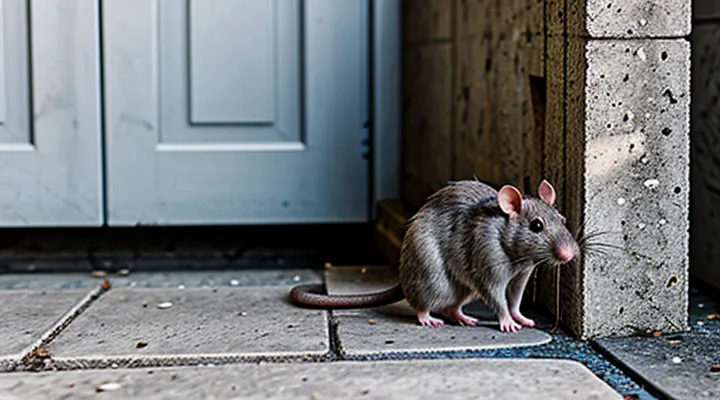
The Gnawing Instinct: A Rat's Biological Drive
Perpetual Growth of Incisors
Constant Need for Abrasive Wear
Rats continuously gnaw concrete because their incisors require regular abrasion to prevent overgrowth. The enamel on the front teeth does not self‑sharpen; instead, the teeth lengthen throughout the animal’s life. Without a constant source of hard material, the incisors become excessively long, impairing chewing efficiency and leading to health complications.
Key mechanisms driving this behavior include:
- Mechanical wear: Concrete provides a durable surface that removes enamel evenly with each bite.
- Dental health maintenance: Regular abrasion reduces the risk of malocclusion, a condition that can cause pain and infection.
- Nutrient access: By creating small fissures in concrete, rats expose embedded mineral deposits, supplementing calcium intake.
The process operates on a feedback loop. As incisors lengthen, the rat’s biting force increases, prompting more aggressive gnawing on the hardest available substrate. Concrete, being ubiquitous in urban environments, satisfies this need more reliably than softer materials such as wood or plastic.
Laboratory observations confirm that rats deprived of abrasive surfaces develop overgrown incisors within weeks, whereas those given access to concrete maintain normal tooth length. Consequently, the persistent demand for abrasive wear directly explains the observed tendency of rats to gnaw concrete structures.
Adaptations for Rodent Dentition
Rats’ tendency to chew concrete stems from specialized dental adaptations that allow them to exert sufficient force on extremely hard substrates while maintaining tooth integrity. Their incisors grow continuously, eliminating the risk of wear-induced shortening. The growth rate matches the material loss incurred during gnawing, ensuring functional length at all times.
The enamel layer of the upper incisors is composed of highly mineralized prisms oriented to resist compressive stress. Beneath the enamel, dentin provides flexibility, absorbing impact without fracturing. This dual‑layer structure creates a self‑sharpening edge: as the softer dentin wears faster than enamel, the cutting surface remains acute.
Key biomechanical features include:
- Rootless incisors that pivot around a fulcrum near the jaw joint, concentrating bite force on the tip.
- Massive masseter and temporalis muscles delivering forces up to several hundred newtons.
- A jaw lever system that amplifies muscular output, producing a high bite pressure per unit area.
- Enamel micro‑striations aligned with the direction of gnawing, reducing friction and channeling debris away from the tooth surface.
These adaptations collectively enable rats to gnaw through concrete, a behavior that serves multiple purposes: maintaining incisor length, creating access routes, and altering the environment to facilitate shelter construction. The combination of relentless growth, reinforced enamel‑dentin architecture, and powerful jaw mechanics explains the ability of rats to overcome the hardness of concrete.
Environmental and Behavioral Factors
Seeking Food or Water
Accessing Hidden Resources
Rats chew through concrete primarily to reach concealed food, water, or nesting material that lies behind or within the structure. Their incisors generate sufficient force to fracture hardened mortar, creating openings that expose hidden supplies.
- Food caches stored in wall cavities become accessible once the barrier is breached.
- Drainage pipes concealed by concrete often contain moisture and organic debris, providing a reliable water source.
- Burrows or nests hidden behind structural elements are revealed, allowing rats to expand their colonies with minimal exposure.
The behavior reflects an adaptive strategy: by exploiting the structural integrity of cement, rats secure resources that are otherwise protected from competitors and predators. This tactic also reduces the distance required to travel for sustenance, conserving energy and enhancing survival rates in urban environments.
Exploring New Territories
Rats extend their range into built environments by biting through concrete surfaces when existing routes prove insufficient. Their incisors, continuously growing, require regular abrasion; hard substrates provide a reliable medium for wear while simultaneously exposing hidden pathways.
Three primary drivers motivate this behavior during territorial expansion:
- Creation of entry points to concealed cavities, sewer lines, or utility shafts.
- Investigation of moisture reservoirs within concrete, such as leaked pipes or condensation zones.
- Establishment of visual and tactile markers that signal occupancy to conspecifics.
Each action serves both immediate survival needs and long‑term colony growth. By compromising structural integrity, rats secure access to food stores, water sources, and nesting sites that would otherwise remain inaccessible.
Effective mitigation demands inspection of concrete joints, reinforcement of vulnerable seams, and integration of rodent‑resistant materials. Early detection of gnaw marks reduces the likelihood of colony establishment and limits subsequent damage to infrastructure.
Nesting and Burrowing Behavior
Creating Shelter and Pathways
Rats chew concrete primarily to shape cavities that serve as shelter and to forge routes through solid barriers. The process begins with incisors that continuously grow; contact with hard material halts overgrowth while simultaneously producing openings large enough for nesting or movement.
Concrete fragments removed by gnawing accumulate near entry points, forming debris piles that indicate active burrowing sites. These piles provide insulation, retain moisture, and conceal entrances from predators.
Key functions of the excavated spaces include:
- Protection: Enclosed chambers shield rats from temperature extremes and aerial threats.
- Food storage: Shelters often incorporate hidden caches of grain or garbage, reducing competition with other species.
- Transit: Tunnels connect multiple structural weaknesses, allowing rats to bypass human traffic and reach distant resources without exposure.
Structural characteristics of concrete influence gnawing intensity. High‑strength mixes resist penetration longer, forcing rats to concentrate effort on joints, cracks, or softened mortar. Areas exposed to water or freeze‑thaw cycles develop micro‑fractures, providing initial footholds for incisors.
Understanding this behavior aids in mitigation. Sealing cracks, applying metal mesh, and maintaining dry conditions reduce the availability of gnawable surfaces, limiting the creation of new shelters and pathways.
Modifying the Environment
Rats frequently chew through concrete, creating holes that compromise building integrity. The damage stems from the animals’ instinct to gnaw hard surfaces for tooth wear and to access shelter or food. Adjusting the surrounding environment can prevent this behavior and protect structures.
Effective environmental modifications include:
- Sealing cracks, joints, and utility openings with cementitious repair mortars or steel mesh.
- Removing sources of moisture by fixing leaks, improving drainage, and installing dehumidifiers in crawl spaces.
- Storing food in sealed containers, eliminating waste debris, and maintaining strict sanitation protocols.
- Installing metal or concrete barriers around vulnerable areas, such as foundation walls and pipe penetrations.
- Deploying rodent-proof landscaping, using low-height hedges and avoiding dense ground cover near building perimeters.
Continuous inspection of repaired sections, combined with regular monitoring of rodent activity, confirms the durability of the interventions. Prompt remediation of any new breaches sustains the protective effect and reduces the likelihood of future concrete gnawing.
Stress and Boredom
Displacement Activities
Rats often chew on concrete when they experience displacement activities—behaviors that appear unrelated to the immediate task but emerge from internal conflict or heightened arousal. These actions serve as a release mechanism for nervous tension and can be triggered by several conditions.
When a rat encounters an obstacle it cannot readily overcome, such as a sealed entry point or a crowded nest, the animal’s motivational systems generate competing drives: the urge to explore versus the need to remain safe. The unresolved tension redirects motor patterns toward an alternative activity, commonly gnawing hard surfaces. This response reduces cortical stress signals and restores a temporary equilibrium.
Key factors that elicit displacement gnawing include:
- Environmental confinement – limited space increases frustration and prompts repetitive biting of nearby structures.
- Sensory overload – loud noises or sudden illumination heighten alertness, leading to non‑goal‑directed chewing.
- Social competition – presence of dominant conspecifics creates hierarchical tension, causing subordinate individuals to redirect aggression onto inanimate objects.
- Nutritional deficiency – lack of calcium or other minerals can intensify oral activity, though the primary driver remains psychological stress.
Neurologically, the behavior correlates with activation of the basal ganglia and the hypothalamic‑pituitary‑adrenal axis. Dopamine release associated with exploratory actions is diverted, while cortisol levels rise, prompting the rat to engage in a stereotyped motor pattern that does not solve the original problem but mitigates physiological arousal.
Understanding displacement gnawing clarifies why concrete surfaces become targets: they provide a durable, readily available substrate that satisfies the rat’s need for oral manipulation without requiring additional resources. Managing the underlying stressors—improving habitat design, reducing crowding, and ensuring balanced nutrition—reduces the frequency of such maladaptive chewing.
Lack of Other Stimuli
Rats resort to gnawing concrete when environmental enrichment is absent. The monotony of a structure composed solely of hard surfaces offers no alternative textures for exploration, prompting incisors to seek tactile stimulation.
- Uniform surfaces provide no variance in hardness, temperature, or vibration, which rats normally assess through gnawing.
- Absence of chewable materials such as wood, plastic, or soft insulation eliminates preferred outlets for dental wear.
- Limited auditory and olfactory cues reduce overall sensory input, intensifying the drive to create feedback through oral activity.
The resulting behavior serves both physiological (to prevent over‑growth of teeth) and psychological purposes, compensating for the deficit of diverse stimuli in the surroundings. Providing a range of materials and sensory cues can redirect gnawing away from concrete structures.
Consequences of Concrete Gnawing
Structural Damage
Compromising Foundations and Walls
Rats gnaw concrete primarily to maintain the length of their continuously growing incisors and to create passages to shelter, food, and water sources. The act of chewing removes material from otherwise hard surfaces, generating irregular openings and micro‑cracks that compromise the homogeneity of the concrete matrix.
The resulting fractures permit moisture ingress, accelerate corrosion of embedded reinforcement, and reduce the compressive strength of the affected area. Even minor loss of concrete volume can alter load distribution within a foundation slab or wall, increasing stress on adjacent sections and promoting progressive deterioration.
Consequences for structural elements include:
- Reduced bearing capacity of footings, leading to uneven settlement.
- Breached waterproofing layers, allowing water penetration and freeze‑thaw damage.
- Accelerated corrosion of rebar, which undermines tensile resistance.
- Creation of pathways for additional pests, compounding the degradation process.
Preventive actions focus on eliminating access points and reinforcing vulnerable zones. Recommendations are:
- Install stainless‑steel mesh or metal flashing around known gnawing sites.
- Apply epoxy‑based sealants to fill cracks and surface holes promptly.
- Conduct quarterly inspections of foundation perimeters and wall bases.
- Employ rodent‑proof concrete mixes that incorporate aggregates resistant to chewing.
Implementing these measures restores the integrity of foundations and walls while limiting further damage caused by rodent activity.
Creating Entry Points
Rats penetrate concrete structures by forming openings that allow access to shelter and food. Their incisors continuously grow, compelling the animals to gnash hard surfaces. When a concrete slab contains micro‑cracks, moisture pockets, or weakened joints, the rodents concentrate chewing effort on these vulnerable zones, enlarging them into usable passages.
Key mechanisms of entry‑point creation:
- Targeting existing fissures, expanding them by repeated gnawing.
- Exploiting gaps around utility penetrations, such as pipes or conduit sleeves.
- Utilizing softened concrete near water leaks, where reduced hardness eases cutting.
- Boring through thin concrete pads that overlay soil, especially where the substrate is loose.
Preventive actions focus on eliminating the conditions that attract gnawing:
- Seal all visible cracks with epoxy or polyurethane sealant.
- Install metal or hardened steel flashing around pipe sleeves and conduit entries.
- Repair water leaks promptly to keep concrete dry and structurally sound.
- Apply concrete resurfacing or a thin layer of cementitious coating to reinforce vulnerable surfaces.
By removing the structural weaknesses that rats exploit, the formation of new entry points can be effectively suppressed.
Health Risks to Rats
Ingesting Harmful Materials
Rats gnaw concrete primarily to obtain substances embedded in the material, such as calcium carbonate, iron filings, or residual construction chemicals. When a rat chews the surface, fragments are broken off and may be swallowed, providing a source of minerals that are otherwise scarce in their diet.
Ingesting toxic or non‑nutritive compounds can occur unintentionally during this behavior. The following substances are commonly encountered in concrete and pose health risks to rodents:
- Lead particles from old pipes or rebar coatings
- Silica dust released during grinding or drilling
- Polymeric additives used as sealants or waterproofing agents
- Residual solvents or oils left from construction work
These ingested materials can disrupt gastrointestinal function, impair neural signaling, or cause organ damage. Rats that regularly consume such contaminants often display reduced weight gain, altered foraging patterns, and increased mortality rates, which in turn affect population dynamics in urban environments.
Understanding the link between concrete chewing and harmful material ingestion clarifies why rodents target seemingly inert structures. The behavior reflects both a mineral‑seeking drive and an exposure pathway to environmental toxins.
Dental Wear and Injuries
Rats continuously grow incisors; the enamel extends beyond the root, requiring regular abrasion to maintain functional length and sharpness. Hard substrates such as concrete supply the necessary resistance, forcing the teeth to file down excess material. The abrasive quality of cementitious surfaces matches the wear rate of rodent incisors, preventing over‑growth that would impede feeding and navigation.
When rats gnaw concrete, the high hardness can exceed the tolerance of enamel and dentin, producing micro‑fractures, chipping, or complete breakage of the incisor tip. Injuries often manifest as irregular wear facets, exposed pulp, and secondary infection. Persistent damage may lead to malocclusion, reduced bite efficiency, and weight loss.
Key outcomes of concrete gnawing include:
- Accelerated tooth wear that balances natural growth.
- Increased risk of enamel cracking and dentin exposure.
- Potential for pulpitis and bacterial colonization.
- Development of misaligned bites affecting overall health.
Prevention and Mitigation Strategies
Rat Control Measures
Trapping and Baiting Programs
Rats gnaw concrete to access shelter, food, and water channels that penetrate hardened structures. Their incisors continuously grow, requiring hard surfaces for wear; concrete provides an abundant, durable material that also creates entry points to hidden cavities.
Effective control hinges on systematic trapping and baiting. A coordinated program reduces population pressure and eliminates the motivation for concrete damage.
- Conduct a site‑wide inspection to locate active gnaw marks, burrows, and travel routes.
- Install snap or electronic traps along identified pathways, positioning them at a 45‑degree angle to maximize strike efficiency.
- Use bait formulated for rats—high‑protein, low‑fat mixtures such as peanut butter combined with dried fish or commercial rodent attractants.
- Replace bait daily to maintain freshness and scent potency.
- Record trap captures, monitor bait consumption, and adjust trap density based on activity trends.
- Integrate bait stations with anticoagulant or non‑anticoagulant rodenticides, ensuring placement complies with safety regulations and is inaccessible to non‑target species.
- Perform follow‑up inspections weekly for at least six weeks, removing any newly formed gnaw marks and reinforcing vulnerable concrete sections with metal mesh or sealants.
Documentation of capture rates and bait uptake provides quantitative evidence of program efficacy, allowing managers to refine tactics and prevent further concrete degradation caused by rat activity.
Exclusion and Sealing Entry Points
Rats gnaw concrete primarily to create or enlarge openings that grant access to shelter, food, and water. The material’s hardness offers resistance that strengthens their incisors, but the underlying motive is entry. Preventing this behavior requires a systematic program of exclusion and sealing.
Identify all potential ingress routes. Typical sources include:
- Cracks in foundation walls larger than ¼ inch.
- Gaps around utility penetrations, such as pipes, cables, and vent stacks.
- Openings at door thresholds, window frames, and basement egress points.
- Deteriorated mortar joints and broken sealant strips.
Inspect each suspect area, record dimensions, and prioritize based on size and proximity to food sources. Apply the following sealing protocol:
- Clean the surface of dust, debris, and moisture.
- Use a high‑grade, rodent‑resistant sealant (e.g., polyurethane‑based or silicone‑polymer) to fill cracks up to ½ inch.
- For larger holes, insert steel wool or copper mesh as a backing material, then apply expanding foam sealant to eliminate voids.
- Reinforce sealed joints with cement mortar or epoxy coating to restore structural integrity.
- Install metal flashing or stainless‑steel plates over utility penetrations, securing them with corrosion‑resistant fasteners.
Maintain a schedule of quarterly inspections to detect new fissures caused by settlement or temperature fluctuations. Prompt repair of emerging gaps eliminates the incentive for rats to compromise concrete structures.
Modifying the Environment
Removing Attractants
Rats gnaw concrete when they encounter food residues, water sources, shelter, or nesting material near the structure. Eliminating these incentives reduces the likelihood of chewing damage.
- Remove food scraps, pet feed, and spilled grain from the perimeter. Store all consumables in sealed containers.
- Repair leaks and clear standing water from gutters, basements, and crawl spaces. Dry environments discourage foraging activity.
- Seal entry points, including gaps around pipes, vents, and foundation cracks. Preventing access removes shelter opportunities.
- Dispose of garbage in rat‑proof bins and empty them regularly. Compost piles should be covered and located away from the building.
- Clear vegetation, debris, and clutter that could serve as nesting sites. Trim shrubs and maintain a tidy landscape.
Consistent application of these measures deprives rodents of the resources that motivate concrete gnawing, protecting the integrity of the structure.
Providing Alternative Gnawing Materials
Rats gnaw concrete primarily because their incisors require constant abrasion to prevent overgrowth and to satisfy a natural foraging instinct. When structural cracks expose moisture or food residues, the gnawing behavior intensifies, leading to damage in foundations, walls, and drainage systems.
Providing suitable substitute materials reduces the incentive to target concrete. Effective alternatives share three characteristics: durability against persistent chewing, low attractiveness to pests, and ease of installation.
- Hardened steel plates or bars positioned at known entry points. Steel resists bite marks and can be secured with anchor bolts.
- High‑density polymer blocks formulated with bittering agents. Polymers endure repeated gnawing while discouraging further attempts.
- Reinforced ceramic tiles installed in vulnerable seams. Ceramic offers hardness comparable to concrete but fractures less readily under rodent pressure.
- Stainless‑steel mesh screens covering ventilation openings. Mesh prevents entry and withstands chewing without deforming.
Implementing these materials alongside routine inspection of structural joints creates a multi‑layered defense. Replacing exposed concrete edges with the listed substitutes eliminates the primary gnawing surface, thereby curbing the destructive habit without relying on chemical deterrents.