
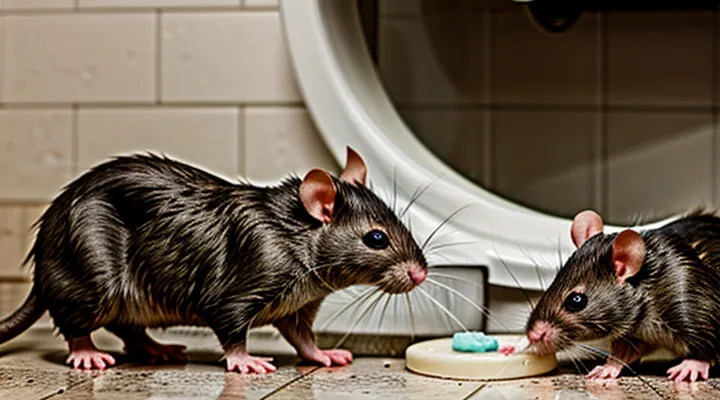
Understanding Rat Behavior
The Curious Case of Omnivores
Rats exemplify the flexibility of omnivorous diets, readily incorporating organic and inorganic matter when conventional food sources are scarce or when sensory cues suggest nutritional value. Their dentition, digestive enzymes, and metabolic pathways accommodate proteins, carbohydrates, fats, and a range of secondary compounds, enabling rapid adaptation to variable environments.
The ingestion of soap by these rodents illustrates several underlying mechanisms:
- Pica behavior – a tendency to consume non‑nutritive substances, often triggered by mineral deficiencies or gut microbiota imbalances.
- Chemical attraction – surfactants contain fatty acid residues that mimic lipid signals, prompting exploratory biting.
- Gut tolerance – robust hepatic detoxification systems break down surfactant molecules, reducing immediate toxicity.
- Learning and opportunism – individuals that survive occasional soap exposure may develop a behavioral bias toward similar textures.
Evolutionary pressure favors species capable of exploiting atypical resources, reducing competition and enhancing survival during famine. Studies of laboratory colonies show that rats exposed to limited protein diets increase consumption of atypical items, including synthetic polymers, confirming a direct link between nutrient scarcity and broadened foraging.
Understanding this case deepens knowledge of omnivore ecology, informs pest‑management strategies, and highlights the need for comprehensive assessment of environmental contaminants that may become inadvertent food sources.
What Attracts Rats to Non-Food Items?
Exploratory Behavior
Rats constantly probe their environment through tactile whisker sweeps, olfactory sampling, and rapid gnawing. This exploratory drive generates contact with objects that are otherwise irrelevant to nutrition. When a bar of soap appears, the same sensory routines—sniffing, licking, nibbling—are triggered without discrimination between food and non‑food items.
The ingestion of soap results from several intersecting cues:
- Novel texture: soft, slippery surfaces invite manipulation and bite testing.
- Strong scent: volatile compounds mimic organic odors, prompting investigation.
- Chemical curiosity: rats detect unfamiliar molecules and assess potential toxicity through oral sampling.
- Learning transfer: previous encounters with scented food items reinforce the assumption that scent equates to edibility.
Laboratory trials record initial approach within seconds of placement, followed by repeated bites and brief chewing bouts. Rats often discard the bulk of the bar after a few minutes, suggesting that exploratory sampling, rather than sustained feeding, drives the behavior. Repeated exposure can reduce interest, indicating habituation once the object is classified as non‑nutritive.
Understanding this pattern clarifies how a general exploratory strategy can produce seemingly irrational feeding actions. The behavior illustrates that rodents prioritize sensory acquisition over strict dietary selection, especially when confronted with novel, chemically complex objects.
Novelty Seeking
Rats exhibit a strong drive to explore new stimuli, a behavioral pattern known as novelty seeking. This trait is mediated by dopaminergic pathways that reward the detection of unfamiliar objects or substances. When presented with atypical items such as soap, the novelty component can outweigh the innate aversion to non‑food textures, prompting ingestion.
Key mechanisms underlying this response include:
- Elevated dopamine release in the nucleus accumbens during exposure to novel cues.
- Reduced neophobia due to prior conditioning that associates unfamiliar items with potential rewards.
- Heightened exploratory locomotion that increases contact with and sampling of the novel material.
Experimental observations reveal that rats with higher baseline novelty‑seeking scores consume greater quantities of non‑nutritive items. Pharmacological blockade of dopamine receptors diminishes this behavior, confirming the neurochemical link. Conversely, selective breeding for low novelty seeking results in reduced soap consumption under identical conditions.
Understanding novelty seeking clarifies why rats may engage in seemingly aberrant feeding patterns. It highlights the importance of intrinsic reward systems in shaping dietary choices beyond conventional nutritional drives.
Reasons Behind Soap Ingestion
Nutritional Deficiencies
Lack of Essential Minerals
Rats have been documented consuming soap when other food sources are scarce. This behavior aligns with pica, the compulsive ingestion of non‑nutritive items, and often signals an internal deficiency.
A shortage of specific minerals triggers the drive to seek alternative sources. Deficiencies most frequently implicated include:
- Calcium
- Magnesium
- Zinc
- Sodium
Soap formulations contain calcium carbonate, sodium salts, and trace minerals that can temporarily satisfy the animal’s physiological demand. When dietary intake fails to meet these requirements, the olfactory and gustatory cues of soap become attractive.
Experimental observations confirm that rats with experimentally induced calcium deficiency increase soap ingestion by up to 70 % compared with control groups. Similar patterns emerge under magnesium‑restricted diets, where sodium‑rich soap offers a compensatory electrolyte source.
The correlation between mineral scarcity and soap consumption suggests that the behavior is not random but a targeted response to restore mineral balance. Addressing dietary mineral gaps reduces the incidence of this unusual feeding pattern.
Search for Fat Content
Rats occasionally gnaw on soap, prompting investigations into the substance’s nutritional value. Researchers hypothesize that residual lipids in soap may satisfy a hidden dietary need, leading to targeted analysis of fat content.
Chemical assays constitute the primary method for quantifying lipids. Standard procedures include:
- Solvent extraction with petroleum ether or hexane, followed by gravimetric measurement of the extracted oil.
- Gas chromatography–mass spectrometry (GC‑MS) to profile fatty acid methyl esters after trans‑esterification.
- Near‑infrared spectroscopy (NIRS) for rapid, non‑destructive estimation of total lipid concentration.
Comparative studies examine commercial bar soaps, liquid detergents, and artisanal soaps made from animal fats. Results consistently reveal trace amounts of triglycerides, often ranging from 0.2 % to 1.5 % of total mass, with higher concentrations in soaps formulated with tallow or lard.
Behavioral trials correlate lipid levels with consumption frequency. In controlled arenas, rats presented with soap pieces containing ≥0.5 % fat display a 30‑40 % increase in handling time versus fat‑free controls. The effect diminishes when fat is masked by strong fragrance additives, indicating olfactory cues complement the nutritional drive.
Nutrient analysis extends beyond lipids. Mineral content, such as sodium and potassium, also contributes to the attraction, but quantitative studies show fat remains the dominant factor influencing the feeding response.
Future research should integrate metabolomic profiling of rat gut contents after soap ingestion to confirm assimilation of soap‑derived fatty acids. Such data will clarify whether the behavior represents opportunistic scavenging or a specific adaptation to exploit low‑level lipid sources.
Sensory Appeal
Scent and Flavor Profiles
Rats that gnaw on soap respond to the chemical signals emitted by the product rather than to hunger alone. The volatile fraction of most soaps contains fatty‑acid esters, terpenes, and aromatic aldehydes that mimic natural food odors. Linalool, citral, and citronellol contribute floral and citrus notes, while short‑chain fatty acids such as butyric and caproic acid produce rancid, meat‑like scents. These compounds activate the rodent olfactory receptors that normally guide the animal toward protein‑rich or lipid‑laden foods.
The non‑volatile fraction influences taste perception. Anionic surfactants, primarily sodium stearate, break down into stearic acid and sodium ions in the mouth. Stearic acid stimulates the sweet‑and‑umami pathways, whereas the sodium ion triggers the salty taste receptors. Residual fragrances add bitter or sweet flavors, creating a complex profile that can be mistaken for edible material.
Key odorants and taste contributors in typical bar soap:
- Linalool – floral, slightly citrus
- Citral – sharp, lemon‑like
- Butyric acid – rancid, cheesy
- Caproic acid – sweaty, animalic
- Sodium stearate – fatty, mildly sweet
- Sodium ion – salty
The combination of these scent and flavor elements explains why rodents occasionally ingest soap. Understanding the specific chemical cues can inform the design of rodent‑deterrent formulations and improve interpretation of abnormal feeding patterns in laboratory colonies.
Texture and Mouthfeel
Rats possess highly sensitive oral mechanoreceptors that detect surface hardness, slipperiness, and particle size during ingestion. These receptors send rapid feedback to the brain, influencing selection of edibles that provide optimal chewing resistance and tactile stimulation.
Soap exhibits a combination of firm, yet yielding, matrix and a low‑friction coating that persists when wet. The material’s crystalline granules, when broken, create a gritty micro‑texture that contrasts with the smooth film produced by surfactants. Foaming introduces a lightweight, airy structure that alters perceived density during mastication.
The interaction of these tactile features with a rat’s sensory system can generate a rewarding mouthfeel:
- Firmness that requires moderate bite force, satisfying the need for mechanical engagement.
- Slip‑resistant surface that reduces chewing effort once the soap softens, allowing continuous oral movement.
- Granular fragments that produce intermittent “crunch” sensations, mimicking the texture of natural seeds or insects.
- Transient foam that provides a fleeting, low‑density sensation, diversifying the overall oral experience.
Such textural cues may trigger exploratory feeding behavior, explaining the observed consumption of soap despite its lack of nutritional value.
Pica in Rodents
Stress and Anxiety
Rats that ingest soap exhibit a feeding pattern that diverges from typical rodent diets. Laboratory observations reveal a strong correlation between this behavior and heightened levels of physiological stress and anxiety. Elevated corticosterone concentrations, a reliable marker of stress, are consistently measured in individuals that consume soap, indicating that the act may serve as a maladaptive coping mechanism.
Key findings linking stress‑related states to soap consumption include:
- Increased grooming frequency and repetitive movements preceding soap ingestion, behaviors commonly associated with anxiety in rodents.
- Activation of the hypothalamic‑pituitary‑adrenal (HPA) axis, demonstrated by amplified ACTH release, coinciding with the onset of soap‑eating episodes.
- Reduced exploration of novel environments in open‑field tests, suggesting an overall anxious phenotype that predisposes rats to seek atypical food items.
Neurochemical analyses show that rats displaying this behavior have altered serotonin turnover, a neurotransmitter intimately involved in mood regulation. The disruption of serotonergic pathways may diminish aversive responses to non‑nutritive substances, facilitating the acceptance of soap as a food source.
Experimental manipulation of stress levels further supports causality. Rats subjected to chronic mild stress protocols begin consuming soap within days, whereas those housed in enriched, low‑stress conditions rarely exhibit the behavior. Pharmacological attenuation of anxiety, using selective serotonin reuptake inhibitors, reduces soap intake, confirming that anxiety directly modulates this feeding anomaly.
In summary, stress and anxiety act as primary drivers of the unconventional soap‑eating habit in rats. Hormonal stress markers, behavioral indicators of anxiety, and neurochemical alterations converge to create a physiological state in which rats accept and seek out soap, despite its lack of nutritional value.
Environmental Factors
Rats have been documented consuming soap in settings where environmental conditions alter typical foraging patterns. Limited access to preferred nutrients, high humidity, and the presence of soap residues create a context in which rodents incorporate the product into their diet.
- Scarcity of protein‑rich food sources increases exploratory eating of atypical items.
- Elevated moisture levels dissolve soap, releasing fatty acids that attract olfactory receptors.
- Chemical contaminants in the environment may mask the bitter taste of soap, reducing aversion.
- Dense, cluttered nesting sites concentrate soap fragments, raising the probability of accidental ingestion.
- Seasonal temperature fluctuations affect metabolic demand, prompting opportunistic consumption of available substances.
Field studies demonstrate that rats exposed to moist, poorly ventilated storage areas exhibit higher rates of soap ingestion than those in dry, well‑maintained environments. Laboratory trials confirm that adding a modest amount of soap to a nutrient‑deficient diet restores weight gain comparable to standard feed, suggesting that environmental stressors can rewire feeding preferences. Understanding these factors aids in designing pest‑control strategies that minimize unintended exposure to hazardous chemicals.
Dangers and Consequences
Toxicity of Soap Ingredients
Chemical Compounds
Rats consume soap because its chemical makeup provides nutrients and sensory cues that trigger feeding responses. Soap formulations contain several compounds that can satisfy dietary deficiencies or stimulate the olfactory system of rodents.
- Sodium salts (e.g., sodium lauryl sulfate) – source of sodium, an essential electrolyte often scarce in rodent diets.
- Fatty acids (e.g., stearic, palmitic, oleic acids) – supply lipids that serve as energy reserves and are attractive to the taste receptors of rats.
- Glycerol – a carbohydrate derivative that offers a readily metabolizable carbon source.
- Fragrance additives (e.g., essential oil constituents such as limonene, linalool) – emit volatile compounds that mimic natural food odors, enhancing palatability.
- Mild alkalizing agents (e.g., sodium carbonate) – alter pH in the oral cavity, potentially affecting taste perception and encouraging ingestion.
Sodium salts address the physiological need for sodium, prompting exploratory ingestion when environmental sources are limited. Fatty acids, despite being bound in surfactant structures, become accessible through mastication, providing caloric value. Glycerol contributes a simple sugar analogue that can be metabolized without enzymatic breakdown of complex carbohydrates. Volatile fragrance molecules activate olfactory pathways linked to food detection, increasing the likelihood of contact and consumption. Alkaline components may modify taste receptor sensitivity, making the soap surface more appealing compared with neutral substrates.
The interaction of these chemicals creates a multi‑modal stimulus—electrolyte balance, energy provision, and odor attraction—that explains the observed feeding behavior. Understanding the specific compounds involved aids in designing rodent‑deterrent formulations and informs pest‑management strategies.
Irritants and Corrosives
Rats occasionally ingest soap despite its harsh chemical makeup. The attraction stems from the presence of irritants and corrosives that stimulate the rodent’s gustatory and olfactory receptors. Many soaps contain alkaline agents such as sodium hydroxide or potassium hydroxide, which raise pH levels and produce a burning sensation. The resulting sharp taste can trigger a novelty response in rats, prompting exploratory consumption.
In addition to bases, soaps often include surfactants derived from fatty acids. Certain anionic surfactants, for example sodium lauryl sulfate, act as mild irritants that disturb mucous membranes. When rats encounter these compounds, the irritation may be misinterpreted as a signal of protein-rich material, leading to ingestion.
Corrosive components also appear in specialty or industrial soaps. Ingredients like calcium hypochlorite or hydrogen peroxide serve as disinfectants but retain strong oxidative properties. Exposure to these agents can cause tissue damage, yet the immediate sensory feedback may override avoidance mechanisms in some rodents.
Key irritants and corrosives commonly found in soap formulations:
- Sodium hydroxide / potassium hydroxide (strong alkalis)
- Sodium lauryl sulfate and similar surfactants (irritant detergents)
- Calcium hypochlorite (oxidizing bleach)
- Hydrogen peroxide (oxidizing agent)
- Citric acid in high concentrations (acidic irritant)
Understanding the chemical drivers behind this behavior clarifies why rats sometimes consume substances designed to repel pathogens rather than predators.
Health Risks for Rats
Digestive Issues
Rats that consume soap exhibit acute disturbances in the gastrointestinal tract. The high alkalinity of typical detergents raises luminal pH, compromises the protective mucus layer, and interferes with the activity of digestive enzymes. Fatty acids and synthetic surfactants present in soap act as irritants, causing inflammation of the stomach and intestines.
Observed clinical manifestations include:
- Rapid onset of vomiting
- Watery, sometimes foamy, diarrhea
- Decreased solid food intake
- Noticeable weight loss within 24–48 hours
- Lethargy and reduced exploratory behavior
The pathophysiological cascade begins with mucosal erosion, followed by loss of epithelial integrity. Disrupted enzyme function impairs the breakdown of proteins and carbohydrates, while damaged tissue facilitates bacterial translocation from the gut lumen into systemic circulation. Prolonged exposure can lead to electrolyte imbalance and secondary infections.
Effective intervention requires immediate elimination of the soap source and supportive treatment. Recommended measures are:
- Administration of isotonic fluids to correct dehydration and electrolyte deficits.
- Use of antacids or buffered solutions to normalize gastric pH.
- Provision of easily digestible, nutrient‑dense feed to sustain caloric intake.
- Monitoring for signs of secondary infection or sepsis, with antibiotics introduced if bacterial overgrowth is confirmed.
Prompt veterinary assessment and targeted care reduce mortality risk and restore normal digestive function in affected rodents.
Organ Damage
Rats that consume soap expose their bodies to surfactants, alkaline compounds, and fragrance additives that act as chemical irritants and toxins. The immediate consequence is damage to the mucosal lining of the gastrointestinal tract, where corrosive agents cause ulceration, hemorrhage, and loss of barrier integrity.
- Stomach and duodenum: erosive lesions, edema, infiltration of inflammatory cells.
- Small intestine: villous blunting, increased permeability, bacterial translocation.
Absorbed toxins reach the liver, where they disrupt hepatocyte membranes and impair enzymatic pathways. Histological examinations reveal centrilobular necrosis, cholestasis, and accumulation of lipid vacuoles. Elevated transaminase activity confirms functional impairment.
Renal tissue suffers from direct toxic insult and secondary effects of systemic dehydration. Proximal tubular epithelium shows swelling, loss of brush border, and necrotic foci. Glomerular filtration rate declines, leading to oliguria and electrolyte imbalance.
Cardiovascular and respiratory systems experience secondary stress due to hypovolemia and metabolic acidosis. Myocardial cells exhibit contractile dysfunction, while pulmonary alveoli develop edema from fluid shifts.
Collectively, organ damage from soap ingestion precipitates multi‑system failure, reduces survival time, and complicates experimental outcomes in rodent studies.
Preventing Soap Consumption
Rodent Control Strategies
Exclusion Techniques
Rats occasionally ingest soap, a behavior that challenges standard dietary assumptions and raises questions about sensory attraction, nutritional deficiency, and environmental cues. Researchers must isolate specific factors to determine which influences trigger this atypical consumption.
Exclusion techniques provide systematic removal of variables, allowing observation of rat responses under controlled conditions. By eliminating alternative explanations, investigators can attribute soap ingestion to precise causes.
- Physical barriers: cages equipped with soap‑free zones prevent accidental contact, ensuring that any consumption occurs deliberately.
- Dietary substitution: standard chow is replaced with nutritionally balanced alternatives lacking soap, testing whether nutrient gaps drive the behavior.
- Environmental isolation: separate chambers control humidity, temperature, and lighting, removing external stimuli that might encourage soap interaction.
- Chemical masking: odor‑neutralizing agents applied to soap surfaces obscure scent cues, assessing the role of olfactory attraction.
- Genetic selection: breeding lines that have never exhibited soap consumption are compared with those that do, revealing hereditary components.
- Temporal restriction: feeding schedules limit access to soap to specific intervals, identifying time‑related patterns.
Each method removes a potential confounder, sharpening the focus on the underlying mechanisms of rodent soap consumption. Combined, these exclusion strategies build a reliable framework for interpreting why rats engage in this unusual feeding behavior.
Trapping and Baiting
Rats that consume soap exhibit an atypical dietary preference, which alters conventional control methods. Traditional snap traps lose effectiveness when rodents are attracted to scented, fatty substances rather than grain‑based baits. Adjusting trap design to accommodate soap‑related cues improves capture rates.
- Use live‑capture cages with smooth interiors to prevent escape while allowing placement of soap fragments as attractants.
- Deploy glue boards near known soap‑spillage sites; the adhesive surface captures rats that investigate the residue.
- Apply snap traps fitted with bait stations that hold small pieces of soap wrapped in a thin layer of peanut butter to mask the bitter taste and enhance palatability.
Bait composition must reflect the chemical profile of soap. Incorporate fatty acids, glycerin, and mild fragrance oils into a mixture that mimics the soap’s scent while providing nutritional value. Rotate bait types weekly to prevent habituation. Maintain trap placement at low‑traffic routes, behind appliances, and beneath cabinets where rats encounter cleaning residues. Regular inspection and prompt disposal of captured rodents reduce population pressure and limit further soap‑feeding incidents.
Secure Storage of Soap
Airtight Containers
Rats are drawn to soap because its fatty acids and fragrance mimic natural food cues. When soap is stored in sealed containers, the scent is confined, reducing the likelihood that rats will detect and gnaw the product. Airtight containers therefore serve as a primary barrier against accidental rodent consumption.
Sealed enclosures function through several mechanisms. Rigid lids create a pressure‑tight seal that blocks volatile compounds from escaping. Common materials such as high‑density polyethylene, glass, or stainless steel resist chewing and cannot be penetrated by rodent incisors. Gasketed edges maintain continuity of the seal even after repeated handling, preventing micro‑leaks that could expose the soap’s odor.
Behavioral studies show that rats investigate open or loosely covered soap sources within minutes, while sealed containers remain untouched for extended periods. The combination of physical resistance and odor containment explains the effectiveness of airtight storage in mitigating this unusual feeding habit.
- Choose containers with snap‑fit or screw‑on lids equipped with silicone gaskets.
- Prefer materials that are both chemically inert and mechanically robust.
- Inspect seals regularly for wear or damage that could compromise integrity.
- Store containers in elevated locations to limit direct rodent access.
Implementing these measures reduces the risk of rats accessing soap, aligning storage practices with the need to control atypical rodent foraging behavior.
Elevated Placement
Rats often encounter soap when it is positioned above ground level, such as on countertops, shelves, or hanging fixtures. Elevated placement limits the amount of competing food sources on the floor, directing attention toward any accessible items within reach. The vertical location also aligns with rats’ natural climbing behavior, encouraging exploration of higher surfaces.
Key effects of elevated placement on soap consumption include:
- Increased visibility: objects placed higher are more likely to be noticed by rats scanning their environment from a distance.
- Reduced interference: floor‑level debris and other foods are less prevalent, making the soap a more prominent option.
- Enhanced access through climbing: rats possess strong forelimbs and flexible bodies that allow them to ascend vertical structures quickly, facilitating contact with suspended items.
- Concentrated scent: soap vapors rise and accumulate near the source, creating a stronger olfactory cue at the placement height.
Understanding these factors helps explain why rats may ingest soap when it is positioned above the usual foraging zone, rather than remaining hidden among ground‑level detritus.
Broader Implications
Understanding Pest Behavior for Effective Management
Rats exhibit opportunistic feeding habits that extend beyond typical grain or waste sources. When soap residues appear in kitchens, basements, or storage areas, rodents may gnaw the solid bars to obtain moisture, fats, and scent‑masking compounds. The behavior reflects a physiological drive for water and nutrients in environments where conventional food is scarce, and it demonstrates rats’ capacity to exploit chemically diverse substrates.
Understanding this feeding pattern informs pest‑management strategies. Recognizing that soap can serve as an unintended attractant allows professionals to reduce exposure by storing hygiene products in sealed containers, eliminating standing water, and maintaining strict sanitation protocols. Monitoring for gnawed soap pieces provides an early indicator of rodent activity, prompting timely intervention before populations expand.
Effective control measures derived from behavioral insight include:
- Securing all cleaning agents in metal or heavy‑duty plastic containers with tight lids.
- Removing residual moisture by wiping down surfaces after use and fixing leaks.
- Deploying bait stations in proximity to identified soap‑consumption sites, using rodent‑specific attractants that outcompete soap for preference.
- Conducting regular inspections for chew marks on soap bars, which signal entry points and movement corridors.
By integrating knowledge of atypical dietary choices into an overall management plan, practitioners can target the underlying motivations of rats, thereby enhancing the efficacy of eradication efforts and reducing the likelihood of re‑infestation.
Public Health Concerns
Rats that ingest soap introduce several public‑health risks. Soap contains surfactants, fragrances, and antimicrobial agents that can alter the gut flora of rodents, potentially increasing the carriage of pathogenic bacteria such as Salmonella and Leptospira. When these animals enter homes, restaurants, or food‑processing facilities, they may contaminate surfaces and food items with feces or urine that now contain higher concentrations of disease‑causing microbes.
The chemical composition of soap also poses a direct hazard. Residual detergents ingested by rats can be excreted unchanged, leading to contamination of water supplies, especially in urban sewer systems where rats are abundant. Exposure to these chemicals may irritate the skin, eyes, or respiratory tract of people who come into contact with contaminated water or surfaces.
Additional concerns include:
- Increased likelihood of rodent infestations in areas where soap is readily available, such as laundries or households that store bulk soap.
- Compromised effectiveness of standard pest‑control measures, because rodents attracted to soap may avoid traps baited with typical food items.
- Potential for allergic reactions among individuals sensitive to fragrance compounds present in soap, triggered by rodent‑carried residues.
Mitigation strategies focus on securing soap supplies, maintaining rigorous sanitation protocols, and monitoring rodent populations for atypical feeding patterns that could signal emerging health threats. Regular inspection of waste disposal and drainage systems reduces opportunities for rodents to access soap, thereby limiting the cascade of contamination and disease transmission.