
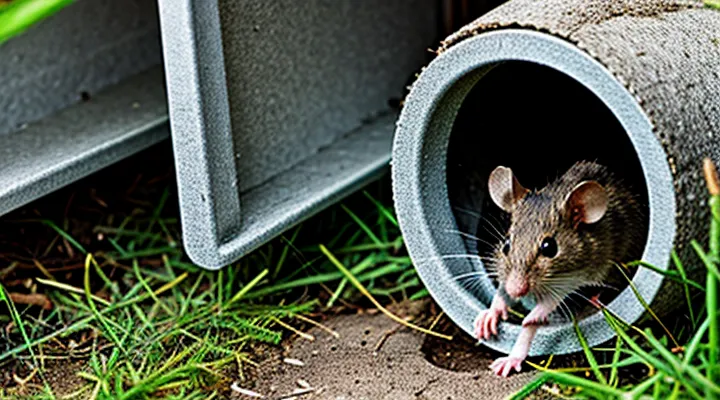
The Fundamentals of Mouse Nesting Behavior
Evolutionary Drivers of Nest Selection
Predation Avoidance
Mice select nesting sites primarily to reduce exposure to predators. Concealed locations such as deep burrows, dense vegetation, or insulated cavities limit visual detection and hinder access by carnivorous mammals, birds of prey, and reptiles. By positioning nests near structural obstacles—roots, rocks, or debris—mice create physical barriers that slow or deter pursuit.
Key mechanisms that enhance safety include:
- Vertical refuge: Elevated or underground chambers keep predators at a distance and provide escape routes through tunnels.
- Material camouflage: Nest construction using shredded plant matter, fur, or soil blends with the surrounding environment, diminishing scent and sight cues.
- Proximity to escape pathways: Adjacent tunnels or crevices enable rapid retreat when a threat approaches.
Temporal patterns also contribute to risk reduction. Mice often relocate nests during periods of heightened predator activity, such as dusk or night, and synchronize breeding cycles with times when predator presence is lowest. This behavioral flexibility minimizes the likelihood of nest discovery throughout the reproductive season.
Overall, predation avoidance drives the choice of secure, concealed, and strategically positioned nesting sites, ensuring higher survival rates for both adult mice and their offspring.
Resource Proximity
Mice select nesting sites primarily based on the distance to essential resources. Proximity to reliable food sources, water, and safe shelter reduces the energy required for foraging and minimizes exposure to predators. Sites that offer immediate access to these elements increase survival rates and reproductive success.
Key resources influencing nest placement include:
- Stored grains or seed caches
- Access to moisture such as puddles, dew-covered surfaces, or underground water tables
- Structural features providing concealment, like dense vegetation, insulation material, or crevices
When resources cluster within a limited radius, mice concentrate their activity around those zones, establishing multiple nests to exploit the abundance while maintaining flexibility. This spatial strategy enables rapid response to fluctuations in food availability and environmental conditions, ensuring sustained colony health.
Key Environmental Factors Influencing Nesting Sites
Shelter and Security
Protection from Elements
Mice select nesting sites that shield them from environmental stressors. The choice of location directly influences survival by mitigating exposure to temperature extremes, moisture, wind, and precipitation.
- Insulation against cold and heat: underground burrows, insulated wall cavities, and dense vegetation maintain stable microclimates.
- Moisture regulation: dry substrates prevent fungal growth and limit heat loss through evaporative cooling.
- Wind and rain shelter: recessed crevices and deep tunnels block drafts and runoff, preserving nest integrity.
- Concealment from predators: concealed spaces reduce visual detection and limit access to the nest interior.
To achieve these protections, mice gather soft materials such as shredded plant fibers, fur, and paper, layering them to create a barrier against external conditions. They position nests near structural supports—e.g., joist spaces or foundation cracks—where airflow is minimal and temperature fluctuates less sharply.
Effective environmental shielding enhances reproductive success and reduces energy expenditure on thermoregulation, confirming that protective considerations dominate site selection for mouse nests.
Concealment from Threats
Mice select nesting sites primarily to avoid predators and environmental hazards. Dense vegetation, thick debris, and underground burrows provide visual obstruction that reduces detection by birds of prey, snakes, and mammals. The complexity of such microhabitats creates multiple escape routes, allowing rapid retreat when a threat approaches.
The structural characteristics that enhance concealment include:
- Low‑lying cover that blocks line of sight from aerial predators.
- Loose, interwoven materials that can be quickly rearranged to mask movement.
- Substrate depth sufficient to conceal scent trails, limiting the ability of scent‑tracking predators to locate the nest.
Thermal insulation also contributes to safety. Cooler, insulated locations diminish metabolic heat signatures, making mice less detectable to thermally sensitive predators. Moisture‑rich environments, such as damp leaf litter, further mask odor cues, reducing the likelihood of detection by carnivores that rely on olfactory tracking.
By nesting in areas where visual, auditory, and chemical signals are suppressed, mice increase survival rates. The strategic use of concealment reflects an adaptive response to predation pressure, shaping the distribution of nesting sites across varied habitats.
Availability of Food and Water Sources
Proximity to Food Stores
Mice select nesting sites that lie close to reliable food sources. Short distances reduce the energy expenditure required for foraging, allowing more calories to be allocated to growth and reproduction. When a nest is within a few meters of stored grain, fruit, or waste, mice can make frequent, brief trips that minimize exposure to predators.
Key advantages of nesting near food stores include:
- Rapid replenishment of depleted caches, sustaining colony size.
- Lower risk of venturing into open areas, which decreases predation probability.
- Enhanced ability to monitor and defend valuable resources, increasing overall survival rates.
Research shows that mice preferentially occupy cavities, wall voids, or attic spaces that adjoin pantry shelves, garbage bins, or compost containers. The spatial correlation between nest placement and food availability is consistent across urban, suburban, and rural environments, indicating a fundamental behavioral adaptation rather than a habitat‑specific anomaly.
Access to Water
Mice select nesting sites where water is reliably reachable. Proximity to moisture reduces the energy cost of daily drinking and supports physiological functions such as thermoregulation and digestion. Access to water also influences the microclimate of a nest; damp substrates retain heat better than dry ones, creating a more stable environment for offspring development.
Key reasons water availability shapes nesting choice:
- Reduced travel distance: Shorter trips to water sources lower exposure to predators and conserve calories.
- Improved reproductive success: Females with easy water access maintain higher hydration levels, which correlates with increased litter size and pup survival.
- Enhanced nest material quality: Moisture facilitates the binding of shredded paper, fibers, or plant matter, resulting in stronger, more cohesive nests.
- Microbial balance: Controlled moisture levels discourage the growth of harmful fungi while permitting beneficial bacteria that aid in waste decomposition within the nest.
In natural habitats, mice are frequently found near streams, seepage zones, or vegetation that retains dew. In human environments, they exploit leaky pipes, condensation under appliances, and pet water bowls. The consistent pattern across settings underscores that water accessibility is a primary determinant of where mice establish their nests.
Temperature and Climate Control
Insulation Properties
Mice select nesting sites that maintain stable internal temperatures, reducing the energy required for thermoregulation. Materials such as shredded paper, dry grasses, or soft insulation fibers trap air, a poor conductor of heat, thereby creating a microenvironment that remains warm during cold periods and cool when ambient temperatures rise.
The insulating function of a nest depends on several physical factors:
- Air pockets: trapped air layers limit heat loss through convection.
- Material density: loosely packed fibers increase the volume of insulating air.
- Moisture content: dry substrates prevent conductive heat transfer that occurs with wet material.
- Thickness: thicker walls provide a larger barrier to thermal exchange.
By constructing nests in locations where these properties are maximized—under floorboards, within wall cavities, or inside stored fabrics—mice achieve a consistent thermal buffer. This buffer lowers metabolic demands, allowing individuals to allocate more energy to growth, reproduction, and foraging activities. Consequently, the thermal efficiency of a nest directly influences survival rates and population density.
Optimal Thermal Comfort
Mice select nesting sites that maintain a stable internal temperature with minimal energy expenditure. The body temperature of a typical house mouse averages 36 °C; deviations of more than a few degrees increase metabolic demand. Structures that retain heat, such as insulated cavities or dense vegetation, reduce the need for thermogenic activity.
Key thermal attributes of preferred locations include:
- Ambient temperature close to the mouse’s thermoneutral zone (30‑34 °C).
- Low thermal conductivity of surrounding materials, limiting heat loss.
- Limited exposure to drafts and direct sunlight, which cause rapid temperature fluctuations.
Thermal gradients within a nest influence the arrangement of body parts and the distribution of litter. Mice position themselves centrally, where insulation is greatest, while peripheral litter provides a barrier against external temperature changes. This configuration maximizes heat retention and minimizes heat exchange with the environment.
Seasonal variations modify site selection. In colder months, mice relocate to deeper burrows, underground chambers, or human-made structures with higher thermal inertia. During warmer periods, they favor elevated, shaded areas that remain below ambient temperature but above the lower limit of their thermoneutral range. The consistent pattern demonstrates that optimal thermal comfort drives nesting decisions across diverse habitats.
Material Accessibility
Nesting Material Composition
Mice select nesting material based on physical properties that support thermoregulation, moisture regulation, and structural stability. Soft fibers such as shredded paper, cotton lint, and wool provide loft and insulation, reducing heat loss in cooler microhabitats. Plant-derived components—dry grasses, leaves, and seed husks—contribute rigidity and help maintain nest shape while allowing airflow.
Animal-derived substances, including fur clippings and spider silk, add tensile strength. Fur fibers interlock to create a dense matrix that resists compression, whereas spider silk offers elasticity, enabling the nest to accommodate growth without collapse. Synthetic materials like polyester fleece and shredded plastic bags are frequently incorporated in human‑occupied settings; they mimic natural fibers in softness but lack biodegradability, which can affect long‑term nest integrity.
Key material attributes influencing selection:
- Insulative capacity – low thermal conductivity, high loft.
- Moisture absorbency – ability to wick away condensation, preventing fungal growth.
- Structural cohesion – fibers that interlock or bind, providing durability.
- Odor masking – neutral or low‑volatile compounds that reduce scent cues for predators.
- Availability – proximity to food storage, nesting sites, or human refuse.
Seasonal shifts modify composition. In autumn, mice incorporate dried seed heads and bark to exploit abundant dry matter. During winter, emphasis moves toward highly insulating fibers, often sourced from stored human textiles. Urban populations rely heavily on discarded packaging, reflecting material accessibility rather than optimal thermal performance.
Species‑specific preferences emerge from ecological niche. House mice (Mus musculus) display opportunistic behavior, readily using any soft debris, while field mice (Apodemus spp.) prioritize natural vegetation and animal fur, reflecting adaptation to forest floor conditions.
Overall, nesting material composition reflects a balance between environmental constraints, physiological needs, and resource availability, shaping the precise locations where mice establish their nests.
Ease of Material Collection
Mice choose nesting sites where building material is readily accessible, reducing the energy required for collection and transport. Proximity to sources such as shredded paper, dry grass, cotton fibers, or textile scraps allows rapid construction of a secure shelter.
- Indoor environments often provide loose fibers from upholstery, insulation, or stored fabrics; these materials can be gathered without leaving the immediate area.
- Agricultural structures contain straw, wheat stalks, and harvested grains that break down into suitable nesting threads; mice exploit these resources while remaining within the same building.
- Natural habitats offer dried plant matter, bark fragments, and leaf litter; dense ground cover supplies material within a few centimeters of the chosen site.
- Human refuse, including discarded packaging and paper waste, presents abundant, lightweight resources that can be incorporated into nests with minimal effort.
The ease of material collection directly influences nest placement because it lowers predation risk, conserves metabolic energy, and accelerates the development of a functional shelter. Consequently, mice prioritize locations where suitable fibers are abundant and obtainable with the least movement.
Common Nesting Locations and Their Appeal
Indoor Habitats
Wall Voids and Attics
Mice consistently select concealed, insulated cavities for nesting. Wall cavities and attic spaces meet these requirements, offering protection from predators, weather, and human activity while maintaining a stable microclimate.
Key attributes that make wall voids and attics attractive:
- Temperature regulation – insulated spaces retain heat in winter and remain cool in summer, reducing the energy mice expend to maintain body temperature.
- Limited exposure – narrow gaps and concealed locations limit visual and tactile detection by predators and occupants.
- Easy access – gaps around utility penetrations, roof vents, and eave openings provide direct routes from the exterior to interior cavities.
- Proximity to food sources – walls often conceal wiring, insulation, and stored items; attics frequently house stored food, grain, or pet feed.
- Moisture availability – condensation on insulation or roof leaks supplies the water mice require for survival.
Effective control measures focus on eliminating entry points, sealing cracks around plumbing, electrical conduits, and roof fixtures, and maintaining proper ventilation to deter moisture accumulation. Regular inspection of wall cavities and attic insulation identifies early signs of activity, such as gnawed materials or droppings, enabling prompt remediation before populations establish.
Kitchens and Pantries
Mice are drawn to kitchens and pantries because these areas combine essential resources and protective conditions. Food residues, crumbs, and stored products provide a constant supply of nutrition, reducing the distance mice must travel to feed. The presence of containers, boxes, and appliances creates numerous concealed openings that facilitate entry and concealment. Heat generated by cooking appliances raises ambient temperature, offering a warm microclimate that supports rapid reproduction. Moisture from sinks, dishwashers, and spills supplies the humidity mice require for nest construction and egg development. Cluttered shelving and poorly sealed packaging generate gaps and voids ideal for building nests that remain hidden from predators and human observation.
Key factors encouraging nesting in these spaces include:
- Abundant, easily accessible food sources
- Elevated temperature and stable humidity
- Numerous entry points created by gaps in countertops, cabinets, and pipework
- Structural cavities and insulation material suitable for nest building
- Reduced human disturbance during nighttime activities
Effective control measures focus on eliminating food attractants, sealing cracks and openings, maintaining clean surfaces, and storing dry goods in airtight containers. Regular inspection of pantry shelves and kitchen corners can detect early signs of activity, allowing prompt intervention before populations become established.
Basements and Garages
Mice are drawn to basements and garages because these areas provide conditions that support survival and reproduction. The underground and semi‑indoor nature of these spaces creates a microenvironment that meets the species’ basic requirements.
- Stable temperature: Sub‑floor levels maintain temperatures between 10 °C and 20 °C year‑round, reducing the energy mice expend to regulate body heat.
- Consistent humidity: Moisture levels around 40‑60 % prevent desiccation of skin and respiratory passages, a critical factor for small mammals.
- Limited disturbance: Human activity in basements and garages is sporadic, offering prolonged periods of undisturbed shelter.
- Abundant entry points: Cracks in foundation walls, gaps around utility pipes, and unsealed doors provide easy access from the exterior.
- Proximity to food sources: Stored items such as pet food, cardboard, insulation, and discarded organic waste supply a steady diet.
- Structural protection: Concrete walls and metal framing shield mice from predators and extreme weather, while still allowing the construction of nests in hidden corners.
These characteristics combine to make basements and garages optimal nesting sites. Effective control measures focus on sealing entry gaps, maintaining low humidity, and removing accessible food, thereby disrupting the conditions that attract mice to these locations.
Outdoor Habitats
Burrows and Underground Spaces
Burrows constitute the principal underground shelters that mice occupy when selecting nesting sites. These structures consist of a network of tunnels, chambers, and ventilation shafts excavated in soil, leaf litter, or under debris. The architecture varies with substrate hardness, moisture level, and available space, yet all burrows share a common purpose: to create a concealed, stable environment for resting, breeding, and storing food.
The advantages of subterranean habitats include:
- Predator avoidance – thick earth layers conceal movement and impede visual detection.
- Thermal regulation – soil temperature fluctuates less than ambient air, maintaining a narrow temperature range suitable for metabolic efficiency.
- Humidity control – underground moisture reduces dehydration risk, especially during dry periods.
- Proximity to foraging zones – tunnels often extend toward seed caches, insect populations, or waste deposits, shortening travel distance.
- Structural support for offspring – reinforced chambers protect pups from collapse and external disturbance.
Mice evaluate potential sites by probing soil compactness, detecting scent cues from conspecifics, and assessing exposure to wind and light. Individuals preferentially expand existing cavities when they meet criteria for depth, drainage, and connectivity. In regions with abundant loose soil, colonies develop extensive tunnel systems that interlink multiple nests, facilitating rapid escape routes and resource sharing.
The reliance on burrows and other underground spaces directly influences reproductive success, survival rates, and population density. By exploiting these concealed environments, mice achieve a balance between resource acquisition and risk mitigation, reinforcing the evolutionary preference for specific nesting locations.
Dense Vegetation and Woodpiles
Dense vegetation offers mice immediate shelter from predators and harsh weather. The interwoven stems and leaves create a maze of escape routes, reducing the likelihood of detection. Moisture retained in the ground beneath thick cover helps maintain a stable microclimate, which is essential for egg development and the health of offspring. Additionally, the abundance of seeds, insects, and plant material provides a reliable food source within a short foraging distance.
Woodpiles serve as durable, insulated structures that protect nests from temperature fluctuations. Decaying timber contains cavities and soft fibers that mice can easily manipulate into nest chambers. The decomposition process attracts insects and fungi, expanding the range of edible resources available to the colony. The elevated position of many piles also limits access for ground-dwelling predators.
Key factors that make these environments favorable:
- Structural complexity that hinders predator movement
- Consistent temperature and humidity levels
- Proximity to diverse, readily available food items
- Materials that can be reshaped into secure nest walls
These characteristics explain the frequent selection of thick plant growth and stacked timber as nesting sites.
Implications of Nesting Habits for Pest Control
Identification of Infestation Hotspots
Understanding where mouse populations concentrate is essential for effective control. Infestation hotspots arise where shelter, food, and travel routes intersect, creating environments that support breeding and survival. Identifying these areas requires systematic observation and data collection.
Key indicators of hotspot locations include:
- Accumulated droppings or urine stains near walls, cabinets, and appliances.
- Gnaw marks on structural elements such as baseboards, pipes, and wiring.
- Presence of shredded material, nesting debris, or burrow entrances in concealed spaces.
- Unexplained food losses or contamination in pantry shelves and storage containers.
- Increased activity during nocturnal hours, detected by motion sensors or infrared cameras.
Effective identification combines these observations with targeted monitoring techniques:
- Deploy snap traps or live‑catch devices along suspected travel corridors; record capture locations to map activity density.
- Install non‑lethal tracking stations that register footprints or heat signatures, providing continuous data without harming animals.
- Conduct infrared or thermal imaging sweeps of attics, crawl spaces, and wall voids to reveal hidden movement patterns.
- Perform periodic inspections of structural gaps, utility penetrations, and HVAC ducts, documenting any signs of ingress.
- Use bait stations equipped with detection cards that change color upon rodent contact, enabling rapid hotspot confirmation.
Compiling data from these sources into a spatial map highlights concentration zones. Prioritizing interventions in these zones—such as sealing entry points, removing food sources, and applying targeted bait—reduces overall infestation levels more efficiently than random treatment. Continuous re‑evaluation ensures that emerging hotspots are detected promptly, maintaining long‑term control.
Targeted Removal Strategies
Mice select nesting sites based on shelter, proximity to food, and protection from predators. Effective control therefore requires interventions that directly disrupt these preferences.
- Inspect building exteriors and seal cracks, gaps, and utility openings no larger than ¼ inch; mice can squeeze through openings as small as ½ centimeter.
- Eliminate interior clutter that offers concealment, such as cardboard boxes, piles of fabric, and unused appliances.
- Store all food in airtight containers; remove crumbs and spills promptly to reduce foraging incentives.
- Install snap traps or electronic kill traps along established travel routes, positioning them perpendicular to walls where mice habitually run.
- Deploy bait stations with anticoagulant rodenticide, placing them in concealed, tamper‑resistant units and monitoring for non‑target exposure.
- Apply rodent‑proof mesh or steel wool to vents, chimney flues, and drainage pipes; reinforce with cement or silicone sealant for durability.
- Consider habitat modification outside the structure: trim vegetation, remove debris piles, and maintain a clear perimeter of at least three feet to limit shelter opportunities.
- Use predator cues, such as synthetic owl or ferret urine, in areas where mice have established activity; rotate cues to prevent habituation.
- Evaluate ultrasonic repellents critically; field studies show limited efficacy, so they should supplement, not replace, physical exclusion methods.
Regularly audit the premises for new entry points and signs of activity. Prompt remediation of any breach prevents re‑establishment of nests and sustains long‑term reduction of mouse populations.