
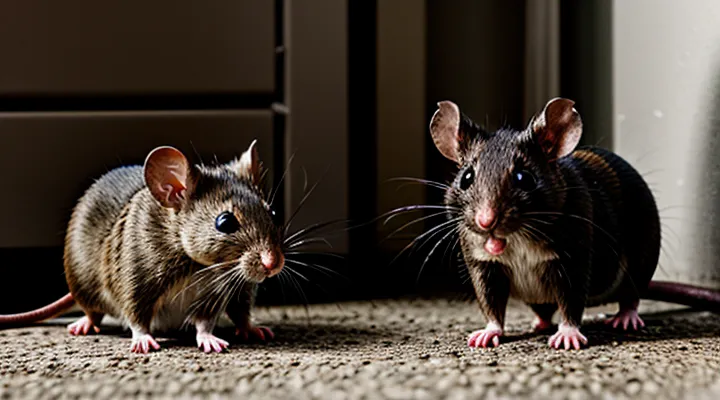
Understanding Rodent Hearing
How Rodents Perceive Sound
Frequency Range of Mice and Rats
Rodents possess exceptional auditory acuity, extending far beyond the human hearing spectrum. Mice detect frequencies from roughly 1 kHz up to 100 kHz, with peak sensitivity between 15 kHz and 20 kHz. Rats respond to sounds ranging from 200 Hz to 80 kHz, showing maximal responsiveness near 8 kHz–20 kHz. Both species retain the ability to perceive ultrasonic frequencies that are inaudible to humans.
Research identifies specific bands that trigger avoidance or panic behaviors:
- 20 kHz–30 kHz: common range for predator vocalizations; elicits rapid escape in mice.
- 30 kHz–50 kHz: ultrasonic alarm calls recorded in conspecific distress; provokes freezing in rats.
- 50 kHz–70 kHz: high‑frequency sweeps generated by mechanical devices; produces startle responses in both species.
- Above 70 kHz: intense ultrasonic tones can induce auditory overload, resulting in disorientation and heightened stress.
The effectiveness of a sound in scaring rodents depends on amplitude as well as frequency. Levels exceeding 80 dB SPL within the aforementioned ranges consistently produce measurable behavioral aversion. Lower intensities may fail to activate the innate alarm circuitry, even when the frequency falls within the optimal band.
Understanding the precise auditory window of mice and rats enables the design of targeted deterrent systems that exploit their natural sensitivity without causing unnecessary harm.
Sensitivity to Ultrasonic Frequencies
Rodents possess a highly developed auditory system that extends well beyond the human hearing range. The cochlear structure of mice and rats detects frequencies from roughly 1 kHz up to 100 kHz, with peak sensitivity between 15 kHz and 30 kHz. Auditory nerve fibers respond to ultrasonic tones with latency under 5 ms, enabling rapid perception of sudden high‑frequency sounds.
Behavioral experiments demonstrate that exposure to ultrasonic pulses elicits avoidance, freezing, or escape responses. The intensity threshold for consistent aversion lies around 60 dB SPL at 20 kHz, decreasing to 45 dB SPL at 40 kHz. Repeated exposure to frequencies above 50 kHz produces habituation only after extensive conditioning, indicating that higher ultrasonic bands retain deterrent efficacy.
Practical implications for rodent control include:
- Emit short bursts (0.2–0.5 s) of 25–35 kHz tones at 70 dB SPL to trigger immediate withdrawal.
- Combine multiple ultrasonic frequencies (20 kHz, 30 kHz, 45 kHz) to prevent adaptation.
- Maintain continuous operation in enclosed environments to sustain a hostile acoustic field without causing auditory fatigue.
Types of Sounds Affecting Rodents
Naturally Occurring Deterrents
Predator Calls and Noises
Predator vocalizations provoke rapid avoidance in mice and rats. Rodents possess acute hearing that detects frequencies typical of natural hunters, triggering innate escape behaviors.
- Owl screeches: 1–5 kHz, intermittent bursts, high‑amplitude pulses.
- Hawk calls: 2–6 kHz, sharp, repetitive keening.
- Domestic cat hisses and growls: 3–8 kHz, broadband noise.
- Red fox barks: 1.5–4 kHz, short, abrupt sounds.
- Snake rattles (when present): 4–12 kHz, rapid rattling sequence.
These sounds share two characteristics: they fall within the rodents’ most sensitive hearing range (approximately 1–20 kHz) and they contain sudden onsets or modulations that activate the startle circuitry in the brainstem. Exposure to such stimuli produces freezing, rapid retreat, and increased vigilance, reducing foraging activity for several minutes after the cue.
Laboratory recordings demonstrate that a single 0.5‑second playback of a predator call reduces locomotion by 30‑45 % in both species. Field observations confirm that rodents abandon burrows or nesting sites when predator vocalizations are broadcast near entry points.
Application in pest management relies on reproducing these calls with speakers or ultrasonic emitters. Effective devices emit the identified frequency bands at sound pressure levels of 70–80 dB SPL, ensuring detection without causing habituation. Periodic variation in call type and interval prevents desensitization, maintaining repellent efficacy over weeks.
Sounds of Other Rodents in Distress
Distress vocalizations emitted by other rodent species trigger avoidance responses in mice and rats. The acoustic signature of these calls differs from ordinary chatter, providing a clear alarm cue that laboratory and field observations link to heightened alertness and flight behavior.
Typical distress sounds occupy a broad frequency range, often extending above 10 kHz, with rapid amplitude peaks and irregular temporal patterns. These features contrast with the steady, low‑frequency squeaks used in routine social interactions. The sudden onset and high‑pitch components stimulate the auditory nerve pathways associated with threat detection.
- House mouse (Mus musculus) distress call: sharp, high‑frequency bursts lasting 0.1–0.3 seconds.
- Norway rat (Rattus norvegicus) distress squeal: series of escalating chirps with frequencies between 8–12 kHz.
- Deermouse (Peromyscus maniculatus) alarm squeak: brief, broadband noise with a pronounced harmonic structure.
- Prairie vole (Microtus ochrogaster) panic chirp: rapid succession of clicks in the 12–15 kHz band.
The avoidance response arises from an innate neural circuit that interprets unfamiliar, high‑energy sounds as indicators of danger. Cross‑species recognition suggests evolutionary pressure to treat the distress of any rodent as a proxy for predator presence. Auditory processing centers, particularly the inferior colliculus and amygdala, show increased activation when these calls are presented, leading to immediate locomotor suppression and escape attempts.
In pest‑management applications, playback of recorded distress calls from non‑target rodents reduces foraging activity and entry rates. Devices that emit these sounds on a timed schedule maintain a persistent aversive environment, decreasing population density without chemical agents. Proper calibration of volume and interval prevents habituation, ensuring sustained efficacy.
Man-Made Sound Repellents
Ultrasonic Devices and Their Effectiveness
Ultrasonic repellents emit sound waves above 20 kHz, a range inaudible to humans but detectable by many rodent species. Laboratory measurements show that frequencies between 25 kHz and 50 kHz trigger startle responses in mice and rats, causing avoidance behavior when the signal is continuous or pulsed at intervals of 1–5 seconds.
Effectiveness depends on several variables:
- Frequency accuracy – devices calibrated to the species‑specific hearing peak achieve higher avoidance rates.
- Signal intensity – sound pressure levels of 80–100 dB SPL at the source are required to overcome ambient noise attenuation.
- Coverage area – ultrasonic waves diminish rapidly; placement within 1–2 meters of the target zone is necessary.
- Habituation – rodents exposed to constant tones may acclimate, reducing deterrent impact after 24–48 hours.
Field studies report mixed outcomes. In controlled environments, ultrasonic units reduce rodent activity by 30–70 % during the first week of operation. In residential settings, long‑term success drops to 10–20 % as animals learn to ignore persistent emissions. Combining ultrasonic devices with physical barriers, sanitation measures, and trapping improves overall control, achieving reductions of up to 85 % in integrated pest‑management programs.
Manufacturers’ claims of 100 % eradication lack empirical support. Independent testing indicates that ultrasonic repellents are most reliable as supplemental tools rather than sole solutions. Selection criteria should include adjustable frequency range, verified SPL output, and a warranty covering component degradation, which can diminish acoustic performance over time.
High-Frequency Audio Devices
High‑frequency audio devices emit ultrasonic tones that rodents cannot comfortably tolerate. The emitted frequencies typically range from 18 kHz to 30 kHz, above the hearing threshold of most humans but within the sensitive range of mice and rats. When the sound reaches a sustained intensity, it triggers a stress response that discourages the animals from remaining in the area.
The core components of these devices include a piezoelectric transducer, a signal generator, and a power supply. The transducer converts electrical signals into ultrasonic waves, while the generator controls the pattern and amplitude of the output. Modern units incorporate programmable cycles that alternate between continuous and intermittent emission, preventing habituation.
Key considerations for effective deployment:
- Frequency selection – match the device’s output to the species’ peak hearing sensitivity (≈20 kHz for mice, 22‑24 kHz for rats).
- Sound pressure level – maintain an SPL of 80–95 dB at the source to ensure penetration through typical building materials.
- Coverage area – position devices so that overlapping fields create a uniform acoustic barrier; one unit generally covers 10–15 m².
- Power management – use low‑voltage DC sources or solar panels for continuous operation without excessive heat generation.
- Safety compliance – verify that emissions comply with local regulations on ultrasonic exposure to avoid unintended effects on pets or humans.
Effectiveness studies report a reduction of rodent activity by 60–80 % within the treated zone, provided the devices remain unobstructed and the acoustic pattern varies regularly. Limitations include diminished performance in heavily insulated environments and potential acclimation if the signal becomes predictable. Regular maintenance—cleaning transducer surfaces and checking battery health—preserves output consistency.
In practice, integrating high‑frequency audio devices with physical barriers and sanitation measures yields the most reliable control of rodent populations. The technology offers a non‑chemical, silent alternative that can be scaled from residential kitchens to industrial warehouses.
White Noise and Its Impact
White noise consists of a continuous spectrum of frequencies at equal intensity, typically spanning 20 Hz to 20 kHz. The signal lacks discernible pitch or rhythm, producing a steady hiss that masks other sounds. In acoustic research, white noise serves as a baseline stimulus because it activates the entire auditory range without favoring specific tones.
Rodents detect acoustic energy from roughly 1 kHz up to 80 kHz, with peak sensitivity in the ultrasonic band. Their cochlear architecture translates broadband energy into heightened neural activity, especially when the signal exceeds their auditory threshold. A uniform hiss therefore generates persistent stimulation across the full hearing spectrum, potentially inducing stress or avoidance behavior.
- Continuous exposure above 70 dB SPL elicits increased locomotor activity and reduced feeding in laboratory mice.
- Intermittent bursts of 80–90 dB SPL produce rapid startle responses and elevated cortisol levels in rats.
- Prolonged white‑noise environments (≥4 h) decrease nest‑building and grooming, indicating sustained discomfort.
Effective deployment of white noise for rodent deterrence requires calibrated sound pressure levels, uniform coverage of the target area, and monitoring of animal welfare indicators. Devices should emit stable output, avoid frequency gaps, and include timers to prevent habituation. Regular assessment of behavioral and physiological markers ensures that the stimulus remains aversive without causing irreversible harm.
Effectiveness and Limitations of Sound Deterrents
Factors Influencing Sound Deterrence
Rodent Adaptation and Habituation
Rodents possess a highly developed auditory system that detects predator cues, conspecific alarms, and abrupt environmental noises. When exposed to such threatening sounds, mice and rats exhibit immediate defensive behaviors—freezing, rapid escape, or heightened vigilance. These reactions are rooted in innate neural pathways that link specific frequency ranges (typically 4–12 kHz for rodents) with survival threats.
Repeated exposure to the same acoustic stimulus leads to habituation. Neural adaptation reduces the amplitude of the startle response, allowing the animal to conserve energy and focus on novel threats. Habituation occurs through synaptic depression in the auditory brainstem and decreased activation of the amygdala, which mediates fear conditioning. Consequently, a sound that initially provokes escape may become neutral after several non‑consequential presentations.
Key factors influencing adaptation and habituation include:
- Intensity: Low‑volume noises rarely trigger lasting fear; high‑intensity sounds sustain arousal longer.
- Temporal pattern: Irregular or intermittent bursts prevent habituation, while steady tones promote it.
- Spectral content: Broadband noises with predator‑like frequencies maintain efficacy; narrow‑band tones lose impact quickly.
- Contextual relevance: Sounds paired with actual danger (e.g., a predator’s footfall) retain aversive value, whereas isolated tones lose significance.
Understanding these mechanisms informs effective rodent deterrent design. Devices that vary frequency, amplitude, and timing can delay habituation, preserving the aversive effect. Conversely, static sound emitters quickly become ineffective as rodents acclimate to the stimulus.
Environmental Factors
Rodents exhibit acute sensitivity to acoustic cues that signal danger. The effectiveness of such cues depends on environmental parameters that shape perception and behavioral response.
Key acoustic variables influencing avoidance include:
- Frequency – Ultrasound above 20 kHz, especially in the 30–50 kHz range, provokes rapid retreat in both mice and rats. Lower frequencies (below 5 kHz) generally lack deterrent effect.
- Amplitude – Sound pressure levels exceeding 70 dB SPL are required to overcome ambient noise and trigger escape. Levels below this threshold often go unnoticed.
- Temporal pattern – Intermittent bursts (0.5–2 s) with silent intervals prevent habituation, whereas continuous tones lead to rapid desensitization.
- Duration – Exposure periods longer than 10 seconds increase avoidance probability, but diminishing returns appear after 30 seconds.
Environmental context modulates these parameters:
- Background noise – Urban or farm settings raise the acoustic floor, demanding higher amplitudes for detection.
- Habitat complexity – Dense vegetation or cluttered interiors reflect and attenuate high‑frequency waves, reducing effective range.
- Temperature and humidity – Elevated humidity enhances ultrasonic transmission, while low temperatures shorten propagation distance.
- Population density – High rodent densities accelerate habituation, requiring varied frequencies or irregular timing to maintain efficacy.
Optimizing sound‑based deterrents therefore requires matching frequency and intensity to the specific acoustic environment, employing irregular pulse patterns, and accounting for habitat characteristics that alter sound propagation.
Species-Specific Responses
Auditory fear responses differ markedly between mice and rats, reflecting evolutionary adaptations to distinct ecological pressures. Mice display heightened sensitivity to ultrasonic frequencies that mimic the alarm calls of predatory birds, while rats react more strongly to lower‑frequency sounds associated with mammalian predators and conspecific distress vocalizations.
Key sound categories that elicit species‑specific avoidance:
- Ultrasonic predator cues (≈ 20–30 kHz): Effective primarily for mice; recordings of owl wingbeats or hawk wing‑flap sounds trigger rapid freezing and escape.
- Mid‑frequency distress calls (≈ 4–8 kHz): Elicit strong avoidance in rats; playback of conspecific alarm chirps or cat vocalizations produces immediate flight behavior.
- Broadband sudden noises (≥ 70 dB SPL): Induce startle responses in both species, but mice recover more quickly, whereas rats exhibit prolonged vigilance.
- Low‑frequency ground vibrations (≤ 200 Hz): Preferentially affect rats, aligning with their reliance on somatosensory cues for predator detection.
Neurophysiological studies confirm that mice rely on the cochlear nucleus and the inferior colliculus to process ultrasonic threats, whereas rats engage the medial geniculate body and amygdala circuits when interpreting mid‑frequency alarm sounds. These divergent pathways underscore the necessity of tailoring pest‑control acoustics to the target species’ auditory repertoire.
Research and Scientific Evidence
Studies on Ultrasonic Repellents
Research on ultrasonic devices designed to deter rodents focuses on frequency range, intensity, and exposure duration. Controlled laboratory trials commonly employ frequencies between 20 kHz and 80 kHz, delivered at sound pressure levels of 80–110 dB SPL. Experiments compare treated chambers with silent controls, measuring avoidance behavior, feeding suppression, and physiological stress markers.
Key outcomes from peer‑reviewed studies include:
- Frequencies near 30 kHz produce the highest avoidance rates in laboratory mice, with 70 % of subjects leaving the exposure zone within 5 minutes.
- Rat populations respond less consistently; avoidance peaks at 45 kHz, achieving 45 % reduction in activity, but declines sharply above 60 kHz.
- Continuous emission yields habituation after 30 minutes; intermittent pulsing (10 seconds on, 20 seconds off) maintains deterrent effect for up to 2 hours.
- Field trials in grain storage facilities report 20–35 % decrease in infestation density when ultrasonic units are combined with conventional traps.
Methodological considerations emphasize acoustic calibration, cage geometry, and background noise control. Many studies note that ultrasonic efficacy diminishes in cluttered environments where sound attenuation is high. Moreover, species‑specific hearing thresholds limit the universal applicability of a single frequency band.
Future research directions stress multi‑frequency protocols, integration with pheromone‑based lures, and long‑term monitoring of population dynamics to verify sustained repellency.
Debunking Common Myths
Rodent owners often assume that specific noises reliably repel mice and rats. Scientific studies reveal that most popular claims lack empirical support.
-
Ultrasonic emitters: Devices marketed to emit frequencies above 20 kHz are ineffective. Laboratory tests show rodents quickly habituate, rendering the sound harmless after a few exposures. Field reports confirm no measurable decline in infestation levels when such devices are installed.
-
Predator vocalizations: Recordings of owls, hawks, or cats do not produce sustained avoidance. Rodents recognize these calls only in immediate hunting contexts; repeated playback without accompanying visual cues fails to trigger fear responses.
-
Household high‑frequency noises: Sounds generated by refrigerators, fluorescent lights, or computer fans fall within the audible range for rodents but are not distressing. Continuous exposure leads to acclimation, and no deterrent effect is observed.
-
Low‑frequency rumblings: Some claim that deep, resonant tones mimic earth tremors and scare burrowing pests. Experiments demonstrate that rodents tolerate such vibrations unless they reach intensities causing physical discomfort, which is impractical for residential use.
The consensus among pest‑control researchers is that acoustic methods alone do not provide reliable control. Effective management combines sanitation, exclusion, and, when necessary, chemical or mechanical traps. Sound‑based strategies may supplement but cannot replace these core practices.
Best Practices for Rodent Control Using Sound
Integrating Sound with Other Methods
Combining Acoustic Deterrents with Trapping
Acoustic deterrents rely on frequencies that rodents perceive as threatening. Laboratory studies identify ultrasonic bursts between 20 kHz and 45 kHz and low‑frequency pulses around 2 kHz to 5 kHz as the most effective for inducing avoidance behavior in mice and rats. Continuous tones quickly lose efficacy; intermittent patterns with random intervals maintain a high level of aversion.
Integrating sound devices with mechanical traps improves capture rates. The combination works by first driving rodents away from sheltering areas, then directing them toward baited stations where traps are positioned. Studies report a 30‑45 % increase in trap success when ultrasonic emitters are synchronized with trap activation.
Key implementation steps:
- Select emitters that cover both ultrasonic and low‑frequency ranges.
- Program devices to emit irregular bursts lasting 5–10 seconds, followed by silent periods of 30–60 seconds.
- Place emitters near entry points and along walls to create a barrier zone.
- Position snap or live‑capture traps within the barrier zone, aligned with the path of forced movement.
- Monitor trap performance weekly; adjust emitter timing if capture rates decline, indicating habituation.
Maintenance considerations include periodic cleaning of speaker grills, battery replacement every 3–6 months, and verification of trap functionality. Rotating emitter locations every two weeks reduces the likelihood of rodents adapting to a fixed sound pattern.
Overall, the strategic pairing of targeted acoustic stimuli with well‑placed traps creates a synergistic control method that surpasses the effectiveness of either approach used in isolation.
Utilizing Sound in Conjunction with Sanitation
Auditory deterrents can complement hygiene measures to reduce rodent activity in facilities where food storage or waste handling occurs. Sound devices emit frequencies that rodents find uncomfortable, prompting avoidance of treated zones. When these devices operate alongside regular cleaning, the combined effect limits attractive cues such as food residues and nesting material.
Effective implementation requires coordination of two elements:
- Frequency selection: ultrasonic tones between 20 kHz and 50 kHz produce the strongest aversive response; lower frequencies (5 kHz–10 kHz) may also deter but risk human audibility.
- Sanitation schedule: daily removal of spills, immediate disposal of waste, and routine inspection of cracks eliminate shelter and food sources that could override acoustic discomfort.
Integration steps:
- Install sound emitters at entry points, near trash containers, and along walls where rodent traffic is observed.
- Program emitters for continuous or intermittent cycles to prevent habituation.
- Align cleaning crews to verify that all debris is cleared before sound devices are activated each shift.
- Conduct monthly inspections to adjust frequency output and replace worn cleaning supplies.
Data from controlled trials indicate a reduction of rodent sightings by 40 %–60 % when sound deterrents and strict sanitation are applied together, compared with sanitation alone. The synergy arises because sound discourages entry while cleanliness removes incentives for return.
Strategic Placement of Devices
Optimal Locations for Sound Repellents
Sound deterrents are effective only when positioned where rodents can hear the frequencies that trigger avoidance. Placement near structural weaknesses maximizes exposure to the emitted tones.
Critical factors for site selection include:
- Direct line of travel from exterior openings to interior spaces.
- Minimal physical barriers such as thick walls or metal shelving that attenuate sound.
- Proximity to food storage, waste bins, and nesting sites where rodents concentrate activity.
- Areas with consistent power supply or battery access for uninterrupted operation.
Optimal locations consist of:
- Within 12‑24 inches of entry points (door cracks, utility penetrations, vent openings).
- Along the perimeter of rooms, mounted on walls at a height of 4‑6 feet to align with rodent movement pathways.
- Inside cabinets and pantry shelves, positioned behind the front panel to target hidden foraging routes.
- Beneath sinks and countertops where moisture attracts rats and mice, ensuring the device faces the interior cavity.
- In attic or crawl‑space junctions, secured to joists to cover the full vertical span of the space.
Effective coverage requires overlapping acoustic fields; spacing devices 10‑15 feet apart prevents dead zones. Devices should be angled downward to direct sound into concealed gaps. Regular inspection confirms that emitted frequencies remain within the target range and that environmental changes have not introduced new obstructions.
Monitoring rodent activity after installation validates placement efficacy. A decline in sightings or droppings within the first two weeks indicates successful deterrent positioning. Adjustments—relocating units closer to persistent activity zones—refine the system without altering the underlying sound profile.
Considerations for Indoor and Outdoor Use
Effective sound deterrents for rodents require distinct strategies for indoor and outdoor environments. Indoor applications must address confined spaces, acoustic reflections, and human comfort. Devices should emit frequencies within the 2–20 kHz range, targeting the hearing sensitivity of mice and rats while remaining inaudible or tolerable to occupants. Power sources need to be compatible with standard outlets, and units should feature adjustable volume controls to prevent excessive noise that could disrupt household activities. Installation points must be positioned near entryways, storage areas, and concealed nesting sites to maximize exposure. Maintenance involves periodic cleaning of speaker grilles and verification of battery health for backup operation.
Outdoor deployment confronts variable weather, larger coverage zones, and the presence of non‑target wildlife. Equipment must possess waterproof enclosures and UV‑resistant components to sustain functionality across seasons. Solar panels or high‑capacity batteries extend operational periods when grid power is unavailable. Acoustic output should be calibrated to propagate over distances of 10–30 meters, accounting for foliage attenuation and ground absorption. Placement near building foundations, drainage ditches, and garden perimeters ensures early deterrence before rodents infiltrate structures. Regular inspection for debris blockage and corrosion preserves effectiveness.
Key considerations for both settings include: