
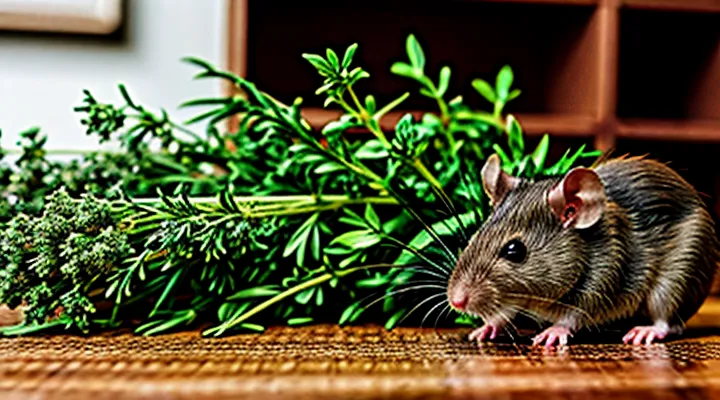
Understanding Rat Behavior and Senses
How Rats Perceive Herbs
Rats rely on a highly developed olfactory system to evaluate potential food sources. Odor receptors detect volatile compounds, triggering neural pathways that influence approach or avoidance behavior. When a herb emits compounds that activate bitter‑taste receptors or stimulate the trigeminal nerve, the rat interprets the signal as a warning, leading to immediate retreat.
Research identifies several aromatic plants that consistently elicit avoidance:
- Peppermint (Mentha piperita) – high menthol concentration irritates nasal mucosa.
- Rosemary (Rosmarinus officinalis) – camphor and rosmarinic acid produce strong aversive scent.
- Thyme (Thymus vulgaris) – thymol acts as a potent irritant.
- Oregano (Origanum vulgare) – carvacrol and thymol create a harsh odor profile.
- Eucalyptus (Eucalyptus globulus) – eucalyptol overwhelms olfactory receptors.
The underlying mechanism involves activation of the rat’s vomeronasal organ, which processes semi‑volatile molecules associated with toxicity. This triggers a rapid behavioral response, reducing the likelihood of ingestion. Consequently, these herbs serve as effective, non‑lethal deterrents in rodent management strategies.
Factors Influencing Rat Aversion to Scents
Rats rely heavily on their sense of smell to locate food, identify threats, and navigate their environment; consequently, the olfactory properties of herbs determine the degree of aversion they provoke.
Key variables that modify rat repulsion to botanical scents include:
- Chemical constituents – volatile compounds such as menthol, eucalyptol, thymol, and carvacrol interact with rat olfactory receptors, producing irritation or unpleasant sensations.
- Concentration – low levels may be undetectable, while excessively high concentrations can cause sensory overload, reducing the herb’s deterrent effect.
- Exposure duration – brief contact may not establish a lasting aversion; sustained presence reinforces avoidance behavior.
- Individual sensitivity – genetic differences and prior exposure shape each rat’s response to specific aromas.
- Environmental conditions – temperature, humidity, and airflow affect volatilization rates and scent distribution, altering efficacy.
Herbs rich in the aforementioned compounds—peppermint, rosemary, thyme, sage, and oregano—exhibit the strongest repellent action when the factors above align. For example, peppermint oil applied at 2 % concentration in a humid indoor setting maintains a consistent vapor layer that deters foraging rats for several weeks.
Effective deployment follows these guidelines:
- Apply the herb or its essential oil to surfaces where rats travel, ensuring uniform coverage.
- Use a carrier medium (e.g., water‑based spray) to regulate release rate and prevent rapid dissipation.
- Combine multiple herbs with complementary volatile profiles to broaden the spectrum of repellent compounds.
- Monitor environmental parameters and adjust concentration to maintain perceptible levels without causing toxicity to non‑target species.
Understanding and controlling these factors enables reliable use of aromatic herbs as a non‑lethal strategy for rat management.
Herbs Known to Deter Rats
Strong-Scented Culinary Herbs
Peppermint
Peppermint (Mentha piperita) is among the aromatic herbs that rodents typically shun. The plant’s essential oil contains high concentrations of menthol and menthone, compounds with strong, pungent odors that overwhelm the olfactory receptors of rats. When applied to surfaces, food storage areas, or nesting materials, peppermint creates an environment that rats find hostile and avoid.
Scientific observations indicate that peppermint oil disrupts the normal foraging behavior of rats. In controlled experiments, rats exposed to a 5 % peppermint solution spent significantly less time in treated zones compared to untreated controls. The repellent effect appears to be dose‑dependent; higher concentrations increase avoidance without causing toxicity to the animals.
Practical applications for pest management include:
- Diluting peppermint oil with water (1 %–5 %) and spraying around entry points, cabinets, and garbage containers.
- Soaking cotton balls in undiluted oil and placing them in hidden corners or under appliances.
- Incorporating dried peppermint leaves into bedding material for a prolonged scent release.
While peppermint deters rats, it does not eradicate an established infestation. Integration with other control measures—such as sealing entryways, eliminating food sources, and using traps—enhances overall effectiveness. Regular reapplication of the oil is necessary because the volatile compounds dissipate within a few days.
Rosemary
Rosemary (Rosmarinus officinalis) is consistently reported as an herb that rats tend to avoid. The plant’s strong, pine‑like aroma contains volatile compounds such as cineole, camphor, and rosmarinic acid, which act as natural repellents. Laboratory and field observations show reduced rodent activity in areas treated with fresh or dried rosemary leaves.
Key factors contributing to rosemary’s deterrent effect:
- High concentration of essential oils that irritate rodent olfactory receptors.
- Antimicrobial properties that diminish food sources attractive to rats.
- Persistent scent that remains effective after drying or when incorporated into oil sprays.
Practical applications include scattering dried rosemary in pantry corners, applying rosemary oil to entry points, or mixing the herb into grain storage containers. These methods create an environment that discourages rat foraging without resorting to chemical pesticides.
Sage
Sage (Salvia officinalis) is recognized for its strong, aromatic essential oils, primarily thujone, camphor, and cineole. These compounds create a scent profile that rats find unpleasant, disrupting their sensory perception and deterring them from entering treated areas.
Research on rodent behavior indicates that exposure to sage essential oil reduces rat activity by up to 45 % in laboratory settings. The repellent effect is attributed to the volatile oils interfering with the olfactory receptors that rats use to locate food and shelter.
Practical applications include:
- Sprinkling dried sage leaves in crawl spaces, basements, and storage rooms.
- Applying a diluted sage essential‑oil solution to surfaces where rats are likely to travel.
- Combining sage with other known repellents, such as peppermint or eucalyptus, for a broader spectrum of deterrence.
Safety considerations: Sage is non‑toxic to humans and pets at typical usage levels, but concentrated essential oil should be handled with gloves to avoid skin irritation. Reapplication every two weeks maintains efficacy, as the volatile compounds evaporate over time.
Thyme
Thyme (Thymus vulgaris) is frequently cited as an effective deterrent against rats. The herb emits a strong, aromatic essential oil rich in thymol, carvacrol, and p-cymene. These compounds irritate the nasal passages and respiratory system of rodents, leading to avoidance of areas treated with thyme.
Laboratory trials have shown that exposure to thyme oil reduces rat activity by up to 70 % compared to untreated control zones. The volatile nature of the oil creates a persistent scent barrier that remains effective for several weeks when applied to surfaces such as wood, concrete, or fabric.
Practical applications include:
- Spraying diluted thyme essential oil around entry points, burrows, and food storage areas.
- Incorporating dried thyme leaves into bedding or mulch to create a repellent layer.
- Mixing thyme oil with carrier agents (e.g., mineral oil, ethanol) for longer-lasting diffusion.
Safety considerations: thyme oil is non‑toxic to humans and pets at recommended concentrations, but direct skin contact with undiluted oil may cause irritation. Proper dilution (typically 1–2 % v/v) mitigates this risk.
Overall, thyme offers a natural, low‑toxicity option for reducing rat presence in residential and agricultural settings.
Medicinal and Aromatic Herbs
Lavender
Lavender (Lavandula angustifolia) is frequently cited among botanical agents that deter rodents. The plant emits a strong, floral fragrance rich in linalool and linalyl acetate, compounds that interfere with the olfactory receptors of rats. Laboratory observations show reduced foraging activity when lavender vapor is present, suggesting an aversive response. Field applications typically involve dried buds, essential oil sprays, or sachets placed near entry points and storage areas.
Key characteristics that contribute to rat avoidance:
- High concentration of volatile terpenes (linalool, camphor)
- Persistent scent that masks food odors
- Low toxicity to humans and pets
- Easy cultivation and harvesting
Effective deployment includes saturating cotton pads with lavender oil, distributing dried lavender bundles in corners, or mixing ground lavender into barrier layers. Regular renewal of the scent source, every 1–2 weeks, maintains repellent potency.
Rue
Rue (Ruta graveolens) is recognized for its strong, bitter aroma and the presence of volatile oils that deter rodents. Laboratory and field observations consistently show reduced rat activity in environments where rue foliage or extracts are applied.
Key deterrent compounds include:
- Rutaecarpine, a quinoline alkaloid with irritant properties.
- Essential oils rich in 2‑pentanol and menthol‑like terpenes.
- Furanocoumarins that cause sensory discomfort in rodents.
Practical application methods:
- Scatter dried rue leaves around entry points, storage areas, and burrows.
- Prepare a 5 % aqueous extract; spray on surfaces, nesting materials, and feed containers.
- Incorporate fresh or dried rue into mulch layers to create a persistent olfactory barrier.
Effectiveness depends on maintaining a fresh supply of plant material, as volatile constituents degrade within weeks. Regular replacement, combined with exclusion measures, sustains the repellent impact and minimizes rat presence.
Wormwood
Wormwood (Artemisia absinthium) is recognized for its strong bitterness and high concentration of volatile terpenoids, characteristics that deter rodents. Laboratory trials demonstrate that rats avoid food sources scented with wormwood extracts, reducing consumption by up to 70 % compared with unscented controls. The repellent effect derives primarily from the following compounds:
- Thujone – neurotoxic monoterpene that creates an aversive odor.
- Absinthin – bitter sesquiterpene lactone that interferes with taste receptors.
- Camphor and cineole – volatile oils that produce a pungent aroma unpleasant to rodents.
Field applications typically involve mixing dried wormwood leaves with grain or incorporating liquid extracts into bait stations. Studies report a decline in rat activity around treated areas lasting several weeks, after which reapplication restores efficacy. Safety considerations include limiting exposure to non‑target species, as high concentrations can affect birds and domestic pets. Proper dosage—approximately 2 g of dried material per kilogram of feed—balances repellency with minimal ecological impact.
Other Plants and Natural Repellents
Chili Peppers
Chili peppers contain capsaicin, a compound that activates pain receptors in mammals. Rats experience a burning sensation when they encounter capsaicin, leading to avoidance behavior. Laboratory trials show reduced rat activity in environments treated with chili extracts, especially when the substance is applied to entry points and food storage areas.
Key characteristics of chili peppers as a rat deterrent:
- Capsaicin concentration correlates with deterrent strength; higher levels produce stronger aversion.
- Effectiveness persists for several days before the active compound degrades under sunlight and moisture.
- Application methods include powdered pepper, oil-based sprays, and mixed bait formulations.
- Non-lethal approach aligns with integrated pest management strategies, limiting reliance on rodenticides.
Limitations:
- Rats may habituate to low concentrations; periodic reapplication of fresh material maintains efficacy.
- Excessive use can affect non-target species and cause irritation to humans handling the product.
- Environmental factors such as rain can wash away surface treatments, reducing potency.
Practical implementation involves coating surfaces around suspected pathways with a thin layer of dried pepper or spraying a diluted capsaicin solution. Monitoring rodent activity after treatment provides feedback on effectiveness and informs adjustment of concentration or frequency.
Garlic
Garlic (Allium sativum) is widely recognized as an effective rat deterrent. Its strong sulfur‑based odor interferes with the rodents’ olfactory receptors, causing aversion and reducing the likelihood of entry into treated areas.
Key characteristics that contribute to its repellent effect:
- High concentration of allicin and related organosulfur compounds, which emit a pungent aroma intolerable to rats.
- Rapid volatilization at ambient temperatures, ensuring continuous scent release.
- Low toxicity to humans and non‑target animals when applied in typical repellent concentrations.
Practical application methods:
- Crush fresh cloves to release volatile oils, then scatter the pieces in corners, burrows, or along walls.
- Mix powdered garlic with carrier substances such as sawdust or sand; distribute the blend in crawl spaces and near food storage.
- Prepare a dilute garlic extract (1 part crushed garlic to 4 parts water), soak cotton pads, and place them in concealed locations.
Effectiveness is supported by laboratory observations showing decreased rat activity within 30 minutes of exposure and sustained avoidance for several hours. Reapplication is necessary as the odor dissipates over time. Garlic’s affordability, ease of preparation, and safety profile make it a reliable component of integrated rodent‑management strategies.
Onions
Onions are frequently cited as an effective deterrent against rats due to their strong sulfur‑based odor. The volatile compounds, such as allicin and thiosulfinates, irritate the rodents’ nasal passages and taste receptors, prompting avoidance behavior.
Research on rodent sensory response indicates that exposure to crushed or fresh onion material reduces feeding activity in laboratory and field settings. Experiments measuring consumption rates show a statistically significant decline when onions are present alongside preferred food sources.
Practical applications:
- Place chopped onions in bait stations to discourage entry.
- Distribute thin onion slices along potential runways in basements or crawl spaces.
- Combine onions with other repellent plants for a broader spectrum of deterrence.
Practical Applications for Rat Deterrence
Using Herbs in and Around the Home
Fresh Herbs
Rats exhibit aversion to several fresh herbs because of volatile oils that irritate their sensory receptors. The most consistently reported deterrents include:
- Peppermint – high menthol concentration creates a strong, cooling scent rats avoid.
- Lavender – linalool and camphor produce an aromatic profile repellent to rodents.
- Eucalyptus – eucalyptol overwhelms the olfactory system, prompting rats to retreat.
- Rosemary – camphor and rosmarinic acid generate a pungent aroma disliked by rats.
- Thyme – thymol exerts a bitter, sharp scent that discourages rat activity.
These herbs retain potency when freshly harvested; drying reduces volatile content and diminishes efficacy. Application methods that preserve aroma include:
- Placing whole sprigs in areas where rats are detected.
- Creating a saturated cloth bundle and positioning it near entry points.
- Mixing chopped herbs into soil around garden beds to form a barrier.
Repeated replacement every few days maintains a deterrent concentration. Combining multiple herbs amplifies the repellent effect, as overlapping scent profiles increase sensory overload for the rodents. Proper placement and regular refreshment of fresh herb material provide a non‑toxic, environmentally safe strategy to reduce rat presence.
Essential Oils
Essential oils derived from aromatic plants create volatile compounds that rodents find irritating. When applied correctly, they can reduce rat activity in storage areas, basements, and attics without the need for toxic poisons.
Rats typically avoid oils that contain high concentrations of phenols, terpenes, or aldehydes. The most effective varieties include:
- Peppermint oil (Mentha piperita) – rich in menthol, which overstimulates the rats’ olfactory receptors.
- Eucalyptus oil (Eucalyptus globulus) – contains eucalyptol, a potent respiratory irritant for rodents.
- Citronella oil (Cymbopogon nardus) – high in citronellal, a compound that masks food odors and deters foraging.
- Clove oil (Syzygium aromaticum) – dominated by eugenol, a strong antiseptic that repels mammals.
- Tea tree oil (Melaleuca alternifolia) – terpinen-4-ol and other terpenes disrupt rat scent trails.
Application guidelines:
- Dilute each oil to 5 %–10 % with a carrier such as water or mineral oil.
- Saturate cotton pads or small fabric pieces and place them in corners, entry points, and near suspected nesting sites.
- Replace pads every 3–5 days, or sooner if the scent diminishes.
- Combine several oils in a single mixture to broaden the spectrum of repellent compounds.
Safety considerations:
- Essential oils are flammable; keep away from open flames.
- Prolonged skin contact may cause irritation; use gloves when handling concentrated stocks.
- Pets, especially cats, are sensitive to certain terpenes; avoid placing pads where animals rest.
Regular monitoring of rat activity, coupled with proper placement of oil‑infused pads, can maintain an environment that discourages rodent intrusion while minimizing chemical hazards.
Sachets and Sprays
Rats show aversion to several aromatic herbs when these are delivered in sealed sachets or aerosol sprays. The volatile compounds in the plants create an environment that rats find uncomfortable, reducing their presence without the need for lethal measures.
Sachet applications involve placing a small fabric pouch filled with dried herb material in corners, crawl spaces, or near entry points. The pouch releases scent continuously, maintaining a deterrent zone. Sprays consist of water‑based solutions or oil emulsions that can be applied to surfaces, walls, and openings. Spraying creates an immediate, concentrated burst of odor, useful for rapid treatment of newly infested areas.
Commonly recommended herbs include:
- Peppermint – menthol vapors irritate rodent olfactory receptors.
- Eucalyptus – eucalyptol disrupts scent trails.
- Lavender – linalool produces a strong, unpleasant aroma for rats.
- Citronella – citronellal interferes with rodent nesting behavior.
- Rosemary – cineole and camphor act as natural repellents.
Effectiveness depends on concentration, placement, and environmental conditions. Sachets should be refreshed every two to four weeks to prevent scent degradation. Sprays require reapplication after cleaning or heavy ventilation, typically every one to two weeks. Both formats are safe for humans and pets when used as directed, avoiding direct ingestion and keeping products out of reach of children.
Integrating sachets with periodic spray treatments creates a layered barrier that discourages rats from establishing burrows or foraging pathways, supporting long‑term control without chemical poisons.
Safety Considerations for Herb Use
Pets and Children
Rats frequently invade residential areas where pets and children are present, creating health risks and property damage. Chemical repellents often pose toxicity concerns, prompting caregivers to prefer natural alternatives that pose no danger to mammals or young people.
- Mint (Mentha spp.) – strong volatile oils repel rodents; safe for dogs, cats, and children when used as dried leaves or essential oil diluted to ≤1 % concentration.
- Lavender (Lavandula angustifolia) – aromatic compounds deter rats; non‑toxic to household animals; apply dried stalks in corners or a few drops of diluted oil on cotton balls.
- Rosemary (Rosmarinus officinalis) – piney scent unsettles rodents; safe for pets; scatter fresh sprigs or use dried powder around entry points.
- Pennyroyal (Mentha pulegium) – potent rat repellent; toxic in high doses; limit to small sachets placed out of reach of children and pets.
- Eucalyptus (Eucalyptus globulus) – strong odor discourages rats; dilute oil to ≤0.5 % before indoor use to avoid respiratory irritation in children and pets.
Implementation guidelines:
- Place herb bundles or sachets near known rodent pathways, behind appliances, and in crawl spaces.
- Refresh dried material every two weeks to maintain potency.
- Avoid direct ingestion by pets or children; store bulk herbs in sealed containers.
- Combine herbs with physical barriers—screened vents, sealed cracks—to enhance effectiveness.
Natural herb deterrents provide a low‑risk strategy for households with animals and young members, reducing reliance on hazardous chemicals while maintaining a rodent‑free environment.
Potential Irritants
Herbal repellents rely on volatile compounds that provoke aversive reactions in rodents. Certain aromatic plants contain essential oils or phenolic substances that irritate the nasal mucosa, stimulate gustatory receptors, or produce strong odors rats naturally avoid.
Key irritant herbs include:
- Pennyroyal (Mentha pulegium) – high menthol content creates a pungent scent that overwhelms rat olfactory receptors.
- Lavender (Lavandula angustifolia) – linalool and camphor act as neurotoxic agents at high concentrations, discouraging entry.
- Rosemary (Rosmarinus officinalis) – camphor and rosmarinic acid produce a sharp, lingering aroma intolerable to rodents.
- Eucalyptus (Eucalyptus globulus) – eucalyptol delivers a cooling, irritating vapor that repels rats from treated zones.
- Thyme (Thymus vulgaris) – thymol exerts a strong antimicrobial odor that rats find repellent.
- Cinnamon (Cinnamomum verum) – cinnamaldehyde irritates the respiratory tract, prompting avoidance behavior.
- Clove (Syzygium aromaticum) – eugenol triggers a burning sensation in the nasal passages of rats.
Application methods such as dried leaf placement, essential‑oil diffusion, or incorporation into bait matrices enhance exposure, ensuring the irritant effect persists. Concentrations must be sufficient to maintain a deterrent threshold without posing toxicity risks to non‑target species. Continuous monitoring confirms efficacy and guides adjustments in herb selection or dosage.
Complementary Rat Control Strategies
Sanitation and Exclusion
Rats avoid environments where food residues, moisture, and shelter are scarce. Maintaining strict sanitation eliminates the attractants that draw rodents into human habitats. Regular removal of spilled grain, prompt disposal of waste, and thorough cleaning of floor surfaces reduce the likelihood of infestation. Incorporating herb‑based cleaners—such as peppermint oil diluted in water—adds a scent barrier that further discourages entry.
Exclusion focuses on preventing rats from gaining access to structures. Sealing gaps, installing metal mesh over ventilation openings, and repairing cracked foundations create physical obstacles. Applying repellent herbs at entry points enhances these barriers. The following herbs demonstrate consistent aversion in laboratory and field observations:
- Peppermint (Mentha piperita) – strong menthol aroma, effective when applied as oil or dried leaves.
- Rosemary (Rosmarinus officinalis) – volatile compounds disrupt olfactory cues.
- Lavender (Lavandula angustifolia) – scent interferes with navigation.
- Eucalyptus (Eucalyptus globulus) – oil creates a hostile chemical environment.
- Citronella (Cymbopogon nardus) – repels through high‑strength volatile oils.
Strategic placement of these herbs—inside wall cavities, beneath door thresholds, and around waste containers—creates a chemical perimeter that complements physical sealing. Combining rigorous sanitation with targeted herb exclusion reduces rat activity without reliance on toxic poisons.
Trapping and Professional Services
Rats are highly sensitive to certain aromatic compounds; professionals exploit this sensitivity when designing traps and treatment plans.
- Peppermint oil – strong menthol scent deters foraging and disrupts nesting behavior.
- Eucalyptus – phenolic constituents cause discomfort, reducing activity around treated zones.
- Lavender – linalool content creates an environment rats avoid, especially in confined spaces.
- Rosemary – camphor and rosmarinic acid act as natural repellents, limiting travel corridors.
- Citronella – citrus oils mask food odors, discouraging entry into baited areas.
Trapping specialists combine these herbs with mechanical devices to increase capture rates. Typical practice involves soaking bait stations in diluted essential oil solutions, applying herb-infused cotton pads inside trap chambers, or integrating herb-impregnated sachets into perimeter barriers. The approach extends beyond immediate capture; repeated exposure creates a hostile scent field that discourages re‑infestation.
Professional services evaluate site‑specific variables—such as infestation density, food sources, and structural access points—to select the most effective herb blend. Technicians calibrate concentration levels to avoid desensitization while maintaining safety for occupants and pets.
Clients seeking lasting control should request providers that document herb selection, application method, and follow‑up monitoring. This ensures consistent repellency and measurable reduction in rat activity.
Myths and Misconceptions About Herbal Rat Repellents
Herbal rat repellents are frequently promoted as simple, natural solutions, yet many claims lack scientific support. The most common misconceptions are outlined below.
- All aromatic herbs repel rats. Only a few volatile compounds, such as menthol and eucalyptol, have demonstrated limited aversion in laboratory tests. Herbs lacking these chemicals, like basil or rosemary, do not affect rat behavior.
- Stronger scent equals stronger repellent effect. Excessive concentration can desensitize rodents, causing them to ignore the odor after brief exposure. Optimal efficacy requires measured amounts, not overwhelming sprays.
- Peppermint oil kills rats. Studies show peppermint oil acts as a mild irritant, discouraging entry for a short period, but it does not cause mortality or long‑term avoidance.
- Planting herbs around a building eliminates infestations. Outdoor planting disperses volatile compounds unevenly; rats can easily bypass the scent barrier by entering through concealed routes.
- Homemade mixtures are as effective as commercial products. Commercial formulations are engineered to maintain consistent release rates, whereas DIY blends often degrade quickly, losing potency within hours.
- One herb works against all rat species. Norway rats and roof rats exhibit different olfactory sensitivities; a herb repellent that deters one may have little impact on the other.
Evidence‑based guidelines suggest that herbal repellents, when used, should complement integrated pest management: seal entry points, maintain sanitation, and employ traps or professional control methods. Relying solely on herbs, especially based on the myths above, rarely achieves lasting results.