
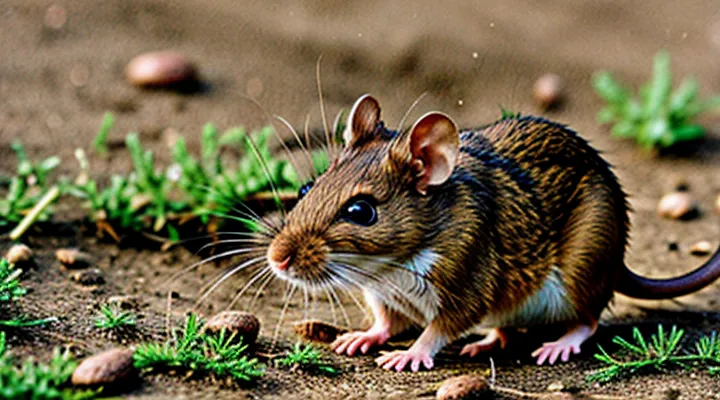
Preferred Environments
Meadows and Grasslands
Field mice thrive in open habitats where herbaceous vegetation dominates. Meadows provide a mosaic of tall grasses, flowering plants, and scattered shrubs, creating a range of micro‑habitats. Dense ground cover offers protection from predators, while the abundance of seeds and insects supplies a reliable food source.
Grasslands share similar structural features but often exhibit greater uniformity in plant height. This uniformity facilitates efficient foraging, as mice can move swiftly across the surface without frequent obstacles. Seasonal variations in grass growth produce pulses of seed availability, influencing reproductive cycles and population density.
Key characteristics of these environments that support field mouse populations include:
- Continuous vegetative cover that reduces exposure to aerial and terrestrial predators.
- High seed productivity, delivering essential carbohydrates and lipids.
- Presence of invertebrate communities that supplement the diet with protein.
- Soil composition that allows easy burrowing for nesting and refuge.
In both meadow and grassland ecosystems, the spatial arrangement of vegetation determines shelter quality, foraging efficiency, and predator avoidance. Management practices such as controlled grazing or periodic mowing can modify these parameters, directly affecting mouse abundance and distribution.
Forests and Woodlands
Field mice occupy a range of temperate forests and woodlands, favoring environments that provide cover, foraging opportunities, and nesting sites. Dense understory vegetation supplies protection from predators, while leaf litter and fallen logs offer a substrate for burrow construction. These habitats also support a diverse insect and seed population that constitutes the mouse’s primary diet.
Key forest characteristics that sustain field mouse populations include:
- Mixed hardwood stands with abundant shrub layers
- Coniferous woods where needle litter accumulates
- Deciduous woodlands with seasonal leaf fall
- Riparian corridors that add moisture and additional cover
Seasonal changes affect activity patterns: spring growth expands food resources, while autumn leaf accumulation enhances shelter options. In winter, mice retreat to deeper burrows or utilize insulated nest chambers within the litter. Maintaining heterogeneous forest structure preserves the conditions necessary for the species’ survival.
Agricultural Fields
Agricultural fields provide the primary environment for the field mouse, offering shelter, food, and breeding sites. The open expanses of cultivated land contain dense ground cover such as wheat stalks, barley stems, and rye residues, which conceal nests from predators. Soil composition influences burrowing depth; loamy soils retain moisture and facilitate tunnel stability, while compacted soils restrict movement.
Key factors affecting mouse presence in these habitats include:
- Crop rotation schedule, which determines the timing of seed availability and vegetation density.
- Harvest periods, during which residue removal reduces cover and forces temporary relocation.
- Predator pressure from birds of prey and domestic cats, which intensifies near field margins.
- Moisture levels, influencing seed germination and insect populations that serve as supplementary food.
Seasonal variations shape activity patterns. Spring growth delivers abundant seeds and insects, supporting population growth. Summer heat drives mice to cooler soil layers and shaded furrows. Autumn harvest creates a surge of discarded grain, prompting increased foraging. Winter scarcity limits activity to insulated burrows, with occasional surface excursions when stored food is accessible.
Nesting Habits and Structures
Field mice construct nests that serve as shelter, breeding sites, and food storage chambers. Nests are typically built in shallow depressions lined with grasses, leaves, and shredded plant material. When available, mice incorporate moss, bark strips, or fine twigs to improve insulation. The entrance is often concealed by a low mound of vegetation, reducing predator detection.
Nesting locations vary with season and habitat type:
- Open grasslands: nests placed under dense clumps of grass or within abandoned insect burrows.
- Agricultural fields: nests hidden in the base of crop stalks, under stone piles, or within irrigation ditches.
- Woodland edges: nests situated in leaf litter, beneath fallen logs, or in the roots of shrubs.
- Urban peripheries: nests found in garden compost heaps, under shed floors, or within debris piles.
Field mice exhibit flexibility in nest architecture. A typical nest consists of:
- Outer layer – coarse material that provides structural stability.
- Middle layer – finer fibers that create a compact cushion.
- Inner chamber – soft, dry substances that maintain warmth and moisture balance.
Mice may construct multiple nests within a home range, designating separate sites for rearing young and for temporary refuge. Nest refurbishment occurs regularly; discarded material is removed and fresh lining added to preserve hygiene and thermal efficiency.
Reproductive cycles influence nest complexity. During gestation, females enlarge the inner chamber to accommodate litters of three to eight offspring. After weaning, nests are often abandoned or repurposed for storage of seeds and cached food items.
Overall, nesting behavior reflects an adaptive strategy that optimizes protection from predators, temperature regulation, and resource management across diverse environments.
Adaptations to Different Living Spaces
Field mice occupy a wide range of environments, from open grasslands and cultivated fields to forest edges and suburban gardens. Each setting imposes distinct challenges that have driven the evolution of specialized traits.
Morphological adjustments enable effective exploitation of diverse microhabitats. In open terrains, dorsal fur often exhibits muted brown or gray tones that blend with dry vegetation and soil, reducing visual detection by aerial predators. In densely vegetated areas, fur may acquire a richer, mottled pattern that matches leaf litter. Limb length varies with substrate; longer hind limbs facilitate rapid, leaping locomotion on sparse ground, while shorter, more robust limbs improve maneuverability among tangled root systems.
Behavioral strategies align with resource availability and predator pressure. In cultivated landscapes, mice display opportunistic foraging, consuming seeds, insects, and human-derived waste, and they adjust activity peaks to avoid diurnal farm machinery. In forest margins, individuals increase nocturnal activity and employ complex tunnel networks that provide shelter and escape routes. Seasonal breeding cycles shift to coincide with peak food abundance, ensuring offspring survival.
Physiological mechanisms support survival across temperature extremes and fluctuating moisture levels. Metabolic rates rise during cold periods, enhancing heat production, while renal adaptations concentrate urine to conserve water in arid fields. Seasonal pelage thickness adjusts to insulating needs, and fat reserves are accumulated before winter to sustain prolonged fasting.
Key adaptations across habitats
- Cryptic coloration matching local substrate
- Variable limb morphology for locomotion on different ground types
- Flexible diet encompassing seeds, insects, and anthropogenic matter
- Complex burrow architecture providing refuge and predator evasion
- Seasonal reproductive timing synchronized with food peaks
- Thermoregulatory and water-conserving physiological changes
Threats to Field Mouse Habitats
Habitat Loss
Field mice occupy grasslands, hedgerows, and low‑lying shrublands where cover and food are abundant. Their survival depends on the continuity of these environments; fragmentation or removal directly reduces viable living space.
- Agricultural intensification replaces native vegetation with monocultures, eliminating shelter and seed sources.
- Urban development converts open fields into impermeable surfaces, cutting off access to foraging grounds.
- Climate‑driven shifts alter moisture regimes, causing drought‑prone conditions that degrade suitable habitats.
Direct outcomes of habitat loss include measurable declines in local field‑mouse populations, lowered reproductive rates, and reduced genetic variability. The disappearance of these small mammals also diminishes seed dispersal and soil aeration services that support broader ecosystem health.
Effective responses involve:
- Designating and managing conservation reserves that preserve representative grassland patches.
- Restoring degraded areas through native plant re‑establishment and controlled grazing practices.
- Implementing land‑use policies that require habitat corridors linking isolated fragments.
These actions maintain the spatial integrity essential for field mice to persist across their natural range.
Predation
The field mouse occupies open fields, hedgerows, and the margins of cultivated land where cover and foraging resources coexist.
Predators that regularly encounter the mouse in these environments include:
- Barn owls (Tyto alba)
- Red foxes (Vulpes vulpes)
- Short-tailed weasels (Mustela erminea)
- Common kestrels (Falco tinnunculus)
Predation pressure shapes the mouse’s activity pattern. Nocturnal foraging reduces exposure to diurnal raptors, while rapid sprint bursts and zig‑zag routes increase escape success against terrestrial hunters.
Population density fluctuates in direct response to predator abundance. High predator numbers trigger increased reproductive output, whereas prolonged low predation allows steady growth without compensatory breeding.
Understanding these dynamics clarifies how the field mouse persists within its ecological niche despite continual threat from a diverse predator community.
Environmental Changes
Environmental shifts directly reshape the habitats occupied by field mice. Rising temperatures expand suitable ground cover northward, while drought conditions contract moist meadow zones, forcing populations to relocate or adapt to drier substrates.
Altered precipitation patterns modify plant communities that provide seed resources and nesting material. When grasses diminish, field mice experience reduced food availability and increased exposure to predators.
Human‑driven changes intensify pressure on these small mammals:
- Agricultural intensification replaces diverse herbaceous layers with monocultures, limiting shelter.
- Pesticide application reduces insect prey and contaminates seed stores.
- Urban expansion fragments continuous fields, isolating colonies and impeding gene flow.
- Flood frequency increases erosion of burrow banks, destabilizing nesting sites.
Collectively, these factors compress the ecological niche of the field mouse, prompting measurable shifts in distribution, reproductive timing, and survival rates. Monitoring these trends offers insight into broader ecosystem health.