
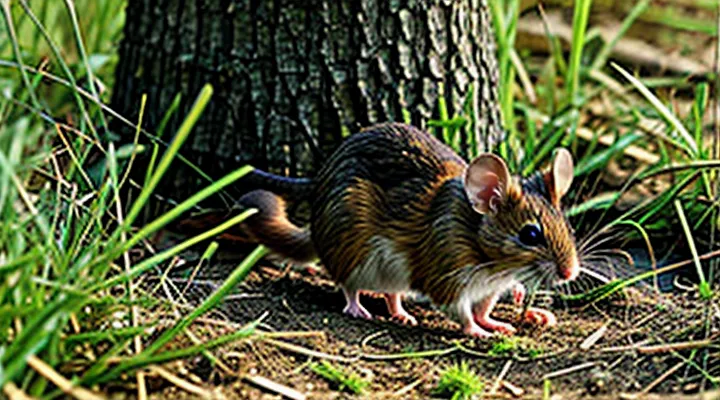
Ecological Niche of the Field Mouse
Taxonomy and Common Species Identification
Field mice belong to the family Muridae, subfamily Murinae. Within this group, the genus Apodemus dominates temperate zones, while Peromyscus occupies many North American ecosystems. The classification hierarchy proceeds from order Rodentia to family Muridae, then to genus and species, providing a framework for ecological studies and conservation assessments.
Typical field‑mouse species encountered across grasslands, forest edges, and cultivated fields include:
- Apodemus sylvaticus (wood mouse): brown dorsal pelage, white ventral side, tail length equal to body, large ears.
- Apodemus flavicollis (yellow‑necked mouse): reddish‑brown back, distinct yellowish collar, moderately long tail, robust skull.
- Peromyscus maniculatus (deer mouse): gray‑brown fur, bi‑colored tail, sharp whiskers, high‑frequency vocalizations.
- Microtus arvalis (common vole, often confused with field mice): short tail, dense fur, blunt nose, preference for moist meadows.
Identification relies on measurable traits: head‑body length (70–120 mm), tail-to-body ratio (0.9–1.2), ear size relative to skull, and pelage coloration patterns. Dental formulae (1/1 incisors, no canines, 0/0 premolars, 3/3 molars) confirm murid affiliation. Skull morphology—particularly the shape of the rostrum and auditory bullae—distinguishes genera.
Habitat selection reflects species‑specific adaptations. A. sylvaticus favors deciduous woodlands with abundant leaf litter, A. flavicollis occupies rocky shrublands, while P. maniculatus thrives in open fields and riparian zones. Understanding taxonomic placement and diagnostic characteristics enables precise field surveys and supports habitat management strategies.
General Physical Traits Affecting Habitat Selection
Field mice exhibit a suite of physical characteristics that directly influence the environments they occupy. Their modest body size, typically ranging from 6 to 12 cm in length, permits navigation through dense ground cover and narrow burrow entrances. Compact size reduces energetic demands, allowing survival in habitats where food resources fluctuate seasonally.
Fur coloration adapts to local substrates, providing camouflage against predators. In grassland settings, dorsal pelage tends toward brown or tan tones that blend with dry vegetation, while in rocky or forested areas, fur may display gray‑ish hues matching stone or leaf litter. This cryptic coloration improves foraging efficiency and reduces exposure risk.
Tail length and flexibility affect balance and locomotion. Longer, prehensile tails enhance agility on vertical structures such as low shrubs or fence posts, enabling mice to exploit arboreal microhabitats. Conversely, shorter, sturdier tails favor rapid movement through low vegetation and underground tunnels.
Foot morphology, including the presence of elongated hind limbs and textured pads, facilitates traction on varied surfaces. Broad soles increase surface area for walking on soft soil, while sharp claws assist in digging and climbing. These adaptations expand the range of viable substrates, from moist meadow soils to rugged limestone outcrops.
Sensory organs, particularly vibrissae and auditory structures, are tuned for detecting subtle vibrations and high‑frequency sounds. Enhanced tactile and acoustic perception allows mice to locate food and avoid predators in dense undergrowth where visual cues are limited.
Metabolic rate correlates with ambient temperature tolerance. Species with higher basal metabolic rates can maintain activity in cooler microclimates, such as shaded forest floors or early‑season snow patches, whereas those with lower rates thrive in warmer, open fields where heat dissipation is critical.
Key physical traits and their habitat implications:
- Small body size → access to narrow refuges, lower food requirements.
- Adaptive fur coloration → camouflage in specific substrate types.
- Tail length variation → balance for vertical versus horizontal movement.
- Specialized foot structure → traction on soft soil or rocky terrain.
- Advanced vibrissae and hearing → detection of prey and predators in low‑visibility settings.
- Metabolic flexibility → endurance across temperature gradients.
Principal Natural Environments
Preference for Grasslands and Open Fields
Field mice are small rodents that consistently occupy grassland ecosystems and expansive, unobstructed fields. Their physiological and behavioral adaptations align with the open‑ground environment, where dense herbaceous cover supplies both nourishment and shelter.
Grasslands provide a continuous supply of seeds, grasses, and insects, which constitute the primary diet of field mice. The low‑lying vegetation allows easy foraging while maintaining proximity to ground cover that conceals movement from predators.
Open fields offer a mosaic of microhabitats—bare soil, tussocks, and scattered shrubs—that facilitate nesting and burrow construction. Burrows protect against temperature extremes and provide refuge during periods of high predation pressure.
Geographically, field mice thrive in temperate regions where seasonal grass growth creates predictable food cycles. Populations are abundant in prairies, meadows, and agricultural margins, where human‑altered landscapes often mimic natural open habitats.
Key habitat characteristics:
- Dominance of herbaceous plants and seed‑producing species
- Presence of short vegetation interspersed with low shrubs for concealment
- Soil conditions suitable for burrow excavation
- Minimal canopy cover, ensuring unobstructed foraging routes
These elements collectively explain the strong preference of field mice for grasslands and open fields, reinforcing their role as widespread inhabitants of such environments.
Presence in Agricultural Landscapes
Cereal Fields and Crop Margins
Field mice are commonly found in cultivated grain landscapes, where the structural complexity of cereal stands and the adjoining vegetative edges provide essential resources. The dense canopy of wheat, barley, or rye offers protection from aerial predators and supports a steady supply of seeds and insects. Soil moisture retained beneath the crop roots creates favorable microclimates for nesting and foraging. Seasonal sowing and harvesting cycles generate temporal niches that field mice exploit for breeding and food storage.
Crop margins—striped hedgerows, grassy ditches, and uncultivated strips bordering fields—enhance habitat suitability. These peripheral zones retain higher plant diversity, including perennial grasses and flowering forbs that sustain invertebrate prey. The reduced disturbance compared with the central crop area allows mice to construct burrows with stable temperature and humidity. Margins also serve as corridors linking fragmented fields, facilitating movement and genetic exchange among mouse populations.
Key habitat characteristics:
- Continuous ground cover of soft stems and seed heads within the crop.
- Moist, loamy soils beneath the root zone.
- Presence of perennial vegetation along field edges.
- Minimal mechanical disturbance during the breeding season.
- Connectivity between adjacent fields through vegetated margins.
Abandoned Farmland
Abandoned farmland provides a mosaic of microhabitats that support field mouse populations. The cessation of intensive agriculture creates uncultivated soil patches, hedgerows, and residual structures that supply shelter, foraging opportunities, and nesting sites.
Key features of abandoned fields that benefit field mice include:
- Loose, organic-rich soil that facilitates burrowing and egg‑casing construction.
- Overgrown vegetation offering cover from predators and a diverse seed supply.
- Decaying woody debris and stone piles serving as refuge and thermoregulation points.
- Reduced pesticide exposure, allowing higher invertebrate abundance for protein intake.
Seasonal dynamics further enhance habitat suitability. Spring growth of grasses and wildflowers increases seed availability, while autumn leaf litter augments ground cover and insulation. Winter survival relies on the retained structural complexity of hedgerows and abandoned farm buildings, which maintain stable microclimates.
Population density tends to rise in fields left undisturbed for several years, as successional processes expand habitat heterogeneity. Management practices that preserve these elements—such as minimal mowing, retention of buffer strips, and protection of old fences—directly influence the long‑term viability of field mouse communities within former agricultural landscapes.
Woodlands and Forest Edges
Field mice thrive in woodland interiors and the transitional zones that border forested areas. These environments provide a mosaic of cover, foraging opportunities, and nesting sites essential for survival. Dense understory, leaf litter, and fallen logs create protected pathways that reduce exposure to predators while facilitating movement between resource patches.
Key habitat attributes include:
- Abundant ground vegetation for seed and insect consumption.
- Moist soil layers that support invertebrate prey.
- Structural complexity such as shrubs, saplings, and decaying wood offering nesting cavities.
- Edge microclimates that combine forest shade with open‑area warmth, enhancing foraging efficiency.
Seasonal changes influence habitat use. In spring, mice exploit fresh growth along forest margins; summer sees increased activity within shaded understory; autumn prompts storage of food in leaf litter; winter drives reliance on insulated burrows beneath snow cover. This adaptive flexibility underscores the importance of preserving both core woodland habitats and their peripheral edges.
Utilization of Hedgerows and Roadside Verges
Field mice thrive in fragmented landscapes where linear features such as hedgerows and roadside verges supply shelter, foraging opportunities, and movement corridors. These elements connect isolated patches of grassland and woodland, allowing individuals to disperse and maintain genetic exchange.
Hedgerows consist of multiple vegetation layers—rooted shrubs, low herbs, and canopy trees—that create a dense, vertically structured environment. Understorey cover protects mice from aerial predators, while seed‑bearing shrubs and insects furnish a year‑round diet. The presence of leaf litter and root systems provides nesting sites and stable microclimates.
Roadside verges, often composed of native grasses, wildflowers, and occasional woody debris, present an open yet protected habitat. Seasonal seed flushes on verges supplement the dietary needs of field mice during periods of scarcity in adjacent fields. The linear nature of verges reduces exposure to larger mammalian predators, and the proximity to agricultural fields enables easy access to additional food resources.
Key management actions that enhance the suitability of these linear habitats include:
- Maintaining continuous hedgerow length of at least 100 m to prevent gaps in connectivity.
- Periodic, selective trimming to preserve understory density while allowing light penetration for herbaceous growth.
- Seeding verges with native grasses and wildflowers that produce abundant seeds and support invertebrate populations.
- Retaining deadwood and leaf litter to increase nesting material and insulation.
- Avoiding the use of broad‑spectrum herbicides along verges to protect invertebrate prey bases.
Effective stewardship of hedgerows and roadside verges contributes directly to the persistence of field mouse populations, supporting broader biodiversity and ecosystem function within agricultural mosaics.
Essential Habitat Requirements
The Role of Dense Vegetation and Ground Cover
Dense vegetation creates a micro‑environment that meets the basic needs of field mice. Thick herbaceous layers retain moisture, regulate temperature, and supply a continuous supply of seeds, insects, and other small invertebrates that form the diet of these rodents.
Ground cover composed of leaf litter, fallen twigs, and low‑lying grasses offers concealment from aerial and terrestrial predators. The structural complexity of such cover disrupts predator sight lines and provides escape routes, reducing the likelihood of successful attacks.
The combination of vegetation and litter also supports nesting behavior. Field mice construct nests within the protective matrix of stems and foliage, which shields offspring from weather extremes and predation. The availability of dry, insulated material directly influences reproductive success and juvenile survival rates.
Key benefits of dense plant growth and ground debris include:
- Enhanced foraging efficiency through abundant, localized food sources.
- Improved thermoregulation via layered canopy and insulating litter.
- Increased safety through visual obstruction and physical barriers.
- Provision of stable sites for nest building and rearing young.
Overall, the presence of rich, layered vegetation and substantial ground cover determines the distribution, population density, and resilience of field mouse communities within their natural ecosystems.
Optimal Locations for Shelter and Nesting
Structure and Design of Underground Burrows
Field mice construct complex underground systems that balance protection, thermoregulation, and resource access. The burrow network consists of a primary tunnel, secondary branches, and specialized chambers, each serving a distinct function.
The primary tunnel extends 30–80 cm below the surface, aligning with soil layers that retain moisture while remaining free of large predators. Its diameter, typically 5–8 mm, matches the animal’s body size, minimizing excavation effort and reducing collapse risk.
Secondary branches diverge from the main passage at angles of 30°–45°, creating a lattice that distributes stress across the surrounding soil. This geometry enhances structural stability and allows rapid escape routes if a predator breaches a section.
Chambers within the burrow fulfill specific roles:
- Nest chamber: Deepest point, lined with shredded plant material for insulation; temperature remains 2–4 °C above ambient soil temperature.
- Food storage: Located near the entrance, positioned to facilitate quick retrieval; lined with dry grasses to prevent spoilage.
- Waste dump: Isolated from living spaces, often at the tunnel’s periphery, to minimize disease risk.
Construction proceeds in stages. First, the mouse excavates a shallow pilot tunnel using its incisors and forelimbs, loosening soil that is expelled through a temporary side opening. Second, reinforcement occurs as the animal compresses surrounding earth with its hind limbs, increasing lateral pressure and reducing voids. Finally, the mouse backs up to seal entry points with compacted soil, creating a camouflaged surface opening.
The burrow’s design reflects adaptation to variable substrates. In loamy soils, tunnels exhibit smoother walls due to higher cohesion, while in sandy environments, mice increase branching density to counteract lower structural integrity. This flexibility ensures the underground refuge remains functional across diverse habitats.
Nest Construction Materials and Placement
Field mice construct nests that balance insulation, concealment, and structural stability. The primary substances they gather include dry grasses, shredded leaves, fine twigs, and soft moss. In regions with abundant herbaceous cover, mice often layer grasses to create a dense base, then add finer foliage to fill gaps and improve thermal retention. When woody debris is scarce, shredded bark and plant stalks serve as supplementary reinforcement.
Nest placement reflects predator avoidance and micro‑climatic preferences. Mice typically locate nests within shallow depressions under dense vegetation, beneath fallen logs, or inside abandoned burrows of other small mammals. Elevation is limited; nests remain close to the ground to maintain proximity to food sources while exploiting the insulating properties of leaf litter and soil moisture. In grassland habitats, nests are concealed by tall grasses, whereas in woodland margins they are tucked into leaf litter piles or the underside of rotting stumps.
Key considerations for nest construction:
- Material selection prioritizes softness for interior lining and rigidity for outer walls.
- Layering strategy creates a core of fine material surrounded by coarser elements for protection.
- Placement chooses sites offering cover, stable humidity, and easy access to foraging paths.
Access to Sustained Food Resources
Field mice occupy a range of open and semi‑open ecosystems, from temperate grasslands to cultivated fields. Their survival depends on continuous access to food that is both abundant and predictable throughout the year.
During the growing season, seeds from grasses, cereals, and wildflowers constitute the bulk of the diet. In late summer and autumn, harvested grain and spilled seed provide a concentrated supply that supports rapid weight gain before winter. In winter, when seed availability declines, field mice shift to stored seeds, fallen nuts, and the occasional invertebrate. This dietary flexibility reduces the risk of starvation during periods of scarcity.
Key factors that maintain a reliable food base include:
- Presence of perennial grasses that produce seed each year.
- Edge habitats where wildflowers and weeds generate a steady stream of small seeds.
- Agricultural margins that retain post‑harvest residues.
- Soil conditions that support a healthy invertebrate community, offering supplemental protein.
Habitat fragmentation can disrupt these resources by isolating food patches, forcing mice to travel longer distances and increasing predation risk. Maintaining continuous corridors of vegetation and preserving field margins mitigates this effect, ensuring that food sources remain within the typical foraging range of a few hundred meters.
Overall, the persistence of field mouse populations hinges on the integration of seasonal seed production, residual agricultural crops, and a supportive invertebrate base within their natural environments.
Adaptation and Environmental Dynamics
Seasonal Shifts in Residence
Winter Survival Strategies
Field mice inhabit grasslands, meadow edges, hedgerows, and forest clearings where winter brings low temperatures, scarce food, and deep snow. Survival during this season relies on physiological, behavioral, and ecological adaptations that maintain body heat, conserve energy, and secure limited resources.
Key strategies include:
- Burrow insulation – underground chambers are lined with dry vegetation and compacted soil, creating a microclimate several degrees warmer than ambient air.
- Food caching – individuals collect seeds, grains, and insects in autumn, storing them in side chambers for later consumption.
- Reduced metabolic rate – during periods of extreme cold, mice enter shallow torpor, lowering heart rate and body temperature while remaining alert to predators.
- Social nesting – multiple mice share a single burrow, pooling body heat and decreasing individual energy expenditure.
- Seasonal coat change – a denser, longer winter pelage provides additional insulation and repels moisture.
These adaptations enable field mice to persist in harsh winter environments, maintaining population stability until spring replenishes food supplies and conditions improve.
Summer Range Expansion
Field mice typically occupy grasslands, meadow edges, and low‑lying shrub areas where dense cover and abundant seed sources provide shelter and food. During summer, populations often extend beyond their usual boundaries, exploiting newly available resources and milder temperatures.
The drivers of this seasonal expansion include:
- Increased insect activity that supplements the mice’s diet.
- Higher vegetation growth that creates additional cover and foraging sites.
- Warm nights that reduce thermoregulatory stress, allowing individuals to travel farther from core habitats.
As the season progresses, the expanded range can reach adjacent woodland clearings, agricultural field margins, and riparian zones. These peripheral areas offer temporary refuges, but they also expose mice to novel predators and altered microclimates.
Long‑term observations indicate that repeated summer expansions can lead to permanent colonization of formerly unsuitable sites. When seed banks in these new locales become established, field mice may maintain year‑round presence, gradually shifting the overall distribution pattern of the species.
Influence of Soil Type on Burrowing Behavior
Soil composition directly shapes the excavation patterns of field mice. Fine, loamy substrates allow rapid displacement of particles, producing smooth tunnel walls that resist collapse. Coarse, sandy soils drain quickly, reducing moisture but increasing the effort needed to remove aggregates, resulting in shorter, more branched burrows. Clay-rich layers retain water, creating compacted sections that impede digging; mice typically avoid deep penetration in such zones and favor surface galleries.
Key effects of soil type on burrowing behavior include:
- Loam: High work efficiency, extensive horizontal networks, stable chambers.
- Sand: Limited depth, frequent branching, increased ventilation.
- Clay: Shallow tunnels, occasional use of pre‑existing cracks, reduced occupancy.
Moisture content interacts with texture. Moist loam maintains cohesion while remaining pliable, optimizing tunnel integrity. Dry sand loses cohesion, raising the risk of tunnel collapse; mice compensate by reinforcing walls with plant material. Saturated clay becomes plastic, allowing limited excavation but increasing the likelihood of flooding, prompting relocation.
Seasonal shifts modify soil properties. Winter freeze hardens loam and clay, forcing mice to dig deeper into thawed layers. Summer drying hardens sand, encouraging surface burrows. Consequently, population density correlates with the availability of suitable soil zones, as mice concentrate in areas where the substrate balances ease of excavation with structural stability.
Predation Risk and Habitat Selection Trade-offs
Field mice occupy a mosaic of grasslands, shrublands, and cultivated fields, each offering distinct shelter and foraging opportunities. Their presence in open meadows provides abundant seeds but exposes them to aerial and terrestrial predators. Conversely, dense vegetation reduces visibility to predators but limits access to high‑quality food sources. This tension forces mice to balance immediate survival against energetic efficiency.
Key factors influencing the trade‑off include:
- Cover density: Thick ground cover lowers predation probability but may impede rapid escape routes.
- Food abundance: Areas with prolific seed production increase intake rates while attracting more hunting species.
- Proximity to refuges: Nest sites near burrows or hedgerows enable quick retreat, yet such sites often lie in marginal foraging zones.
- Temporal activity patterns: Shifts to nocturnal foraging reduce exposure to diurnal raptors but increase vulnerability to nocturnal mammals.
Mice adjust their habitat use dynamically, selecting microhabitats that minimize risk during peak predator activity and exploiting richer foraging patches when threat levels decline. This flexible strategy reflects an evolutionary compromise between safety and resource acquisition, shaping the distribution of field mouse populations across heterogeneous landscapes.
Human Influence on Natural Habitats
Fragmentation and Isolation
Field mice occupy a mosaic of grasslands, hedgerows, and low‑lying shrubbery. When these environments become fragmented, the continuous landscape divides into isolated patches. The division reduces the area available for foraging, nesting, and predator avoidance, forcing individuals to remain within confined zones.
Fragmentation creates barriers that limit dispersal. Juvenile mice, which normally travel several hundred meters to locate new territories, encounter roads, agricultural fields, or urban development that impede movement. As a result, gene flow between populations declines, leading to reduced genetic diversity and heightened susceptibility to disease.
Isolation of habitat patches produces several ecological effects:
- Decreased population size in each fragment, raising the risk of local extinction.
- Elevated competition for limited resources within confined areas.
- Increased predation pressure as predators concentrate around remaining suitable cover.
- Limited recolonization potential after disturbances, because individuals cannot easily traverse hostile terrain.
Conservation measures that reconnect fragmented habitats—such as establishing hedgerow corridors or restoring native vegetation strips—enhance movement pathways. By restoring connectivity, field mouse populations maintain healthier genetic structures and sustain their ecological functions across the broader landscape.
Tolerance to Peri-Urban Areas
Field mice exhibit a measurable capacity to occupy peri‑urban environments, where human development meets natural landscapes. Their presence in these transitional zones reflects a combination of ecological flexibility and behavioral adaptation.
- Access to fragmented vegetation provides shelter and foraging opportunities, compensating for reduced continuous cover typical of rural habitats.
- Proximity to anthropogenic food sources, such as garden waste and cultivated crops, supplements natural seed diets and supports higher reproductive rates.
- Reduced predator density in suburban gardens, due in part to altered predator communities, lowers mortality risk for juvenile mice.
- Microhabitat features—soil moisture, leaf litter depth, and ground cover heterogeneity—remain critical; peri‑urban sites that retain these elements sustain viable mouse populations.
Physiological stress indicators, including corticosterone levels, are comparable between individuals in peri‑urban and core woodland settings, suggesting effective acclimatization. However, exposure to pollutants, vehicular traffic, and increased human disturbance can limit long‑term population stability. Conservation assessments therefore consider peri‑urban tolerance as a factor influencing species distribution models and management strategies.