
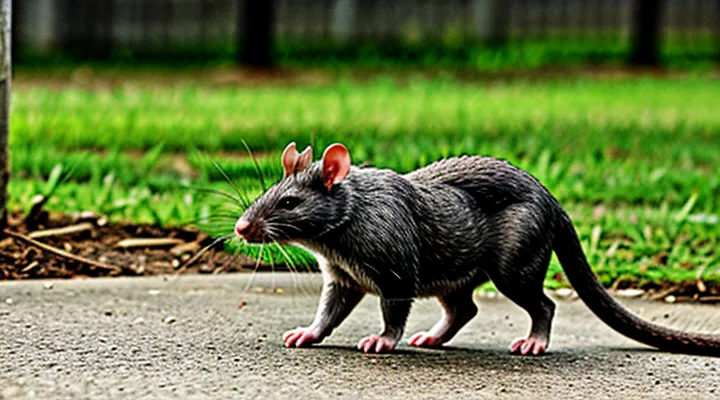
Beyond the Common Rat: Giants of the Rodent World
Distinguishing Large Rats from Other Rodents
Size as a Defining Characteristic
Size distinguishes the most massive members of the genus Rattus and related genera, providing a clear taxonomic and ecological delimiter. Researchers rely on measurements of head‑body length, tail proportion, and body mass to separate truly large rat species from average-sized congeners.
Typical size parameters for the largest rat taxa range from 25 cm to over 40 cm in head‑body length, tails extending 20 cm to 30 cm, and body masses between 300 g and 1 kg. These dimensions exceed the averages of most Rattus species, which rarely surpass 20 cm in body length and 250 g in weight.
- Cricetomys gambianus (African giant pouched rat) – head‑body length 25–30 cm; tail 15–20 cm; weight 500–900 g.
- Rattus norvegicus (brown rat, large morphs) – head‑body length 20–25 cm; tail 18–22 cm; weight up to 500 g.
- Rattus rattus (black rat, island giant forms) – head‑body length 22–28 cm; tail 20–25 cm; weight 350–600 g.
- Hydromys chrysogaster (water rat) – head‑body length 30–35 cm; tail 20–25 cm; weight 400–800 g.
- Mallomys spp. (New Guinea giant rat) – head‑body length 30–40 cm; tail 20–30 cm; weight 700 g–1 kg.
Size directly influences dietary breadth, locomotor capability, and predator‑prey dynamics. Larger individuals exploit a wider range of food resources, including hard‑shelled nuts and carrion, and can deter smaller predators through sheer mass. Their expanded body dimensions also correlate with broader geographic distributions, often occupying habitats where abundant resources support elevated growth rates.
Consequently, size functions as the principal characteristic for classifying and understanding the ecology of the most sizable rat species.
Taxonomic Classification of Large Rodents
Large rat-like rodents belong to the order Rodentia, suborder Myomorpha, and superfamily Muroidea. Within this framework the taxa that contain the biggest members are primarily the families Muridae and Cricetidae, with occasional representation in other families such as Echimyidae.
- Family Muridae – true rats and mice; subfamily Murinae includes the genera Rattus (e.g., Rattus norvegicus, Rattus rattus) and Bandicota (greater bandicoot rat). Species in this subfamily reach body lengths of 20–30 cm and weights up to 500 g.
- Family Cricetidae – diverse group of voles, lemmings, and New World rats; subfamily Sigmodontinae contains large South‑American genera such as Oryzomys and Nectomys, with some species exceeding 250 g.
- Family Echimyidae – spiny rats of tropical America; genus Phyllomys includes species that approach 300 g.
- Family Hydrochoeridae – capybara (Hydrochoerus hydrochaeris), the world’s largest rodent, classified outside the typical “rat” families but sharing the same order.
At the genus level, size distinctions are reflected in specific epithets and morphological adaptations. For instance, Rattus species are distinguished by dental formula 1.0.0.3/1.0.0.3, elongated skulls, and robust hind limbs, traits that correlate with their larger body mass relative to smaller murids. Bandicota exhibits a broader rostrum and more massive mandibles, supporting its status as one of the heaviest murids.
Taxonomic classification clarifies evolutionary relationships among these rodents, indicating that large body size has arisen independently in several lineages. Recognizing the hierarchical structure—from order to family, subfamily, and genus—enables precise identification of each species and facilitates comparative research across the diverse group of sizable rat-like rodents.
Common Misconceptions About «Rats»
People frequently confuse the terminology applied to sizable rodent species with general rat stereotypes. The resulting misunderstandings affect both scientific communication and public perception.
-
Misconception 1: All large rodents called “giant rats” belong to the same taxonomic group.
Fact: Species such as the African giant pouched rat (Cricetomys gambianus) and the giant bamboo rat (Rhizomys sumatrensis) belong to distinct families and differ markedly in morphology and ecology. -
Misconception 2: Size alone determines the name “rat.”
Fact: Taxonomic classification relies on genetic relationships, not on body mass. The term “rat” applies to members of the genus Rattus and related genera, regardless of whether individuals are small or relatively large. -
Misconception 3: Large rats are universally aggressive and disease‑carrying.
Fact: Many sizable species, including the capybara‑like capy‑rat (Hydrochoerus spp.) and the giant African pouched rat, exhibit low aggression and are employed in conservation work, such as detecting landmines and tuberculosis. -
Misconception 4: The word “rat” is interchangeable with “mouse.”
Fact: Mice belong primarily to the genus Mus and are taxonomically separate from rats; size differences are just one of several distinguishing characteristics.
Understanding these corrections clarifies the proper use of names for large rodent species and reduces the spread of inaccurate generalizations.
Notable Large Rat Species and Their Names
African Giant Pouched Rat («Cricetomys gambianus»)
Physical Characteristics and Habitat
Large rat species, often referred to as giant rats or megacratids, exhibit distinctive physical traits that set them apart from smaller relatives. Adult individuals typically reach body lengths of 30–45 cm, with tails adding another 20–35 cm. Weight ranges from 0.5 kg in smaller forms to over 2 kg in the largest species. Fur is dense and varies from dark brown to grayish‑black, providing camouflage in forest understories. Heads are proportionally broad, featuring strong incisors that continue to grow throughout life. Ears are relatively small, reducing heat loss, while hind limbs are robust, enabling powerful digging and climbing. Sensory whiskers are long and highly innervated, assisting navigation in low‑light environments.
Habitat preferences of these rodents are closely tied to their size and dietary requirements. They occupy:
- Tropical rainforests of Southeast Asia, where abundant leaf litter and fallen logs supply shelter and foraging grounds.
- Montane cloud forests in New Guinea, offering cool, humid conditions and a rich supply of fungi and insects.
- Riverine floodplains of the Amazon basin, where seasonal water levels create dense vegetation mats for nesting.
- Agricultural margins in northern Australia, where introduced species exploit grain stores and irrigation channels.
Populations thrive in areas with dense ground cover, consistent moisture, and limited predation pressure. Burrowing behavior varies; some species construct shallow nests under roots, while others occupy abandoned termite mounds. Dietary breadth includes seeds, fruits, roots, insects, and occasional carrion, reflecting opportunistic feeding strategies that support survival across diverse ecosystems.
Social Behavior and Diet
Large rat-like rodents exhibit complex social structures. Most species form stable colonies ranging from a few individuals to dozens, with dominant males or females establishing hierarchical positions. Communication relies on vocalizations, body postures, and scent marking; these signals coordinate foraging, predator avoidance, and breeding. Cooperative nesting and joint pup care are common, reducing individual exposure to environmental stressors.
Dietary habits vary across species but share several traits. Large rodents are primarily opportunistic omnivores, capable of exploiting seasonal resources. Typical food items include:
- Fresh vegetation such as grasses, leaves, and aquatic plants
- Fruits, seeds, and nuts providing carbohydrate and lipid reserves
- Invertebrates, carrion, and occasional small vertebrates supplying protein
- Human-derived waste in proximity to settlements, contributing to dietary flexibility
Digestive adaptations, such as an enlarged cecum, enable efficient fermentation of fibrous plant material. Seasonal shifts in food availability prompt adjustments in foraging range and group movement, ensuring sustained nutrition throughout the year.
Role in Detection and Research
Large rat species, such as the African giant pouched rat (Cricetomys gambianus), the New Guinea giant rat (Uromys spp.), and the giant bamboo rat (Rhizomys spp.), are employed in practical detection tasks and scientific investigations.
In detection work, these rodents are conditioned to identify specific chemical signatures. Trained African giant pouched rats locate tuberculosis bacteria in sputum samples with sensitivity comparable to laboratory microscopy, while also screening for explosive residues and land‑mine components in field environments. Their olfactory acuity, combined with rapid training cycles, enables large‑scale screening operations where conventional methods are cost‑prohibitive.
Research applications exploit the physiological and behavioral traits of big rat taxa. Their size permits implantation of telemetry devices, facilitating long‑term monitoring of cardiovascular and neurological parameters. Genetic studies benefit from their relatively short gestation periods and high litter sizes, providing a scalable model for studying zoonotic pathogens, metabolic disorders, and neurodegenerative processes. Comparative immunology investigations often reference the robust immune responses observed in African giant pouched rats, informing vaccine development strategies.
Key contributions of these rodents can be summarized as follows:
- Rapid, low‑cost identification of infectious agents and hazardous chemicals.
- Adaptability to field conditions where conventional equipment is impractical.
- Provision of a scalable animal model for translational biomedical research.
- Enhancement of data quality through the integration of physiological monitoring technologies.
Northern Luzon Giant Cloud Rat («Phloeomys pallidus»)
Appearance and Geographic Range
Large rat taxa encompass several members of the genus Rattus and related genera that exceed the typical body mass of common house rats. Adults commonly weigh 300 g to 1 kg, possess robust skulls, dense coarse fur, and tails proportionally shorter than body length. Ear size varies from small, rounded forms to large, naked pinnae, reflecting adaptation to local climates.
- Rattus norvegicus (brown rat) – Dark brown to gray dorsal pelage, lighter ventral side; tail covered with sparse hair; length up to 30 cm, weight 350–500 g. Native to eastern Asia, now cosmopolitan in urban and agricultural habitats across Europe, North America, and Oceania.
- Rattus rattus (black rat) – Sleek black or brown fur, long hairless tail exceeding body length; head slightly smaller than brown rat. Originated in South Asia, spread worldwide through maritime trade, prevalent in tropical and subtropical regions of Africa, the Americas, and the Pacific islands.
- Rattus exulans (Polynesian rat) – Smallish for a large rat, gray‑brown coat, relatively long tail. Endemic to Southeast Asia, introduced to many Pacific islands, now found from New Guinea to Easter Island.
- Cricetomys gambianus (African giant pouched rat) – Thick, brownish‑gray fur, large cheek pouches, short tail; body length up to 40 cm, weight up to 1 kg. Distributed throughout sub‑Saharan Africa, inhabiting savannas, forests, and agricultural fields.
- Papagomys armandvillei (New Guinea giant rat) – Russet to reddish‑brown coat, stout body, short hairless tail, pronounced whiskers. Confined to high‑altitude forests of the central mountain range of New Guinea.
These species share a common morphology of enlarged incisors, strong jaw muscles, and adaptable dentition, enabling exploitation of diverse food sources. Their geographic ranges reflect both natural dispersal from ancestral habitats in Asia and Africa and extensive human‑mediated introductions, resulting in a global presence of several large rat taxa.
Nocturnal Habits and Arboreal Lifestyle
Large rat-like rodents that exceed the size of typical Rattus species exhibit distinct patterns of activity after dark. Their eyes are adapted for low‑light vision, and most species rely on heightened auditory and olfactory cues to locate food and avoid predators during nighttime hours.
A subset of these sizable rodents occupies trees, using prehensile tails or strong claws to navigate branches. Arboreal members feed on fruits, seeds, and bark, and their foraging routes often overlap with nocturnal feeding periods, reducing competition with ground‑dwelling counterparts.
Key examples include:
- Giant African pouched rat (Cricetomys gambianus): nocturnal, climbs saplings to harvest fruits and insects.
- Bamboo rat (Rhizomys spp.): primarily nocturnal, climbs bamboo culms to access tender shoots.
- New Guinea giant rat (Mallomys spp.): primarily active after sunset, spends daylight hours in tree hollows.
- Capybara (Hydrochoerus hydrochaeris) is not a rat but illustrates the size range of large rodents; it remains terrestrial and diurnal, highlighting the contrast with arboreal, night‑active relatives.
These species demonstrate that large rodent morphology does not preclude nocturnal or tree‑dwelling behavior; instead, sensory adaptations and limb morphology support efficient exploitation of nighttime arboreal niches.
Conservation Status and Threats
Large rat species, including the Bosavi woolly rat (Mallomys spp.), the Malagasy giant rat (Hypogeomys antimena), and the Polynesian rat (Rattus exulans), occupy diverse habitats across Oceania, Madagascar, and Southeast Asia. Their population trends vary widely, reflecting differing levels of protection and environmental pressure.
According to the International Union for Conservation of Nature, current assessments list several species as follows:
- Bosavi woolly rat – Data Deficient, limited surveys hinder reliable evaluation.
- Malagasy giant rat – Endangered, population decline exceeds 30 % over three generations.
- Polynesian rat – Least Concern, widespread distribution but localized declines reported.
- Giant white‑tailed rat (Uromys caudimaculatus) – Vulnerable, fragmented habitats reduce viable subpopulations.
Primary threats to these taxa include:
- Habitat conversion for agriculture, mining, and urban development, resulting in loss of forest cover and nesting sites.
- Introduction of non‑native predators such as feral cats, dogs, and mustelids, which increase predation rates.
- Disease transmission from commensal rodents, notably hantavirus and leptospirosis, leading to mortality spikes.
- Climate change‑driven alterations in temperature and precipitation, affecting food availability and reproductive cycles.
- Direct persecution by humans through trapping and poisoning, often aimed at crop protection.
Effective conservation requires targeted field surveys to resolve data gaps, habitat preservation through protected area designation, and invasive‑species control programs. Monitoring programs should prioritize species classified as Endangered or Vulnerable to detect population changes promptly.
Southern Luzon Giant Cloud Rat («Phloeomys cumingi»)
Similarities and Differences with Northern Cousin
Large rat species are commonly referred to as “giant rats” or “large‑size murids.” Examples include the Polynesian giant rat († Canariomys), the African giant pouched rat (Cricetomys spp.), and the South American capybara, which, despite its rodent classification, exceeds typical rat dimensions.
Both these species and their northern relatives share several biological traits:
- Belong to the family Muridae or closely related rodent families.
- Exhibit omnivorous diets, consuming plant material, insects, and small vertebrates.
- Possess robust skulls and enlarged incisors adapted for processing tough food.
- Display social structures ranging from solitary individuals to small colonies.
Key distinctions arise from geographic and ecological pressures:
- Size range: Northern cousins, such as the European water vole (Arvicola), rarely exceed 300 g, whereas tropical giant rats can reach several kilograms.
- Habitat preference: Northern species favor temperate wetlands and forest edges; large tropical rats occupy rainforest floors, savanna burrows, or island ecosystems.
- Reproductive strategy: Northern rodents typically produce multiple litters per year with smaller offspring; giant tropical rats often have fewer, larger litters timed with seasonal resource peaks.
- Morphological adaptations: Northern forms retain shorter tails and denser fur for colder climates; giant rats exhibit longer tails for balance and thinner fur suited to warm environments.
Understanding these parallels and divergences clarifies how size evolution in rodents aligns with regional climate, food availability, and predator pressures.
Diet and Reproductive Strategies
Large rat species, often referred to as giant or megacommensal rodents, exhibit omnivorous feeding patterns adapted to diverse habitats. Their diet typically includes:
- Seeds, grains, and nuts harvested from cultivated fields or forest understories.
- Invertebrates such as insects, worms, and mollusks captured during nocturnal foraging.
- Small vertebrates, including amphibians and juvenile birds, taken opportunistically.
- Aquatic resources—algae, crustaceans, and detritus—utilized by semi‑aquatic taxa.
Digestive physiology reflects this breadth: a robust cecum ferments fibrous plant material, while enzymatic pathways efficiently process protein‑rich prey. Seasonal fluctuations prompt shifts toward higher carbohydrate intake during crop harvest periods and increased animal protein when insect populations surge.
Reproductive strategies among these rodents emphasize rapid population expansion. Key characteristics include:
- Early sexual maturity, often reached within three to four months of birth.
- Polyestrous cycles, enabling multiple litters per year; gestation spans 21–28 days depending on species.
- Litter sizes ranging from four to twelve offspring, with high neonatal survival linked to communal nesting and shared parental care.
- Seasonal breeding peaks correlated with resource abundance, ensuring offspring emerge during optimal food availability.
Physiological adaptations, such as elevated estrogen levels and responsive hypothalamic pathways, facilitate synchronized estrus across colonies. Behavioral mechanisms—scent marking, vocalizations, and aggressive mate guarding—reinforce dominant male access while minimizing inbreeding. Collectively, these dietary flexibility and reproductive efficiency underpin the ecological success of large rat taxa across temperate and tropical regions.
Importance in Ecosystems
Large rat taxa, often referred to as giant rats, bushy‑tailed rats, or water rats, occupy diverse habitats across tropical and temperate regions. Their size distinguishes them from typical murids and influences their interactions with surrounding biota.
These rodents contribute to ecosystem processes through several mechanisms:
- Seed transport and germination enhancement – Consumption of fruits followed by defecation deposits viable seeds away from parent plants, increasing plant recruitment in fragmented landscapes.
- Predator support – Their biomass provides a reliable food source for snakes, raptors, small carnivores, and larger mammals, sustaining trophic links.
- Soil turnover – Burrowing activity mixes organic material into deeper soil layers, improving aeration and nutrient cycling.
- Pathogen regulation – By serving as intermediate hosts for certain parasites, they modulate disease dynamics within wildlife communities.
Population fluctuations of these rodents directly affect the abundance of their predators and the dispersal patterns of plant species that rely on them. Conservation assessments therefore consider their functional roles alongside taxonomic classification, recognizing that loss of large rat populations can lead to measurable shifts in community structure and nutrient fluxes.
Other Notable Large Rodent Species Often Mistaken for Rats
Coypu («Myocastor coypus»)
The coypu, scientifically designated Myocastor coypus, is a sizable semiaquatic rodent native to South America. It belongs to the family Echimyidae, not to the Muridae family that contains true rats, but its size and morphology often lead to its inclusion in discussions of large rat-like species.
Typical characteristics include a body length of 40–60 cm, a tail of similar length, and a weight ranging from 5 to 12 kg. Dense, coarse fur covers the body, while the hind feet are webbed, providing strong swimming ability. The animal inhabits wetlands, riverbanks, and irrigation canals, where it constructs burrows with multiple entrances.
Common names for Myocastor coypus are:
- nutria
- river rat
- swamp rat
- water rat
The species has been introduced to Europe, North America, and Asia, where it establishes feral populations that can cause significant damage to agricultural crops, levees, and native vegetation. Control measures often involve trapping, hunting, and habitat modification.
Taxonomically, the genus Myocastor is monotypic, containing only M. coypus. Molecular studies place it within the subfamily Myocastorini, confirming its distinction from the true rats of the genus Rattus. This classification clarifies the appropriate terminology for large rodent species that resemble rats but belong to a separate evolutionary lineage.
Nutria («Myocastor coypus»)
Nutria, scientifically named Myocastor coypus, belong to the family Echimyidae and are often classified among the largest rodent species resembling rats. The animal’s common English names include coypu, river rat, and water beaver, reflecting its semi‑aquatic habits and size comparable to that of a small dog. Adult individuals typically reach 40–60 cm in body length, with a tail adding another 30–45 cm, and weigh between 5 and 9 kg, placing them well above the dimensions of most true rats (Rattus spp.).
Taxonomically, nutria are placed in the suborder Hystricomorpha, a group that also contains capybaras and guinea pigs. Their dentition features continuously growing incisors similar to those of rats, but the molar pattern and skull structure differ markedly, supporting their classification as a distinct genus. The species originated in South America’s river basins, where it occupies wetlands, marshes, and riverbanks, and has since been introduced to Europe, North America, and Asia for fur farming and meat production.
Key characteristics that distinguish nutria from typical rat species:
- Size: body mass up to 9 kg, considerably larger than Rattus spp.
- Habitat: preference for aquatic environments; capable of swimming long distances.
- Fur: dense, water‑repellent coat used commercially.
- Reproduction: litters of 4–13 young after a gestation of about 130 days.
These traits explain why nutria are frequently referenced in discussions of large rodent species and why their nomenclature includes terms that emphasize both their rat‑like appearance and their unique ecological niche.
Muskrat («Ondatra zibethicus»)
The muskrat, scientific name Ondatra zibethicus, is a semi‑aquatic rodent frequently cited when discussing the terminology applied to sizable rat‑like mammals. Unlike true rats of the genus Rattus, the muskrat belongs to the family Cricetidae and is the sole extant member of its genus.
Adult muskrats reach body lengths of 30–45 cm, with tails adding another 13–18 cm, and weigh between 0.9 and 2 kg. This size places them well above the average dimensions of common rats, justifying their inclusion in discussions of large rodent species.
Key characteristics:
- Dense, waterproof fur that resists water penetration.
- Webbed hind feet adapted for swimming.
- Strong incisors capable of gnawing aquatic vegetation and wood.
- Construction of dome‑shaped lodges from plant material, often anchored to waterbanks.
Geographic distribution spans North America, parts of Central America, and introduced populations in Europe, Asia, and South America. Habitats include marshes, ponds, slow‑moving streams, and wetlands where abundant vegetation supports their herbivorous diet.
In taxonomic literature, the muskrat is referenced under several common names:
- Muskrat
- Water rat (a colloquial term, not to be confused with true rats)
- Ondatra
These designations reflect the animal’s rat‑like appearance while acknowledging its distinct ecological niche and taxonomic placement.
The Importance of Accurate Terminology
Scientific Nomenclature vs. Common Names
Scientific classification assigns each sizable rat-like rodent a binomial name consisting of a genus and species, following the rules of the International Code of Zoological Nomenclature. These Latinized designations provide a universal reference that remains stable across languages and regions, allowing researchers to identify organisms unambiguously despite local variations in vernacular terminology.
Common names arise from cultural, geographic, or morphological observations and often differ between communities. While they facilitate public communication, they can refer to multiple taxa or obscure phylogenetic relationships. Accurate translation between scientific and everyday language requires awareness of both naming systems.
- Rattus norvegicus – Norway rat, brown rat
- Rattus rattus – black rat, ship rat
- Cricetomys gambianus – African giant pouched rat, Gambian pouched rat
- Hydromys chrysogaster – water rat, rakali
The juxtaposition of formal nomenclature with colloquial labels underscores the necessity of precise terminology in scientific discourse and highlights the potential for confusion when common names are employed without clarification.
Impact of Terminology on Conservation Efforts
The terminology applied to sizable murine taxa directly shapes public perception. Labels that emphasize size and distinctiveness, such as “giant rat” or “large field mouse,” generate curiosity and reduce stigma associated with typical pest species. This shift in perception increases willingness to support habitat protection measures.
Accurate scientific names reinforce credibility among policymakers. When conservation documents cite recognized taxonomic designations—e.g., Rattus argentiventer rather than generic “big rat”—legislators are more likely to allocate resources. Precise nomenclature also facilitates international collaboration by ensuring that all parties reference the same organism.
Funding agencies prioritize projects that address clearly defined species. Projects that target “large rodent species of Southeast Asia” receive higher evaluation scores than those described ambiguously. Clear terminology enables grant reviewers to assess risk, distribution, and conservation status without additional clarification.
- Clear labels improve community outreach programs.
- Precise names enhance legal protection frameworks.
- Consistent terminology streamlines research data aggregation.
Misleading or overly colloquial names can hinder conservation. Terms that suggest pest status, such as “rat pest,” trigger negative attitudes, reducing volunteer participation and discouraging habitat restoration. Rebranding efforts that replace pejorative labels with neutral or positive descriptors have been shown to increase local engagement and compliance with protective regulations.
Overall, the choice of words that define large rat species exerts measurable influence on conservation outcomes. Accurate, neutral, and descriptive terminology aligns scientific communication with policy objectives, improves public support, and maximizes funding opportunities.
Educating the Public About Rodent Diversity
Large rat species, often referred to as “giant rats” or “megaprodonts,” include several distinct taxa that differ in size, habitat, and geographic range. Recognizing these groups enhances public comprehension of rodent biodiversity and supports conservation initiatives.
- Rattus norvegicus (Brown rat) – worldwide distribution, adult weight up to 500 g, common in urban environments.
- Rattus rattus (Black rat) – lighter build, maximum weight around 300 g, thrives in tropical and subtropical regions.
- Cricetomys gambianus (Gambian pouched rat) – native to sub‑Saharan Africa, body length up to 40 cm, weight up to 1.5 kg, notable for large cheek pouches.
- Mastomys natalensis (Natal multimammate mouse) – large African rodent, adult weight up to 150 g, recognized for extensive mammary glands.
- Hydromys chrysogaster (Water rat) – semi‑aquatic, found in Australian wetlands, length up to 30 cm, tail length comparable to body.
- Rattus exulans (Polynesian rat) – one of the smallest island rat species, adult weight near 80 g, significant for human-mediated dispersal.
Public education programs should present these examples alongside visual aids that illustrate morphological differences, ecological roles, and geographic patterns. Emphasizing taxonomic clarity helps avoid conflating all large rodents under a single label, reducing misinformation and fostering accurate species identification.
Key points for outreach materials:
- Define “large” relative to average rodent size (typically above 150 g).
- Highlight habitat specificity—urban, forest, wetland, or savanna—to illustrate adaptive diversity.
- Clarify common misconceptions, such as the assumption that all sizable rats are pests; many play essential roles in seed dispersal and ecosystem engineering.
- Provide actionable steps for citizens: reporting sightings, supporting habitat preservation, and participating in citizen‑science surveys.
By delivering precise terminology, factual species profiles, and clear guidance, educators equip the public to recognize the breadth of rodent diversity and to appreciate the ecological significance of the continent’s biggest rat-like mammals.