
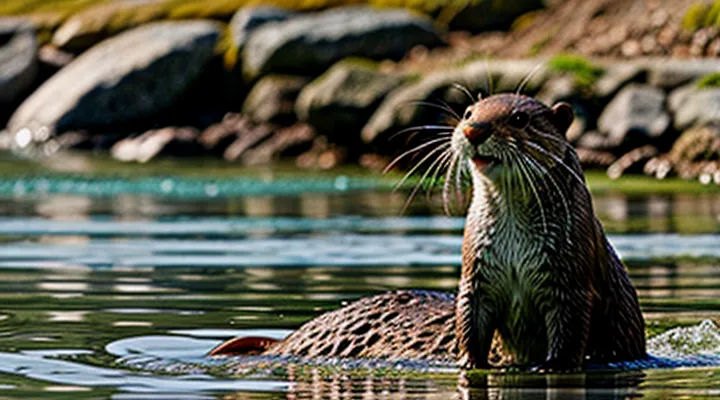
Introduction to Aquatic Mammals
Common Misconceptions
The aquatic rodent commonly called the water rat and the semi‑aquatic carnivore known as the otter are frequently confused, leading to persistent myths that distort public perception.
-
Misconception 1: Both species belong to the same taxonomic family.
Reality: The water rat is a murid rodent (family Muridae), while the otter is a mustelid (family Mustelidae). Their evolutionary lineages diverge at the order level. -
Misconception 2: Otters and water rats share identical diets.
Reality: Water rats primarily consume aquatic insects, small crustaceans, and plant material. Otters hunt fish, amphibians, and occasionally crustaceans, relying on a higher trophic position. -
Misconception 3: Their fur provides comparable waterproofing.
Reality: Otter fur contains dense under‑coat and guard hairs that trap air for exceptional insulation. Water rat fur lacks this specialized structure, offering only modest water resistance. -
Misconception 4: Both species exhibit the same social behavior.
Reality: Otters often form family groups and display cooperative hunting. Water rats are generally solitary, defending individual territories along waterways. -
Misconception 5: Photographs of one species can be used interchangeably to represent the other.
Reality: Morphological differences—such as otter’s webbed feet, larger tail, and streamlined body—are evident in visual documentation and should not be conflated.
Clarifying these points eliminates the most common errors in identification, ecological study, and public education concerning these distinct semi‑aquatic mammals.
Importance of Identification
Accurate identification of the semi‑aquatic rodent and the mustelid species is essential for reliable data collection, habitat management, and photographic documentation. Misclassification can distort population estimates, leading to inappropriate resource allocation and flawed ecological models.
Key reasons for precise differentiation include:
- Conservation planning – each species faces distinct threats; targeted measures depend on correct species counts.
- Scientific research – behavioral studies, diet analysis, and disease monitoring require unambiguous species records.
- Public education and media – photographs labeled with the proper animal enhance credibility and prevent the spread of misinformation.
Without clear identification, management actions may be misdirected, research conclusions unreliable, and visual resources misleading. Consistent use of morphological cues, habitat preferences, and, when available, genetic testing ensures that observations, reports, and images reflect the true subject.
Distinguishing Features: Physical Characteristics
Size and Build
Water Rat Size
The water rat (genus Hydromys) is a semi‑aquatic rodent native to coastal and inland waterways of Australia and New Guinea. Adult body length typically ranges from 180 mm to 260 mm, measured from the tip of the snout to the base of the tail. Tail length exceeds body length, averaging 210 mm to 300 mm, providing balance during swimming. Overall weight varies between 300 g and 650 g, with males generally heavier than females by 10‑15 %.
Size variation correlates with habitat and food availability:
- Coastal populations: larger tail proportion (up to 35 % of total length) and higher average mass.
- Highland streams: reduced body length (≈ 180 mm) and lighter weight (≈ 300 g).
- Seasonal fluctuations: body mass increases by 5‑10 % during wet season due to abundant aquatic prey.
When contrasted with the common river otter (Lutra lutra), the water rat remains smaller in both length and mass. An adult otter reaches 500‑600 mm in body length, tail 300‑400 mm, and weighs 5‑10 kg, outpacing the water rat by an order of magnitude. This size disparity influences predator‑prey dynamics, with water rats relying on concealment and rapid diving rather than brute strength.
Otter Size
Otter size provides a clear metric for distinguishing these mammals from their semi‑aquatic relatives. Measurements include total body length, tail length, and body mass, which vary markedly among species.
The most widely studied species exhibit the following dimensions:
- North American river otter (Lontra canadensis) – total length 70–107 cm; tail 30–45 cm; weight 5–14 kg.
- European otter (Lutra lutra) – total length 80–110 cm; tail 35–45 cm; weight 7–13 kg.
- Sea otter (Enhydra lutris) – total length 115–150 cm; tail 30–45 cm; weight 14–45 kg, with males typically larger.
- Asian small‑clawed otter (Aonyx cinereus) – total length 55–80 cm; tail 20–30 cm; weight 2–5 kg.
Males generally exceed females by 10–30 % in body mass, reflecting pronounced sexual dimorphism across the group. Growth curves indicate rapid weight gain during the first year, after which size stabilizes.
In contrast, the water rat (Hydromys chrysogaster) reaches a maximum total length of 30–45 cm and a weight of 0.5–1.2 kg, positioning it well below the smallest otter species. This disparity in dimensions underscores the otter’s adaptation to larger prey and broader territorial ranges.
Fur Color and Texture
Water Rat Fur
Water rat fur is dense, water‑repellent, and typically brown to gray. The hair length averages 5–7 mm, providing insulation while allowing the animal to remain buoyant. Each follicle produces a double‑coat structure: a soft underlayer for heat retention and a coarser outer layer that sheds moisture.
In contrast, otter pelage features a thicker guard hair layer and a higher oil content, giving a glossy appearance. Otter fur can reach up to 10 mm in length, and the oil glands secrete a substance that enhances waterproofing beyond the capabilities of water rat hair. These distinctions become evident in side‑by‑side photographs, where the otter’s sheen and longer hairs are visually apparent.
Key differences in fur characteristics:
- Length: water rat ≈ 5–7 mm; otter ≈ 8–12 mm
- Structure: water rat double‑coat; otter triple‑layer with abundant guard hairs
- Oil production: minimal in water rat; high in otter, producing a noticeable sheen
- Coloration: muted earth tones in water rat; richer brown to black in otter
Understanding these attributes aids identification in field images and informs habitat suitability assessments for each species.
Otter Fur
Otter fur constitutes a primary diagnostic trait when distinguishing otters from water rats. The pelage exhibits exceptional density, with up to one million hairs per square centimeter, far surpassing the comparatively sparse coat of water rats. Individual guard hairs measure 30–45 mm, while the underfur reaches lengths of 10–15 mm, creating a plush, water‑repellent surface.
Key functional attributes of otter fur include:
- Thermal insulation: tightly packed fibers trap air, preserving body heat during prolonged immersion.
- Hydrodynamic efficiency: micro‑scale oil glands coat each hair, reducing water adhesion and facilitating rapid movement.
- Camouflage: mottled brown‑gray coloration blends with riverine substrates, aiding predator avoidance.
- Durability: resilient keratin structure withstands abrasion from rocks and vegetation.
In contrast, water rat pelage is thinner, with fewer guard hairs and a coarser texture, providing limited insulation and reduced water repellency. The color palette of water rats leans toward uniform brown, lacking the intricate patterning observed in otters.
Photographic records emphasize these differences. Close‑up images reveal the glossy sheen of otter fur under wet conditions, while water rat coats appear matte and less voluminous. Such visual evidence supports morphological assessments and reinforces the taxonomic separation of the two species.
Tail Morphology
Water Rat Tail
The tail of the water rat is a muscular, laterally compressed structure that provides propulsion during swimming and aids in balance when the animal navigates steep riverbanks. Its length typically equals 30–40 % of the body, and the surface is covered with dense, water‑repellent fur that reduces drag. Unlike the otter’s broad, flattened tail, the water rat’s tail is more cylindrical and tapers toward the tip, reflecting its primary role in rapid, agile movements rather than sustained thrust.
Key morphological distinctions:
- Shape: cylindrical versus broad and paddle‑like.
- Length proportion: shorter relative to body size compared to otters.
- Fur density: denser, enhancing waterproofing.
- Musculature: higher proportion of fast‑twitch fibers for quick bursts.
Photographic identification relies on observing the tail’s cross‑section and fur texture. Close‑up images should capture the tapering silhouette against a neutral background, while underwater shots benefit from side lighting that highlights the tail’s curvature and the sheen of the fur. Positioning the camera at a shallow angle reduces distortion and clarifies the contrast between the tail and surrounding water.
Otter Tail
The otter’s tail is a muscular, laterally flattened structure that serves multiple functions crucial for the species’ aquatic lifestyle. Its shape creates a powerful paddle, providing propulsion and steering while swimming. The dense, waterproof fur covers the tail, reducing drag and maintaining insulation in cold water. The tail’s vertebral column contains a high proportion of flexible intervertebral joints, allowing rapid, precise movements needed for agile maneuvers during hunting and escape.
Key characteristics distinguishing the otter tail from that of the water rat:
- Form: Broad and flattened versus the slender, cylindrical shape of the water rat’s tail.
- Function: Primary locomotor organ for swimming versus a primarily balancing and prehensile appendage for climbing.
- Musculature: Extensive muscle mass enabling strong thrusts; water rat tail possesses limited muscle, suited for limited aquatic activity.
- Fur coverage: Dense, oily fur providing waterproofing; water rat tail exhibits sparser fur, offering less protection against water.
These traits reflect the otter’s adaptation to a fully aquatic niche, whereas the water rat retains a more generalized tail suited for both terrestrial and semi‑aquatic environments.
Webbing on Feet
Water Rat Feet
Water rats possess partially webbed hind feet, each bearing five elongated toes with sharp, curved claws. The webbing extends only to the base of the toes, allowing flexibility on land while enhancing propulsion in water. The dorsal surface of the foot is covered with dense, water‑repellent fur that reduces drag and protects against cold currents.
Muscular development concentrates in the gastrocnemius and soleus muscles, providing rapid, powerful strokes during swimming. The pads beneath the toes feature a rough, textured skin that improves grip on slippery river stones and vegetation. Sensory receptors densely populate the foot pads, delivering precise feedback for navigation in turbid environments.
Key distinctions between water rat and otter feet:
- Webbing: water rat webbing limited to toe bases; otter webbing spans the entire foot surface.
- Claw morphology: water rat claws long and hooked for digging; otter claws short and blunt for grasping prey.
- Fur density: water rat foot fur thicker for insulation; otter foot fur thinner, favoring streamlined movement.
- Pad texture: water rat pads rough for traction; otter pads smoother for silent swimming.
Otter Feet
Otter feet exhibit extensive webbing between the toes, creating a paddle‑like surface that maximizes thrust during swimming. The webbing retracts when the animal walks on land, allowing precise foot placement. Dense, waterproof fur covers the dorsal surface, while the ventral pads remain hairless to improve tactile feedback.
Muscle arrangement concentrates near the ankle joint, delivering rapid, powerful strokes. Sharp, curved claws at the toe tips enable traction on riverbanks and assist in digging burrows. Sensory receptors in the pads detect vibrations and temperature changes, supporting prey detection underwater.
Key distinctions from the feet of water rats include:
- Webbing: Otters possess fully connected webbing; water rats have only partial membranes.
- Size: Otter feet are larger relative to body mass, providing greater surface area for propulsion.
- Fur coverage: Otter foot pads are predominantly hairless; water rat pads retain a thin fur layer.
- Claw morphology: Otter claws are more pronounced and curved, whereas water rat claws are shorter and flatter.
Photographic documentation benefits from capturing otters in motion, where the webbed feet are fully extended, or from close‑up shots of the ventral pads to illustrate sensory adaptations. Backlighting highlights the contrast between the dark webbing and the lighter fur, emphasizing the structural features described.
Head Shape and Snout
Water Rat Head
The head of the water rat exhibits adaptations for semi‑aquatic life that differ markedly from those of an otter. Morphology, fur pattern, and sensory structures provide reliable criteria for field identification and photographic documentation.
Key distinguishing features of the water rat head include:
- Broad, flat skull with a short nasal bridge, reducing water resistance during submergence.
- Small, rounded ears set low on the skull, often covered by dense, water‑repellent fur.
- Large, dark eyes positioned laterally, granting a wide field of vision for detecting predators.
- Whiskers (vibrissae) that are longer and more numerous than those of otters, enhancing tactile perception in murky water.
- Dental formula characterized by sharp incisors and reduced molar size, reflecting a diet of small invertebrates.
Photographic capture of the water rat head requires attention to lighting and angle to reveal these traits. Front‑on lighting highlights the flat nasal profile, while side illumination accentuates ear concealment and whisker length. A shallow depth of field isolates the head from surrounding vegetation, allowing clear presentation of eye placement and fur texture. Consistent exposure settings prevent loss of detail in the glossy fur, ensuring that diagnostic features remain visible across varied habitats.
Otter Head
The otter’s head is compact, with a broad skull that supports strong jaw muscles. The muzzle is short, ending in a rounded tip, and the nostrils lie close to the tip, allowing efficient breathing while the animal remains mostly submerged. Large, dark eyes provide acute vision in low‑light water, while the ears are small, recessed, and covered by a thick fur fringe that reduces water ingress. The facial whiskers (vibrissae) are long, densely packed, and highly sensitive, serving as tactile sensors for detecting prey in murky environments. The fur on the head blends seamlessly with the body coat, typically dark brown to black, with a glossy sheen that repels water.
In contrast, the water rat (also known as a water vole) possesses a more elongated skull and a longer, pointed snout. Its eyes are proportionally smaller, and the ears are more visible, lacking the protective fur fringe seen in otters. The vibrissae are shorter and less densely arranged, reflecting a reliance on different foraging strategies. Fur coloration on the head tends toward lighter brown or gray tones, often with a distinct dorsal stripe.
Key visual cues for distinguishing an otter head in photographs:
- Short, rounded muzzle with nostrils near the tip
- Small, recessed ears hidden by fur
- Prominent, long vibrissae extending forward
- Dark, glossy fur covering the entire head
- Broad skull shape evident in side profiles
These characteristics enable reliable identification of otter heads in comparative imagery, facilitating accurate differentiation from the heads of similar semi‑aquatic mammals.
Habitat and Behavior
Preferred Habitats
Water Rat Habitats
Water rats (genus Nectogale and related species) occupy a range of freshwater environments across Eurasia. Their distribution includes temperate riverbanks, marshes, and alpine streams where water flow is moderate to swift. Dense riparian vegetation provides shelter and foraging opportunities, while submerged root systems and fallen logs serve as platforms for nesting and escape from predators.
Key habitat features:
- Proximity to water: Must have continuous access to fresh water for swimming, diving, and thermoregulation.
- Vegetative cover: Dense reeds, cattails, and overhanging shrubs protect against aerial and terrestrial threats.
- Soil stability: Soft, loamy banks prevent erosion and facilitate burrow construction.
- Food availability: Abundant aquatic invertebrates, small fish, and amphibian larvae sustain the species year‑round.
Seasonal variations influence habitat use. In winter, water rats retreat to insulated burrows beneath frozen banks, whereas summer drives expansion into open floodplains and temporary pools formed by snowmelt. Altitudinal ranges extend from sea level up to 2,500 m, with populations adapting to lower oxygen levels and colder water temperatures at higher elevations.
Human activities impact these habitats. Agricultural runoff introduces pollutants that reduce invertebrate populations, while dam construction alters flow regimes, fragmenting suitable river sections. Conservation measures focus on preserving riparian corridors, enforcing water quality standards, and maintaining natural flood cycles to support both breeding and foraging requirements.
Otter Habitats
Otters occupy a range of aquatic environments that provide clean water, abundant prey, and secure resting sites. Freshwater species favor rivers and streams with moderate flow, deep pools, and overhanging banks that offer shelter and visibility for hunting. Coastal and marine otters rely on estuaries, mangroves, and near‑shore marine zones where tidal fluctuations create rich feeding grounds. All habitats share essential elements:
- Clear, unpolluted water supporting fish, crustaceans, and amphibians.
- Riparian vegetation or shoreline debris for constructing dens (holts) and protecting young.
- Minimal human disturbance to maintain stable populations.
Geographic distribution reflects these preferences. River otters (e.g., Lutra lutra) are common across temperate Europe and North America, while sea otters (Enhydra lutris) concentrate along the Pacific coastline of North America and Asia. Smaller species such as the Asian small‑clawed otter (Aonyx cinereus) inhabit lowland wetlands and rice paddies in Southeast Asia. Habitat selection influences foraging behavior, social structure, and reproductive success, making habitat quality a primary determinant of otter population health.
Diet and Feeding Habits
Water Rat Diet
The water rat, also known as the Australian native water vole, consumes a diet that reflects its semi‑aquatic lifestyle. Primary food sources include:
- Aquatic insects such as beetle larvae, dragonfly nymphs, and mayfly swarms.
- Small crustaceans, notably freshwater shrimp and amphipods.
- Freshwater mollusks, including tiny snails and mussel juveniles.
- Plant material, chiefly aquatic grasses, reeds, and floating algae.
- Occasional terrestrial insects captured near water margins.
Feeding behavior adapts to seasonal availability. In spring and summer, insect abundance increases, shifting the diet toward protein‑rich prey. During cooler months, the proportion of plant matter rises as invertebrate activity declines. Water rats forage both underwater and along banks, employing whisker sensitivity to locate hidden prey.
Compared with the diet of otters, which relies heavily on fish and larger vertebrates, the water rat’s intake emphasizes smaller invertebrates and vegetation. This distinction underscores divergent ecological niches despite overlapping habitats.
Otter Diet
Otters are carnivorous mammals that rely on a high‑protein, high‑fat diet to sustain their active, aquatic lifestyle. Their prey selection reflects the availability of aquatic and semi‑aquatic organisms in the habitats they occupy.
Typical prey includes:
- Freshwater fish such as trout, perch, and catfish
- Marine fish for coastal species, including herring and sardines
- Crustaceans: crayfish, crabs, and shrimp
- Amphibians: frogs and salamanders
- Mollusks: mussels, clams, and snails
- Small vertebrates: waterfowl, ducklings, and rodents
- Invertebrates and insects when fish are scarce
Diet composition varies seasonally. During spawning periods, fish become abundant, raising their proportion in the diet to 70 % or more. In winter or in regions with limited fish, otters increase consumption of crustaceans and amphibians, which can constitute up to 40 % of intake.
Nutritional balance is achieved through selective foraging. Otters target prey with high lipid content to meet energy demands for thermoregulation and prolonged swimming. They also ingest the liver and other organs rich in essential vitamins and minerals.
Regional differences are evident when comparing otters to semi‑aquatic rodents such as water rats. While water rats supplement their diet with plant material and terrestrial insects, otters remain strictly animal‑based, reflecting divergent ecological niches within the same freshwater and coastal environments.
Social Structure
Water Rat Social Behavior
The water rat (Nectomys spp.) exhibits a social system that contrasts sharply with the largely solitary otter. Individuals form small, stable colonies typically consisting of a breeding pair and their offspring. Cohabitation persists beyond weaning, allowing juveniles to assist in nest maintenance and predator vigilance.
Communication relies on a repertoire of vocalizations, scent marking, and tactile signals. Key behaviors include:
- Low‑frequency chirps exchanged during nocturnal foraging to coordinate movement.
- Urine and glandular secretions deposited at burrow entrances to delineate territory and reinforce pair bonds.
- Grooming bouts that strengthen affiliative ties and reduce ectoparasite loads.
Reproductive dynamics are synchronized with seasonal rainfall. Females produce one to two litters per year, each containing three to five pups. Parental investment is shared: males guard the nest while females nurse, and older offspring contribute to food provisioning. Aggressive encounters are limited to intruders that breach scent‑marked boundaries, prompting brief chases and vocal warnings rather than prolonged fights.
Otter Social Behavior
Otters are highly social mammals that live in cohesive family groups, often termed rafts, composed of parents, offspring, and occasionally unrelated juveniles. Group cohesion is maintained through constant physical contact and coordinated activities.
Typical social behaviors include:
- Mutual grooming that reduces parasite load and reinforces bonds.
- A repertoire of vocalizations such as whistles, chirps, and growls used to signal distress, locate group members, or coordinate movements.
- Play involving chasing, tossing stones, and sliding on mud, which develops motor skills and strengthens social ties.
- Cooperative hunting where individuals herd fish toward each other, increasing capture efficiency.
- Collective defense of territory against intruders, marked by scent‑spreading and aggressive displays.
- Extended parental care, with both parents participating in feeding, teaching, and protecting pups until independence.
Compared with the water rat, which generally exhibits solitary or loosely associated behavior, otters display a markedly higher degree of cooperation and communication. This distinction influences habitat use, foraging strategies, and vulnerability to environmental changes.
Activity Patterns
Water Rat Activity
Water rats exhibit predominantly nocturnal activity, emerging from burrows at dusk to forage along riverbanks and shallow streams. Their locomotion combines agile swimming with terrestrial sprinting, allowing rapid transitions between water and land to pursue prey or escape predators.
Foraging centers on aquatic invertebrates, small fish, and aquatic vegetation. The rodents employ tactile whiskers to detect prey in turbid water, then use their dexterous forepaws to capture and manipulate food. Feeding bouts last 20–40 minutes before the animal retreats to a secure nest for digestion.
Social structure is characterized by solitary territories that overlap minimally during the breeding season. Males defend a defined home range marked by scent glands; females maintain separate nesting chambers lined with plant material. Litters average three to five juveniles, which remain with the mother for approximately six weeks before dispersal.
Key distinctions in activity patterns relative to sympatric otters:
- Temporal niche: Water rats operate mainly at night; otters are primarily diurnal.
- Mobility: Water rats rely on short bursts of swimming; otters perform extended dives lasting up to five minutes.
- Territoriality: Water rats maintain fixed burrow sites; otters patrol larger river sections with fluid boundaries.
These behavioral traits define the ecological role of water rats as nocturnal foragers and territorial occupants of riparian habitats, contrasting sharply with the daylight hunting and broader ranging habits of otters.
Otter Activity
Otters spend most of their time in or near water, where they hunt, groom, and interact with conspecifics. Their hunting strategy involves diving to capture fish, crustaceans, and amphibians, using whiskers to detect prey movements. After a successful catch, they often surface to eat while floating on their backs, a posture that frees their forepaws for handling food.
Social behavior includes frequent grooming sessions that maintain fur condition and reinforce group bonds. Otters also engage in play, such as sliding down riverbanks, tossing objects, and chasing one another, which strengthens coordination and reduces stress. These activities occur both in the water and on adjacent banks, reflecting the species’ adaptability to varied aquatic environments.
Typical otter activities:
- Diving for prey
- Surface feeding while floating
- Mutual grooming
- Playful sliding and object manipulation
- Territorial patrolling along riverbanks
These patterns distinguish otters from water rats, whose activity is primarily terrestrial and focused on foraging among vegetation rather than extensive aquatic pursuits.
Photographic Identification Guide
Key Visual Cues for Water Rats
«Water Rat in its Natural Environment»
The water rat (genus Nectomys) inhabits tropical and subtropical waterways across South America. It occupies banks of fast‑flowing streams, lowland rivers, and marshy floodplains where dense vegetation offers cover and foraging opportunities. Submerged roots, fallen logs, and riverbank burrows serve as primary shelters; individuals construct shallow nests from plant material and mud, often close to water to facilitate rapid escape.
Key ecological traits include:
- Semi‑aquatic locomotion: webbed hind feet and a flattened tail generate thrust for swimming and diving up to 30 seconds.
- Nocturnal foraging: diet consists of aquatic insects, crustaceans, small fish, and fallen fruit; prey is captured by tactile whiskers and a sensitive palate.
- Territoriality: scent marking with glandular secretions defines individual ranges, typically spanning 0.5–1 km² along a watercourse.
- Reproductive cycle: breeding peaks during the rainy season; litters of 2–4 offspring are raised in concealed nests, with maternal care lasting 3–4 weeks.
Geographic distribution extends from the Amazon basin to the Atlantic coastal lowlands of Brazil, Paraguay, and northern Argentina. Population density correlates with water quality; clear, oxygen‑rich streams support higher numbers, while polluted or heavily silted waters show reduced presence.
Observational guidelines for field researchers and photographers:
- Approach banks during dusk or pre‑dawn hours; water rats are most active at low light levels.
- Use silent, low‑profile equipment; a 300 mm telephoto lens captures detail without disturbance.
- Position oneself downstream of the animal’s expected path to anticipate movement.
- Record ambient temperature, water depth, and vegetation type to contextualize behavior.
Conservation considerations emphasize protection of riparian corridors, maintenance of water purity, and avoidance of habitat fragmentation caused by agriculture or urban development. Monitoring programs that combine visual surveys with camera traps provide reliable data on population trends and habitat health.
«Close-up of Water Rat Features»
A close‑up examination of the water rat reveals a compact body covered with dense, water‑repellent fur that ranges from dark brown to grayish‑brown. The fur lies flat against the skin, minimizing drag during swimming. The tail is short, broad, and flattened laterally, functioning as a rudder for precise maneuvering in shallow water. Whiskers (vibrissae) extend forward from the muzzle, providing tactile feedback for detecting prey in turbid conditions. The paws are webbed between the second and third digits, with sharp, curved claws that aid in gripping riverbank substrates. Eyes are relatively small, positioned high on the skull to maintain visual contact while the animal remains partially submerged. The nose is pointed, equipped with a moist rhinarium that enhances scent detection.
- Dense, flat fur; dark brown to gray tones
- Short, laterally flattened tail acting as a rudder
- Forward‑projecting whiskers for tactile navigation
- Partially webbed hind feet with curved claws
- Small, high‑set eyes for submerged vision
- Pointed, moist snout for olfactory acuity
These characteristics contrast sharply with those of the otter. Otters possess longer, tapered tails with a pronounced dorsal crest, larger eyes placed more laterally, and fully webbed feet lacking the distinct claw curvature seen in water rats. Their fur is longer, softer, and less tightly pressed against the skin, resulting in a different hydrodynamic profile.
When photographing these features, use macro lenses with a shallow depth of field to isolate fur texture and whisker detail. Adequate lighting from a diffused source reduces glare on the wet coat, while a fast shutter speed captures the animal’s subtle movements without motion blur. Position the camera at eye level to emphasize the small, high‑set eyes and the streamlined head shape.
Key Visual Cues for Otters
«Otter Swimming and Hunting»
Otters exhibit streamlined bodies, dense fur, and webbed feet that enable rapid propulsion through water. Muscular fore‑limbs generate thrust while the tail provides steering and stability. Their eyes and ears are positioned to maintain focus above the surface, allowing continuous visual monitoring during dives.
Hunting strategy relies on agility and tactile sensitivity. Otters locate prey by feeling vibrations with whisker‑rich snouts, then execute swift underwater chases. Typical prey includes fish, crustaceans, and amphibians. After capture, they use their forepaws to manipulate food, often removing shells or scales before consumption.
Key adaptations supporting swimming and hunting:
- High‑density fur for insulation and buoyancy control.
- Strong, flexible spine enabling undulating movements.
- Vibrissae (whiskers) that detect water currents and prey movement.
- Sharp, retractable claws for grasping slippery organisms.
These characteristics differentiate otters from similar semi‑aquatic mammals, illustrating specialized evolution for an aquatic predatory lifestyle.
«Close-up of Otter Features»
The close‑up view of an otter reveals a suite of adaptations that support an aquatic lifestyle. Each element of the animal’s anatomy is observable in high‑resolution photographs, allowing precise comparison with the water rat.
The fur forms a dense, water‑repellent coat. Guard hairs are longer and stiff, shedding water efficiently, while the under‑coat provides insulation against cold currents. Near the nose, a dense array of vibrissae detects subtle water movements, a sensory system more pronounced than that of the water rat.
The limbs exhibit specialized structures. Webbing between the toes expands surface area for propulsion; the webbing is clearly visible on the hind feet, while the forepaws retain dexterous claws for handling prey. Muscular shoulders and a flexible spine enable rapid undulation, evident in the curvature of the torso captured in a side profile.
Key otter features observable in close‑up images:
- Fur texture: layered, oily guard hairs over soft under‑coat
- Vibrissae: long, highly sensitive whiskers surrounding the muzzle
- Webbed feet: extensive webbing on hind limbs, reduced on forepaws
- Claws: sharp, retractable on forepaws for grasping
- Tail shape: flattened, tapering to a paddle‑like tip for steering
- Eye placement: forward‑facing, providing binocular vision for depth perception
These characteristics distinguish the otter from the water rat, whose fur is less oily, whiskers are shorter, and webbing is limited to the hind feet. The photographic detail underscores the otter’s specialization for swift, agile movement in aquatic environments.
Comparative Photo Analysis
«Side-by-Side Comparison: Water Rat vs. Otter»
The water rat (genus Hydromys) and the otter (family Mustelidae) occupy overlapping riparian habitats yet exhibit distinct biological and ecological traits.
-
Taxonomic classification
Water rat: Rodentia, Muridae.
Otter: Carnivora, Mustelidae. -
Geographic range
Water rat: Coastal and inland waterways of Australia, New Guinea, and surrounding islands.
Otter: Broad distribution across North America, Europe, Asia, and parts of Africa; species such as the North American river otter (Lontra canadensis) and Eurasian otter (Lutra lutra) dominate temperate zones. -
Physical dimensions
Water rat: Head‑body length 25–35 cm, tail 20–30 cm, weight 250–450 g. Dense, water‑repellent fur, partially webbed hind feet.
Otter: Head‑body length 70–100 cm, tail 30–40 cm, weight 5–15 kg. Streamlined body, muscular tail, full webbing on all toes, thick double coat. -
Dietary habits
Water rat: Omnivorous; consumes aquatic insects, crustaceans, small fish, and plant material.
Otter: Predominantly carnivorous; hunts fish, amphibians, crustaceans, and occasionally small mammals. -
Reproductive strategy
Water rat: Breeding peaks in wet season; litters of 2–4 pups after a gestation of ~30 days.
Otter: Seasonal breeding; litters of 1–3 pups following a gestation of 60–70 days; offspring remain with parents for several months. -
Social behavior
Water rat: Primarily solitary, territorial individuals.
Otter: Varies by species; river otters form family groups, while sea otters may aggregate loosely. -
Conservation status
Water rat: Classified as Least Concern, though habitat alteration poses localized threats.
Otter: Several species listed as Near Threatened or Vulnerable due to pollution, habitat loss, and historic fur trade. -
Photographic identifiers
Water rat: Dark brown to black fur, relatively small ears, short whiskers; eyes positioned high on the head for submerged vision.
Otter: Light to dark brown coat, pronounced chest muscles, long muscular tail visible in water; facial markings often include a lighter throat patch.
Together, these criteria provide a clear, side‑by‑side framework for distinguishing the two semi‑aquatic mammals in field observations and photographic documentation.
«Subtle Differences in Movement and Posture»
The focus of this analysis is the nuanced variations in movement and posture that distinguish the water rat from the otter, as captured in comparative photographs.
On land, the water rat exhibits a compact, low‑to‑ground trot, with limbs moving in a synchronized diagonal pattern that minimizes vertical displacement. The otter, by contrast, employs a more expansive gait; its hind limbs generate a pronounced thrust while the fore‑limbs swing forward, raising the body higher off the substrate.
During swimming, the water rat relies heavily on its laterally flattened tail, generating rhythmic undulations that keep the torso relatively rigid. Its fore‑limbs serve primarily for steering, producing subtle, intermittent strokes. The otter displays a streamlined, elongated body that aligns with the water flow; the tail functions as a stabilizer rather than a primary propulsor, while continuous, paddle‑like movements of both fore‑ and hind‑limbs provide sustained thrust.
Photographic documentation highlights these distinctions:
- Side‑view images reveal the water rat’s crouched posture versus the otter’s elongated silhouette.
- Underwater shots show the water rat’s tail wave pattern compared with the otter’s smooth, wave‑riding form.
- Close‑up frames capture the otter’s fore‑limb paddling rhythm, contrasted with the water rat’s occasional steering flicks.
These observable traits, evident in visual records, allow precise identification of each species based on their characteristic locomotor signatures.
Conservation Status and Threats
Water Rat Conservation
Population Trends
Population surveys across North America and Eurasia reveal divergent trajectories for the two semi‑aquatic mammals. Water rat (Hydromys chrysogaster) numbers have risen modestly in regions where riparian habitats have expanded due to restored floodplains and reduced agricultural runoff. Recent monitoring indicates a 12 % increase in breeding pairs over the past decade in the Murray‑Darling basin, with similar gains reported in New Zealand’s lowland streams.
Otter (Lutra lutra) populations display a broader pattern of recovery interspersed with localized declines. Conservation programs that reintroduce individuals and protect riverbanks have produced a continent‑wide growth of approximately 25 % in breeding territories since the early 2000s. However, urban encroachment and water pollution continue to suppress numbers in densely populated catchments. Current data summarize these trends:
- Water rat: +12 % in breeding pairs (10‑year span), stable or increasing in restored wetlands.
- Otter: +25 % in breeding territories (20‑year span), decline of 8 % in heavily industrialized river systems.
- Both species: positive response to riparian buffer zones, negative response to chemical contaminants and habitat fragmentation.
Long‑term monitoring emphasizes the necessity of sustained habitat protection and water‑quality improvement to maintain the upward momentum observed in both species.
Threats to Water Rats
Water rats (Hydromys chrysogaster) are semi‑aquatic rodents inhabiting wetlands, streams, and coastal lagoons across eastern Australia. Their ecological niche overlaps with that of the local otter species, making their conservation a component of broader freshwater biodiversity assessments.
- Habitat fragmentation caused by urban expansion and agricultural drainage reduces the continuity of riparian corridors essential for foraging and shelter.
- Water pollution from agricultural runoff, industrial effluents, and sedimentation degrades food resources and impairs respiratory health.
- Invasive predators such as feral cats, foxes, and introduced mustelids increase mortality rates, especially in fragmented habitats where escape routes are limited.
- Competition with introduced rodent species for food and burrow sites intensifies pressure on native populations.
- Climate‑related shifts, including altered precipitation patterns and increased frequency of drought, lower water levels and shrink suitable habitat.
- Direct human disturbance from recreational activities, fishing, and shoreline development disrupts breeding sites and elevates stress hormones.
These pressures collectively diminish population stability, reduce genetic diversity, and heighten the risk of local extirpation. Effective mitigation requires integrated watershed management, strict control of invasive predators, and preservation of contiguous riparian habitats. Monitoring programs that track water quality and population trends provide the data needed to evaluate the success of conservation actions.
Otter Conservation
Population Trends
The population trajectories of the semi‑aquatic rodent commonly known as the water vole and the otter (Lutra lutra) differ markedly across their native ranges.
In the United Kingdom, water vole numbers have declined by approximately 80 % since the 1990s, driven primarily by habitat loss, agricultural runoff, and predation by invasive American mink. Conservation programs focusing on habitat restoration and mink control have stabilized some local populations, yet the species remains classified as vulnerable.
Otter populations in the same region have shown a consistent increase over the past three decades. Legal protection, improved water quality, and reduced direct persecution have contributed to a rebound from near‑extinction levels in the 1970s to an estimated 20,000–30,000 individuals today. The species is now listed as least concern in Europe, although isolated declines persist in heavily polluted waterways.
Key comparative trends:
- Population change (1990‑2020)
- Water vole: –80 %
- Otter: +150 % to +200 %
- Primary threats
- Water vole: habitat fragmentation, invasive mink, water pollution
- Otter: occasional chemical contamination, habitat disturbance
- Conservation status
- Water vole: Vulnerable (IUCN)
- Otter: Least Concern (IUCN)
Continued monitoring suggests that otter recovery may benefit water vole habitats indirectly through enhanced riparian vegetation, while targeted mink eradication remains essential for reversing the rodent’s decline.
Threats to Otters
Otters depend on clean water, abundant prey, and undisturbed riverbanks. Their populations decline when any of these conditions deteriorate.
- Habitat fragmentation from urban expansion, agriculture, and dam construction eliminates nesting sites and reduces foraging range.
- Water pollution—industrial discharge, agricultural runoff, and plastic debris—lowers prey abundance and introduces toxic substances that accumulate in otter tissue.
- Climate change alters precipitation patterns, leading to droughts or flooding that destroy riverbank vegetation and disrupt breeding cycles.
- Invasive species, such as non‑native fish, outcompete native prey and can introduce novel pathogens.
- Direct persecution, including illegal trapping for fur or as by‑catch in fishing gear, removes individuals from breeding populations.
- Road networks intersect waterways, causing frequent vehicle collisions and mortality.
- Disease outbreaks, notably canine distemper and leptospirosis, spread more readily in stressed, densely populated groups.
Mitigating these pressures requires coordinated habitat protection, strict pollution controls, monitoring of invasive species, enforcement of anti‑poaching laws, and public education on wildlife-friendly infrastructure.
Human Impact
Habitat Loss
Habitat loss threatens both semi‑aquatic rodents and mustelids that share riparian environments. Urban expansion, agricultural drainage, and dam construction reduce the availability of shallow streams, wetlands, and riverbanks that water rats rely on for foraging and shelter. Simultaneously, otters lose access to clean water, abundant fish populations, and den sites essential for breeding.
The two species differ in their ecological requirements, which shapes their response to habitat degradation. Water rats prefer dense vegetation along slow‑moving water where they can hide from predators, while otters need larger water bodies with open stretches for swimming and hunting. Consequently, habitat fragmentation often isolates water rat populations more rapidly, whereas otters may persist in larger, albeit degraded, waterways.
Key impacts of habitat loss include:
- Decreased prey abundance (insects for water rats, fish for otters)
- Increased exposure to terrestrial predators due to reduced cover
- Lower reproductive success from limited nesting or den sites
- Elevated stress levels leading to higher mortality rates
Mitigation measures focus on preserving riparian corridors, restoring natural flow regimes, and implementing buffer zones that protect water quality. Effective conservation requires coordinated monitoring of both species to assess population trends and habitat integrity.
Pollution Impacts
Pollution alters the aquatic environments that support both water rats and otters, affecting each species in distinct ways. Chemical contaminants such as heavy metals, pesticides, and industrial effluents accumulate in water bodies, reducing prey availability and impairing reproductive success. Water rats, which rely on dense riparian vegetation for shelter and foraging, experience habitat loss when runoff destroys plant cover and increases sedimentation. Elevated turbidity hampers their ability to detect insects and crustaceans, leading to decreased foraging efficiency.
Otters, as apex predators, suffer from bioaccumulation of toxins through the food chain. Persistent organic pollutants concentrate in fish and amphibians, resulting in liver dysfunction, immune suppression, and reduced litter size in otter populations. Oil spills coat fur, diminishing insulation and increasing the risk of hypothermia. Both species exhibit behavioral changes under polluted conditions, such as altered movement patterns and increased time spent searching for clean water sources.
Key pollution impacts:
- Habitat degradation: loss of vegetation, increased sediment load, reduced water clarity.
- Food chain disruption: decline in invertebrate and fish populations, toxin accumulation.
- Physiological stress: organ damage, compromised immunity, reproductive failure.
- Behavioral adaptation: longer foraging trips, avoidance of contaminated zones.
Photographic documentation of these effects requires clear water and undisturbed habitats; polluted sites often produce low‑contrast images and limit opportunities to capture natural behaviors. Monitoring visual records alongside ecological data provides a comprehensive view of how contamination reshapes the lives of these semi‑aquatic mammals.