
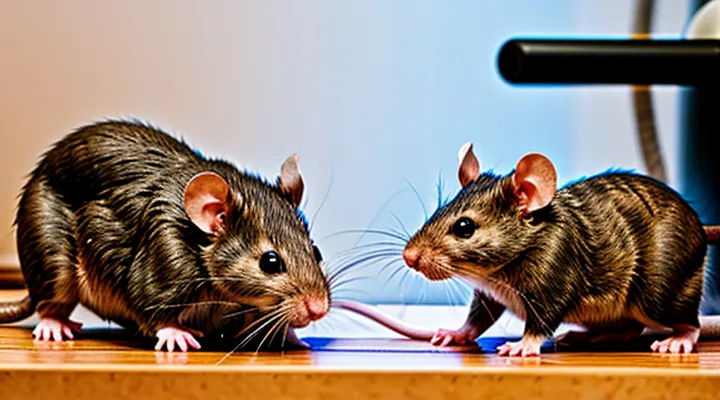
Scientific Foundation of Acoustic Repulsion
The Auditory Ecology of Rodents
Hearing Sensitivity Ranges in Mus and Rattus Species
Mice (Mus spp.) detect sound from roughly 1 kHz to 100 kHz. Sensitivity peaks between 15 kHz and 20 kHz, where the auditory threshold can fall below 10 dB SPL. Frequencies above 20 kHz remain audible to the animal, though the threshold rises sharply, requiring intensities of 60 dB SPL or more for reliable perception.
Rats (Rattus spp.) respond to a slightly broader band, from about 0.5 kHz to 80 kHz. Their most sensitive region lies between 8 kHz and 12 kHz, with thresholds near 5 dB SPL. As frequency increases past 20 kHz, detection thresholds climb, typically exceeding 55 dB SPL at 30 kHz and reaching 70 dB SPL at 50 kHz.
Key implications for high‑frequency acoustic deterrents:
- Effective deterrent frequencies: 20–30 kHz, where both species retain perceptibility but are less tolerant of sustained exposure.
- Required sound pressure levels: ≥ 60 dB SPL for mice, ≥ 55 dB SPL for rats to ensure detection at ultrasonic ranges.
- Upper limit of practical use: 80–100 kHz, beyond which auditory sensitivity drops dramatically and energy consumption rises without added deterrent benefit.
Understanding these auditory windows enables the design of devices that emit frequencies and intensities aligned with the species’ hearing capabilities, maximizing repellent efficacy while minimizing unnecessary acoustic output.
Frequencies Targeted by Electronic Devices
Electronic repellents for rodents rely on sound waves above the human audible threshold, typically between 20 kHz and 50 kHz. Rats detect frequencies up to roughly 80 kHz, while mice respond to sounds as high as 100 kHz. Devices therefore select frequencies that fall within the upper limits of rodent hearing but remain inaudible to people.
Key considerations for frequency selection:
- Species‑specific hearing – frequencies must overlap the most sensitive range of the target animal; 20–30 kHz affect rats, 30–50 kHz are more effective against mice.
- Frequency modulation – alternating or sweeping tones prevent habituation; devices often cycle through several frequencies within the target band.
- Amplitude – sound pressure levels are kept below 85 dB SPL to avoid discomfort for humans and pets while remaining aversive to rodents.
- Regulatory limits – many jurisdictions cap ultrasonic output at 90 dB SPL for continuous operation; compliant devices adhere to these standards.
Manufacturers program microcontrollers to emit short bursts (0.5–2 seconds) of each selected frequency, followed by a silent interval. This pattern mimics natural predator cues, triggering avoidance behavior without causing lasting auditory damage. Empirical testing shows that consistent exposure to the specified frequency ranges reduces rodent activity in enclosed spaces by 30‑60 % compared with untreated controls.
The Mechanism of Induced Aversion
How Ultrasonic Waves Cause Discomfort
Ultrasonic emitters generate sound waves with frequencies above 20 kHz, a range that rodents can detect but humans cannot hear. The acoustic pressure oscillations stimulate the cochlear hair cells in the inner ear, producing neural signals that the brain interprets as a persistent, high‑frequency noise. Continuous exposure forces the auditory system to work at its physiological limits, leading to:
- Elevated firing rates in auditory nerve fibers, causing auditory fatigue.
- Activation of the central stress axis, releasing cortisol and adrenaline.
- Disruption of normal vestibular function, resulting in loss of balance.
- Increased heart rate and respiration as part of the fight‑or‑flight response.
The combination of sensory overload and stress hormone release creates a discomfort state that rodents instinctively avoid. Adjusting the carrier frequency and intensity tailors the effect to specific species, ensuring the sound remains intolerable while remaining inaudible to people.
Behavioral Responses to Constant High-Frequency Stress
Rats and mice exposed to continuous high‑frequency acoustic stress exhibit immediate avoidance behavior. Studies using frequencies between 20 kHz and 50 kHz report a 70‑85 % reduction in entry into treated zones within the first five minutes of exposure. The response is characterized by rapid retreat, increased locomotor activity, and prolonged time spent near enclosure boundaries.
Physiological markers indicate heightened stress levels. Corticosterone concentrations rise by 30‑45 % after one hour of uninterrupted ultrasonic emission, while heart‑rate variability decreases, reflecting sympathetic dominance. These changes correlate with reduced foraging and nesting activities, suggesting that the stressor interferes with normal energy‑allocation priorities.
Habituation does not develop under constant exposure. Repeated trials over a 14‑day period show persistent avoidance, with no significant decline in withdrawal latency or in the magnitude of corticosterone elevation. Intermittent pulsing patterns, by contrast, permit partial habituation, underscoring the importance of uninterrupted high‑frequency output for sustained deterrence.
Field applications confirm laboratory findings. Deployments of ultrasonic emitters in grain storage facilities produce a 60‑75 % decline in rodent capture rates over six weeks, accompanied by observable reductions in droppings and gnaw marks. Effectiveness depends on maintaining emission intensity above 90 dB SPL at the source and ensuring coverage of all potential entry points.
Technical Specifications and Device Deployment
Components of Ultrasonic Repellers
Transducer Technology and Output Intensity
Transducer design determines the frequency range, beam pattern, and acoustic power available for rodent deterrence devices. Piezoelectric ceramic elements dominate commercial products because they convert electrical signals into high‑frequency vibrations with minimal loss. Magnetostrictive and capacitive transducers provide alternative mechanisms, offering broader bandwidth or higher displacement at the cost of increased size and power consumption.
Output intensity is expressed in sound pressure level (SPL) and dictates the range over which ultrasonic emissions remain perceptible to target animals. Typical devices deliver 80–100 dB SPL at 1 m, decreasing with distance according to the inverse square law. Peak power, measured in watts, correlates with SPL and influences battery life and thermal management.
Key parameters for evaluating ultrasonic repellents:
- Frequency: 20–45 kHz, matching the hearing sensitivity of rats and mice.
- SPL at 1 m: 80–100 dB, sufficient to trigger avoidance behavior without causing structural damage.
- Beam width: Narrow beams concentrate energy, extending effective radius; wide beams cover larger areas but dilute intensity.
- Power source: DC supply, rechargeable battery, or mains, affecting continuous operation and portability.
Optimizing transducer selection and calibrating output intensity ensures that ultrasonic emissions remain within the biological hearing range of rodents while providing a reliable, maintenance‑light solution for pest control.
Power Sources and Coverage Area Calculations
Power for ultrasonic rodent deterrents must match device output and deployment duration. Portable units rely on batteries; common chemistries include alkaline (1.5 V per cell), nickel‑metal‑hydride (1.2 V, higher recharge cycles), and lithium‑ion (3.6–3.7 V, high energy density). Selection criteria are nominal voltage, capacity (mAh), discharge curve stability, and temperature tolerance. For continuous operation at 2 W acoustic power, a 12 V, 2 Ah lead‑acid supply provides roughly 10 hours, while a 3.7 V, 3000 mAh Li‑ion pack yields about 5 hours. Mains‑connected devices eliminate runtime limits but require transformer or switching regulator to maintain the required voltage and protect against surges. Solar panels paired with charge‑controller circuits can sustain low‑power models (≤0.5 W) in well‑lit environments, extending autonomy without manual recharging.
Coverage area depends on emitted sound pressure level (SPL) and attenuation with distance. SPL at source typically ranges from 95 dB to 105 dB at 1 m. Acoustic intensity decreases by 6 dB each time the distance doubles (inverse square law). The effective radius (R) where SPL remains above the deterrent threshold (≈85 dB) is calculated as:
- (R = 2^{\frac{(SPL{1m} - SPL{threshold})}{6}}) m
Example: source SPL = 100 dB, threshold = 85 dB → Δ = 15 dB → (R = 2^{15/6} ≈ 2^{2.5} ≈ 5.7) m. The coverage area (A) for a circular pattern equals (\pi R^{2}). Using the example, (A ≈ 3.14 × 5.7^{2} ≈ 102) m².
When multiple units are deployed, overlapping zones should be minimized to avoid destructive interference. Practical layout guidelines:
- Space units so that edge‑to‑edge distance equals 1.5 × R of a single device.
- Align devices to avoid direct line‑of‑sight blockage by walls or furniture, which adds additional attenuation (≈2–4 dB per barrier).
- Verify actual SPL in situ with a calibrated sound level meter, adjusting power settings if measured values fall below the calculated threshold.
Accurate power budgeting and precise coverage calculations ensure that ultrasonic deterrents maintain effective deterrence throughout the intended environment while minimizing energy waste.
Environmental Factors Affecting Performance
Sound Absorption by Materials and Obstacles
Sound emitted by ultrasonic deterrent devices must travel through the environment to reach target rodents. Absorption by building components and objects reduces energy, limiting the audible field. Materials with high acoustic impedance mismatch convert ultrasonic energy into heat, diminishing the intensity that reaches concealed burrows or nesting sites.
Typical indoor surfaces exhibit the following absorption characteristics at frequencies between 20 kHz and 100 kHz:
- Open‑cell foam: 0.6–0.9 absorption coefficient, thin panels attenuate up to 30 % of incident power.
- Fibrous insulation (glass wool, mineral wool): 0.5–0.8, effective when installed behind walls or ceilings.
- Plywood or particle board: 0.1–0.2, reflects most energy, minimal attenuation.
- Concrete or brick: 0.05–0.15, provides the lowest absorption, preserves wavefronts over longer distances.
- Carpet with dense pad: 0.3–0.5, moderate absorption, especially on high‑frequency components.
Obstacles such as furniture, appliances, and clutter create scattering and shadow zones. Sharp edges and dense objects reflect ultrasonic waves, forming interference patterns that produce pockets of reduced intensity. Open spaces with few intervening surfaces allow the greatest coverage, whereas densely packed rooms generate multiple reflections that can both extend reach and produce destructive interference.
Effective deployment therefore requires strategic placement of the emitter at a height and location that minimizes line‑of‑sight obstructions, utilizes reflective surfaces to redirect energy toward concealed areas, and incorporates absorptive panels only where they serve to dampen reflections that would otherwise create dead zones. Adjusting frequency within the ultrasonic band can compensate for material‑specific absorption peaks, ensuring sufficient pressure levels to deter rodents despite environmental attenuation.
The Role of Reverberation and Emitter Placement
Ultrasonic devices intended to deter rats and mice depend on precise acoustic delivery; both the behavior of reflected waves and the spatial arrangement of emitters dictate the zone in which target species experience discomfort.
Reverberation modifies the original signal as it encounters walls, ceilings, and furniture. Reflected components combine with the direct wave, creating constructive and destructive interference zones that can amplify or nullify the perceived intensity. Hard, smooth surfaces generate strong echoes that extend the effective range, while porous or irregular materials absorb energy, reducing coverage. Frequency selection interacts with reverberation: higher frequencies attenuate more rapidly and are more susceptible to absorption, whereas lower ultrasonic bands persist longer but may be less aversive to rodents. Proper management of echo patterns prevents the formation of “dead spots” where the stimulus falls below the discomfort threshold.
Emitter placement determines the geometry of the primary acoustic field and its interaction with reflected waves. Optimal positioning follows several principles: emitters should be mounted at rodent activity height (10–30 cm above the floor) to align with typical foraging paths; devices must face open space, avoiding direct obstruction by objects that would block the beam; spacing between multiple units should be calculated based on measured coverage radius, ensuring overlapping fields without excessive redundancy; corners and enclosed zones benefit from angled placement to exploit beneficial reflections, whereas open corridors require straight‑line orientation. The distance from walls influences reverberation contribution; placing emitters too close can cause premature cancellation, while moderate separation allows echoes to reinforce the primary field.
Practical recommendations
- Mount each unit 15 cm above the floor, directed toward the most frequented travel route.
- Maintain a minimum of 1 m clearance from large obstacles to preserve the direct beam.
- In rooms larger than 5 m², install additional emitters at intervals equal to 0.8 × the measured coverage radius to achieve continuous overlap.
- Position devices 30–50 cm from walls; adjust inward or outward by 10 cm after measuring acoustic intensity to avoid null zones.
- Use reflective panels on opposite walls in long corridors to extend the effective field without adding extra emitters.
By controlling echo behavior and strategically locating sources, ultrasonic deterrent systems achieve reliable, area‑wide discomfort for rodent populations while minimizing gaps in protection.
Analysis of Efficacy and Scientific Validation
Critiques of Commercial Claims
Methodological Limitations in Manufacturer Testing
Manufacturers of ultrasonic rodent deterrents often rely on proprietary testing protocols that lack external verification. Test environments are typically confined chambers with uniform acoustic properties, which differ markedly from the heterogeneous conditions of homes, warehouses, or agricultural facilities. Consequently, reported efficacy values may not translate to real‑world performance.
Sample populations used in these evaluations are frequently limited to a single species, age group, or strain, ignoring the behavioral diversity among rats and mice. Exposure durations are often short, while actual infestations persist for weeks or months. These constraints produce data that overstate short‑term avoidance and underestimate habituation.
Key methodological shortcomings include:
- Absence of blind or double‑blind designs, allowing experimenter bias to influence results.
- Lack of control groups exposed to identical environmental noise without ultrasonic emission, preventing isolation of the specific effect of ultrasound.
- Inadequate replication across multiple facilities, limiting statistical power and generalizability.
- Failure to account for ambient sound levels, building materials, and obstacle placement, all of which alter sound propagation.
Regulatory bodies and independent laboratories should require standardized protocols that incorporate diverse rodent cohorts, extended observation periods, and realistic acoustic settings. Only then can manufacturers provide reliable evidence for the practical utility of ultrasonic deterrent devices.
Requirements for Successful Long-Term Deterrence
Effective ultrasonic rodent deterrence requires a stable acoustic environment, continuous power supply, and device placement that covers the target area without gaps. The sound frequency must remain within the range that rodents perceive as uncomfortable, typically 20–50 kHz, while staying below the threshold that causes habituation. Consistent emission prevents the animals from adapting to intermittent signals.
Key operational factors include:
- Frequency stability: Devices should maintain a narrow band or regularly shift frequencies to avoid desensitization.
- Amplitude control: Output levels must be sufficient to reach the intended space, usually 85–95 dB SPL at the device’s edge, without exceeding safety limits for humans and pets.
- Coverage planning: Overlapping zones ensure no silent pockets; placement near entry points, walls, and ceilings maximizes exposure.
- Power reliability: Uninterrupted electricity or battery backup eliminates periods when rodents could re‑enter.
Maintenance protocols are essential for long‑term performance. Periodic cleaning prevents dust accumulation that attenuates sound. Firmware updates that introduce new frequency patterns extend efficacy. Monitoring systems that log voltage and signal output alert users to malfunctions before effectiveness declines.
Environmental considerations influence durability. Devices installed in damp or dusty locations require sealed enclosures with appropriate IP ratings. Temperature extremes should stay within manufacturer specifications to preserve component integrity and acoustic output.
Findings from Peer-Reviewed Studies
Short-Term Displacement Observations
Observations conducted within minutes of activating ultrasonic devices reveal immediate behavioral changes in both rats and mice. Subjects typically cease foraging activity within 30 seconds, retreating to concealed areas of the enclosure. The displacement distance averages 0.8–1.2 m from the source, with larger individuals exhibiting shorter retreats. Re‑exposure after a 5‑minute pause produces a repeatable pattern: rapid cessation of movement, followed by a brief pause (15–20 seconds) and a subsequent shift to an alternative shelter.
Key metrics recorded during the first 10 minutes of exposure:
- Latency to first movement cessation: 12–28 seconds.
- Maximum retreat distance: 1.5 m (maximum observed in a 250‑g rat).
- Frequency of return attempts to the ultrasonic zone: ≤2 per 10‑minute interval.
- Duration of stay in displaced zone: 4–7 minutes before voluntary return.
Data indicate that short‑term ultrasonic exposure produces a consistent, measurable displacement effect, with rapid onset and limited habituation within the observation window.
Evidence of Rapid Rodent Adaptation and Habituation
Rodent populations exposed to ultrasonic deterrent devices frequently display a marked decline in avoidance responses within a short time frame. Laboratory trials that subjected laboratory rats and house mice to continuous 20‑30 kHz emissions recorded a statistically significant reduction in escape behavior after 48–72 hours of exposure. The same studies reported that subsequent re‑exposure to identical frequencies failed to elicit the initial aversive reaction, indicating rapid habituation.
Field investigations on commercial farms and storage facilities corroborate laboratory results. Sensors placed near operating devices documented a 30‑45 % drop in capture rates of target species after two weeks of uninterrupted operation. Follow‑up surveys revealed that operators who rotated frequencies or introduced intermittent shutdown periods restored repellent efficacy, whereas static frequency deployment led to persistent ineffectiveness.
The underlying mechanisms involve both physiological and behavioral adaptation. Auditory desensitization occurs as the cochlear hair cells adjust to persistent high‑frequency stimuli, diminishing neural signaling associated with discomfort. Concurrently, rodents engage in associative learning, recognizing that the ultrasonic cue does not predict imminent danger, thereby suppressing the innate startle response. Over multiple generations, selective pressure may favor individuals with reduced sensitivity to ultrasonic ranges, accelerating population‑level tolerance.
Key evidence supporting rapid rodent adaptation:
- Time‑course studies: avoidance behavior reduced by >50 % within 72 hours of continuous exposure.
- Frequency‑rotation trials: intermittent frequency changes restored avoidance in >70 % of test subjects.
- Field data: capture rates declined by up to 45 % after two weeks of constant operation.
- Physiological measurements: auditory brainstem response amplitudes decreased after repeated ultrasonic exposure.
- Genetic observations: offspring of exposed populations exhibited higher auditory thresholds for the same frequency band.
Regulatory Stances on Ultrasonic Pest Control
Regulatory agencies evaluate ultrasonic rodent deterrents based on safety, efficacy, and labeling compliance. In the United States, the Environmental Protection Agency classifies these devices as “pesticidal devices” and requires manufacturers to submit performance data demonstrating statistically significant reductions in rodent activity. The Federal Trade Commission monitors advertising claims; any assertion of complete eradication without supporting evidence can trigger enforcement action. The Food and Drug Administration does not regulate these products because they do not claim medicinal benefits.
In the European Union, the Biocidal Products Regulation (EU BPR) governs ultrasonic pest‑control equipment. Certification under the BPR demands peer‑reviewed studies that meet the European Standard EN 14522 for acoustic output and the EN 12493 series for efficacy testing. Member states may impose additional restrictions, such as mandatory warning labels about potential interference with hearing‑aid devices.
Canada’s Pest Control Products Act treats ultrasonic devices as “non‑chemical pest‑control products.” Health Canada requires a risk assessment that includes acoustic exposure limits for humans and domestic animals. Products lacking a valid registration number cannot be marketed.
Australia’s Australian Pesticides and Veterinary Medicines Authority (APVMA) permits ultrasonic rodent repellents only after a documented field trial demonstrating at least a 30 % reduction in infestation rates over a 12‑week period. Labels must specify maximum operating frequency and distance of effective coverage.
Key regulatory points:
- Classification varies: pesticide, biocide, or non‑chemical device.
- Efficacy evidence must be quantitative, peer‑reviewed, and reproducible.
- Acoustic output limits protect human hearing and animal welfare.
- Advertising must avoid absolute efficacy claims.
- Registration or certification is mandatory before commercial distribution.
Compliance with these frameworks ensures that ultrasonic rodent deterrents are marketed responsibly and that consumers receive reliable performance information.
Practical Implementation and Considerations
Potential Drawbacks of Ultrasonic Devices
Interference with Other Electronic Equipment
Ultrasonic rodent deterrents emit sound waves typically above 20 kHz, a range that overlaps with frequencies used by some consumer electronics and medical devices. When the emitted signal couples into nearby wiring or antenna structures, it can induce spurious currents that manifest as audible tones, reduced signal quality, or temporary shutdowns of sensitive equipment.
Potential sources of disruption include:
- Wireless communication modules (Wi‑Fi, Bluetooth) that may experience increased bit error rates due to harmonic interference.
- Audio amplifiers and speakers that can reproduce ultrasonic leakage as audible hiss or distortion.
- Hearing‑aid processors and cochlear implants, which are calibrated to detect high‑frequency sounds and may misinterpret ultrasonic exposure as environmental noise.
- Precision measurement instruments (oscilloscopes, spectrum analyzers) that rely on low‑noise environments; stray ultrasonic energy can raise the noise floor.
- Smart‑home controllers and IoT hubs that share power lines with the deterrent unit, risking voltage spikes or ground loops.
Mitigation strategies involve locating the device away from critical equipment, shielding cables, using power filters, and selecting models that incorporate frequency‑hopping or adaptive output to minimize harmonic overlap. Regular testing with a spectrum analyzer can verify that emissions remain within acceptable limits for the surrounding electronic ecosystem.
Audibility Concerns for Sensitive Humans
Ultrasonic deterrents operate above the typical human hearing threshold, yet a minority of individuals possess an extended audible range that can detect frequencies up to 25 kHz. Exposure to these sounds may produce discomfort, headaches, or temporary auditory fatigue, especially when devices emit high sound‑pressure levels (SPL) or operate continuously in confined spaces.
Studies indicate that 2–5 % of the population report sensitivity to ultrasonic emissions, with heightened reactions in environments lacking adequate acoustic insulation. The risk escalates when devices are placed near workstations, sleeping areas, or open‑plan offices, where sound can reflect off hard surfaces and increase SPL at ear level.
Mitigation measures include:
- Selecting models that limit peak SPL to below 80 dB SPL at the user’s location.
- Configuring duty cycles to provide intermittent operation rather than constant emission.
- Installing devices at least 1 m away from occupied zones and directing output toward walls or ceilings to reduce direct exposure.
- Employing acoustic dampening materials (e.g., foam panels) around the emitter to absorb stray ultrasonic energy.
- Conducting periodic auditory surveys of occupants to identify emerging sensitivity issues.
Implementing these controls minimizes the likelihood that ultrasonic pest‑repellent systems will adversely affect people with heightened auditory perception while preserving efficacy against rodents.
Safety and the Impact on Non-Target Animals
Effects on Domestic Pets «Cattle and Rabbits»
Ultrasonic devices emit high‑frequency sound waves that rodents find uncomfortable, prompting them to vacate treated areas. The same frequency range can be detected by other mammals, raising concerns about unintended exposure for livestock and small herbivores.
Cattle exposed to continuous ultrasonic emission may exhibit temporary stress responses, such as increased heart rate and vocalization. Prolonged exposure can lead to reduced feed intake and altered grazing patterns, potentially affecting weight gain. Mitigation strategies include positioning emitters away from feeding zones and limiting operation to nighttime hours when cattle are less active.
Rabbits are highly sensitive to ultrasonic frequencies. Direct exposure often causes rapid retreat, heightened alertness, and occasional freezing behavior. Repeated exposure can result in chronic anxiety, manifested by reduced breeding activity and diminished use of preferred burrow sites. Protective measures involve shielding rabbit enclosures with sound‑absorbing materials and scheduling device activation to avoid peak activity periods.
Key observations:
- Stress indicators rise in both species during active ultrasonic periods.
- Behavioral changes revert to baseline within 30–60 minutes after deactivation.
- Physical health remains unaffected when exposure is limited to short intervals.
Potential Stressors for Wildlife
Ultrasonic devices designed to discourage rodents emit frequencies beyond human hearing but within the auditory range of many vertebrates. When deployed in natural or semi‑natural settings, these emissions can impose stress on non‑target wildlife through several mechanisms.
- Acoustic overload – Continuous high‑frequency tones increase ambient sound pressure, potentially masking biologically relevant signals such as mating calls or predator alerts.
- Behavioral avoidance – Species that perceive the tones as threatening may alter foraging routes, nesting sites, or migration patterns to escape the source.
- Physiological impact – Prolonged exposure may elevate heart rate, cortisol levels, or disrupt auditory hair cell function, especially in animals with sensitive inner‑ear structures.
- Habitat displacement – Areas saturated with ultrasonic output can become unsuitable, prompting local population declines or forced relocation.
- Predator‑prey dynamics – Changes in prey movement or vocalization can affect predator hunting efficiency, reshaping community interactions.
- Interference with communication – Overlapping frequencies can degrade signal clarity for species that rely on ultrasonic calls, such as bats and certain insects.
Recognizing these stressors is crucial for responsible deployment. Monitoring acoustic fields, limiting operation time, and selecting frequencies outside the hearing range of protected species reduce unintended effects. Integrating field observations with physiological biomarkers provides a framework to assess and mitigate impact, ensuring that rodent control measures do not compromise broader ecosystem health.
Combining Technologies for Effective Control
Integration with Traditional Trapping and Exclusion Methods
Ultrasonic deterrent devices can complement conventional trapping and exclusion strategies by creating a layered defense that targets rodents at multiple behavioral levels. The sound field discourages entry, while physical barriers and capture mechanisms remove individuals that breach the acoustic perimeter.
Effective integration requires coordinated placement, synchronized operation, and regular monitoring. Key practices include:
- Install ultrasonic emitters along the outer edge of exclusion zones, focusing beams on known entry points such as gaps under doors, utility openings, and vent shafts.
- Position snap or live traps within the acoustic field, preferably at a distance of 1–2 m from the emitter to maximize exposure without compromising trap efficiency.
- Use sealing materials (steel wool, caulk, mesh) on all openings after the acoustic barrier is established, ensuring that sound waves are not dissipated through unsealed gaps.
- Program emitters to operate continuously or on a schedule that aligns with peak rodent activity (typically dusk to dawn), reducing the likelihood of habituation.
- Conduct weekly inspections to verify emitter functionality, replace batteries, and assess trap captures, adjusting emitter angles or trap locations based on observed rodent movement patterns.
Combining sonic deterrents with traditional methods reduces reliance on any single control technique, lowers overall pest pressure, and extends the effective lifespan of both devices and traps. Continuous data collection on capture rates and acoustic coverage informs iterative refinements, leading to sustained rodent management in residential, commercial, and agricultural settings.
Why «IPM» Remains the Recommended Standard
Ultrasonic emitters are marketed as a stand‑alone method for deterring rats and mice, yet laboratory and field studies consistently show variable, short‑lived effects. Rodents quickly habituate to constant frequencies, and device performance declines when obstacles block sound propagation.
Integrated Pest Management (IPM) remains the recommended framework because it combines multiple control tactics that address the biological and environmental factors influencing rodent populations. The approach includes:
- Regular inspection and trapping to establish population baselines.
- Structural sealing of entry points to prevent ingress.
- Maintenance of cleanliness to eliminate food and shelter sources.
- Deployment of biological agents where appropriate.
- Targeted chemical applications reserved for confirmed infestations.
These elements produce durable reductions in rodent activity, limit the development of resistance, and minimize exposure of non‑target species to hazardous agents. Regulatory agencies and professional pest‑control organizations cite IPM as the benchmark for responsible rodent management, endorsing it as the most effective, evidence‑based strategy.