
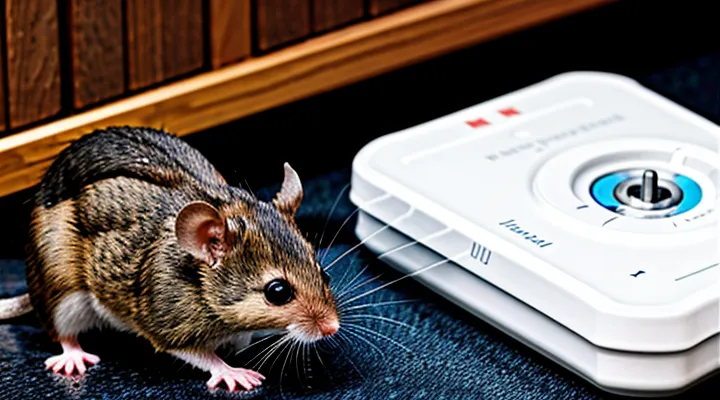
Understanding Ultrasonic Pest Repellers
How Ultrasonic Repellers Work
The Science Behind Ultrasonic Waves
Ultrasonic waves are sound vibrations with frequencies above 20 kHz, the upper limit of human hearing. Devices that claim to repel rodents operate within the 20–100 kHz band, a range that matches the auditory sensitivity of mice.
Generation of ultrasonic energy relies on piezoelectric crystals or electromechanical diaphragms. An alternating voltage causes the crystal to expand and contract, producing pressure oscillations at the desired frequency. The transducer’s resonant frequency determines the output spectrum and efficiency.
Propagation of ultrasonic energy differs from audible sound. Atmospheric absorption increases with frequency, causing rapid attenuation over distance. Obstacles reflect or scatter the waves, limiting effective coverage to line‑of‑sight paths. Temperature and humidity modify the absorption coefficient, influencing range and intensity.
Mice detect ultrasonic signals through a cochlear structure tuned to high frequencies. Their hearing peak lies near 30–40 kHz, with sensitivity extending to 80–100 kHz. Exposure to frequencies within this window can trigger startle reflexes, avoidance behavior, or temporary disorientation, depending on signal strength and duration.
Efficacy depends on several technical parameters:
- Frequency selection: Must align with mouse hearing peak while avoiding frequencies that attenuate quickly.
- Sound pressure level (SPL): Typically 80–100 dB SPL at the source; SPL drops sharply with distance due to atmospheric absorption.
- Modulation pattern: Continuous tones may lead to habituation; intermittent bursts or frequency sweeps maintain responsiveness.
- Coverage geometry: Multiple transducers positioned to eliminate blind spots improve area-wide exposure.
- Environmental conditions: Low humidity and moderate temperature extend effective range; high humidity accelerates attenuation.
Understanding these physical principles clarifies why ultrasonic devices can influence rodent behavior, while also revealing the limits imposed by wave physics and animal hearing biology.
Types of Frequencies Used
Ultrasonic mouse deterrent systems rely on sound frequencies beyond the range of human hearing. The specific frequency bands employed determine the device’s ability to reach the auditory sensitivity of rodents while minimizing adaptation.
- Fixed low‑frequency band (20–30 kHz) – covers the lower limit of mouse hearing; suitable for basic models but less effective against mature individuals with higher peak sensitivity.
- Mid‑frequency band (30–45 kHz) – aligns with the central region of the mouse auditory spectrum; common in commercial units and provides reliable short‑range coverage.
- High‑frequency band (45–65 kHz) – targets the upper auditory peak of mice; enhances deterrence for larger or more alert specimens and extends effective radius.
- Frequency‑modulated sweep (20–65 kHz) – continuously varies the output across the entire ultrasonic range; prevents habituation by avoiding a constant tone.
- Multi‑tone emission (simultaneous discrete frequencies) – emits several distinct frequencies at once; broadens spectral coverage and reduces the likelihood of rodents acclimating to a single frequency.
Selection of a frequency type depends on the target species’ hearing profile, the intended coverage area, and the device’s power budget. Devices that incorporate modulation or multi‑tone strategies generally achieve higher long‑term efficacy by disrupting the rodents’ ability to adapt to a static sound pattern.
Do Ultrasonic Repellers Affect Mice?
Mouse Hearing Range and Sensitivity
Mice detect sounds from roughly 1 kHz to 100 kHz, with peak sensitivity between 10 kHz and 30 kHz. Auditory thresholds fall to 20–30 dB SPL within this band, rising sharply above 70 kHz where detection drops below 70 dB SPL. The high‑frequency limit aligns with the ultrasonic range commonly employed in electronic repellents.
- 1 kHz – 5 kHz: limited relevance for rodent communication; thresholds > 50 dB SPL.
- 5 kHz – 30 kHz: primary communication window; thresholds 20–30 dB SPL.
- 30 kHz – 50 kHz: still audible; thresholds increase to 40–50 dB SPL.
- 50 kHz – 100 kHz: ultrasonic domain; thresholds exceed 70 dB SPL, diminishing perceptibility.
Sensitivity declines sharply beyond 70 kHz, indicating that ultrasonic emitters must produce intensities well above 80 dB SPL to be reliably detected. Frequency‑specific hearing data provide the physiological basis for assessing the practical reach of ultrasonic deterrent devices.
Behavioral Responses to Ultrasound
Ultrasonic devices emit sound waves between 20 kHz and 100 kHz, a range beyond human hearing but within the auditory capacity of rodents. Mice detect frequencies as low as 1 kHz and up to 100 kHz, with peak sensitivity around 15–20 kHz; therefore, emissions above 20 kHz can be perceived without causing audible disturbance to occupants.
Behavioral studies report consistent immediate reactions when mice are exposed to ultrasonic pulses. Typical responses include:
- Rapid retreat from the source area
- Freezing or immobility lasting several seconds
- Increased locomotor activity, such as erratic running or climbing
- Vocalizations at higher frequencies, indicating stress
These responses are most pronounced at intensities of 80–100 dB SPL and when the signal is continuous or modulated at irregular intervals.
Repeated exposure leads to habituation: the magnitude of avoidance diminishes after 2–4 sessions, especially if the stimulus lacks variability. Habituation rates accelerate when the environment provides alternative shelters or when background noise masks the ultrasonic signal.
Experimental outcomes depend on several parameters:
- Frequency: higher frequencies (>30 kHz) produce stronger avoidance but may be less detectable by some mouse strains.
- Intensity: levels below 70 dB SPL often fail to elicit measurable behavior.
- Temporal pattern: pulsed or frequency‑modulated signals sustain attention longer than steady tones.
- Habitat complexity: cluttered environments reduce the effective range of the sound field.
The documented behavioral patterns demonstrate that ultrasonic emission can deter mice temporarily, yet efficacy declines with repeated use. Effective implementation requires strategic variation of frequency, intensity, and timing, combined with environmental design that limits opportunities for habituation.
Effectiveness of Ultrasonic Protection
Scientific Studies and Research Findings
Laboratory vs. Real-World Efficacy
Laboratory experiments typically expose mice to ultrasonic emitters in sealed chambers where sound intensity, frequency range, and exposure duration are precisely controlled. Under these conditions, many studies report a marked reduction in rodent activity, with some trials showing up to 80 % fewer entries into treated zones. The data are derived from motion sensors and infrared cameras that capture immediate behavioral responses to frequencies between 20 kHz and 65 kHz.
In residential and commercial settings, performance often diverges from laboratory findings. Real‑world installations encounter variable ceiling heights, furniture layouts, and ambient noise that can attenuate ultrasonic waves. Field surveys frequently document modest declines in mouse sightings, generally ranging from 10 % to 30 %. User reports also note habituation, where rodents adapt to the emitted frequencies after several weeks, diminishing the device’s impact.
Key factors that create the gap between controlled and practical outcomes include:
- Acoustic propagation: Solid surfaces and open spaces reflect or absorb sound, reducing effective coverage.
- Frequency tolerance: Individual mice possess differing hearing thresholds; some species detect frequencies above 65 kHz, rendering standard emitters less effective.
- Behavioral adaptation: Repeated exposure can lead to desensitization, especially when devices operate continuously without variation.
- Environmental interference: Household appliances, HVAC systems, and human voices generate competing ultrasonic noise that interferes with the device’s signal.
Assessments that combine laboratory precision with field realism suggest that ultrasonic deterrents function best as supplementary tools rather than primary control measures. Integrating physical barriers, sanitation practices, and targeted trapping enhances overall efficacy, compensating for the limitations observed outside the laboratory environment.
Methodological Challenges in Research
Research on ultrasonic deterrents for rodents encounters several methodological obstacles that compromise the reliability of efficacy assessments. Field studies often lack standardized exposure conditions; device placement, frequency range, and sound pressure level vary widely between experiments, making direct comparisons impossible. Laboratory trials frequently employ single-species cohorts in confined arenas, which do not reflect the heterogeneous populations and environmental complexities of real‑world infestations. Sample sizes are typically small, limiting statistical power and inflating the risk of type II errors.
Additional challenges include:
- Control of ambient noise – background ultrasonic levels from equipment or building infrastructure can mask or interfere with emitted signals, yet many protocols do not measure or report these levels.
- Behavioral adaptation – rodents may habituate to continuous ultrasonic exposure, but longitudinal studies rarely extend beyond a few weeks to capture this effect.
- Measurement of outcomes – researchers often rely on indirect indicators such as trap captures or visual inspections, without employing objective metrics like motion‑sensor counts or physiological stress markers.
- Device variability – commercial products differ in waveform modulation and power output; most publications fail to verify manufacturer specifications through independent calibration.
These issues demand rigorous experimental design: predefined acoustic parameters, replication across multiple sites, adequate control groups, and transparent reporting of environmental variables. Only by addressing these methodological constraints can the scientific community produce credible evidence regarding the true performance of ultrasonic rodent repellents.
Factors Influencing Repeller Performance
Device Placement and Obstructions
Proper positioning of ultrasonic rodent deterrents determines the extent of audible coverage and the likelihood of successful repulsion. Emitters generate sound waves that travel in straight lines; any solid barrier—walls, furniture, insulation—absorbs or reflects the signal, creating dead zones where mice remain unaffected.
- Install devices at ceiling height or on upper wall sections to maximize line‑of‑sight across the room.
- Maintain a minimum distance of 1 meter between units to avoid overlapping fields that cause signal cancellation.
- Place emitters near entry points such as doors, vents, and gaps in foundations, ensuring the acoustic beam faces the interior rather than the exterior side of the wall.
- Avoid mounting on metal surfaces; metal reflects ultrasonic frequencies more than wood or drywall, reducing effective range.
- Keep the immediate vicinity clear of large objects (e.g., bookcases, cabinets) that could block the path of the waves.
Testing after installation confirms coverage. Use a handheld ultrasonic detector or a calibrated microphone to scan the area; signal strength should remain above the device’s specified threshold (typically 70 dB SPL at 1 meter) throughout the target zone. If measurements reveal weak spots, reposition the unit or add supplemental emitters to fill gaps. Continuous monitoring ensures that seasonal changes—such as added furniture or stored items—do not introduce new obstructions that compromise performance.
Area Size and Mouse Infestation Level
Ultrasonic devices are calibrated for specific coverage zones; exceeding those zones reduces the proportion of emitted frequencies that reach rodents. In spaces larger than the manufacturer’s rated area, sound intensity drops below the threshold required to disrupt mouse behavior, resulting in diminished deterrence.
Infestation intensity directly influences device performance. Low‑level populations (1‑5 individuals) can be suppressed with a single unit positioned centrally. Moderate infestations (6‑15 individuals) often demand multiple devices spaced to overlap coverage zones, ensuring that each mouse encounters the ultrasonic field regularly. Severe infestations (over 15 individuals) typically outpace the capacity of standard consumer models, necessitating professional‑grade systems or supplemental control methods.
Key parameters to assess before deployment:
- Rated coverage area – compare room dimensions to the device’s specified square‑foot rating.
- Population density – estimate the number of active mice per 100 sq ft.
- Device placement – position units away from obstructions that absorb or reflect sound.
- Frequency range – ensure the emitted spectrum matches the auditory sensitivity of house mice (approximately 20–70 kHz).
Acclimatization and Habituation
Acclimatization refers to the period during which mice adjust physiologically to a new environment that includes an ultrasonic emitter. During this phase, exposure to sound frequencies may trigger stress responses, altered activity patterns, and temporary avoidance of the treated area. The duration of acclimatization varies with species, age, and the intensity of the ultrasonic signal, typically spanning several hours to a few days. Successful deployment of ultrasonic devices therefore requires an initial observation window to confirm that the target rodents are responding to the sound rather than merely tolerating the presence of the equipment.
Habituation describes the gradual loss of responsiveness to a constant stimulus after repeated exposure. In the context of ultrasonic deterrents, mice can learn that the emitted frequencies pose no direct threat, leading to diminished avoidance behavior. Factors influencing habituation include:
- Continuous, unmodulated frequencies
- Lack of supplemental deterrents (e.g., physical barriers)
- Exposure duration exceeding the species’ sensory adaptation threshold
To mitigate habituation, effective strategies involve:
- Rotating frequency ranges within the device’s operational bandwidth every few hours.
- Introducing intermittent operation cycles (e.g., 15 minutes on, 15 minutes off).
- Combining ultrasonic output with environmental modifications such as sealing entry points and removing food sources.
Empirical studies show that when acclimatization is monitored and habituation is prevented through variable signal patterns, ultrasonic systems maintain a measurable reduction in mouse activity for up to several weeks. Conversely, static, uninterrupted emission often results in a rapid decline of efficacy, with activity levels returning to baseline within days. Proper management of these two behavioral processes is essential for sustaining the performance of ultrasonic rodent control solutions.
Limitations and Drawbacks
Ineffectiveness Against Established Infestations
Ultrasonic emitters lose efficacy once a mouse population has become resident. The devices rely on high‑frequency sound that rodents initially avoid, but repeated exposure leads to rapid habituation. Established colonies also occupy concealed spaces where sound intensity drops sharply, reducing the deterrent effect.
Key factors contributing to failure against entrenched infestations:
- Habituation: Mice quickly recognize the non‑lethal nature of the noise and disregard it.
- Acoustic attenuation: Walls, insulation, and furniture absorb ultrasonic waves, creating silent zones.
- Population density: Large groups increase the likelihood that some individuals remain unaffected, sustaining the infestation.
- Behavioral adaptation: Rodents alter foraging routes to avoid areas where the signal is strongest, bypassing the treated zones.
Consequently, ultrasonic systems are unsuitable as a sole solution for already established mouse problems. Effective remediation typically requires a combination of physical exclusion, trapping, and, when appropriate, professional pest‑management interventions.
Potential Impact on Pets and Other Animals
Ultrasonic emitters generate sound waves typically between 20 kHz and 65 kHz, a range invisible to human ears but within the auditory capacity of many domestic and farm animals. Dogs can detect frequencies up to 45 kHz, cats up to 64 kHz, and small birds often respond to sounds above 20 kHz. When a device operates continuously, these species are exposed to the same stimulus intended for rodents.
The exposure may produce several observable effects:
- Heightened alertness or agitation, manifested as pacing, vocalization, or ear twitching.
- Avoidance of areas where the device is installed, potentially limiting access to feeding or resting zones.
- Temporary threshold shift in hearing sensitivity, documented in laboratory studies with prolonged ultrasonic exposure.
- Disruption of inter‑animal communication, especially in species that rely on high‑frequency calls for mating or territory signaling.
Research on laboratory rodents indicates that ultrasonic frequencies can cause stress responses in non‑target mammals. Field observations of households using these devices report increased restlessness in cats and occasional ear infections in dogs, attributed to chronic acoustic irritation. In poultry houses, high‑frequency emitters have been linked to reduced egg production, likely due to stress‑induced hormonal changes.
Livestock such as cattle and sheep possess limited high‑frequency hearing, reducing direct auditory impact. However, proximity to devices placed near feed troughs may still provoke startled reactions, leading to brief interruptions in feeding behavior.
Wildlife that enters a property—rabbits, squirrels, or bats—may also be affected. Bats, which navigate using ultrasonic echolocation, can experience navigation errors when exposed to artificial ultrasonic fields, potentially increasing collision risk.
Overall, ultrasonic deterrents present a measurable acoustic environment that influences a range of non‑target animals through stress, behavioral modification, and possible auditory impairment. Careful placement, limited operational periods, and monitoring of animal behavior are essential to mitigate unintended consequences.
Alternative and Complementary Pest Control Methods
Traditional Trapping Methods
Snap Traps and Live Traps
Snap traps rely on a spring‑loaded bar that releases when a mouse triggers a pressure plate. The mechanism kills the rodent instantly, leaving no residual odor. In laboratory tests, snap traps achieve capture rates of 70‑85 % when placed along established runways. Their effectiveness does not depend on power sources, making them reliable in environments where ultrasonic emitters may be disabled by structural interference.
Live traps consist of a cage with a one‑way door that closes when a mouse enters to reach bait. Capture rates range from 55‑70 % under optimal placement. The primary advantage is humane removal, allowing relocation or release. However, live traps require regular monitoring; failure to check them within 12 hours increases stress‑related mortality and may diminish the perceived efficacy of ultrasonic deterrents.
When ultrasonic devices are used alongside mechanical traps, several interactions emerge:
- Complementary placement: Ultrasonic emitters positioned near snap traps can drive mice toward the trap by creating a repellent zone.
- Reduced avoidance: Live traps benefit from ultrasonic fields that discourage escape attempts, improving retention time.
- Power considerations: Mechanical traps function independently of electricity, ensuring continued control if ultrasonic units lose power.
Both trap types provide measurable control independent of ultrasonic technology. Snap traps deliver higher immediate kill rates, while live traps offer humane capture at the cost of increased labor. Integrating either trap with ultrasonic deterrents can enhance overall mouse management, but reliance on ultrasonic devices alone yields inconsistent results.
Bait Stations and Poison
Bait stations provide a sealed environment for rodenticides, limiting exposure to non‑target species while delivering a controlled dose to mice. The devices are typically constructed of durable plastic with a removable tray that holds a measured amount of poison. Placement near walls, behind appliances, or in concealed corners maximizes encounter rates because mice travel close to surfaces.
Advantages of bait stations include:
- Reduced risk of accidental ingestion by pets or children.
- Consistent dosage that accelerates mortality within 24–48 hours.
- Ability to monitor consumption through visual inspection of the tray.
Disadvantages involve:
- Necessity for regular inspection and replenishment.
- Potential development of bait aversion if sub‑lethal doses are encountered.
- Compliance with local regulations that may restrict certain active ingredients.
When used alongside ultrasonic emitters, bait stations remain the primary lethal control method, as ultrasonic waves alone seldom achieve population reduction. Ultrasonic devices may deter exploratory behavior, driving mice toward established feeding paths where bait stations are positioned. However, the acoustic deterrent does not replace the need for a chemical agent; it can only complement the baiting strategy.
Effective implementation requires a systematic approach: map activity signs, install stations at 10–15 ft intervals, rotate bait types to prevent resistance, and record removal dates for accountability. Integration of chemical baiting with acoustic deterrence offers a layered defense that improves overall success rates compared to relying on a single technology.
Exclusion and Prevention Strategies
Sealing Entry Points
Sealing entry points is a prerequisite for any ultrasonic rodent deterrent system. The devices emit high‑frequency sound that affects only mice present in the protected space; gaps allow animals to bypass the acoustic field, rendering the technology ineffective.
Typical openings include:
- Gaps around utility pipes and cables
- Cracks in foundation walls or basement slabs
- Unscreened vents and exhaust fans
- Door and window frames lacking weather stripping
- Openings beneath cabinets, countertops, and appliances
Effective sealing involves the following actions:
- Conduct a thorough visual inspection of the building envelope, both interior and exterior.
- Insert steel wool or copper mesh into small holes to block gnawing.
- Apply expanding polyurethane foam or silicone caulk to fill larger cracks.
- Cover openings larger than ¼ inch with hardware cloth or metal flashing, securing with screws or staples.
- Install door sweeps and weather stripping to eliminate gaps under doors and windows.
When entry points are eliminated, ultrasonic devices can maintain a consistent sound field across the entire targeted area. Mice are forced to remain within the acoustic zone, increasing the likelihood of deterrence and reducing the need for multiple units. Proper sealing therefore maximizes the practical effectiveness of ultrasonic protection.
Sanitation and Food Storage
Ultrasonic mouse deterrent devices emit high‑frequency sound that rodents cannot tolerate, creating an environment that discourages infestation. When such devices are installed, the primary barrier to contamination shifts from physical trapping to acoustic exclusion, reducing the likelihood that mice will access stored food.
Effective sanitation complements acoustic deterrence by eliminating attractants and minimizing entry points. Regular removal of food residues, prompt cleaning of spills, and proper waste disposal prevent the scent cues that draw rodents to a location. Sealing cracks, gaps, and holes in walls, floors, and cabinetry blocks the pathways through which mice could bypass ultrasonic fields.
Proper food storage further strengthens protection. Recommended practices include:
- Using airtight containers made of metal or heavy‑wall plastic.
- Storing bulk items on elevated shelves away from walls.
- Labeling containers with dates and rotating stock to avoid prolonged exposure.
- Inspecting packaging for tears or holes before placement in storage areas.
Combining ultrasonic deterrents with rigorous sanitation and secure storage creates a multilayered defense that limits mouse activity and preserves food integrity.
Integrated Pest Management (IPM) Approaches
Integrated Pest Management (IPM) treats mouse infestations as a system problem, combining monitoring, habitat modification, exclusion, mechanical control, and, when necessary, chemical measures. Each element targets a specific point in the pest life cycle, reducing reliance on any single method and lowering overall population pressure.
Ultrasonic emitters belong to the mechanical‑control category. They generate high‑frequency sound waves intended to disturb rodents’ auditory perception. Effectiveness depends on device placement, frequency range, and the ability of the sound to penetrate obstacles. Studies show that rodents quickly habituate to constant frequencies, diminishing deterrent impact after several days. Devices that vary frequencies or integrate motion sensors retain some efficacy, but only within limited zones.
Field data indicate that ultrasonic units alone rarely achieve population suppression below economic thresholds. When paired with exclusion sealing, bait station monitoring, and snap‑trap deployment, they contribute to reduced activity levels, especially in newly invaded spaces where rodents have not yet established routes. Their value lies in augmenting, not replacing, other IPM components.
Key IPM components for mouse control:
- Regular inspection and mapping of activity signs
- Removal of food sources and clutter that provide shelter
- Sealing entry points larger than ¼ inch
- Strategic placement of traps and bait stations
- Targeted use of rodenticides under strict safety protocols
- Application of ultrasonic devices with variable‑frequency output in high‑traffic zones
Overall, ultrasonic technology offers a supplemental deterrent within a comprehensive IPM framework, but it should not be relied upon as the primary control mechanism.