
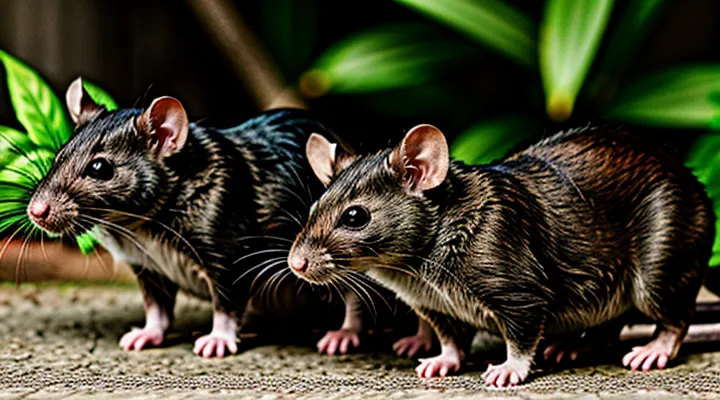
Understanding Rats: A General Overview
The Distinction Between «True Rats» and «Other Rodents»
The genus Rattus comprises the animals commonly identified as true rats. True rats share a set of anatomical and behavioral traits that separate them from other rodent species often mistaken for rats. Key differences include skull shape, tail length, and dental patterns.
- Skull: Broad, robust cranium with a pronounced facial ridge; other rodents display a narrower skull and less developed facial ridge.
- Tail: Proportionally long, naked, and scaly, typically equal to or longer than the body; many non‑rat rodents have shorter, hairy tails.
- Teeth: Two upper incisors that are continuously growing and have a distinctive orange enamel; other rodents may possess additional incisors or varying enamel coloration.
- Reproductive rate: True rats produce larger litters (up to 12 offspring) and have shorter gestation periods (≈ 21 days); most other rodents have smaller litters and longer gestation.
Ecological habits also diverge. True rats thrive in urban and agricultural settings, exhibiting high adaptability to human environments. In contrast, species such as house mice, voles, and gerbils occupy more specialized niches, ranging from grain stores to desert burrows.
Visual identification benefits from these criteria. Photographs that highlight head profile, tail texture, and body proportions enable reliable distinction without reliance on common names that can be ambiguous. Accurate labeling supports scientific communication, pest management, and public education.
Why Identifying Rat Types Matters
Identifying rat species provides accurate data for disease surveillance, enabling targeted interventions that reduce pathogen transmission to humans and livestock. Precise classification distinguishes carriers of hantavirus, leptospirosis, and plague from non‑vector species, allowing health agencies to allocate resources efficiently.
Accurate species recognition supports effective pest management. Control measures such as bait selection, trap placement, and habitat modification depend on the behavior and habitat preferences of each rat type. Misidentification leads to wasted effort, increased resistance, and collateral damage to non‑target wildlife.
In scientific research, reproducibility hinges on correctly named subjects. Experimental outcomes—including drug efficacy, behavioral studies, and genetic analyses—vary significantly among species. Clear identification ensures that findings are comparable across laboratories and that regulatory submissions meet required standards.
- Public health monitoring
- Tailored pest control strategies
- Validated scientific experimentation
- Conservation and biodiversity assessments
- Compliance with wildlife regulations
Common Rat Species Around the World
The Brown Rat («Rattus norvegicus»)
Physical Characteristics
Rats exhibit a range of physical traits that distinguish one species from another. Body length typically varies from 10 cm in dwarf varieties to over 30 cm in large maritime species. Tail proportion mirrors body size, extending from 70 % to 100 % of total length, and may be scaly or haired depending on the species. Fur coloration spans black, brown, gray, and white, with some breeds displaying distinct dorsal stripes or spotted patterns. Ear size correlates with habitat temperature; desert-dwelling rats possess larger, thinner ears for heat dissipation, while forest species have smaller, more insulated ears. Whisker length exceeds body width in most rats, providing tactile feedback essential for navigation in low-light environments. Skeletal structure remains consistent across genera, featuring robust mandibles for gnawing and a flexible spine that supports rapid, agile movement.
Key physical characteristics by common rat types:
- Norwegian (brown) rat: gray‑brown fur, robust body, long hairless tail, medium ears.
- Black rat: sleek black coat, slender build, proportionally longer tail, slightly larger ears.
- Dwarf hamster‑derived rat: diminutive size (≈10 cm), soft white or cream fur, short tail, rounded ears.
- Maritime rat: larger body, coarse brown fur, thick tail with sparse hair, broad ears.
Habitat and Behavior
Rats occupy a wide range of environments, each influencing their daily routines and survival strategies. The brown rat (Rattus norvegicus) thrives in sewers, basements, and agricultural fields, where its burrowing ability provides shelter from predators and extreme weather. The black rat (Rattus rattus) prefers elevated habitats such as attics, trees, and ship decks, exploiting vertical space to avoid ground‑dwelling competitors. Desert‑adapted species like the Indian desert rat (Rattus indica) seek shelter under rocks and within sparse vegetation, conserving moisture through nocturnal activity. Forest‑dwelling rats, including the Himalayan field rat (Rattus nitidus), inhabit leaf litter and fallen logs, relying on dense cover for protection.
Behavioral patterns correspond closely to habitat conditions:
- Diet: Opportunistic omnivores; urban rats consume refuse, grains, and insects, while desert rats focus on seeds and arthropods with higher water content.
- Social structure: Colonial colonies form in resource‑rich settings, with hierarchical organization and cooperative breeding; solitary tendencies appear in sparsely populated desert zones.
- Reproduction: Short gestation (≈ 21 days) and rapid maturation enable multiple litters per year; breeding peaks align with food availability, especially in temperate regions.
- Activity cycle: Primarily nocturnal; increased crepuscular movement observed near human habitation where artificial lighting extends foraging windows.
Understanding these habitat‑behavior relationships aids identification and management of rat populations across diverse ecosystems.
Geographic Distribution
Rats occupy a wide range of habitats across every continent except Antarctica, with each species showing distinct regional patterns.
The brown rat (Rattus norvegicus) thrives in temperate zones and urban centers throughout North America, Europe, and East Asia. It favors riverbanks, sewers, and agricultural fields where food and shelter are abundant.
The black rat (Rattus rattus) prefers warmer climates. Its range includes the Mediterranean basin, sub‑Saharan Africa, South and Southeast Asia, and parts of South America. The species commonly inhabits rooftops, ships, and tropical forest edges.
The Polynesian rat (Rattus exulans) is native to Oceania. Populations exist on many Pacific islands, including Hawaii, New Zealand, and the Cook Islands, where it was introduced by early human settlers.
The Asian house rat (Rattus tanezumi) concentrates in South‑East Asian countries such as Thailand, Vietnam, and the Philippines. It is also found in parts of southern China and northern Australia, often in rice paddies and rural settlements.
The desert rat (Rattus fuscipes) occupies arid regions of the Middle East and North Africa, where it shelters in burrows beneath sparse vegetation.
Key distribution points:
- Temperate urban and agricultural zones – R. norvegicus
- Tropical and subtropical coastal areas – R. rattus
- Remote Pacific islands – R. exulans
- Southeast Asian lowlands – R. tanezumi
- Arid desert habitats – R. fuscipes
Understanding these geographic ranges assists in ecological research, pest management, and conservation planning.
The Black Rat («Rattus rattus»)
Physical Characteristics
Rats exhibit a wide range of physical traits that distinguish each species and aid identification. Body length typically varies from 10 cm in the smallest dwarf rats to over 30 cm in larger tropical species. Tail length often matches or exceeds body length, providing balance for agile climbing. Fur coloration spans from uniform black or brown to patterned coats featuring dorsal stripes, dorsal spots, or contrasting ventral patches. Ear size correlates with habitat temperature; species in cooler regions possess smaller, densely furred ears, whereas those in warm climates have larger, thinner ears for heat dissipation. Hind feet display adaptations such as elongated toes for gripping smooth surfaces or robust pads for burrowing.
- Brown rat (Rattus norvegicus): robust body, coarse brown to gray fur, short tail with sparse hair, broad skull, large ears, strong forelimbs for digging.
- Black rat (Rattus rattus): slender frame, glossy black or dark brown fur, long tail covered in fine hair, narrow skull, prominent ears, agile climber with elongated hind feet.
- Pacific rat (Uromys spp.): oversized head, dense reddish-brown fur, short tail, massive hind limbs, heavily muscled forearms for handling large seeds.
- Dusky rat (Rattus fuscipes): medium size, dark gray to black fur with a lighter ventral side, moderately long tail, rounded ears, robust hind limbs for terrestrial locomotion.
- White‑toothed rat (Niviventer spp.): pale gray or brown fur, distinctive white incisors visible when mouth is closed, elongated tail, small ears, fine whiskers for tactile navigation.
Skeletal structure varies: skulls range from broad and robust in ground‑dwelling species to narrow and lightweight in arboreal forms. Dental formula remains constant (1/1 incisors, 0/0 canines, 0/0 premolars, 3/3 molars) but enamel thickness and crown shape adapt to diet, from hard seeds to soft fruits. These physical characteristics provide reliable markers for visual identification and classification across the diverse rat taxa.
Habitat and Behavior
Rats occupy a broad range of environments, each species adapting its foraging, nesting and social patterns to local conditions.
-
Norway rat (Rattus norvegicus)
- Habitat: underground burrows, sewers, agricultural fields, urban basements.
- Behavior: nocturnal omnivore, prefers ground foraging, establishes hierarchical colonies, exhibits strong territorial marking.
-
Roof rat (Rattus rattus)
- Habitat: attics, trees, cliffs, ship decks, tropical gardens.
- Behavior: agile climber, primarily arboreal, active at dusk, forms smaller family groups, displays opportunistic feeding on fruits and insects.
-
Black rat (Rattus rattus)
- Habitat: coastal ports, historic buildings, grain stores, warm temperate regions.
- Behavior: nocturnal, nests in concealed crevices, competes aggressively for food, capable of rapid reproduction under favorable climate.
-
Polynesian rat (Rattus exulans)
-
Bush rat (Rattus fuscipes)
- Habitat: dense underbrush, wetlands, forest floor in southeastern Australia.
- Behavior: primarily ground-dwelling, forages on seeds and small vertebrates, exhibits seasonal breeding peaks, constructs shallow nests from vegetation.
Across species, rats demonstrate flexible diet selection, rapid reproductive cycles, and strong scent-based communication, enabling survival in both natural and anthropogenic landscapes.
Geographic Distribution
Rats occupy a broad range of habitats across all continents except Antarctica, with each species adapted to specific climatic and ecological conditions. Understanding where each species is found aids identification when reviewing visual records and taxonomic listings.
- Brown rat (Rattus norvegicus) – urban and agricultural zones throughout Europe, North America, and parts of Asia; also established in coastal regions of South America and Australia.
- Black rat (Rattus rattus) – tropical and subtropical areas of Africa, Southeast Asia, the Pacific islands, and the southern United States; frequently associated with human dwellings.
- Polynesian rat (Rattus exulans) – remote Pacific islands, including New Zealand and Hawaii; introduced by early seafaring peoples.
- Asian house rat (Rattus tanezumi) – Southeast Asian mainland, Indonesia, and the Philippines; thrives in rice paddies and peri‑urban environments.
- Mongolian rat (Rattus mongolicus) – arid and steppe regions of Mongolia, northern China, and parts of Central Asia; prefers dry scrubland.
Distribution patterns reflect historical trade routes, human migration, and natural dispersal mechanisms. Species confined to temperate zones tend to coexist with dense human populations, while those native to tropical islands remain limited by geographic isolation.
Other Notable Rat Species
Polynesian Rat («Rattus exulans»)
The Polynesian rat (Rattus exulans) is a small murid native to Southeast Asia and widely dispersed across the Pacific islands by early human voyagers. It belongs to the genus Rattus, species exulans, and is the smallest member of the genus, typically weighing 40–70 g and measuring 13–18 cm in head‑body length.
Key identifying features include:
- Dorsal fur: dark brown to grayish, often with a lighter belly.
- Tail: proportionally long, exceeding body length, sparsely haired.
- Ears: relatively large, rounded, with a pinkish hue.
- Skull: narrow rostrum, well‑developed auditory bullae.
Habitat ranges from coastal villages and cultivated fields to forest edges. The species is omnivorous, consuming seeds, fruits, insects, and human food waste. Breeding occurs year‑round in tropical climates, with litters of up to eight pups after a gestation of 21 days.
Archaeological sites frequently contain R. exulans remains, providing chronological markers for human settlement patterns across Oceania. The rat’s presence on remote islands also influences native flora and fauna through seed predation and competition with endemic species.
Gambian Pouched Rat («Cricetomys gambianus»)
The Gambian pouched rat (Cricetomys gambianus) belongs to the family Muridae and is one of the larger rodent species commonly featured in visual guides to rat diversity. Adults reach a head‑body length of 30–45 cm, with a tail of similar size, and weigh between 1.0 and 1.5 kg. The coat is dense, ranging from dark brown to reddish‑gray, while a distinctive cheek pouch expands for food storage. Eyes are large and forward‑facing, providing acute vision for nocturnal foraging.
Native to sub‑Saharan Africa, the species inhabits savanna, forest edge, and agricultural landscapes. It thrives near human settlements, where it exploits crops, grains, and refuse. Its omnivorous diet includes seeds, fruits, insects, and small vertebrates. Social structure is flexible; individuals may live solitarily or form loose colonies that share burrows.
Key attributes of the Gambian pouched rat:
- Size: 30–45 cm body, 30–45 cm tail, 1.0–1.5 kg weight.
- Morphology: Robust body, prominent cheek pouch, coarse fur.
- Habitat: Savanna, woodland margins, cultivated fields.
- Distribution: West, Central, and East Africa, from Senegal to Kenya.
- Behavior: Nocturnal, omnivorous, capable of limited burrowing.
- Human interaction: Employed in land‑mine detection and disease surveillance due to keen olfactory abilities.
Photographic documentation typically highlights the rat’s large ears, muscular build, and the expanded cheek pouch, features that aid identification among the many rat species showcased in visual compilations of rodent taxonomy.
Pack Rat (Neotoma species)
Pack rats, belonging to the genus Neotoma, are medium‑sized rodents native to North America. They possess a robust body, a length of 20–30 cm, and a long, scaly tail that can exceed the body length. Fur coloration ranges from gray‑brown to reddish brown, often with a distinct dorsal stripe. Large, dark eyes and prominent whiskers aid nocturnal navigation.
These rodents inhabit a variety of environments, including deserts, chaparral, woodlands, and mountainous regions. They construct extensive nests, called middens, from twigs, leaves, and collected objects. Middens serve as food caches and shelter, sometimes accumulating materials for decades and providing valuable paleoenvironmental data.
Key characteristics of pack rats:
- Diet: Omnivorous; consumes seeds, fruits, green vegetation, insects, and occasionally small vertebrates.
- Behavior: Highly territorial; individuals defend nesting sites against conspecifics and other small mammals.
- Reproduction: Breeding occurs year‑round in warmer climates; litters typically contain 2–5 young, with a gestation period of about 30 days.
- Adaptations: Strong incisors for gnawing; cheek pouches for transporting materials to nests.
Photographic documentation commonly highlights the contrast between the animal’s dense fur and the intricate structure of its midden. Images often capture the species’ distinctive tail, facial profile, and the surrounding habitat, providing visual reference for identification and ecological study.
Identifying Rats by Physical Traits
Size and Body Shape
Rats exhibit a wide spectrum of dimensions and body configurations, each trait serving as a reliable marker for visual identification. Size typically ranges from 10 cm to 35 cm in head‑body length, while tail length may equal or exceed the body, influencing overall silhouette.
Small‑to‑medium specimens, such as the common house rat, display a sleek, cylindrical torso, a proportionally short tail, and a modest weight of 150–300 g. Larger representatives, like the giant African bush rat, possess a robust, blocky frame, a thickened neck, and a tail that tapers gradually, supporting body masses up to 1 kg.
- Rattus norvegicus (Norwegian rat) – head‑body 20–25 cm, tail 18–22 cm; stout body, broad head, dense fur.
- Rattus rattus (Black rat) – head‑body 16–20 cm, tail 20–25 cm; slender torso, elongated tail, pointed snout.
- Bandicota indica (Greater bandicoot rat) – head‑body 25–30 cm, tail 15–20 cm; massive, muscular build, short tail, pronounced cheek pouches.
- Mastomys natalensis (Natal multimammate mouse) – head‑body 10–12 cm, tail 12–14 cm; compact, rounded ears, relatively long tail for its size.
- Tokudaia osimensis (Osim rat) – head‑body 13–15 cm, tail 14–16 cm; elongated body, thin tail, reduced whisker length.
Understanding these dimensional and morphological patterns enhances the accuracy of photographic catalogues and supports precise species classification without reliance on textual descriptors alone.
Tail Length and Appearance
Tail length serves as a primary visual cue for differentiating rat varieties. Measurements range from short, stubby tails in dwarf breeds to long, slender tails in larger field species. Appearance includes scale pattern, hair coverage, and curvature, all observable in photographs and identification guides.
- Dwarf Fancy Rat – Tail length 6–8 cm, approximately half the body length; tail appears thin, hairless, with a subtle dorsal ridge.
- Standard Fancy Rat – Tail length 12–15 cm, roughly equal to body length; tail is smooth, uniformly scaled, and lightly furred near the base.
- Long‑Haired Rat – Tail length 10–13 cm; tail remains hairless but exhibits a pronounced ventral curve, giving a “hooked” silhouette.
- Brown Norway (Field Rat) – Tail length 15–20 cm, exceeding body length; tail is fully scaled, thick, and slightly flattened, reflecting adaptation to outdoor habitats.
- Rex Rat – Tail length 9–12 cm; tail shows a fine, velvety texture on the dorsal surface due to the rex coat mutation, while retaining the typical hairless shaft.
Tail morphology influences balance, thermoregulation, and sensory perception. Longer tails provide enhanced stability during climbing, whereas shorter tails reduce heat loss in colder environments. Scale density and curvature affect tactile feedback, allowing rats to navigate narrow passages and detect subtle environmental changes.
Ear Size and Shape
Ear morphology provides a reliable metric for separating rat varieties, complementing visual identification and photographic records. Size and contour of the auricle differ markedly among common species, enabling quick field assessment.
Size ranges from diminutive (approximately 5 mm in length) to expansive (up to 15 mm). Small‑eared forms include the Asian house rat, whose compact pinnae reduce thermal loss in temperate habitats. Medium‑sized ears appear in the brown rat, measuring roughly 8–10 mm and offering balanced auditory sensitivity. Large, conspicuous ears characterize the desert‑adapted kangaroo rat, extending beyond 12 mm to enhance sound capture in open environments.
Shape variations follow functional adaptations. Rounded ears dominate in forest dwellers, providing structural resilience against foliage. Pointed or triangular pinnae occur in species that navigate narrow burrows, directing sound waves toward the inner ear. Folded or semi‑curved ears are observed in semi‑aquatic rats, reducing drag while maintaining acoustic efficiency.
Key ear traits by species:
- Asian house rat – small, rounded, hair‑covered.
- Brown rat – medium, oval, sparsely furred.
- Kangaroo rat – large, triangular, hairless at the tip.
- Semi‑aquatic rat – medium, semi‑curved, waterproof coating.
These dimensions and configurations serve as practical identifiers when cataloguing rat photographs and compiling taxonomic lists.
Fur Color and Texture
Fur coloration and texture provide reliable criteria for distinguishing among rat varieties, complementing photographic documentation and nomenclature.
Common fur colors include:
- Black: dense, uniform pigmentation covering the entire body.
- Brown: ranging from light chestnut to deep chocolate, often with a subtle sheen.
- White: pure, lacking pigment; may appear slightly creamy under certain lighting.
- Agouti: banded hairs producing a speckled, mixed‑tone appearance.
- Rex: soft, velvety coat with a muted, pastel hue.
Typical texture types are:
- Glossy: smooth, reflective surface; common in short‑haired breeds.
- Satin: slightly iridescent, semi‑smooth; seen in medium‑length fur.
- Woolly: thick, fluffy, with a pronounced undercoat; characteristic of long‑haired specimens.
- Rex: short, curly, and plush; results from a genetic mutation affecting hair structure.
Color and texture often correlate; for example, black satin coats appear darker due to light absorption, while white woolly coats tend to look bulkier because of the voluminous undercoat. Recognizing these attributes enhances accuracy when cataloguing rat species, supporting both visual identification and taxonomic classification.
Behavioral Clues for Rat Identification
Nesting Habits
Rats exhibit diverse nesting strategies that correspond to species‑specific ecology and habitat preferences. Understanding these behaviors aids in accurate visual identification and informs habitat management.
- Norway rat (Rattus norvegicus) – Constructs extensive burrow systems with multiple chambers in soil, under foundations, or within compost piles; tunnels often feature a main tunnel 30–50 cm deep and side chambers for food storage.
- Roof rat (Rattus rattus) – Prefers elevated nests built from shredded plant material, insulation, or debris in attics, eaves, and tree canopies; nests are compact, dome‑shaped, and typically situated 2–3 m above ground.
- Polynesian rat (Rattus exulans) – Occupies shallow ground depressions or nests in hollow logs and dense vegetation; nests are modest, composed of grasses and leaves, and are often located near food sources such as fruit trees.
- Ricefield rat (Rattus argentiventer) – Forms burrows in flooded fields and riverbanks; tunnels are reinforced with vegetation and maintain an oxygen channel for survival in water‑logged conditions.
- Marsh rice rat (Oryzomys palustris) – Builds nests above ground on dense marsh vegetation; structures consist of woven reeds and grasses, anchored to stems for stability against water flow.
Nesting materials reflect availability: dry fibers, leaves, insulation, and soil. Nest locations range from subterranean burrows to arboreal platforms, each providing protection from predators, climate regulation, and proximity to food. Photographic documentation of nests, paired with species names, enhances field identification and supports ecological surveys.
Diet and Feeding Patterns
Rats exhibit diverse dietary habits that reflect their adaptability to various habitats. Most species consume a combination of plant material, animal protein, and anthropogenic waste, allowing them to thrive in urban, agricultural, and natural environments.
Key components of a typical rat diet include:
- Grains, seeds, and cereals
- Fresh fruits and vegetables
- Insects, eggs, and small vertebrates
- Human-derived food scraps and refuse
Feeding patterns differ among species but share common characteristics. Many rats are nocturnal foragers, increasing activity after dusk to reduce predation risk. Opportunistic feeding behavior enables rapid exploitation of temporary food sources, while some species display seasonal shifts, favoring higher protein intake during breeding periods. Social feeding dynamics range from solitary consumption to communal scavenging, influencing competition and resource allocation within colonies.
Sounds and Vocalizations
Rats communicate through a complex repertoire of acoustic signals that differ among species and behavioral contexts. Researchers documenting rat diversity with visual references also record these vocalizations to provide a complete profile of each taxon.
- Ultrasonic chirps (30–80 kHz): emitted during social interaction, navigation, and exploration; often undetectable without specialized equipment.
- Low‑frequency squeaks (1–10 kHz): associated with distress, aggression, or predator alerts; audible to human ears.
- Purr‑like vocalizations (10–30 kHz): observed in grooming and maternal care, indicating a relaxed state.
- Rapid trill bursts: produced during mating rituals, signaling sexual readiness.
Each sound conveys specific information. Ultrasonic chirps facilitate group cohesion and spatial orientation. Low‑frequency squeaks function as alarm calls that trigger flight or defensive behavior in conspecifics. Purr‑like tones reinforce affiliative bonds between parents and offspring. Trill bursts synchronize reproductive activity within a population.
Field recordings employ condenser microphones paired with high‑sample‑rate digital recorders. Spectrographic analysis isolates frequency bands, enabling comparison across photographed specimens. Cross‑referencing acoustic profiles with visual identifiers enhances accuracy in species identification and supports ecological monitoring.
Practical Tips for Rat Identification
Using Photos for Comparison
Photographic comparison provides a reliable method for distinguishing among the various rat species. High‑resolution images reveal morphological details that text descriptions alone may overlook, such as fur coloration patterns, tail length ratios, ear size, and facial markings. By aligning side‑by‑side photos of known specimens with an unknown sample, observers can quickly assess congruence with diagnostic traits.
Key visual criteria for comparison include:
- Fur hue and texture – dorsal and ventral coloration, presence of striping or spotting.
- Tail proportion – length relative to body, presence of hair or a naked shaft.
- Ear dimensions – size, shape, and visibility of cartilage ridges.
- Facial features – eye placement, whisker arrangement, and muzzle shape.
- Body size – overall length and weight estimates derived from scale references in the image.
Effective use of photos requires consistent lighting, standardized angles (lateral, dorsal, and cranial views), and inclusion of a measurement scale. When photographs meet these criteria, comparative analysis yields accurate species identification and supports documentation of regional rat populations.
Consulting with Pest Control Experts
Consulting with pest‑control professionals enhances accurate identification of rat species, which is essential for targeted management. Experts compare sighted rodents with photographic references, match coloration, tail length, and body size to species such as the Norway rat, roof rat, or house mouse, and determine the most effective control measures.
Professional assessment provides several advantages:
- Precise species confirmation reduces reliance on guesswork.
- Recommendations align with local regulations and safety standards.
- Integrated pest‑management plans incorporate sanitation, exclusion, and baiting tailored to the identified rat type.
- Ongoing monitoring ensures early detection of re‑infestation and allows timely adjustments.
When engaging a specialist, supply clear photographs of the rodents, note observed behavior, and describe the environment. The expert will evaluate habitat conditions, identify entry points, and propose a comprehensive strategy that minimizes risk to non‑target species and human occupants.
The Impact of Different Rat Species
Health Risks Associated with Rats
Rats, whether common brown, black, or other species, serve as reservoirs for numerous pathogens that affect human health.
- Leptospira bacteria cause leptospirosis, transmitted through urine-contaminated water or soil.
- Hantavirus pulmonary syndrome spreads via inhalation of aerosolized droppings, urine, or saliva.
- Salmonella enterica and other enteric bacteria contaminate food surfaces, leading to gastroenteritis.
- Rat‑bite fever, caused by Streptobacillus moniliformis or Spirillum minus, follows bites or scratches.
- Yersinia pestis, the agent of plague, persists in flea‑infested rodent populations.
Rodent droppings, urine, and shed hair introduce allergens that trigger asthma and hypersensitivity reactions, especially in indoor environments. Food storage areas contaminated by rat activity experience mold growth and spoilage, increasing the risk of toxin ingestion.
Bites penetrate skin, delivering bacteria directly into tissue and creating a portal for secondary infection. Even minor scratches can result in localized inflammation and potential systemic involvement.
Effective risk mitigation includes:
- Sealing entry points and maintaining structural integrity to prevent access.
- Storing food in rodent‑proof containers and regularly cleaning surfaces with disinfectants.
- Setting traps or employing professional pest‑control services to reduce populations.
- Monitoring for signs of infestation, such as gnaw marks, droppings, or nocturnal activity.
- Using personal protective equipment when handling contaminated materials or cleaning rodent residues.
Damage to Property and Agriculture
Rats, identified by distinct visual characteristics and scientific names, are responsible for extensive damage to both built environments and agricultural production. Their gnawing habit compromises structural integrity, while burrowing activities undermine foundations and irrigation systems.
Key forms of property damage include:
- Chewed electrical wiring, leading to short circuits and fire hazards.
- Deteriorated insulation and woodwork, resulting in costly repairs.
- Contaminated stored goods, reducing market value and requiring disposal.
In agricultural settings, rat activity translates into measurable losses:
- Consumption of seeds, grains, and tubers, directly decreasing yields.
- Damage to planting equipment and storage facilities, increasing maintenance expenses.
- Transmission of pathogens to livestock and crops, prompting additional veterinary and phytosanitary interventions.
Effective management relies on accurate species identification, as behavioral patterns and dietary preferences vary among rat types. Photographic guides and taxonomic references support targeted control measures, optimizing resource allocation and minimizing economic impact.