
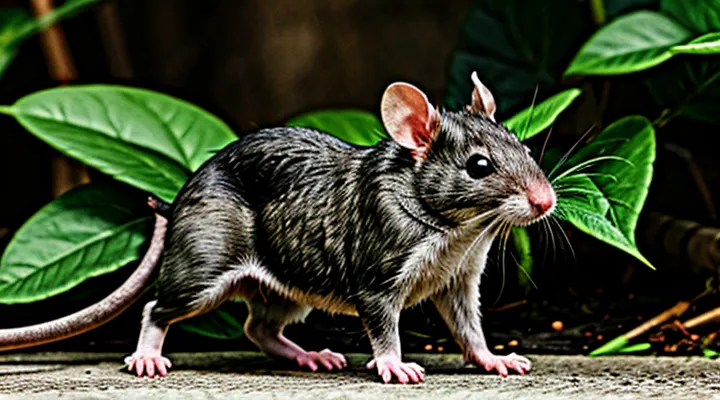
Defining «Dangerous» in the Context of Rats
Direct Threats: Disease Transmission
The rat identified as the most hazardous globally carries a suite of pathogens that infect humans through direct contact, bites, scratches, and contamination of food or water. Transmission occurs when saliva, urine, feces, or ectoparasites such as fleas and mites come into contact with open wounds or mucous membranes. In urban environments, the animal’s proximity to dense human populations amplifies exposure risk.
Key diseases transmitted by this rodent include:
- Leptospirosis – a bacterial infection spread via contaminated urine; symptoms range from mild flu‑like illness to severe kidney or liver failure.
- Hantavirus pulmonary syndrome – contracted through inhalation of aerosolized droppings; leads to rapid respiratory distress and high mortality.
- Plague – caused by Yersinia pestis carried by fleas that infest the rat; results in bubonic, septicemic, or pneumonic forms.
- Salmonellosis – bacterial contamination of food surfaces by feces; produces gastroenteritis and can be fatal in vulnerable individuals.
- Rat‑borne hemorrhagic fever – a viral disease transmitted by rodent bites; presents with fever, bleeding, and organ failure.
Effective control measures focus on eliminating rodent infestations, securing food storage, and maintaining sanitation to interrupt the transmission pathways described above.
Indirect Threats: Ecological Impact and Infrastructure Damage
The deadliest rat species exerts indirect pressure on ecosystems through competition, disease transmission, and alteration of food webs. By displacing native rodents, it reduces biodiversity and destabilizes predator‑prey relationships, which can lead to population explosions of insects and other pests. Its capacity to carry pathogens extends the risk of zoonotic outbreaks beyond direct human contact, affecting wildlife health and agricultural productivity.
Infrastructure suffers damage from the species’ burrowing behavior and gnawing habits. Key impacts include:
- Erosion of soil foundations around bridges, culverts, and levees, compromising structural integrity.
- Penetration of electrical wiring and insulation in residential and commercial buildings, increasing fire hazard and maintenance costs.
- Blockage of drainage systems and sewer lines, resulting in flooding, sanitation failures, and costly repairs.
These indirect effects amplify the overall threat posed by the rat, extending consequences from ecological imbalance to economic loss and public‑health challenges.
Contenders for the Title
The Black Rat («Rattus rattus»)
The Black Rat (Rattus rattus) is a cosmopolitan rodent whose presence correlates with heightened public‑health risks. Originating in tropical Asia, the species has expanded globally through maritime trade, establishing dense populations in urban, peri‑urban, and rural environments.
Morphologically, the Black Rat exhibits a slender body, long tail exceeding head‑body length, and a dark, glossy coat. Its agility enables rapid climbing, facilitating access to elevated food sources and nesting sites within human structures.
Key traits contributing to its danger include:
- Pathogen carriage: vectors for Yersinia pestis, Leptospira spp., and several hantaviruses; capable of transmitting bacterial, viral, and parasitic agents to humans and domestic animals.
- Reproductive efficiency: gestation of 21–23 days, litters of 5–10 pups, and sexual maturity reached at 2–3 months, allowing exponential population growth under favorable conditions.
- Dietary flexibility: omnivorous consumption of grains, fruits, insects, and waste material, ensuring survival in diverse habitats and promoting competition with native fauna.
- Behavioral resilience: nocturnal activity, strong avoidance of traps, and capacity to travel several kilometers in search of resources.
Ecologically, the Black Rat displaces indigenous rodent species, disrupts seed dispersal patterns, and damages stored commodities. Economically, infestations incur losses in agriculture, food processing, and infrastructure through gnawing and contamination.
Effective control measures require integrated pest management: environmental sanitation, structural exclusion, targeted baiting, and continuous monitoring to prevent resurgence. Understanding the species’ biology and epidemiological role is essential for mitigating its impact on human health and economic stability.
Historical Impact and Spread
The black rat (Rattus rattus) and the Norway rat (Rattus norvegicus) have shaped human history through disease transmission, food storage disruption, and ecological alteration. Their introduction coincided with maritime expansion in the 14th‑15th centuries, embedding them in global trade networks. By the early 1700s, rat‑borne plague outbreaks traced directly to shipborne infestations, prompting quarantine measures that reshaped port policies. Agricultural societies experienced grain loss rates exceeding 30 % during peak infestations, compelling the development of storage technologies and pest‑control legislation.
Key milestones in the spread of these rodents include:
- 1347: Arrival in Mediterranean ports via Genoese vessels; subsequent plague epidemic.
- 1492: Introduction to the Americas on Columbus’s fleet; rapid colonization of coastal settlements.
- 1650‑1800: Expansion into inland Europe through river transport; establishment of permanent urban populations.
- 19th century: Global diffusion via steamships; emergence of rat‑resistant grain silos.
- 20th century: Adoption of rodenticides and integrated pest management; reduction in urban density but persistence in sewer systems.
Ecological consequences manifested as native species displacement, particularly on islands where endemic birds and insects declined after rat colonization. Conservation programs now employ eradication campaigns, using bait stations and trapping, to restore biodiversity. The historical trajectory of these rodents underscores their role as inadvertent agents of economic loss, public‑health crises, and ecological transformation.
Disease Vectors: Plague and More
Rats rank among the most prolific carriers of zoonotic pathogens, with several species responsible for historic and contemporary outbreaks. The bacterium Yersinia pestis, the agent of plague, relies on rat populations to sustain flea vectors that transmit infection to humans. When plague infiltrates a rodent colony, mortality spikes, prompting surviving fleas to seek alternative hosts, thereby amplifying human exposure.
Beyond plague, rats transmit a spectrum of diseases:
- Leptospira spp. cause leptospirosis, a kidney‑affecting illness spread through contaminated urine.
- Hantaviruses induce hemorrhagic fever with renal syndrome, acquired via inhalation of aerosolized rodent excreta.
- Salmonella enterica leads to gastroenteritis after ingestion of food tainted by rat feces.
- Rickettsia spp. produce murine typhus, transmitted by flea bites after rats serve as reservoirs.
Key biological traits underpin rats’ vector capacity. Rapid breeding cycles generate dense populations that thrive in urban infrastructure. Synanthropic habits keep rodents in close proximity to food storage and waste, facilitating pathogen exchange. Grooming behavior disperses ectoparasites, while aggressive foraging spreads contaminated material across extensive areas.
Collectively, these characteristics enable rats to maintain and amplify disease cycles, making them central to public‑health risk assessments and control strategies.
Adaptability and Global Presence
The deadliest rat species demonstrates extraordinary adaptability, allowing it to thrive in diverse environments and achieve a worldwide footprint. Its success stems from physiological and behavioral traits that facilitate rapid colonization and persistent survival.
Key adaptive characteristics include:
- Omnivorous diet that accepts human refuse, agricultural crops, and natural food sources.
- Reproductive cycle capable of producing multiple litters annually, each containing up to a dozen offspring.
- High tolerance for temperature extremes, ranging from sub‑zero conditions to tropical heat.
- Ability to navigate complex structures, exploiting sewers, basements, and shipping containers.
Global presence reflects the species’ capacity to exploit human activity. Established populations exist across North America, Europe, Asia, Africa, and Oceania, with notable concentrations in major ports, densely populated cities, and peri‑urban farms. Transport of goods provides vectors for accidental introductions, while urban waste streams supply consistent nourishment.
Effective management requires coordinated surveillance, strict quarantine protocols, and targeted habitat modification. Reducing food availability and sealing entry points diminish reproductive success, limiting further spread.
The Brown Rat («Rattus norvegicus»)
The brown rat (Rattus norvegicus) is the most widely distributed rodent species, inhabiting urban centers, agricultural lands, and coastal regions across all continents except Antarctica. Its success stems from a combination of physiological resilience, behavioral flexibility, and close association with human waste streams.
Physiologically, the brown rat reaches a body mass of 300–500 g and a length of up to 30 cm, with a robust skull capable of crushing hard food items. A high reproductive rate—up to seven litters per year, each containing 6–12 offspring—ensures rapid population growth under favorable conditions. The species tolerates extreme temperatures, low‑oxygen environments, and exposure to many rodenticides, partly due to efficient hepatic detoxification pathways.
Key traits that elevate the brown rat’s threat level include:
- Pathogen carriage – vectors for leptospirosis, hantavirus, plague (Yersinia pestis), and various salmonella strains.
- Food contamination – opportunistic feeding on stored grains, meat, and refuse leads to direct contamination of human food supplies.
- Structural damage – powerful incisors gnaw through insulation, wiring, and concrete, creating fire hazards and infrastructure failures.
- Aggressive behavior – territorial individuals may bite when cornered, transmitting bacterial infections such as rat‑bite fever.
- Adaptation to control measures – documented resistance to anticoagulant rodenticides forces reliance on integrated pest‑management strategies.
Ecologically, the brown rat functions as both predator and prey, influencing invertebrate populations while providing sustenance for birds of prey, mustelids, and domestic cats. Its presence often triggers secondary ecological shifts, such as increased competition with native rodent species and altered seed dispersal patterns.
Effective management requires comprehensive surveillance, habitat reduction, and targeted use of bait stations combined with biological controls. Monitoring for rodenticide resistance and disease prevalence remains essential to mitigate the public‑health risks associated with this highly adaptable mammal.
Physical Characteristics and Aggressiveness
The most perilous rodent species exhibits a compact, muscular build, dense fur ranging from brown to black, and a sturdy skull with pronounced incisors. Its tail is short relative to body length, enhancing maneuverability in confined spaces. Body weight often exceeds 500 g, providing the strength needed to displace obstacles and defend territory.
Key physical and behavioral traits include:
- Broad, powerful forelimbs equipped with sharp claws for digging and grappling.
- Enlarged auditory bullae that amplify low‑frequency sounds, facilitating detection of intruders.
- Highly vascularized skin allowing rapid healing of bite wounds.
- Elevated cortisol levels correlated with heightened alertness and reduced fear response.
Aggressiveness manifests as:
- Immediate, territorial lunges when approached, accompanied by audible chattering.
- Prolonged biting sequences lasting up to several seconds, delivering deep puncture wounds.
- Coordinated group attacks in densely populated colonies, increasing overall threat potential.
Urban Dominance and Associated Risks
The black rat (Rattus rattus), known for its aggression, high reproductive rate, and resistance to many rodenticides, has become the dominant rodent in dense metropolitan environments. Its ability to exploit sewage systems, sub‑way tunnels, and abandoned structures enables rapid colonization of urban cores, often outpacing control measures.
Urban dominance creates several public‑health and safety hazards:
- Transmission of pathogens such as Leptospira spp., hantavirus, and Salmonella through contaminated surfaces and food supplies.
- Structural damage caused by gnawing on electrical wiring, plumbing, and building materials, increasing fire risk and costly repairs.
- Economic loss from spoilage of stored goods, particularly in warehouses and food‑service facilities.
- Psychological impact on residents, including heightened anxiety and reduced perception of safety in affected neighborhoods.
Effective mitigation requires integrated pest‑management strategies that combine habitat reduction, targeted baiting, and continuous monitoring to limit population growth and minimize the associated threats.
Economic Damage and Agricultural Pests
The rat species identified as the most hazardous to human interests inflicts substantial economic losses through direct crop consumption, contamination of harvested produce, and the transmission of pathogens that diminish livestock productivity. Field surveys estimate annual damage exceeding USD 2 billion in major agricultural regions, with losses concentrated in grain storage, fruit orchards, and vegetable farms.
Key mechanisms of loss include:
- Feeding damage – rodents gnaw seedlings, reduce yields by up to 30 % in vulnerable crops such as wheat, rice, and maize.
- Post‑harvest contamination – urine, feces, and hair introduce microbial hazards, prompting costly decontamination procedures or product rejection.
- Infrastructure degradation – gnawed wiring and structural components increase maintenance expenditures for farms and processing facilities.
- Disease vectors – carriers of leptospirosis, salmonellosis, and hantavirus impair animal health, leading to veterinary costs and reduced marketability of meat and dairy products.
Control measures that mitigate these impacts rely on integrated pest management (IPM) strategies: habitat modification, rodent‑proof storage, targeted baiting, and regular monitoring. Effective IPM implementation reduces damage rates by 50 % or more, translating into measurable savings for producers and downstream supply chains.
Other Notable Species
The global catalog of dangerous murine species extends beyond the most infamous carriers. Several additional rodents exhibit traits that elevate public‑health concerns and ecological impact.
- Rattus norvegicus (Norway rat) – widespread urban presence, prolific breeder, primary vector for leptospirosis, hantavirus, and plague bacteria. Adaptable diet and tolerance for polluted environments increase contact with humans.
- Rattus rattus (Black rat) – excels in climbing, infiltrates attics and roofs, spreads murine typhus and Lassa‑like viruses. Its agility enables rapid colonization of ship cargoes and tropical dwellings.
- Rattus exulans (Polynesian rat) – introduced across Pacific islands, contributes to the decline of native bird populations, carries murine typhus and plague. Small size facilitates transport in agricultural produce.
- Papagomys armandvillei (Flores giant rat) – endemic to Indonesia, reaches 1.5 kg, aggressive when cornered, potential reservoir for novel hantavirus strains. Limited distribution heightens risk of localized outbreaks.
- Bandicota indica (Greater bandicoot rat) – common in South‑Asian rice fields, aggressive burrowing behavior, vector for leptospirosis and hemorrhagic fever viruses. High reproductive rate sustains large infestations.
These species share common danger factors: capacity to thrive in human‑altered habitats, efficiency as disease carriers, and behavioral traits that facilitate close contact with people. Monitoring programs prioritize them alongside the most notorious murine threats to mitigate zoonotic transmission and agricultural damage.
The Polynesian Rat («Rattus exulans»)
The Polynesian rat (Rattus exulans) is the smallest member of the genus Rattus and the only native rat species found across many Pacific islands, including New Zealand, Hawaii, and numerous Micronesian and Polynesian archipelagos. Genetic analyses trace its spread to early human migrations, establishing it as a long‑standing commensal of seafaring cultures. Its presence on isolated ecosystems makes it a primary agent of biodiversity loss, frequently outcompeting native rodents and preying on ground‑nesting birds, insects, and plant seeds.
Key characteristics that contribute to its reputation as a hazardous rodent include:
- High reproductive rate: females can produce up to five litters per year, each containing up to six offspring, allowing rapid population expansion.
- Broad diet: omnivorous feeding habits enable exploitation of diverse food sources, from agricultural crops to native fauna.
- Disease transmission: documented carriers of leptospirosis, hantavirus, and murine typhus, posing direct health risks to human populations.
- Dispersal efficiency: capable of traveling aboard ships, cargo, and natural rafts, facilitating colonization of remote islands.
- Ecological impact: reduction of native species through predation and competition, leading to altered plant regeneration and trophic cascades.
Collectively, these traits render the Polynesian rat a significant threat to both human health and island ecosystems, underscoring its status among the most dangerous rat species worldwide.
Giant Pouched Rats («Cricetomys» spp.)
Giant pouched rats (genus Cricetomys) rank among the largest murine rodents, with adult body masses reaching 1.5 kg and head‑to‑tail lengths exceeding 70 cm. Their size alone contributes to a heightened capacity to inflict serious bites; canine‑like incisors can penetrate deep tissue, and muscular jaws generate forces comparable to those of medium‑sized carnivores.
These rodents serve as efficient vectors for zoonotic pathogens. Laboratory studies confirm carriage of Leptospira spp., Salmonella spp., and hantavirus strains, each capable of causing severe human disease. Their omnivorous diet—comprising insects, eggs, small vertebrates, and carrion—facilitates exposure to diverse microbial reservoirs, while frequent proximity to human settlements increases transmission risk.
Key traits that amplify their threat profile include:
- Robust build and powerful bite capable of breaking skin and bone.
- Highly developed olfactory system enabling detection of hidden food and prey.
- Nocturnal activity patterns that align with human nighttime exposure.
- Social structure with cooperative foraging, allowing rapid colonization of new areas.
- Proven ability to thrive in disturbed habitats, including urban waste sites.
Collectively, the combination of physical strength, aggressive feeding behavior, and pathogen carriage positions giant pouched rats as a prominent hazard among rodent species.
African Giant Pouched Rat
The African giant pouched rat (Cricetomys gambianus) ranks among the largest rodent species capable of inflicting serious injury. Adults reach lengths of 40 cm (head‑body) with tails extending another 30 cm, and weigh up to 1.5 kg. Their robust build, strong jaws, and sharp incisors enable them to deliver deep puncture wounds that can damage tissue, blood vessels, and bone.
Native to sub‑Saharan savannas, woodlands, and agricultural fields, the species thrives in proximity to human settlements. This overlap increases the likelihood of contact with people and livestock, facilitating the spread of pathogens. Documented carriers include Yersinia pestis (plague) and Leptospira spp., both of which pose significant health risks when transmitted through bites or contaminated urine.
Key characteristics contributing to their danger level:
- Aggressive defensive behavior – rapid charge, loud vocalizations, and frequent biting when threatened.
- High reproductive rate – litters of 2–4 pups, multiple breeding cycles per year, leading to swift population growth.
- Adaptability – ability to exploit varied habitats, from natural bushland to urban waste sites.
- Disease reservoir – natural hosts for several zoonotic bacteria and parasites.
Control measures focus on habitat management, exclusion barriers, and public education about avoiding direct contact. Monitoring programs in endemic regions track population dynamics and pathogen prevalence to mitigate health impacts.
Gambian Giant Pouched Rat
The Gambian giant pouched rat (Cricetomys gambianus) ranks among the largest murine rodents, reaching lengths of 90 cm including the tail and weighing up to 1.5 kg. Native to sub‑Saharan Africa, it inhabits savannas, forest edges, and agricultural fields, where it exploits abundant seeds, fruits, and insects.
Physiologically, the species possesses:
- Massive cheek pouches extending to the shoulders for transporting food.
- Prominent, rounded ears that enhance auditory detection of predators.
- Strong incisors capable of gnawing through hard seeds and wooden structures.
Behaviorally, the rat exhibits nocturnal activity, solitary foraging, and a keen sense of smell that enables it to locate carrion and refuse. These traits contribute to its reputation as a pest: the animal frequently infiltrates grain stores, contaminates crops, and spreads pathogens such as Yersinia pestis when acting as a reservoir in plague‑endemic regions.
In addition to its destructive potential, the species has been harnessed for detection work. Trained individuals can locate landmines and tuberculosis samples, exploiting their olfactory acuity and trainability. This duality—dangerous as a crop invader yet valuable in security applications—underscores the Gambian giant pouched rat’s significance within discussions of hazardous rodent species.
Traits Contributing to Danger
Reproductive Capacity and Rapid Population Growth
The species regarded as the deadliest rodent exhibits a reproductive system that enables swift expansion of its numbers. Females reach sexual maturity at five to six weeks, allowing breeding cycles to commence shortly after birth. Gestation lasts 21–23 days, and each litter can contain up to twelve offspring. A single female may produce three to five litters annually, resulting in a potential output of sixty juveniles per year under optimal conditions.
Key factors driving rapid population growth:
- Short generation interval (≈5 weeks)
- High litter size (up to 12 pups)
- Multiple breeding cycles per year (3–5)
- Ability to breed throughout the year in temperate and tropical zones
- Minimal parental investment required for survival of offspring
These biological characteristics, combined with the rat’s capacity to exploit diverse habitats and food sources, produce exponential population increases when resources are abundant. In urban environments, where waste and shelter are plentiful, colony size can double within a few months, overwhelming control measures and facilitating the spread of disease vectors.
Adaptability and Resilience
The deadliest rat species demonstrates unparalleled adaptability, thriving in environments ranging from dense urban infrastructure to remote agricultural fields. Its capacity to exploit varied food sources—human waste, stored grains, and native vegetation—allows rapid colonization of new territories. Genetic plasticity supports tolerance to diverse temperatures and humidity levels, enabling survival in climates from tropical heat to temperate cold. Behavioral flexibility, such as nocturnal foraging and opportunistic burrowing, reduces competition with native fauna and minimizes exposure to predators.
Resilience manifests through several physiological and ecological mechanisms:
- Accelerated reproductive cycle: litters of up to twelve offspring mature within weeks, replenishing populations after disturbances.
- High metabolic efficiency: ability to subsist on nutrient‑poor diets sustains individuals during scarcity.
- Antimicrobial peptide production: innate immunity counters pathogens commonly encountered in polluted habitats.
- Social cohesion: structured colonies coordinate defense and resource allocation, enhancing collective endurance.
These attributes collectively ensure the species maintains dominance despite eradication attempts, habitat modification, and climatic fluctuations.
Intelligence and Problem-Solving Abilities
The brown rat (Rattus norvegicus), often identified as the most perilous rodent species, demonstrates cognitive capacities that rival those of many small mammals. Laboratory experiments reveal rapid acquisition of maze navigation, with subjects locating escape routes after a single exposure. This efficiency indicates a high level of spatial memory and the ability to form mental maps of complex environments.
Problem‑solving performance emerges clearly in food‑retrieval tests. When presented with a container sealed by a simple latch, rats manipulate the mechanism within minutes, adjusting grip strength and angle to achieve release. Such behavior reflects flexible learning, not merely instinctual response.
Key cognitive traits include:
- Adaptive learning: modification of behavior after a single failure.
- Tool‑use potential: utilization of objects to overcome obstacles, observed in laboratory settings where rats employ sticks to pry open gaps.
- Social transmission: individuals replicate successful strategies observed in conspecifics, accelerating group learning.
Field observations confirm that these abilities enhance survival in urban and agricultural habitats. Rats exploit human infrastructure, bypassing traps by detecting and exploiting mechanical weaknesses, thereby increasing their impact as vectors of disease and crop damage.
Nocturnal Habits and Evasion
The deadliest rat species exhibits strictly nocturnal activity, emerging after dusk to exploit reduced human presence and cooler temperatures. Vision adapts to low light through a high density of rod cells, while enlarged auditory canals detect faint sounds of prey and predators alike. Whisker sensitivity allows precise navigation through cluttered environments, supporting rapid movement along narrow pathways and underground tunnels.
Key evasion strategies include:
- Burrow utilization: Complex tunnel networks provide immediate refuge; escape routes branch outward from central chambers, minimizing exposure.
- Aquatic escape: Strong, webbed hind limbs enable swift swimming across sewers and ditches, allowing transition between terrestrial and waterborne habitats.
- Climbing proficiency: Curved claws and flexible spine permit ascent of vertical surfaces such as pipes and walls, expanding escape options beyond ground level.
- Silent locomotion: Soft foot pads reduce acoustic signatures, decreasing detection by both humans and predators.
- Rapid sprint bursts: Muscular hindquarters generate short, high‑speed runs that outpace typical predator pursuit distances.
These nocturnal habits and evasion mechanisms collectively enhance the species’ capacity to avoid threats, secure food resources, and maintain dominance in urban and rural ecosystems.
Dietary Versatility and Opportunism
The deadliest rodent species owes much of its threat to a diet that adapts to any available resource. Unlike specialist feeders, it consumes plant matter, animal tissue, and anthropogenic waste with equal efficiency, allowing survival in diverse habitats and rapid population expansion.
- Grains, seeds, and stored cereals
- Fruits, vegetables, and tubers
- Insects, arthropods, and other invertebrates
- Small vertebrates, eggs, and carrion
- Human refuse, food scraps, and contaminated materials
Strong incisors and a highly acidic stomach enable rapid breakdown of fibrous plant material and the neutralization of toxins found in decaying organic matter. Enzymatic diversity permits digestion of lipids, proteins, and carbohydrates from disparate sources, while a flexible jaw joint expands bite force across varied prey sizes.
Nocturnal foraging, bold exploration of human structures, and a willingness to scavenge from contaminated sites create constant opportunities for contact with pathogens and competition with native fauna. This opportunism drives the spread of disease vectors, undermines agricultural stores, and accelerates ecological displacement wherever the species establishes itself.
Mitigation and Control Strategies
Integrated Pest Management
Integrated Pest Management (IPM) offers a systematic framework for controlling the most hazardous rat species that threaten public health and infrastructure. The approach begins with precise population monitoring, using bait stations, tracking tunnels, and visual surveys to establish baseline numbers and detect trends. Data collected guide the selection of intervention thresholds, ensuring actions occur only when rat activity exceeds defined risk levels.
Control tactics within IPM combine several methods:
- Cultural controls: removal of food sources, sealing of entry points, and habitat modification reduce attractiveness of urban and agricultural sites.
- Mechanical controls: snap traps, live‑capture devices, and exclusion barriers provide immediate reduction of individual rodents.
- Biological controls: introduction of natural predators such as owls or feral cats, and use of rodent‑specific pathogens, target populations without widespread chemical exposure.
- Chemical controls: targeted bait applications employ anticoagulant or non‑anticoagulant rodenticides, applied according to strict dosage and placement guidelines to minimize non‑target impact.
The dangerous rat in question exhibits high reproductive capacity, aggressive foraging behavior, and resistance to certain anticoagulants. IPM addresses these traits by rotating rodenticides to prevent resistance buildup, integrating habitat alteration to disrupt breeding sites, and employing regular follow‑up surveys to assess efficacy. Documentation of each intervention, including dosage records and trap counts, creates a feedback loop that refines future actions.
Long‑term success relies on stakeholder coordination. Municipal agencies, property owners, and public health officials share monitoring data, synchronize control schedules, and allocate resources for education on waste management and building maintenance. By maintaining this collaborative network, IPM sustains low rat densities, curtails disease transmission, and protects structural integrity without overreliance on chemical solutions.
Public Health Initiatives
Public health programs targeting the most hazardous rodent species focus on interrupting transmission cycles, reducing population density, and safeguarding food supplies. Agencies coordinate surveillance, environmental management, and community outreach to lower disease incidence linked to these mammals.
Surveillance systems collect rodent trapping data, pathogen testing results, and geographic information. Real‑time mapping identifies hotspots and guides resource allocation. Laboratory networks confirm infections such as leptospirosis, hantavirus, and plague, enabling rapid response.
Environmental management reduces habitat suitability. Actions include:
- Securing waste containers with tight lids and regular collection schedules.
- Removing debris, vegetation, and standing water that provide shelter and water sources.
- Implementing structural repairs to block entry points in buildings and warehouses.
Community outreach educates residents on risk reduction. Materials convey proper food storage, personal protective equipment for pest‑control workers, and signs of rodent‑borne illness. Training sessions empower local volunteers to monitor rodent activity and report anomalies to health authorities.
Vaccination campaigns address secondary threats. In regions where leptospiral infection is prevalent, pre‑exposure immunization for high‑risk groups—such as sanitation workers and agricultural laborers—reduces morbidity. Antimicrobial prophylaxis is reserved for outbreak containment under strict clinical guidelines.
Regulatory frameworks enforce standards for pest control operators, mandating licensure, pesticide safety protocols, and documentation of interventions. Penalties for non‑compliance deter negligent practices that could exacerbate rodent proliferation.
Evaluation metrics track program effectiveness: reduction in trap counts, decline in reported cases, and improved compliance rates among waste‑management firms. Periodic audits adjust strategies, ensuring sustained protection against the health threats posed by the most dangerous rat species.
Research and Future Perspectives
Current investigations focus on the taxonomy, venomous potential, and ecological impact of the rodent species identified as the most lethal to humans. Molecular phylogenetics has clarified relationships among several populations, revealing distinct lineages with elevated toxin production. Field studies in endemic regions have documented bite incidence, mortality rates, and habitat overlap with agricultural zones, providing baseline epidemiological data.
Laboratory analyses have isolated hemotoxic compounds from salivary glands, characterizing their protein structures and mechanisms of action. Advanced proteomics and recombinant expression systems enable the synthesis of antagonist molecules, which are being screened for therapeutic efficacy. Concurrently, ecological modeling predicts range expansion under climate change scenarios, highlighting emerging public‑health risks.
Future research priorities include:
- Comprehensive genomic sequencing of all identified lethal lineages to map toxin‑encoding genes.
- Development of rapid field diagnostics for bite identification and toxin detection.
- Long‑term monitoring of population dynamics using satellite telemetry and citizen‑science networks.
- Evaluation of antitoxin candidates through in vivo efficacy trials and safety profiling.
- Integration of climate‑impact models with land‑use data to inform mitigation strategies.
Implementation of interdisciplinary collaborations—combining veterinary pathology, toxinology, and spatial ecology—will accelerate knowledge transfer and support evidence‑based policy decisions aimed at reducing human exposure and mortality.