
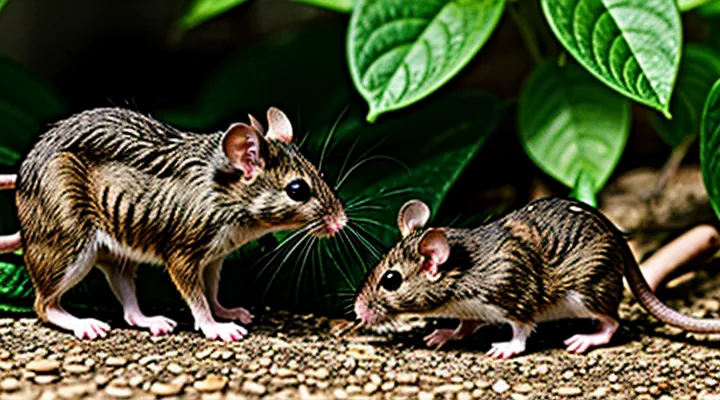
Understanding the Ecological Niche of Mice
Defining Mice
Biological Classification
Mice belong to the class Mammalia, characterized by hair, three‑middle‑ear bones, and live birth. Within Mammalia they are placed in the order Rodentia, the most diverse mammalian order. The family Muridae includes the true mice and rats, distinguished by a single pair of continuously growing incisors. The genus Mus comprises several species, the most widespread being Mus musculus, commonly referred to as the house mouse.
The taxonomic placement of mice informs their ecological functions and agricultural interactions:
- Kingdom: Animalia – multicellular, heterotrophic organisms.
- Phylum: Chordata – possession of a dorsal nerve cord.
- Class: Mammalia – endothermy and mammary glands.
- Order: Rodentia – gnawing adaptation via incisors.
- Family: Muridae – high reproductive capacity and adaptability.
- Genus: Mus – small body size, omnivorous diet.
- Species: Mus musculus – global distribution, synanthropic tendencies.
Classification clarifies physiological traits that affect soil aeration, seed predation, and pest population dynamics. Recognizing mice as members of Rodentia highlights their dentition, which enables consumption of a wide range of plant material and insects, influencing nutrient cycling. Their placement in Muridae emphasizes rapid breeding cycles, a factor in both natural predator‑prey relationships and crop‑damage scenarios.
Understanding the hierarchical taxonomy of mice allows researchers and agricultural managers to predict behavior patterns, assess risk levels for crop loss, and develop targeted management strategies that align with the species’ biological characteristics.
Common Species and Habitats
Mice occupy a wide range of environments across temperate, subtropical and arid regions. The most frequently encountered species include:
- Mus musculus (house mouse) – thrives in human‑occupied structures and surrounding gardens.
- Apodemus sylvaticus (field mouse) – inhabits hedgerows, grasslands and woodland edges.
- Peromyscus maniculatus (deer mouse) – prefers open fields, shrublands and semi‑desert zones.
- Apodemus flavicollis (wood mouse) – found in mature forests and dense undergrowth.
- Micromys minutus (harvest mouse) – occupies cereal crops and damp meadows.
Habitat preferences reflect adaptability to both natural and anthropogenic settings. Typical locations comprise:
- Residential basements, barns and storage facilities.
- Crop fields, especially wheat, barley and corn.
- Meadow ecosystems with tall grasses and seasonal herbaceous cover.
- Forest stands containing leaf litter, fallen logs and dense shrub layers.
- Riparian zones where moisture supports dense vegetation.
These rodents influence ecosystem processes through several mechanisms. Consumption of seeds and insects regulates plant regeneration and pest populations. Burrowing activity enhances soil aeration and nutrient mixing, facilitating root penetration. As a primary prey item, mice sustain populations of raptors, snakes and small carnivores, thereby supporting trophic stability.
In agricultural landscapes, mouse activity yields both benefits and challenges. Seed dispersal and predation on insect larvae contribute to crop health, while soil disturbance improves structure and water infiltration. Conversely, high densities may lead to direct consumption of seedlings and grain stores. Effective management integrates habitat manipulation, natural predator encouragement and targeted control measures to balance positive contributions against potential losses.
Dietary Habits and Adaptations
Mice exhibit a highly flexible diet, consuming seeds, grains, fruits, fungi, insects, and carrion. This omnivorous pattern allows rapid adjustment to seasonal resource availability and reduces competition with more specialized species. The dental formula, featuring continuously growing incisors, enables efficient processing of hard plant material and exoskeletons alike.
Adaptations supporting dietary breadth include:
- Strong, chisel‑shaped incisors that self‑sharpen during gnawing.
- A short gastrointestinal tract optimized for rapid digestion of high‑energy seeds while retaining sufficient enzymatic capacity for protein breakdown from animal prey.
- Acute olfactory and tactile senses that locate concealed food sources under leaf litter or within soil.
- Behavioral plasticity, such as hoarding surplus seeds during abundant periods and increasing foraging range when supplies decline.
In agricultural landscapes, mouse feeding activity influences crop dynamics. Seed predation can limit weed proliferation, while consumption of insect larvae contributes to natural pest suppression. Simultaneously, grain consumption may reduce yields, prompting integrated management strategies that balance ecological services with economic considerations. Soil turnover resulting from burrowing further enhances aeration and nutrient mixing, reinforcing overall ecosystem productivity.
Ecosystem Services Provided by Mice
Role as Primary Consumers
Herbivory and Seed Dispersal
Mice act as selective herbivores, consuming seeds, seedlings, and vegetative tissue. Their feeding pressure reduces the abundance of aggressive weeds, allowing less competitive native plants to persist. By limiting overgrowth, mice help maintain heterogeneous plant assemblages that support a range of ecological functions.
Seed dispersal by mice occurs through caching behavior and accidental transport. Stored seeds that are not retrieved become viable propagules, often germinating in microhabitats favorable for establishment. This mechanism supplies new individuals of both wild species and cultivated crops, contributing to population renewal and genetic exchange across landscapes.
Key outcomes of mouse‑driven herbivory and seed movement include:
- Suppression of invasive plant species, enhancing biodiversity.
- Creation of soil disturbance that promotes seed‑bed formation.
- Distribution of seeds to microsites with optimal moisture and light conditions.
- Support of agricultural productivity by dispersing crop seeds beyond sowing rows.
Fungal Spore Distribution
Mice interact with fungal communities through foraging, burrowing, and waste deposition. By consuming mycelium and fruiting bodies, they regulate fungal population density, preventing overgrowth that could suppress plant root development. Their movement through litter layers fragments hyphae, creating additional surfaces for spore attachment and release.
Key mechanisms of spore distribution mediated by rodents include:
- Transport of spores on fur and paws to new microsites, extending fungal colonization ranges.
- Incorporation of spores into droppings, which provide nutrient‑rich microenvironments that enhance germination success.
- Soil turnover during nest construction, exposing dormant spores to favorable moisture and temperature conditions.
These processes contribute to soil biodiversity, improve nutrient cycling, and support crop productivity by fostering symbiotic mycorrhizal networks that enhance plant nutrient uptake.
Contribution to Soil Health
Aeration and Nutrient Cycling
Mice create extensive tunnel networks that increase soil porosity, allowing air and water to penetrate deeper layers. This physical disturbance improves root respiration and reduces compaction, which enhances plant growth potential.
Burrowing activity also accelerates the breakdown of organic matter. Mouse feces and carcasses introduce nitrogen, phosphorus, and micronutrients directly into the soil matrix. These inputs become readily available to microorganisms that further decompose material, completing the nutrient cycle.
Key processes facilitated by mice include:
- Soil mixing that distributes organic residues across horizons.
- Redistribution of surface litter into subsurface zones, promoting microbial access.
- Creation of micro‑habitats that sustain diverse decomposer communities.
Collectively, these actions sustain a dynamic flow of nutrients from the surface to deeper soil layers, supporting crop productivity and natural vegetation alike.
Burrowing Activities
Mice construct extensive tunnel networks that modify soil structure, increase aeration, and facilitate water infiltration. These changes enhance root penetration and promote healthier plant growth, directly supporting crop productivity and natural vegetation.
- Soil mixing redistributes organic matter, accelerating decomposition and nutrient cycling.
- Burrow walls create microhabitats for microorganisms, fostering biodiversity at the soil level.
- Excavated soil is displaced to the surface, forming mounds that improve seed germination conditions.
The disturbance generated by burrowing also reduces surface compaction, allowing precipitation to percolate more efficiently. This effect mitigates runoff, lowers erosion risk, and sustains moisture availability for plants.
In agricultural fields, the presence of mouse burrows can lead to more uniform seed distribution and earlier emergence, contributing to higher yields. In natural ecosystems, the same processes support plant community resilience, enable colonization by pioneer species, and maintain habitat heterogeneity.
Overall, mouse burrowing activity acts as a natural engineering process that sustains soil health, promotes plant development, and reinforces ecosystem stability.
Prey for Higher Trophic Levels
Food Source for Predators
Mice constitute a primary nutritional resource for a broad spectrum of carnivorous and omnivorous species. Small mammals supply high‑protein biomass that supports the energetic demands of predators ranging from raptors to mammalian carnivores.
Key predator groups that regularly consume mice include:
- Owls (e.g., barn owl, great horned owl)
- Hawks (e.g., red‑tailed hawk, Cooper’s hawk)
- Foxes (red and gray)
- Badgers and weasels
- Snakes (e.g., rattlesnakes, garter snakes)
- Domestic cats and dogs in rural settings
Consumption of mice sustains reproductive output, juvenile survival, and territorial stability within these predator populations. Reliable access to mouse prey reduces the need for predators to shift toward alternative, often less abundant, food sources, thereby stabilizing trophic interactions.
In agricultural landscapes, mouse‑driven predator activity contributes to pest management. Predators that rely on mice also target insects, rodents, and other crop‑damaging organisms, delivering indirect protection for cultivated plants. By maintaining robust predator communities, ecosystems enhance biological control services, lowering reliance on chemical interventions.
Impact on Predator Populations
Mice serve as a primary food source for a wide range of predatory species, including birds of prey, snakes, and small carnivorous mammals. Their abundance directly influences predator reproductive success, juvenile survival rates, and seasonal population fluctuations. When mouse numbers rise, predator breeding output typically increases, leading to higher predator densities that can subsequently suppress other pest organisms.
Key effects on predator populations include:
- Enhanced fecundity: abundant prey supplies sufficient nutrition for female predators to produce larger litters.
- Improved juvenile recruitment: young predators benefit from easier access to prey, reducing mortality during early life stages.
- Seasonal stabilization: fluctuations in mouse populations help smooth predator population cycles, preventing extreme declines during lean periods.
- Agricultural pest control: elevated predator numbers, sustained by mouse prey, contribute to the reduction of crop‑damaging insects and rodents, creating a secondary benefit for farming systems.
The reciprocal relationship between mice and their predators reinforces ecosystem resilience. Predator pressure, in turn, can regulate mouse populations, preventing overabundance that might otherwise lead to crop loss. This dynamic equilibrium supports both natural habitats and cultivated landscapes, highlighting the interconnected role of small mammals in maintaining balanced predator communities.
Agricultural Implications of Mice
Pest or Ally in Agriculture
Seed Predation and Crop Damage
Mice contribute to seed dynamics by consuming a wide range of plant propagules. Their foraging behavior reduces the seed bank of competitive weeds, thereby limiting the emergence of undesirable species in cultivated fields. This natural form of seed predation can lower the reliance on chemical herbicides and support sustainable crop management.
The impact on crops manifests in two principal ways:
- Direct damage: Mice ingest germinating seeds and young seedlings, causing measurable loss in yield, especially for cereals such as wheat and barley.
- Indirect effects: Burrowing activity creates soil disturbance that can expose roots to pathogens and increase moisture loss, potentially compromising plant health.
Quantitative assessments indicate that seed loss attributable to rodent activity ranges from 5 % to 15 % of total production in temperate regions. Mitigation strategies include habitat manipulation, exclusion devices, and targeted baiting, each reducing damage while preserving the ecological functions rodents provide.
Balancing seed predation against the benefits of natural weed suppression requires integrated pest‑management plans that recognize mice as both agents of loss and contributors to ecosystem regulation.
Insect Control and Pollination Support
Mice reduce populations of phytophagous insects that threaten crops. By consuming larvae, beetles, and moths, they lower the pressure on plant tissues and diminish the need for chemical pest control.
- Direct predation on seed‑eating insects limits seed loss.
- Consumption of soil‑dwelling larvae improves root health.
- Removal of leaf‑chewing species enhances photosynthetic capacity.
While foraging for seeds and insects, mice frequently brush against flowering plants, resulting in accidental pollen transfer. This incidental pollination complements the activity of dedicated pollinators and contributes to the reproductive success of certain wild and cultivated species.
The combined effect of insect suppression and supplemental pollination supports higher agricultural productivity and promotes biodiversity. Reduced reliance on pesticides lessens environmental contamination, and increased seed set strengthens plant community resilience.
Integrated Pest Management Strategies
Balancing Control and Ecological Benefits
Mice influence both natural habitats and cultivated lands by providing services that support biodiversity while also generating economic losses. Their activities promote nutrient cycling, create soil channels that improve aeration, and sustain predator populations that regulate other pest species.
In agricultural settings, rodents consume seeds, damage standing crops, and can transmit pathogens. These impacts reduce yield quality and increase management costs.
Balancing the dual nature of mouse populations requires strategies that limit damage without eradicating ecological contributions. Effective approaches include:
- Monitoring population density through systematic trapping and visual surveys.
- Applying targeted, low‑toxicity rodenticides only when thresholds exceed economic injury levels.
- Enhancing habitat complexity around field margins to encourage natural predators such as owls and snakes.
- Implementing crop rotation and residue management to reduce food availability during peak breeding periods.
By integrating these measures, producers can maintain the beneficial functions of mice—seed dispersal, soil modification, and predator support—while curbing the adverse effects on crop production. The result is a sustainable equilibrium that preserves ecosystem health and agricultural profitability. «Balanced control preserves both ecological services and economic returns».
Non-Lethal Approaches
Mice contribute to nutrient cycling, seed dispersal, and soil aeration, yet their populations often intersect with agricultural interests. Managing these rodents without resorting to lethal measures preserves ecological functions while reducing crop damage.
Non‑lethal strategies focus on prevention, deterrence, and population regulation. Effective approaches include:
- Habitat alteration: removing debris, sealing entry points, and maintaining clean grain storage limit shelter and food availability.
- Physical barriers: fine‑mesh fencing, metal guards on trunks, and raised platforms prevent rodent access to vulnerable crops.
- Chemical repellents: plant‑derived essential oils (e.g., peppermint, clove) applied to perimeters create sensory deterrents without toxicity.
- Biological encouragement: installing nesting boxes for owls, hawks, and snakes enhances natural predation pressure.
- Fertility control: oral contraceptives formulated for rodents reduce reproductive rates, lowering long‑term population density.
- Acoustic devices: ultrasonic emitters generate frequencies uncomfortable to mice, discouraging occupancy of treated zones.
Each method targets specific behavioral or environmental cues, allowing integration into comprehensive management plans. Combining multiple tactics creates synergistic effects, minimizing reliance on poisons and preserving biodiversity.
Conservation Status and Future Perspectives
Factors Affecting Mouse Populations
Habitat Loss and Fragmentation
Mice serve as seed dispersers, soil engineers, and prey for a range of predators, thereby linking terrestrial productivity with trophic dynamics.
Habitat loss and fragmentation arise from urban expansion, intensive farming, and infrastructure development, resulting in reduced patch size, increased isolation, and altered microclimatic conditions.
Reduced habitat continuity limits population connectivity, lowers genetic diversity, and elevates local extinction risk for mouse communities.
Consequences for ecosystem processes and agricultural systems include:
- Decline in seed dispersal efficiency, leading to diminished plant regeneration and altered vegetation structure.
- Decreased soil turnover and aeration, impairing nutrient cycling and water infiltration.
- Weakening of predator–prey networks, potentially allowing pest species to proliferate.
- Lowered pollination support through indirect effects on insect populations that rely on mouse‑mediated habitat features.
Mitigating habitat fragmentation preserves mouse populations, sustains their functional contributions, and enhances resilience of both natural ecosystems and cultivated lands.
Climate Change Impacts
Mice serve as biological indicators of climate‑driven alterations in habitat structure, population dynamics, and trophic interactions. Shifts in temperature and precipitation patterns affect their reproductive cycles, survival rates, and geographic distribution, which in turn influence ecosystem processes and agricultural productivity.
Key climate‑related impacts include:
- Accelerated phenology: earlier breeding seasons align with altered plant growth, modifying seed predation and dispersal.
- Habitat contraction: increased frequency of droughts and extreme heat reduces suitable cover, prompting population declines in marginal areas.
- Predator‑prey balance: changes in predator abundance under warming conditions can intensify predation pressure on mice, reshaping community composition.
- Disease vector potential: warmer climates expand the range of pathogens carried by rodents, raising risks for livestock and crops.
These effects cascade through soil aeration, seed turnover, and nutrient cycling, underscoring the necessity of monitoring mouse populations as part of climate adaptation strategies in both natural and cultivated landscapes.
Importance of Research and Monitoring
Understanding Population Dynamics
Mice population dynamics describe the patterns of change in abundance, age structure, and spatial distribution over time. Core variables include reproductive output, juvenile survival, adult mortality, predation pressure, and availability of food and shelter. Seasonal climate shifts and habitat fragmentation modify these variables, producing predictable cycles in many temperate regions.
Fluctuations in mouse numbers affect several ecological processes. Elevated densities increase seed consumption, influencing plant regeneration patterns; burrowing activity enhances soil aeration and nutrient mixing; prey abundance supports raptor, mustelid, and snake populations that regulate insect pests. Conversely, population declines reduce these services, potentially allowing unchecked growth of certain plant species and insect herbivores.
In agricultural landscapes, mouse population peaks can augment seed loss, yet the associated rise in predator activity often offsets crop damage by suppressing rodent‑borne and insect pests. Balanced dynamics therefore contribute to integrated pest management, reducing reliance on chemical controls.
Effective stewardship relies on systematic monitoring and habitat management. Key actions include:
- Regular trapping surveys to estimate density and age composition.
- Maintenance of field margins and hedgerows that provide refuge for predators.
- Adjustment of crop rotation schedules to disrupt food surpluses.
- Promotion of native vegetation that stabilizes mouse populations without encouraging outbreaks.
Understanding the drivers and outcomes of mouse population dynamics enables the alignment of ecological benefits with agricultural productivity, fostering resilient ecosystems and sustainable food production.
Informing Conservation Efforts
Mice contribute to biodiversity maintenance, soil health, and crop resilience; these functions provide critical data for targeted conservation programs. Scientific surveys that quantify mouse population dynamics generate baseline metrics for habitat quality assessment. Genetic analyses of mouse communities reveal connectivity among fragmented landscapes, guiding corridor design and land‑use planning.
Key applications for conservation planning include:
- Monitoring of population trends to detect early signs of ecosystem degradation.
- Evaluation of seed‑dispersal patterns that support plant regeneration in agro‑ecological zones.
- Assessment of soil‑aeration effects that enhance nutrient cycling and reduce erosion risk.
- Identification of predation pressures that inform predator‑prey balance management.
- Integration of mouse‑related pest‑control data to reduce reliance on chemical interventions, promoting sustainable agriculture.
By incorporating mouse‑derived indicators into policy frameworks, managers can prioritize areas for protection, allocate resources efficiently, and measure the outcomes of restoration initiatives. Continuous data collection ensures adaptive management, allowing strategies to evolve in response to environmental change.