
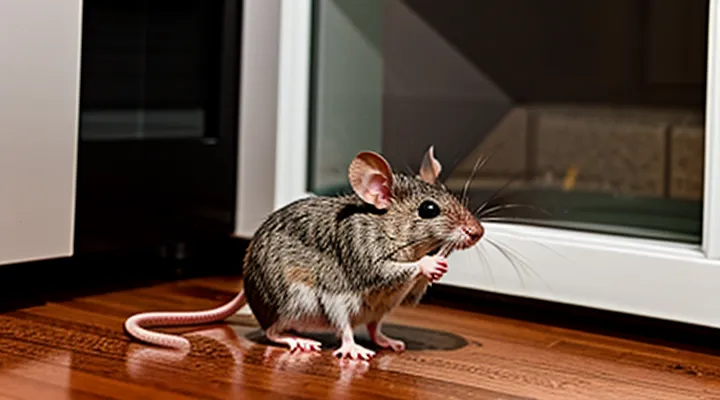
Mice as Harbingers of Fortune and Misfortune
Prosperity and Abundance
Seeing a mouse inside a dwelling often triggers an interpretation that extends beyond pest control. Traditional belief systems across Europe, Asia, and the Americas associate the creature’s presence with signals of wealth and plenty. The animal’s reputation for uncovering hidden stores and reproducing rapidly fuels the notion that it can herald material growth.
The symbolism rests on three core observations:
- Mice locate concealed food, suggesting undiscovered resources will surface.
- Their rapid multiplication mirrors the expansion of personal assets.
- Their nocturnal activity reflects unseen opportunities that emerge without warning.
When a mouse appears, the omen is read as a forecast of increased financial flow, unexpected gifts, and a surge in household provisions. Responding to the sign may involve actions that reinforce abundance, such as organizing storage spaces, budgeting for potential gains, and acknowledging the moment as a reminder of forthcoming prosperity.
Impending Loss and Hardship
In many cultures, the sudden presence of a mouse within a dwelling is interpreted as an omen of forthcoming loss and hardship. The belief rests on the animal’s association with stealth, scarcity, and the unseen forces that drain resources.
- A mouse seen scurrying across a threshold is taken to forecast financial depletion, often linked to unexpected expenses or dwindling income.
- A mouse nesting in a pantry signals potential spoilage of stored provisions, implying that sustenance will become unreliable.
- The appearance of a mouse during a night of silence is thought to herald emotional strain, suggesting relationships will encounter tension or separation.
These interpretations arise from observations of mice behavior: their tendency to infiltrate hidden spaces, consume stored goods, and reproduce rapidly. Such traits symbolize the gradual erosion of stability when unnoticed problems multiply.
Historically, folk narratives reinforce the connection between rodent sightings and adversity. For example, rural legends recount families who ignored early mouse activity and later suffered crop failure or loss of livestock. Urban anecdotes describe tenants who, after dismissing a single mouse, encountered rising utility costs and deteriorating living conditions.
The underlying logic links the mouse’s capacity to gnaw through barriers with the metaphorical “gnawing” of misfortune into personal affairs. Recognizing the sign prompts preventive measures: securing food sources, sealing entry points, and reviewing financial plans. In this way, the superstition serves both as a warning and a catalyst for proactive protection against impending hardship.
Regional Superstitions and Their Origins
European Folklore and Pestilence
Mice entering a dwelling have long been interpreted as omens in European folklore, often tied to disease and misfortune. In medieval Scandinavia, a sudden appearance of a mouse was taken as a warning of plague, because rodents were known carriers of fleas that transmitted Yersinia pestis. Rural German tales describe a solitary mouse crossing the threshold as a signal that a household will soon suffer an outbreak of fever or pestilential decay.
In the Balkans, folk narratives link a mouse’s squeak at night to the arrival of a hidden contagion, urging residents to cleanse the home and perform protective rituals. Celtic legends recount that a mouse seen in the hearth portends a lingering illness that will spread through the family unless a priestly blessing is invoked.
Common motifs across these traditions include:
- Association of mice with hidden danger, especially infectious disease.
- Belief that the animal’s movement reflects the unseen spread of illness within the walls.
- Prescribed actions such as sweeping, burning incense, or invoking saints to ward off the threat.
Historical records confirm that outbreaks of plague and typhus often followed periods of rodent infestation, reinforcing the credibility of these superstitions. Contemporary epidemiology acknowledges rodents as vectors for several pathogens, validating the ancient perception that mouse sightings forewarn health crises.
Thus, European folklore consistently treats mouse appearances in apartments as symbolic alerts of pestilence, prompting communal and ritual responses aimed at preventing disease.
Asian Beliefs: Luck and Unseen Forces
Mice that enter a dwelling are often interpreted as carriers of hidden influence in many Asian cultures. The sighting is linked to concepts of fortune, karmic balance, and unseen forces that affect daily life.
In Chinese tradition, a mouse crossing the threshold may signal an upcoming change in wealth. If the animal moves from left to right, it is taken as a favorable omen, suggesting that financial opportunities will flow inward. Conversely, a mouse that retreats toward the exit is read as a warning that resources could slip away.
Japanese folklore associates rodents with the deity of harvest and prosperity, Inari. A mouse that pauses on a kitchen shelf is considered a sign that the household will receive abundant food and protection from scarcity. The animal’s behavior—whether it scurries quietly or squeaks loudly—conveys the intensity of the blessing.
Korean belief systems view mice as messengers of unseen spirits (gwi). A sudden appearance in a bedroom suggests that protective spirits are near, ready to shield the occupants from misfortune. If the mouse disappears without being seen, the message is interpreted as a subtle reassurance that no immediate danger exists.
Typical responses across these cultures include:
- Placing a small offering of rice or grain near the mouse’s path to acknowledge the spirit.
- Reciting a short prayer or mantra invoking luck and protection.
- Keeping the entrance clean and free of crumbs to invite positive energy while discouraging pest infestation.
These practices reflect a broader Asian perspective that ordinary animal encounters can reveal underlying currents of luck and hidden forces, influencing both personal well‑being and household harmony.
North American Perspectives: Modern Interpretations
North American residents often interpret unexpected mouse sightings in apartments as signals rather than mere pests. Contemporary commentary links such encounters to personal and environmental cues, drawing on a blend of cultural folklore and psychological framing.
Current interpretations emphasize three primary dimensions:
- Personal omen – a sudden mouse appearance is read as an indicator of upcoming change, frequently associated with financial shifts or relationship transitions.
- Spatial warning – the presence of a rodent is taken as a sign that household maintenance is neglected, prompting immediate attention to structural integrity, sanitation, or ventilation.
- Collective narrative – sightings contribute to shared stories within building communities, reinforcing group identity and prompting collective action, such as coordinated pest‑control efforts.
Survey data reveal a correlation between higher education levels and a preference for rational explanations, yet even well‑educated occupants retain symbolic readings rooted in historical superstitions. Media outlets and social‑media platforms perpetuate these modern interpretations by presenting anecdotal accounts alongside expert commentary, thereby normalizing the belief that mice convey meaningful messages.
Overall, North American perspectives blend pragmatic concerns with enduring symbolic meanings, treating mouse appearances as both practical alerts and culturally resonant signs.
Psychological Impact of Mouse Sightings
Fear and Anxiety in the Home
Rodent sightings in apartments frequently provoke immediate fear and heightened anxiety. The sudden appearance of a mouse interrupts the perceived safety of a private space, triggering a visceral reaction rooted in both evolutionary caution and cultural lore.
Psychological drivers include the association of mice with disease transmission, the instinctive aversion to uncontrolled intruders, and the reinforcement of negative narratives passed through generations. These factors converge to amplify stress levels the moment a mouse is observed.
Common anxieties linked to such encounters are:
- Concern about contamination of food and surfaces.
- Worry that the presence signals a larger infestation.
- Belief that a mouse sighting foretells financial or personal misfortune.
Effective responses focus on practical and mental strategies. Maintaining rigorous cleanliness reduces attractants, while prompt professional pest management eliminates the source. Cognitive techniques—such as re‑framing the event as a solvable problem rather than an omen—help diminish panic. Regular monitoring and swift action prevent the escalation of fear into chronic anxiety.
The Role of Superstition in Coping Mechanisms
Mouse sightings in residential spaces frequently trigger interpretive frameworks that assign symbolic significance to the event. These frameworks transform a mundane intrusion into a narrative about fortune, health, or social standing, thereby granting the observer a means to ascribe order to an otherwise random occurrence.
Superstitious interpretation functions as a psychological buffer. By converting ambiguity into a defined omen, the mind substitutes uncertainty with a predictable pattern, which diminishes stress and restores a feeling of agency. The belief system supplies a ready‑made explanation that circumvents prolonged rumination about underlying causes.
Coping manifests through ritualized responses. Individuals enact prescribed actions—such as placing salt near entry points, reciting specific verses, or relocating personal items—to neutralize perceived negative implications. These behaviors reinforce the belief structure, create a sense of proactive mitigation, and signal to others that the threat has been addressed.
Typical practices include:
- Sprinkling pepper or salt at thresholds to repel further incursions.
- Hanging a small figurine of a cat or a protective charm in the kitchen.
- Performing a brief cleansing ritual with incense or sage after a sighting.
- Avoiding the room where the mouse was observed until a symbolic gesture (e.g., lighting a candle) is completed.
The cumulative effect shapes decision‑making. Residents may prioritize preventive measures, adjust cleaning schedules, or alter furniture placement based on the perceived omen. Such adjustments, while rooted in superstition, often align with practical hygiene improvements, thereby delivering tangible benefits alongside the psychological comfort of ritualized control.
Distinguishing Superstition from Reality
Practical Explanations for Mouse Appearances
Mice enter apartments for reasons that can be measured and prevented. Their presence often fuels folklore, yet the underlying causes are environmental and behavioral.
- Food availability – unsecured pantry items, pet food left out, or crumbs on countertops supply a reliable energy source. Reducing accessible nourishment removes the primary attraction.
- Entry points – gaps around doors, windows, utility penetrations, and foundation cracks provide unobstructed routes. Sealing openings with steel wool, caulk, or metal mesh blocks ingress.
- Shelter – cluttered storage areas, insulation, and wall voids offer protection from predators and temperature extremes. Decluttering and maintaining clear spaces diminish hiding locations.
- Water sources – leaky pipes, condensation, or standing water in sinks create hydration opportunities. Repairing leaks and drying damp zones eliminates this incentive.
- Seasonal pressure – colder months drive rodents indoors in search of warmth. Enhancing building insulation and limiting interior temperature fluctuations reduce the urge to seek refuge.
Addressing each factor systematically curtails the conditions that give rise to sightings, thereby weakening the superstitious aura surrounding unexpected rodent encounters.
When to Seek Professional Assistance
Encountering a mouse inside a residence often triggers cultural interpretations that can influence how occupants respond. When such interpretations intersect with health, safety, or structural concerns, professional intervention becomes necessary.
Seek expert assistance under the following conditions:
- Repeated sightings suggest an established infestation, indicating that DIY measures are unlikely to eradicate the problem.
- Evidence of damage to wiring, insulation, or structural components appears, posing fire or collapse risks.
- Presence of droppings, urine stains, or strong odors creates potential for disease transmission, especially in households with children, elderly individuals, or immunocompromised persons.
- Allergic reactions or asthma attacks correlate with rodent allergens, requiring remediation beyond simple cleaning.
- Legal or lease obligations demand documented pest control actions to maintain compliance with housing standards.
Contact a licensed exterminator, structural engineer, or health inspector promptly when any of these criteria are met. Professional evaluation provides accurate identification of infestation scope, implements certified control methods, and ensures remediation aligns with safety regulations. Ignoring these signals can exacerbate damage, amplify health hazards, and reinforce negative superstitious beliefs that may affect occupants’ well‑being.