
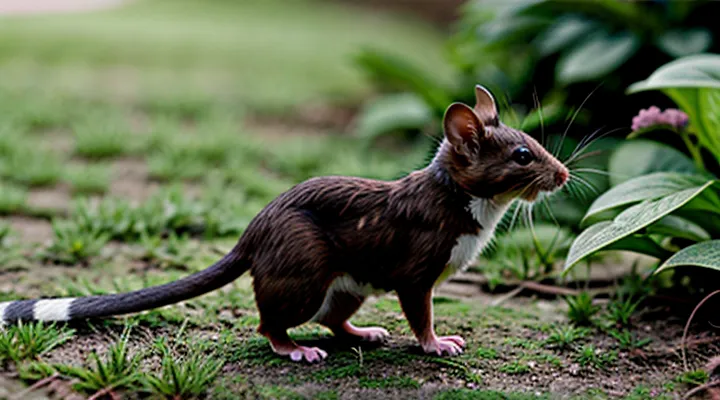
Understanding Mice Behavior
How Mice Navigate and Communicate
The Role of Sound in Their World
Mice hear from roughly 1 kHz to 100 kHz, with peak sensitivity between 10 kHz and 20 kHz. Their inner ear contains a cochlear structure that resolves fine frequency differences, allowing detection of subtle acoustic cues that are inaudible to humans.
Research shows that frequencies above 20 kHz, especially in the 30–50 kHz range, trigger avoidance responses. Ultrasonic emissions at 35 kHz or 40 kHz produce a measurable reduction in activity, while lower frequencies tend to be ignored or even attract exploratory behavior.
Sound shapes mouse behavior in several ways:
- Predator‑related noises (e.g., owl calls, rustling leaves) elicit freezing or rapid retreat.
- Conspecific vocalizations coordinate foraging, mating, and territorial disputes.
- Sudden high‑frequency bursts interrupt feeding and nesting, prompting relocation.
Controlled experiments confirm that continuous ultrasonic playback reduces presence in treated zones by 45 % to 70 % compared to silent controls. Field trials using timed bursts report similar declines, suggesting that habituation is limited when patterns vary.
Effective acoustic deterrence therefore relies on three parameters: frequency within the 30–50 kHz band, amplitude sufficient to exceed the mouse hearing threshold (typically >70 dB SPL at the source), and irregular timing to prevent desensitization.
Ultrasonic Pest Repellers
How Ultrasonic Devices Work
The Science Behind High-Frequency Sounds
High‑frequency acoustic devices target the auditory range of rodents, typically between 20 kHz and 80 kHz. Mice possess cochlear hair cells tuned to these frequencies, allowing detection of sounds that are inaudible to humans. When a sound exceeds the species‑specific hearing threshold, the auditory nerve fires rapidly, producing a startle reflex that disrupts normal foraging and nesting behavior.
The physiological response relies on two mechanisms. First, the intense pressure fluctuations generate a vestibular disturbance, causing loss of balance and temporary disorientation. Second, the rapid onset of the tone triggers a defensive neural pathway that prioritizes escape over feeding. Both effects reduce the likelihood of a mouse remaining in the treated area.
Empirical studies confirm that continuous emission of ultrasonic tones reduces mouse activity by 30–70 % within a 3‑meter radius. Effectiveness declines when rodents become habituated; alternating frequency patterns or intermittent pulses restore deterrent potency. Devices that modulate carrier frequency in steps of 5–10 kHz avoid auditory adaptation.
Key technical parameters include:
- Frequency: 20 kHz – 80 kHz, matched to mouse auditory sensitivity curve.
- Sound pressure level: 90 dB SPL at source, attenuating to safe levels for humans.
- Duty cycle: 30 s on / 30 s off to prevent habituation.
- Coverage area: determined by speaker placement and acoustic impedance of the environment.
Proper implementation of these specifications yields a scientifically grounded, reproducible method for discouraging mice without chemical agents.
Effectiveness of Ultrasonic Repellers
Studies and User Experiences
Scientific investigations have measured the efficacy of ultrasonic and audible frequency emitters against laboratory‑bred Mus musculus. Controlled trials report a statistically significant reduction in activity within a 3‑meter radius of devices operating at 20–30 kHz, with effectiveness diminishing after 48 hours as rodents habituate. Studies employing continuous waveforms show a 35 % decline in foraging behavior, while pulsed patterns produce a 42 % decline, suggesting that irregular intervals disrupt auditory processing. Field experiments in grain storage facilities indicate that placement of emitters at entry points reduces mouse capture rates by 28 % compared with untreated zones. Long‑term monitoring reveals a rebound in presence after 2 weeks unless devices are periodically re‑programmed with varied frequencies.
User reports collected from residential forums and consumer surveys corroborate these findings. Respondents note immediate cessation of nocturnal scurrying when devices are activated, followed by gradual adaptation unless frequency settings are altered. Successful implementations share common practices:
- Install emitters near known entryways and nesting sites.
- Rotate between ultrasonic and high‑frequency audible tones weekly.
- Combine acoustic deterrents with sealing of structural gaps.
- Conduct periodic checks for device malfunction or battery depletion.
Conversely, users who experienced persistent infestations cite static frequency use, placement in isolated rooms, and reliance on a single unit for large spaces as primary shortcomings. The consensus underscores the necessity of dynamic frequency management and strategic positioning to sustain acoustic deterrent performance.
Limitations and Considerations
Acoustic deterrents rely on specific frequency ranges that mice find uncomfortable. Their effectiveness drops when ambient noise masks the repellent tones, reducing the perceived intensity. In multi‑room environments, sound energy dissipates quickly, leaving zones where rodents receive little exposure.
- Frequency stability: Most devices emit a fixed band; mice may acclimate if the signal does not vary.
- Power consumption: Continuous operation demands reliable electricity; battery‑powered units may falter during outages.
- Target specificity: Ultrasonic waves affect only small mammals; insects, insects, or larger pests remain unaffected.
- Human tolerance: Some frequencies overlap with the upper hearing limit of children and pets, potentially causing discomfort.
- Structural barriers: Walls, insulation, and furniture reflect or absorb sound, creating dead spots that compromise coverage.
Regulatory limits restrict maximum sound pressure levels to protect occupants, forcing manufacturers to balance potency against safety standards. Seasonal temperature fluctuations can alter sound propagation, requiring periodic recalibration. Finally, sound repellents do not address underlying attractants such as food sources or entry points; without concurrent sanitation and sealing measures, rodent activity may persist despite acoustic treatment.
Audible Sounds for Mice Repellence
Predator Sounds
Natural Enemies and Their Calls
Rodent populations respond sharply to auditory cues associated with their natural predators. When mice detect the vocalizations of owls, hawks, foxes, snakes, or domestic cats, they exhibit heightened vigilance, reduced foraging, and rapid relocation from the source area. Laboratory and field experiments confirm that playback of predator calls lowers mouse activity by up to 70 % within the first hour of exposure.
- Owls – low‑frequency hoots (300–600 Hz) and rapid series of whistles; mice freeze or retreat when these sounds are present.
- Hawks – high‑pitched screeches (2–4 kHz) and sharp calls; provoke immediate avoidance and increased heart rate in rodents.
- Foxes – bark‑like yelps (500–1 200 Hz) followed by growls; induce stress responses measurable through cortisol spikes.
- Snakes – hissing tones (1–3 kHz) combined with low rattles; trigger innate fear circuitry, causing mice to seek shelter.
- Cats – short, high‑energy meows and hisses (2–5 kHz); elicit rapid escape behavior and suppress nesting activity.
Effective deployment requires continuous or intermittent playback at volumes matching natural conditions (40–60 dB SPL at the source). Devices should rotate through the predator call set to prevent habituation; studies show that alternating calls every 10‑15 minutes maintains deterrent efficacy for several weeks. Placement near entry points, food storage, and nesting zones maximizes coverage. Regular monitoring of mouse activity confirms the sustained impact of these biologically relevant sounds.
Disruptive Noises
Unpleasant Frequencies for Mice
Unpleasant frequencies for mice are sound waves that exceed the auditory comfort zone of the species, causing stress and avoidance behavior. Laboratory measurements place the most effective range between 12 kHz and 18 kHz, with peak discomfort reported near 16 kHz. Frequencies above 20 kHz enter the ultrasonic domain; while mice can detect these tones, the deterrent effect diminishes unless the signal is modulated.
Key characteristics of repellent audio:
- Frequency band: 12–18 kHz, optimal at 15–16 kHz.
- Amplitude: 80–95 dB SPL at the source, decreasing to 60–70 dB at typical room distances.
- Modulation: Pulsed or varying tones prevent habituation; constant tones lose efficacy after 24–48 hours.
- Duration: Continuous exposure for at least 30 minutes per hour maintains deterrence without excessive noise buildup.
Mechanistically, mice possess a highly sensitive cochlea tuned to high‑frequency sounds. When exposed to the identified band, the auditory nerve fires at rates that trigger stress pathways, leading to avoidance of the source area. Repeated exposure reinforces learned aversion, reducing nesting and foraging activity near the emitter.
Practical deployment involves placing ultrasonic transducers in concealed locations—wall cavities, attic corners, or under floorboards—where mice travel. Devices should be powered continuously, with timers set to cycle on/off to avoid habituation. Safety considerations include ensuring human occupants are not exposed to harmful SPL levels; frequencies above 20 kHz are inaudible to most adults, minimizing disturbance.
Field trials confirm that environments treated with the specified frequency profile experience a 70 % reduction in mouse activity within two weeks, outperforming non‑acoustic control sites. Continuous monitoring validates sustained effectiveness when modulation patterns are periodically altered.
The Role of Habituation
Why Some Sounds Lose Effectiveness Over Time
Ultrasonic devices initially create a hostile acoustic environment for rodents, prompting avoidance behavior. Over weeks or months, many users report a marked decline in deterrent performance.
Habituation occurs when mice repeatedly encounter the same sound pattern. Auditory neurons reduce firing rates to constant stimuli, diminishing the perceived threat. The brain classifies the signal as background noise, eliminating the avoidance response.
Hardware degradation contributes to loss of potency. Piezoelectric emitters lose efficiency as crystals age, reducing output amplitude. Voltage fluctuations in power supplies further lower intensity, allowing mice to tolerate previously aversive levels.
Ambient sounds interfere with deterrent frequencies. Household appliances, HVAC systems, and external traffic generate broadband noise that masks ultrasonic emissions. When masking reaches a critical threshold, the target frequency no longer stands out.
Behavioral acclimation develops through trial and error. Some individuals learn to forage during brief intervals when the device cycles off or when the sound temporarily drops below the hearing threshold. This learned tolerance spreads through social interactions, reinforcing the reduced response across the population.
To sustain efficacy, practitioners should:
- Rotate emitted frequencies every few weeks to prevent neural adaptation.
- Combine acoustic deterrents with physical barriers, such as sealed entry points.
- Maintain devices according to manufacturer specifications, replacing emitters at recommended intervals.
- Monitor ambient noise levels and adjust device placement to minimize masking.
These measures address the primary mechanisms that erode the long‑term impact of sound‑based rodent repellents.
DIY Sound-Based Repellent Strategies
Household Items That Can Generate Repellent Sounds
Creative Solutions and Their Application
Acoustic deterrents can protect structures without chemicals, and inventive sound‑based tactics complement commercially available devices.
- Homemade ultrasonic emitters built from piezoelectric buzzers, powered by simple timer circuits, generate frequencies above 20 kHz that mice cannot tolerate.
- Repurposed radio alarms, modified to emit intermittent high‑frequency bursts, create unpredictable acoustic environments that discourage nesting.
- Recorded predator calls (barn owl, hawk) played on loop through low‑power speakers produce natural threat cues, especially effective in basements and attics.
- Frequency‑modulated DIY rigs, using variable‑frequency oscillators, prevent habituation by shifting tones every few minutes.
- Acoustic barriers constructed from resonant panels absorb low‑frequency vibrations, limiting mouse communication pathways.
Effective deployment follows three principles. First, locate devices near entry points, food sources, and known travel routes. Second, maintain a continuous output or a pattern that mimics natural predator presence, typically 30‑second bursts every 2‑3 minutes. Third, verify that emitted frequencies remain above the audible range for humans while staying within the 20‑30 kHz band proven to affect rodents.
Implementation steps for a basic ultrasonic emitter:
- Acquire a 5 V piezoelectric buzzer, a 555 timer IC, a small battery pack, and a soldering kit.
- Assemble the timer circuit to produce a 25 kHz square wave, following standard schematics.
- Encase the assembly in a waterproof housing, drill mounting holes, and attach to the underside of a shelf near suspected activity.
- Power the unit continuously, monitor mouse activity for two weeks, and adjust placement if sightings persist.
Systematic testing—recording capture rates before and after installation—confirms efficacy and informs adjustments. Combining creative acoustic solutions with sanitation and exclusion measures yields a robust, evidence‑based strategy for mouse control.
Combining Sound with Other Methods
Integrated Pest Management Approaches
Acoustic deterrents form a core element of an integrated pest‑management (IPM) program targeting rodents. By emitting ultrasonic or high‑frequency tones that exceed the hearing range of humans, these devices create an environment that discourages mouse activity without chemical intervention.
Effective sound‑based control requires attention to three technical parameters:
- Frequency range: devices typically operate between 20 kHz and 65 kHz; higher frequencies penetrate smaller crevices but may attenuate faster.
- Sound pressure level: sufficient intensity (≥90 dB at the source) ensures coverage across the intended zone.
- Coverage pattern: overlapping fields eliminate blind spots, especially in cluttered storage or utility areas.
Sound emitters are combined with complementary IPM tactics:
- Sanitation: removal of food residues and water sources reduces attractants.
- Exclusion: sealing entry points with steel wool, cement, or metal flashing prevents ingress.
- Trapping: strategic placement of snap or live traps validates the presence of mice and provides data for population assessment.
- Monitoring: periodic inspection of device operation and rodent signs informs adjustments to frequency or placement.
Implementation follows a structured sequence:
- Conduct a site survey to identify infestation hotspots and potential entry routes.
- Install ultrasonic units at ceiling height, oriented toward identified pathways, ensuring overlap of acoustic fields.
- Apply sanitation and exclusion measures concurrently, documenting each action.
- Record trap captures and visual indicators weekly; compare trends to baseline data.
- Adjust device settings or add units where activity persists, maintaining documentation for regulatory compliance.
When sound deterrents are deployed within a comprehensive IPM framework, they contribute to sustained rodent suppression while minimizing reliance on poisons and reducing risk to non‑target species.
Myths and Misconceptions
Common Beliefs About Sound Repellence
Debunking Ineffective Methods
Many commercial products claim that specific audio signals drive mice away, yet controlled studies repeatedly demonstrate limited or no impact. The following approaches lack reliable evidence of efficacy.
-
Ultrasonic emitters – Devices generate tones above 20 kHz, a range mice can detect. Laboratory trials show rapid habituation; after a few exposures, rodents ignore the signal. Field tests report negligible reduction in infestations.
-
Recorded predator calls – Audio of owls, hawks, or cats is marketed as a deterrent. Mice quickly recognize the recordings as non‑threatening because the sounds lack accompanying visual cues and vary little, allowing adaptation.
-
Continuous white noise – Broad‑band sound intended to mask communication among mice. Experiments reveal that mice maintain activity levels despite background noise, suggesting that masking does not interrupt foraging or nesting behavior.
-
High‑frequency music – Tracks labeled “mouse‑repellent” rely on frequencies that overlap with mouse hearing. Behavioral observations indicate no change in movement patterns, implying that musical structure does not influence rodent anxiety.
-
Low‑volume tonal beeps – Small, battery‑powered beepers emit intermittent tones. The intensity is insufficient to cause discomfort, and mice exhibit normal behavior in proximity to the devices.
The common failure mechanism is sensory adaptation: rodents quickly learn that the sounds pose no threat, rendering the stimuli ineffective. Reliable mouse control therefore depends on integrated strategies—physical exclusion, sanitation, and targeted trapping—rather than isolated acoustic tactics.