
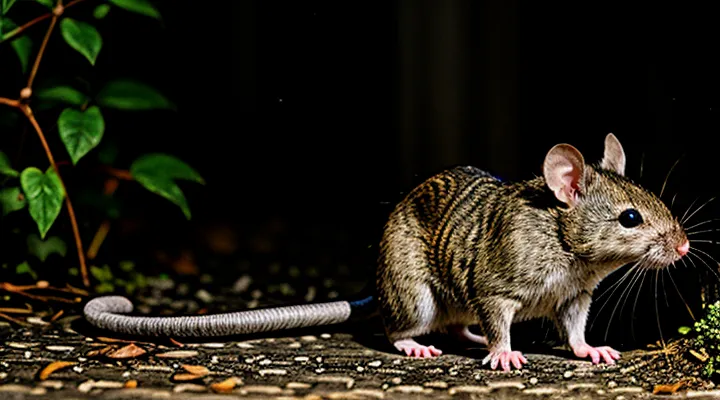
The Nocturnal World of Rodents
Understanding Rodent Behavior at Night
Why Rodents Are More Active After Dark
Rodents increase movement after sunset because their internal clocks synchronize activity with low‑light conditions. The circadian system drives hormone release that prepares muscles and metabolism for nighttime foraging, while suppressing activity during daylight when predators are most active.
Environmental advantages also favor nocturnal behavior. Human presence diminishes after dark, reducing disturbance and the risk of accidental death. Cooler temperatures lower water loss, allowing longer excursions. Sound travels farther in still night air, enhancing the effectiveness of vocalizations used for locating food and conspecifics.
Social and reproductive factors intensify night activity. Males emit chirps and squeaks to establish territories and attract mates, behaviors that peak during the hours when visual cues are limited. Females forage for nesting material and offspring, relying on auditory signals to coordinate care.
Key drivers of increased nocturnal rodent activity:
- Circadian hormone cycles that promote energy expenditure at night
- Reduced predation risk from diurnal hunters
- Lower ambient temperatures that conserve water
- Decreased human interference
- Enhanced acoustic propagation for communication
- Seasonal breeding cycles that concentrate mating calls after dark
Understanding these motivations clarifies why the sounds of rats and mice become most detectable during nighttime surveys. Recognizing the biological and environmental context improves identification accuracy and informs effective pest‑management strategies.
Common Rodent Habitats in Homes
Rodents commonly select areas within residential structures that provide shelter, food access, and concealment. In the darkness of night, the sounds they generate—scratching, gnawing, and scurrying—often originate from these preferred locations. Understanding typical habitats helps homeowners pinpoint the source of nocturnal noises and plan effective control measures.
- Kitchen cabinets and pantry shelves: abundant crumbs and stored grains attract mice and rats seeking nourishment.
- Wall voids and insulation cavities: warm, protected spaces allow nests to be built behind drywall or within attic insulation.
- Basements and crawl spaces: low humidity and limited traffic create ideal refuge zones for larger populations.
- Attic rafters and roof spaces: proximity to exterior entry points and insulation material provides both entry and concealment.
- Garage corners and utility rooms: clutter and stored boxes offer hidden nesting sites while remaining close to potential food sources.
- Under floorboards and between joists: gaps in flooring permit easy movement and enable rodents to travel unnoticed between rooms.
Each habitat presents specific acoustic signatures. Scratching behind walls produces intermittent, high‑pitched squeaks, while gnawing on stored food yields repetitive, low‑frequency chattering. Rodents traveling across attic insulation generate rustling, and their movement within floor cavities creates hollow thuds that resonate through the floorboards. Recognizing these patterns in relation to the identified habitats enables accurate diagnosis of infestation locations.
Preventive actions focus on eliminating access and reducing attractants. Seal gaps around utility penetrations, install metal flashing on vent openings, and store food in airtight containers. Regularly inspect the listed areas for droppings, urine stains, or nesting material, and address any findings promptly. By correlating nocturnal sounds with the known residential habitats, homeowners can target interventions where rodents are most likely to reside.
Distinguishing Rat and Mouse Sounds
Common Sounds Produced by Rats
Rat Squeaks and Chirps
Rat vocalizations at night consist primarily of high‑pitched squeaks and short chirps. Both sounds occupy frequencies between 3 kHz and 15 kHz, but squeaks often peak near 8 kHz while chirps concentrate around 12 kHz. Squeaks are typically emitted in rapid succession, lasting 0.1–0.3 seconds each, and signal agitation, territorial disputes, or sudden threats. Chirps appear as brief, single‑note calls, lasting 0.05–0.15 seconds, and serve as contact signals between individuals, especially during foraging or mating activities.
Key distinguishing features:
- Temporal pattern – Squeaks form a series; chirps occur singly.
- Amplitude – Squeaks are louder, often exceeding 70 dB SPL at 1 m; chirps remain below 60 dB SPL.
- Contextual cues – Squeaks accompany rustling, foot‑stomping, or sudden movements; chirps accompany quiet scurrying or nest‑maintenance behavior.
When listening outdoors, isolate these characteristics by:
- Using a directional microphone or parabolic reflector to focus on a specific area.
- Adjusting gain to capture subtle chirps without clipping louder squeaks.
- Applying a spectrogram filter set to 3–15 kHz to visualize the frequency envelope.
Comparative analysis with other nocturnal sounds clarifies identification. Owl hoots dominate below 2 kHz, while insect chirps produce repetitive patterns above 20 kHz. Rat squeaks and chirps remain confined to the mid‑high frequency band and exhibit irregular timing, unlike the rhythmic cadence of cricket calls.
Accurate recognition of these vocalizations enhances monitoring of rodent activity, informs pest‑control strategies, and contributes to ecological surveys of urban and rural habitats.
Rat Gnawing Sounds
Rat gnawing sounds are characterized by a sharp, repetitive clicking or squeaking noise produced when incisors cut through wood, plastic, or insulation. The frequency typically ranges from 3 kHz to 8 kHz, audible to human ears but often masked by ambient night-time activity.
Key identifiers:
- Pattern: series of short, evenly spaced clicks lasting 1–2 seconds, followed by brief pauses.
- Location cue: sounds originate from concealed areas such as wall voids, attic rafters, or beneath floorboards.
- Timing: peak activity occurs shortly after sunset and before sunrise, coinciding with rats’ foraging cycles.
- Acoustic texture: metallic or hollow quality distinguishes gnawing from soft scurrying or squeaking.
Differentiation from mouse noises:
- Mouse gnawing is higher-pitched, irregular, and often accompanied by lighter scratching.
- Rat gnawing produces deeper, more forceful clicks and may be accompanied by occasional crunching when hard materials are penetrated.
Detection strategies:
- Use a directional microphone or smartphone recording app to capture sounds near suspected entry points.
- Replay recordings at low volume to isolate the characteristic click pattern.
- Correlate audio data with visual inspections for gnaw marks, droppings, or grease trails.
Health considerations:
- Continuous gnawing indicates active burrowing, increasing the risk of structural damage and exposure to pathogens carried by rodent saliva.
- Prompt identification allows targeted sealing of entry points and placement of traps or deterrents.
Mitigation steps:
- Seal cracks larger than ¼ inch with steel wool and caulk.
- Replace gnawed insulation or wiring to prevent fire hazards.
- Install ultrasonic deterrents calibrated to the 3–8 kHz range to disrupt gnawing behavior.
Rat Scratching and Scampering
Rats produce distinct scratching noises when they move across walls, ceilings, or stored materials. The sound is sharp, intermittent, and often resonates louder on wooden or metal surfaces. Frequency ranges between 2 kHz and 5 kHz, making it audible to most adults in a quiet environment. The pattern typically follows a rapid series of three to five contacts, then a brief pause before the next series.
Scampering sounds differ from scratching by their rhythmic, high‑pitched cadence. When a rat runs, the footfalls generate a rapid succession of clicks lasting 0.2–0.5 seconds per stride. The cadence averages 8–12 steps per second, creating a continuous rustle that may be mistaken for wind through leaves. The intensity increases on loose insulation or paper, decreasing on dense flooring.
Key identifiers for nighttime listening:
- Timing: Scratching appears near walls or corners; scampering occurs in open attic spaces or along joists.
- Duration: Scratching episodes last 5–30 seconds; scampering can persist for several minutes.
- Acoustic profile: Scratching produces a jagged, low‑frequency burst; scampering yields a steady, high‑frequency rhythm.
- Location cues: Scratching often precedes scampering, indicating a rat transitioning from a hidden nest to a foraging path.
Common Sounds Produced by Mice
Mouse Squeaks and Peeps
Mouse vocalizations at night consist of brief, high‑pitched squeaks and softer, intermittent peeps. Squeaks typically range from 10 to 20 kHz, last 0.1–0.3 seconds, and occur during active foraging or when a mouse encounters a threat. Peeps fall below 10 kHz, persist for 0.5–1 second, and accompany social interactions such as grooming or nest maintenance.
Key acoustic cues for identification:
- Frequency band: Squeaks occupy the upper ultrasonic range; peeps remain in the lower audible spectrum.
- Duration: Squeaks are short bursts; peeps extend longer without abrupt termination.
- Pattern: Squeaks appear in rapid sequences (2–5 calls per second); peeps are spaced by several seconds.
- Contextual timing: Squeaks increase after sudden noises or light exposure; peeps rise during periods of quiet activity inside the nest.
Detecting these sounds requires a microphone with sensitivity up to 25 kHz and a recording device capable of sampling at 48 kHz or higher. Listening with a calibrated headset reveals the distinct tonal quality: sharp, staccato clicks for squeaks and mellow, plaintive tones for peeps. Recognizing these differences enables precise monitoring of mouse presence and behavior during nocturnal hours.
Mouse Gnawing Sounds
Mouse gnawing sounds are a distinct component of nocturnal rodent acoustics. They arise when a mouse’s incisors bite through materials such as wood, plastic, insulation, or wiring. The noise typically consists of rapid, repetitive clicks or high‑pitched squeaks lasting a few seconds to several minutes, depending on the size of the object and the mouse’s activity level.
Key acoustic traits include:
- Frequency range: 2–8 kHz, often audible to human ears but higher than most ambient household noises.
- Rhythm: steady, evenly spaced bites with occasional pauses as the animal repositions.
- Volume: 30–50 dB at a distance of one meter, louder when the mouse gnaws on thin or resonant surfaces.
Temporal patterns help differentiate gnawing from other nighttime sounds. Mice are most active during the early hours of darkness (approximately 20:00–02:00). Gnawing episodes frequently coincide with periods of quiet, making them more noticeable when background noise subsides.
Locating the source relies on directional hearing. The sound intensity increases as the listener approaches the point of contact. Walls, ceilings, and baseboards often amplify the noise, indicating that the gnawing occurs within concealed cavities. Persistent gnawing near electrical wiring suggests a higher risk of damage and warrants immediate inspection.
Mitigation measures:
- Seal entry points with steel wool or caulking to prevent access.
- Install ultrasonic deterrents calibrated to the 2–8 kHz range.
- Replace compromised materials with rodent‑resistant alternatives (e.g., cement board, metal conduit).
Understanding these characteristics enables accurate identification of mouse gnawing sounds and informs effective response strategies during nighttime monitoring.
Mouse Scratching and Rustling
Mouse scratching is a high‑pitched, intermittent noise produced when a rodent drags its claws across wood, drywall, or stored materials. The sound usually lasts 0.5–2 seconds per stroke and repeats at intervals of 5–30 seconds. It is most common in attic spaces, wall cavities, and under floorboards where mice can move along structural members while foraging or nesting.
Rustling follows a different acoustic pattern. It consists of soft, continuous rustles generated by the animal’s body brushing against insulation, paper, or fabric. The frequency range lies between 2–5 kHz, and the amplitude is lower than that of scratching, often perceived as a faint shuffling. Rustling intensifies when a mouse climbs vertically or manipulates debris, and it may persist for several minutes as the rodent explores a new area.
Key characteristics for distinguishing these noises from other nocturnal sounds:
- Duration: Scratching: brief, discrete bursts; Rustling: sustained, low‑level activity.
- Pitch: Scratching: sharp, high‑frequency clicks; Rustling: muted, mid‑frequency rustle.
- Pattern: Scratching: regular intervals; Rustling: irregular, often increasing with movement.
- Location cues: Scratching often originates from structural joints; Rustling is heard near stored items or insulation.
Recognizing these patterns enables accurate identification of mouse presence and informs targeted control measures.
Interpreting Rodent Noises
Identifying the Location of Sounds
Sounds from Walls and Ceilings
Rats and mice produce distinct noises that travel through structural cavities, allowing identification without visual confirmation.
Common sounds heard in walls and ceilings include:
- Scratching or gnawing – rapid, repetitive rasping on wood or insulation, often louder during the first few hours after sunset.
- Scurrying – light, rapid footfalls that create a faint, continuous patter, sometimes resembling distant rain on a tin roof.
- Squeaking – high‑pitched, brief chirps emitted when rodents are startled or communicating with nestmates; frequency typically above 2 kHz.
- Thumping – heavier thuds produced by larger rats when moving heavy objects or climbing vertical ducts.
Key acoustic characteristics aid differentiation from non‑rodent sources:
- Temporal pattern – rodent activity peaks between 10 p.m. and 3 a.m., with intervals of 5–15 seconds between individual sounds.
- Location consistency – noises persist in the same wall or ceiling segment, indicating a fixed nest or travel route.
- Sound quality – gnawing generates a coarse, uneven texture, whereas scurrying yields a soft, rhythmic cadence.
Distinguishing these noises from building settling, plumbing, or HVAC systems relies on noting the irregularity and biological timbre of the sounds. Persistent detection of the listed acoustic signatures warrants inspection of the corresponding structural cavity to locate and address the infestation.
Sounds from Attics and Basements
Rats and mice produce distinct noises that often echo through attics and basements after dark. Recognizing these sounds helps pinpoint infestation locations and plan effective control.
In attics, the most common acoustic signatures include:
- Squeaking: high‑pitched, rapid bursts lasting 0.2–0.5 seconds, repeated at intervals of 1–3 seconds.
- Scurrying: soft rustling of insulation or stored materials, louder when animals move along joists.
- Gnawing: repetitive, sharp chipping noises as rodents chew wood, wiring, or foam.
Basements generate a different acoustic profile:
- Scratching: lower‑frequency, irregular scratches on concrete or pipe surfaces, often heard near wall seams.
- Chattering: short, staccato clicks produced by teeth against metal or stone, indicative of foraging activity.
- Footfall thuds: dull thumps when larger rats navigate on concrete floors, louder than mouse steps.
Key distinguishing factors:
- Pitch: mice emit higher frequencies; rats produce deeper tones.
- Pattern: mice repeat squeaks in rapid succession; rats alternate between vocalizations and silence.
- Location: attic sounds travel through insulation, creating muffled echoes; basement noises resonate off hard surfaces, sounding clearer.
Monitoring equipment such as ultrasonic detectors or simple audio recorders can capture these patterns. Analyzing recordings against established frequency ranges (mouse squeaks: 5–10 kHz; rat vocalizations: 2–5 kHz) confirms species identification.
Accurate interpretation of attic and basement acoustics enables targeted inspection, reduces unnecessary disruption, and supports timely pest‑management actions.
Sounds from Inside Cabinets and Appliances
Rats and mice often produce audible activity from within kitchen cabinets, pantry shelves, and household appliances during nighttime hours. Their movements generate a range of sounds that can be distinguished from ordinary household noises.
Typical noises include:
- Light scratching or scurrying on wood, plastic, or metal surfaces, often heard when the animal runs along interior walls of a cabinet.
- Soft gnawing noises as teeth bite into packaging, insulation, or wiring, producing a high‑pitched, intermittent clicking.
- Occasional squeaking or chirping when rodents communicate with each other, usually a brief, high‑frequency burst lasting less than a second.
- Rattling of loose components inside appliances, such as a dishwasher or washing machine, when a rodent climbs onto the motor housing or inside the drum.
Temporal patterns help identify rodent presence. Activity peaks shortly after dusk and continues through the early morning, with brief pauses during daylight. Sounds are louder when the animal is confined in a tight space, as vibrations reverberate against the surrounding material.
To verify the source, pause the appliance or close the cabinet door and listen for a sudden reduction in noise. Use a flashlight or a small inspection camera to examine interior corners, joints, and vent openings. Evidence such as droppings, gnaw marks, or shredded material confirms the presence of rodents and indicates the need for professional removal and sealing of entry points.
Differentiating Rodent Sounds from Other Pests
Sounds of Insects
In nighttime field observations, insect acoustics often overlap with the vocalizations of small mammals, making accurate identification essential for reliable data collection. Insects produce a range of sounds that differ in source, frequency, and temporal pattern from the squeaks and scurrying noises of rats and mice.
Typical nocturnal insect sounds include:
- Stridulation – produced by rubbing body parts, common in crickets and katydids; frequencies usually between 2–8 kHz, creating rhythmic chirps that repeat at regular intervals.
- Wing‑beat buzz – generated by moths and beetles; tonal peaks often exceed 10 kHz, forming a continuous humming that persists while the insect is in flight.
- Tremulation – low‑frequency vibrations transmitted through substrates, observed in some larvae and earwigs; audible as soft thuds or rattles below 1 kHz.
- Clicking – emitted by click beetles and certain beetle larvae; short, sharp pulses with a broadband spectrum, typically spaced irregularly.
Key distinctions from rodent noises:
- Frequency range – rodent squeaks concentrate around 1–4 kHz, whereas many insects emit higher frequencies or, conversely, very low‑frequency tremulations.
- Temporal structure – rodent vocalizations are often brief, irregular, and accompanied by scurrying sounds; insect chirps follow species‑specific rhythmic patterns.
- Acoustic source – mammalian sounds originate from the vocal tract, producing harmonic tones; insect sounds arise from mechanical actions (wing movement, leg rubbing) and lack true harmonic series.
When recording nocturnal soundscapes, isolate insect contributions by:
- Filtering frequencies above 6 kHz to capture typical cricket and katydid chirps.
- Applying a low‑pass filter below 1 kHz to detect substrate tremulations.
- Analyzing pulse repetition rates; insect chirps maintain consistent intervals, while rodent squeaks appear sporadic.
Understanding these acoustic signatures enables precise separation of insect noises from rodent calls, improving the accuracy of nighttime wildlife monitoring.
Sounds of Birds
Bird vocalizations heard after dark differ markedly from the high‑pitched squeaks of nocturnal rodents. Most night‑active birds produce low‑frequency calls, repetitive chirps, or soft trills that can be distinguished by pitch, rhythm, and timbre.
Typical nocturnal bird sounds include:
- Low, mournful hoots from owls, characterized by a steady, resonant tone lasting one to two seconds.
- Short, rapid chirps of nightjars, consisting of a series of high‑frequency ticks separated by brief silences.
- Soft, whistling notes of nightingales, featuring a melodious rise and fall in pitch over several seconds.
- Harsh, repetitive clucks of certain woodpecker species, audible as a series of rapid, muted taps.
Key identification cues:
- Frequency range: bird calls generally occupy 1–5 kHz, whereas rodent squeaks cluster above 8 kHz.
- Temporal pattern: birds often repeat motifs at regular intervals; rodent sounds appear irregular and brief.
- Harmonic structure: bird vocalizations contain multiple harmonics, producing a richer tone compared to the single‑tone squeaks of rats and mice.
Recognizing these patterns enables accurate separation of avian and rodent acoustics during nighttime field observations.
Sounds of Larger Animals
Nighttime acoustic environments often include vocalizations from animals larger than common rodents. Recognizing these sounds aids field researchers, pest control professionals, and wildlife enthusiasts in distinguishing harmless wildlife from potential threats.
Typical nocturnal calls of larger mammals include:
- Deep, resonant growls or roars from foxes, coyotes, and wolves; frequency ranges between 200 Hz and 800 Hz, often accompanied by a rhythmic howling pattern.
- Low, guttural grunts of raccoons; short bursts lasting 0.5–1 seconds, repeated at irregular intervals.
- Heavy footfalls and snorts from deer; audible when moving through dry brush, producing a thudding rhythm of 2–4 Hz.
- Harsh hissing or clattering of badgers; high‑energy sounds that peak around 1 kHz and may be preceded by a rapid series of snorts.
Key identification markers:
- Pitch: Larger mammals generate lower frequencies than small rodents, which usually emit squeaks above 2 kHz.
- Duration: Calls from bigger species tend to be longer, often exceeding one second, while rodent chirps are brief.
- Rhythm: Predatory canids exhibit patterned howling; solitary larger mammals produce irregular, solitary sounds.
- Context: Calls often correspond with specific behaviors—territorial marking, mating, or alarm—providing clues about the species involved.
Understanding these acoustic signatures allows accurate differentiation between the subtle noises of small nocturnal rodents and the more pronounced calls of larger fauna sharing the same habitat.
Actionable Steps and Prevention
What to Do When You Hear Rodent Sounds
Confirming the Presence of Rodents
Rats and mice produce distinctive noises after dark that can be used to verify their presence. Scrutinizing these sounds alongside physical indicators yields reliable confirmation.
Auditory clues include:
- High‑pitched squeaks or chirps, often heard from wall voids or ceiling spaces.
- Rapid, repetitive scratching or gnawing noises, typically originating near insulation, pipes, or stored food.
- Soft rustling or shuffling sounds as rodents move across debris or nesting material.
Physical evidence reinforces the acoustic assessment:
- Fresh droppings, ¼‑inch dark pellets, found along pathways, near food sources, or in concealed corners.
- Gnaw marks on wood, plastic, or wiring, identifiable by the characteristic crescent shape of rodent teeth.
- Nests constructed from shredded paper, fabric, or insulation, usually located in hidden cavities, attics, or behind appliances.
- Grease or oil trails left by rodents’ fur, often visible on walls, baseboards, or furniture.
Inspection techniques that improve detection accuracy:
- Conduct a systematic visual sweep of all potential entry points, including gaps around doors, windows, and utility penetrations.
- Use a flashlight or infrared device to illuminate dark crevices and observe movement.
- Place passive acoustic monitors near suspected activity zones to record and analyze sound patterns over several nights.
- Deploy non‑toxic tracking powders or adhesive boards to capture footprints for species identification.
- Examine discarded food containers and trash bins for bite marks and contamination.
Combining sound analysis with these tangible signs provides a conclusive assessment of rodent occupancy during nighttime hours.
Safety Precautions
Understanding nocturnal rodent noises can prompt actions that protect health and property. Recognizing the source of squeaks, scurries, or rustling allows timely implementation of safety measures.
- Inspect entry points; seal cracks, gaps around pipes, vents, and foundation with steel wool, caulk, or metal flashing.
- Eliminate food sources; store grains, pet food, and garbage in airtight containers and clean spills immediately.
- Reduce clutter; remove piles of cardboard, fabric, or debris that provide shelter.
- Install motion-activated lighting in dark areas such as basements, attics, and crawl spaces to deter activity.
- Use traps or bait stations according to local regulations; wear disposable gloves and handle devices with care to avoid direct contact.
- Wear protective clothing—long sleeves, gloves, and a mask—when cleaning droppings or nesting material to prevent inhalation of pathogens.
- Disinfect surfaces with a solution containing at least 1 % bleach after removal of waste; allow contact time of ten minutes before rinsing.
- Schedule regular inspections by a qualified pest‑control professional; document findings and actions taken.
Following these precautions reduces the risk of disease transmission, structural damage, and fire hazards associated with gnawing electrical wiring. Consistent application of the steps above ensures a safer environment when rodent sounds are heard at night.
Effective Rodent Control Strategies
Trapping Methods
Effective trapping requires precise placement, appropriate bait, and selection of a device that matches the target species’ behavior. Nighttime activity patterns of rats and mice dictate that traps be set before dusk and checked at regular intervals to prevent unnecessary suffering and to maintain trap efficacy.
Key considerations include:
- Trap type – Snap traps deliver immediate kill; live‑catch traps allow relocation; glue boards provide passive capture but pose higher risk of injury.
- Bait choice – High‑protein foods such as peanut butter, dried fruit, or small pieces of meat attract both rats and mice; avoid strong scents that may deter them.
- Placement – Position traps along walls, behind appliances, or near known runways; rodents prefer concealed routes and will avoid open spaces.
- Safety measures – Wear thick gloves when handling traps; store them out of reach of children and pets; use tamper‑proof designs in residential settings.
When deploying multiple traps, stagger them by 2–3 feet to prevent competition and increase capture probability. After each capture, reset the trap with fresh bait and inspect for damage. Consistent monitoring, combined with proper sanitation, reduces reinfestation and supports accurate interpretation of nocturnal rodent vocalizations.
Exclusion Techniques
Rodent activity during nighttime produces audible scurrying, gnawing and squeaking that can disturb occupants. Preventing these sounds requires eliminating the pathways and conditions that allow rats and mice to enter buildings.
- Seal all exterior openings larger than ¼ inch with steel wool, metal flashing or cement‑based sealant.
- Install door sweeps and weather‑stripping on exterior doors to block gaps under the thresholds.
- Repair cracks in foundation walls, windows, and roof eaves; use expanding foam or mortar for permanent closure.
- Cover vents, chimneys and utility penetrations with mesh screens of at least ¼‑inch aperture.
- Maintain a clear perimeter by trimming vegetation, removing debris and storing firewood at least 18 inches from the building foundation.
Inside the structure, remove attractants and create an inhospitable environment. Store food in sealed containers, keep garbage in tightly lidded bins, and fix water leaks to eliminate moisture sources. Place traps or bait stations only after all entry points are secured; otherwise rodents will simply relocate to other accessible areas.
Regular inspection reinforces exclusion. Conduct quarterly surveys of the building envelope, noting any new gaps or signs of rodent activity. Promptly repair deficiencies to sustain a barrier that prevents nocturnal noises from recurring.
Professional Pest Control Considerations
Professional pest control operators rely on accurate interpretation of nocturnal rodent vocalizations to design effective interventions. Sound patterns distinguish between rats, which emit low‑frequency chattering and squeaking, and mice, which produce higher‑pitched squeaks and rapid chirps. Recognizing these differences informs the choice of monitoring tools and treatment zones.
Field assessment begins with calibrated acoustic devices capable of isolating frequencies between 300 Hz and 10 kHz. Operators position microphones near suspected entry points, walls, and ceiling voids, recording for intervals that capture peak activity after sunset. Audio files are analyzed with spectral software to confirm species presence and estimate population density.
Key considerations for professional response include:
- Species verification to select appropriate bait size and trap design.
- Spatial mapping of sound sources to locate nesting sites and travel pathways.
- Estimation of infestation magnitude based on call frequency and duration.
- Assessment of health hazards such as disease vectors and allergen exposure.
- Compliance with local regulations governing rodent control chemicals and humane trapping.
Control measures integrate acoustic data with physical barriers. Exclusion projects seal gaps identified by sound mapping, while targeted bait stations and snap traps are deployed in proximity to confirmed activity zones. Integrated pest management protocols schedule follow‑up acoustic surveys to verify suppression and adjust tactics as needed.
Documentation of sound recordings, analysis results, and remedial actions creates a verifiable audit trail. Regular review of acoustic trends ensures early detection of re‑infestation and supports continuous improvement of control strategies.
Preventing Future Rodent Infestations
Securing Food Sources
Rodents forage after dark, often entering kitchens, pantries, and storage areas. Unchecked access leads to contamination, loss, and health risks, making food protection a priority whenever nocturnal rodent sounds are detected.
High‑pitched squeaks, rapid scratching, and intermittent gnawing noises signal a breach in containment. Persistent chatter indicates a colony has located a food source, while occasional clicks suggest exploratory activity near potential supplies.
To prevent loss, implement the following measures:
- Seal all entry points with steel wool, caulk, or metal flashing; rodents can squeeze through openings as small as ½ inch.
- Store dry goods in airtight containers made of glass, metal, or heavy‑wall plastic; avoid paper or cardboard packaging.
- Keep countertops and floors free of crumbs; clean spills immediately and dispose of waste in sealed bins.
- Position traps or bait stations along walls where sounds originate; monitor and replace them regularly.
- Conduct nightly inspections of storage areas; listen for new noises and address them before they spread.
Consistent application of these steps eliminates attractants, reduces audible activity, and secures food supplies against rodent intrusion.
Sealing Entry Points
Sealing entry points eliminates the pathways that allow rodents to access interior spaces, directly reducing the nocturnal scratching and scurrying noises that disturb occupants.
Typical openings include gaps around utility pipes, ventilation ducts, foundation cracks, foundation vent stacks, window frames, door thresholds, and openings beneath appliances such as refrigerators and stoves. Small holes behind cabinets and gaps under siding also serve as access routes.
Procedure for locating and sealing openings
- Conduct a visual inspection during daylight; look for gnaw marks, droppings, and disturbed insulation.
- Use a flashlight at night to trace the source of sounds to the nearest wall or floor junction.
- Insert a thin probe or wire through suspected gaps; a resistance change indicates a cavity.
- Apply a durable sealant—preferably steel wool combined with silicone caulk for larger gaps, or expanding foam for irregular voids.
- Reinforce high‑traffic areas with metal flashing or hardware cloth to prevent future gnawing.
Recommended materials: stainless‑steel mesh (1/4‑inch gauge), high‑grade silicone sealant, expanding polyurethane foam, metal flashing, and weather‑resistant caulking. For openings larger than ¼ inch, install hardware cloth before sealing to provide a physical barrier that resists chewing.
Periodic verification involves re‑inspecting sealed locations after heavy rain or seasonal temperature shifts, repairing any new cracks promptly, and maintaining a clear perimeter around the property to discourage rodent activity.
Maintaining a Clean Environment
A clean environment directly limits the conditions that encourage nocturnal rodent activity. Eliminating food residues, spilled grains, and decomposing organic matter removes the primary attractants that cause rats and mice to forage and vocalize during night hours.
Regular waste management is essential. Use sealed containers, empty them daily, and keep disposal areas away from living spaces. Prompt removal of garbage prevents odor buildup that signals the presence of pests.
Structural maintenance reduces shelter opportunities. Seal gaps around doors, windows, and utility penetrations with steel wool or caulk. Repair damaged flooring and wall coverings to deny rodents nesting sites that generate audible scurrying.
Implement a routine cleaning schedule:
- Sweep and vacuum floors nightly to collect crumbs and droppings.
- Wipe countertops, tables, and appliance surfaces after each use.
- Mop hard surfaces with a disinfectant solution weekly.
- Launder pet bedding and blankets regularly.
By maintaining these standards, the likelihood of hearing rodent sounds after dark diminishes, supporting both hygiene and acoustic comfort.