
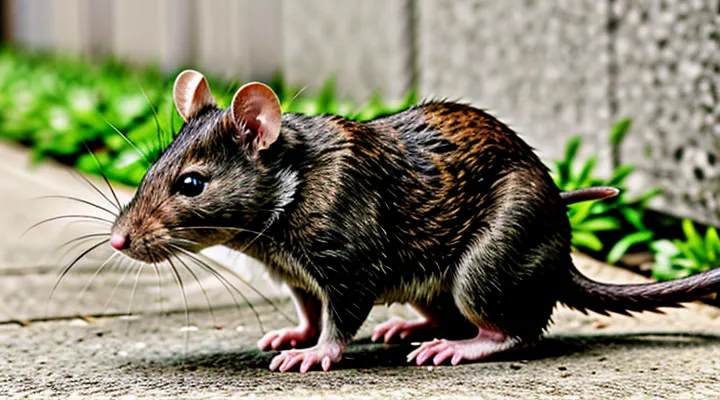
Understanding Rat Behavior and Risks
Why Professional Rat Control is Essential
Health Hazards Posed by Rats
Rats transmit a wide range of pathogens that directly threaten human health. Their saliva, urine, and feces contain microorganisms capable of causing severe illness, while their presence in buildings often leads to contamination of food and water supplies.
- Leptospirosis – bacterial infection acquired through contact with urine‑contaminated surfaces; symptoms range from fever to kidney failure.
- Salmonellosis – foodborne disease resulting from ingestion of food tainted by rat droppings; leads to gastrointestinal distress and dehydration.
- Hantavirus pulmonary syndrome – respiratory illness transmitted via inhalation of dried urine or fecal particles; mortality rates can exceed 30 %.
- Plague – historically fatal bacterial disease; modern cases still emerge when fleas from rats bite humans.
- Rat‑bite fever – bacterial infection following bites or scratches; produces fever, rash, and joint pain.
- Allergic reactions – proteins in rat dander and urine trigger asthma attacks and hypersensitivity in susceptible individuals.
Exposure to these hazards extends beyond direct contact. Rats gnaw electrical wiring, creating fire risks, and their burrowing undermines structural integrity, indirectly increasing injury potential. Contaminated storage areas compromise commercial food safety, prompting costly recalls and legal liability.
Understanding the spectrum of rat‑borne health threats underscores the necessity for professional eradication programs. Effective control measures—inspection, baiting, trapping, and exclusion—reduce pathogen reservoirs, protect public health, and mitigate economic losses associated with disease outbreaks.
Property Damage Caused by Rats
Rats inflict extensive damage on residential and commercial structures, directly influencing the effectiveness of professional rodent management programs. Their gnawing behavior compromises building integrity, while their presence introduces health hazards that increase remediation costs.
- Structural components: beams, joists, and framing members suffer bite marks that weaken load‑bearing capacity.
- Electrical systems: insulation on wiring is chewed, exposing live conductors and creating fire risk.
- Insulation and HVAC: fiberglass and ductwork are shredded, reducing thermal efficiency and contaminating air flow.
- Plumbing: seals and plastic pipes are punctured, leading to leaks and water damage.
- Stored goods: food, paper products, and fabrics are contaminated by urine, feces, and saliva, prompting disposal and loss of inventory.
Damage assessment guides control operators in selecting bait placement, trap density, and exclusion techniques. Accurate identification of compromised areas enables targeted sealing of entry points, preventing re‑infestation and reducing future repair expenses.
Financial impact extends beyond immediate repairs. Insurance claims often rise due to concealed damage discovered after infestation, and property value depreciates when rat activity is documented. Effective rodent control mitigates these losses by eliminating the source of damage and restoring structural soundness.
The Comprehensive Rat Control Process
Initial Inspection and Assessment
Identifying Rat Entry Points
Identifying where rats gain access to a building is a prerequisite for effective pest management. Inspectors focus on structural vulnerabilities, utility penetrations, and environmental conditions that facilitate rodent ingress.
- Gaps around pipes, cables, and conduit sleeves larger than ¼ inch
- Cracks in foundation walls, slab joints, and floor seams
- Openings around doors, windows, and ventilation ducts, especially if weather‑stripping is damaged
- Unsealed openings at roof eaves, soffits, and chimney flues
- Defective or missing screens on vents, dryer exhausts, and trash compactors
- Holes in siding, wall cladding, or exterior trim
Inspection proceeds systematically: visual examination of exterior perimeters, use of flashlights and mirrors to probe concealed spaces, and deployment of motion‑activated cameras at suspected ingress sites. Infrared thermography may reveal hidden heat signatures indicating rodent activity behind insulation.
Once entry points are documented, remedial actions include sealing with steel wool, copper mesh, or high‑grade caulking; installing rigid metal flashing around utility penetrations; repairing foundation cracks with epoxy or hydraulic cement; and fitting self‑closing doors or weather‑stripping. All measures prioritize materials that resist gnawing and maintain structural integrity.
Continuous monitoring after repairs—through bait stations, tracking plates, or periodic visual checks—confirms that sealed openings remain effective and prevents re‑infestation.
Assessing Infestation Severity
Assessing the severity of a rat infestation is the first decisive step for any professional rodent management operation. Inspectors begin with a visual sweep of the property, noting droppings, gnaw marks, nesting material, and burrow entrances. Each indicator receives a quantitative score—typically on a 0‑5 scale—allowing the creation of an aggregate severity index.
Key metrics include:
- Dropping density: count per square foot on surfaces such as countertops, floors, and insulation.
- Activity trails: number of parallel lines of gnaw marks or grease smears identified along walls and pathways.
- Nesting sites: presence of shredded material, shredded paper, or stored food in concealed locations.
- Auditory evidence: frequency of audible scurrying or squeaking during nighttime inspections.
- Population signs: live captures, carcasses, or fresh footprints.
Data collection follows a standardized form to ensure consistency across technicians. The aggregated scores categorize infestations into low (0‑8), moderate (9‑16), or high (17‑25) severity levels. These categories dictate the scope of intervention, ranging from targeted bait placement to comprehensive structural sealing and repeated monitoring.
Advanced assessments may incorporate infrared cameras to detect nocturnal movement and pheromone traps to estimate population density more accurately. Results are recorded in a digital management system, enabling trend analysis and rapid adjustment of control tactics as the infestation evolves.
Locating Nests and High-Activity Areas
Effective rat management begins with precise identification of nesting sites and areas of intense activity. Technicians first conduct a visual sweep of the premises, noting signs such as gnaw marks, droppings, urine stains, and shredded materials. These indicators reveal pathways and potential harborages.
Common techniques for pinpointing locations include:
- Infrared and thermal imaging – detects heat signatures generated by rodent colonies hidden behind walls or in insulation.
- Motion-activated cameras – records movement patterns, confirming active routes and feeding stations.
- Bait station monitoring – tracks bait consumption rates, indicating proximity to a nest.
- Trace dust and fluorescent powders – applied to suspected pathways; subsequent inspection under UV light reveals travel routes.
Data from these tools guide the placement of traps and bait, ensuring coverage of the most problematic zones. Patterns of droppings concentration, for instance, often correspond to the perimeter of a nest, while frequent gnaw marks near structural joints suggest entry points. By correlating multiple evidence streams, technicians construct a detailed map of rodent activity, allowing targeted intervention and minimizing unnecessary chemical use.
Treatment Strategies and Methods
Baiting Techniques and Products
Effective baiting remains a core component of professional rat management. Practitioners select baits based on species behavior, infestation severity, and environmental constraints. The process begins with a thorough inspection to identify active runways, feeding stations, and nesting sites. Once locations are mapped, technicians apply the following techniques:
- Pre‑baiting: Offer non‑poisoned food to build trust, then introduce toxic bait in the same spot.
- Station placement: Install tamper‑resistant bait stations near walls, under appliances, and in concealed corners to protect non‑target animals and children.
- Rotational baiting: Alternate active ingredients every 30‑45 days to prevent resistance development.
- Targeted dosing: Adjust bait quantity to match the size of the infestation, avoiding excess that could attract wildlife.
Products employed in rat control fall into distinct categories:
- Anticoagulant baits – contain compounds such as brodifacoum or difenacoum; induce internal bleeding after ingestion.
- Non‑anticoagulant baits – include bromadiolone‑free formulations like chlorophacinone; suitable where anticoagulant resistance is documented.
- Acute toxic baits – deliver rapid lethality via neurotoxic agents; used for short‑term eradication in confined spaces.
- Mechanical devices – snap traps and electronic kill stations complement chemical baits, providing immediate reduction of visible activity.
- Rodent‑specific attractants – flavor enhancers derived from grain, peanut butter, or fish oil increase bait acceptance.
Safety protocols govern every step. Technicians wear protective equipment, record bait locations, and conduct follow‑up inspections to confirm mortality and identify secondary exposure risks. Documentation includes product batch numbers, dosage rates, and disposal methods for unused bait. Compliance with local pest‑control regulations ensures that baiting operations protect public health while achieving long‑term rat population suppression.
Trapping Solutions
Professional rat management operations rely on trapping solutions to achieve rapid population reduction and prevent reinfestation. Traps provide a direct, observable method for removing rodents from infested sites, allowing technicians to verify removal and adjust strategies in real time.
Key components of an effective trapping program include:
- Trap selection – Snap traps deliver immediate mortality, live‑catch traps enable relocation under regulatory guidelines, and electronic traps supply a humane, quick kill with minimal mess.
- Bait optimization – High‑energy attractants such as peanut butter, dried fruit, or commercial rodent lures increase capture rates; bait placement must prevent non‑target exposure.
- Strategic placement – Traps are positioned along walls, near entry points, and in concealed pathways where rats travel; spacing typically follows a 10‑foot grid to maximize coverage.
- Monitoring and data collection – Daily inspection records capture numbers, trap condition, and location performance, informing adjustments to density and bait type.
- Safety protocols – Operators wear gloves, use protective eyewear, and follow disposal regulations to prevent disease transmission and environmental contamination.
Implementation proceeds in stages. Initially, technicians conduct a site survey to identify activity hotspots and structural vulnerabilities. Based on findings, they deploy an array of traps calibrated to the estimated infestation level. Captured rodents are removed promptly, and traps are reset with fresh bait. Continuous monitoring continues for at least two weeks, after which trap density is reduced, and preventive measures—such as sealing gaps and eliminating food sources—are reinforced.
The integration of these practices ensures that trapping solutions function as a reliable, measurable element of rat control services, delivering quantifiable results while maintaining compliance with health and safety standards.
Exclusion Methods for Prevention
Exclusion methods focus on sealing all potential pathways that rats could use to enter a structure. Professionals begin with a thorough inspection, documenting gaps around foundations, utility penetrations, doors, windows, and roof eaves. Measurements guide the selection of appropriate sealing materials.
Effective barriers include:
- Steel wool or copper mesh packed into small cracks, then covered with cement or silicone.
- Heavy-duty rodent‑proof metal flashing around pipe entries and vents.
- Seamless concrete or metal lintels over foundation cracks.
- Self‑closing door sweeps and weather‑stripping on exterior doors.
- Reinforced hardware cloth on vent openings and crawl‑space accesses.
After installation, technicians perform a verification walk‑through to confirm that no openings remain. They advise property owners on regular inspections, especially after seasonal weather changes, to detect new gaps caused by settlement or damage.
Integrating exclusion with sanitation, trapping, and baiting creates a comprehensive prevention strategy, reducing the likelihood of infestation and minimizing the need for reactive measures.
Sanitation and Habitat Modification Recommendations
Effective rat management begins with eliminating food, water, and shelter sources. Operators advise strict sanitation protocols to reduce attractants and prevent infestations.
- Store waste in sealed containers; remove garbage daily.
- Clean floors, countertops, and equipment to eliminate crumbs and spills.
- Repair leaky pipes and eliminate standing water.
- Keep storage areas organized; elevate pallets and boxes off the floor.
- Install door sweeps and window screens to block entry.
Habitat modification focuses on structural changes that make premises unsuitable for rodents. Professionals recommend:
- Seal all gaps larger than ¼ inch using steel wool, caulk, or concrete.
- Trim vegetation within 2 feet of building foundations to remove climbing routes.
- Install rat-resistant vent covers and utility entry points.
- Elevate food preparation surfaces and keep them free of debris.
- Remove clutter, debris piles, and unused equipment that can serve as hiding places.
Integrating these measures with routine monitoring and bait placement creates a comprehensive control program. Continuous inspection confirms that sanitation standards are maintained and that habitat alterations remain effective over time.
Post-Treatment Monitoring and Follow-Up
Checking for Continued Activity
After an extermination visit, technicians verify that the infestation has been eliminated by inspecting the premises for signs of ongoing rodent activity. This verification phase is essential for confirming the effectiveness of bait placement, traps, and structural modifications.
Inspectors examine high‑risk zones such as kitchen cabinets, utility rooms, and building exteriors. They look for fresh gnaw marks, droppings, urine stains, and new pathways. Any evidence of recent movement triggers an immediate reassessment of the control plan.
If activity is detected, the service team adjusts tactics:
- Replace or reposition bait stations where consumption has ceased.
- Add additional traps in newly identified travel routes.
- Apply exclusion measures to seal fresh entry points uncovered during the follow‑up.
- Schedule a supplemental visit within 48‑72 hours to monitor response.
Documentation of findings includes photographic records, count of droppings per square foot, and a written summary of corrective actions. This report is shared with the client to demonstrate accountability and to outline the next steps.
Continuous monitoring may extend beyond the initial follow‑up. Some providers recommend periodic inspections—weekly for high‑traffic facilities, monthly for residential properties—to ensure that any resurgence is caught early and addressed before the population rebounds.
Re-evaluation of Control Measures
Re-assessing rat control strategies begins with systematic data collection. Field teams record trap counts, bait consumption, and activity patterns across all serviced locations. This baseline enables comparison against historical performance and highlights deviations that may signal reduced effectiveness.
Key steps in the re‑evaluation process include:
- Quantitative analysis of capture rates versus projected targets.
- Review of bait placement density and timing to identify gaps.
- Assessment of equipment condition, including trap functionality and sensor accuracy.
- Comparison of current costs with projected savings from alternative methods.
- Verification of compliance with local health and environmental regulations.
Findings feed directly into adaptive planning. When metrics fall short, technicians adjust placement algorithms, introduce newer bait formulations, or integrate complementary techniques such as habitat modification. Continuous monitoring ensures that each modification is measured, documented, and incorporated into the next cycle of control measures.
Long-Term Prevention Strategies
Effective rodent management depends on sustained prevention rather than reactive elimination. Long‑term strategies focus on eliminating conditions that attract rats, reducing entry opportunities, and maintaining vigilance through scheduled actions.
Sanitation reduces food availability. Regular removal of waste, proper storage of bulk commodities, and prompt cleaning of spills deprive rodents of sustenance. Structural exclusion blocks access; sealing gaps larger than ¼ inch, installing chew‑resistant materials around utility penetrations, and reinforcing foundation walls prevent ingress. Continuous monitoring identifies early activity; placing motion‑activated sensors, tracking stations, and periodic visual inspections provides data for timely response.
Professional services implement these measures through systematic protocols:
- Quarterly property assessments to locate vulnerabilities and verify corrective actions.
- Installation and maintenance of tamper‑proof bait stations positioned according to risk maps.
- Replacement of compromised seals and reinforcement of building envelopes during scheduled maintenance windows.
- Documentation of rodent sightings, trap counts, and bait consumption to adjust control tactics.
- Client education on waste handling, landscaping practices, and reporting procedures to sustain cooperation.
Integration with an Integrated Pest Management (IPM) framework ensures that chemical interventions are minimized and applied only when monitoring indicates necessity. Data collected over multiple seasons inform trend analysis, allowing service providers to predict population surges and pre‑emptively strengthen barriers. Contractual arrangements that include ongoing inspections, bait replenishment, and exclusion upgrades guarantee continuity, reducing the likelihood of re‑infestation.