
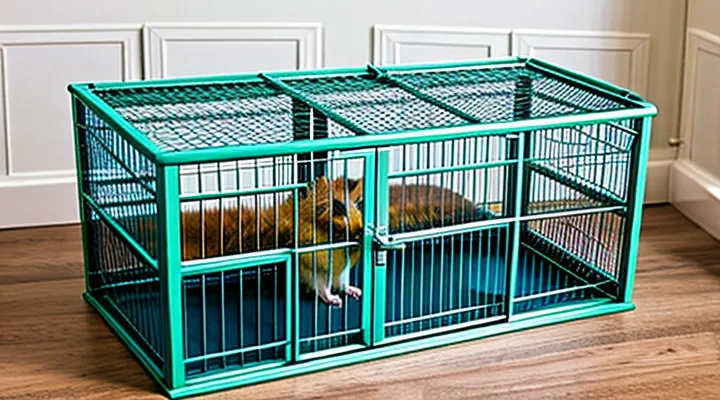
The Importance of an Appropriate Rat Cage
Why Size Matters for Rat Welfare
Behavioral Needs and Space Requirements
Rats exhibit distinct exploratory, nesting, and foraging behaviors that dictate minimum enclosure dimensions. An adult laboratory rat requires at least 0.5 m² floor area to move freely, while a breeding pair needs a minimum of 0.8 m² to accommodate nesting material, tunnels, and exercise wheels. Vertical space should allow a clear height of 30 cm for climbing structures and a minimum of 40 cm for multi‑level platforms, which reduce stress and promote natural climbing activity.
Key spatial parameters:
- Floor area per individual: 0.25 m² (minimum); increase by 0.1 m² for each additional rat.
- Height clearance: 30 cm for simple enrichment; 40 cm for tiered designs.
- Nesting zone: at least 0.1 m² of insulated, soft substrate per cage.
- Exercise zone: wheel or running track occupying 0.05 m², positioned away from food and water stations.
Providing these dimensions supports normal locomotion, social interaction, and nesting, thereby maintaining physiological health and reducing stereotypic behaviors. Adjustments for larger strains or high‑activity individuals should follow the same proportional scaling principles.
Health Implications of Restricted Space
Limited floor area in a rat enclosure directly affects physiological and behavioral health. Constrained space elevates cortisol levels, indicating chronic stress. Elevated stress compromises immune function, increasing susceptibility to bacterial and viral infections. Reduced movement opportunities weaken skeletal muscles and impair joint development, leading to kyphosis and hindlimb weakness. Insufficient ventilation space concentrates ammonia from urine, causing respiratory irritation, bronchitis, and reduced lung capacity. Overcrowding within a small cage promotes aggressive encounters, resulting in bite wounds and heightened pain‑related behaviors. Limited exploration opportunities suppress natural foraging and nesting instincts, producing stereotypic circling or excessive grooming, both linked to anxiety disorders.
Key health outcomes of inadequate enclosure size:
- Hormonal imbalance (elevated cortisol, altered thyroid hormones)
- Musculoskeletal degeneration (muscle atrophy, joint deformities)
- Respiratory pathology (ammonia‑induced bronchial inflammation)
- Immunosuppression (lowered lymphocyte counts, increased infection rates)
- Behavioral pathology (stereotypies, heightened aggression)
Mitigation requires providing a floor area at least three times the rat’s total body length, vertical enrichment to increase usable space, and adequate ventilation to keep ammonia below 25 ppm. Regular health monitoring should focus on weight trends, respiratory sounds, and behavioral observations to detect early signs of space‑related distress. Adjusting enclosure dimensions accordingly reduces morbidity and supports long‑term welfare.
Key Considerations for Cage Design
Material Safety and Durability
When selecting a cage for laboratory or pet rats, the material must protect the animals from chemical exposure and withstand repeated handling. Non‑toxic polymers such as high‑density polyethylene (HDPE) and polypropylene meet safety standards; they resist leaching, are easy to disinfect, and survive routine washing at temperatures up to 80 °C. Metal frames constructed from stainless steel or powder‑coated aluminum provide structural integrity without rusting, provided the coating is free of lead and cadmium. Untreated wood is unsuitable because it can splinter, absorb moisture, and release tannins that irritate rodent skin and respiratory tracts.
Key durability criteria include:
- Resistance to gnawing: Materials should tolerate continuous chewing without fragmenting. Polycarbonate and reinforced acrylic panels retain shape under constant bite pressure.
- Corrosion and chemical stability: Stainless steel (grade 304 or higher) resists saline solutions and disinfectants; powder‑coated aluminum avoids oxidation when exposed to humidity.
- Impact strength: Cage components must absorb accidental drops without cracking. Tempered glass offers high impact resistance but adds weight and breakage risk.
- Cleaning compatibility: Surfaces must allow rapid removal of waste and disinfectant residues. Smooth, non‑porous finishes prevent bacterial colonization and reduce cleaning time.
Long‑term performance depends on proper installation. Secure joints, reinforced corners, and lockable hinges prevent loosening under repeated cage manipulation. Periodic inspection for micro‑cracks, rust spots, or coating wear extends service life and maintains a safe environment for the rodents. Selecting materials that satisfy toxicity, wear resistance, and maintenance requirements ensures both animal welfare and cost‑effective cage longevity.
Ventilation and Airflow
Effective ventilation is a primary factor in maintaining a healthy environment for laboratory rats. Stagnant air encourages the growth of pathogens and increases ammonia levels from urine, which can impair respiratory function. Proper airflow removes contaminants, stabilizes temperature, and reduces humidity, thereby supporting animal welfare and experimental reliability.
Design considerations for cage ventilation include:
- Passive openings: Mesh panels or slatted sides allow continuous exchange without mechanical components. Choose mesh with openings no larger than 1 mm to prevent escape while ensuring sufficient air passage.
- Active systems: Small fans or ducted exhaust units provide controlled air turnover. Set flow rates between 10 and 15 air changes per hour, measured at the cage interior, to meet most regulatory guidelines.
- Filter integration: HEPA or carbon filters placed in supply lines remove particulates and odors. Replace filters according to manufacturer specifications or when pressure drop exceeds 10 Pa.
Placement of vents influences circulation patterns. Position intake vents near the cage top and exhaust vents near the bottom to create a downward flow that sweeps waste gases away from the animal’s breathing zone. Verify airflow uniformity with an anemometer; variations greater than 20 % across the cage interior indicate inadequate distribution and require vent redesign.
Ease of Cleaning and Maintenance
Choosing cages with smooth, non‑porous walls reduces residue buildup and simplifies disinfection. Materials such as powder‑coated metal or high‑density polyethylene resist scratching, allowing wipes or spray cleaners to remove contaminants without abrasive action.
Design elements that facilitate routine upkeep include:
- Removable bottom trays that slide out for quick waste removal.
- Hinged or swing‑out doors providing unobstructed entry for cleaning tools.
- Integrated drainage channels that direct liquid away from living areas.
- Modular panels that detach for thorough interior washing.
Easy‑access latch mechanisms eliminate the need for tools, decreasing cleaning time and limiting stress on the animals. Sealed seams prevent debris accumulation in crevices, while rounded corners discourage gnawing of structural joints.
Routine maintenance benefits from standardized component sizes. Identical parts across cages enable a single set of cleaning equipment, reducing inventory complexity and ensuring consistent hygiene standards.
Finally, selecting cages compatible with commercial cage‑wash systems accelerates turnaround between housing cycles. Compatibility specifications typically list dimensions, tray depth, and material tolerances; confirming these details before purchase guarantees seamless integration with automated cleaning workflows.
Determining Optimal Cage Size
Minimum Size Guidelines for Pet Rats
Single Rat vs. Multiple Rats
When housing rats, the decision between a solitary enclosure and a communal one directly influences cage dimensions, ventilation, and enrichment layout. A single rat requires a minimum floor area of 2 sq ft, with additional height for climbing structures; this space accommodates a nest box, water bottle, and one feeding dish without crowding. A pair or small group (3‑4 individuals) needs at least 4 sq ft total, plus an extra 0.5 sq ft per additional animal to preserve personal zones and reduce aggression.
Key considerations:
- Social needs – Rats are highly social; group housing satisfies natural interaction, reduces stress‑related behaviors, and promotes activity. Solo housing may be justified only for medical isolation or when a dominant individual exhibits severe aggression.
- Space allocation – Group cages must provide multiple nesting sites, separate feeding stations, and vertical elements that allow each rat to claim a perch. Single‑rat cages can concentrate enrichment in a compact arrangement.
- Health monitoring – Isolating a rat simplifies disease detection and treatment, as symptoms appear in a single subject. In group settings, observation requires more frequent checks to identify the affected individual.
- Cleaning efficiency – Larger, multi‑rat cages often feature removable trays and modular accessories that streamline waste removal. Single‑rat cages, being smaller, may be cleaned more quickly but require more frequent turnover if occupancy is high.
Design implications extend to material choice and airflow. Multi‑rat enclosures benefit from mesh sides that enhance ventilation and prevent odor buildup, while a single‑rat cage can employ solid walls to reduce escape risk. Regardless of occupancy, all cages should incorporate chew‑resistant bars, secure locks, and a removable top for easy access. Selecting the appropriate configuration hinges on balancing social welfare with spatial, health, and maintenance requirements.
Growth and Future Needs
Rats increase in body length and weight rapidly during the first eight weeks, reaching adult dimensions that exceed juvenile requirements. Enclosure dimensions must accommodate this growth curve; a cage that fits a three‑week‑old specimen will become cramped within a month, leading to restricted movement and heightened stress.
Future breeding programs amplify space demands. Each additional litter adds at least one adult pair, and the cumulative volume rises exponentially. Planning for expansion involves:
- Selecting modular units that can be linked without structural compromise.
- Ensuring the base area per animal meets or exceeds recommended standards for adult size.
- Providing vertical space for climbing, which reduces floor footprint while preserving activity zones.
Long‑term health monitoring reveals that inadequate space correlates with increased incidence of musculoskeletal issues and abnormal behavior. Adjusting cage size ahead of expected growth eliminates retrofitting costs and minimizes disruption to the colony.
When forecasting facility upgrades, incorporate buffer capacity equal to 20 % of the projected maximum population. This margin accommodates unforeseen breeding spikes and permits isolation of sick individuals without sacrificing overall spatial adequacy.
Factors Influencing Space Requirements
Activity Levels and Playfulness
Rats exhibit high locomotor activity and a strong drive for exploration; cage dimensions must accommodate these behaviors to prevent stress and injury. Sufficient floor area allows for sustained running, while vertical space supports climbing, a natural component of rat movement. Enclosure design that integrates multiple levels, tunnels, and platforms distributes activity across the cage, reducing congestion and encouraging balanced exercise.
Key design elements that support active and playful rats include:
- Minimum floor space of 0.5 sq ft per adult rat, with additional 0.2 sq ft for each extra occupant.
- Vertical clearance of at least 12 inches to permit climbing structures and elevated platforms.
- Modular accessories (ramps, ladders, hammocks) that can be rearranged to introduce novel challenges.
- Solid flooring combined with a detachable chewable substrate to protect paws while offering tactile stimulation.
- Open‑top or ventilated sections that allow safe aerial exploration without risk of escape.
Providing these spatial and structural features aligns cage capacity with the innate activity levels of rats, fostering natural play, reducing stereotypic behavior, and promoting overall health.
Enrichment and Accessories
Enrichment items increase physical activity, mental stimulation, and natural foraging behavior in laboratory and pet rats. Appropriate choices depend on cage dimensions, material durability, and ease of cleaning.
- Chewing toys made of untreated wood, mineral blocks, or safe plastics satisfy gnawing instincts and help maintain dental health.
- Climbing structures such as ladders, platforms, and rope bridges utilize vertical space, encouraging muscle development and exploration.
- Tunnel networks and PVC pipes create concealed routes that mimic burrowing environments, supporting problem‑solving behavior.
- Foraging devices, including treat‑dispensing balls and hide‑away food containers, extend feeding time and promote scent tracking.
- Nesting material, such as shredded paper or cotton, provides a substrate for building nests and regulates temperature.
Accessories that support routine care and observation include:
- Water bottles with stainless‑steel sippers to prevent leakage and contamination.
- Gravity‑fed feed dispensers that allow controlled access to pellets while reducing waste.
- Cage dividers or modular panels that enable separation of individuals or groups without compromising airflow.
- Cleaning tools, such as detachable trays, scraper pads, and disinfectant‑compatible wipes, facilitate thorough sanitation between cage changes.
Selection criteria for enrichment and accessories:
- Compatibility with cage size; items should not obstruct movement or restrict access to food and water.
- Non‑toxic, chew‑resistant materials to prevent ingestion of harmful substances.
- Simple assembly and disassembly for quick replacement and cleaning.
- Ability to withstand repeated handling and exposure to moisture without degradation.
Integrating these elements creates a balanced environment that meets physiological needs, reduces stress, and supports accurate experimental or observational outcomes.
Breed-Specific Considerations
Selecting appropriate cage dimensions and configurations requires attention to the distinct spatial and environmental needs of each rat breed. Different genetic lines exhibit variations in body size, activity level, and grooming habits; these factors dictate the minimum floor space, height, and accessory placement needed for optimal welfare.
Large‑bodied breeds such as the Dumbo or the “Rex” variety demand at least 0.5 sq ft of horizontal area per animal, with a minimum cage height of 12 inches to accommodate their broader frames and frequent climbing. Smaller breeds, including the “Hairless” and “Tricolor” strains, can thrive in slightly reduced footprints—approximately 0.35 sq ft per rat—provided vertical enrichment remains accessible.
Breeds with heightened exploratory drive, notably the “Satin” and “Standard” fancy rats, benefit from multi‑level platforms, tunnels, and chew‑resistant ladders. Incorporating at least one elevated platform that adds 4–6 inches of usable height supports their natural tendency to perch and survey the environment.
Hairless rats require enhanced humidity control and temperature stability. Selecting cages constructed from non‑porous materials, equipped with removable panels for easy cleaning, reduces the risk of skin desiccation. Adding a sealed, insulated corner for a heated pad ensures consistent warmth without compromising overall ventilation.
Breeds prone to respiratory issues, such as the “Rex” and certain “Himalayan” lines, need cages with ample airflow and low dust accumulation. Mesh flooring should be avoided; solid, easy‑to‑wipe surfaces paired with a filtered ventilation system maintain air quality while preventing foot injuries.
Key considerations can be summarized:
- Minimum floor space: 0.5 sq ft for large breeds; 0.35 sq ft for smaller breeds.
- Height requirement: ≥12 inches for robust breeds; ≥10 inches for others, with additional platforms for active strains.
- Material choice: non‑porous, chew‑resistant plastics or coated metal for skin‑sensitive rats; stainless steel mesh for superior ventilation in respiratory‑sensitive breeds.
- Enrichment: at least two vertical elements (platforms, ladders) for exploratory breeds; insulated corner for hairless strains.
- Cleaning access: removable side panels and smooth interior surfaces to facilitate frequent sanitation.
Applying these breed‑specific parameters when configuring cages ensures each rat receives adequate space, appropriate environmental conditions, and enrichment suited to its genetic profile.
Essential Design Elements for a Rat Cage
Cage Type Options
Wire Cages: Advantages and Disadvantages
Wire cages are a common option for laboratory and pet rat housing because their construction permits easy observation and cleaning. The metal mesh provides a barrier against escape while allowing airflow, which helps maintain a stable microclimate.
Advantages
- High visibility of occupants and bedding, facilitating health checks without disturbance.
- Rapid removal of waste through removable trays; debris falls through mesh, simplifying sanitation.
- Durable material resists chewing and deformation, extending the lifespan of the enclosure.
- Compatibility with modular accessories such as ramps, tunnels, and nesting platforms, enabling customization of interior space.
Disadvantages
- Mesh size may cause paw injuries if gaps are too wide; selection of appropriate gauge is essential.
- Metal conducts heat and cold, potentially exposing rats to temperature extremes unless supplemental insulation is added.
- Noise generated by movement against the wire can stress animals, particularly in quiet environments.
- Cleaning of the mesh itself can be labor‑intensive; residues may accumulate in small openings if not regularly flushed.
Aquarium/Tank Cages: When to Use (and When Not To)
Aquarium‑style cages provide a clear, enclosed environment that can simplify cleaning and allow visual monitoring of rodents. They are suitable when the enclosure will remain stationary, when a waterproof base is required, and when the user prefers a glass or acrylic front for observation.
Appropriate scenarios
- Permanent placement on a level surface; the weight of glass or acrylic limits portability.
- Need for a sealed bottom to prevent bedding leakage or moisture damage.
- Preference for a transparent front that does not obstruct view from multiple angles.
- Situations where the cage will house a small number of rats (one to three) and the interior volume meets minimum space guidelines.
Unsuitable scenarios
- Frequent relocation; the combined weight and fragility of glass can cause breakage or injury.
- Housing larger groups; the fixed dimensions of many tanks restrict horizontal expansion, leading to crowding.
- Requirement for extensive enrichment structures that need drilling or attachment to the cage walls; acrylic and glass surfaces limit modification.
- Environments with temperature fluctuations; glass can amplify heat loss or gain, affecting the microclimate inside.
When integrating an aquarium cage into a broader rat enclosure plan, verify that the internal floor area meets the standard of at least 0.4 sq ft (≈0.04 m²) per rat and that the height allows upright standing. Pair the tank with a solid‑bottom accessory box or a secondary compartment if additional floor space is needed. Ensure ventilation openings comply with airflow requirements to prevent humidity buildup. Selecting an aquarium cage only when these conditions align preserves animal welfare while taking advantage of the design’s cleaning efficiency and observation benefits.
DIY Cage Solutions
DIY cage projects offer precise control over enclosure dimensions, material quality, and cost efficiency for laboratory or pet rats. Builders can tailor internal space to meet species‑specific activity levels, ensuring sufficient floor area, climbing structures, and nesting zones without relying on pre‑manufactured units.
Material selection influences durability and hygiene. Stainless steel provides corrosion resistance and easy sterilization; high‑density polyethylene resists chewing and chemical exposure; untreated wood offers natural aesthetics but requires sealant to prevent moisture damage. When choosing a primary material, prioritize non‑toxic finishes and smooth interior surfaces to reduce injury risk.
Key design elements include:
- Floor space: Minimum 0.5 sq ft per adult rat; larger groups benefit from 0.75 sq ft per animal.
- Height: At least 10 inches to accommodate vertical enrichment such as shelves or tunnels.
- Ventilation: Mesh panels covering 20‑30 % of side area ensure airflow while preventing escape.
- Accessibility: Hinged doors or removable panels facilitate cleaning and health checks without stressing occupants.
- Modularity: Interlocking sections allow expansion as the colony grows or simplifies transport.
Construction steps:
- Draft a scaled plan indicating overall dimensions, ventilation openings, and accessory placement.
- Cut panels to size using appropriate tools; deburr edges to eliminate sharp points.
- Assemble frames with stainless steel brackets or reinforced plastic connectors, securing joints with rust‑free screws.
- Install mesh sections using corrosion‑resistant staples or silicone sealant to maintain airtight seams.
- Attach doors with latch mechanisms that lock securely yet release quickly for emergency access.
- Apply a non‑toxic coating to interior surfaces; allow full curing before introducing animals.
Cost analysis shows that a basic 2 ft × 1 ft × 12‑in‑high cage can be built for under $50, compared with commercial equivalents ranging from $80 to $150. Savings increase proportionally with larger or multiple units, provided bulk material purchases are leveraged.
Regular maintenance—weekly cleaning, periodic inspection of mesh integrity, and replacement of worn components—extends cage lifespan and preserves a safe environment for rats. DIY solutions thus deliver customizable, economical, and durable habitats aligned with optimal size and design principles.
Bar Spacing: Safety First
Preventing Escapes
Ensuring that laboratory or pet rats remain securely contained requires attention to cage architecture, fastening mechanisms, and environmental factors. A well‑designed enclosure eliminates gaps, resists gnawing, and limits opportunities for climbing or squeezing through openings.
Key measures to prevent escapes:
- Secure latches – double‑acting locks that cannot be opened from the interior; test each latch daily for wear.
- Mesh specifications – use wire with an aperture no larger than 0.25 in (6 mm); stainless steel resists chewing and corrosion.
- Floor design – solid or fine‑mesh flooring prevents rats from digging beneath the cage; avoid smooth surfaces that encourage climbing.
- Height and clearance – provide sufficient vertical space for activity while ensuring the top panel is reinforced and sealed.
- Ventilation panels – integrate vents with the same mesh size as side walls; seal edges with silicone to stop small rodents from forcing openings.
- Secondary containment – place the primary cage inside a larger, escape‑proof cabinet or a secondary wire cage for added redundancy during cleaning or transport.
Regular inspection complements design choices. Look for signs of gnaw marks, loose hinges, or compromised seals. Replace damaged components promptly to maintain barrier integrity.
By combining robust hardware, appropriate materials, and systematic maintenance, the risk of rat escape is minimized, supporting both animal welfare and experimental reliability.
Avoiding Injuries
When selecting a cage that minimizes the risk of injury, prioritize clear pathways, sturdy construction, and appropriate dimensions for the animal’s size and activity level. Overcrowding compresses movement, increases stress, and raises the likelihood of bites, scratches, and entanglement. Ensure that the floor is solid or covered with a low‑profile, chew‑resistant substrate to prevent paws from slipping or becoming trapped. Wire spacing must be narrow enough to stop a rat’s head from passing through, yet wide enough to allow unobstructed ventilation.
Key safety considerations:
- Minimum interior height equal to at least twice the average standing length of an adult rat; this prevents vertical climbing onto unsafe surfaces.
- Floor-to-ceiling clearance of at least 4 inches (10 cm) to accommodate jumping without striking the cage roof.
- Bar spacing no greater than ½ inch (12 mm) to block head and tail entry while maintaining airflow.
- Rounded corners on all interior surfaces; sharp edges create puncture hazards.
- Secure, lockable doors with smooth hinges; broken latches can cause sudden releases and panic‑induced injuries.
- Use chew‑proof materials for ladders, ramps, and enrichment items; worn pieces become splinters or sharp fragments.
Regular inspection of the cage’s structural integrity, including wire tension, joint stability, and wear on accessories, is mandatory. Replace any compromised component before an incident occurs. Maintaining a clean, well‑ventilated environment reduces the presence of sharp debris that could cause cuts or abrasions. By adhering to these specifications, the enclosure provides a safe habitat that supports natural behavior while preventing preventable injuries.
Levels, Ramps, and Platforms
Maximizing Vertical Space
Vertical space inside a rat enclosure can increase usable floor area without enlarging the cage footprint. Multi‑level platforms, climbing ramps, and suspended tubes create additional levels for activity, nesting, and shelter. When designing vertical features, prioritize sturdy connections, secure attachment points, and materials that withstand chewing.
Key considerations for effective vertical utilization:
- Load capacity – each platform must support the weight of multiple rats and any bedding or accessories placed on it.
- Access routes – ramps or stairs should have gentle inclines (no steeper than 30°) to allow safe ascent and descent.
- Cleaning efficiency – removable trays or slide‑out sections simplify debris removal and reduce disturbance to the animals.
- Ventilation – maintain airflow across all levels to prevent heat buildup and humidity pockets.
- Safety – avoid sharp edges, gaps larger than 0.5 cm, and unsecured joints that could collapse under stress.
Integrating these elements maximizes the three‑dimensional volume of the habitat, promotes natural climbing behavior, and reduces the overall cage size required for a healthy, active colony.
Encouraging Exercise and Exploration
Optimal cage dimensions create sufficient floor area for rats to run, climb, and investigate. A minimum of 0.5 sq ft per animal prevents crowding and supports natural locomotion. Height of at least 12 inches accommodates vertical enrichment such as ladders and platforms.
Design features that stimulate activity include:
- Multi‑level structures connected by sturdy ramps, allowing movement between floors.
- Varied textures (wire mesh, solid panels, natural wood) that encourage tactile exploration.
- Secure tunnels and hideouts that mimic burrow environments and promote curiosity.
- Rotating or interchangeable accessories that refresh the environment regularly.
Providing a rotating schedule of enrichment items maintains novelty and reduces habituation. Replace or reposition objects weekly to sustain interest. Ensure all components are anchored securely to prevent collapse during vigorous exercise.
Ventilation and lighting must remain consistent. Adequate airflow prevents respiratory issues, while a natural light cycle supports circadian rhythms, indirectly influencing activity levels.
Cleaning protocols should preserve functional enrichment. Remove waste without dismantling platforms, and inspect structural elements for wear before each cleaning cycle. This approach prolongs the lifespan of exercise‑promoting features while maintaining hygiene.
Doors and Access Points
Security Features
Security considerations dominate the selection of rat enclosures, especially when size and construction aim for optimal performance. Robust lock systems prevent unauthorized access and accidental release. Lever‑type latches, spring‑loaded bolts, and keyed locks provide redundancy; each mechanism should be tested for smooth operation and resistance to tampering.
Material choice contributes directly to containment integrity. Heavy‑gauge stainless steel or reinforced aluminum resists bending and chewing. Welded seams eliminate weak points that could be exploited by persistent rodents. When transparent panels are required, polycarbonate offers impact resistance superior to acrylic, reducing the risk of cracks that facilitate escape.
Ventilation openings must balance airflow with security. Mesh screens with a minimum aperture of 1 mm block entry while allowing sufficient exchange. Incorporating overlapping flaps or hinged doors adds an extra barrier, ensuring that maintenance activities do not create temporary vulnerabilities.
Cleaning protocols rely on secure access points. Removable trays and hinged tops should lock in place during transport to avoid spillage. Quick‑release clamps enable rapid removal without compromising the cage’s overall seal.
A concise checklist for evaluating security features:
- Dual‑action locking mechanism (manual and keyed)
- Welded frame with no exposed seams
- Reinforced mesh screens (≤1 mm aperture)
- Overlapping or hinged ventilation covers
- Lockable removable components for cleaning
Implementing these elements ensures that the enclosure maintains containment, protects animal welfare, and complies with laboratory safety standards.
Convenience for Interaction and Cleaning
When selecting a cage for laboratory or pet rats, the ease of handling and maintaining hygiene directly affects animal welfare and caretaker efficiency. Designs that incorporate large front or top openings enable quick, unobstructed access for feeding, health checks, and behavioral observation. Hinged or removable panels should lock securely yet release without tools, allowing the caretaker to enter the cage space with minimal disturbance to the occupants.
Cleaning efficiency hinges on modular components that separate waste from the living area. Recommended features include:
- Sliding or pull‑out trays that collect bedding and droppings, positioned at floor level for effortless removal.
- Removable nesting platforms and enrichment items that can be washed or replaced independently of the main cage.
- Smooth, non‑porous interior surfaces—such as stainless steel or high‑grade polycarbonate—that resist absorption of liquids and simplify sterilization.
- Integrated drainage channels that direct excess water away from the animal zone, preventing moisture buildup.
Ergonomic considerations reduce physical strain during routine maintenance. Adjustable-height workstations align with cage dimensions, enabling caretakers to perform tasks while standing or seated comfortably. Quick‑release latches and lever‑type doors eliminate the need for excessive force, decreasing the risk of injury to both staff and rats. By prioritizing these practical elements, the cage design supports consistent interaction and reliable sanitation without compromising animal health.
Furnishing and Outfitting Your Rat's Home
Bedding and Substrate Choices
Absorbency and Odor Control
Absorbent bedding directly influences the health of laboratory and pet rats by managing moisture and reducing ammonia formation. High‑capacity materials such as compressed wood shavings, paper pulp, or corn‑cob granules retain urine and feces, keeping the cage floor dry for extended periods. When selecting bedding, prioritize products with documented absorption rates and low dust generation to prevent respiratory irritation.
Effective odor control combines absorbency with ventilation and surface treatments. A typical cage design should incorporate:
- Perforated flooring or mesh platforms that allow airflow beneath the bedding layer.
- Adjustable vent panels positioned opposite the cage door to create a cross‑draft.
- Removable, washable liners made of polypropylene or silicone that can be periodically disinfected.
- Activated‑carbon filters or odor‑absorbing inserts placed in the cage lid or external housing.
Regular maintenance amplifies these measures. Replace soiled bedding before saturation, clean the tray and liners weekly, and inspect vent openings for blockage. Monitoring ammonia levels with portable meters provides objective feedback; values exceeding 25 ppm indicate that absorbent capacity or ventilation is insufficient.
Integrating absorbent substrates with engineered airflow reduces odor, enhances animal welfare, and prolongs the functional lifespan of the cage. Selecting materials and design features that work together ensures a hygienic environment without compromising space or structural integrity.
Safety and Dust-Free Options
When evaluating rodent enclosures, safety and dust control are critical factors that influence both animal welfare and laboratory compliance. Secure construction eliminates escape routes and prevents injuries caused by sharp edges or unstable components. Materials such as high‑density polyethylene, stainless steel, or reinforced acrylic provide durability while resisting corrosion and breakage. Locks and latch mechanisms must be tamper‑proof and allow quick access for routine checks without compromising containment.
Dust generation during cleaning and bedding changes can impair respiratory health and contaminate adjacent workspaces. Selecting low‑dust bedding—such as paper‑based or finely shredded wood pulp—reduces particle suspension. Incorporating sealed bottom trays with removable liners simplifies debris removal and limits aerosol release. Additional measures include:
- Integrated filtration ports that connect to HEPA or carbon filters, capturing airborne particles during ventilation.
- Smooth interior surfaces that discourage static buildup, preventing dust adhesion.
- Adjustable airflow vents positioned to promote laminar flow, sweeping particles away from the cage interior.
- Transparent panels made from anti‑static coated acrylic to allow observation without opening the enclosure, thereby minimizing disturbance and dust escape.
Regular maintenance protocols—scheduled disassembly, thorough wiping with non‑abrasive cleaners, and routine inspection of seals—ensure that safety features remain effective and that dust accumulation does not exceed acceptable thresholds. By prioritizing robust construction and dust‑mitigating design elements, users achieve a secure, hygienic environment that supports reliable experimental outcomes.
Enrichment and Accessories
Toys and Chew Items
When planning a rat enclosure, the inclusion of enrichment items directly influences health and behavior. Toys and chewable objects must fit the interior dimensions, allowing free movement while preventing obstruction of ventilation or feeding stations.
Effective enrichment falls into three categories:
- Manipulable toys – lightweight, easily grasped items such as plastic tunnels, wooden blocks, or rope ladders. Their size should not exceed one‑third of the cage floor area to preserve walking space.
- Chew materials – untreated wood branches, mineral blocks, or safe cardboard. Provide continuous access; replace when worn to avoid sharp edges.
- Sensory stimulators – scent‑infused pads, mirrors, or textured fabrics. Attach to cage walls at a height that does not interfere with climbing routes.
Placement strategy matters. Distribute items horizontally and vertically to encourage climbing, foraging, and gnawing. Secure loose objects to prevent accidental ingestion of detachable parts. Rotate selections weekly to maintain novelty and reduce habituation.
Maintenance considerations include regular inspection for splintering, mold, or excessive wear. Clean removable components with mild detergent; avoid harsh chemicals that could linger on chewing surfaces. Selecting materials that resist bacterial growth simplifies sanitation and extends the lifespan of both the toys and the cage itself.
Hiding Spots and Hammocks
Providing rats with concealed areas and suspended rests improves welfare and reduces stress. Hiding spots mimic natural burrows, allowing individuals to retreat when threatened. Hammocks offer elevated platforms that support climbing instincts and facilitate exercise without excessive floor space.
Effective integration of these features depends on cage dimensions, material durability, and safety. Enclosed tunnels or PVC tubes fitted snugly into the cage walls create secure shelters. Ensure entry openings are no larger than 1 cm to prevent escape. Soft fabric liners or untreated wood shavings line the interior to keep the environment dry and comfortable.
Hammocks should be anchored to the cage’s upper frame using stainless‑steel hooks or reinforced eye bolts. Weight capacity must exceed the heaviest rat by at least 30 % to avoid sagging. Choose breathable, washable fabrics such as cotton or fleece; avoid synthetic fibers that retain moisture and foster odor.
Key design guidelines:
- Position hiding spots opposite each other to encourage exploration of the entire enclosure.
- Install at least one hammock per two rats to prevent competition for elevated space.
- Maintain a clearance of 2–3 cm between hammock and cage ceiling to allow easy access.
- Regularly inspect attachment points for wear; replace any compromised hardware promptly.
By incorporating well‑placed shelters and sturdy hammocks, the cage layout maximizes usable area while satisfying the species’ behavioral needs. This approach yields a balanced environment that supports health, activity, and natural inclinations.
Food and Water Dispensers
Food and water dispensers must match cage dimensions to prevent spillage and ensure continuous access. A dispenser positioned too low can be obstructed by bedding, while one placed too high may be unreachable for smaller rats. Align the dispenser height with the cage’s floor level, allowing rats to drink and eat without climbing.
Key considerations for dispenser selection:
- Material: Stainless steel resists corrosion and simplifies sanitation; high‑density polyethylene offers durability and low weight; acrylic provides visibility but may crack under stress.
- Capacity: Choose a volume that exceeds daily consumption by at least 30 % to reduce refill frequency. For a standard laboratory cage housing up to five rats, a 500‑ml water bottle and a 250‑g food hopper are typical benchmarks.
- Attachment mechanism: Clip‑on designs secure to the cage side without drilling; screw‑on models provide a tighter seal but may require cage modification.
- Leak prevention: Double‑seal valves and anti‑drip nozzles minimize moisture accumulation on bedding, preserving hygiene and preventing mold growth.
- Cleaning compatibility: Detachable components that fit into standard dishwashers or autoclaves streamline routine maintenance and reduce pathogen risk.
Placement strategy influences both ergonomics and cleanliness. Install the water bottle on the cage’s upper corner to keep the nozzle above bedding, and locate the food hopper on the opposite side to distribute activity zones. This arrangement encourages movement throughout the enclosure, promoting natural foraging behavior.
When integrating dispensers into a cage system, verify that the combined footprint does not exceed the usable floor area. For cages with a 12 × 12 inch base, allocate no more than 20 % of the surface to dispenser hardware. Excessive coverage reduces space for nesting and enrichment, compromising welfare.
Placement and Environment
Temperature and Humidity
Maintaining appropriate temperature and humidity within a rat enclosure is essential for animal welfare and experimental reliability. Rats thrive at a stable ambient temperature of 20 °C to 24 °C (68 °F–75 °F). Temperatures below 18 °C increase metabolic stress, while levels above 26 °C accelerate respiration and can mask disease symptoms. Consistent thermal conditions reduce variability in physiological measurements and support normal growth rates.
Relative humidity should be kept between 40 % and 60 %. Lower humidity accelerates skin desiccation and nasal irritation; higher humidity encourages mold growth, bacterial proliferation, and condensation on cage components. Proper humidity control also preserves the integrity of bedding and prevents clumping that could obstruct airflow.
Key design features that facilitate climate regulation:
- Ventilation slots or perforated panels positioned to promote uniform air exchange without creating drafts directly on the animals.
- Insulating side walls made of low‑conductivity materials to buffer external temperature fluctuations.
- Adjustable heating elements (e.g., thermostatically controlled pads) placed beneath the cage floor, allowing precise temperature set‑points.
- Humidity sensors integrated with automated misting or dehumidification modules, ensuring the target range is maintained continuously.
- Sealed joints that prevent unwanted infiltration of external air while allowing controlled ventilation.
Regular monitoring with calibrated thermometers and hygrometers is required. Calibration should be performed at least weekly, and data logged to detect trends that may indicate equipment failure or environmental shifts. Prompt corrective action—adjusting heating, improving airflow, or repairing seals—preserves the cage’s microclimate and safeguards the health of the rodents.
Noise Levels and Stimuli
Noise generated by ventilation, lighting, and external activity can stress laboratory rats, alter physiological measurements, and compromise experimental validity. Elevated sound pressure levels above 65 dB SPL typically trigger heightened corticosterone release, leading to increased heart rate and reduced grooming behavior. Continuous exposure to low‑frequency hums, such as HVAC systems, may induce habituation, yet subtle changes in baseline activity persist, affecting locomotor assessments.
Effective cage design mitigates acoustic intrusion while preserving necessary environmental stimuli. Key considerations include:
- Material selection: Solid‑core polycarbonate panels dampen airborne noise better than wire mesh; acoustic foam lining on interior walls reduces reverberation without obstructing visual contact.
- Ventilation placement: Position exhaust ports away from the animal zone; use low‑velocity fans with variable‑speed controllers to maintain airflow below 55 dB SPL.
- Isolation mounts: Install rubber or silicone dampers between cage frames and rack supports to absorb structural vibrations.
- Stimulus control: Provide consistent, low‑intensity background music or white noise at 45 dB SPL to mask sporadic disturbances; avoid sudden frequency shifts that could startle subjects.
- Lighting design: Employ LED systems with dimmable output; flicker frequencies above 200 Hz prevent retinal stress and reduce associated acoustic artifacts from ballast circuits.
Monitoring protocols should record ambient sound levels continuously using calibrated sound level meters, documenting peaks and average values for each housing unit. Correlating these data with behavioral readouts enables identification of thresholds beyond which experimental outcomes become unreliable. By integrating acoustic attenuation measures with controlled sensory enrichment, researchers ensure stable, reproducible environments for rat studies.
Common Mistakes to Avoid When Choosing a Rat Cage
Overlooking Ventilation
Ventilation is frequently omitted when evaluating cage dimensions and layout for laboratory or pet rats. Insufficient airflow raises humidity, promotes ammonia buildup, and accelerates pathogen proliferation, compromising animal health and experimental validity.
Key risks of inadequate ventilation:
- Elevated ammonia concentration above 10 ppm, leading to respiratory irritation.
- Rapid humidity increase, fostering mold growth on bedding.
- Temperature gradients that create hot spots in confined spaces.
- Accumulation of odors, affecting caretaker comfort and biosecurity.
Design features that mitigate these risks:
- Mesh panels covering at least 30 % of side walls, sized to prevent escape yet allow free air exchange.
- Adjustable vent slots on the top frame, enabling fine‑tuning of airflow without altering cage footprint.
- Integrated passive air channels that direct fresh air from the room into the cage interior and exhaust stale air outward.
- Compatibility with external HEPA filtration units for high‑containment facilities.
When selecting a cage, verify that the manufacturer provides ventilation specifications, including airflow rate (CFM) and material permeability. Conduct periodic measurements of ammonia and humidity to confirm that the ventilation system maintains levels within accepted thresholds. Failure to address airflow can invalidate research outcomes and increase veterinary costs.
Underestimating Cleaning Requirements
Choosing a cage that appears spacious can mask the effort required to keep it hygienic. Underestimating cleaning demands leads to compromised health, increased labor, and higher long‑term costs.
Rats produce dense droppings, urine stains, and gnawing debris. When the cage’s dimensions and layout limit access, routine sanitation becomes time‑consuming. Designers often prioritize aesthetics or maximum floor area while neglecting the practicality of reaching corners, wire panels, and interior enrichment items.
Key considerations to avoid cleaning shortfalls:
- Open‑frame design: Allows quick removal of trays and easy wiping of walls; solid sides impede tool placement.
- Removable bedding compartments: Separate sections for soiled bedding streamline disposal and reduce cross‑contamination.
- Smooth, non‑porous surfaces: Plastic or coated metal resist urine absorption; untreated wood retains odors and requires additional treatment.
- Adequate clearance: Minimum 2 inches of space around accessories ensures brushes or vacuum nozzles can reach all surfaces.
- Integrated drainage: Sloped bottoms or built‑in channels direct liquid toward collection points, preventing pooling.
Failure to incorporate these features forces staff to dismantle the entire cage for each cleaning cycle, extending downtime and increasing stress on the animals. Accurate assessment of cleaning workload should precede any purchase decision, balancing cage size with maintenance efficiency.
Prioritizing Aesthetics Over Functionality
When visual appeal drives the selection of a rat enclosure, the primary focus shifts from space efficiency and enrichment to the appearance of the unit within a household or laboratory setting. Designers must balance decorative materials, color schemes, and form factor against the animal’s basic welfare requirements, ensuring that aesthetic enhancements do not compromise ventilation, escape prevention, or ease of cleaning.
Key considerations for aesthetically driven choices include:
- Surface finishes that resist corrosion and are compatible with disinfectants.
- Transparent or tinted panels that maintain viewing access while integrating with interior décor.
- Modular frames that allow rearrangement without altering structural integrity.
- Concealed wiring and lighting systems that blend with the cage’s silhouette.
Potential drawbacks arise when visual priorities limit cage dimensions, restrict access points, or obscure monitoring of health indicators. Overly ornate exteriors may conceal wear, making early detection of damage difficult. Selecting materials that combine durability with stylistic flexibility mitigates these risks.
A pragmatic approach retains aesthetic objectives while preserving functional essentials: adopt a minimalist design language that emphasizes clean lines, choose neutral palettes that complement various environments, and verify that all modifications comply with species‑specific space standards and hygiene protocols. This strategy ensures that visual standards enhance, rather than undermine, the overall quality of the enclosure.
Neglecting Safety Features
Ignoring safety elements when selecting a rat enclosure compromises animal welfare and laboratory integrity. A cage that meets dimensional requirements but lacks protective features can become a source of injury, disease transmission, and escape.
- Insufficient ventilation permits ammonia buildup and respiratory problems.
- Sharp edges or poorly finished metal create lacerations.
- Inadequate latch mechanisms allow accidental openings.
- Non‑chew‑resistant plastics fracture under gnawing, exposing wires or gaps.
- Absence of secure flooring permits burrowing through the base.
These oversights result in frequent injuries, heightened stress, and increased contamination risk, which in turn affect experimental reliability and increase veterinary costs.
To avoid such outcomes, verify that each cage includes: validated airflow specifications, rounded interior corners, tamper‑proof locks, chew‑resistant construction materials, and a reinforced base. Conduct routine inspections for wear, replace compromised components promptly, and document compliance with established safety standards.