
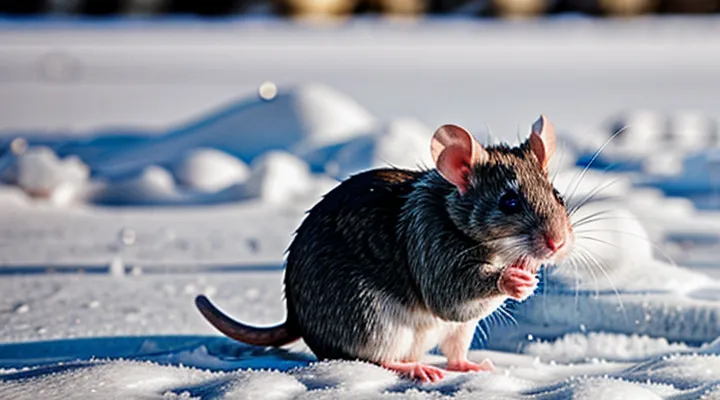
«The Unique Physiology of Rat Paws»
«Vascularization and Blood Flow»
Rats maintain low temperature in their paws through a specialized vascular network that limits heat transfer to the environment.
The digital region receives blood via a branching arterial tree that terminates in a dense capillary plexus. Arterioles at the periphery are highly innervated by sympathetic fibers, allowing rapid adjustment of vessel diameter in response to ambient temperature.
When ambient conditions are cool, sympathetic activation induces pronounced vasoconstriction. Reduced lumen size decreases blood flow, limiting the delivery of warm core blood to the extremities. This physiological response conserves core heat while the paws remain cold.
A counter‑current heat exchange system operates between arterial and venous vessels that run parallel along the digits. Warm arterial blood transfers heat to the cooler venous return before reaching the paw surface, further lowering the temperature of the blood that finally perfuses the distal tissues.
Consequences of this arrangement include:
- Minimal thermal energy reaching the paw skin
- Preservation of core temperature during exposure to low ambient temperatures
- Enhanced ability to navigate cold substrates without compromising overall metabolic balance
Thus, the pattern of vascularization and regulated blood flow directly explains the characteristic coolness of a rat’s paws. «Peripheral vasoconstriction reduces thermal loss», illustrating the central mechanism behind this adaptation.
«Lack of Insulating Fat and Fur»
Rats frequently exhibit paws that feel noticeably colder than the rest of their bodies. This temperature difference stems primarily from «Lack of Insulating Fat and Fur».
Subcutaneous fat in rodents is concentrated around vital organs and the torso, leaving the distal limbs virtually devoid of protective adipose tissue. Without this thermal barrier, heat dissipates rapidly from the paws.
Hair coverage on rat paws is minimal; the skin is largely exposed, providing little resistance to ambient cooling. The combination of sparse fur and absent fat creates a direct pathway for heat loss, resulting in the characteristic cold sensation.
Key physiological effects include:
- Accelerated surface cooling of the paws
- Increased reliance on core temperature regulation
- Potential sensitivity to low‑temperature environments
Understanding this anatomical limitation clarifies why rat paws often feel colder than other body regions.
«Environmental Factors and Paw Temperature»
«Ambient Temperature and Heat Exchange»
Rats maintain low temperature in their extremities to reduce heat loss when ambient conditions are cool. Peripheral blood flow is regulated by vasoconstriction, which limits warm blood reaching the paws and conserves core temperature. The thin skin and minimal fur on the feet further facilitate heat dissipation to the surrounding environment.
Heat exchange between a rat’s paws and the air depends on several physical factors:
- Temperature gradient: greater difference between ambient air and paw surface accelerates conductive and convective loss.
- Surface area-to-volume ratio: small paws present a high ratio, enhancing heat transfer per unit mass.
- Conductivity of surrounding substrates: contact with cold surfaces increases conductive cooling.
When ambient temperature drops below the thermoneutral zone, sympathetic nervous activity intensifies, triggering stronger vasoconstriction. This response lowers paw temperature, providing a rapid mechanism to preserve core heat without expending metabolic energy on active warming.
Conversely, in warm environments, vasodilation restores blood flow to the paws, raising their temperature and aiding heat release from the body. The dynamic adjustment of peripheral circulation allows rats to balance thermal homeostasis with minimal energy cost.
«Surface Contact and Conduction»
Rats often exhibit noticeably cold extremities because heat dissipates rapidly through direct «Surface Contact and Conduction». When a paw touches a substrate, thermal energy moves from the paw’s interior to the surface along the temperature gradient. The rate of transfer depends on the substrate’s thermal conductivity, the contact area, and the thickness of the paw’s insulating layers.
Key physiological factors influencing this process include:
- Thin fur covering the paws, providing minimal insulation.
- Sparse subcutaneous fat, reducing thermal storage capacity.
- High surface‑to‑volume ratio, which amplifies heat loss per unit mass.
- Vasoconstriction of peripheral blood vessels, limiting warm blood flow to the paws.
Environmental conditions intensify the effect. Contact with cold materials (metal, tile, ice) creates a steep temperature differential, prompting conduction to dominate over convective cooling. The paw’s skin, rich in keratinized cells, conducts heat efficiently, allowing the substrate to draw warmth away within seconds.
Understanding the mechanics of «Surface Contact and Conduction» clarifies why rat paws feel cold and informs handling protocols, cage design, and experimental setups that aim to maintain animal comfort and physiological stability.
«Behavioral Adaptations for Temperature Control»
«Burrowing and Nesting Habits»
Rats maintain low temperatures in their paws through behavioral adaptations linked to «Burrowing and Nesting Habits».
In underground tunnels, rats construct a stable microenvironment. Soil insulation and limited air flow keep ambient temperatures lower than surface conditions. This environment reduces heat exchange with the paws, allowing the animals to conserve core temperature while peripheral limbs remain cool.
Nest construction further supports thermoregulation. Rats gather shredded paper, cloth, and plant material to create densely packed nests. The insulation provided by these layers retains warmth near the body, while the paws, positioned on the nest surface, experience reduced heat transfer.
When rats transition between the burrow interior and the nest, peripheral blood vessels constrict. This vasoconstriction limits blood flow to the paws, directly lowering their temperature.
Key points of the behavioral strategy:
- Excavation of shallow burrows creates a consistently cool substrate.
- Assembly of insulated nests concentrates warmth around the torso.
- Strategic placement of paws on cooler surfaces minimizes heat loss.
- Controlled vasoconstriction synchronizes with environmental shelter.
Collectively, these practices explain the persistent coolness observed in rat paws.
«Grooming and Licking Paws»
Rats maintain body heat primarily through a dense coat and rapid metabolism, yet their extremities often feel noticeably cooler. Blood flow to the paws can be reduced during rest or stress, resulting in lower surface temperature compared to the torso.
«Grooming and Licking Paws» directly influences this temperature disparity. When a rat cleans its feet, saliva spreads across the skin, creating a thin moist layer. The subsequent evaporation draws heat away from the paw surface, intensifying the cold sensation. Additionally, the act of licking stimulates sympathetic nerves, prompting vasoconstriction that further limits blood circulation to the digits.
Key effects of this behavior include:
- Evaporative cooling from saliva evaporation.
- Sympathetic activation leading to reduced peripheral blood flow.
- Removal of debris that might otherwise insulate the paws, exposing skin to ambient air.
Persistent cold paws may signal excessive grooming, stress, or underlying circulatory issues. Monitoring grooming frequency and ensuring a stable, warm environment can mitigate excessive temperature loss. Providing nesting material and minimizing stressors helps maintain optimal paw warmth and overall health.
«Common Misconceptions About Cold Paws»
«Cold Paws as a Sign of Illness»
Rats regulate body temperature primarily through the core, while extremities often remain cooler. When paws feel unusually cold, the condition may indicate an underlying health problem rather than normal thermoregulation.
Cold extremities result from peripheral vasoconstriction, a response that reduces blood flow to the skin. Illnesses that impair circulation or metabolic balance amplify this response, causing paws to feel markedly colder than surrounding tissues.
Common medical conditions associated with this symptom include:
- Respiratory infections that elevate stress hormones and trigger vasoconstriction.
- Septic states that compromise cardiovascular efficiency.
- Hypoglycemia, which limits energy available for peripheral circulation.
- Dehydration, reducing blood volume and peripheral perfusion.
- Cardiovascular disorders that hinder effective blood distribution.
Distinguishing normal from pathological cold paws involves observing additional signs:
- Persistent chill despite ambient warmth.
- Paleness or bluish tint of the pads.
- Decreased activity, lethargy, or reluctance to move.
- Reduced food and water intake.
- Noticeable weight loss over a short period.
Owners should monitor paw temperature regularly, provide a stable, warm environment, and avoid sudden temperature fluctuations. If any of the listed warning signs appear, veterinary evaluation is warranted. Diagnostic measures may include blood work, radiography, and assessment of respiratory function to identify the precise cause of «Cold Paws as a Sign of Illness». Prompt treatment of the underlying condition typically restores normal peripheral temperature.
«Comparison to Human Thermoregulation»
Rats maintain low temperatures in their paws through peripheral vasoconstriction, a response that conserves core heat during exposure to cold environments. Blood flow to the digits is reduced, allowing heat loss to be minimized while the central body temperature remains stable. The same principle operates in human thermoregulation, where cutaneous vessels constrict to limit heat dissipation from the skin. Both species rely on sympathetic nervous system signaling to trigger vasoconstriction, but the anatomical and behavioral adaptations differ.
Key distinctions between rodent extremity cooling and human temperature control:
- Rats possess a highly vascularized tail that functions as a thermal radiator; humans lack an analogous structure, relying primarily on skin surface area.
- Human thermoregulatory responses include shivering thermogenesis and brown adipose tissue activation, mechanisms less pronounced in rats.
- In rodents, cold paw temperature can persist without discomfort due to a higher tolerance for peripheral cooling; humans experience discomfort and potential tissue damage at similar temperatures.
Overall, the physiological strategy of limiting peripheral blood flow to preserve core temperature is shared, while the specific anatomical features and supplemental heat‑generation methods reflect species‑specific adaptations.
«Implications for Rat Health and Welfare»
«Recognizing Normal vs. Abnormal Paw Temperatures»
Rats normally exhibit paw temperatures that are slightly lower than core body temperature, typically ranging from 30 °C to 34 °C. This cooling effect results from peripheral vasoconstriction, which conserves heat for vital organs. Recognizing when paw temperature deviates from this range provides early insight into circulatory or metabolic disturbances.
Assessment methods include gentle tactile inspection and non‑contact infrared thermometry. The tactile approach relies on the examiner’s perception of coolness versus warmth; infrared devices deliver objective readings with an accuracy of ±0.5 °C. Consistent measurements taken under stable ambient conditions yield reliable data for comparison.
Signs of abnormal paw temperature:
- Persistent temperature below 28 °C, indicating severe vasoconstriction or hypoperfusion.
- Temperature above 36 °C, suggesting inflammation, infection, or systemic fever.
- Asymmetrical readings between left and right paws, reflecting localized vascular obstruction or injury.
- Sudden temperature fluctuations without changes in ambient temperature, pointing to acute stress or metabolic imbalance.
When abnormal values are detected, immediate veterinary evaluation is warranted. Diagnostic steps may involve blood work, imaging, and assessment of peripheral circulation. Early intervention can prevent progression to tissue necrosis or systemic illness, preserving the animal’s overall health.
«Providing an Optimal Environment»
Rats experience reduced peripheral circulation when ambient temperature falls below their thermoneutral zone, leading to noticeably cold extremities. Maintaining a stable thermal environment mitigates this physiological response and promotes overall health.
Key elements of an optimal habitat include:
- Ambient temperature consistently between 20 °C and 24 °C; «Maintain a stable ambient temperature of 20‑24 °C» reduces vasoconstriction in the paws.
- Bedding of sufficient depth (at least 5 cm) composed of absorbent, insulating material such as shredded paper or aspen wood chips.
- Nesting material readily available to allow the animal to construct a micro‑environment that conserves heat.
- Relative humidity kept within 40‑60 % to prevent evaporative cooling of the skin surface.
- Regular health monitoring to detect early signs of circulatory impairment, including discoloration or reduced responsiveness of the paws.
Supplementary measures reinforce thermal stability. Providing a heat source, such as a low‑intensity ceramic heat pad placed beneath the cage floor, supplies localized warmth without disrupting normal behavior. Adjusting feeding schedules to include high‑energy foods supports metabolic heat production during colder periods.
Consistent application of these environmental controls eliminates the primary trigger for cold extremities, ensuring that the rat’s circulatory system remains functional and that the animal exhibits normal activity levels.