
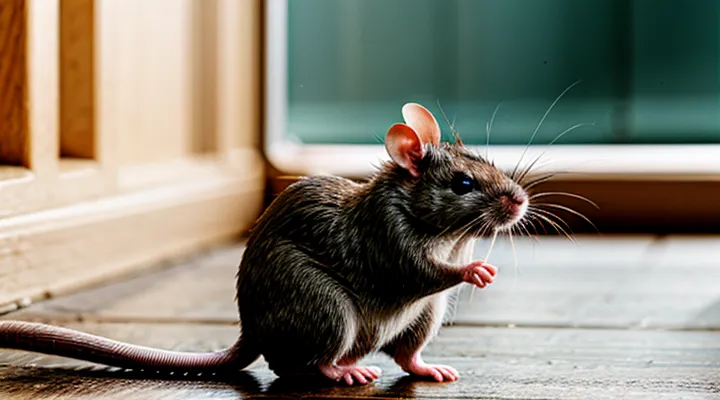
The Duality of the Rat: Perceptions and Symbolism
Negative Connotations in Western Cultures
Association with Disease and Plague
Rats have long been linked to epidemic disease, a connection that defines much of their symbolic weight in societies worldwide. Historical chronicles record massive mortality spikes coinciding with rodent infestations, most notably during the mid‑14th‑century pandemic that devastated Europe and Asia. Contemporary scholarship attributes the rapid spread of that outbreak to flea‑borne bacteria carried by commensal rats.
Key disease events associated with rats include:
- The Black Death (Yersinia pestis) – 1347‑1351, Europe and the Near East.
- The Third Pandemic (late 19th‑early 20th century) – spread from Hong Kong to global ports.
- Plague outbreaks in the United States (1900‑1925) – primarily in western states.
- Murine typhus (Rickettsia typhi) – recurring in urban centers since the early 20th century.
- Hantavirus pulmonary syndrome – identified in North America in 1993, traced to deer mouse populations.
The biological mechanism underlying these episodes involves ectoparasites (primarily Xenopsylla cheopis) that feed on rat blood, acquire pathogenic bacteria, and subsequently bite humans. In densely populated settlements, rodents thrive in waste stores, creating ideal conditions for parasite proliferation and rapid human exposure.
Cultural narratives echo this epidemiological reality. Folktales portray rats as harbingers of doom; medieval art frequently depicts them alongside death symbols. Literary works, from Geoffrey Chaucer’s “The Canterbury Tales” to modern horror novels, exploit the animal’s association with contagion to evoke fear and moral caution.
Current public health policy treats rats as primary vectors in disease surveillance. Integrated pest management programs prioritize habitat reduction, sanitation improvement, and targeted rodent control to limit zoonotic transmission. Educational campaigns stress the link between rodent presence and infection risk, reinforcing the animal’s enduring reputation as a biological warning sign.
Symbol of Vermin and Filth
Rats have long been associated with disease, decay, and unsanitary conditions. Historical records link them to plague outbreaks, grain spoilage, and urban squalor, reinforcing their reputation as carriers of filth. This perception persists across cultures, where rats embody the threat of contamination and moral degradation.
- In medieval Europe, rats symbolized divine punishment for communal impurity.
- East Asian folklore portrays rats as harbingers of pestilence, contrasting with occasional positive traits.
- Contemporary media frequently depict rats as antagonists in narratives about urban neglect.
Anthropological analysis shows that the vermin image serves as a social warning. Communities use the rat metaphor to condemn behaviors that jeopardize public health or ethical standards. By projecting disgust onto the animal, societies externalize anxieties about hygiene and order, reinforcing collective norms that prioritize cleanliness and disease prevention.
Portrayals in Literature and Folklore
Rats appear repeatedly in literary and folk narratives, serving as conduits for moral, social, and existential commentary. Their presence spans centuries and continents, reflecting both admiration and aversion within human cultures.
In European literature, rats often symbolize disease and decay, yet also embody cunning survival. William Shakespeare’s Macbeth includes a line that likens a “rat” to the “canker” of the kingdom, emphasizing corruption. In Charles Dickens’s Oliver Twist, the “rat‑infested” workhouse underscores poverty and neglect. Conversely, the character of the rat in Franz Kafka’s The Metamorphosis functions as a catalyst for alienation, illustrating the protagonist’s marginalization.
Asian folklore presents a contrasting perspective. Chinese myth recounts the “Year of the Rat” as the first sign in the zodiac, attributing intelligence, resourcefulness, and prosperity to the animal. Japanese kappa tales occasionally feature rats as shape‑shifters, illustrating adaptability. In Indian Panchatantra fables, the rat protagonist repeatedly outwits larger predators, reinforcing the virtue of wit over brute strength.
African oral traditions frequently portray rats as tricksters. In West African Yoruba stories, the rat Ijapa employs deception to achieve goals, embodying the cultural value of cleverness in the face of adversity. Similarly, Swahili folklore includes the rat Mbuzi who navigates village hierarchies, highlighting themes of social mobility.
Indigenous North American narratives assign rats symbolic roles linked to renewal. Among the Hopi, the “rat” is associated with the emergence of corn, signifying fertility and sustenance.
Key literary and folk examples:
- The Tale of the White Rat (Japanese folklore) – rat as a benevolent messenger.
- Rats in the Walls by H.P. Lovecraft – rat as an embodiment of hidden terror.
- The Rat (Mongolian epic) – rat as a heroic figure defending the clan.
- The Rat and the Elephant (African fable) – rat’s strategic cunning overcoming physical might.
Across these traditions, the rat functions as a versatile symbol, capable of representing both menace and ingenuity, reflecting the complex relationship between humanity and this ubiquitous creature.
Positive and Neutral Meanings in Eastern Cultures
Astrological Significance in the Chinese Zodiac
The rat occupies the first position in the Chinese zodiac, marking the commencement of the twelve‑year cycle. Its placement reflects ancient beliefs that the rat’s agility and resourcefulness set the tone for the year’s prevailing energies.
In astrological interpretation, the rat is linked to the Water element, which amplifies traits such as quick thinking, adaptability, and ambition. Individuals born under this sign are described as keen observers who excel in gathering information and exploiting opportunities. The Water influence also suggests emotional depth and a propensity for strategic planning.
Key characteristics attributed to the rat in the zodiac include:
- Sharp intellect and analytical ability
- Strong networking skills and persuasive communication
- Capacity for rapid accumulation of wealth or resources
- Tendency toward cautious optimism and pragmatic decision‑making
Traditional Chinese astrology connects the rat’s influence with specific auspicious periods. The first month of the lunar year, known as the Rat Month, is considered favorable for initiating projects, negotiating contracts, and undertaking financial ventures. Conversely, the rat’s association with vigilance advises caution against impulsive actions during the final weeks of the year.
Historical texts cite the rat’s role in festivals and rituals that honor its symbolic power. Offerings of rice and grain are presented to invoke the rat’s blessing for abundance and protection against scarcity. Such practices underscore the enduring cultural reverence for the rat’s astrological significance.
Religious Importance in Hinduism
Rats occupy a revered position in Hindu worship, most prominently through their association with the deity Ganesha, whose vahana (vehicle) is a mouse. Scriptures describe the mouse as the embodiment of Ganesha’s power to overcome obstacles, and temples often keep live rats as sacred custodians of the divine presence.
The religious significance manifests in several practices:
- Temple guardianship: Certain shrines, especially those dedicated to Ganesha, maintain colonies of rats that roam freely, receiving food offerings from devotees.
- Ritual offerings: Devotees present grains, fruits, and sweets to the rats, believing that their satisfaction pleases the deity and brings blessings.
- Mythological narratives: Legends recount that the mouse was once a demon transformed by Ganesha to serve as his mount, symbolizing the subjugation of destructive forces.
- Symbolic lessons: The animal’s ability to navigate hidden pathways is interpreted as a metaphor for insight and the ability to access concealed knowledge.
These elements integrate the creature into Hindu devotional life, reinforcing the belief that even the smallest beings can embody divine attributes and participate directly in worship.
Symbol of Prosperity and Resourcefulness
Rats have long been regarded as emblems of prosperity and resourcefulness, a perception that transcends regional boundaries and historical periods. Their capacity to thrive in diverse environments and to locate hidden food supplies has fostered an association with abundance and clever survival strategies.
Across cultures, the animal embodies these qualities in distinct narratives:
- Chinese tradition: The rat occupies the first position in the zodiac, symbolizing wealth accumulation and entrepreneurial spirit. Folklore recounts how the animal’s cunning secured it the inaugural spot, reinforcing its link to financial success.
- Indian folklore: Stories portray the rat as the favored companion of the deity Ganesha, representing intelligence and the ability to uncover hidden riches.
- African proverbs: Numerous sayings equate the rat’s adaptability with the skill of turning scarcity into plenty, highlighting the animal’s role as a model of ingenuity.
- European folklore: Medieval bestiaries describe the rat as a creature that hoards grain, implying a connection to material surplus.
Modern contexts preserve this symbolism. Business logos incorporate rat imagery to suggest agility and market insight. Financial literature cites the rat’s behavior as a metaphor for strategic investment, emphasizing the importance of seizing opportunities in volatile conditions.
The persistent link between the rat and economic well‑being reflects a universal admiration for an animal that converts limited resources into sustained growth, embodying both material prosperity and the ingenuity required to achieve it.
Cultural Narratives and Legends
Rats appear repeatedly in mythic storytelling, serving as agents of moral instruction, cultural identity, and cosmological explanation. In East Asian tradition, the rat occupies the first position of a twelve‑animal cycle, symbolizing adaptability and the onset of spring. Legends describe its cleverness in outwitting larger creatures, reinforcing values of wit over brute strength.
In South Asian narratives, the rat is linked to the deity Ganesha, whose vehicle is a mouse that retrieves hidden treasures and removes obstacles. The animal’s association with the god underscores themes of hidden knowledge and the removal of ignorance.
African folklore presents the rat as a trickster figure who negotiates survival through deception. Tales from the Yoruba and Bantu peoples depict the rodent navigating human settlements, illustrating the tension between communal order and individual cunning.
European medieval lore often casts the rat as an omen of plague and moral decay. Stories recount towns besieged by swarms, framing the creature as a warning against societal neglect and impurity.
Native American oral histories include the rat as a symbol of abundance and resourcefulness. Among the Pueblo, the rodent’s burrowing habits are praised for sustaining the earth’s fertility.
Key narrative motifs across cultures:
- Cunning and resourcefulness: demonstrated in Chinese zodiac tales and African trickster stories.
- Divine companionship: exemplified by the mouse serving Ganesha in Hindu myth.
- Harbinger of disease or moral decline: reflected in European plague legends.
- Agent of fertility and sustenance: highlighted in Pueblo oral tradition.
These recurring patterns reveal how societies encode survival strategies, ethical lessons, and cosmological views within rat-centered legends, illustrating the animal’s enduring symbolic potency.
Manifestations in Arts and Media
Rats in Mythology and Ancient Texts
Stories of Creation and Destruction
The rat appears repeatedly in myths that describe the origins of worlds and the forces that unravel them. Across continents, storytellers assign the creature dual responsibilities: initiating life and precipitating collapse.
Creation narratives frequently feature the rat as a catalyst. In Japanese folklore, the first animal to emerge from the primordial sea is a rat, whose swift movements open pathways for subsequent beings. Mesoamerican legends recount a rat‑like deity that gathers scattered seeds, weaving them into the first fields. Hindu tradition describes the rat as the vehicle of Ganesha, a deity who removes obstacles and grants new beginnings; the animal’s keen sense of hidden routes symbolizes the discovery of hidden potential.
Destruction stories portray the rat as an agent of ruin. Biblical accounts associate swarms of rats with the tenth plague, a divine punishment that decimates populations. Medieval Europe records the Black Death, where rat‑borne fleas transmit Yersinia pestis, reshaping demographics and economies. In Chinese tales, the legendary beast Nian, described as a massive rat, returns each year to devour crops, forcing communities to confront mortality and adapt their defenses.
These contrasting depictions illustrate a cultural perception of the rat as both architect and annihilator. The animal’s adaptability, nocturnal habits, and proximity to human settlements make it an apt symbol for forces that construct and dismantle societal structures. By embedding the rat in stories of creation and destruction, cultures convey the paradoxical nature of progress: advancement inevitably carries the seed of its own undoing.
Divine Connections and Messengers
Rats appear repeatedly in mythic narratives as agents of divine communication. In ancient Egyptian belief, the animal was associated with the goddess Sekhmet, who dispatched rodents to convey warnings of plague and to signal purification rites. The presence of a rat in temple precincts indicated an imminent divine message, prompting priests to perform corrective rituals.
In Hindu tradition, the deity Ganesha rides a rat, symbolizing the creature’s capacity to navigate hidden pathways and deliver insights from the spiritual realm to mortals. Stories describe the rat retrieving sacred objects from concealed locations, thereby acting as a conduit for divine instruction.
Japanese folklore assigns the rat a role as a messenger of the kami known as Daikokuten, one of the Seven Lucky Gods. Legends recount rats delivering omens of prosperity or disaster, their movements interpreted by shrine priests as directives from the deity.
Native American cultures of the Southwest regard the packrat as a keeper of sacred knowledge. The animal’s habit of collecting objects is interpreted as gathering fragments of divine wisdom, later presented to tribal shamans for guidance.
Key functions of the rat as a divine messenger include:
- Signaling impending change through appearance or behavior.
- Transporting sacred items or symbols between realms.
- Acting as an intermediary that translates celestial intent into human action.
Across these traditions, the rat’s agility, nocturnal habits, and capacity to infiltrate concealed spaces support its symbolic function as a bridge between the earthly and the divine. The consistent portrayal of the rodent as a messenger underscores a universal cultural pattern: the attribution of spiritual agency to an animal capable of traversing hidden domains.
Modern Interpretations in Popular Culture
Representations in Cinema and Television
Rats appear repeatedly in film and television as visual shorthand for survival, subversion, and moral ambiguity. Their presence often signals a setting’s decay, a character’s marginal status, or a narrative’s dark undercurrents.
Early cinema employed rats to evoke urban squalor and criminality. In The Rats (1927) the rodents underscore the protagonist’s descent into poverty. Nosferatu (1922) uses a swarm of rats to amplify the horror of the vampire’s lair, linking disease‑bearing vermin with supernatural threat.
Mid‑century and contemporary movies expand the symbolism. Ratatouille (2007) reverses the negative connotation, presenting a rat as a culinary prodigy, thereby challenging audience expectations about class and talent. The Departed (2006) includes a rat as a metaphor for informants within organized crime. The Secret of NIMH (1982) portrays intelligent rats as agents of liberation, aligning their intelligence with themes of empowerment.
Television series adopt similar motifs. The Wire (2002‑2008) repeatedly references rats to denote informants and systemic corruption. Breaking Bad (2008‑2013) uses the rat motif in the episode “Madrigal” to illustrate the spread of illicit activity. Stranger Things (2016‑) features a rat‑infested laboratory, reinforcing the connection between scientific experimentation and ethical decay.
Across these works, several patterns emerge:
- Rats signal environments of neglect or danger.
- Rats embody characters who operate beneath mainstream society.
- Rats function as agents of transformation, either destructive or redemptive.
- Visual focus on rats often coincides with moments of moral decision or revelation.
The recurring use of rats in visual storytelling demonstrates their flexibility as a cultural emblem, allowing creators to convey complex social commentary through a single, universally recognizable creature.
Role in Contemporary Art and Literature
The rat resurfaces in contemporary visual art as a conduit for commentary on urban ecosystems, marginality, and resilience. Artists employ the animal’s physicality and mythic associations to interrogate spatial hierarchies, often juxtaposing realistic renderings with abstracted forms. In installations, live rodents or their silhouettes generate tactile tension, prompting viewers to confront discomfort and empathy simultaneously.
Literary works incorporate the rat to explore themes of survival, corruption, and identity. Narrative strategies range from first‑person animal perspectives that reveal subcultural insights to symbolic motifs that mirror societal decay. The creature’s adaptability provides a framework for characters navigating fragmented environments, reinforcing motifs of persistence amidst adversity.
Key manifestations in recent decades include:
- Large‑scale murals in metropolitan districts that depict rats navigating neon‑lit alleys, emphasizing the coexistence of nature and technology.
- Multimedia exhibitions where motion‑capture data of rats translate into kinetic sculptures, illustrating patterns of movement as metaphors for human migration.
- Novels that position the rat as an unreliable narrator, offering critiques of surveillance culture and class stratification.
- Poetry collections that employ the rat’s nocturnal habits to structure verses around cycles of concealment and revelation.
These artistic and literary interventions harness the rat’s dual perception as pest and survivor, converting it into a versatile signifier that interrogates contemporary anxieties without resorting to generic statements about cultural importance.
Gaming and Digital Media Adaptations
Rats appear repeatedly in interactive entertainment, carrying cultural connotations of resourcefulness, danger, and social marginality. Developers translate these associations into mechanics, aesthetics, and narrative functions that resonate with players’ pre‑existing perceptions.
- A Plague Tale: Innocence – swarms of rats embody the Black Death, forcing stealth and environmental manipulation; their presence reinforces themes of contagion and oppression.
- Bloodborne – the Rat King serves as a boss whose grotesque design and erratic behavior evoke urban decay and pestilence, challenging players to confront primal fear.
- Minecraft (2022 update) – rats function as neutral mobs that can be domesticated, highlighting adaptability and companionship, a departure from purely hostile portrayals.
- The Last of Us Part II – rat‑infested interiors create tension and signal unsanitary conditions, reinforcing the post‑apocalyptic setting’s harsh realities.
- Sly Cooper: Thieves in Time – a rat antagonist utilizes cunning and agility, mirroring folklore’s depiction of the animal as a clever trickster.
Digital media beyond games reinforce these motifs. Animated series and streaming avatars frequently adopt rat imagery to convey street‑wise charisma or outsider status; visual designers employ exaggerated whiskers, sharp teeth, and scurrying motion to evoke instinctual reactions. Sound designers integrate squeaks and scurrying noises to heighten suspense or comic relief, depending on context.
The cumulative effect shapes audience interpretation. When a rat appears as an adversary, players instinctively anticipate threat; when presented as a companion, the creature signals resilience and unexpected loyalty. This duality allows creators to manipulate emotional tone without explicit exposition, preserving narrative efficiency while tapping into deep‑rooted cultural symbolism.
The Rat as a Metaphor
Adaptability and Survival
Rats have long served as cultural symbols, their representation often linked to the capacity to thrive under adverse conditions. This capacity is rooted in biological adaptability and strategic survival mechanisms that societies have observed and incorporated into myth, folklore, and artistic expression.
Physical flexibility enables rats to navigate narrow passages, exploit diverse food sources, and reproduce rapidly. Their sensory acuity detects subtle environmental changes, prompting immediate behavioral adjustments. These traits have been highlighted in literature and visual art to illustrate resilience and ingenuity.
Key adaptive features include:
- Omnivorous diet – consumption of grains, insects, waste, and occasional plant matter.
- Reproductive efficiency – short gestation, large litters, and early sexual maturity.
- Habitat plasticity – occupation of sewers, fields, urban structures, and remote wilderness.
- Problem‑solving ability – use of learned routes, memory of food caches, and avoidance of traps.
Cultural narratives draw on these attributes to convey moral lessons. In East Asian folklore, the rat’s cleverness justifies its position among the zodiac animals, symbolizing resourcefulness. In European fables, the creature’s survival instincts caution against complacency and encourage strategic planning.
By embedding the rat’s adaptive strengths within symbolic frameworks, societies reinforce a collective respect for flexibility and perseverance. The animal’s enduring presence in cultural discourse underscores the universal relevance of survival skills across time and geography.
Intelligence and Cunning
Rats have long served as emblematic figures representing intellectual agility and strategic deception. Their reputation for quick problem‑solving and adaptive behavior appears consistently in myth, literature, and oral tradition.
- East Asian tradition: In the Chinese zodiac, the rat is praised for ingenuity and resourcefulness, traits linked to success in commerce and governance. Classical texts describe the animal’s capacity to locate hidden food sources, a metaphor for uncovering opportunities.
- South Asian folklore: Hindu legends portray the rat as the vehicle of the deity Ganesha, emphasizing cleverness and the ability to navigate complex environments. Stories recount the rat’s role in retrieving lost objects, illustrating mental dexterity.
- European medieval lore: Medieval bestiaries label the rat as a cunning predator of stored grain, symbolizing both the threat of theft and the necessity of vigilance. Moralizing tales use the rat’s stealth to caution against deceitful conduct.
- Indigenous North American narratives: Certain tribal myths attribute trickster qualities to the rat, highlighting its skill in outwitting larger animals and humans alike, reinforcing the value of wit over brute strength.
Scholars observe that these depictions influence societal attitudes toward the animal, shaping legal regulations, pest‑control practices, and artistic representations. Literary works frequently employ rat characters to embody strategic thinking, as seen in espionage novels where protagonists adopt rat‑like tactics for infiltration and information gathering.
The persistence of intelligence and cunning as defining attributes underscores the rat’s role as a cultural archetype for mental acuity. Across disparate societies, the animal’s behavior serves as a template for human admiration of cleverness, strategic planning, and the capacity to thrive under adverse conditions.
Marginalization and Resilience
Rats have long occupied a paradoxical position in human imagination, simultaneously dismissed as vermin and revered as clever tricksters. Their depiction reflects a pattern of exclusion that underscores broader social dynamics of marginal groups.
- Ancient Egyptian texts label the rat as a pest, yet the animal appears in protective amulets.
- Classical Greek literature portrays the rodent as an omen of disease, reinforcing fear‑based narratives.
- Buddhist folklore casts the rat among the zodiac, granting it a place in moral instruction while maintaining its status as an outsider.
Despite systematic disparagement, rats demonstrate extraordinary resilience. Their physiological adaptability enables survival in diverse habitats, while cultural narratives repurpose the animal as a symbol of ingenuity and perseverance. In East Asian traditions, the rat embodies resourcefulness and economic success, counterbalancing negative stereotypes.
Modern reinterpretations exploit this duality. Street artists employ rat imagery to critique urban neglect, and environmental campaigns highlight the species’ role in ecosystem balance. These uses transform marginalization into a platform for empowerment, reinforcing the rat’s capacity to thrive amid adversity.
Societal Commentary and Allegory
Rats appear repeatedly as a mirror for human institutions, exposing greed, corruption, and marginalization through stark metaphor. Their omnipresence in urban environments makes them an accessible image for critique, allowing creators to address taboo subjects without direct accusation.
In antiquity, rats symbolized pestilence and decay, reinforcing moral lessons about societal neglect. Medieval bestiaries employed the animal to illustrate the consequences of excess, while early modern fables cast the rodent as a cunning trickster challenging authority.
Contemporary narratives extend this tradition:
- George Orwell’s allegorical novella uses a rat‑infested setting to illustrate totalitarian surveillance.
- Haruki Murakami’s novels feature rats as agents of existential disquiet, questioning consumer culture.
- The animated film Ratatouille subverts the rodent’s negative connotations, commenting on class barriers within culinary arts.
- Satirical cartoons in political magazines depict rats infiltrating government halls to highlight bureaucratic rot.
Political satire frequently adopts the rat as a stand‑in for corrupt officials. Caricatures portray legislators as vermin gnawing at public trust, while protest posters replace corporate logos with rat silhouettes to denounce exploitation.
Through these varied applications, the rat functions as a concise, potent allegory that condenses complex social criticism into a single, universally recognizable figure. Its enduring relevance confirms the animal’s capacity to articulate dissent across cultures and epochs.