
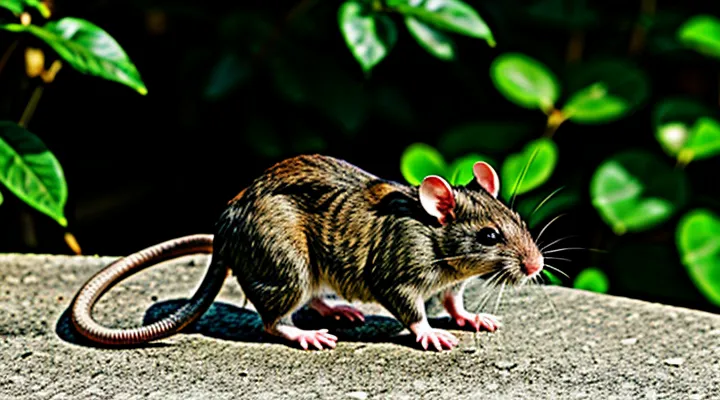
Understanding the Rat as a Biological Entity
Biological Classification and Characteristics
Taxonomy and Species Diversity
Rats belong to the order Rodentia, family Muridae, and are classified within the genus Rattus. This taxonomic placement distinguishes them from other rodent groups and aligns them with a well‑defined lineage of mammals.
- Kingdom: Animalia
- Phylum: Chordata
- Class: Mammalia
- Order: Rodentia
- Family: Muridae
- Genus: Rattus
The genus comprises more than 60 recognized species, ranging from the widely studied Rattus norvegicus (brown rat) to lesser‑known forms such as Rattus exulans (Pacific rat). Species exhibit considerable morphological variation: body size spans 150–300 mm, tail length varies from 100–200 mm, and coat coloration includes brown, black, gray, and speckled patterns. Geographic distribution covers all continents except Antarctica, with endemic species on islands in the Pacific, Indian Ocean, and Caribbean.
Ecological adaptability underlies this diversity. Species occupy habitats from urban sewers to remote forests, exploit a broad diet of grains, fruits, and carrion, and display reproductive rates that support rapid population expansion. Genetic studies reveal distinct lineages correlated with geographic isolation, confirming the genus’s high speciation rate.
Understanding the taxonomy and species diversity of these rodents informs biomedical research, pest management, and conservation strategies, as each species presents unique physiological and ecological traits.
Physical Attributes and Adaptations
Rats exhibit a compact body plan ranging from 150 mm to 300 mm in head‑body length, with a proportionally long, hair‑less tail that aids balance and thermoregulation. Their fur is dense, typically brown to black, providing insulation while allowing rapid heat loss when needed. The skull supports continuously growing incisors, self‑sharpening through a combination of enamel hardness and dentine softness, enabling relentless gnawing of hard materials. Limb morphology includes dexterous forepaws with tactile pads and a flexible wrist joint, facilitating manipulation of objects and entry into confined spaces. Sensory organs are highly developed: large, mobile ears detect a broad frequency range; whiskers (vibrissae) convey precise tactile information; and a keen sense of smell identifies food and predators at low concentrations.
Adaptations that support survival in diverse environments include:
- Dental resilience – ever‑growing incisors prevent wear from constant gnawing, allowing access to seeds, wood, and plastic.
- Reproductive efficiency – gestation of 21–23 days, litter sizes of 6–12, and the ability to breed year‑round result in exponential population growth.
- Omnivorous diet – enzymatic versatility processes plant matter, insects, carrion, and anthropogenic waste, reducing dependence on specific food sources.
- Social flexibility – hierarchical colonies minimize conflict and enable cooperative foraging, while solitary individuals can exploit isolated niches.
- Physiological plasticity – renal concentration mechanisms conserve water, and metabolic rate adjustments permit activity in extreme temperatures.
These physical traits and adaptive strategies collectively enable rats to occupy urban infrastructure, agricultural fields, and natural ecosystems. Their capacity to exploit structural gaps, reproduce rapidly, and process varied diets underpins their status as one of the most successful mammalian colonizers worldwide.
Habitat and Geographic Distribution
Rats, members of the genus Rattus, thrive in a wide range of environments, from temperate forests to tropical savannas and urban landscapes. Their adaptability allows occupation of burrows, sewers, agricultural fields, and abandoned structures, where shelter and food sources are readily available.
Geographic distribution spans every continent except Antarctica. The most widespread species, the black rat (Rattus rattus) and the brown rat (Rattus norvegicus), exhibit the following regional presence:
- Europe: coastal ports, inland cities, rural farms.
- Asia: temperate zones of China and Japan, tropical regions of Southeast Asia.
- Africa: coastal areas of North Africa, sub‑Saharan settlements.
- North America: east and west coasts, major metropolitan areas, agricultural valleys.
- South America: urban centers of Brazil, Argentina, and Chile, as well as highland farms.
- Australia and Oceania: major ports, inland towns, agricultural districts.
Populations establish quickly in newly colonized habitats, aided by high reproductive rates and omnivorous diets, which sustain their presence across diverse ecological niches.
Cultural Perceptions and Symbolic Meanings of the Rat
Rats in Mythology and Folklore
Positive Interpretations
Rats demonstrate cognitive abilities comparable to many mammals, including problem‑solving, memory retention, and social learning. Their capacity to navigate complex mazes and adapt to changing environments illustrates advanced neural processing.
Positive aspects of rats include:
- Efficient waste decomposition, accelerating nutrient recycling in ecosystems.
- Contribution to scientific research, providing reliable models for studying human diseases, drug effects, and neurological functions.
- Natural pest control, reducing populations of insects and smaller rodents through predatory behavior.
- Cultural symbolism in various traditions, where rats represent resourcefulness, survival, and cleverness.
Their adaptability enables urban and rural coexistence, supporting biodiversity by occupying ecological niches that other species may not fill.
Negative Symbolism
Rats have consistently embodied negative symbolism across cultures, religions, and literary traditions. In ancient Egyptian myth, the animal represented disease and decay, while in medieval European folklore it signified treachery and filth. Religious texts frequently link the creature to impurity, reinforcing moral judgments that associate it with sin and corruption. Literary works, from classic novels to contemporary horror, employ the rodent as a metaphor for societal decay, betrayal, or hidden threats.
Common negative connotations include:
- Disease transmission – historical outbreaks of plague and other illnesses were attributed to rats, cementing their reputation as vectors of contagion.
- Moral degradation – stories often portray rats as cunning thieves or deceitful informants, reinforcing the idea that they embody dishonesty.
- Urban squalor – the presence of rats in cities correlates with poor sanitation, leading to their identification with neglect and poverty.
These associations persist in modern media, where visual and narrative depictions continue to leverage the animal’s reputation to evoke fear, disgust, or moral warning. The enduring pattern demonstrates how a single species can function as a powerful emblem of negativity within collective consciousness.
Rats in Literature and Popular Culture
Portrayals in Fiction
Rats appear repeatedly in narrative media as more than biological specimens; they function as narrative devices that convey fear, cunning, survival, or subversion. Classic literature employs them to illustrate decay or moral corruption, while contemporary works often assign them agency, turning the creature into a protagonist or anti‑hero.
In early novels, rats symbolize infestation and societal breakdown. In Charles Dickens’s Oliver Twist, the presence of rats in the workhouse underscores the grim conditions faced by the poor. Similarly, in George Orwell’s Animal Farm, the rat is absent, but its omission highlights the focus on other farm animals as allegorical stand‑ins, suggesting the rat’s marginal status in certain political fictions.
Modern cinema frequently repositions the rat as a central character. Notable examples include:
- Ratatouille (2007): a rat with culinary ambition challenges the stereotype of vermin as mere pests, illustrating themes of talent transcending species.
- Willard (1971, 2003): a human‑rat partnership explores manipulation and power dynamics, portraying the rat as both tool and collaborator.
- The Secret of NIMH (1982): a rat community exhibits advanced organization and intelligence, blurring the line between animal instinct and societal structure.
Graphic novels and manga often anthropomorphize rats to critique human behavior. In Maus (Art Spiegelman), rats represent the oppressors of the Holocaust, using the animal metaphor to convey profound historical trauma while maintaining narrative distance.
Science‑fiction and fantasy literature sometimes imbue rats with supernatural qualities. In China Miéville’s Perdido Street Station, the Rat King is an eldritch entity whose existence challenges the distinction between mundane creature and mythic horror.
Across media, the rat fulfills three principal narrative functions:
- Symbol of decay – underscores environments or societies in decline.
- Embodiment of ingenuity – showcases survival instincts that parallel human resourcefulness.
- Vehicle for subversion – positions the rat as a protagonist to invert expectations about morality and worth.
These functions reveal that fictional portrayals consistently treat the rat as a versatile signifier, capable of representing both animalistic traits and complex sociocultural commentary.
Representation in Media
Rats appear across media as symbols, characters, and plot devices, reflecting cultural attitudes toward the species. In cinema, they often embody danger or disease, as seen in horror films that use swarms to evoke fear. Conversely, animated productions portray rats as clever protagonists, highlighting intelligence and resilience. Literature frequently employs rats to critique social hierarchies, using their scavenging behavior as a metaphor for marginalized groups. Advertising exploits the animal’s reputation for adaptability, positioning products as resourceful or ubiquitous. Video games assign rats roles ranging from adversarial enemies to playable allies, emphasizing agility and stealth.
Key patterns in media representation include:
- Antagonistic imagery – rats depicted as carriers of contamination or menace.
- Heroic reinterpretation – rats cast as resourceful heroes overcoming adversity.
- Social allegory – rats used to comment on class disparity or survival instincts.
- Commercial symbolism – rats associated with versatility and persistence in marketing narratives.
These recurring motifs illustrate how media constructs a dual identity for the species, oscillating between negative stereotypes and positive attributes, thereby shaping public perception beyond biological classification.
The Rat's Role in Human Society
Rats as Pests and Disease Vectors
Public Health Concerns
Rats are vectors of numerous zoonotic diseases that pose direct threats to human health. They transmit pathogens through bites, scratches, contaminated urine, feces, and aerosolized particles. Outbreaks linked to rat‑borne agents include leptospirosis, hantavirus pulmonary syndrome, plague, salmonellosis, and rat‑bite fever. Each disease presents specific clinical challenges, ranging from acute febrile illness to severe respiratory distress and multi‑organ failure.
Key public‑health concerns include:
- Environmental contamination: Rat droppings and urine degrade food safety in homes, restaurants, and food‑processing facilities, leading to widespread bacterial contamination.
- Urban density: High population density amplifies rat breeding sites, increasing human‑rat contact rates and accelerating disease transmission cycles.
- Antimicrobial resistance: Rats harbor resistant strains of bacteria such as methicillin‑resistant Staphylococcus aureus and extended‑spectrum β‑lactamase‑producing Enterobacteriaceae, facilitating the spread of hard‑to‑treat infections.
- Rodenticide resistance: Genetic adaptations reduce the efficacy of chemical control, necessitating integrated pest‑management strategies and continuous monitoring.
- Economic burden: Healthcare costs associated with rat‑related illnesses, combined with losses in food production and property damage, impose substantial financial strain on municipalities.
Effective mitigation relies on systematic surveillance, rapid diagnostic testing, and coordinated pest‑control programs. Public‑health agencies must enforce sanitation standards, promote community education on waste management, and support research into novel control technologies. Continuous assessment of rodent populations and pathogen prevalence is essential to prevent outbreaks and protect community health.
Economic Impact on Agriculture
Rats, as adaptable rodents, infiltrate fields, granaries, and processing facilities, directly reducing yields and compromising product quality. Field surveys attribute up to 15 % of grain loss to rodent activity, while storage facilities report annual damage ranging from 5 % to 12 % of inventory value.
Economic consequences divide into three categories. First, direct losses encompass destroyed crops, contaminated harvests, and reduced marketable output. Second, expenditures on control measures—traps, rodenticides, and integrated pest‑management programs—average $30–$45 per hectare in major producing regions. Third, indirect effects include increased labor for inspection, higher transportation costs due to spoilage, and market price volatility caused by supply fluctuations.
Cost‑benefit analysis of mitigation strategies shows that preventive measures, such as structural sealing and habitat modification, yield a return on investment of 1.8 : 1 over five years. Reactive approaches, relying primarily on chemical control, often generate lower returns due to resistance development and repeated application requirements.
Effective management combines early detection, habitat reduction, and targeted chemical use, aligning expenditure with projected loss avoidance. Adoption of these practices can reduce overall economic impact on agriculture by 30 % to 45 % in affected zones.
Rats in Scientific Research
Laboratory Animals and Medical Advances
Rats are among the most widely used species in biomedical research because their physiology, genetics, and reproductive cycles align closely with many human conditions. Their small size, rapid breeding, and well‑characterized genome enable controlled experiments and high‑throughput screening.
Key medical advances derived from rat studies include:
- Development of the polio vaccine, which relied on rat models to assess viral attenuation and immune response.
- Identification of hypertension mechanisms, leading to the introduction of beta‑blockers and ACE inhibitors.
- Elucidation of pain pathways, informing the creation of non‑opioid analgesics.
- Validation of gene‑editing techniques such as CRISPR, demonstrated through targeted modifications in rat embryos.
- Modeling of neurodegenerative diseases, providing insight into protein aggregation and therapeutic targeting.
Regulatory frameworks now require justification for each animal experiment, implementation of the 3Rs (Replacement, Reduction, Refinement), and adherence to institutional animal care standards. Alternatives, including organ‑on‑a‑chip systems and computational simulations, complement rat research, reducing overall animal use while preserving scientific rigor.
Collectively, rat‑based investigations have accelerated translational medicine, delivering treatments that improve human health outcomes and informing policy on responsible research practices.
Contributions to Behavioral Studies
Rats have supplied extensive data for experimental psychology, neurobiology, and comparative cognition. Their rapid breeding cycle, ease of handling, and well‑characterized physiology enable controlled manipulation of variables that would be impractical in larger mammals. Researchers have exploited these attributes to map learning processes, test reinforcement schedules, and quantify response latency under diverse conditions.
Key contributions include:
- Demonstration of operant conditioning principles through lever‑press tasks, establishing quantitative relationships between reward magnitude and response rate.
- Elucidation of spatial memory mechanisms via maze navigation, revealing hippocampal involvement and informing models of human navigation deficits.
- Identification of addiction pathways by measuring self‑administration of substances, providing a framework for pharmacological interventions.
- Assessment of social hierarchy and affiliative behavior, clarifying the impact of environmental enrichment on stress markers.
- Development of transgenic lines that express fluorescent reporters, allowing real‑time observation of neuronal activity during behavior.
Data derived from rat experiments have shaped theoretical models of decision‑making, informed clinical trial design, and guided ethical standards for animal research. The cumulative evidence underscores the species’ utility as a proxy for complex biological and psychological phenomena.
Beyond the Biological: The Metaphorical Rat
«Rat» as a Term of Derision
Social and Psychological Connotations
Rats have long occupied a paradoxical position in human societies, simultaneously evoking fear, disgust, and fascination. Their presence in urban environments triggers instinctive avoidance, rooted in evolutionary mechanisms that associate rodents with disease vectors. This aversion translates into social stigma, where individuals who keep rats as pets or work with them often confront prejudice and marginalization.
Psychologically, rats serve as symbols of cunning, survival, and subversion. Literary and cinematic portrayals exploit these attributes to represent deceitful characters or underground movements. Such representations reinforce collective attitudes, shaping public perception that extends beyond the animal’s biological traits.
Key social and psychological effects include:
- Heightened anxiety in spaces where rats are reported, influencing real‑estate values and municipal policies.
- Reinforcement of class distinctions, as rat infestations are frequently linked to impoverished neighborhoods, perpetuating stereotypes about poverty and neglect.
- Utilization in experimental research, which normalizes the creature as a tool rather than a sentient being, affecting ethical judgments about animal welfare.
- Adoption in subcultural identities, where rat imagery conveys rebellion, resilience, or alternative aesthetics, countering mainstream disgust.
Understanding these dynamics clarifies how the rodent functions as a cultural signifier, shaping attitudes, policies, and individual behavior across diverse contexts.
Usage in Idioms and Slang
Rats appear frequently in English idioms and slang, serving as shorthand for deceit, betrayal, or undesirable behavior. Their negative connotation stems from historical associations with disease and theft, which language speakers have transferred to interpersonal contexts.
Common expressions illustrate this function:
- “Rat out” – inform on someone; expose a secret to authorities.
- “Smell a rat” – sense that something is dishonest or suspicious.
- “Rat’s nest” – describe a tangled, chaotic situation.
- “Rat race” – refer to a relentless, competitive struggle, especially in work environments.
- “Dirty rat” – label a person as treacherous or untrustworthy.
- “Ratted” (British slang) – indicate that someone has been cheated or left in a disadvantageous position.
Beyond idioms, slang terms incorporate “rat” to convey contempt or marginalization. In prison jargon, a “rat” denotes an informant who cooperates with officials, while online communities may use “rat” as an insult for perceived opportunists. The term also surfaces in culinary slang, where “rat” can describe a substandard or low‑quality product, reinforcing the animal’s symbolic link to filth.
These linguistic patterns reinforce the perception of the rat as more than a biological creature; it functions as a cultural signifier for moral judgment, social hierarchy, and the experience of competition. The persistence of rat‑related idioms across generations underscores their entrenched role in everyday speech.
The Rat in Ethical and Philosophical Discourse
Animal Rights and Welfare Perspectives
Rats belong to the order Rodentia, possess complex nervous systems, and exhibit behaviors indicative of pain perception, problem‑solving, and social interaction. Their cognitive capacities place them among mammals that merit moral consideration beyond mere pest status.
From an animal‑rights standpoint, the following principles apply:
- Recognition of intrinsic value: rats are regarded as individuals with rights to life and bodily integrity.
- Moral equality: their capacity for suffering obliges humans to extend the same ethical safeguards afforded to other sentient mammals.
- Legal implications: jurisdictions that embed animal‑rights language in statutes may require prohibition of unnecessary killing, confinement, or exploitation of rats.
The animal‑welfare perspective emphasizes minimizing distress while acknowledging human interests such as research, pest control, and pet ownership. Key guidelines include:
- Environmental enrichment: provision of nesting material, tunnels, and varied stimuli to promote natural behaviors.
- Humane handling: use of gentle restraint techniques, avoidance of tail‑snipping, and application of analgesics when procedures cause pain.
- Euthanasia standards: implementation of rapid, stress‑free methods consistent with veterinary best practices.
Balancing these viewpoints demands clear policies that protect rat welfare, respect their sentience, and align with ethical frameworks governing all vertebrate animals.
Questions of Intelligence and Consciousness
Rats exhibit problem‑solving abilities comparable to many mammals, prompting investigation into the limits of their cognition. Laboratory experiments demonstrate that they can navigate mazes, manipulate objects to obtain food, and learn through observation of conspecifics. These behaviors suggest adaptive learning mechanisms rather than rigid instinctual patterns.
Assessing consciousness in rodents relies on indirect measures, such as self‑recognition tasks, response to novel stimuli, and the presence of affective states. Neuroimaging reveals activation of cortical areas associated with awareness in humans, while electrophysiological recordings show similar patterns of synchronized firing during complex tasks. The convergence of behavioral and neural data supports the hypothesis that rats possess a degree of subjective experience.
Key questions guiding current research include:
- How does the complexity of a rat’s problem‑solving strategy compare with that of primates?
- What neural signatures reliably indicate conscious perception in non‑human mammals?
- Can ethical frameworks be adjusted to reflect emerging evidence of rodent sentience?
- Which experimental designs best isolate self‑awareness from conditioned responses?
Clarifying these issues informs both scientific understanding of mammalian cognition and the development of humane practices in research environments.