
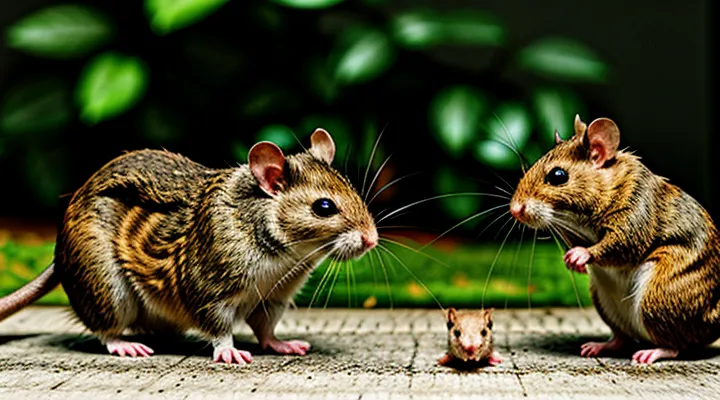
Understanding Each Rodent
Rat Characteristics and Behavior
Social Structures and Communication
Rats and hamsters exhibit distinct social organization that shapes their interactions. In laboratory and field observations, rats form hierarchical colonies where dominant individuals regulate access to resources and coordinate group movement. Hamsters, by contrast, are primarily solitary; territorial aggression limits direct contact, and social bonds emerge only during brief breeding periods.
Communication channels differ between the two species:
- Auditory signals: Rats emit ultrasonic vocalizations (20–80 kHz) to convey alarm, mating readiness, or social ranking. Hamsters produce low‑frequency squeaks and chirps, mostly during mating or when threatened.
- Chemical cues: Both species rely on scent marks. Rats deposit pheromone‑rich urine on communal pathways, establishing dominance gradients. Hamsters scatter scent glands on cheek fur and foot pads, marking personal space and signaling reproductive status.
- Tactile interactions: Rats engage in allogrooming and nose‑to‑nose contact to reinforce social bonds. Hamsters display brief nose touches during courtship but quickly revert to solitary behavior.
When rats and hamsters share an enclosure, the rat’s hierarchical tendencies can dominate the interaction. Rats may approach hamster burrows, using ultrasonic calls to assess the hamster’s stress level. Hamsters respond with rapid foot stamping and scent deposition, signaling avoidance. The asymmetry in communication intensity often leads to the rat assuming a supervisory role, while the hamster maintains strict territorial boundaries.
Understanding these divergent structures aids in designing mixed‑species habitats that minimize conflict and promote welfare. Providing separate nesting zones, distinct scent sources, and acoustic buffers reduces unwanted dominance displays and supports natural communication patterns for each rodent.
Diet and Habitat Preferences
Rats consume a broad spectrum of organic material, including grains, fruits, insects, and occasional carrion. Hamsters rely primarily on seeds, nuts, and dried vegetation, supplementing with occasional insects. Overlap occurs in grain and seed consumption, creating potential competition when resources are limited.
- Rats: wheat, corn, rice, fruit peels, meat scraps, insects.
- Hamsters: sunflower seeds, millet, oats, dried berries, mealworms.
Rats favor environments offering shelter and access to food waste, such as sewers, basements, and outdoor burrows. Hamsters prefer confined, controlled spaces with nesting material, tunnels, and a stable temperature range. The two species differ in spatial requirements; rats require larger territories with multiple entry points, whereas hamsters thrive in compact enclosures that limit movement.
Interaction between the species centers on resource competition and territorial aggression. Shared feeding stations increase the likelihood of confrontations and disease transmission. Effective management involves providing separate feeding areas, distinct habitats, and monitoring for signs of stress or injury. Maintaining these boundaries reduces conflict and supports the health of both rodents.
Reproductive Habits
Rats reach sexual maturity at 5‑6 weeks for males and 8‑10 weeks for females; hamsters mature slightly later, around 8‑10 weeks for both sexes. Both species exhibit seasonal breeding patterns, but laboratory strains of rats can breed year‑round under controlled lighting, whereas Syrian hamsters retain a strong photoperiod response, limiting reproduction to longer daylight periods.
Estrous cycles differ markedly. The rat’s cycle lasts 4‑5 days, progressing through proestrus, estrus, metestrus, and diestrus, with ovulation occurring spontaneously at the end of estrus. Hamsters display a 4‑day cycle but are induced ovulators; copulation triggers immediate release of oocytes, eliminating a predictable estrus window.
Mating behavior reflects species‑specific strategies. Male rats initiate courtship with ultrasonic vocalizations and rapid mounting, often producing multiple litters per year, each averaging 6‑12 pups. Male hamsters engage in brief, aggressive mounting bouts, and females typically produce a single litter of 6‑10 pups after a gestation of 21 days. The limited number of litters per year in hamsters constrains population growth compared with rats.
When the two rodents share an enclosure, divergent reproductive schedules reduce direct competition for mates. However, rats’ aggressive territoriality can suppress hamster breeding activity, and the presence of a dominant rat may increase stress‑induced estrus suppression in hamsters. Managing space, lighting, and population density mitigates these interactions and preserves the reproductive potential of each species.
Hamster Characteristics and Behavior
Solitary Nature and Territoriality
Rats and hamsters exhibit pronounced solitary tendencies, especially when confined to limited environments. Adult hamsters typically maintain exclusive burrow systems, defending entrances against conspecifics. Rats, while capable of forming hierarchical groups, often isolate themselves during breeding cycles or when resources are scarce, establishing personal nesting zones.
Territoriality in both species relies on scent marking, vocalizations, and physical barriers. Common mechanisms include:
- Urine and glandular secretions deposited along the perimeter of a nest.
- Aggressive displays—lunging, biting, or vocal chirps—when intruders approach.
- Construction of solid walls or tunnels that delineate individual spaces.
These behaviors reduce competition for food and mates, minimizing stress-induced pathologies such as ulceration or immunosuppression. When rats and hamsters share an enclosure, each species’ innate drive to defend its domain can trigger conflict. Effective management requires:
- Separate compartments with impermeable partitions.
- Distinct feeding stations positioned far from each other.
- Frequent replacement of bedding to disrupt lingering scent trails.
Understanding solitary and territorial dynamics enables precise control of interspecific interactions, preventing injury and promoting welfare in laboratory or pet settings.
Diet and Habitat Preferences
Rats and hamsters exhibit distinct nutritional requirements that reflect their evolutionary adaptations. Rats are omnivorous, consuming grains, fruits, insects, and occasional protein sources such as meat or eggs. Hamsters are primarily granivorous, favoring seeds, nuts, and dried plant material, while supplementing with occasional insects or fresh vegetables.
Typical diet components include:
- Whole grains (wheat, oats, barley) – primary energy source for both species.
- Protein supplements (hard‑boiled egg, mealworms) – limited amounts for hamsters, moderate for rats.
- Fresh produce (carrots, apple slices) – offered sparingly to prevent digestive upset.
- Commercial pellets formulated for each species – ensure balanced nutrient ratios.
Habitat preferences diverge markedly. Rats thrive in densely populated, moist environments with abundant shelter opportunities, such as burrows, sewers, or building cavities. Their nests are constructed from shredded material and are often located near food sources. Hamsters prefer dry, confined burrows or nesting boxes with ample bedding for insulation, typically situated in quiet, low‑traffic areas. Both species require nesting material, but rats favor larger, multi‑entrance colonies, whereas hamsters maintain solitary chambers.
Interaction between the two rodents is influenced by these ecological differences. Overlapping food supplies can lead to competition, especially when grain stores are limited. However, distinct habitat selections reduce direct confrontations, allowing each species to exploit separate micro‑niches within shared environments. Proper management of diet and enclosure design minimizes conflict and promotes coexistence.
Reproductive Habits
Rats and hamsters exhibit distinct reproductive strategies that influence their coexistence and potential competition for resources. Female rats reach sexual maturity at 5–6 weeks, produce a estrous cycle of 4–5 days, and can give birth to litters of 6–12 pups after a gestation of 21–23 days. They are capable of multiple litters per year, with intervals as short as 3 weeks when conditions are favorable. Male rats achieve sexual readiness at a similar age and demonstrate continuous sperm production, enabling frequent mating opportunities.
Hamsters mature later, typically 8–10 weeks for females and 10–12 weeks for males. Their estrous cycle is 4 days, but they are seasonal breeders, with reproductive activity peaking in longer daylight periods. Gestation lasts 16–18 days, and litters average 4–8 pups. Post‑partum estrus allows a female to become receptive within 24 hours, yet the species generally limits breeding to one or two litters annually due to the energy demands of large offspring.
Key reproductive differences affecting interspecific interaction:
- Maturation age: rats mature earlier, enabling earlier entry into breeding populations.
- Litter size: rat litters are larger, increasing potential for rapid population growth.
- Breeding frequency: rats can produce several litters per year; hamsters are limited to one or two.
- Seasonality: hamster reproduction is constrained by photoperiod, while rats breed year‑round under suitable conditions.
These parameters determine how each species allocates space, food, and nesting sites when sharing habitats, shaping the dynamics of their mutual presence.
Potential for Interaction
Comparing Natural Habitats
Overlapping Environments
Rats and hamsters frequently share the same urban and suburban settings, creating zones where resources, shelter, and waste intersect. These shared spaces generate direct competition for food, nesting sites, and water, influencing population density and territorial behavior for both species.
Common factors in overlapping habitats include:
- Access to human‑derived food waste, which sustains high reproductive rates.
- Availability of concealed structures such as wall voids, basements, and garden debris that provide shelter.
- Presence of rodents‑specific parasites and pathogens that can transfer between species.
- Seasonal fluctuations that alter resource abundance and force broader habitat use.
Interaction within these zones often results in aggressive encounters, displacement of one species by the other, and increased stress levels that affect health and reproductive success. Monitoring shared environments aids in predicting population dynamics and mitigating disease spread among rodent communities.
Predatory-Prey Dynamics in the Wild
Rats and hamsters occupy overlapping habitats in many temperate regions, creating opportunities for direct predation. Adult rats, weighing up to 300 g, possess powerful incisors and a highly adaptable hunting repertoire. Juvenile hamsters, typically 30–50 g, lack defensive structures beyond rapid burrowing, making them vulnerable when exposed on the surface.
Predatory‑prey interactions between these species follow classic ecological patterns:
- Size disparity: Rat mass exceeds hamster mass by a factor of five to ten, providing sufficient force to subdue prey.
- Temporal activity: Both are primarily nocturnal; overlapping activity windows increase encounter rates.
- Habitat use: Rats exploit open fields and human‑derived waste, while hamsters favor concealed burrows; occasional foraging above ground places hamsters within rat hunting zones.
- Dietary flexibility: Rats consume seeds, insects, and carrion, allowing opportunistic predation on small rodents when other resources are scarce.
Field observations document that rat predation pressure can suppress local hamster populations, particularly in fragmented landscapes where shelter is limited. Conversely, hamster abundance may influence rat foraging behavior, prompting increased vigilance and altered movement patterns to avoid detection.
Management strategies that reduce rat density—such as targeted baiting or habitat modification—correlate with measurable increases in hamster reproductive success. Monitoring predator‑prey ratios therefore provides a reliable indicator of ecosystem health in mixed‑rodent communities.
Interactions in Captivity
Shared Enclosures: Risks and Rewards
Housing rats and hamsters together presents a set of biological and behavioral variables that demand careful assessment. The decision to combine these species in a single enclosure hinges on the balance between potential benefits and identifiable hazards.
Risks
- Aggressive encounters triggered by territorial instincts, especially in mature individuals.
- Transmission of pathogens specific to one species that may affect the other, such as respiratory viruses or parasites.
- Competition for limited resources, leading to nutritional deficits or stress‑induced immunosuppression.
- Differences in enclosure design preferences; rats require climbing structures, while hamsters need burrowing material, creating an environment that may favor one species over the other.
Rewards
- Enrichment through interspecies stimulation, encouraging natural foraging and exploration behaviors.
- Space efficiency in laboratory or educational settings where separate habitats are impractical.
- Opportunity to observe comparative social dynamics, providing data for ethological research.
- Reduced overall maintenance workload when compatible individuals coexist without conflict.
Management guidelines
- Select young, socially tolerant specimens; avoid pairing dominant adults with submissive juveniles.
- Provide distinct zones within the enclosure: elevated platforms for rats, concealed tunnels for hamsters, each equipped with species‑specific bedding.
- Implement a strict health‑screening protocol before introduction, including parasite checks and respiratory assessments.
- Monitor interactions daily for signs of stress, injury, or resource monopolization; be prepared to separate animals immediately if adverse behavior emerges.
- Maintain a balanced diet that meets the nutritional requirements of both species, offering separate feeding stations to prevent competition.
Adhering to these practices maximizes the advantages of shared housing while mitigating the inherent dangers associated with cohabiting rats and hamsters.
Separate Enclosures: Scent and Sound Communication
Rats and hamsters housed in individual cages maintain indirect contact through chemical and acoustic signals. Physical separation prevents direct aggression while allowing each species to perceive the presence of the other.
-
Chemical cues: Both rodents deposit pheromones on bedding, nesting material, and cage walls. Rats detect these odors with a highly developed vomeronasal organ, interpreting them as indicators of territory, reproductive status, and stress level. Hamsters, though less reliant on olfactory information, recognize conspecific and heterospecific scents, adjusting activity patterns to avoid overlap with unfamiliar odors. Regular cleaning with unscented, mild agents preserves the integrity of these signals without introducing confounding smells.
-
Acoustic cues: Rats emit ultrasonic vocalizations (UUVs) ranging from 20 to 80 kHz during exploration, mating, and distress. Hamsters produce audible squeaks and ultrasonic chirps in the 30–50 kHz band for alarm and social interaction. Even when cages are separated by solid barriers, sound transmits through the laboratory environment, enabling each animal to gauge the other's behavioral state. Recording equipment calibrated to these frequency ranges can capture and quantify inter‑species acoustic activity.
Effective management of separate enclosures incorporates both signal types. Providing scent‑rich objects (e.g., nesting material from a conspecific) and ensuring acoustic continuity (e.g., low‑density cage walls) supports natural communication while maintaining safety. Monitoring changes in scent deposition or vocalization patterns offers early detection of stress, illness, or hierarchy shifts, allowing timely intervention without direct contact.
Outcomes of Interaction
Aggression and Conflict
Signs of Stress and Fear
Rats and hamsters display distinct behavioral and physiological cues when experiencing stress or fear during co‑habitation. Observable indicators include:
- Rapid, shallow breathing and elevated heart rate detectable by increased movement of the chest or flank.
- Excessive grooming or self‑biting, often focused on the tail, whiskers, or hindquarters.
- Vocalizations such as high‑pitched squeaks in rats or squeals in hamsters.
- Withdrawal into corners, burrows, or secluded areas, accompanied by reduced exploration of shared space.
- Aggressive posturing, including raised fur, tail stiffening, and lunging toward the other rodent.
- Abnormal defecation patterns, such as scattered droppings outside usual latrine zones.
These signs manifest differently between species. Rats typically exhibit heightened alertness, frequent rearing, and intermittent freezing, whereas hamsters may show prolonged immobility, frantic wheel running, or frantic escape attempts. Monitoring these behaviors provides a reliable framework for assessing welfare and guiding interventions to mitigate conflict and enhance coexistence.
Physical Harm and Injury
Rats and hamsters often share confined environments, creating opportunities for direct physical conflict. Aggressive encounters can result in bite wounds, bruising, and puncture injuries, especially when territorial instincts dominate. Rapid movements increase the likelihood of accidental crushing or entrapment, leading to fractures or joint dislocations.
Common injury patterns include:
- Facial and tail lacerations from bites
- Hemorrhagic bruises on the dorsal surface
- Puncture wounds on limbs causing tissue loss
- Compressive trauma producing rib or vertebral fractures
- Nail or claw scratches that may become infected
Prompt veterinary assessment is essential. Treatment protocols typically involve wound cleaning, antimicrobial therapy, analgesia, and immobilization of fractures. Monitoring for signs of infection, such as swelling or discharge, reduces the risk of systemic complications. Preventive measures—adequate space, environmental enrichment, and species-specific housing—minimize the incidence of physical harm.
Disease Transmission
Common Rodent Diseases
Rats and hamsters share susceptibility to several viral, bacterial, and parasitic agents that can affect health and behavior when they occupy the same environment. Recognizing these pathogens is essential for managing co‑habitation and preventing cross‑infection.
- Sendai virus – a highly contagious paramyxovirus causing respiratory distress, nasal discharge, and lethargy in both species. Outbreaks spread rapidly through aerosol droplets and contaminated bedding.
- Salmonella spp. – bacterial infection leading to gastroenteritis, fever, and dehydration. Transmission occurs via fecal‑oral routes, especially when food or water sources are shared.
- Mycoplasma pulmonis – respiratory mycoplasma producing chronic cough, sneezing, and otitis. Direct contact and shared nesting material facilitate spread.
- Pinworm (Syphacia muris) – intestinal nematode causing anal irritation and weight loss. Eggs disseminated in feces can infect both rats and hamsters through contaminated surfaces.
- Dermatophytes (e.g., Trichophyton mentagrophytes) – fungal skin infection resulting in alopecia, crusting, and pruritus. Contact with infected fur or bedding promotes transmission.
When rats and hamsters are housed together or in adjacent cages, pathogen exchange intensifies due to overlapping ventilation, shared handling equipment, and accidental cross‑contamination of feed. Viral agents such as Sendai virus can persist in the environment for days, while bacterial spores and helminth eggs remain viable for weeks, increasing the risk of persistent infection cycles.
Effective control relies on strict biosecurity: isolate new arrivals for at least two weeks, conduct regular health screenings, and implement quarantine protocols. Maintain separate feeding stations, use autoclaved bedding, and disinfect cages with rodent‑approved agents (e.g., 10 % bleach solution). Vaccination against Sendai virus, where available, reduces respiratory disease incidence. Routine deworming with appropriate anthelmintics interrupts pinworm transmission. Prompt veterinary assessment and targeted antimicrobial therapy are required for confirmed bacterial infections.
Adhering to these measures limits disease prevalence, sustains the welfare of both rodents, and preserves the stability of their interaction.
Cross-Species Pathogen Exchange
Rats and hamsters frequently share laboratory and urban environments, creating opportunities for the transfer of infectious agents. Direct contact, shared bedding, and contaminated feed represent the primary routes through which pathogens move between the species. Respiratory viruses, enteric bacteria, and zoonotic parasites have all been documented in mixed‑species colonies, indicating that cross‑species transmission can occur rapidly under suitable conditions.
Key factors influencing pathogen exchange include:
- High population density, which elevates contact frequency.
- Overlapping dietary resources, allowing oral ingestion of contaminated material.
- Species‑specific immune responses that may permit asymptomatic carriage in one host while causing disease in the other.
Experimental studies have shown that hantavirus strains isolated from rats can infect hamsters, leading to severe pulmonary syndrome. Conversely, certain Streptococcus species endemic to hamsters have been recovered from rat colonies, demonstrating bacterial spill‑over. Molecular surveillance routinely reveals identical viral genome fragments in both hosts, confirming direct transmission events.
Mitigation strategies focus on segregation, rigorous sanitation, and routine microbiological screening. Physical barriers, such as cage dividers, reduce direct contact, while autoclaved bedding and filtered water limit indirect exposure. Periodic PCR testing of fecal and respiratory samples enables early detection of emerging pathogens, allowing prompt quarantine and treatment.
Understanding the dynamics of pathogen exchange between these rodents informs biosecurity protocols in research facilities and helps predict potential public‑health risks associated with rodent‑borne diseases.
Preventing Negative Interactions
Housing and Environment
Space Requirements for Each Species
Rats require a minimum floor area of 0.5 sq ft per individual, with additional space for each additional rat. A cage measuring at least 24 × 12 in provides the baseline, but larger enclosures (e.g., 30 × 18 in) improve health outcomes. Height should allow vertical climbing; a minimum of 12 in is recommended, though 18–24 in is optimal for multi‑level structures.
Hamsters need less horizontal space but benefit from depth for burrowing. The smallest acceptable floor area is 0.3 sq ft per hamster, typically achieved with a cage of 12 × 12 in. Height of 12 in suffices for a standard Syrian hamster; dwarf varieties can thrive in slightly lower enclosures (10 in). Providing a deep bedding layer of at least 4 in supports natural digging behavior.
Key considerations for both species:
- Flooring: Solid, non‑slippery surfaces prevent foot injuries; wire flooring is unsuitable.
- Ventilation: Adequate airflow reduces respiratory risk; cages should include multiple air holes or mesh panels.
- Enrichment: Include climbing structures for rats and tunnels for hamsters; these do not replace required floor space but complement it.
- Group housing: When multiple individuals share a cage, increase floor area by 0.2 sq ft per extra animal to maintain comfort and reduce aggression.
Meeting these spatial standards promotes physiological health, reduces stress, and supports natural behaviors in each rodent.
Enclosure Design Considerations
Designing an enclosure that accommodates both rats and hamsters requires attention to species‑specific needs while preventing conflict. Space allocation, material choice, and environmental enrichment must be balanced to support health, natural behavior, and safety.
Key considerations include:
- Size and segmentation – Provide a minimum floor area of 0.5 m² per animal. Incorporate solid partitions or mesh barriers to separate nesting zones, reducing territorial disputes.
- Flooring – Use chew‑resistant, non‑porous surfaces such as powder‑coated metal or high‑density polyethylene. Avoid wire mesh that can cause foot injuries.
- Shelter and nesting – Install multiple opaque hideouts at different heights. Rats prefer larger burrows; hamsters need compact chambers. Separate compartments prevent one species from monopolizing resources.
- Ventilation and climate control – Maintain temperature between 18–24 °C and relative humidity of 40–60 %. Ensure fresh‑air flow without drafts that could stress either rodent.
- Cleaning and sanitation – Design removable trays and slide‑out sections for routine disinfection. Materials should tolerate mild detergents and avoid toxic residues.
- Enrichment – Provide chew toys, tunnels, and climbing structures in each species’ area. Rotate items regularly to sustain interest and reduce stereotypic behaviors.
- Safety features – Eliminate gaps larger than 1 cm to prevent escape. Secure lids with locks that resist gnawing.
By integrating these elements, the enclosure will support coexistence, promote welfare, and simplify maintenance for caretakers.
Introduction Protocols
Supervised Encounters
Supervised encounters refer to controlled meetings between rats and hamsters in which an experienced caretaker monitors all interactions to prevent injury and assess compatibility. The caretaker provides a neutral enclosure, limits access to escape routes, and maintains consistent lighting and temperature to reduce stress for both species.
Key elements of a supervised session include:
- Separate acclimation periods of at least 15 minutes before direct contact.
- Observation of body language such as ear position, grooming, and vocalizations.
- Immediate separation at the first sign of aggression, chase, or excessive dominance.
- Documentation of duration, behaviors displayed, and any injuries for future reference.
When supervision is applied correctly, rats may exhibit curiosity without overwhelming the hamster, while hamsters can demonstrate defensive postures without sustained harm. Repeated, brief exposures can reveal tolerance thresholds, inform enclosure design, and guide decisions about cohabitation or continued segregation. Failure to supervise adequately often results in bites, stress‑induced weight loss, or territorial disputes that compromise the health of both rodents.
Scent Familiarization
Scent familiarization enables rats and hamsters to recognize each other’s presence through volatile compounds released from skin, urine, and glandular secretions. Olfactory receptors detect these molecules, triggering neural pathways that modulate social behavior, territorial assessment, and stress response.
Key aspects of scent exchange include:
- Species‑specific odor profiles – each rodent produces a distinct blend of pheromones that conveys identity, reproductive status, and health condition.
- Acquisition mechanisms – individuals acquire foreign scents by direct contact, shared bedding, or airborne diffusion, allowing rapid updating of the chemical landscape.
- Behavioral outcomes – exposure to a conspecific’s odor can reduce aggression, promote exploratory activity, and facilitate the establishment of a stable hierarchy within mixed‑species enclosures.
Experimental evidence shows that pre‑exposure to the opposite species’ scent prior to cohabitation lowers cortisol levels and increases time spent in neutral zones, indicating reduced anxiety and improved tolerance. Controlled scent‑transfer protocols—such as bedding swaps and scented swabs—provide reliable tools for assessing interspecies compatibility and for designing enrichment strategies that support harmonious cohabitation of rats and hamsters.
Conclusion for Pet Owners and Researchers
Ethical Considerations
Well-being of the Animals
Rats and hamsters share a confined environment when housed together, requiring careful management to maintain their health. Adequate space prevents territorial aggression; each species should have a minimum floor area of 0.5 m², with vertical enrichment for rats and separate hiding compartments for hamsters.
Nutritional needs differ markedly. Rats thrive on a high‑protein diet with fresh vegetables, while hamsters require a low‑fat grain mix supplemented by occasional seeds. Providing species‑specific feeders eliminates competition and reduces stress.
Environmental enrichment supports natural behaviors. Recommended items include:
- For rats: chew blocks, tunnels, climbing ropes, and foraging puzzles.
- For hamsters: wheel, nesting material, burrow tubes, and solid‑surface exercise platforms.
Health monitoring must be species‑specific. Rats are prone to respiratory infections; routine inspection of nasal discharge and weight loss is essential. Hamsters commonly develop skin lesions; weekly skin checks and clean bedding prevent escalation.
Handling protocols should respect individual temperaments. Rats tolerate brief, gentle restraint; hamsters react better to cupping in the hand without excessive pressure. Training staff to recognize stress signals—such as rapid breathing, vocalization, or excessive grooming—reduces injury risk.
Sanitation practices influence disease transmission. Daily spot cleaning, weekly deep cleaning with a mild disinfectant, and separate water bottles for each species minimize cross‑contamination.
Overall, the well‑being of these rodents depends on distinct housing, diet, enrichment, health surveillance, and handling strategies that acknowledge their physiological and behavioral differences.
Responsibility of Ownership
Owning both a rat and a hamster requires clear delineation of duties to ensure the health and safety of each animal. The caretaker must address housing, nutrition, health monitoring, and behavioral management as separate yet interrelated responsibilities.
- Provide species‑specific cages that prevent escape and eliminate cross‑contamination; rodents should never share the same enclosure.
- Supply diets formulated for each animal’s digestive needs, avoiding shared feeding bowls that could introduce unsuitable foods.
- Conduct regular health checks, including weight measurement, coat condition, and observation for signs of illness; schedule veterinary examinations at least twice a year.
- Monitor interaction zones, such as shared play areas, to prevent aggression or stress; supervise any supervised contact and intervene immediately if tension arises.
- Maintain a cleaning schedule that includes daily spot cleaning and weekly deep sanitation, using rodent‑safe disinfectants to reduce pathogen spread.
- Record all care activities in a logbook, noting feeding times, health observations, and any behavioral changes to facilitate timely interventions.
Effective ownership hinges on consistent application of these practices, which protect both species from preventable harm and promote a stable environment for their coexistence.
Future Research Directions
Behavioral Studies
Behavioral research on cohabiting rats and hamsters provides quantitative data on interspecific social dynamics, activity patterns, and stress markers. Controlled laboratory settings enable systematic observation of approach–avoidance responses, grooming exchanges, and territorial marking when the two species share a confined environment. Video tracking software records locomotor trajectories, while physiological assays measure cortisol levels to assess anxiety.
Key observations derived from repeated trials include:
- Rats initiate exploratory contact more frequently than hamsters, leading to brief affiliative bouts that rarely exceed ten seconds.
- Hamsters exhibit heightened vigilance, characterized by increased thigmotaxis and reduced foraging during rat presence.
- Mutual aggression manifests as bite attempts from rats and defensive tail rattling by hamsters; these events correlate with spikes in corticosterone.
- Long‑term cohabitation reduces interspecific aggression by approximately 30 % after a 14‑day acclimation period, suggesting habituation mechanisms.
Methodological guidelines emphasize random assignment of individuals, equal sex ratios, and standardized enrichment objects to minimize confounding variables. Data analysis employs mixed‑effects models to partition variance attributable to species, individual identity, and time. Replication across multiple strains confirms the robustness of the observed behavioral patterns.
The findings inform experimental design in comparative neuroethology, facilitate refinement of welfare protocols for mixed‑species housing, and contribute to the broader understanding of rodent social cognition.
Health Impacts of Co-habitation
Co‑housing rats and hamsters introduces specific health considerations that differ from single‑species environments. Both species are susceptible to stress‑induced immunosuppression; elevated cortisol levels observed in rats sharing space with hamsters correlate with increased incidence of respiratory infections. Hamsters, being more solitary by nature, exhibit heightened aggression when confined with rats, leading to bite wounds that serve as entry points for bacterial pathogens such as Staphylococcus aureus.
Nutritional competition can compromise dietary balance. Rats consume larger quantities of high‑protein pellets, potentially depleting resources needed for hamsters’ calcium‑rich diet. Deficiencies in calcium manifest as skeletal abnormalities in hamsters, while rats may develop obesity from overconsumption of shared feed.
Environmental hygiene deteriorates more rapidly in mixed enclosures. Urine and fecal deposits from rats contain higher ammonia concentrations, which irritate hamster respiratory tracts and predispose them to sinusitis. Regular cleaning intervals must be shortened to maintain ammonia levels below 20 ppm, a threshold identified for safe hamster respiration.
Key health impacts can be summarized:
- Stress‑related immune suppression in both species
- Increased risk of bite‑induced infections
- Nutrient competition leading to calcium deficiency in hamsters and obesity in rats
- Elevated ammonia exposure causing respiratory irritation in hamsters
- Higher parasite transmission potential due to mixed bedding
Mitigation strategies include separate feeding stations, species‑specific nesting areas, and daily monitoring of ammonia levels. Implementing these measures reduces the probability of disease outbreaks and supports the physiological well‑being of both rodents.