
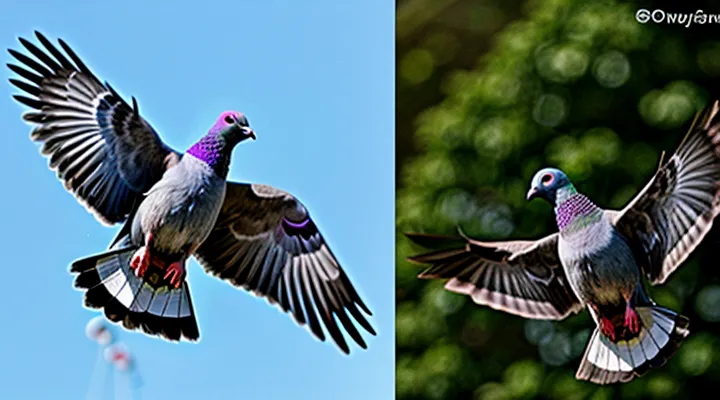
The Derogatory Moniker: «Flying Rats»
Origins and Popular Perception
Pigeons belong to the family Columbidae; their wild ancestor, the rock dove (Columba livia), inhabited cliffs of the Mediterranean and North Africa. Humans captured rock doves for food and message‑carrying purposes as early as 3000 BC. Selective breeding produced the domestic pigeon, which spread across Europe, Asia, and the Americas through trade routes and exploration. By the 19th century, feral populations established in cities worldwide, deriving from escaped or released domestic birds.
Public attitudes toward these birds diverge sharply from their biological origins. Historically, pigeons symbolized peace, navigation, and nourishment; medieval art frequently portrayed them alongside saints. Contemporary urban environments associate them with waste, disease, and nuisance, leading to the colloquial label “flying rats.” The perception rests on several factors:
- High population density in city squares and rooftops.
- Habit of feeding on discarded food and droppings that stain architecture.
- Visibility of large flocks at dusk, creating an impression of uncontrolled proliferation.
- Media reports linking pigeon droppings to health concerns, despite limited scientific evidence.
Societal Impact on Pigeon Status
Pigeons occupy a contested position in human environments, shifting between valued urban assets and perceived nuisances. Historical reliance on homing abilities for communication established a positive reputation, while later associations with waste accumulation and disease have fostered negative attitudes.
Key societal mechanisms that shape pigeon status include:
- Legislation – Municipal ordinances regulate feeding, nesting, and population control; penalties deter practices that increase colony sizes.
- Public health policy – Surveillance of avian pathogens informs guidelines for sanitation and building design, reducing disease risk.
- Cultural representation – Artistic depictions, literature, and media reinforce stereotypes that influence public tolerance.
- Economic activities – Competitive racing, breeding, and tourism generate revenue, legitimizing pigeon keeping in regulated contexts.
- Urban planning – Architectural features such as ledges, atriums, and waste management systems either facilitate or restrict roosting opportunities.
These factors collectively determine whether pigeons are regarded as beneficial urban wildlife or as undesirable pests, directly affecting management strategies and public perception.
Biological Characteristics of Pigeons (Columba livia)
Taxonomy and Evolutionary History
Columbidae, the bird family that includes the common city pigeon (Columba livia), occupies the order Galliformes within the class Aves. Its taxonomic hierarchy is:
- Kingdom: Animalia
- Phylum: Chordata
- Class: Aves
- Order: Columbiformes
- Family: Columbidae
- Genus: Columba
- Species: C. livia
The lineage of Columbidae traces back to the early Paleogene, roughly 60 million years ago, when the first basal columbiform fossils appear in European deposits. Molecular phylogenies place pigeons as a sister group to sandgrouse (family Pteroclidae), indicating a rapid diversification of modern birds after the Cretaceous–Paleogene extinction event. Subsequent adaptive radiations produced the global distribution observed today, with island endemic species evolving distinct morphological traits such as reduced flight capability or altered plumage coloration.
Rodents, classified under the order Rodentia, share the same kingdom and phylum but diverge at the class level, belonging to Mammalia. Their evolutionary origin predates that of pigeons, with the earliest rodent-like forms documented in the late Cretaceous, about 70 million years ago. Unlike avian lineages that rely on feathered flight, rodents evolved gnawing dentition and a high reproductive rate as primary adaptive strategies. The juxtaposition of avian and mammalian taxonomic pathways highlights distinct evolutionary solutions to urban exploitation, where both groups have independently achieved worldwide success despite their separate phylogenetic histories.
Physical Adaptations for Urban Environments
Diet and Foraging Behavior
Pigeons and rats occupy overlapping urban niches, yet their nutritional strategies differ markedly. Both species are opportunistic omnivores, but the composition of consumed items reflects distinct physiological constraints and foraging tactics.
Pigeons primarily exploit plant‑derived resources and anthropogenic waste that is high in carbohydrates. Their diet includes:
- Grains and seeds found on sidewalks or in bird feeders
- Sprouted vegetation from park lawns
- Processed food scraps such as bread, crackers, and pastry remnants
- Infrequent ingestion of insects or small invertebrates during breeding season
The digestive tract of pigeons efficiently extracts energy from starches and simple sugars, supporting rapid flight metabolism. Foraging behavior relies on visual detection of stationary food items, with individuals scanning open surfaces while perched or walking. Group foraging is common; flocks coordinate movement to locate fresh deposits, reducing individual search time.
Rats exhibit a broader trophic breadth, incorporating higher protein and fat sources. Their diet typically comprises:
- Meat remnants, including discarded fish, poultry, and rodent carcasses
- Fats from oily food waste, such as fried potatoes or pizza crusts
- Cereals and grains, similar to pigeons but often processed into smaller fragments
- Insects, larvae, and other arthropods captured opportunistically
- Fecal matter and carrion when other resources are scarce
Rats employ tactile and olfactory cues to locate concealed food, often probing beneath debris or within sewers. Their nocturnal activity pattern reduces competition with diurnal pigeons and expands access to waste generated after daylight hours. Individual foraging is flexible; solitary hunting alternates with brief aggregations at abundant refuse sites.
Overall, pigeons prioritize carbohydrate‑rich, surface‑available foods accessed through visual scanning, whereas rats maximize caloric intake by exploiting protein and fat sources discovered via chemical sensing and nocturnal exploration. These divergent strategies illustrate how two urban omnivores partition resources to coexist within the same environment.
Reproductive Strategies and Lifespan
Pigeons exhibit a seasonal breeding pattern, with peak egg production in spring when temperatures rise and food availability increases. Females lay two eggs per clutch, and both parents share incubation duties for approximately 17‑19 days. Hatchlings are altricial, requiring intensive brooding and frequent feeding; parents deliver crop milk, a nutrient‑rich secretion, during the first week of life. After fledging, juveniles remain dependent for several weeks, learning foraging routes and predator avoidance from their parents.
Key aspects of pigeon reproduction:
- Clutch size: consistently two eggs, minimizing parental investment per breeding attempt.
- Incubation period: 17‑19 days, shared equally by male and female.
- Nest frequency: up to three broods per year in temperate regions, reduced to one in harsher climates.
- Offspring development: rapid growth; fledging occurs at 25‑30 days post‑hatch.
In contrast, rats reproduce continuously throughout the year, with gestation lasting 21‑23 days and litter sizes ranging from 5 to 12. Females can produce a new litter roughly every month under optimal conditions, resulting in exponential population growth. Rat offspring are born relatively mature, capable of locomotion and thermoregulation within hours, which shortens parental care compared with pigeons.
Lifespan differences further distinguish the two species. Urban pigeons typically survive 3‑5 years, with exceptional individuals reaching 15 years under protected conditions. Mortality peaks occur shortly after fledging and during harsh winter periods. Rats, especially the common brown rat, average 1‑2 years in the wild; predation, disease, and competition drive early turnover, while captive individuals may live up to 3 years.
Comparative summary:
- Reproductive rate: pigeons—low clutch, limited broods; rats—high litter size, continuous breeding.
- Parental investment: pigeons—extended biparental care; rats—minimal, primarily maternal.
- Longevity: pigeons—several years, potential for longevity; rats—shorter, high turnover.
These contrasting strategies reflect divergent evolutionary pressures: pigeons prioritize offspring quality and parental cooperation, whereas rats maximize quantity and rapid replacement to offset high mortality.
Cognitive Abilities and Behavior
Navigation and Homing Instincts
Pigeons exhibit extraordinary navigation abilities that rival those of many mammals, including rodents often labeled as pests. Their homing performance derives from a multi‑modal sensory system that integrates magnetic, solar, olfactory, and visual information.
- Magnetoreception: Cryptochrome proteins in the retina respond to Earth's magnetic field, providing an internal compass that functions under cloudy conditions.
- Solar orientation: Retinal photoreceptors detect polarized light patterns, allowing birds to calculate position relative to the sun’s trajectory.
- Olfactory mapping: Experiments with anosmic pigeons show reduced return accuracy, indicating that volatile compounds form a geographic scent map.
- Visual landmarks: The optic tectum and hippocampal formation process panoramic cues, enabling route memorization across urban and rural environments.
Neuroanatomical studies reveal that the pigeon hippocampus occupies a larger proportion of the brain than that of typical rats, correlating with enhanced spatial memory. Gene expression analyses identify up‑regulation of navigation‑related transcription factors, such as ZENK, during displacement experiments.
Laboratory trials demonstrate that disrupting a single cue—magnetic, olfactory, or visual—does not abolish homing but reduces precision, confirming redundancy in the navigation network. In contrast, rats rely predominantly on olfactory and tactile cues, with limited magnetosensory capacity, resulting in shorter range homing abilities.
Collectively, these findings establish pigeons as a model for complex navigational biology, highlighting distinct physiological adaptations that differentiate avian homing from mammalian spatial behavior.
Social Structure and Intelligence
Pigeons exhibit a highly organized social system that balances flexibility with stability. Individuals form long‑term monogamous pairs, while larger flocks display a loose dominance hierarchy based on age, breeding status, and resource access. Within a flock, subordinate birds gain protection and foraging opportunities, whereas dominant members secure prime nesting sites and priority feeding. Seasonal fluctuations in population density prompt rapid re‑configuration of these structures, allowing colonies to expand or contract without losing cohesion.
Cognitive capacities of pigeons support this social complexity. They demonstrate:
- Spatial memory sufficient to locate numerous feeding stations across urban landscapes.
- Episodic-like recall of specific events, enabling adaptation to changing human activity patterns.
- Observational learning, whereby naïve individuals acquire foraging techniques by watching experienced conspecifics.
- Problem‑solving abilities reflected in maze navigation and tool use experiments.
When compared to rodents, pigeons share several intelligence markers, such as flexible learning, memory consolidation, and the use of social cues for decision‑making. However, avian neural architecture differs markedly, with a densely packed pallium replacing the mammalian neocortex. This divergence yields comparable performance in tasks like pattern discrimination while employing distinct processing pathways. The convergence of social organization and cognitive skill in pigeons underscores their success as ubiquitous urban dwellers and positions them as a valuable model for studying vertebrate intelligence.
Biological Attributes Associated with «Rats»
Common Rat Species (Rattus norvegicus, Rattus rattus)
Rattus norvegicus and Rattus rattus represent the two most widespread rodent species associated with human environments. Both belong to the family Muridae, order Rodentia, and share several physiological and ecological characteristics that influence their interaction with urban ecosystems.
The brown rat (Rattus norvegicus) exhibits a robust body, average length 20–25 cm, and a tail roughly equal to its body length. It thrives in temperate climates, prefers ground burrows, and displays strong territoriality. Reproductive capacity includes up to five litters per year, each containing 6–12 offspring, enabling rapid population growth under favorable conditions. Its omnivorous diet encompasses grains, waste, and small invertebrates, allowing exploitation of diverse food sources. The species is a known reservoir for pathogens such as Leptospira spp., Hantavirus, and Salmonella.
The black rat (Rattus rattus) is smaller, with body length 15–20 cm and a longer, prehensile tail. It favors arboreal habitats, nesting in attics, trees, and cliffs. Reproduction mirrors that of R. norvegicus but typically yields fewer litters annually. Dietary preferences lean toward fruits, seeds, and stored grains, reflecting its adaptation to tropical and subtropical regions. It transmits diseases including plague (Yersinia pestis) and murine typhus.
Key comparative points:
- Habitat preference: ground burrows (R. norvegicus) vs. arboreal structures (R. rattus).
- Body size: larger and heavier (R. norvegicus) compared to smaller, more agile (R. rattus).
- Reproductive rate: similar litter size, but R. norvegicus achieves higher annual litters.
- Dietary breadth: broader omnivory (R. norvegicus) versus fruit‑seed emphasis (R. rattus).
- Disease vectors: overlapping pathogens with species‑specific prominence.
Understanding these attributes provides a factual basis for evaluating the biological parallels and distinctions between urban rodents and other synanthropic species such as pigeons.
Reproductive Capacity and Population Dynamics
Pigeons exhibit a high reproductive output that sustains their ubiquitous presence in urban ecosystems. Females lay two eggs per clutch, with incubation lasting approximately 17–19 days. Hatchlings become fledglings within 25–30 days, and sexual maturity is reached at 6–12 months, allowing multiple breeding cycles per year in temperate climates and up to three cycles in subtropical regions.
Key reproductive parameters:
- Clutch size: 2 eggs (average)
- Breeding frequency: 1–3 clutches annually, depending on climate and food availability
- Age at first breeding: 0.5–1 year
- Nesting sites: ledges, building eaves, bridges, and other sheltered structures
Population dynamics are driven by the interplay of rapid turnover, high survival rates of juveniles, and abundant anthropogenic resources. Mortality factors such as predation, disease, and harsh weather affect only a fraction of the cohort, resulting in net positive growth under most urban conditions. Estimates of intrinsic rate of increase (r) for feral pigeon populations range from 0.12 to 0.20 per year, comparable to that of commensal rodents.
Comparative analysis with urban rats reveals divergent strategies. Rats produce larger litters (5–12 pups) but experience higher juvenile mortality and longer gestation (21–23 days). Their reproductive cycle extends over several months, limiting the number of litters per year to 5–7. Consequently, pigeons achieve similar or greater population expansion despite smaller brood sizes, owing to shorter developmental periods and continuous breeding opportunities.
The combination of frequent, small clutches, early sexual maturity, and extensive use of human-made habitats enables pigeons to maintain dense populations across cities worldwide. Their reproductive efficiency, coupled with low parental investment per offspring, explains the persistent and often overwhelming presence of these birds in metropolitan environments.
Adaptability to Human Habitats
Pigeons thrive in urban environments because they exploit resources that humans generate. Their digestive system processes a wide range of organic waste, allowing them to feed on discarded food, seed spillage, and insects attracted to refuse. This dietary flexibility reduces dependence on natural habitats and sustains large populations within city limits.
Key physiological and behavioral traits support their success:
- Rapid breeding cycle; multiple clutches per year with short incubation periods.
- High tolerance for pollutants; respiratory and immune systems adapt to particulate matter and chemical residues.
- Nesting versatility; colonies form on building ledges, bridges, and interior vents, where the microclimate mimics cliff ledges.
- Homing ability; magnetic and visual navigation enables return to roosts after foraging trips across extensive urban areas.
Compared with commensal rodents, pigeons display similar opportunism in resource use but differ in social organization and movement patterns. Rats rely heavily on subterranean tunnels and exhibit nocturnal activity, whereas pigeons operate diurnally and maintain visible, densely packed roosts. Both groups reproduce quickly and tolerate human disturbance, yet pigeons’ flight capacity expands their foraging radius and reduces direct competition for ground-level food sources.
Disease Transmission Concerns
Pigeons host a range of zoonotic agents, including Salmonella spp., Campylobacter spp., Chlamydia psittaci, and various fungi. These microorganisms can be transferred to humans through inhalation of contaminated dust, direct contact with droppings, or consumption of improperly handled food exposed to pigeon waste. Outbreaks of psittacosis and gastro‑intestinal infections have been linked to dense pigeon populations in urban settings.
Rats similarly carry pathogens such as Leptospira spp., Yersinia pestis, Hantavirus, and Streptobacillus moniliformis. Transmission pathways encompass contaminated water, aerosolized urine, and bite wounds. Historical data associate rat‑borne diseases with severe public‑health crises, including plague and leptospirosis epidemics.
Key comparative points:
- Pathogen diversity: Both species harbor bacteria, viruses, and fungi; pigeons contribute more to respiratory infections, whereas rats are primary sources of hemorrhagic fevers and plague.
- Environmental persistence: Pigeon droppings decompose slowly, maintaining viable microbes for weeks; rat urine can survive in moist environments for months, extending infection windows.
- Human exposure routes: Pigeons predominantly affect occupants of buildings with ledges or aviaries; rats impact water supplies and food storage facilities.
- Control implications: Effective management requires sanitation, exclusion of nesting sites, and rodent‑proof infrastructure; chemical deterrents and habitat modification reduce both populations.
Epidemiological surveillance should integrate pigeon and rat monitoring to identify hotspots, guide targeted interventions, and mitigate disease spread in densely populated areas.
Comparative Biological Analysis: Pigeons vs. Rats
Similarities in Urban Adaptation
Resource Utilization
Pigeons and rats occupy overlapping niches in cities, each extracting energy, shelter, and materials from human‑generated sources. Their success derives from flexible foraging strategies, rapid reproduction, and the ability to exploit waste streams that other species avoid.
Food intake reflects direct competition for discarded organic matter. Both groups consume grain residues, fruit skins, and meat scraps, yet rats supplement with higher‑protein carrion and insect prey, while pigeons rely more heavily on cereal particles and seed kernels. The overlap creates a measurable demand on municipal refuse; estimates indicate that combined pigeon and rat populations can remove up to 15 % of daily solid waste in dense districts.
Key resources utilized by the two taxa include:
- Nutrient sources: bakery waste, restaurant leftovers, animal carcasses, insect larvae.
- Shelter materials: building ledges, roof eaves, underground burrows, sewers, abandoned structures.
- Water: puddles, drainage pipes, condensation on surfaces, birdbaths installed for ornamental purposes.
Shelter selection differs in structural requirements. Pigeons favor elevated, dry perches that provide quick escape routes, whereas rats construct concealed tunnels and nest chambers within debris piles or utility conduits. Both species modify the environment: pigeons deposit guano that enriches soil microflora, while rats spread pathogens through fecal contamination of stored food.
Resource utilization patterns generate feedback loops in urban ecosystems. High pigeon densities increase seed dispersal of invasive plants, altering vegetation composition. Rat populations accelerate decomposition of organic waste, influencing nutrient cycling rates. Management strategies that target waste reduction, secure food storage, and limit access to nesting sites can disrupt these loops, reducing the overall resource footprint of both organisms.
Population Growth Potential
Pigeons and rats coexist in many urban ecosystems, yet their capacity for population expansion differs markedly because of distinct reproductive strategies and ecological tolerances.
Pigeons (Columba livia domestica) produce two clutches per year, each containing one to three eggs. Incubation lasts 17–19 days, and fledging occurs within 28 days. Under favorable conditions a pair can raise 4–6 offspring annually.
Rats (Rattus norvegicus) breed year‑round. A female can generate up to ten litters, each comprising 6–12 pups. Gestation requires 21–23 days, and sexual maturity is reached at 5–6 weeks. Consequently, a single female may contribute 60–120 offspring per year.
Key factors influencing growth potential:
- Reproductive frequency – rats reproduce continuously; pigeons are limited to two seasons.
- Litter size – rats produce larger litters than pigeons.
- Age at sexual maturity – rats mature faster, enabling more breeding cycles.
- Survival rates – pigeons benefit from higher parental care, raising fledgling survival; rats experience higher juvenile mortality due to predation and disease.
Urban environments provide abundant food waste and shelter, elevating carrying capacity for both species. However, the combination of rapid turnover, high litter output, and early maturity grants rats a substantially greater intrinsic rate of increase. Pigeons, constrained by seasonal breeding and smaller clutch sizes, exhibit slower exponential growth, though their ability to exploit rooftops and ledges sustains stable local populations.
Overall, rat populations possess a higher theoretical expansion speed, while pigeon numbers rise more gradually, reflecting the divergent life‑history traits that shape their urban prevalence.
Differences in Biology and Behavior
Locomotion and Habitat Use
Pigeons achieve locomotion primarily through powered flight. Wing muscles constitute roughly 15 % of body mass, enabling rapid wingbeats that generate lift and thrust. Flight speed ranges from 50 km h⁻¹ in cruising to 120 km h⁻¹ in short bursts. Take‑off is facilitated by a strong leg push and wing extension, while landing involves a controlled reduction of wingbeat frequency and a brief hop to absorb impact. Pigeons also employ terrestrial locomotion for short distances, using a balanced, bipedal gait that conserves energy when ground travel is more efficient.
Habitat use reflects adaptability to dense human environments. Urban roosting sites include building ledges, bridges, and under‑eaves, where microclimate conditions provide shelter from predators and weather extremes. Nesting occurs on flat surfaces or in crevices, with a clutch size of two eggs. Foraging territories extend up to several kilometers from the roost, exploiting abundant grain, discarded food, and plant matter. Pigeons demonstrate strong site fidelity, returning to the same roosts nightly.
Comparative analysis with rats highlights divergent locomotor strategies and habitat preferences:
-
Locomotion:
• Pigeons: aerial propulsion, high-speed wingbeats, occasional bipedal walking.
• Rats: quadrupedal scurrying, rapid bursts of sprinting, proficient climbing on vertical surfaces. -
Habitat exploitation:
• Pigeons: elevated roosts, open air corridors, reliance on visual navigation.
• Rats: subterranean burrows, sewer systems, dense vegetation, tactile and olfactory cues for navigation.
Both species exploit urban ecosystems, yet pigeons dominate the aerial niche while rats dominate the ground and subterranean niches. Their respective locomotor adaptations drive distinct patterns of space use, resource acquisition, and interaction with human infrastructure.
Dietary Specializations
Pigeons and rats both exploit human‑altered environments, yet their digestive systems reflect divergent evolutionary pressures.
Pigeons possess a crop for temporary storage and a muscular gizzard that pulverizes hard seeds. Their primary intake consists of cereals, legumes, fruit pulp, and occasional anthropogenic waste such as bread crumbs. Enzymatic profiles favor carbohydrate digestion, while a modest caecal pouch supports limited fermentation of fibrous material.
Rats exhibit a highly flexible dentition that continuously erupts, allowing processing of a broader spectrum of foods. Their diet includes grains, nuts, insects, small vertebrates, carrion, and diverse refuse from urban habitats. A well‑developed caecum hosts microbial consortia that ferment complex polysaccharides, providing essential nutrients from plant matter and detritus.
Key dietary distinctions:
- Food type breadth – pigeons concentrate on plant‑derived resources; rats incorporate significant animal protein.
- Digestive morphology – gizzard in pigeons versus robust incisors and extensive caecum in rats.
- Fermentation capacity – limited in pigeons, extensive in rats, enabling utilization of high‑fiber substrates.
- Adaptation to waste – both consume human refuse, but rats process a wider range of organic and inorganic materials.
Perceived Nuisance Factors
Damage to Infrastructure
Pigeons generate substantial damage to built environments through physical, chemical, and biological mechanisms. Their excreta contain uric acid, which accelerates corrosion of metal fixtures, stone facades, and concrete surfaces. Accumulated droppings increase slip hazards, impair visibility on windows, and add weight that can stress structural elements.
Nesting behavior introduces additional risks. Pigeons collect twigs, paper, and synthetic fibers, embedding them in roof crevices, ventilation ducts, and eaves. The material obstructs airflow, reduces cooling efficiency, and creates moisture retention that promotes mold growth and wood rot. When nests block gutters or drainage channels, water runoff is diverted, leading to overflow, erosion, and foundation weakening.
Electrical infrastructure suffers from short‑circuiting and insulation breakdown. Droppings and nesting debris infiltrate transformers, circuit breakers, and outdoor wiring, providing conductive pathways that can trigger failures or fire hazards.
A concise overview of the principal impacts:
- Corrosion of metal and stone caused by acidic droppings.
- Structural loading and moisture retention from nests.
- Blockage of drainage systems, resulting in water damage.
- Compromise of electrical components through conductive contamination.
- Increased maintenance costs and service interruptions.
Compared with rodent damage, which primarily involves gnawing of cables and insulation, pigeon‑related damage relies on deposition and accumulation. Both groups impose financial burdens on municipalities, property owners, and infrastructure operators, yet the pathways of deterioration differ markedly. Effective mitigation requires regular cleaning, exclusion devices, and habitat management to limit pigeon access to vulnerable structures.
Public Health Implications
Pigeons, often termed urban avian carriers, share several biological traits with commensal rodents that influence community health. Their proximity to human activity creates pathways for pathogen exchange, vectoring bacteria such as Salmonella spp., Campylobacter spp., and fungi like Cryptococcus neoformans. These microorganisms can survive on feather shafts and be aerosolized during nesting or cleaning, leading to respiratory exposure for residents and workers in densely populated districts.
Allergic responses constitute a significant burden. Feather dust and droppings release particulate matter rich in proteins that trigger IgE‑mediated reactions, comparable to rodent allergen profiles. Epidemiological surveys link elevated pigeon density to increased incidence of asthma exacerbations and sinusitis, especially in individuals with pre‑existing sensitivities.
Economic impact derives from healthcare costs and infrastructure degradation. Contamination of public spaces, transportation hubs, and food‑handling facilities necessitates regular decontamination, raising municipal expenditures. Moreover, droppings corrode building materials, indirectly affecting public safety and increasing maintenance budgets.
Effective mitigation relies on integrated strategies:
- Population control through humane trapping and reproductive inhibition programs.
- Habitat modification, including exclusion of roosting sites and sanitation of feeding areas.
- Routine environmental monitoring for microbial load, employing culture‑based and molecular diagnostics.
- Public education campaigns that discourage intentional feeding and promote reporting of nuisance colonies.
Antimicrobial resistance surveillance is essential, as pigeons can harbor multidrug‑resistant strains transmitted to humans via indirect contact. Monitoring resistance patterns in avian isolates informs local antibiotic stewardship policies and reduces the risk of treatment failure in community‑acquired infections.
Overall, the convergence of pathogen transmission, allergenic potential, and economic strain positions urban pigeons as a public health concern comparable to that posed by synanthropic rodents. Targeted, evidence‑based interventions are required to mitigate these risks while preserving the ecological functions birds provide in city ecosystems.
Re-evaluating the «Flying Rat» Label
Scientific Accuracy of the Comparison
Pigeons are frequently labeled “flying rats” because they thrive in cities and are often regarded as pests. Scientific scrutiny of this label requires comparison of taxonomy, anatomy, physiology, and ecology.
Pigeons belong to the class Aves; rats belong to Mammalia. The two groups diverged over 300 million years ago, exhibit distinct reproductive modes, and maintain different basal metabolic rates.
Key anatomical distinctions:
- Feathers cover the body; mammals possess hair or fur.
- Beak replaces mammalian incisors and molars.
- Wings consist of modified forelimbs with elongated digits; rats retain quadrupedal limbs with standard digit arrangement.
- Skeletal structure differs in sternum shape, pelvis orientation, and vertebral articulation.
Physiological contrasts:
- Both are endothermic, yet birds achieve higher body temperatures with a unique air‑sac respiratory system that provides continuous airflow through the lungs.
- Mammalian respiration relies on a diaphragm and tidal breathing.
- Avian brains allocate a larger proportion of cortex to visual processing; rodent brains emphasize olfactory and tactile regions.
- Digestive tracts reflect diet: pigeons process grains and seeds with a crop and gizzard; rats digest a broader range of omnivorous material, including protein‑rich waste.
Ecological overlap exists in urban environments: both species exploit human waste, occupy similar nesting sites, and reproduce rapidly. Differences remain:
- Pigeons primarily consume plant matter; rats ingest diverse organic matter, including carrion.
- Disease transmission profiles diverge; rats are vectors for pathogens such as hantavirus and leptospirosis, while pigeons are less associated with zoonotic agents.
- Population regulation mechanisms vary: birds rely on seasonal breeding cues; rats respond to food availability and social hierarchy.
The term “flying rats” functions as a metaphor describing nuisance behavior, not a biologically accurate equivalence. Taxonomic, anatomical, physiological, and ecological evidence demonstrates fundamental disparities that invalidate a literal comparison.
Impact of Language on Conservation
Language determines how societies view urban avifauna, especially when colloquial labels reduce pigeons to derogatory terms. Describing these birds as “flying rats” triggers aversion, discourages public support for habitat protection, and legitimizes control measures. Neutral descriptors such as “city-dwelling pigeon” or “rock pigeon” mitigate negative bias and foster acceptance.
Framing in media, social networks, and policy documents directly shapes attitudes. Sensational headlines amplify fear, while scientific communications that emphasize ecological functions promote stewardship. Terminology used by municipal agencies influences budget allocations, permitting processes, and the legal status of pigeon populations.
The linguistic impact manifests in three measurable outcomes:
- Reduced charitable donations for pigeon‑related projects when negative epithets dominate public discourse.
- Lower priority in urban wildlife management plans, resulting in fewer green spaces or nesting structures.
- Increased public tolerance for lethal control methods, reflected in higher permit requests for culling.
Effective mitigation requires deliberate language choices. Educational campaigns should replace pejorative slang with factual descriptions of pigeons’ role in seed dispersal, disease monitoring, and cultural heritage. Policy drafts must adopt standardized, non‑pejorative terms to ensure equitable treatment in conservation legislation.
Promoting a Balanced Understanding of Urban Wildlife
Urban environments host a variety of species that coexist with human activity. Pigeons, frequently observed on city streets and rooftops, often attract negative labels that obscure their ecological contributions. A factual perspective reveals that these birds possess physiological and behavioral traits enabling survival in densely built habitats.
Pigeons exhibit rapid reproductive cycles, high tolerance for fluctuating temperatures, and efficient foraging strategies that exploit anthropogenic food sources. Their droppings contribute nitrogen and phosphorus to urban soils, supporting microbial communities and modest plant growth in otherwise nutrient‑poor settings. Moreover, pigeons serve as prey for raptors such as peregrine falcons, which have re‑established nesting sites on skyscrapers, thereby sustaining higher trophic levels within city ecosystems.
Promoting a measured view of city wildlife requires concrete actions:
- Integrate brief, evidence‑based modules on urban avian ecology into school curricula and public workshops.
- Install feeding stations that provide nutritionally balanced food, reducing reliance on human waste and limiting disease transmission.
- Encourage building designs that incorporate nesting ledges for raptors, creating natural population controls for pigeon numbers.
- Support citizen‑science platforms that collect data on pigeon distribution, health indicators, and interaction with other species, informing adaptive management policies.
Implementing these measures aligns public perception with scientific understanding, fostering coexistence that respects both human infrastructure and the biological roles of urban birds.