
Pre-mammalian Ancestry
Early Rodentia
The First Murids
The earliest members of the murid lineage appear in the early Oligocene, roughly 34–30 million years ago, when diversifying rodent clades colonized Eurasia and North America. Fossil material from the Messel Pit (Germany) and the Rusinga Island deposits (Kenya) documents small, squirrel‑like forms that exhibit the dental pattern characteristic of murids: multiserial enamel and a distinctive cusp arrangement on the first molar. These specimens represent the basal radiation from which later rat and mouse ancestors evolved.
Key genera that define this initial murid radiation include:
- †Paramys – widespread across North America and Europe; exhibits a robust mandible and high‑crowned cheek teeth.
- †Plesiomys – known from early Oligocene strata in Europe; shows elongated rostrum and incisor enamel thickness approaching that of modern murids.
- †Mylagaulidae (early members) – present in Asian deposits; displays transitional features between primitive cricetids and true murids.
Morphological analysis indicates that the first murids possessed a blend of primitive and derived traits: a relatively short auditory bulla, a flexible scapular girdle enabling rapid locomotion, and a dental formula of 1/1, 0/0, 0/0, 3/3. These adaptations facilitated exploitation of seed and insect resources, driving early ecological success.
Biogeographic evidence suggests a rapid expansion from Eurasian origin points into North America via the Beringian corridor during the late Oligocene. This dispersal set the stage for subsequent diversification events that produced the extensive murid families observed today.
Diversification of Rattus
Geographic Expansion and Adaptation
Commensalism and Human Impact
Rats originated in the grasslands and forest edges of southern Asia, where early members of the genus Rattus exploited seed caches and burrows. Their physiological flexibility allowed rapid adaptation to human‑altered habitats, establishing a commensal relationship that has persisted for millennia.
In commensalism, rats obtain food, shelter, and breeding sites from human settlements while the host species experiences little direct benefit. Human populations typically incur indirect costs, such as property damage and disease transmission, yet the presence of rats rarely alters human economic output in measurable terms.
Human activities that intensified the rat‑human association include:
- Concentrated waste generation in urban centers
- Construction of permanent housing with concealed cavities
- Expansion of global trade routes and maritime transport
- Development of irrigation and agricultural storage facilities
These factors created continuous resource streams and dispersal corridors, enabling rat populations to expand beyond their native range and colonize temperate and polar regions.
The resulting ecological impact encompasses altered predator–prey dynamics, competition with native small mammals, and increased prevalence of rodent‑borne pathogens. Management programs now focus on sanitation, habitat modification, and targeted population control to mitigate the adverse effects of this long‑standing commensal partnership.
Genetic and Morphological Evolution
Key Evolutionary Milestones
Speciation Events
The evolutionary lineage of rodents that gave rise to modern rats comprises several distinct speciation events documented through fossil records and molecular phylogenetics. Early diversification occurred in the late Eocene, when the first muroid ancestors split from other sciurognathous rodents. This split produced the basal lineage that would later generate the Muridae family.
During the Oligocene, a second divergence separated the subfamily Murinae from its sister groups, establishing the primary branch that includes the genus Rattus. Morphological adaptations such as enlarged incisors and increased body size accompanied this split, as evidenced by the Paleomys fossils dated to approximately 30 million years ago.
The Miocene epoch witnessed rapid radiation within Murinae, driven by geographic isolation across Eurasia. Two notable speciation events are:
- Emergence of the Rattus clade in South‑East Asia (~15 Ma), characterized by dental enamel patterns distinct from earlier murines.
- Parallel development of the Niviventer lineage in the Indian subcontinent (~12 Ma), later contributing genetic material to Rattus through hybridization events.
In the Pliocene and early Pleistocene, climatic fluctuations promoted further subdivision. The split between Rattus rattus (black rat) and Rattus norvegicus (brown rat) is dated to roughly 2 million years ago, with each species adapting to different ecological niches—R. rattus to arboreal habitats, R. norvegicus to more terrestrial, flood‑prone environments.
The most recent speciation episode, occurring within the last 10 kyr, involved the global spread of R. norvegicus facilitated by human maritime activities, leading to the establishment of distinct regional populations that exhibit minor genetic divergence but retain overall species cohesion.
Modern Rat Species
Global Distribution
Notable Rat Varieties
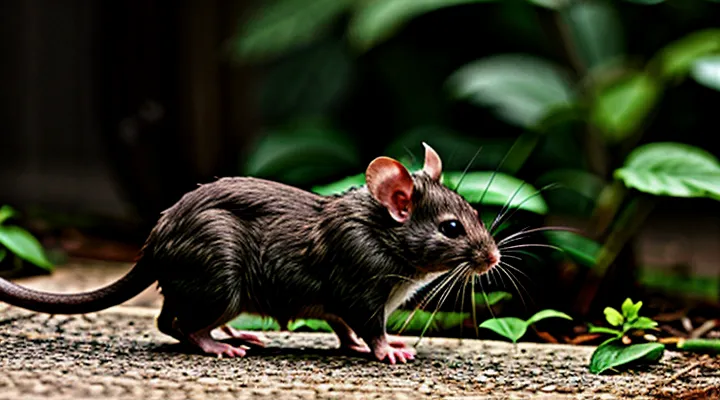
Rats display a range of distinct lineages that illustrate adaptive divergence throughout their evolutionary past. The most widespread lineage, the brown or Norway rat (Rattus norvegicus), thrives in temperate zones, occupies human‑altered habitats, and exhibits high reproductive output. The black rat (Rattus rattus), originally native to tropical Africa and Asia, expanded globally via maritime trade, showing a preference for arboreal niches and a capacity for rapid colonization of island ecosystems.
The Polynesian rat (Rattus exulans) represents the smallest extant species, dispersed across numerous Pacific islands by early human voyagers. Its limited size and dietary flexibility facilitated survival in isolated environments where larger competitors were absent. The Asian house rat (Rattus tanezumi) occupies Southeast Asian urban and agricultural landscapes, displaying tolerance for high temperatures and a diet rich in grain and waste.
Domesticated forms, commonly referred to as fancy rats, derive from Rattus norvegicus and have been selectively bred for coat coloration, size, and temperament. These laboratory and pet strains provide valuable genetic models for biomedical research, reflecting the species’ adaptability to controlled environments.
Key varieties can be summarized:
- Rattus norvegicus – brown, global commensal, high fecundity.
- Rattus rattus – black, arboreal, historically linked to seafaring trade routes.
- Rattus exulans – Polynesian, smallest, island specialist.
- Rattus tanezumi – Asian house, heat‑tolerant, agricultural associate.
- Domesticated Rattus norvegicus – selective breeding, laboratory and companion use.
Each variety contributes specific insights into the species’ phylogeography, ecological plasticity, and the mechanisms that have enabled rats to persist and proliferate across diverse habitats.
Future Evolutionary Trajectories
Rats have persisted through dramatic climatic shifts, dietary changes, and varied ecosystems, demonstrating a genetic flexibility that shapes their prospective development. Their rapid reproductive cycle and high mutation rate provide a foundation for swift adaptation to emerging selective pressures.
Projected evolutionary pathways include:
- Expansion of detoxification enzymes enabling exploitation of anthropogenic pollutants and novel food sources.
- Modification of craniofacial morphology to accommodate altered mastication demands as urban waste composition evolves.
- Enhanced neuroplasticity supporting complex social structures that arise from denser, multi‑species urban habitats.
- Development of resistance to emerging pathogens through selective pressure on immune system genes.
Climate change will likely intensify selective forces on thermoregulation, prompting alterations in fur density and metabolic efficiency. Concurrently, the spread of smart infrastructure may impose new cognitive challenges, favoring individuals with superior problem‑solving abilities and sensorimotor integration.
Long‑term genomic monitoring suggests that gene flow between commensal and wild rat populations will increase, merging adaptive traits and generating hybrid lineages capable of thriving across a broader range of environments. This genetic exchange, combined with persistent anthropogenic pressures, will drive a continual reshaping of rat phenotypes and behaviors.