
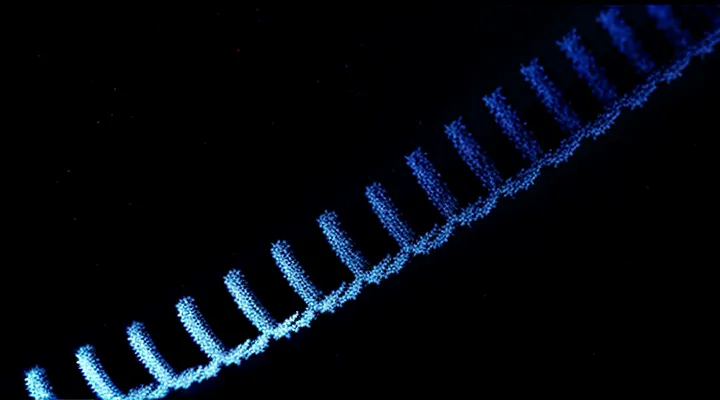
What are Chromosomes?
Basic Structure
Rats possess a diploid set of 42 chromosomes, arranged in 21 homologous pairs. Each chromosome consists of a single, linear DNA molecule packaged with histone proteins into chromatin. The structure of a rat chromosome includes the following elements:
- Centromere – the constriction point that divides the chromosome into a short (p) arm and a long (q) arm; centromere positions vary, producing metacentric, submetacentric, and acrocentric morphologies.
- Telomeres – repetitive DNA sequences at both ends that protect chromosome integrity and prevent degradation.
- Chromosome arms – p and q regions contain distinct bands visible after G‑banding, reflecting variations in gene density and heterochromatin.
- Sex chromosomes – one pair determines sex: females carry two X chromosomes (XX), males carry one X and one Y chromosome (XY). The Y chromosome is markedly smaller and contains fewer genes.
- Autosomes – the remaining 20 pairs are non‑sex chromosomes, each carrying thousands of genes involved in metabolism, development, and physiological regulation.
The rat karyotype is characterized by a uniform size range for most autosomes, with the largest chromosome exceeding 200 Mb and the smallest under 50 Mb. Banding patterns provide a reliable framework for identifying individual chromosomes and detecting structural abnormalities. This basic organization underlies the species’ utility in genetic and biomedical research.
Function in Genetics
Rats possess a fixed diploid chromosome complement of 42 chromosomes, a figure that underpins virtually every genetic investigation involving the species.
The chromosome count serves several core genetic functions:
- Guarantees accurate segregation of genetic material during meiosis, preventing aneuploidy that could compromise experimental outcomes.
- Establishes a baseline for dosage balance, allowing researchers to predict phenotypic effects of gene deletions or duplications.
- Provides a scaffold for high‑resolution linkage maps, facilitating the localization of quantitative trait loci and disease‑related genes.
A stable chromosome number enables the generation of reproducible mutant lines, supports comparative genomics between rodents and other mammals, and allows precise manipulation of the genome using techniques such as CRISPR‑Cas9. Consequently, the defined rat chromosome complement is a foundational element for genetic modeling, functional genomics, and translational research.
Chromosome Count in Different Rat Species
Common Laboratory Rat («Rattus norvegicus»)
The common laboratory rat, Rattus norvegicus, possesses a diploid chromosome complement of 42. This count comprises 21 pairs of autosomes and a pair of sex chromosomes (XX in females, XY in males). The autosomal set is organized into three size groups: large (pairs 1‑3), medium (pairs 4‑13) and small (pairs 14‑21). The sex chromosomes are the smallest elements of the karyotype.
Key points regarding the rat genome:
- Total chromosome number: 42 (2 n = 42)
- Autosomal pairs: 21
- Sex chromosome composition: XX (female) or XY (male)
- Chromosome morphology: metacentric to submetacentric for larger pairs, acrocentric for smaller pairs
Karyotypic analysis of R. norvegicus is routinely performed using metaphase spreads stained with Giemsa or banding techniques such as G‑banding. These methods confirm the standard chromosome number across most inbred strains, although occasional aneuploidies (e.g., trisomy of chromosome 10) have been documented in specific experimental lines.
The established chromosome count provides a baseline for genetic mapping, transgenic manipulation, and comparative studies with other rodent species. Consistency of the 42‑chromosome karyotype underpins reproducibility in biomedical research employing the laboratory rat.
Black Rat («Rattus rattus»)
The black rat (Rattus rattus) possesses a diploid chromosome complement of 42 (2n = 42). Its karyotype consists of 21 pairs of autosomes and a pair of sex chromosomes (XY in males, XX in females). The autosomes are organized into three size groups: large, medium and small, with centromere positions ranging from metacentric to acrocentric.
Key cytogenetic characteristics include:
- Total chromosome number: 42
- Sex chromosome system: XY/XX
- Fundamental number (NF): 62, reflecting the count of chromosomal arms
- Presence of a distinct heterochromatic block on the short arm of chromosome 2, useful for species identification
Comparative data show that the black rat’s chromosome count differs from the common house mouse (Mus musculus) (2n = 40) and the Norway rat (Rattus norvegicus) (2n = 42), indicating conserved diploid numbers within the Rattus genus but distinct banding patterns that aid taxonomic discrimination.
Other Rat Species
The chromosome complement varies among rat taxa. The Norway rat (Rattus norvegicus) possesses 42 chromosomes, organized as 21 pairs. The black rat (Rattus rattus) also has 42 chromosomes, but its karyotype includes distinct banding patterns that differentiate it from R. norvegicus. The Polynesian rat (Rattus exulans) shares the 42‑chromosome count, yet exhibits minor structural variations detectable by cytogenetic analysis.
Other members of the Muridae family display different totals. The Asian house rat (Rattus tanezumi) carries 44 chromosomes, while the Australian swamp rat (Rattus lutreolus) has 40. The African giant pouched rat (Cricetomys gambianus), although not a true Rattus species, presents 44 chromosomes and is frequently referenced in comparative studies.
Key comparative data:
- Rattus norvegicus – 42 chromosomes (2n = 42)
- Rattus rattus – 42 chromosomes (2n = 42)
- Rattus exulans – 42 chromosomes (2n = 42)
- Rattus tanezumi – 44 chromosomes (2n = 44)
- Rattus lutreolus – 40 chromosomes (2n = 40)
- Cricetomys gambianus – 44 chromosomes (2n = 44)
These figures illustrate that chromosome numbers are not uniform across rat species, providing a basis for phylogenetic and evolutionary investigations.
Genetic Significance
Role in Inheritance
Rats possess a diploid set of 42 chromosomes, organized as 20 pairs of autosomes and a single pair of sex chromosomes (XX in females, XY in males). Each somatic cell therefore contains two complete copies of the genome, while gametes carry a single complement of 21 chromosomes.
During meiosis, homologous chromosomes separate, ensuring that each gamete inherits one member of every pair. This segregation produces haploid cells that, upon fertilization, restore the full complement of 42 chromosomes in the zygote. The process guarantees that allelic variants are transmitted according to Mendelian ratios, with each parent contributing exactly one allele per locus.
Key consequences for inheritance in rats:
- Predictable transmission of genetic markers across generations.
- Ability to map genes by tracking recombination frequencies between chromosome pairs.
- Foundation for creating defined inbred strains and transgenic lines used in biomedical research.
- Facilitation of disease‑gene identification through linkage analysis that relies on the known chromosome count.
The defined chromosome complement thus underpins the reliability of genetic experiments, breeding strategies, and the interpretation of hereditary patterns in this model organism.
Implications for Research
Rats possess a diploid chromosome complement of 42, organized into 21 pairs of autosomes and a pair of sex chromosomes. This specific chromosomal count provides a stable reference for genetic manipulation, enabling precise targeting of loci in genome‑editing protocols.
The defined karyotype facilitates the creation of disease models by allowing researchers to introduce or delete genes with predictable chromosomal contexts. Comparative studies benefit from the rat’s chromosome number, which aligns closely with that of other rodent species, supporting cross‑species mapping of quantitative trait loci.
In toxicology, the fixed chromosome count permits the detection of clastogenic effects through micronucleus assays, as deviations from the baseline 42 chromosomes indicate genomic instability.
The rat’s chromosomal architecture also underpins the development of recombinant inbred lines, where recombination events can be tracked across the 21 autosomal pairs to dissect polygenic traits.
Key research advantages derived from the rat’s chromosome complement include:
- Accurate genome annotation due to a well‑characterized karyotype.
- Efficient generation of transgenic and knockout models, with predictable insertion sites.
- Robust cytogenetic screening for mutagenic compounds.
- Enhanced comparative genomics with other mammals, aiding evolutionary studies.
Overall, the rat’s chromosomal framework serves as a foundational metric that streamlines experimental design, data interpretation, and translational relevance across biomedical disciplines.
Impact on Rat Health
Rats possess a diploid chromosome complement of 42, organized into 21 pairs. This chromosomal configuration determines the genetic blueprint that governs cellular processes, tissue development, and physiological regulation.
Stability of the rat genome influences several health parameters:
- Proper segregation of chromosomes during mitosis and meiosis prevents aneuploidy, which can lead to embryonic lethality or developmental abnormalities.
- Balanced gene dosage maintains normal organ function; deviations often result in metabolic dysregulation, such as altered glucose handling.
- Integrity of sex chromosomes affects reproductive capacity; abnormalities correlate with reduced fertility and malformed gonadal structures.
- Chromosomal mutations contribute to susceptibility or resistance to specific diseases, including certain cancers and neurodegenerative conditions.
- Genome integrity modulates the response to environmental toxins; compromised DNA repair mechanisms increase toxicant-induced morbidity.
Experimental models demonstrate that induced chromosomal alterations, such as deletions or translocations, produce measurable changes in lifespan, immune competence, and behavioral phenotypes. Conversely, strains with conserved chromosomal architecture exhibit consistent health outcomes across generations, supporting the link between chromosomal composition and overall rat well‑being.
Methods of Chromosome Analysis
Karyotyping
Karyotyping provides a direct assessment of the rat chromosome complement, enabling precise determination of the diploid number and structural organization of each chromosome. The technique involves arresting cells in metaphase, spreading chromosomes on a glass slide, staining, and arranging the visualized chromosomes in a standardized format for analysis.
Key aspects of rat karyotype analysis include:
- Metaphase arrest using colchicine or colcemid to maximize chromosome visibility.
- Hypotonic treatment to swell cells and facilitate chromosome spreading.
- Fixation with methanol‑acetic acid to preserve chromosome morphology.
- G‑banding or other differential staining methods to reveal banding patterns for identification of individual chromosomes.
- Photographic documentation and digital image processing to construct a complete chromosome set.
The resulting karyotype consistently shows a diploid number of 42 chromosomes (20 pairs of autosomes and two sex chromosomes). Comparative studies of banding patterns allow detection of numerical abnormalities, translocations, or deletions that may influence phenotypic traits or disease susceptibility in laboratory rat strains.
Molecular Techniques
Molecular methods provide precise determination of the rat chromosomal complement, enabling verification of the diploid number and detection of structural variations.
- Fluorescence in situ hybridization (FISH) – fluorescent probes bind specific chromosome regions, allowing direct visualization of individual chromosomes under a microscope.
- Comparative genomic hybridization (CGH) – labeled genomic DNA from a rat sample competes with reference DNA on a microarray, revealing copy‑number changes across the genome.
- Next‑generation sequencing (NGS) based karyotyping – whole‑genome sequencing data are analyzed for read depth and breakpoint patterns, producing a high‑resolution chromosome map.
- PCR‑based microsatellite mapping – primers target repeat loci distributed on each chromosome; allele patterns confirm chromosome presence and integrity.
- Southern blot analysis – restriction fragments hybridized with chromosome‑specific probes identify large‑scale rearrangements and confirm chromosome count.
Each technique contributes distinct information: FISH delivers visual confirmation of individual chromosomes; CGH and NGS detect submicroscopic gains or losses; PCR and Southern blot assess specific loci for structural integrity. Combining methods improves confidence in the reported rat chromosome number and uncovers anomalies that single‑approach assays might miss.
Effective application requires high‑quality DNA, appropriate probe design, and calibrated detection systems. Choice of method balances resolution, throughput, and cost; FISH remains standard for routine counts, while NGS provides comprehensive analysis for research requiring genome‑wide detail.
Evolutionary Context
Comparative Genomics
Rats possess a diploid set of 42 chromosomes, a figure that serves as a reference point for comparative genomic analyses across vertebrates. This chromosomal complement provides a baseline for evaluating genome organization, evolutionary rearrangements, and functional conservation.
When juxtaposed with other model organisms, the rat genome reveals distinct patterns:
- Mouse: 40 chromosomes, high synteny with rat but several fission/fusion events.
- Human: 46 chromosomes, extensive rearrangements relative to rodent lineages.
- Dog: 78 chromosomes, larger karyotype reflecting divergent evolutionary pressures.
Comparative studies exploit these differences to map orthologous regions, trace lineage-specific inversions, and identify conserved gene clusters. Whole‑genome sequencing combined with high‑resolution cytogenetics delineates breakpoints and assesses the impact of structural variation on phenotype.
Karyotype data integrate with sequence assemblies to refine annotation, validate scaffold orientation, and detect assembly errors. Cross‑species alignment tools quantify conserved syntenic blocks, while phylogenomic pipelines infer chromosomal evolution timelines.
The rat’s chromosomal architecture underpins its utility as a biomedical model. Alignments with human disease loci facilitate translational research, and identification of conserved regulatory elements informs functional genomics. Comparative genomics thus leverages the rat’s chromosome number to elucidate genome dynamics across mammals.
Chromosomal Evolution in Rodents
Rodent genomes display a wide range of chromosome counts, reflecting dynamic structural rearrangements that have occurred over millions of years. In the common laboratory rat, the diploid complement consists of 42 chromosomes, a figure that serves as a reference point for comparative studies across the order. Variations in chromosome number among rodents arise primarily from Robertsonian fusions, centric fissions, and pericentric inversions, each altering the morphology and number of chromosomes without necessarily affecting gene content.
Key mechanisms driving chromosomal evolution in this group include:
- Robertsonian translocations – fusion of two acrocentric chromosomes into a single metacentric chromosome, reducing the overall count.
- Centric fissions – splitting of a metacentric chromosome into two acrocentric chromosomes, increasing the count.
- Pericentric inversions – reversal of a chromosome segment that changes arm ratios but leaves the total number unchanged.
- Chromosome loss or gain – rare events leading to aneuploidy, often associated with reproductive barriers.
Comparative karyotype analyses reveal distinct patterns among rodent families. Muridae species typically maintain 42–44 chromosomes, while Cricetidae exhibit counts ranging from 20 to 70, reflecting extensive Robertsonian activity. Sciuridae members often possess higher numbers (up to 80), suggesting a history of centric fissions. These trends correlate with phylogenetic branching, providing a cytogenetic framework for reconstructing evolutionary relationships.
The stability of the rat chromosome complement, juxtaposed with the plasticity observed in related taxa, underscores the utility of this species as a baseline for investigating chromosomal rearrangements. Genetic mapping and whole‑genome sequencing confirm that many rearrangements are neutral with respect to fitness, yet they contribute to reproductive isolation and speciation. Consequently, the study of rodent chromosomal evolution offers insights into the mechanisms that shape genome architecture across mammals.