
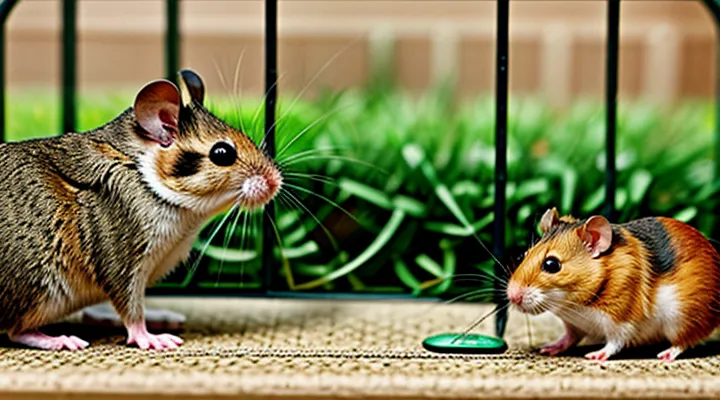
Introduction to Rodent Dynamics
Understanding Each Species
Mice: Characteristics and Needs
Mice are small, nocturnal rodents with a typical body length of 6–10 cm and a lifespan of 1–2 years in captivity. They possess keen senses of smell and hearing, rapid reproduction cycles, and a natural tendency to explore confined spaces.
Physical traits include a fine, soft fur that varies in color, a pointed snout, sharp incisors that grow continuously, and agile limbs capable of climbing and burrowing. These attributes demand a cage environment that prevents dental overgrowth and allows vertical movement.
Key environmental requirements are:
- Minimum floor area of 0.2 m² per mouse, with additional vertical space for climbing structures.
- Solid, chew‑resistant bedding such as aspen shavings or paper products; avoid pine or cedar, which release harmful oils.
- Stable ambient temperature between 20 °C and 26 °C and a 12‑hour light/dark cycle to support circadian rhythms.
- Continuous access to fresh water via a sipper bottle or droplet system.
- Enrichment items including tunnels, wheels, and nesting material to satisfy exploratory and nesting instincts.
Nutritional needs consist of a balanced commercial mouse pellet supplemented with occasional seeds, grains, and fresh vegetables. Protein should represent 15–20 % of the diet, while fat remains below 5 %. Treats must be limited to prevent obesity.
Mice are inherently social; groups of three or more individuals exhibit reduced stress and more natural behaviors. Cohabitation requires careful monitoring for hierarchy formation and provision of multiple hiding spots to prevent aggression.
Meeting these characteristics and needs creates a stable environment that supports mouse health and behavior, facilitating harmonious coexistence with other small rodents in a shared enclosure.
Hamsters: Characteristics and Needs
Hamsters are compact rodents measuring 5–18 cm in length, depending on species. Syrian hamsters reach up to 18 cm, while dwarf varieties remain under 10 cm. They possess stout bodies, short tails, and large cheek pouches used for transporting food. Nighttime activity dominates their behavior; they are crepuscular to nocturnal, exploring and foraging primarily after dusk.
Physical health relies on a balanced diet of commercial hamster mix, supplemented with fresh vegetables, limited fruit, and occasional protein sources such as boiled egg or mealworm. Water must be available at all times in a leak‑proof bottle. Over‑rich foods, sugary treats, and high‑fat items can cause obesity and hepatic lipidosis, conditions common in captive hamsters.
Enclosure requirements include a minimum floor area of 450 sq in (≈2900 cm²) with solid base to prevent foot injuries. Bedding of absorbent, dust‑free material—paper pulp, aspen shavings, or coconut fiber—supports nesting and thermoregulation. A solid wheel of appropriate diameter (≥8 in for dwarfs, ≥10 in for Syrians) provides necessary aerobic exercise; wire wheels increase the risk of limb injuries. Hideouts, tunnels, and chewable objects satisfy natural burrowing and gnawing instincts, reducing stress and dental overgrowth.
Key care elements:
- Daily fresh water and regular food portion control.
- Weekly bedding change and spot cleaning of waste.
- Monthly health check for coat condition, eye clarity, and weight stability.
- Quarterly nail trimming and dental inspection by a qualified veterinarian.
Understanding these characteristics and needs enables successful cohabitation strategies when hamsters share a cage environment with mice, ensuring each species receives appropriate space, enrichment, and health management.
Potential for Coexistence
Behavioral Differences
Social Structures
Mice and hamsters exhibit distinct social architectures that shape their interactions when confined together. In solitary species such as the Syrian hamster, dominance is expressed through aggressive posturing, scent marking, and exclusive access to nesting material. Mice, particularly the common house mouse, form fluid hierarchies where dominant individuals control food sources and preferred routes, while subordinate members display submissive grooming and avoidance behaviors.
When both species occupy the same cage, several mechanisms determine the outcome:
- Territorial demarcation – Hamsters establish a personal zone using bedding piles and urine; mice respond by expanding their foraging routes around this area.
- Communication channels – Mice rely on ultrasonic vocalizations and pheromone trails; hamsters depend on tactile signals and scent glands. Overlap of these modalities can trigger stress responses.
- Resource allocation – Competition intensifies when food or water stations are limited; equitable distribution reduces aggression.
- Social learning – Mice quickly adapt to the presence of a hamster by modifying activity patterns; hamsters show limited flexibility, often maintaining strict routines.
Successful cohabitation requires environmental modifications that respect each species’ social framework. Providing multiple nesting sites, separate feeding stations, and vertical enrichment structures creates distinct territories, minimizing direct confrontations. Monitoring behavioral cues—such as increased grooming, vocalizations, or aggressive lunges—allows early detection of hierarchy breakdowns.
In summary, the divergent social structures of mice and hamsters dictate the balance between peaceful coexistence and competitive exclusion. Strategic cage design that acknowledges territorial needs, communication differences, and resource partitioning supports stable, low‑stress environments for both rodents.
Nocturnal vs. Diurnal Activity
Mice are predominantly nocturnal. Their activity peaks during the dark phase, with heightened foraging, nest building, and wheel running between midnight and early morning. Light exposure suppresses movement, and food intake aligns with darkness.
Hamsters exhibit a mixed pattern. Many strains are primarily nocturnal, yet they show significant crepuscular bursts at dawn and dusk. Their wheel use and exploratory behavior increase during low‑light periods, while daylight often triggers rest in the nest.
Key distinctions influencing cohabitation:
- Peak hours – Mice: late night; Hamsters: early night plus twilight.
- Light sensitivity – Both reduce activity under bright light, but hamsters respond more strongly to dawn/dusk cues.
- Feeding schedule – Mice consume most calories after dark; hamsters may spread intake across night and twilight.
- Space utilization – Mice occupy the cage throughout the night; hamsters concentrate activity in brief, intense bouts, leaving longer rest intervals.
Synchronizing the light‑dark cycle to favor overlapping nocturnal periods can minimize competition for resources and promote peaceful coexistence. Adjusting feeding times to match each species’ active window further reduces conflict.
Environmental Requirements
Space and Enrichment
Providing adequate floor area and environmental stimulation determines whether a mouse and a hamster can coexist without conflict. A cage must contain separate zones that respect each species’ territorial instincts while allowing shared access to enrichment resources.
Space allocation should consider the adult size of each animal. A mouse requires approximately 0.5 sq ft of unobstructed floor, whereas a hamster needs about 0.75 sq ft. Partitioning the enclosure with a solid divider creates distinct living quarters, each equipped with its own nesting material, shelter, and wheel. The divider should be tall enough to prevent climbing and impermeable to scent transfer, reducing stress triggers.
Enrichment elements support natural behaviors and reduce aggression. Effective items include:
- Climbing structures: wooden branches, PVC tubes, or mesh ladders placed in the mouse’s sector to encourage exploration.
- Burrowing substrate: deep, dust‑free bedding (e.g., aspen shavings) for the hamster to dig tunnels.
- Foraging puzzles: sealed treat containers that require manipulation, positioned near the divider to promote mental engagement without direct competition.
- Exercise wheels: species‑specific wheels (solid‑spoke for hamsters, mesh‑spoke for mice) mounted on opposite sides of the partition to prevent simultaneous use.
- Sensory objects: scented herbs (lavender, rosemary) placed in low‑traffic zones to provide olfactory variety without overwhelming either animal.
Regular rotation of enrichment items maintains novelty. Replace or reposition at least weekly, monitoring for signs of dominance, such as one animal monopolizing a resource. If competition arises, introduce additional duplicates of the contested item in the other’s zone.
Ventilation and lighting must be uniform across the entire cage to avoid temperature gradients that could favor one species. Maintain a temperature range of 68–74 °F and a 12‑hour light/dark cycle, ensuring both occupants experience consistent conditions.
By respecting spatial limits, installing species‑specific enrichment, and monitoring interaction patterns, a mouse and a hamster can share a single enclosure with minimal stress and maximal well‑being.
Diet and Water
Mice and hamsters share similar nutritional needs but differ in portion size and feeding behavior, which influences their coexistence in a single cage. Both species require a balanced mix of proteins, carbohydrates, fats, vitamins, and minerals. A typical diet includes:
- Commercial rodent pellets formulated for each species; pellets for mice are smaller and denser, while hamster pellets are larger and often contain additional fiber.
- Fresh vegetables such as carrots, broccoli, and leafy greens; limit to 10 % of daily intake to prevent digestive upset.
- Occasional protein sources like boiled egg, mealworms, or low‑fat cheese; restrict to a few bites per week.
- Small amounts of fruit (apple, berries) as treats; avoid citrus and high‑sugar varieties.
Water must be continuously available and clean. Use a sipper bottle with a stainless‑steel tube to prevent contamination; refill daily and inspect for leaks. Mice tend to drink more frequently but consume smaller volumes, whereas hamsters may take larger gulps less often. Monitoring water intake helps detect health issues early, such as dehydration or renal problems.
When feeding in a shared enclosure, distribute food in separate zones to reduce competition. Place mouse pellets on one side of the cage and hamster pellets on the opposite side, each with its own water bottle. This arrangement minimizes territorial disputes and ensures each animal receives appropriate nutrition without interference.
Risks of Cohabitation
Aggression and Stress
Territoriality
Territorial behavior determines whether a mouse and a hamster can coexist peacefully or become rivals within the same enclosure. Both species establish personal space using scent marking, nest construction, and visual cues. A mouse typically claims the lower levels of a cage, creating tunnels and burrows, while a hamster prefers the upper sections, building a solitary nest and hoarding food. Overlap of these zones often triggers defensive actions such as biting, chasing, or aggressive vocalizations.
Key indicators of territorial conflict include:
- Repeated patrol of the same area by one animal, accompanied by scent deposition.
- Rapid displacement of the other individual from a preferred spot.
- Elevated cortisol levels measurable in droppings, reflecting stress.
- Physical injuries such as scratches or bite wounds.
Mitigation strategies rely on spatial separation and resource distribution. Providing multiple nesting sites, distinct feeding stations, and barriers that restrict movement between levels reduces direct encounters. Monitoring interactions for the first 48 hours after introduction allows early detection of aggression, enabling prompt cage reconfiguration before injuries occur.
Predatory Instincts
Mice possess a strong drive to seek out moving prey, especially insects and small arthropods, which can manifest as rapid stalking and biting when other food sources are scarce. This instinct is regulated by the hypothalamic‑pituitary‑adrenal axis, releasing cortisol that heightens alertness and motor coordination. In a confined environment, the presence of a hamster may trigger these pathways if the hamster’s movements resemble typical prey stimuli.
Hamsters exhibit opportunistic predation toward soft‑bodied organisms, including juvenile mice, when protein requirements exceed the supply of plant material. Their nocturnal activity pattern aligns with periods of heightened mouse foraging, increasing the likelihood of encounters. The predatory response is mediated by the amygdala, which processes visual and olfactory cues associated with vulnerability.
Interaction outcomes depend on several factors:
- Size disparity: larger hamsters can overpower smaller mice, reducing the mouse’s chance of escape.
- Resource abundance: plentiful grain or pellets diminish predatory motivation for both species.
- Cage enrichment: complex structures provide escape routes for mice and reduce direct contact.
- Individual temperament: some mice display aggressive avoidance, while certain hamsters show reduced hunting drive.
Observational studies report that when predatory triggers are minimized—through balanced diets, ample hiding spaces, and limited overlap of active periods—cohabitation stabilizes. Conversely, heightened hunger or limited shelter correlates with increased attacks, confirming that innate predatory instincts remain a decisive factor in cage dynamics.
Health Concerns
Disease Transmission
Mice and hamsters sharing a confined environment can exchange a range of pathogens that affect both species and potentially humans. Direct contact, shared bedding, and contaminated food or water serve as primary transmission routes. Aerosolized droplets from sneezes or coughs also carry respiratory agents between the two rodents.
Common agents observed in mixed‑species cages include:
- Salmonella spp. – spreads through fecal contamination of food and bedding.
- Streptobacillus moniliformis – causes rat‑bite fever; transmitted via bites, scratches, or contaminated surfaces.
- Mouse hepatitis virus (MHV) – a coronavirus affecting the gastrointestinal tract; can survive on fomites.
- Hamster polyomavirus – persists in urine and saliva; capable of infecting mice under stressful conditions.
- External parasites such as mites and lice – move readily between hosts, facilitating bacterial secondary infections.
Stress induced by competition for space or resources amplifies susceptibility, weakening immune defenses and increasing pathogen shedding. Consequently, disease outbreaks tend to be more severe in cages where dominance hierarchies are unstable.
Preventive measures focus on environmental control and health monitoring:
- Maintain separate feeding stations and water bottles to limit cross‑contamination.
- Replace bedding weekly and sterilize cage components with approved disinfectants.
- Conduct regular health checks, including fecal sampling and visual inspections for respiratory signs.
- Implement quarantine protocols for new arrivals, observing a minimum two‑week isolation period before introduction.
Effective management of disease transmission hinges on strict hygiene, vigilant observation, and minimizing stressors that encourage inter‑species aggression.
Injury Risk
When rodents share a confined environment, the probability of physical harm increases markedly. Mice are agile, quick‑moving, and prone to darting into narrow spaces, while hamsters are larger, possess powerful jaws, and tend to dominate limited resources. Their differing body sizes and behavioral patterns create situations where accidental bites, scratches, or crushing injuries occur.
Key injury mechanisms include:
- Bite incidents – hamsters may bite a mouse during territorial disputes or while defending food; mice can bite hamsters in response to perceived threats.
- Crush injuries – a mouse can become trapped under a hamster’s weight when the latter climbs or nests, leading to spinal or limb damage.
- Escape‑related trauma – frantic attempts to flee a hostile cage can result in collisions with cage bars or hard surfaces, causing bruises or fractures.
- Dental damage – hamsters’ incisors can inadvertently gnaw on a mouse’s tail or ears, producing lacerations or loss of tissue.
Preventive measures focus on environmental design and monitoring. Providing separate compartments within the same enclosure, using solid dividers that prevent physical contact, and ensuring each species has its own feeding station reduce direct interaction. Regular observation for signs of aggression, such as raised fur, hissing, or rapid movements, allows early intervention before injuries develop.
If injury is observed, immediate isolation of the affected animal, veterinary assessment, and treatment of wounds are essential to prevent infection and secondary complications. Documentation of incidents supports adjustments to cage layout and husbandry practices, minimizing future risk.
Factors Influencing Outcome
Species and Breed Selection
Dwarf Hamsters vs. Syrian Hamsters
Dwarf hamsters are significantly smaller than Syrian hamsters, typically weighing 30–45 g compared to 120–180 g for the larger species. Their compact size allows several individuals to share a single enclosure, provided sufficient space and separate nesting areas are maintained. Syrian hamsters, being solitary by nature, require exclusive cages to prevent aggression, especially during breeding periods.
Both varieties share a diet of commercial hamster pellets, fresh vegetables, and occasional protein treats, yet dwarf hamsters metabolize food faster and benefit from more frequent, smaller feedings. Syrian hamsters tolerate larger food portions and can store excess in cheek pouches for later consumption.
Reproductive patterns differ markedly. Dwarf hamsters reach sexual maturity at 4–6 weeks, produce multiple litters annually, and exhibit shorter gestation (16–18 days). Syrian hamsters mature at 8–10 weeks, have a single litter per year, and a gestation of 16 days. These factors influence population control measures in mixed-species habitats.
Compatibility with mice hinges on three variables: enclosure size, individual temperament, and resource allocation. A well‑designed cage that separates climbing structures, hides, and feeding stations reduces competition. Monitoring for signs of stress—excessive grooming, reduced food intake, or aggression—allows timely intervention.
Key distinctions:
- Size: dwarf ≈ 30–45 g; Syrian ≈ 120–180 g
- Social behavior: dwarf = social, can cohabit; Syrian = solitary, aggressive toward conspecifics
- Maturity: dwarf = 4–6 weeks; Syrian = 8–10 weeks
- Litter frequency: dwarf = several per year; Syrian = one per year
Understanding these parameters enables informed decisions about housing mice and hamsters together, ensuring each species receives appropriate space, diet, and social conditions.
Domesticated Mice vs. Wild Mice
Domesticated mice and their wild counterparts differ markedly in genetics, behavior, and husbandry requirements. Selective breeding has produced laboratory and pet strains with reduced aggression, predictable coat colors, and heightened tolerance for confinement. Wild mice retain natural wariness, seasonal breeding cycles, and a broader genetic pool that includes resistance to diverse pathogens.
Key distinctions include:
- Temperament: Domestic mice exhibit docile interactions with conspecifics and other small rodents; wild mice display territorial aggression and rapid flight responses.
- Dietary needs: Captive mice thrive on balanced commercial pellets supplemented with grains; wild mice consume a variable diet of seeds, insects, and plant matter, adapting to seasonal availability.
- Health profile: Inbred domestic lines are prone to specific hereditary disorders, whereas wild mice show greater immunological resilience but higher parasite loads.
- Reproductive rate: Domestic strains often produce larger litters on a fixed schedule; wild populations adjust litter size to environmental pressures.
From a cage‑management perspective, domestic mice can coexist with hamsters when space, enrichment, and separate feeding stations are provided. Wild mice, if introduced, would likely dominate the enclosure, outcompeting hamsters for resources and triggering stress‑related behaviors. Effective segregation or exclusive housing is essential to prevent conflict between these species.
Management and Separation
Separate Cages
Separate cages provide a reliable method for housing mice and hamsters together without direct interaction. By isolating each species, owners prevent aggression, competition for food, and the spread of species‑specific diseases. The physical barrier also allows for tailored environmental conditions that meet the distinct needs of each rodent.
Key advantages of using distinct enclosures:
- Behavioral safety – Mice are active climbers; hamsters prefer burrowing. Separate spaces eliminate territorial disputes and stress‑induced injuries.
- Health management – Pathogens such as Mycoplasma pulmonis affect mice but rarely hamsters. Isolation reduces cross‑infection risk and simplifies quarantine procedures.
- Environmental control – Mice thrive at temperatures of 20‑24 °C with moderate humidity, while hamsters tolerate slightly cooler, drier settings. Individual cages enable precise climate regulation.
- Enrichment customization – Wheels, tunnels, and nesting material can be selected according to species‑specific preferences, enhancing welfare without compromising the other animal’s habitat.
Practical considerations when implementing separate cages:
- Position cages within the same room to maintain visual contact, which can reduce isolation stress while preserving physical separation.
- Ensure adequate ventilation for each enclosure; shared airflow may reintroduce contaminants.
- Use compatible substrate materials—paper bedding for mice, sand or corncob for hamsters—to avoid cross‑contamination.
- Schedule cleaning cycles independently; mice produce more urine, requiring more frequent sanitation.
Overall, distinct enclosures reconcile the desire to keep mice and hamsters in proximity with the necessity of preventing conflict and disease, supporting optimal health and behavior for both species.
Supervised Interactions
Supervised interactions between a mouse and a hamster provide a controlled environment for assessing compatibility, aggression thresholds, and stress indicators. Direct observation during brief, monitored sessions reveals immediate behavioral cues such as pursuit, avoidance, and vocalizations, allowing caretakers to intervene before escalation.
Key observations during supervised meetings include:
- Initiation of contact by the mouse, typically involving sniffing and gentle nudging.
- Hamster response ranging from passive tolerance to rapid retreat into its enclosure.
- Frequency of aggressive displays, such as biting or lunging, recorded per session.
- Physiological stress markers, measured by changes in activity levels and grooming behavior.
Data collected from repeated supervised sessions suggest that compatibility varies with individual temperament, cage enrichment, and timing of interactions. Successful cohabitation often requires gradual exposure, provision of separate hideouts, and consistent monitoring to prevent injury.
Ethical Considerations
Animal Welfare Standards
Stress Reduction
When mice and hamsters share a confined environment, physiological stress can compromise health, reproduction, and immune function. Elevated cortisol levels indicate chronic tension, which manifests as reduced activity, weight loss, or aggressive encounters. Managing stress therefore becomes a prerequisite for maintaining viable cohabitation.
Effective stress mitigation relies on three core elements: spatial separation, environmental enrichment, and routine consistency. Spatial separation prevents direct competition for resources and allows each species to establish a personal territory. Enrichment supplies sensory stimulation and opportunities for natural behaviors, diminishing boredom‑induced anxiety. Consistent routines reduce uncertainty, stabilizing hormonal rhythms.
Practical measures include:
- Installing a solid divider that eliminates visual contact while permitting airflow.
- Providing species‑specific shelters: nesting material for mice, a hideaway tube for hamsters.
- Distributing food and water stations on opposite sides of the partition to avoid crowding.
- Rotating toys and chew items weekly to sustain novelty.
- Conducting brief, gentle handling sessions twice weekly to habituate animals to human presence.
Monitoring indicators such as grooming frequency, vocalizations, and cage activity provides early detection of stress spikes. Adjustments to the above measures should be made promptly to preserve a low‑stress environment for both rodents.
Enrichment
Enrichment for small rodents housed together must address species‑specific behaviors while minimizing conflict. Effective enrichment supplies opportunities for foraging, climbing, nesting, and sensory stimulation, thereby reducing stress and promoting natural activity patterns.
Physical structures should include separate climbing ladders or tubes for each animal, positioned to prevent direct competition for space. Multi‑level platforms allow vertical movement, which satisfies the mouse’s tendency to explore height and the hamster’s preference for elevated hideouts. Durable chewable items, such as untreated wood blocks or mineral chews, support dental health and satisfy gnawing instincts for both species.
Foraging enrichment can be achieved by scattering small seed mixes, hiding millet in paper tubes, or placing mealworms in shallow dishes. Rotate these items daily to maintain novelty. Sensory enrichment may involve introducing safe scents (e.g., lavender or rosemary) on cotton swabs, changing bedding textures, or providing a shallow water dish with floating toys.
A practical checklist:
- Separate climbing apparatus for each rodent
- Multi‑level platforms with secure anchoring
- Chewable objects made from non‑toxic materials
- Daily rotation of foraging items (seeds, insects, hidden treats)
- Scented or textured bedding changes every 2–3 days
- Shallow water source with floating enrichment
Monitoring behavior during enrichment sessions reveals dominance patterns. If one animal monopolizes a resource, adjust placement or increase the number of identical items to distribute access evenly. Regular observation ensures that enrichment remains beneficial rather than a source of competition.
Recommendations for Pet Owners
Prioritizing Animal Safety
Research and Preparation
Research on the interaction between mice and hamsters within a shared enclosure requires a disciplined approach that begins with a comprehensive review of existing studies. Scholars should query databases such as PubMed, Web of Science, and Scopus using terms like “mouse‑hamster cohabitation,” “rodent social behavior,” and “cage competition.” Inclusion criteria must limit results to peer‑reviewed articles published within the last ten years, experimental reports involving both species, and studies that document environmental variables. Exclusion parameters should reject papers focused solely on single‑species housing or unrelated laboratory models.
Experimental design must control for species‑specific needs while allowing direct observation of interspecific dynamics. A baseline group housing each species separately establishes reference behavior. A test group places one mouse and one hamster in a cage meeting the larger of the two species’ space requirements (minimum 0.5 m² floor area). The enclosure should contain nesting material, a running wheel, and separate feeding stations to reduce resource overlap. Light cycles, temperature, and humidity must remain constant across all groups.
Preparation steps include:
- Procurement of health‑certified animals; quarantine for 14 days.
- Calibration of cage dimensions; verification of ventilation rates.
- Installation of individual water bottles and food dispensers.
- Placement of opaque barriers to create temporary visual separation during acclimation.
- Configuration of high‑resolution cameras for continuous recording.
- Development of an ethogram defining aggressive, neutral, and affiliative actions.
Data collection proceeds through video analysis, manual scoring, and physiological sampling. Observers record frequency and duration of behaviors such as chasing, grooming, and nest sharing. Salivary cortisol samples taken weekly provide a biochemical indicator of stress. All measurements should be timestamped to align behavioral events with physiological data.
Statistical evaluation employs mixed‑effects models to account for repeated measures within each animal pair. Software packages like R (lme4) or SPSS facilitate hypothesis testing for differences between control and mixed‑species groups. Effect sizes, confidence intervals, and p‑values are reported to substantiate conclusions about whether the two rodents act as cooperative neighbors or direct competitors under the specified conditions.
Expert Consultation
Expert consultation for housing mice and hamsters together focuses on evaluating species‑specific needs, predicting interaction outcomes, and designing a management plan that minimizes stress and disease risk.
Consultants assess behavioral patterns, including territorial aggression, nocturnal activity peaks, and social hierarchy, to determine whether cohabitation is feasible for the particular strains involved. They review health records, quarantine histories, and environmental parameters such as temperature, humidity, and lighting cycles, ensuring that both animals receive optimal conditions.
Key recommendations often include:
- Providing a divided enclosure with a secure visual barrier while allowing limited scent exchange.
- Supplying separate nesting zones, enrichment objects, and feeding stations to reduce competition.
- Implementing a gradual introduction protocol that monitors aggression markers and adjusts exposure time accordingly.
- Conducting regular veterinary checks to detect early signs of illness or injury.
Adhering to expert guidance reduces the likelihood of injury, promotes welfare, and supports reliable data collection for research or breeding programs.