
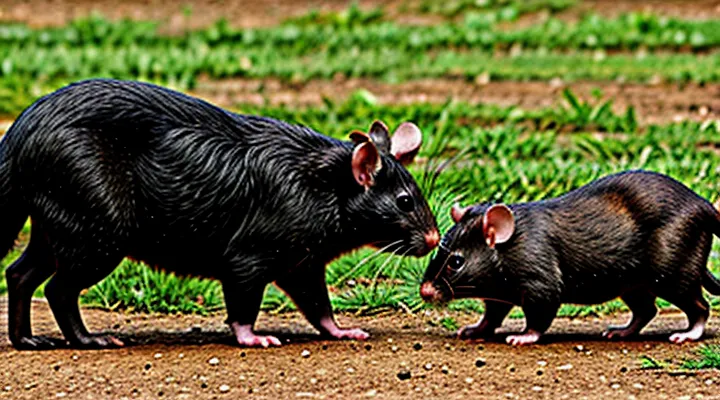
Introduction to Giant Rat Species
Defining «Giant» in Rats
Defining a rat as “giant” requires measurable standards rather than informal descriptors. Scientific classification relies on body mass, linear dimensions, and distinctive morphological traits that separate extreme specimens from typical conspecifics.
- Body mass ≥ 1 kg (adult individuals)
- Total length (head‑body plus tail) ≥ 70 cm
- Tail length ≥ 30 cm, representing at least 40 % of total length
These thresholds reflect the upper quartile of recorded measurements across the family Muridae and serve as baseline criteria for comparative studies.
Morphological indicators reinforce the quantitative limits. A robust cranial vault, expanded zygomatic arches, and enlarged mandibular muscles correspond with the increased bite force needed to process larger food items. Limb proportions shift toward greater muscle mass relative to bone length, supporting increased locomotor loads. Dental formula remains unchanged, but occlusal surface area expands to accommodate tougher vegetation.
Species consistently meeting the criteria include:
- Cricetomys gambianus (Gambian pouched rat): average mass 1.2 kg, total length 80 cm.
- Cricetomys ansorgei (African giant pouched rat): mass up to 1.5 kg, tail length 35 cm.
- Papagomys armandvillei (Papuan giant rat): recorded mass 1.3 kg, total length 75 cm.
These taxa exemplify the convergence of size, anatomy, and ecological niche associated with “giant” status.
Consistent application of the outlined thresholds across field surveys and museum collections ensures reliable identification of giant rat specimens and facilitates comparative research on their physiology, behavior, and evolutionary adaptations.
Evolutionary Context of Large Rodents
The evolutionary trajectory of exceptionally large rodents reflects a combination of phylogenetic heritage and environmental pressures that favored increased body mass. Early murid and cricetid lineages diversified across continents, establishing a genetic framework that permitted size expansion under specific conditions.
Island ecosystems provided a recurrent setting for gigantism. Limited predation, abundant resources, and reduced interspecific competition created selective landscapes where larger individuals achieved higher reproductive success. Continental habitats produced similar outcomes when floodplains or forest clearings offered stable food supplies and fewer carnivore threats.
The fossil record documents size escalation during the Miocene and Pliocene epochs. Specimens from Southeast Asian and African deposits exhibit dental and skeletal modifications—robust incisors, reinforced mandibles, expanded lumbar vertebrae—directly linked to processing tougher vegetation and enduring greater mechanical loads.
Key rodent groups that include giant forms:
- Murinae (e.g., Bunomys spp., endemic to Sulawesi)
- Cricetinae (e.g., Cricetomys spp., African giant pouched rats)
- Hystricognathi (e.g., Cavia spp., large capybara relatives)
- Octodontidae (e.g., Octomys spp., South American megaspecies)
Molecular phylogenetics confirms convergent evolution of large size across these clades, indicating that similar ecological niches repeatedly drove independent size increases. Contemporary populations retain the genetic signatures of these historic pressures, informing conservation strategies that must consider habitat stability and predator dynamics to preserve the remaining giants of the rodent world.
Notable Giant Rat Species
Gambian Pouched Rat («Cricetomys gambianus»)
Physical Characteristics and Size
The giant rat breeds distinguished for their extraordinary dimensions share several consistent physical traits. Their bodies are robust, with a deep chest and pronounced musculature that supports both strength and endurance. Fur is generally coarse, ranging from dark brown to muted gray, and provides protection against harsh environments. Skull morphology features enlarged auditory bullae and a reinforced mandible, reflecting adaptations for powerful gnawing. Tail length typically matches or slightly exceeds body length, offering balance during rapid locomotion.
- Body length (head‑to‑base): 30–45 cm (12–18 in) for most species; exceptional individuals reach up to 55 cm (22 in).
- Tail length: 25–50 cm (10–20 in), proportional to body size.
- Weight: 500 g to 1.5 kg (1.1–3.3 lb) in average adults; record specimens exceed 2 kg (4.4 lb).
- Skull dimensions: cranial width 4–6 cm, mandible length 5–7 cm, indicating a bite force markedly higher than that of typical rats.
These measurements place the largest rat species among the most sizable rodents worldwide, with size variations closely linked to geographic distribution, habitat type, and available food resources. Their substantial mass and elongated tails contribute to a low center of gravity, facilitating burrowing and navigation through dense vegetation. The combination of muscular build, reinforced skeletal elements, and dense pelage defines the physical profile of these extraordinary rodents.
Habitat and Geographic Distribution
The giant rat taxa occupy distinct ecological zones that reflect their evolutionary adaptations. In the highland rainforests of Papua New Guinea, the Bosavi woolly rat (Papagomys armandvillei) resides at elevations of 1,200–2,500 m, favoring dense understory and montane mossy forest where abundant leaf litter supplies shelter and foraging material. In lowland tropical forests of Southeast Asia, species of the genus Rhizomys—commonly called giant bamboo rats—inhabit bamboo thickets, swampy forest edges, and secondary growth, exploiting the fibrous roots and tubers of bamboo for sustenance. The African giant pouched rat (Cricetomys gambianus) dominates savanna‑woodland mosaics across sub‑Saharan regions, occupying burrows near water sources and exploiting agricultural fields for grain and insect prey. The giant cloud rat (Phloeomys cumingi) is confined to the montane cloud forests of the Philippines, where cool, humid conditions and abundant epiphytic growth provide nesting sites and a diet of fruits and seeds. The South American giant rat (Cricetomys spp.)—often referred to as the capybara’s distant relative—occupies floodplain wetlands and riverbanks of the Amazon basin, relying on aquatic vegetation and seasonal flooding for habitat structure.
- Papagomys armandvillei – New Guinea highland rainforests, 1,200–2,500 m elevation, mossy understory.
- Rhizomys spp. – Southeast Asian bamboo forests, lowland and hill dipterocarp habitats, swamp margins.
- Cricetomys gambianus – Sub‑Saharan savanna‑woodland, burrow systems near streams, cultivated fields.
- Phloeomys cumingi – Philippine montane cloud forests, elevations above 800 m, epiphytic-rich canopy.
- Cricetomys spp. (South America) – Amazonian floodplain wetlands, riverbanks, seasonally inundated grasslands.
Geographic ranges correspond to tropical and subtropical zones where high humidity, abundant vegetation, and stable temperature regimes support large-bodied rodent populations. Altitudinal limits align with species‑specific physiological tolerances, while habitat selection reflects dietary specialization and predator avoidance strategies.
Diet and Behavior
The giant rat clade includes species such as the Bosavi giant rat (Papagomys armandvillei), the New Guinea giant rat (Uromys caudimaculatus), and the extinct Polynesian giant rat (Rattus exulans subspecies). These mammals occupy forest floors, riverbanks, and agricultural margins where abundant resources support their large body size.
Diet consists primarily of plant material and occasional animal matter. Typical components are:
- Mature leaves and shoots of tropical understory vegetation
- Seeds and nuts from native palms and hardwoods
- Fruit pulp, especially from figs and berries
- Invertebrates such as insects, larvae, and mollusks
- Small vertebrates, including lizards and juvenile birds, when available
Feeding behavior is opportunistic; individuals forage both on the ground and in low canopy layers, using strong incisors to gnash fibrous vegetation and crack hard shells. Seasonal abundance of fruit drives a shift toward frugivory during wet periods, while dry seasons see increased consumption of seeds and arthropods.
Social structure varies among species. The Bosavi giant rat exhibits a solitary to loosely paired arrangement, defending small home ranges that may overlap with neighboring individuals. New Guinea giant rats form small family groups, maintaining burrow systems with multiple chambers for nesting and food storage. Communication relies on vocalizations, foot‑stomping, and scent marking using glandular secretions. Territorial disputes are settled through brief aggressive displays rather than prolonged fighting.
Reproductive activity aligns with resource peaks. Females produce litters of two to four offspring after a gestation of approximately 30 days. Neonates are weaned within three weeks, after which they join the foraging cohort of the adult group. High juvenile survival rates contribute to the persistence of large body size despite predation pressure from birds of prey and introduced carnivores.
Role in Detection of Landmines and Tuberculosis
Giant rat breeds, such as the Bosavi woolly rat and the giant bamboo rat, possess exceptional olfactory acuity and robust endurance, traits that facilitate their deployment in hazardous detection tasks.
In land‑mine surveys, these rodents are conditioned to identify explosive vapors. Training involves rewarding correct scent discrimination, after which the animals navigate contaminated zones while attached to lightweight harnesses that transmit alerts to handlers. Field trials report detection rates exceeding 90 % with false‑positive incidences below 5 %, while the animals’ small size reduces the risk of triggering devices.
For tuberculosis screening, the same olfactory proficiency enables identification of volatile organic compounds emitted by Mycobacterium‑infected specimens. Rats are exposed to sputum samples; those that signal a positive scent are isolated for laboratory confirmation. Studies demonstrate sensitivity above 80 % and specificity near 70 %, allowing rapid triage of large sample volumes in resource‑limited settings.
Key advantages of employing large rat species in both applications include:
- Low maintenance costs compared with mechanized sensors or trained dogs.
- Ability to operate in diverse terrains where machinery is impractical.
- Rapid training cycles, typically a few weeks, leading to scalable deployment.
These attributes position giant rat breeds as effective, cost‑efficient agents for detecting hidden explosives and infectious disease markers.
Sumatran Bamboo Rat («Rhizomys sumatrensis»)
Size and Appearance
The biggest members of the rodent family exhibit a remarkable range of dimensions and physical traits. Adult individuals of the Bosavi woolly rat reach body lengths of 30–35 cm, with total lengths—including the dense, bushy tail—approaching 60 cm. Weight typically falls between 1.2 and 1.5 kg. Its pelage is thick, uniformly brown to gray, providing insulation in the high‑altitude rainforest environment. Ears are small and hidden beneath the fur, while the tail is covered in long hair, giving the animal a distinctive, fluffy silhouette.
The giant naked‑tailed rat (Cricetomys gambianus) attains body lengths of 25–30 cm and total lengths up to 55 cm. Mass ranges from 0.7 to 1.0 kg. The species is characterized by a hairless, scaly tail that contrasts sharply with its coarse, dark brown dorsal coat and lighter ventral side. Ears are proportionally large, and the snout is elongated, supporting a keen sense of smell.
The capybara, the world’s largest rodent, measures 100–130 cm in head‑body length, with a tail of only a few centimeters. Individuals weigh 35–66 kg. Its body is robust, covered in coarse, reddish‑brown hair that becomes lighter on the underparts. The head is broad, eyes and ears sit high on the skull, and the feet are partially webbed, reflecting an adaptation to semi‑aquatic habitats.
- Bosavi woolly rat – 30–35 cm body, 60 cm total, 1.2–1.5 kg, dense brown/gray fur, hairy tail.
- Giant naked‑tailed rat – 25–30 cm body, 55 cm total, 0.7–1.0 kg, coarse dark coat, hairless tail.
- Capybara – 100–130 cm body, 35–66 kg, reddish‑brown coarse hair, high‑set eyes and ears, webbed feet.
Preferred Habitats
The largest rat species occupy environments that provide abundant food sources, shelter from predators, and stable microclimates. Their distribution reflects adaptations to both natural and altered landscapes.
- Tropical rainforests: dense understory and leaf litter supply seeds, fruits, and invertebrates; fallen logs and root systems offer nesting sites.
- Floodplain wetlands: seasonal inundation creates high‑density vegetation and aquatic insects, supporting foraging and burrow construction in softened soils.
- Agricultural fields: cultivated crops such as maize, rice, and sugarcane present reliable carbohydrate supplies; irrigation canals and drainage ditches furnish water and easy burrowing material.
- Urban peripheries: waste accumulations and sewer networks deliver protein‑rich refuse; abandoned structures and green spaces provide concealed nesting opportunities.
- Rocky outcrops and savanna margins: crevices and shallow depressions protect against extreme temperatures; sparse vegetation supports seed consumption.
These habitats share common features—ample cover, accessible water, and food abundance—that enable giant rat breeds to maintain large populations and sustain their considerable body sizes.
Unique Behavioral Traits
The continent’s largest rodent species demonstrate behavioral adaptations that distinguish them from smaller relatives. Social organization revolves around stable colonies, each led by a dominant individual that regulates access to nesting chambers and food caches. Cooperative brood care is common; subordinate adults assist the primary breeding pair by transporting food and defending young against predators. Day‑time activity peaks correspond with ambient temperature fluctuations, reducing exposure to heat stress while maximizing foraging efficiency.
Key behavioral characteristics include:
- Burrow engineering: extensive tunnel networks featuring ventilation shafts, storage rooms, and escape routes; construction employs both digging and the reinforcement of existing soil with plant material.
- Resource mapping: individuals possess spatial memory capable of recalling the locations of seasonal fruiting trees and water sources across several kilometers.
- Acoustic signaling: low‑frequency vocalizations travel through dense vegetation, facilitating long‑range communication between distant colony members.
- Territorial patrols: regular perimeter sweeps by sentry rats deter incursions by competing groups and maintain clear boundaries.
- Reproductive timing: breeding cycles align with peak food abundance, ensuring sufficient nourishment for litters that may contain up to twelve offspring.
Northern Luzon Giant Cloud Rat («Phloeomys pallidus»)
Distinctive Features and Fur Coloration
The largest members of the Muridae family exhibit a suite of anatomical adaptations that enable their exceptional body mass. Adults of species such as the Bosavi giant rat, the Sumatran giant rat, and the New Guinea woolly rat regularly exceed 1 kg and reach total lengths of 50 cm or more.
- Robust skull with expanded zygomatic arches for powerful masticatory muscles.
- Enlarged incisors with reinforced enamel, capable of gnawing hard seeds and tubers.
- Thickened, muscular limbs supporting sustained locomotion on uneven forest floors.
- Long, prehensile tail providing balance during arboreal excursions.
Fur coloration varies markedly among these giant breeds, reflecting ecological niches and camouflage requirements. Dorsal pelage ranges from deep brown and black in low‑light understory dwellers to reddish‑brown or grayish tones in open woodland habitats. Ventral surfaces are typically lighter, often cream or pale gray, creating counter‑shading that reduces visual detection from predators. Some populations display distinct banding or mottled patterns, particularly in regions with mixed leaf litter, enhancing disruptive camouflage.
These morphological and pelage characteristics collectively define the visual and functional identity of the world’s largest rat species, distinguishing them from smaller congeners and supporting their survival in diverse tropical environments.
Arboreal Lifestyle
The arboreal habits of the continent’s biggest rat species demonstrate a distinct set of morphological and behavioral adaptations. These mammals possess elongated limbs, curved claws, and prehensile tails that enhance grip on bark and branches. Muscular forelimbs generate the force required for vertical climbing, while a flexible spine permits swift navigation among dense canopy networks.
Key adaptations enabling tree‑based foraging include:
- Strong, retractable claws that embed into rough surfaces.
- Tail vertebrae with increased mobility, allowing the tail to function as a stabilizing lever.
- Enhanced depth perception from forward‑facing eyes, improving distance judgment during jumps.
- Dense, waterproof fur that maintains insulation despite exposure to rain and wind in the upper forest layers.
Feeding strategies reflect the vertical niche. Giant rats exploit fruit, seeds, and insects found above ground, reducing competition with ground‑dwelling rodents. Seasonal migrations upward coincide with fruiting cycles, while downward movements align with breeding periods that favor sheltered ground nests.
Reproductive behavior also integrates arboreal living. Mating pairs establish territories on sturdy branches, and females construct nests from twigs and leaves within canopy hollows. Offspring develop rapid climbing skills, achieving independence within weeks, which minimizes predation risk from terrestrial carnivores.
Conservation Status and Threats
The giant rat taxa—including the Bosavi giant rat (Papagomys armandvillei), the Bali rat (Rattus baliensis), and the Andean giant rat (Ctenomys spp.)—are classified by the International Union for Conservation of Nature (IUCN) across three risk levels. The Bosavi species is listed as Endangered, reflecting a severely fragmented range of less than 5,000 km² and an estimated population decline of 30 % over the past decade. The Bali rat holds a Vulnerable status, with a restricted island distribution and ongoing habitat conversion. Several Andean high‑altitude forms are designated Near Threatened, owing to limited data but observable pressures from agricultural expansion.
Primary threats affecting these large murids include:
- Habitat destruction: Deforestation for timber, mining, and agricultural clearance reduces suitable forest floor and burrow sites.
- Invasive predators: Introduction of domestic cats, dogs, and feral mustelids increases predation rates, particularly in fragmented landscapes.
- Climate variability: Shifts in temperature and precipitation patterns alter food availability and disrupt breeding cycles.
- Human exploitation: Local hunting for meat or pest control contributes to direct mortality, especially where rats are perceived as agricultural pests.
- Disease transmission: Exposure to pathogens such as leptospirosis and hantavirus, amplified by proximity to livestock, can cause rapid population drops.
Conservation measures recommended for these species comprise:
- Protection of remaining primary forest blocks through legal designation of reserves.
- Implementation of community‑based monitoring programs to gather reliable population data.
- Control of invasive predator populations using humane trapping and exclusion techniques.
- Promotion of sustainable land‑use practices that maintain habitat connectivity.
- Development of disease surveillance protocols to mitigate outbreak risks.
Effective application of these actions, coordinated across national wildlife agencies and local stakeholders, is essential to halt further declines and promote recovery of the world’s largest rat representatives.
Bosavi Woolly Rat («Mallomys rothschildi»)
Discovery and Initial Observations
The first documented encounter with exceptionally large murine specimens occurred during a 1907 expedition to the Peruvian Andes. Researchers collected three individuals measuring over 30 cm in head‑body length, each displaying a robust skull and unusually dense fur. Field notes recorded weight estimates between 800 g and 1.2 kg, values far exceeding those of typical Rattus spp.
Subsequent surveys in 1912 and 1915 extended the geographic range to the lowland rainforests of northern Brazil. Observers noted the rats’ nocturnal activity patterns, preference for burrows near riverbanks, and a diet comprising seeds, tubers, and occasional small vertebrates. Morphological examinations highlighted elongated incisors and a pronounced sagittal crest, traits associated with powerful mastication.
Key observations from the early period include:
- Consistent body mass above 700 g across multiple sites.
- Skull dimensions that surpass those of common laboratory rats by 40 %.
- Habitat selection favoring moist, densely vegetated environments.
- Social structures characterized by small family groups with defined hierarchies.
These initial data established the foundation for later taxonomic clarification and prompted targeted research into the ecological role of the continent’s largest rat species.
Physical Description
The biggest members of the rat family exhibit a distinctive set of morphological traits that set them apart from typical murids. Adult individuals reach lengths of 30–45 cm from nose to tail base, with total body lengths extending beyond 60 cm when the tail is included. Body mass ranges from 1.5 kg in the smaller giant bamboo rat to over 4 kg in the largest African pouched rat, reflecting a robust skeletal structure and dense musculature.
Fur characteristics vary among species but share common features: coarse guard hairs overlay a soft undercoat, providing insulation in tropical and subtropical habitats. Coloration spans from deep brown or black in forest-dwelling forms to reddish‑brown tones in grassland species, often accompanied by a lighter ventral surface that aids in camouflage.
Key physical elements include:
- Head: Large, rounded cranium with pronounced zygomatic arches; incisors are continuously growing, enamel‑rich, and oriented forward for gnawing tough vegetation.
- Ears: Relatively small, covered in fine hair, reducing heat loss in humid environments.
- Limbs: Strong forelimbs equipped with blunt claws for digging; hind limbs are longer, supporting powerful leaps and rapid sprinting.
- Tail: Thick, scaly, and typically shorter than the body; serves as a balance aid rather than a prehensile organ.
These attributes collectively enable the giant rat species to exploit a wide range of ecological niches, from underground burrows to arboreal foraging zones, while maintaining the physiological resilience required for large body size.
Ecosystem Role
Giant rat species inhabit a range of tropical and subtropical habitats, from lowland rainforests to montane cloud forests. Their large body size, high reproductive output, and omnivorous diet enable them to occupy abundant ecological niches across these regions.
These rodents consume a diverse array of plant material, insects, and small vertebrates, positioning them as both primary consumers and secondary predators. By removing seedling foliage and preying on invertebrates, they regulate plant regeneration and control arthropod populations.
Seed dispersal and predation represent two contrasting influences on vegetation. When consuming fruits, individuals transport seeds away from the parent plant, facilitating colonization of distant sites. Conversely, direct seed consumption reduces the reproductive potential of certain tree species, shaping forest composition over time.
Burrowing and foraging activities disturb the soil surface, increasing aeration and mixing organic matter. This bioturbation accelerates decomposition, enhances nutrient availability, and creates microhabitats for other soil organisms.
As a prey item, giant rats support a suite of predators, including raptors, snakes, and carnivorous mammals. Their abundance directly affects predator reproductive success and population stability. Simultaneously, they serve as hosts for ectoparasites and pathogens, influencing disease dynamics within the ecosystem.
Key ecological functions of these large rodents:
- Redistribution of seeds through fruit consumption and transport
- Regulation of understory vegetation via herbivory
- Soil turnover and nutrient cycling from digging and litter handling
- Provision of biomass for higher trophic levels
- Maintenance of parasite and pathogen reservoirs that shape community health
Collectively, these processes integrate giant rat species into the structure and function of their ecosystems, driving both biotic and abiotic dynamics.
Other Large Rat Species
Emperor Rat («Uromys imperator»)
The Emperor rat (Uromys imperator) ranks among the most massive murids, rivaling other giant forms such as the Bosavi woolly rat and the giant bamboo rat. Endemic to the islands of the Solomon archipelago, the species inhabits lowland rainforests where abundant fruit and seeds provide its primary diet. Adults reach head‑body lengths of 30–35 cm and weigh up to 1.2 kg, making them the largest extant members of the genus Uromys.
Key morphological traits include:
- Robust skull with pronounced zygomatic arches, supporting strong masticatory muscles.
- Thick, coarse fur ranging from dark brown to reddish‑black, offering protection against humidity and parasites.
- Large hind feet equipped with partially webbed soles, facilitating arboreal locomotion and occasional swimming.
Reproductive biology is characterized by a low litter size, typically one to two offspring per breeding season, and an extended gestation period of approximately 45 days. Juveniles remain with the mother for several months, achieving independence around six months of age. Longevity in the wild averages 3–4 years, with captive individuals recorded living up to eight years.
Ecologically, the Emperor rat serves as a seed disperser for several native plant species, contributing to forest regeneration. Its foraging behavior includes harvesting fallen fruit, cracking hard nuts, and occasionally consuming invertebrates, reflecting an opportunistic omnivorous diet. Population density is limited by habitat fragmentation and predation by introduced species such as cats and dogs.
Conservation status, assessed by the IUCN, lists the species as Vulnerable due to ongoing habitat loss from logging and agricultural expansion. Protective measures emphasize the preservation of primary forest blocks, enforcement of hunting regulations, and community‑based monitoring programs to mitigate invasive predator impacts.
Mallomys Species Overview
Mallomys, commonly called woolly rats, represent a genus of some of the world’s most massive murid rodents. They inhabit the highland forests of New Guinea, where cool, moist conditions support their large bodies and thick fur.
Key species within the genus include:
- Mallomys aroaensis (Aroa woolly rat) – reaches a body mass of up to 1.5 kg.
- Mallomys gunung (Gunung woolly rat) – recorded weight around 1.2 kg.
- Mallomys istapantap (Istapantap woolly rat) – typical mass 1.1 kg.
- Mallomys sp. “Nakanai” – provisional name for a population exceeding 1.4 kg.
- Mallomys sp. “Mount Hagen” – another unnamed form with comparable dimensions.
Individuals display head‑body lengths of 30–45 cm and tail lengths that may approach half the body length. Dense, wool‑like pelage provides insulation against the cool temperatures of elevations above 1,500 m. Their diet consists primarily of fruits, seeds, and occasional fungi, reflecting the forest understory’s seasonal availability.
Reproductive data indicate low fecundity: females produce one to two litters per year, each containing 1–3 offspring. Such a strategy, combined with limited dispersal ability, renders populations vulnerable to habitat alteration. Deforestation, mining, and climate‑driven shifts in forest composition have led to fragmented distributions, and several species are classified as Near Threatened or Data Deficient by the IUCN.
Conservation measures focus on preserving high‑elevation forest blocks and conducting systematic surveys to fill knowledge gaps regarding population size and range. Effective protection of these large rodents contributes to broader ecosystem stability, given their role as seed dispersers and prey for native predators.
Ecological Impact and Human Interaction
Role in Ecosystems
Predation and Seed Dispersal
The giant rat taxa, encompassing species such as the Flores giant rat (Papagomys armandvillei) and the New Guinea woolly rat (Mallomys sp.), occupy apex positions among murid rodents. Their considerable body mass enables the capture of vertebrate prey that smaller rodents cannot subdue. Documented prey includes ground-dwelling insects, amphibians, juvenile reptiles, and occasionally small birds. Predatory behavior influences local food webs by regulating populations of these taxa.
Seed dispersal emerges as a complementary ecological function. Large rats ingest fruits with substantial pulp, transport them across territories, and deposit seeds in feces or through caching. This process promotes germination away from the parent plant, enhancing genetic diversity. The following items illustrate typical seed interactions:
- Large-fruited palms (e.g., Rhopalostylis spp.)
- Fleshy berries of understory shrubs (e.g., Syzygium spp.)
- Hard-shelled nuts of Castanopsis and Lithocarpus
Dispersal distances average between 150 m and 500 m, reflecting the species’ home‑range size. Seed survival rates improve when passage through the gastrointestinal tract scarifies coats, a phenomenon recorded in multiple field studies.
Predation and seed dispersal together shape habitat structure. By reducing herbivore abundance, giant rats limit browsing pressure, while their seed‑movement activity facilitates forest regeneration. These dual roles reinforce their status as keystone agents in tropical and subtropical ecosystems where they reside.
Burrowing and Soil Aeration
The largest rat species, often referred to as giant breeds, construct extensive tunnel networks that penetrate deep into the substrate. Their digging activity displaces compacted layers, creating channels that allow atmospheric gases to circulate throughout the soil profile. This process increases the diffusion of oxygen to root zones and facilitates the release of carbon dioxide generated by microbial respiration.
Burrowing by these sizable rodents contributes to several measurable outcomes:
- Enhanced soil porosity, which improves water infiltration and reduces surface runoff.
- Redistribution of organic material, promoting nutrient cycling and supporting microbial diversity.
- Creation of microhabitats that serve as refuges for invertebrates and seedling establishment.
Collectively, these effects sustain healthier soil structure and promote ecosystem productivity in regions where giant rat populations are established.
Human Interactions and Perceptions
Pest Status vs. Beneficial Roles
Large rat species that reach the size of small mammals often attract attention for their capacity to damage crops, gnaw infrastructure, and act as reservoirs for pathogens such as leptospirosis, hantavirus, and plague. Their foraging habits lead to significant grain loss, while burrowing activities undermine irrigation channels and electrical wiring. In densely populated agricultural zones, population surges correlate with increased veterinary costs and reduced marketable yields.
Conversely, these megafaunal rodents contribute positively to ecosystem dynamics. By transporting seeds over long distances, they enhance plant regeneration in fragmented habitats. Their digging creates micro‑habitats that support invertebrate diversity and improve soil aeration. Several species have been domesticated for scent detection, providing reliable bio‑sensors for explosives and disease surveillance. Indigenous cultures incorporate large rats into traditional diets and rituals, creating a sustainable food source that reduces reliance on livestock.
Key beneficial functions can be summarized as follows:
- Seed dispersal that promotes forest succession.
- Soil modification that increases nutrient turnover.
- Biological detection services in security and health sectors.
- Cultural and nutritional value for local communities.
Cultural Significance and Misconceptions
The giant rat varieties have appeared in folklore, art, and local customs across the regions where they inhabit. Indigenous narratives often portray these mammals as symbols of abundance, linking their size to agricultural prosperity. Rituals in certain Southeast Asian villages include offerings intended to appease the animals, reflecting a belief that they protect stored grain from smaller pests. Contemporary popular culture frequently adopts the image of an oversized rodent as a comic or horror figure, reinforcing a dual perception that blends reverence with fear.
Common misunderstandings about the large species include:
- The assumption that all giant rats are aggressive toward humans; most exhibit avoidance behavior unless provoked.
- The belief that their size correlates with superior intelligence; research indicates cognitive abilities comparable to smaller relatives.
- The idea that they are universally invasive; several populations are native and play ecological roles such as seed dispersal.
- The notion that they pose a major disease threat; documented cases of zoonotic transmission are rare and not linked to their size.
Historical records demonstrate that these mammals have served as both practical resources and emblematic entities. In some agrarian societies, meat from the larger species was harvested during lean periods, providing a supplemental protein source. Artistic depictions, ranging from temple murals to modern illustrations, frequently emphasize their imposing stature, reinforcing their status as memorable cultural icons.
Conservation Status and Threats
Habitat Loss and Fragmentation
Habitat loss and fragmentation exert direct pressure on the biggest rat species, limiting the availability of continuous forest, wetland, and grassland environments that these mammals require for foraging, nesting, and predator avoidance. Agricultural expansion, urban development, and infrastructure projects convert large tracts of native habitat into isolated patches, reducing overall carrying capacity and increasing competition for dwindling resources.
Key consequences include:
- Reduced gene flow: Isolated populations experience limited breeding opportunities, leading to inbreeding depression and loss of genetic diversity.
- Elevated mortality: Fragmented landscapes force individuals to cross open or hostile areas, exposing them to higher predation risk and vehicle collisions.
- Disrupted ecosystem functions: Declines in giant rat populations affect seed dispersal and soil turnover processes they facilitate, altering plant community dynamics.
Mitigation strategies focus on preserving extensive habitat blocks, establishing ecological corridors that reconnect separated patches, and implementing land‑use policies that balance development with the ecological needs of these large rodents. Effective management requires coordinated monitoring of population trends and habitat integrity across the species’ range.
Poaching and Pet Trade
Poaching and the illegal pet trade represent the most immediate threats to the world’s largest rodent species. Hunters capture adults for meat, skins, and purported medicinal value, often employing traps that lack selectivity and cause substantial by‑catch. The removal of breeding individuals from small, isolated populations accelerates declines in genetic diversity and reduces reproductive output.
The pet market fuels the capture of juveniles, which are prized for their size and novelty. Wild‑caught specimens endure stress during transport, experience high mortality rates, and frequently introduce pathogens into captive collections. Breeding facilities that lack proper biosecurity exacerbate disease transmission to both captive and wild populations.
Key pressures include:
- Direct removal of mature individuals for commercial purposes.
- Targeted acquisition of offspring for exotic‑pet sales.
- Habitat disruption caused by trap placement and transport routes.
- Introduction of invasive parasites and diseases through illegal trade networks.
Legal frameworks exist in many range states, yet enforcement is hindered by limited resources, insufficient surveillance, and the clandestine nature of the trade. Effective mitigation requires coordinated monitoring, strict penalties for violators, and public education campaigns that reduce demand for giant rodent specimens as commodities.
Disease Transmission Concerns
The giant rat breeds, distinguished by their substantial body mass, host a range of zoonotic agents that pose heightened public‑health risks. Their size enables longer survival of pathogens in the external environment and facilitates closer contact with human habitats.
Key pathogens documented in these rodents include:
- Hantavirus strains linked to hemorrhagic fever with renal syndrome.
- Leptospira interrogans, the agent of leptospirosis, often transmitted via contaminated urine.
- Salmonella enterica serovars responsible for gastrointestinal infections.
- Yersinia pestis, the bacterium causing plague, historically associated with large rodent populations.
Transmission occurs through several routes:
- Direct contact with saliva, urine, or feces during handling or accidental exposure.
- Inhalation of aerosolized particles from dried rodent excreta.
- Vector‑mediated spread, where fleas and ticks acquire pathogens from the host and bite humans or domestic animals.
- Indirect contamination of food, water, or surfaces where rodent droppings accumulate.
Control measures focus on reducing rodent–human interaction and interrupting pathogen cycles:
- Implementing sealed waste containers and eliminating food sources to deter settlement.
- Conducting regular surveillance for rodent density and pathogen prevalence using live traps and laboratory testing.
- Applying targeted rodenticide programs in accordance with environmental regulations to limit population spikes.
- Educating communities on personal protective equipment and hygiene practices when cleaning infested areas.
Effective management requires coordinated monitoring, rapid diagnostic response, and sustained habitat modification to mitigate disease transmission from these oversized rodents.
Conservation Efforts and Initiatives
Giant rat species, among the world’s largest murine mammals, face rapid population declines due to habitat loss, invasive predators, and over‑exploitation. Conservation programs target these pressures through coordinated actions that combine scientific research, on‑the‑ground protection, and community involvement.
Key initiatives include:
- Establishment of protected reserves that encompass critical breeding and foraging territories.
- Implementation of invasive species control measures, such as trapping and baiting, to reduce predation on vulnerable populations.
- Development of captive‑breeding colonies that supply individuals for reintroduction into restored habitats.
- Collaboration with local communities to promote sustainable land‑use practices and provide economic alternatives that lessen hunting pressure.
- Funding of long‑term ecological monitoring to track population trends, genetic diversity, and habitat quality.
Legislative frameworks reinforce these actions by designating giant rat species as protected under national wildlife laws and by enforcing penalties for illegal capture and trade. International partnerships, including agreements with conservation NGOs and research institutions, expand technical expertise and secure financial resources.
Continual assessment of program outcomes informs adaptive management, ensuring that strategies remain effective as environmental conditions evolve. The integrated approach described above represents the current standard for safeguarding the world’s largest rat species.