
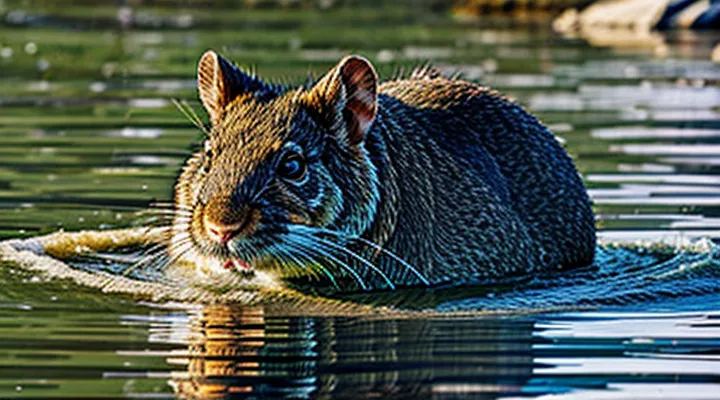
Large Water Rat: General Overview
Taxonomy and Classification
Scientific Name
The species identified as the large water rat carries the scientific designation Hydromys chrysogaster (Gould, 1852). This binomial reflects its placement within the rodent order and distinguishes it from related semiaquatic mammals.
The name originates from Greek: hydro (water), mys (mouse or rat), and chrysogaster (golden‑belly), describing both habitat preference and distinctive ventral coloration.
Taxonomic hierarchy
- Kingdom: Animalia
- Phylum: Chordata
- Class: Mammalia
- Order: Rodentia
- Family: Muridae
- Subfamily: Murinae
- Genus: Hydromys
- Species: Hydromys chrysogaster
The precise nomenclature enables consistent communication across scientific literature and supports accurate identification in ecological surveys.
Common Names
The large water rat is referred to by a variety of vernacular names that differ by region and language.
- Giant water mouse
- Marsh rat
- River beaver
- Water vole (in some locales)
- Aquatic rat
These names appear in field guides, wildlife reports, and local folklore, reflecting the animal’s adaptation to riparian environments and its prominence among communities that encounter it.
Evolutionary History
The sizable semi‑aquatic rodent known colloquially as the large water rat traces its lineage to early Muridae that colonized riverine environments during the late Miocene. Fossil fragments dated to approximately 7 million years ago reveal a gradual increase in body mass and cranial robustness, traits linked to a shift from terrestrial foraging to opportunistic aquatic predation.
Molecular phylogenetics places this species within a clade that diverged from its closest terrestrial relatives around 4.5 million years ago. The divergence coincides with the uplift of major river systems in the region, providing stable aquatic habitats that favored selection for:
- Enlarged hind limbs for powerful swimming strokes
- Streamlined skull morphology reducing drag underwater
- Enhanced vibrissae sensitivity for detecting prey in turbid water
Paleoclimatic data indicate that periods of increased precipitation expanded floodplain networks, creating ecological corridors that facilitated gene flow among isolated populations. Conversely, arid intervals induced bottlenecks, evident in reduced mitochondrial diversity observed in contemporary specimens.
Comparative analysis of dental enamel microstructure shows a transition from omnivorous wear patterns to specialized incisor sharpening, reflecting a diet increasingly dominated by fish and crustaceans. This dental adaptation aligns with isotopic signatures pointing to higher trophic positioning relative to ancestral forms.
Overall, the evolutionary trajectory of the large water rat illustrates a concerted response to hydrological changes, resulting in morphological and genetic modifications that underpin its current ecological niche as a dominant semi‑aquatic predator.
Physical Characteristics
Size and Weight
The large water rat attains a body length of 35–45 cm, measured from the tip of the snout to the base of the tail. Tail length adds an additional 20–30 cm, resulting in a total length of 55–75 cm. Adult individuals typically weigh between 1.2 kg and 2.0 kg, with females averaging slightly less than males.
Key metrics:
- Head‑body length: 35–45 cm
- Tail length: 20–30 cm
- Total length: 55–75 cm
- Weight: 1.2–2.0 kg (average 1.6 kg)
Compared with other semi‑aquatic rodents, the species ranks among the heaviest, surpassing the common water vole (≈0.2 kg) and approaching the size of a small domestic cat. The robust build supports strong swimming ability and enables the animal to exploit a range of aquatic habitats, from fast‑flowing streams to stagnant ponds.
Fur and Coloration
The large aquatic rat possesses a dense undercoat of soft, water‑repellent fibers that lies beneath a coarser outer layer. The undercoat provides insulation against cold river currents, while the outer guard hairs shed excess moisture and protect the skin from abrasive vegetation and sharp shells.
Coloration varies across populations, reflecting both genetic lineage and local habitat conditions. Typical patterns include:
- Olive‑brown dorsal surface – blends with submerged reeds and riverbank mud.
- Grayish‑black ventral region – reduces visibility from predators viewing the animal from below.
- Reddish‑tan patches on the flanks – common in individuals inhabiting tannin‑rich waters where the hue offers camouflage among fallen leaves.
- Occasional white or cream markings along the throat and tail tip – observed in isolated river systems with lighter substrate.
The fur’s microscopic structure features hollow shafts that trap air, enhancing buoyancy and thermal regulation. Seasonal molting replaces older fibers with thicker, darker guard hairs during winter, increasing protection against lower temperatures and reduced daylight.
Distinctive Features
Tail Morphology
The tail of the large water rat exhibits a combination of muscular and skeletal adaptations that support both swimming and terrestrial locomotion. It is elongated, reaching up to 30 % of total body length, and displays a laterally flattened profile that reduces drag during propulsion. The vertebral column within the tail contains a higher proportion of thoracolumbar vertebrae, each bearing robust transverse processes for attachment of strong caudal muscles. These muscles enable rapid, forceful strokes while the animal navigates water currents.
Key morphological characteristics include:
- A dense, waterproof pelage covering the dorsal and ventral surfaces, providing insulation and minimizing friction.
- A tapered tip that narrows to a point, facilitating precise steering and balance adjustments.
- An extensive network of arterial and venous vessels that support thermoregulation during prolonged immersion.
- Sensory whisker clusters (vibrissae) positioned along the lateral margins, detecting water flow and obstacles.
The tail’s skeletal structure comprises elongated caudal vertebrae with fused intervertebral discs, enhancing rigidity without compromising flexibility. Tendon sheaths encase the major muscle groups, reducing wear from repetitive motion. Collectively, these features enable the species to maintain stability while swimming, execute swift directional changes, and employ the tail as a propulsive organ during rapid escape responses.
Webbed Feet
The sizable semi‑aquatic rodent possesses fully webbed hind feet that extend beyond the toes, forming a continuous membrane. This structure increases surface area, allowing efficient propulsion through water and enabling the animal to maintain stability while swimming.
Key morphological traits of the webbing include:
- Thick, keratinized skin resistant to abrasion from submerged vegetation.
- Flexible joints that adjust tension during stroke cycles.
- Dense vascularization that supports thermoregulation during prolonged immersion.
Functionally, the webbed feet generate thrust by pushing water backward, converting muscular effort into forward motion with minimal drag. The membrane also acts as a paddle, providing directional control when the animal navigates narrow channels or dense reeds.
Habitat correlation is evident: populations thrive in slow‑moving streams, marshes, and floodplain lakes where dense aquatic flora offers both cover and foraging opportunities. The webbing enables rapid escape from predators and swift pursuit of invertebrate prey hidden among submerged roots.
Habitat and Distribution
Geographic Range
The large water rat inhabits a broad swath of tropical and subtropical river systems across Southeast Asia. Its core distribution includes the Mekong, Chao Phraya, and Irrawaddy basins, extending into the lower reaches of the Salween and Red River. Populations are also documented in the island rivers of Sumatra, Borneo, and the Philippines, where suitable floodplain habitats exist.
Key geographic characteristics:
- Latitude range: approximately 5° N to 20° N.
- Elevation: primarily below 800 m, with occasional records up to 1,200 m in mountainous tributaries.
- Climate: warm, humid environments with annual precipitation exceeding 1,500 mm.
- Habitat continuity: linked by extensive wetlands, marshes, and slow‑moving watercourses that facilitate dispersal.
Peripheral occurrences have been reported in the coastal estuaries of the Gulf of Thailand and the South China Sea, where brackish conditions support temporary foraging groups. Overall, the species’ range reflects a reliance on interconnected freshwater networks that span national boundaries, enabling a relatively stable distribution despite localized habitat alteration.
Preferred Habitats
Aquatic Environments
The large water rat, a semi‑aquatic rodent, inhabits a range of freshwater systems where water depth, flow, and vegetation provide foraging and shelter. Its distribution is linked to environments that combine open water with dense marginal plant growth, allowing access to both aquatic prey and terrestrial cover.
Typical aquatic settings include:
- Low‑gradient rivers with soft, silty banks;
- Floodplain marshes featuring emergent reeds and cattails;
- Slow‑moving oxbow lakes surrounded by dense riparian vegetation;
- Seasonal wetlands that retain water through the breeding period.
In these habitats the species exploits submerged roots and fallen logs for nesting, while foraging on crustaceans, insects, and small fish. Preference for water bodies with stable bank structures reduces predation risk and supports burrow stability. Seasonal water level fluctuations dictate movement patterns; the rat retreats to higher ground during droughts and returns as floodwaters rise. Conservation assessments emphasize the preservation of contiguous riparian corridors, as fragmentation directly limits access to the diverse aquatic resources essential for survival.
Terrestrial Zones
The sizeable semi‑aquatic rodent inhabits a range of terrestrial environments that intersect with freshwater systems. Its physiological adaptations—dense fur, webbed hind feet, and a high tolerance for saturated soils—enable it to exploit habitats where land and water merge.
Key terrestrial zones supporting the species include:
- Riparian corridors along rivers and streams, where bank vegetation provides cover and foraging opportunities.
- Floodplain meadows that experience seasonal inundation, offering abundant aquatic invertebrates and plant material.
- Low‑elevation wetlands surrounded by grassland, presenting soft substrate for burrowing and easy access to shallow water.
- Montane stream banks, where cooler temperatures and fast‑flowing water sustain a distinct prey community.
Population density typically peaks in zones with continuous water flow, dense underbrush, and minimal human disturbance. In contrast, arid upland areas lacking surface water host only transient individuals. The distribution pattern reflects the rodent’s reliance on moist soil, abundant food sources, and secure nesting sites within these specific terrestrial zones.
Behavior and Ecology
Diet and Foraging
Food Sources
The large water rat obtains nourishment primarily from aquatic and riparian environments. Its diet consists of:
- Freshwater invertebrates such as crustaceans, insects, and mollusks.
- Small fish and amphibian larvae captured during nocturnal foraging.
- Aquatic vegetation, including tender shoots, seeds, and submerged algae.
- Occasionally, fallen fruits and nuts found along riverbanks.
Seasonal shifts influence food availability. In spring, the abundance of insect larvae and newly hatched fish provides protein‑rich meals, while summer sees increased consumption of aquatic plants and algae. Autumn brings a rise in fallen fruit and seed intake, and winter forces reliance on stored plant material and slower‑moving prey.
The rat’s foraging behavior adapts to water depth and flow. In shallow, still waters, it exploits benthic invertebrates, whereas in faster currents it targets surface insects and small fish. This flexibility ensures a stable energy supply across diverse freshwater habitats.
Hunting Techniques
The large water rat, a sizable semi‑aquatic rodent, requires specialized methods to capture it efficiently in its wetland environment.
Effective hunting techniques include:
- Nighttime ambush – Position a concealed platform near known burrow entrances at dusk; the rat’s nocturnal activity makes it vulnerable when emerging for water.
- Water‑trap deployment – Submerge a weighted net with a baited lure (e.g., fresh vegetation) in shallow channels; the rat’s strong swimming ability draws it into the enclosure.
- Foot‑snare placement – Install a trigger‑activated snare on overhanging roots or banks where the animal traverses to reach feeding sites; tension release secures the catch without harming the surrounding habitat.
- Decoy call imitation – Use recorded vocalizations of conspecifics to attract individuals to a predefined capture zone equipped with a remote‑triggered cage.
- Predator‑assisted pursuit – Train trained water‑birds or otters to flush the rat from hiding spots, directing it toward waiting traps.
Each technique exploits the rat’s reliance on water corridors, nocturnal foraging patterns, and preference for dense vegetation. Proper execution minimizes non‑target injury and preserves the ecological balance of wetland ecosystems.
Reproductive Habits
Breeding Season
The breeding period for the giant aquatic rodent typically spans late spring to early summer, coinciding with rising water temperatures and increased food availability. Males establish territories along riverbanks and marsh edges, defending them through vocalizations and scent marking. Females enter estrus shortly after the onset of the seasonal flood, which provides optimal nesting sites and protection from predators.
Gestation lasts approximately 30 days, after which litters of three to five offspring are born in burrows lined with vegetation and soft mud. Neonates are altricial, relying on maternal care for the first two weeks before venturing onto the water’s surface. Weaning occurs around four weeks, and juveniles attain sexual maturity by the end of the following year.
Key environmental cues that trigger reproductive activity include:
- Water temperature rise above 12 °C
- Increased daylight hours (photoperiod lengthening)
- Elevated aquatic plant growth providing both food and cover
Population surveys indicate that reproductive success peaks in habitats with stable water levels and abundant shoreline vegetation. Habitat degradation, such as drainage or pollution, directly reduces breeding output by limiting suitable nesting areas and disrupting the seasonal cues essential for synchronized mating.
Litter Size
The large water rat typically produces litters ranging from three to eight offspring, with most observations recording five or six young per breeding event. Seasonal variations influence reproductive output; peak breeding occurs during the wet season when food resources are abundant, often resulting in the upper end of the litter size spectrum.
Key factors affecting litter size include:
- Maternal age: mature females tend to have larger litters than younger individuals.
- Nutritional status: individuals with higher body condition scores produce more offspring.
- Habitat quality: access to stable water bodies and dense riparian vegetation correlates with increased reproductive success.
Long‑term field studies indicate that average litter size remains relatively stable across the species’ range, suggesting a well‑adapted reproductive strategy that balances offspring quantity with parental investment in the semi‑aquatic environment.
Social Structure
The large water rat lives in organized colonies that balance cooperation and competition. Individuals form stable units composed of a dominant breeding pair and several subordinate adults and juveniles. Dominance is reinforced through physical displays, scent marking, and occasional aggressive encounters, ensuring clear rank without constant conflict. Subordinates assist in nest construction, foraging, and predator vigilance, gaining indirect reproductive benefits by supporting the pair’s offspring.
Key characteristics of the colony’s social framework:
- Hierarchical structure – a single breeding male and female occupy the highest tier; lower‑rank adults defer to them in access to food and nesting sites.
- Territorial boundaries – colonies defend a defined shoreline segment marked by scent glands and vocalizations; neighboring groups respect these limits to reduce overlap.
- Cooperative breeding – non‑breeding members participate in caring for pups, providing warmth, grooming, and protection from aquatic predators.
- Communication network – a repertoire of high‑frequency squeaks, low‑frequency growls, and tail‑slap signals conveys alarm, submission, and social status.
- Dispersal pattern – juveniles leave the natal colony at sexual maturity, seeking vacant territories or forming new groups, which maintains genetic flow across populations.
Predation and Threats
Natural Predators
The sizable semi‑aquatic rodent inhabits riverbanks, marshes, and floodplain forests, where it remains vulnerable to a range of carnivorous species. Predation pressure shapes its behavior, population dynamics, and distribution.
- Pinniped and mustelid carnivores such as otters (Lutra spp.) hunt the rodent by swimming into its burrows or ambushing it near water edges. Their streamlined bodies and sharp teeth enable rapid capture in shallow channels.
- Birds of prey including white‑tailed hawks (Buteo albicaudus) and marsh harriers (Circus aeruginosus) target individuals during dawn and dusk flights over open water, using keen eyesight to spot movement on the surface.
- Snakes like the water moccasin (Natrix natrix) enter burrow entrances or swim beneath floating vegetation to seize unsuspecting rats, relying on constriction or venom to subdue prey.
- Mammalian predators such as small wild cats (Leopardus spp.) and feral dogs (Canis lupus familiaris) pursue the rodent along riverbanks, employing stealth and speed to catch it on land or near water.
- Large fish including pike (Esox lucius) attack when rats swim or forage in deeper channels, using sudden lunges to grasp the animal with powerful jaws.
These predators operate across the same wetland ecosystems, creating a complex trophic network that regulates the rodent’s abundance and influences its foraging patterns, burrow placement, and activity cycles.
Human Impact
Human activities alter the ecosystems that support the large aquatic rodent, reducing population viability. Urban expansion replaces riparian vegetation with impermeable surfaces, eliminating shelter and foraging grounds. Agricultural runoff introduces nitrates and pesticides, degrading water quality and causing physiological stress. Dams and water‑withdrawal projects fragment waterways, impede dispersal, and lower floodplain connectivity essential for breeding. Commercial fishing and by‑catch mortality directly remove individuals from local populations. Introduction of non‑native predators, such as domestic cats and invasive fish, increases predation pressure. Climate‑driven shifts in precipitation patterns exacerbate habitat loss by drying low‑lying wetlands.
Key human‑induced threats include:
- Habitat conversion (urban, agricultural, industrial)
- Chemical contamination (nutrient loading, toxic substances)
- Hydrological alteration (dam construction, water extraction)
- Direct exploitation (hunting, accidental capture)
- Invasive species introduction
- Climate change impacts (wetland desiccation, temperature rise)
Mitigation strategies focus on preserving and restoring riparian corridors, enforcing water‑quality standards, implementing sustainable water‑management policies, and monitoring population trends. Protective legislation that restricts land‑use change near critical habitats and promotes community engagement in conservation can reduce anthropogenic pressure and support long‑term species resilience.
Conservation Status
Population Trends
The large water rat has experienced fluctuating numbers across its range over the past two decades. Survey data from 2005‑2025 indicate a 12 % overall decline, driven primarily by habitat loss in low‑lying wetlands and increased predation pressure from introduced mustelids.
Recent monitoring reveals distinct regional patterns:
- Northern river basins: Populations remain stable, with annual counts averaging 1,200 individuals; localized breeding success has offset modest habitat disturbance.
- Central floodplains: Numbers dropped 23 % between 2010 and 2020, correlating with agricultural drainage projects that reduced riparian vegetation.
- Southern coastal marshes: A rebound of 8 % has been recorded since 2018, following the implementation of protected‑area regulations and restoration of tidal channels.
Long‑term trends suggest that reproductive rates have declined in areas where water quality deteriorates, while mortality rates rise in zones with elevated rodenticide residues. Genetic analyses confirm reduced diversity in isolated subpopulations, heightening vulnerability to disease outbreaks.
Conservation measures that have shown measurable impact include:
- Reestablishment of native plant buffers to improve shelter and foraging grounds.
- Strict regulation of pesticide applications near waterways.
- Creation of wildlife corridors linking fragmented habitats.
Continued systematic censusing and adaptive management are essential to reverse the downward trajectory and secure the species’ viability.
Conservation Efforts
Conservation programs focus on safeguarding the species’ riparian and wetland environments. Legal designations, such as protected area status and species‑specific regulations, limit habitat loss from development and pollution. Restoration projects rebuild riverbanks, re‑vegetate floodplains, and re‑establish natural water flow to improve shelter and food availability.
Monitoring networks track population trends through live trapping, camera surveys, and genetic sampling. Data inform adaptive management, allowing rapid response to emerging threats such as invasive predators or disease outbreaks.
Community involvement reduces human‑induced pressures. Initiatives include:
- Education campaigns that explain the species’ ecological function and legal protections.
- Incentive schemes for landowners who maintain buffer zones and practice sustainable agriculture.
- Volunteer programs that assist with habitat clean‑ups and citizen‑science data collection.
Research funding supports studies on reproductive biology, diet specialization, and climate resilience. Findings guide captive‑breeding protocols and potential re‑introduction efforts in restored habitats.
International collaboration exchanges best practices, coordinates funding, and aligns policy frameworks, ensuring a cohesive approach across the species’ range.