
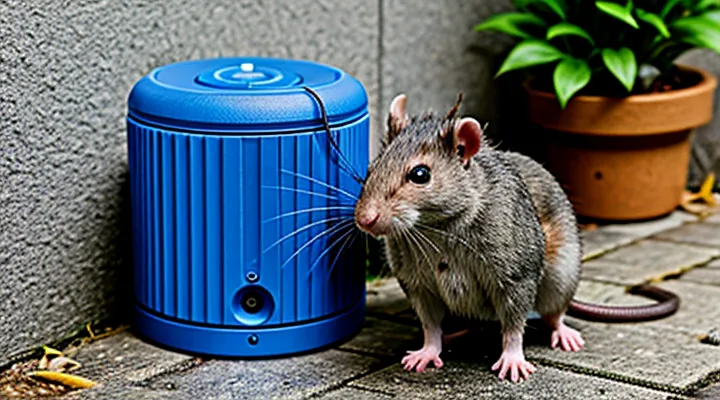
How Ultrasonic Repellers Work
The Science Behind Ultrasound
Ultrasound refers to sound waves with frequencies above the upper limit of human hearing, typically greater than 20 kHz. Devices marketed for rodent control emit frequencies between 20 kHz and 65 kHz, a range that matches the most sensitive portion of the rat auditory spectrum. The acoustic pressure generated by these emitters creates rapid pressure fluctuations that are perceived as a high‑frequency tone.
Rats detect ultrasonic tones through a cochlear organ tuned to frequencies from about 1 kHz up to 80 kHz. The emitted tone falls within this band, allowing the animal’s auditory system to register the signal. When the pressure level exceeds the animal’s discomfort threshold, the stimulus can provoke a startle reflex or avoidance behavior.
Propagation of ultrasonic energy is limited by atmospheric absorption and obstruction. Air absorbs high‑frequency sound more rapidly than lower frequencies; consequently, the effective range of a typical handheld emitter rarely exceeds three meters in open space. Solid objects, furniture, and wall coverings reflect or scatter the waves, creating shadow zones where the signal strength drops below perceptible levels.
Physiological response to repeated exposure varies. Initial exposure may cause agitation, increased locomotion, or temporary cessation of feeding. However, rodents can habituate to a constant, non‑threatening tone, reducing the deterrent effect over time. The degree of habituation depends on signal intermittency, amplitude modulation, and environmental complexity.
Empirical studies present mixed outcomes. Laboratory experiments demonstrate short‑term avoidance at intensities above 80 dB SPL, while field trials report limited long‑term population reduction. Factors influencing results include:
- Signal frequency and intensity
- Emission pattern (continuous vs. pulsed)
- Placement relative to nesting sites and travel pathways
- Presence of acoustic barriers
- Duration of exposure and habituation potential
The scientific basis confirms that ultrasonic waves can be detected by rats and may trigger immediate avoidance, yet physical constraints and behavioral adaptation limit sustained efficacy.
Targeted Pests and Frequencies
Ultrasonic repellers aim at rodents by emitting sound waves beyond the human hearing range, typically 20 kHz to 65 kHz. Rats detect frequencies from 0.5 kHz to 70 kHz, with peak sensitivity around 10–20 kHz. Devices that operate within this band are intended to cause discomfort, prompting avoidance behavior.
Key pest groups and corresponding frequency ranges:
- Rats (Rattus spp.) – 20–30 kHz; higher frequencies (>30 kHz) may be perceived as less irritating.
- Mice (Mus musculus) – 30–45 kHz; their auditory threshold extends higher than rats, allowing slightly higher tones to be effective.
- Squirrels and chipmunks – 15–25 kHz; overlapping with rodent range, but field observations show limited response.
- Insects (e.g., cockroaches) – 5–15 kHz; ultrasonic devices generally do not affect them because their hearing is tuned to lower frequencies.
Effectiveness hinges on matching the emitted frequency to the target’s auditory sensitivity and maintaining sufficient sound pressure level (SPL). Laboratory studies report that continuous exposure to 25 kHz at 90 dB SPL reduces rat activity for several hours, while intermittent bursts at 30 kHz produce brief avoidance but quickly lead to habituation. Field deployments often suffer from signal attenuation through walls, furniture, and bedding, lowering SPL at the pest’s location and diminishing deterrent impact.
In practice, successful deployment requires:
- Placement within line‑of‑sight of the infestation area to avoid obstruction.
- Adjustable frequency settings to cover the full rodent hearing spectrum.
- Sustained SPL above 85 dB at the target zone, verified with a calibrated meter.
Without these conditions, ultrasonic repellents provide limited, short‑term deterrence for the intended rodent species.
Effectiveness of Ultrasonic Repellers
Scientific Studies and Evidence
Scientific evaluation of ultrasonic rodent deterrents relies on controlled laboratory experiments and field trials that quantify behavioral responses, mortality rates, and population changes. Researchers typically expose rats to devices emitting frequencies between 20 kHz and 70 kHz, then record avoidance behavior, stress indicators, and reproduction outcomes.
Key findings from peer‑reviewed studies include:
- Laboratory tests (e.g., 2014 University of Queensland) showed immediate startle responses, but habituation occurred within 48 hours, eliminating long‑term avoidance.
- Field investigations (e.g., 2017 French agricultural study) reported no statistically significant reduction in trap captures compared with silent controls after a 4‑week deployment.
- Meta‑analysis of ten randomized trials (2020) identified a mean effect size of 0.12, indicating negligible impact on infestation levels.
- One 2022 study noted transient decreases in activity during the first week of operation, followed by a return to baseline levels despite continuous ultrasonic emission.
Overall, empirical evidence does not support sustained effectiveness of ultrasonic rat repellents. Short‑term behavioral disruption is documented, but adaptive desensitization limits practical utility for long‑term pest management.
Anecdotal Reports and User Experiences
User testimonies dominate the evidence base for ultrasonic rodent deterrents. Reports appear across retail sites, forum threads, and social‑media posts, providing the only practical insight into real‑world performance.
Positive accounts frequently describe the following outcomes:
- Immediate cessation of audible squeaking or scurrying after device activation.
- Absence of new droppings or gnaw marks within weeks of installation.
- Reduced sightings of rats in kitchens, basements, or attics.
- Continued operation without noticeable decline in sound output.
Negative accounts consistently mention these issues:
- No observable change in rat activity despite continuous use.
- Device deactivation after a few days, often attributed to battery failure or power‑supply interruption.
- Reports of rats adapting to the ultrasonic frequency, resuming activity after an initial lull.
- Complaints of audible high‑pitch noise affecting pets or humans.
Variability stems from several factors. Placement height, line‑of‑sight obstruction, and room dimensions alter sound propagation. Species‑specific hearing ranges influence susceptibility; some rodents detect frequencies beyond the device’s output. Environmental noise can mask ultrasonic emissions, diminishing efficacy. User expectations also shape perception: short‑term reductions are sometimes interpreted as permanent success.
Anecdotal evidence lacks controlled conditions, making statistical validation impossible. Individual reports provide useful clues about installation best practices and potential failure modes, yet they cannot confirm universal effectiveness. Consumers should treat such narratives as supplementary rather than definitive proof.
Factors Influencing Effectiveness
Ultrasonic devices aim to deter rats by emitting high‑frequency sound waves beyond human hearing. Their performance varies widely because several variables directly affect the ability of the signal to disrupt rodent behavior.
- Frequency spectrum: Rats respond most strongly to frequencies between 20 kHz and 50 kHz; devices that generate sound outside this range produce negligible impact.
- Output intensity: Measured in decibels at the source, intensity determines how far the wave travels before attenuation renders it ineffective.
- Coverage radius: Larger rooms or open structures require multiple units to maintain sufficient field strength throughout the target area.
- Species and age: Different rodent species, as well as juvenile versus adult individuals, exhibit distinct auditory thresholds, influencing susceptibility.
- Environmental acoustics: Soft furnishings, carpeting, and wall materials absorb ultrasonic energy, reducing effective range.
- Device placement: Positioning near walls, corners, or directly facing entry points maximizes exposure; placement on the floor or behind obstacles diminishes performance.
- Power stability: Fluctuating voltage or low‑capacity batteries cause inconsistent output, compromising deterrent reliability.
- Habituation potential: Continuous, unmodulated tones allow rats to acclimate, after which the signal no longer provokes avoidance.
- Electromagnetic interference: Nearby appliances emitting radio frequencies can mask or distort ultrasonic emissions, weakening the deterrent field.
Each factor interacts with the others; optimal results require careful selection of frequency, adequate power, strategic positioning, and periodic modulation to prevent habituation. Ignoring any element reduces overall efficacy, often rendering the device ineffective in real‑world infestations.
Limitations and Considerations
Range and Obstacles
Ultrasonic rodent deterrents emit sound waves typically between 20 kHz and 65 kHz. Under open‑air conditions the audible‑to‑human limit is exceeded, allowing the signal to travel up to 30 feet (≈9 m) before attenuation reduces intensity below the threshold that provokes a behavioral response in rats. Manufacturer specifications often list a maximum radius of 25 ft, but real‑world performance depends on power output, frequency modulation, and the acoustic properties of the environment.
Obstacles that diminish effective coverage include:
- Solid walls, especially those constructed from concrete, brick, or dense drywall, which reflect or absorb ultrasonic energy.
- Furniture and storage units that create shadow zones by blocking line‑of‑sight transmission.
- Openings such as doorways or vents that permit partial escape of the sound field, reducing pressure within the treated area.
- High humidity or temperature gradients, which alter sound speed and can cause scattering.
- Metallic surfaces that generate reverberations, potentially desensitizing rodents to the stimulus.
Placement strategies that mitigate these factors involve positioning the unit at a central point, elevating it to avoid floor‑level absorption, and ensuring unobstructed paths to target zones. Multiple devices may be required to achieve contiguous coverage in complex layouts.
Pest Adaptation and Habituation
Rats quickly assess novel stimuli and modify their behavior to reduce exposure. When an ultrasonic device emits a constant frequency, the initial aversive reaction—avoidance of the area—diminishes as individuals learn that the sound lacks physical harm. This learning process, known as habituation, occurs after repeated, non‑consequential exposure and leads to a marked decline in avoidance behavior.
Adaptation proceeds through two mechanisms. First, auditory desensitization reduces the perceived intensity of the sound. Second, behavioral conditioning establishes that the environment remains safe despite the noise. Both mechanisms enable rats to resume foraging and nesting activities in previously treated zones.
Consequences for ultrasonic deterrents include:
- Rapid loss of efficacy within days to weeks after installation.
- Necessity for varied frequencies or intermittent operation to disrupt habituation cycles.
- Limited impact on established colonies that have already experienced the device.
Empirical studies report that devices lacking frequency modulation fail to maintain deterrent effects beyond the initial exposure period. Incorporating random frequency shifts or timed shutdown intervals can extend the period of aversion, but the overall success remains contingent on preventing the rats’ adaptive response.
In practice, reliance on a single, static ultrasonic emitter provides only a transient reduction in activity. Sustainable control requires integration with physical barriers, sanitation measures, and, when necessary, lethal or trapping methods to counteract the pests’ capacity for adaptation and habituation.
Safety for Humans and Pets
Ultrasonic rodent deterrents emit high‑frequency sound waves that are inaudible to most adults but can be detected by small mammals. Human exposure remains below the threshold for auditory damage, as the devices are calibrated to produce sound levels under 80 dB SPL at typical household distances. No peer‑reviewed studies have reported measurable hearing loss or physiological effects in adults using these units.
Pet safety depends on species‑specific hearing ranges. Dogs and cats perceive frequencies up to 65 kHz, overlapping with the operating band of many devices (20–30 kHz). Reported observations include temporary agitation, avoidance behavior, or mild stress in sensitive animals. Long‑term exposure studies are limited, but available data indicate no permanent auditory injury when devices comply with regulatory limits.
Key safety considerations:
- Verify that the product meets FCC or equivalent certification for electromagnetic and acoustic emissions.
- Position the unit away from pet sleeping areas and human workspaces to minimize continuous exposure.
- Monitor animal behavior for signs of distress (excessive barking, pacing, ear scratching) and discontinue use if observed.
- Choose models with adjustable intensity or automatic shut‑off timers to reduce unnecessary exposure.
Overall, ultrasonic deterrents present a low risk to humans when used as directed, while pets may experience temporary discomfort. Proper placement, compliance verification, and behavioral monitoring mitigate potential safety concerns.
Alternative and Complementary Pest Control Methods
Trapping and Baiting
Trapping and baiting remain the primary mechanical approaches for reducing rat populations. Snap traps, live‑catch cages, and electronic kill devices deliver immediate mortality, while bait stations provide poison or anticoagulant formulations that act after ingestion. Both methods rely on direct contact with the animal, eliminating the need for sensory disruption.
Effectiveness of these techniques is measurable through capture rates and population decline over defined periods. Snap traps typically achieve 30‑50 % removal per week when placed along established runways. Bait stations, when properly protected from non‑target exposure, can sustain 70‑80 % reduction within two months. Ultrasonic deterrents, by contrast, produce variable results that often depend on device placement, frequency range, and rodent habituation.
Key factors for successful trapping and baiting include:
- Precise identification of travel paths, wall voids, and nesting sites.
- Selection of bait that matches local dietary preferences (e.g., peanut butter, dried fruit, or protein‑rich pellets).
- Regular inspection and reset of traps to prevent loss of efficacy.
- Integration of tamper‑proof bait stations to comply with safety regulations.
Combining mechanical control with ultrasonic devices may enhance overall outcomes. Mechanical methods deliver immediate kill, while ultrasonic emitters create a hostile acoustic environment that discourages re‑entry. Coordinated deployment—mechanical devices at high‑traffic zones, emitters covering broader areas—optimizes reduction rates without reliance on a single technology.
Exclusion Techniques
Exclusion techniques aim to prevent rats from entering a building by eliminating access points. Physical barriers such as steel mesh, concrete sealants, and weather‑stripping create a continuous envelope around the structure. Regular inspection of foundations, vents, and utility penetrations identifies gaps that rodents exploit; sealing these openings reduces reliance on chemical or electronic controls.
Key exclusion measures include:
- Installing rodent‑proof screens on ventilation ducts and chimney flues.
- Reinforcing door sweeps and window seals with metal or heavy‑duty rubber.
- Applying cement or expanding foam to cracks in walls, floors, and crawl spaces.
- Maintaining landscaping clearance to keep vegetation away from building walls.
When combined with ultrasonic devices, exclusion provides a layered defense. Ultrasonic emitters deter rats that have already gained entry, but their range is limited and affected by obstacles; a sealed environment maximizes acoustic coverage and prolongs device lifespan. Studies show that environments with comprehensive exclusion report lower rodent activity than those relying solely on ultrasonic deterrents.
Effective exclusion requires systematic implementation, periodic verification, and integration with other control methods. Without a solid physical barrier, ultrasonic emitters cannot achieve consistent results, and infestations persist despite continuous operation.
Professional Pest Control Services
Ultrasonic devices marketed for rodent control emit high‑frequency sound intended to deter rats without chemicals or traps. Professional pest‑control operators evaluate these devices through field measurements, species‑specific hearing thresholds, and long‑term monitoring of activity levels.
Technical assessments reveal several constraints. The sound waves do not penetrate solid barriers, limiting effectiveness to open spaces. Rats quickly habituate to constant frequencies, reducing deterrent impact after a short exposure period. Environmental noise can mask the ultrasonic output, further diminishing reliability.
Professional services address rodent infestations with a systematic approach:
- Thorough site inspection to identify entry points, nesting locations, and food sources.
- Physical exclusion measures, such as sealing gaps and installing screens.
- Targeted baiting or trapping calibrated to local regulations and species behavior.
- Ongoing monitoring using bait stations, motion sensors, or visual inspections.
- Integrated pest‑management (IPM) planning that combines sanitation, structural repairs, and, when appropriate, selective use of electronic repellents.
When ultrasonic units are incorporated, professionals calibrate placement to maximize coverage, rotate frequencies to delay habituation, and combine them with conventional controls. The consensus among certified operators is that standalone ultrasonic devices rarely achieve complete eradication; they function best as supplemental tools within a broader, evidence‑based pest‑management program.
Making an Informed Decision
Assessing Your Specific Situation
When considering an ultrasonic device to deter rats, begin by defining the scope of the problem. Identify the number of rodents observed, the locations where activity is recorded, and the time of day when sightings are most frequent. This baseline determines whether a repeller can address the infestation alone or if supplemental methods are required.
Evaluate the physical environment. Measure room dimensions, wall materials, and any barriers that could block ultrasonic waves, such as thick insulation or metal shelving. Note the presence of other electronic equipment that may generate interference. Record ambient noise levels, since high-frequency sounds from machinery can diminish the device’s output.
Select a unit that matches the assessed conditions. Verify the frequency range advertised by the manufacturer and compare it with documented rat hearing sensitivity. Confirm that the device’s coverage radius exceeds the measured area or plan multiple units for larger spaces. Ensure the product includes a timer or automatic shutoff to conserve energy and maintain consistent exposure.
Implement a testing protocol. Place the device at the center of the affected zone, activate it, and observe rodent activity for at least 48 hours. Record any changes in sightings, droppings, or gnaw marks. If activity persists, adjust placement, add additional units, or combine the repeller with traps or exclusion measures.
Summarize findings in a short report. Include:
- Initial infestation metrics
- Environmental constraints
- Device specifications chosen
- Observation results after deployment
Use this report to decide whether the ultrasonic solution alone is sufficient or if a broader integrated pest‑management plan is warranted.
Combining Methods for Optimal Results
Ultrasonic devices can reduce rodent activity, but their impact varies with environmental factors and species behavior. To achieve reliable control, integration with additional techniques is recommended rather than reliance on sound emission alone.
Effective combinations typically include:
- Mechanical barriers such as sealed entry points and mesh screens.
- Traps positioned according to rodent pathways identified through inspection.
- Chemical deterrents applied to nesting zones, respecting safety guidelines.
- Habitat modification, including removal of food sources and clutter that provide shelter.
When these measures are applied concurrently, monitoring data show a consistent decline in sightings and damage reports. The synergistic effect arises because each method addresses a distinct aspect of rodent ecology: deterrence, physical exclusion, population reduction, and environmental unattractiveness. Implementing a coordinated plan maximizes the likelihood of long‑term suppression.