
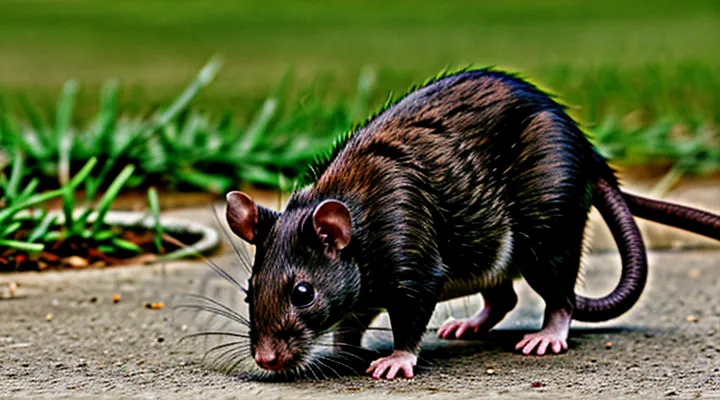
What Are Rats?«Basic Classification and Species»
Common Rat Species«Brown, Black, and More»
Rats encountered worldwide belong primarily to three well‑known species, each displaying distinct physical traits and ecological preferences. The most widespread are the brown rat (Rattus norvegicus), the black rat (Rattus rattus), and several less common relatives that inhabit specific regions.
The brown rat, often called the «Norwegian rat», exhibits robust body proportions, a blunt snout, and a tail shorter than its body length. Adult individuals typically weigh 250–500 g and thrive in urban sewers, agricultural fields, and coastal docks. Their omnivorous diet includes grains, fruits, and discarded food, supporting high reproductive rates that enable rapid population expansion.
The black rat, known as the «ship rat», possesses a slender build, a longer tail exceeding body length, and a darker, glossy coat. Weighing 150–250 g, this species favors higher elevations, attics, and warm climates, frequently colonizing ships and tropical environments. Its agility and climbing ability allow access to elevated food sources, distinguishing its habitat use from that of the brown rat.
Additional common species include:
- «Polynesian rat» (Rattus exulans): smallest of the group, prevalent on Pacific islands, often associated with human settlements.
- «Himalayan field rat» (Rattus nitidus): inhabits mountainous regions of South Asia, prefers open fields and forest edges.
- «Bush rat» (Rattus fuscipes): native to Australian bushland, displays nocturnal activity and a diet rich in seeds and insects.
These species collectively illustrate the adaptive versatility of rats, each occupying niche environments while sharing core biological characteristics such as rapid breeding cycles and opportunistic feeding habits.
Rodent Family Tree«Rats in Context»
The rodent family tree positions rats within a well‑defined evolutionary framework. Rats belong to the order Rodentia, suborder Myomorpha, and family Muridae, which also includes mice, voles, and gerbils. This placement reflects shared morphological traits such as continuously growing incisors and a distinctive dentition pattern.
- Order: Rodentia – most diverse mammalian order, characterized by a single pair of ever‑growing incisors in each jaw.
- Suborder: Myomorpha – groups rodents with a myomorphous skull, including mice, rats, and hamsters.
- Superfamily: Muroidea – encompasses families Muridae and Cricetidae, representing the majority of mouse‑like rodents.
- Family: Muridae – the largest rodent family, containing the true rats and mice.
- Genus: Rattus – comprises the most widely studied rat species, such as the brown rat (Rattus norvegicus) and the black rat (Rattus rattus).
Phylogenetic analyses indicate that rats share a recent common ancestor with mice, diverging approximately 12 million years ago. Close relatives within Muridae, such as the Asian house rat (Rattus exulans), display similar ecological adaptations, including omnivorous diets and high reproductive rates. Comparative studies of these lineages clarify traits that distinguish rats from other murids, such as larger body size and greater tolerance for urban environments.
Understanding the hierarchical classification outlined in the rodent family tree provides essential context for interpreting rat behavior, disease transmission, and ecological impact. Accurate taxonomic placement supports research on genetics, pest management, and conservation by linking rat biology to broader rodent evolutionary patterns.
Physical Characteristics«Beyond the Stereotypes»
Size and Weight«Variations by Species»
Rats exhibit a broad range of body dimensions, reflecting adaptation to diverse habitats and ecological niches. Adult individuals typically measure between 15 cm and 30 cm in head‑body length, with tail length often comparable to or exceeding the body.
Key species and their average size metrics:
- Brown rat (Rattus norvegicus) – body length 20–25 cm; tail 18–24 cm; weight 250–500 g.
- Black rat (Rattus rattus) – body length 16–20 cm; tail 18–25 cm; weight 150–250 g.
- Polynesian rat (Rattus exulans) – body length 12–15 cm; tail 13–15 cm; weight 40–70 g.
- Swamp rat (Rattus lutreolus) – body length 22–30 cm; tail 20–28 cm; weight 300–600 g.
- Australian water rat (Hydromys chrysogaster) – body length 25–30 cm; tail 20–30 cm; weight 300–500 g.
Size variation results from genetic factors, resource availability, and environmental pressures. Larger species such as the brown rat thrive in temperate urban settings, whereas smaller species like the Polynesian rat occupy island ecosystems with limited food sources. Weight fluctuations within a species correspond to age, sex, and nutritional status, with mature males generally heavier than females.
Distinctive Features«Tail, Ears, and Fur»
Rats possess three anatomical traits that readily differentiate them from many other rodents: a long, hair‑less tail, prominent, highly mobile ears, and a dense coat of fur covering the body.
- «Tail»: typically longer than the body, scaly, and capable of precise balance adjustments during climbing and rapid locomotion. The absence of fur reduces drag and enhances thermoregulation.
- «Ears»: proportionally large relative to head size, supported by a well‑developed musculature that permits independent rotation. This structure improves sound localization and aids in detecting predators.
- «Fur»: fine, soft, and densely packed, providing insulation across a wide temperature range. The coloration varies among species, often serving as camouflage in diverse habitats.
Collectively, these features support agility, sensory acuity, and environmental adaptability, contributing to the species’ successful colonization of urban and natural ecosystems.
Sensory Abilities«Sight, Smell, and Hearing»
Rats possess sensory systems adapted for nocturnal and subterranean environments, enabling efficient navigation, foraging, and predator avoidance. Their eyes detect motion and contrast rather than fine detail, providing sufficient visual input in low‑light conditions. Vision extends into the ultraviolet spectrum, allowing discrimination of patterns invisible to many predators.
- «Sight»: visual acuity approximates 20/400 in human terms; retinal cells are dominated by rods, optimizing sensitivity over resolution. Peripheral vision covers a wide field, reducing blind spots during rapid movement.
- «Smell»: olfactory epithelium contains up to 1 000 000 sensory neurons, surpassing human capacity by an order of magnitude. Detection thresholds reach parts per trillion, facilitating identification of food sources, conspecifics, and predators through pheromonal cues.
- «Hearing»: auditory range spans 200 Hz to 80–90 kHz, considerably higher than human hearing. Cochlear structures amplify ultrasonic frequencies, supporting communication via high‑frequency vocalizations and early warning of aerial threats.
Collectively, these modalities compensate for individual limitations, creating a robust perceptual network that supports survival in diverse habitats.
Behavior and Lifestyle«More Than Just Pests»
Social Structures«Colonies and Communication»
Rats organize themselves into stable social units that function similarly to colonies observed in other rodent species. Within each unit, individuals occupy defined roles that facilitate group cohesion, resource acquisition, and predator avoidance. Hierarchical relationships are established through dominance interactions, which are reinforced by scent marking and physical displays. Dominant members typically secure preferential access to food and nesting sites, while subordinate rats contribute to communal grooming and nest construction.
Communication among colony members relies on multiple channels:
- Scent cues emitted from urine, feces, and specialized dorsal glands convey identity, reproductive status, and territorial boundaries.
- Ultrasonic vocalizations, ranging from 20 to 80 kHz, transmit alarm signals, mating calls, and social bonding messages. These sounds are inaudible to humans but can be recorded with specialized equipment.
- Tactile interactions, including nose‑to‑nose contact and allogrooming, reinforce social bonds and reduce stress within the group.
- Visual signals such as tail posture and ear orientation supplement auditory and olfactory information during confrontations and courtship.
These communication methods operate concurrently, allowing rapid information exchange that coordinates foraging trips, nest maintenance, and defensive responses. Collective decision‑making emerges when individuals respond to the same vocal or chemical cues, resulting in synchronized movement toward food sources or safe shelter.
The structure of rat colonies demonstrates adaptability; groups can expand, fragment, or merge depending on environmental pressures and resource availability. Such flexibility ensures the persistence of social organization across diverse habitats, from urban sewers to agricultural fields.
Diet and Foraging«Opportunistic Eaters»
Rats exhibit remarkable dietary flexibility, allowing them to thrive in diverse environments. Their gastrointestinal tract efficiently processes both plant and animal matter, supporting rapid growth and high reproductive rates.
Key characteristics of their foraging behavior include:
- Consumption of grains, fruits, nuts, and seeds when available.
- Ingestion of insects, carrion, and small vertebrates during periods of protein scarcity.
- Exploitation of human-generated waste, including discarded food scraps and stored products.
- Ability to store excess food in cheek pouches for later consumption.
The label «Opportunistic Eaters» captures this adaptive strategy; rats assess nutrient content, moisture level, and caloric density before selecting items. Seasonal shifts prompt a higher intake of seeds and nuts in autumn, while urban populations increase reliance on processed foods during colder months. This opportunism contributes to their status as resilient omnivores capable of exploiting virtually any accessible resource.
Habitat and Adaptations«Urban and Wild Environments»
Rats occupy a broad spectrum of habitats, ranging from densely populated cities to remote natural ecosystems. Two species dominate human‑adjacent environments: the brown (Norway) rat, which thrives in sewer systems and basements, and the black rat, which prefers elevated structures and vegetation‑rich outskirts. Both species demonstrate remarkable ecological plasticity, enabling survival across disparate settings.
Urban environments impose challenges that have driven specific physiological and behavioral adaptations.
- Diet: omnivorous feeding habits allow exploitation of human waste, processed foods, and discarded organic material.
- Nesting: compact burrows within walls, insulation, and underground conduits provide shelter while minimizing exposure to predators.
- Reproduction: accelerated breeding cycles, with gestation periods of 21–23 days and litters of up to 12 offspring, sustain populations despite high mortality rates.
- Chemical resistance: enhanced detoxification enzymes reduce susceptibility to rodenticides and urban pollutants.
In contrast, wild habitats demand different survival strategies.
- Burrowing: extensive tunnel networks in soil or leaf litter protect against temperature extremes and predation.
- Seasonal coat: denser fur in winter conserves heat, while lighter pelage in summer improves thermoregulation.
- Predator avoidance: heightened nocturnal activity and acute olfactory senses facilitate detection of snakes, birds of prey, and mammalian hunters.
- Food caching: storage of seeds and insects ensures sustenance during periods of scarcity.
These divergent adaptations illustrate rats’ capacity to modify morphology, reproductive timing, and behavior in response to the specific pressures of urban and wild ecosystems.
Reproduction and Life Cycle«A Rapid Process»
Breeding Habits«Frequent and Numerous»
Rats reproduce with remarkable speed and high output. Sexual maturity is reached at 5‑6 weeks for females and 6‑8 weeks for males, allowing breeding cycles to commence within two months of birth. Gestation lasts 21‑23 days, after which a litter of 6‑12 pups is typical; litters as large as 20 have been recorded under optimal conditions. Females can become pregnant again within 24 hours of giving birth, resulting in up to five litters per year in temperate environments.
Key reproductive parameters:
- Age of first estrus: 5 weeks
- Gestation period: 21‑23 days
- Average litter size: 6‑12 pups
- Maximum litters per year: 5
- Post‑partum estrus interval: 1 day
Rapid turnover and large brood size contribute to the species’ capacity to colonize diverse habitats and recover from population losses. Environmental factors such as abundant food, shelter, and low predation pressure amplify these breeding characteristics, reinforcing the description «Frequent and Numerous».
Lifespan«In the Wild and Captivity»
Rats typically live between two and three years, but lifespan varies markedly depending on environmental conditions.
- In the wild, average longevity ranges from 12 months to 18 months. High predation risk, limited food availability, and exposure to disease compress life expectancy.
- In captivity, rats commonly reach 24 months to 36 months. Controlled diet, veterinary care, and protection from predators extend survival.
Factors influencing these differences include genetics, housing density, stress levels, and the presence of parasites. Captive environments that replicate natural stimuli while maintaining health standards can further approach the upper limits of rodent lifespan.
Intelligence and Adaptability«Masters of Survival»
Problem-Solving Skills«Learning and Memory»
Rats excel in problem‑solving tasks that require flexible strategies and rapid adaptation. Laboratory mazes demonstrate that individuals can navigate novel configurations after only a few exposures, indicating robust spatial reasoning. When presented with obstacles, rats modify their approach—switching from direct routes to indirect detours—without external prompting.
Learning and memory processes underpin this capability. The hippocampus consolidates spatial maps, while the prefrontal cortex integrates rule‑based information. Reinforcement schedules enhance retention: consistent rewards yield longer-lasting performance improvements than intermittent reinforcement.
Key observations include:
- Rapid acquisition of new escape routes after a single trial.
- Ability to transfer learned solutions from one apparatus to another, reflecting abstract reasoning.
- Persistence of learned patterns for weeks, even after periods of inactivity.
Neurochemical studies link acetylcholine release to heightened attentional focus during complex tasks, and dopamine spikes correlate with reward‑driven learning phases. These mechanisms collectively enable rats to solve problems efficiently and retain solutions over extended intervals.
Navigational Prowess«Exploring Their Surroundings»
Rats demonstrate exceptional spatial cognition, allowing rapid adaptation to complex environments. Their hippocampal circuitry encodes grid-like patterns that support precise distance estimation and directional orientation. Sensory integration of whisker tactile input, olfactory cues, and auditory signals creates a multimodal map of surroundings, enabling efficient route planning.
Key mechanisms underlying navigational prowess include:
- Path integration that continuously updates position relative to a starting point.
- Landmark recognition facilitated by strong visual and olfactory memory.
- Flexible learning of shortcuts after repeated exposure to maze-like structures.
These capabilities allow rats to explore territories, locate food sources, and evade predators with remarkable speed and accuracy. The combination of neural architecture and sensory processing underpins their ability to navigate diverse habitats.
Rats in Human Culture«Perception and Impact»
Symbolism and Folklore«Good and Bad Omens»
Rats have occupied a prominent place in myth and tradition across cultures, often embodying dualistic meanings that reflect human concerns about prosperity and danger. In many East Asian societies, the presence of a rat in a household is interpreted as a sign of wealth and abundance, linked to the animal’s reputation for rapid reproduction and resourcefulness. Conversely, European folklore frequently casts rats as harbingers of disease and misfortune, associating them with plagues, famine, and the decay of communal order.
The dichotomy between auspicious and ominous symbolism appears in ritual practices as well. In Chinese lunar calendars, the Year of the Rat is celebrated for its promise of cleverness and financial success, while rituals to repel rats involve incense and talismans intended to ward off the perceived threat of pestilence. In medieval Europe, towns erected statues of cats and dogs to discourage rat infestations, believing that the animals’ presence would counteract the negative omen represented by rodent activity.
Literary works reinforce these contrasting images. Classical fables portray the rat as a cunning survivor, rewarding ingenuity, whereas medieval chronicles describe swarms of rats as divine punishment, signaling impending catastrophe. Such narratives contribute to a persistent cultural framework in which rats serve as both «Good and Bad Omens», embodying the tension between fertility and decay, safety and peril.
Scientific Research«Contributions to Medicine»
Rats serve as a primary model organism in biomedical investigations, delivering data that directly informs therapeutic development. Their physiological and genetic characteristics allow researchers to extrapolate findings to human health contexts with measurable reliability.
Key attributes include a rapid reproductive cycle, well‑characterized genome, and behavioral patterns that mirror human disease manifestations. These features enable controlled experimental designs, longitudinal studies, and reproducible outcomes across laboratories.
Significant medical advances derived from rat research:
- Development of the polio vaccine, demonstrated in early 20th‑century trials «The use of rats in poliovirus attenuation studies».
- Identification of insulin’s pharmacodynamics, facilitating dosage optimization for diabetic treatment.
- Elucidation of tumorigenic pathways, leading to targeted chemotherapeutic agents for breast and lung cancer.
- Validation of neuroprotective compounds for stroke and Parkinson’s disease through behavioral and histological assessments.
- Assessment of cardiovascular prosthetics, supporting safety and efficacy of stent materials before human implantation.