
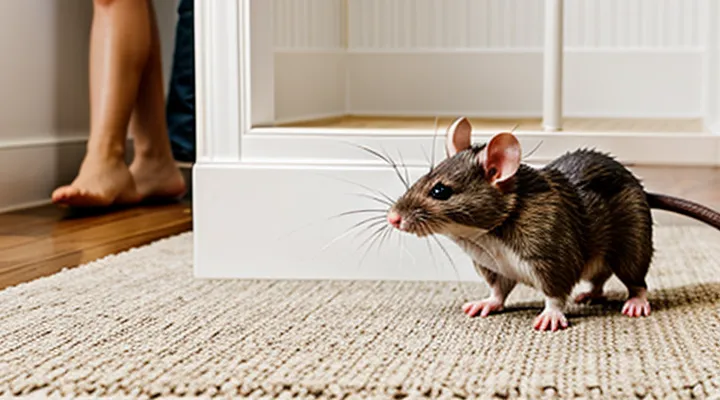
«Understanding the Situation»
«Identifying the Rat's Presence»
«Signs of a Rat Infestation»
Rats reveal their presence through observable evidence that precedes direct contact. Recognizing these indicators enables a swift, humane removal strategy.
First, droppings appear near food sources, along walls, and in concealed corners. Fresh pellets are dark, glossy, and roughly ½ inch long; older waste turns lighter and crumbly.
Second, gnaw marks emerge on wood, plastic, or wiring. Teeth create clean, crescent-shaped cuts, often accompanied by shredded material.
Third, nests form from shredded paper, fabric, or insulation. These mounds are typically located in hidden spaces such as attic corners, behind appliances, or within wall voids.
Fourth, audible activity becomes noticeable at night. Scratching, scurrying, or squeaking sounds indicate movement within concealed areas.
Fifth, a distinctive musky odor may linger, especially near nesting sites or where urine has accumulated. The smell intensifies with larger populations.
Sixth, unexplained damage to stored food, packaging, or containers points to foraging behavior. Bite marks and torn wrappers are common signs.
Identifying these signs promptly informs the selection of non-lethal deterrents, containment measures, and exclusion techniques that safely guide the animal out of the occupied space.
«Confirming It's a Single Rat»
When attempting to remove a rodent from a room without causing harm, the first step is to verify that only one individual is present. Accurate identification prevents unnecessary escalation and ensures that any deterrent measures are appropriately scaled.
Observe the environment for direct evidence of a single animal. Look for a solitary set of footprints, a lone droppings trail, and a single gnaw mark on food packaging or wiring. A single nest built from shredded material, located in an isolated corner, also indicates one occupant.
Listen for sound patterns. A solitary scurrying noise that repeats at regular intervals, without overlapping chatter, suggests a single rat. Multiple overlapping sounds typically signal a group.
Check for visual confirmation. Use a flashlight to spot movement in concealed areas such as under furniture, behind appliances, or within wall voids. A single silhouette or brief sighting confirms solitary presence; repeated sightings in different locations may imply additional individuals.
If uncertainty remains, set a humane live trap with bait. A single capture confirms the count; multiple captures from a single trap session reveal more than one rat.
Document findings—footprint count, droppings quantity, nest size, auditory observations, and trap results. This record validates the assessment and guides subsequent non-lethal removal actions.
«Assessing the Room Layout»
«Potential Escape Routes»
When a rodent must be escorted out of an indoor space without lethal means, the most effective strategy is to create a direct, unimpeded pathway to the outside. Identify every possible egress and ensure it remains accessible throughout the process.
- Open doors leading to hallways, stairwells, or outdoor exits; keep them fully ajar.
- Unfasten windows that open outward or can be tilted; remove screens if they block movement.
- Clear ventilation grilles, air ducts, or wall vents that connect to external areas; verify they are not sealed.
- Remove obstacles from under furniture, beneath rugs, and along baseboards to prevent the rat from hiding.
- Position a sturdy tube or PVC pipe between the interior and an exterior opening; secure both ends to prevent collapse.
- Ensure gaps around door frames, floorboards, or utility openings are widened enough for the animal to pass without squeezing.
After establishing these routes, monitor the rodent’s progress and gently guide it toward the nearest opening using low‑frequency sounds, mild light, or a non‑threatening object. Maintaining a clear, continuous escape path eliminates the need for force and reduces stress for both the animal and the handler.
«Hiding Spots and Obstacles»
Rats exploit crevices, furniture edges, and clutter to avoid capture. Identifying these locations is the first step in a humane removal plan.
Common hiding spots include:
- Gaps behind appliances, especially refrigerators and stoves.
- Openings under doors and between baseboards.
- Stacks of boxes, laundry piles, and disorganized storage.
- Cavities inside wall voids, ceiling tiles, and attic access panels.
Obstacles that impede safe extraction:
- Loose wires and cords that can entangle a rat or hinder movement of tools.
- Overfilled trash bins that provide temporary shelter and concealment.
- Heavy furniture that blocks direct pathways to exits.
- Small openings that allow entry but restrict exit, forcing the animal to retreat deeper.
Effective management involves:
- Clearing clutter to reduce concealment opportunities.
- Sealing non‑essential gaps with steel wool, caulk, or mesh to limit re‑entry.
- Creating a clear, unobstructed route from the identified hiding area to an open door or window.
- Using low‑noise, non‑lethal deterrents (e.g., bright lights, gentle air flow) to encourage movement toward the exit.
By systematically eliminating hiding places and removing barriers, the rat is guided out of the room without injury.
«Preparation for a Humane Eviction»
«Gathering Necessary Supplies»
«Non-Lethal Traps»
Non‑lethal traps provide a humane way to remove a rat from an indoor space while keeping the animal alive. These devices capture the rodent in a confined compartment, allowing relocation to an exterior environment far from the building.
Typical designs include:
- Live‑catch cages: Wire mesh enclosure with a baited entry door that snaps shut when the rat pushes through.
- Tube traps: Narrow cylindrical tube with a one‑way flap; the rat enters for food and cannot exit.
- Multi‑compartment traps: Series of linked chambers that guide the rat deeper into the system, preventing escape until the operator releases it.
Effective deployment follows a simple protocol. Place traps along walls, near suspected travel routes, and close to food sources. Use high‑protein bait such as peanut butter or dried fruit to increase attraction. Check traps at least twice daily; once a rat is captured, transport it to a suitable outdoor location, release it at least 200 meters from the building, and seal any entry points to prevent re‑entry.
Maintenance includes cleaning traps after each use, inspecting for damage, and replacing worn bait. Proper sanitation—removing crumbs, securing garbage, and repairing structural gaps—reduces future incursions and maximizes the success of non‑lethal capture methods.
«Protective Gear»
When attempting to remove a rodent from an interior space without causing injury, appropriate protective equipment safeguards both the handler and the animal.
A sturdy pair of gloves made from nitrile or leather prevents bites and scratches while allowing enough tactile feedback to manipulate traps or guiding tools. Eye protection—clear safety glasses or a full-face shield—guards against potential splashes of urine or feces and protects against sudden movements that could strike the face. A disposable mask or respirator with a particulate filter reduces inhalation of allergens, dust, and droppings that may trigger respiratory irritation. Long-sleeved, tightly woven clothing, such as a work shirt and pants, creates a barrier against fur and minor abrasions. Slip‑resistant footwear ensures stable footing on potentially wet or uneven flooring, reducing the risk of falls while pursuing the animal.
Additional items improve control without harming the rodent:
- A flexible capture tube or humane live‑catch trap, allowing safe containment once the rat moves toward the exit.
- A low‑noise, battery‑powered ultrasonic deterrent to encourage movement away from hiding spots without physical contact.
- A disposable towel or cloth to gently block gaps or guide the animal toward the doorway.
All gear should be inspected before use, cleaned after each encounter, and stored in a sealed container to maintain hygiene and effectiveness. Proper preparation minimizes stress for the rodent, reduces the likelihood of bites, and ensures the operator remains protected throughout the removal process.
«Cleaning Supplies»
Cleaning agents can be employed to coax a rodent out of an interior space while preserving its life. The approach relies on odor aversion, physical barriers, and sanitation that discourages re‑entry.
- Mild dish soap diluted in warm water – creates a slippery surface on floors and countertops, making movement uncomfortable for the animal.
- White vinegar – strong scent repels rodents; spray a thin mist along entry routes and near hiding places.
- Peppermint essential oil – natural deterrent; dilute a few drops in water and apply to cotton balls placed at doorways and corners.
- Disposable gloves – protect hands from contamination while handling supplies.
- Trash bags, paper towels, and a broom – collect debris, wipe surfaces, and remove any droppings promptly.
Begin by removing food items and securing waste containers to eliminate attractants. Wear gloves, then sweep the floor to expose any hidden pathways. Apply the soap solution to high‑traffic zones, allowing it to dry so the surface remains tacky. Follow with a light vinegar spray along the same routes; the combined odor and texture create an unpleasant environment that encourages the rat to seek an exit.
Position peppermint‑infused cotton balls at the primary exit door and any secondary openings. The scent gradient directs the animal toward the least resistant path. Open the door fully and, if necessary, use a gentle shooing motion with a broom to guide the rodent outward without physical contact.
After the rodent leaves, disinfect all treated areas with a diluted bleach solution or an approved surface sanitizer. Dispose of used towels, gloves, and cotton balls in sealed bags. Inspect the room for signs of re‑entry and repeat the deterrent measures if activity recurs. This systematic use of cleaning supplies achieves humane removal while maintaining a hygienic environment.
«Securing the Room»
«Blocking Gaps and Holes»
Sealing openings forces the rodent to use the only available exit, preventing it from retreating to hidden corners.
Begin by inspecting walls, floorboards, baseboards, and any fixtures for cracks, holes, or gaps larger than a quarter‑inch. Mark each opening with a temporary indicator.
Prepare appropriate sealing materials: steel wool, copper mesh, silicone caulk, expanding foam, and weather‑stripping. For narrow cracks, pack steel wool tightly, then coat with caulk to hold it in place. Larger holes require a backing of mesh, covered by a layer of expanding foam that cures into a solid barrier. Around doors and windows, install weather‑stripping that eliminates gaps while allowing the door to open fully for the rat’s escape.
After all passages are sealed, open a single, unobstructed doorway or window that leads directly outside. Monitor the area, ensuring the rat cannot re‑enter through any concealed route. Once the animal exits, inspect the room again and reinforce any new gaps that may have appeared during the process.
«Removing Food Sources»
Eliminate all accessible nutrition to compel the rodent to leave voluntarily. Begin by inspecting the room for crumbs, spilled pet food, and exposed pantry items. Store each edible item in sealed containers made of glass or heavy‑wall plastic; metal tins with airtight lids are also effective. Clean surfaces with a degreasing detergent to remove residue that may attract the animal.
- Remove fruit bowls, open snack packages, and cereal boxes.
- Seal garbage bins with tight‑fitting lids; empty them daily.
- Relocate pet feeding stations to a separate area, preferably outside the room.
- Sweep and vacuum floors, then mop with a solution that leaves no scent.
With no food supply, the rat’s natural foraging behavior drives it to search elsewhere, increasing the likelihood of exiting the space without harm. Continuous monitoring ensures that no new food sources reappear during the process.
«Creating a Clear Path to Exit»
Creating a direct, unobstructed route encourages a rat to leave a room on its own. Begin by identifying the nearest opening—door, window, or gap—and ensure it remains fully accessible. Remove any objects that could block the path, such as furniture, boxes, or clutter, and keep cords and wires away from the exit to prevent entanglement. If the opening is partially closed, adjust hinges or slides so the gap is wide enough for the animal to pass without hesitation.
Next, arrange a one‑way corridor leading to the exit. Position low, stable barriers (e.g., bookshelves or cardboard sheets) on the sides of the route to guide movement while preserving a clear central lane. The barriers should be tall enough to deter the rat from turning back but low enough to avoid creating a new obstacle.
Finally, use gentle stimuli to direct the rodent toward the exit:
- Place a small amount of food (e.g., a piece of fruit or grain) at the far end of the corridor, just inside the opening.
- Emit a soft, continuous noise (a tapping sound or low hum) behind the rat to encourage forward motion.
- Avoid sudden movements or loud sounds that could cause the animal to freeze or seek shelter.
Maintain the clear path until the rat disappears through the opening. Afterward, seal any potential entry points to prevent future incursions.
«Executing the Eviction Strategy»
«Guiding the Rat Out»
«Using Sound and Light»
Sound and light can compel a rat to leave a confined area without causing injury. Auditory cues trigger the animal’s instinct to flee from perceived predators, while sudden illumination disrupts its sense of safety and encourages movement toward an exit.
- Emit high‑frequency tones (above 15 kHz) that rats detect but humans cannot hear. Use a portable ultrasonic emitter placed near the door or opening; operate for 30–60 seconds before each attempt.
- Alternate bursts of low‑frequency noise (1–4 kHz) to startle the rat without inducing stress. Position speakers at opposite walls to create directional pressure toward the exit.
Light tactics rely on rapid changes in brightness:
- Install a strobe light aimed at the exit, set to flash at 5–10 Hz. The intermittent glare disorients the rat and pushes it toward darker zones.
- Use a high‑intensity LED spotlight directed at the doorway; maintain illumination for 20 seconds, then dim gradually to guide the animal outward.
- Apply a handheld flashlight with a focused beam to sweep the floor, forcing the rat to move away from the light source.
When sound and light are synchronized, the rat experiences a compounded stimulus that maximizes escape behavior. Activate the ultrasonic device and strobe simultaneously, then gradually reduce both as the animal approaches the opening. Ensure that all equipment is positioned to avoid direct exposure to humans and that the exit remains unobstructed. This coordinated approach reliably removes the rodent while preserving its life.
«Gentle Herding Techniques»
Removing a rodent from an indoor space without causing harm requires controlled guidance rather than aggression. Gentle herding relies on directing the animal toward an exit while maintaining a calm environment.
- Close doors and windows that do not lead to the intended exit.
- Place a sturdy, flat object (e.g., a cardboard sheet) near the doorway to create a visual barrier.
- Position a low‑profile container or a piece of furniture opposite the exit to limit the rat’s escape routes.
- Use a soft, long‑handled instrument such as a broom or a piece of PVC pipe to nudge the rodent gently, keeping movements slow and deliberate.
- Encourage movement by tapping lightly on the floor or walls ahead of the animal, prompting it to move forward.
Maintain low lighting to reduce startling reactions, but ensure enough illumination for clear visibility. Remove food sources and clutter that could provide hiding spots. Keep pets and children away from the area until the rodent has left.
After the rat exits, inspect the room for signs of damage, droppings, or entry points. Seal gaps, repair holes, and store food in sealed containers to prevent recurrence. Use disposable gloves when handling waste, and disinfect surfaces with an appropriate sanitizer.
«Avoiding Direct Contact»
When removing a rodent from an enclosed area without causing harm, the primary concern is to keep hands, clothing, and skin away from the animal. Direct contact increases the risk of bites, scratches, and disease transmission, and it can also stress the creature, making it harder to guide it out.
- Deploy a long-handled scoop or a sturdy piece of cardboard to gently lift the rat and place it near an open exit.
- Use a funnel-shaped trap made of wire mesh that directs the animal toward the doorway while keeping it inside a cage that can be released outside.
- Position a flexible rod or broom to nudge the rat toward the exit without touching its body; a smooth, steady push encourages movement without alarm.
- Lay a thin sheet of plastic or a disposable glove over the floor; the rat will climb onto it, allowing you to slide the sheet toward the opening without direct hand contact.
Maintain a clear path to the exit by removing obstacles, closing other doors, and ensuring the target doorway remains unobstructed. Keep the room well‑lit so the rat can see the route, and avoid sudden movements that could trigger a defensive response. After the animal has exited, disinfect any surfaces the rat may have contacted and wash hands thoroughly before handling any tools.
«Setting Up Humane Traps»
«Baiting the Traps Effectively»
Effective baiting is essential for persuading a rat to leave a room without causing harm. Choose attractants that match the animal’s natural preferences and that do not pose a risk to humans or pets.
- Use high‑protein foods such as peanut butter, cooked egg, or small pieces of lean meat.
- Add a scent component, like a few drops of vanilla extract or a pinch of catnip, to increase detectability.
- Present the bait on a simple, non‑lethal trap that allows the rat to enter, feed, and exit freely.
- Position the trap along established runways: near walls, behind furniture, or close to where droppings have been observed.
- Secure the trap at ground level; rats rarely climb to reach food placed higher than 12 inches.
- Check the trap at regular intervals (every 30–60 minutes) to prevent the animal from becoming trapped for too long.
Adjust bait composition if initial attempts fail. Replace a protein source with a carbohydrate option, such as a small piece of dried fruit, and observe any change in activity. Rotate bait locations nightly to prevent the rat from associating a single spot with danger. Maintain a clean environment by removing competing food sources; this concentrates the rat’s focus on the offered bait.
Once the rat enters the trap, allow it to consume the bait and exit voluntarily. Immediately close the trap to avoid recapture, then release the animal at a safe distance from the building, preferably in a wooded area with access to shelter and water. This approach eliminates the need for lethal measures while ensuring the rat is effectively removed from the interior space.
«Placement of Traps»
Effective trap placement determines whether a rodent will exit a space voluntarily. Identify all entry points, such as gaps under doors, cracks in walls, and ventilation openings. Position a humane capture device directly in the path between the rodent’s shelter and the nearest exit. Align the trap so that the trigger mechanism faces the direction of travel; this reduces hesitation and increases capture likelihood.
Locate additional traps near secondary routes that the animal might use after encountering the first device. Space them at intervals of 12–18 inches to create a continuous barrier without crowding the area. Ensure each trap rests on a stable surface; uneven placement can cause the rat to avoid the device.
Avoid placing traps in high‑traffic zones where human activity could disturb the mechanism. Keep bait—such as peanut butter, dried fruit, or a small piece of cheese—secured on the trigger plate to maintain attraction. Replace bait daily to preserve scent strength.
Maintain a clear line of sight from the trap to the exit door. When the rodent enters the trap, release it immediately outside, preferably several meters from the building, to prevent immediate return. After release, inspect the room for new signs of activity and adjust trap locations accordingly.
«Regular Monitoring»
Regular monitoring is the most reliable way to ensure a rodent leaves a space voluntarily. By observing the rat’s movements and habits, you can predict when it is most vulnerable to non‑lethal removal methods and intervene before the animal becomes stressed or hidden.
- Install motion‑activated cameras or infrared sensors at entry points and along walls. Record activity for at least 24 hours to capture peak movement periods.
- Review footage twice daily. Note the times the rat appears, the routes it prefers, and any changes in behavior after initial deterrents are applied.
- Adjust deterrent placement (e.g., ultrasonic emitters, scent barriers) based on observed patterns. If the rat avoids a particular zone, reinforce that area with additional non‑lethal stimuli.
- Keep a log of observations, including date, time, and specific actions taken. Consistent documentation allows you to measure the effectiveness of each intervention and modify the strategy promptly.
Continuous observation eliminates guesswork, reduces the need for forceful measures, and creates a predictable environment that encourages the rodent to exit on its own.
«Post-Eviction Measures»
«Releasing the Rat Safely»
«Choosing an Appropriate Location»
Choosing a suitable destination for the rat is essential for a humane removal. The area must be free of obstacles that could injure the animal, such as exposed wiring, sharp objects, or clutter that could trap its limbs. It should also be easy for the rodent to access and exit, with a clear path to an exterior opening or a secure containment device.
Key criteria for the location include:
- Open floor space that allows unrestricted movement.
- Absence of toxic substances, chemicals, or food sources that could attract the rat back.
- Proximity to a safe exit, such as a door, window, or vent, that can be opened temporarily.
- Structural stability to prevent collapse or blockage during the chase.
- Minimal human traffic to reduce stress on the animal and prevent accidental capture.
«Distance from Your Home»
The distance between your residence and the location where the rodent will be released determines the feasibility and safety of a humane removal operation. When the target area lies within the same building, containment and relocation can be completed without transporting the animal far from the property. When the release point is outside the immediate premises, planning must account for travel time, environmental suitability, and legal restrictions.
If the rat remains inside the building, use a portable trap that can be sealed and carried directly to a nearby suitable habitat, such as a vacant lot or wooded area located no more than a few hundred meters from the structure. This minimizes stress on the animal and reduces the likelihood of re‑entry.
For releases situated on the homeowner’s land but beyond the immediate vicinity, follow these steps:
- Identify a location at least 150 m from the house, preferably with natural cover and access to food sources.
- Verify that the site is not adjacent to a neighbor’s property or a public space where the animal could become a nuisance.
- Transport the sealed trap in a secure container to prevent escape during transit.
- Open the trap at the chosen site, allow the rat to exit, and observe for a brief period to confirm departure.
When the appropriate habitat lies several kilometers away, incorporate additional considerations:
- Check local wildlife regulations to ensure release is permitted in the selected area.
- Choose a route that avoids high‑traffic zones and potential predators.
- Use a vehicle or bicycle that can accommodate the trap safely, keeping it upright and insulated from extreme temperatures.
- Record the GPS coordinates of the release point for future reference and compliance verification.
Distance thus influences the logistics of a non‑lethal extraction: shorter ranges allow rapid, low‑effort relocation; moderate ranges require careful site selection and transport safeguards; extensive ranges demand regulatory awareness and thorough planning. Aligning the chosen distance with these guidelines ensures humane handling while protecting the integrity of the surrounding environment.
«Preventing Future Infestations»
«Sealing Entry Points Permanently»
Effective removal of a rodent from an interior space relies on eliminating all routes it can use to re‑enter. Permanent blockage of openings prevents the animal from returning after it has been encouraged to leave.
Begin by conducting a thorough inspection of walls, floors, ceilings, and adjacent structures. Look for gaps larger than a quarter of an inch, holes around utility penetrations, and cracks at the junction of baseboards and trim. Pay special attention to areas where pipes, wires, or vents pass through the room’s envelope.
Once entry points are identified, apply the following sealing methods:
- Steel wool combined with caulk – pack steel wool into the opening, then cover with silicone or acrylic caulk to deter chewing.
- Expanding polyurethane foam – inject into gaps around pipes or ducts; the foam hardens, creating a durable barrier.
- Metal flashing or mesh – fit over larger openings, secure with screws and sealant to provide a chew‑proof surface.
- Concrete or mortar – fill sizable cracks in masonry; smooth the surface to maintain structural integrity.
- Weather‑stripping or door sweeps – attach to the bottom of doors and windows to block narrow passages.
After sealing, verify the integrity of each repair by probing with a thin object or by observing for new signs of activity. Maintain a schedule for periodic checks, especially after renovations or seasonal changes that may cause material shrinkage.
By removing all viable ingress routes, the rat loses the ability to re‑occupy the room, ensuring a humane and lasting solution.
«Maintaining Cleanliness»
Keeping the room free of food particles, crumbs, and spills removes the primary incentive for a rat to stay. When no edible material is visible, the animal is more likely to search for a cleaner area and exit willingly.
- Store all food in sealed containers; discard leftovers promptly.
- Sweep and vacuum floors daily; wipe countertops with a detergent solution.
- Empty trash cans before they become full; use bins with tight‑fitting lids.
- Clean up pet food and water dishes after each use; rinse surfaces thoroughly.
- Inspect shelves and cabinets for hidden spills; clean any residue immediately.
After eliminating attractants, reduce hiding opportunities by clearing clutter and arranging furniture to create open pathways. A tidy layout allows the rat to see an unobstructed route to the exit.
Finally, maintain the cleaned state by establishing a regular schedule for waste removal, surface sanitation, and inspection of potential entry points. Consistent upkeep sustains an environment that discourages the rat from returning, enabling a humane removal without lethal measures.
«Regular Inspections»
Regular inspections provide the data needed to guide a humane removal effort. By systematically checking the room, you can locate the rat’s pathways, identify food sources, and confirm that the animal is moving toward an exit.
Key inspection elements include:
- Fresh droppings or urine stains indicating recent activity.
- Gnaw marks on walls, furniture, or wiring that reveal preferred routes.
- Small openings, gaps, or damaged screens that serve as entry or escape points.
- Nesting material such as shredded paper, fabric, or insulation.
Conduct inspections daily while the rat is present, then reduce to weekly checks once the animal has vacated the space. Consistent timing prevents new infestations and ensures that any missed entry points are addressed promptly.
Record each observation in a simple log: date, location, and type of evidence. Use the log to adjust trap placement, reposition deterrents, and schedule repairs. Documentation also creates a clear audit trail for future maintenance.
Integrating inspection results with other non‑lethal tactics—such as live traps, scent repellents, and barrier sealing—maximizes the likelihood that the rat exits the room without injury.