
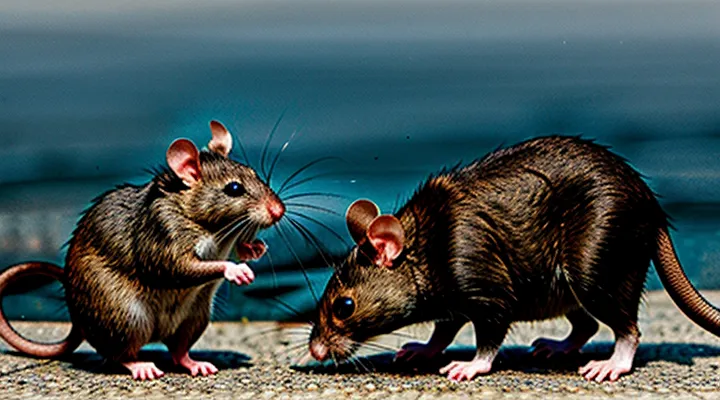
Distinguishing Rats and Mice: Fundamental Differences
Physical Characteristics and Identification
Size and Weight Comparisons
Rats generally exceed mice in both length and mass. Adult Norway rats (Rattus norvegicus) attain body lengths of 20–25 cm, tail lengths of 18–25 cm, and total weights of 250–500 g. Common house mice (Mus musculus) reach body lengths of 7–10 cm, tail lengths of 5–10 cm, and total weights of 15–35 g.
Key comparative metrics:
- Body length: rat ≈ 20–25 cm; mouse ≈ 7–10 cm
- Tail length: rat ≈ 18–25 cm; mouse ≈ 5–10 cm
- Weight: rat ≈ 250–500 g; mouse ≈ 15–35 g
These dimensions reflect divergent ecological niches: rats occupy larger burrows and exploit broader food resources, while mice thrive in confined spaces and consume smaller quantities. Size disparity influences predator–prey dynamics, competition for shelter, and disease transmission patterns between the two rodents.
Tail Length and Body Proportions
Tail length distinguishes rat and mouse morphology, reflecting divergent ecological niches. In rats, the tail typically measures 20‑30 % of total body length, providing balance for climbing and a surface for thermoregulation. Mice display proportionally shorter tails, usually 15‑20 % of body length, optimized for rapid maneuvering through narrow burrows.
Body proportions further separate the two species. Rats exhibit a robust torso, with the head‑to‑body ratio approximating 1:2.5, supporting greater muscle mass for foraging on larger food items. Mice possess a more slender build, head‑to‑body ratio near 1:3, facilitating agility and higher reproductive output.
These morphological differences influence inter‑species interactions:
- Competition for shelter diminishes when tail and body size allow rats to occupy higher, open structures while mice remain in confined niches.
- Predation risk varies; longer tails in rats serve as visual deterrents, whereas mice rely on swift escape facilitated by compact bodies.
- Resource partitioning emerges, with rats exploiting larger seeds and fruits, mice focusing on tiny grains and insects.
Understanding tail length and body proportions clarifies how physical traits mediate coexistence, territorial overlap, and adaptive strategies between the two rodent groups.
Ear Size and Snout Shape
Rats and mice exhibit distinct morphologies that influence their social and ecological dynamics. Ear size varies markedly between the two genera. Rats typically possess larger, more robust ears that enhance thermoregulation and auditory detection of low‑frequency sounds. Mice display smaller, delicate ears, optimized for high‑frequency perception and reduced heat loss in confined habitats.
Snout shape further differentiates the species. Rats feature elongated, blunt rostra with a broad nasal cavity, supporting strong bite force and efficient processing of coarse materials. Mice present short, pointed snouts, allowing precise manipulation of fine seeds and insects. These craniofacial traits affect inter‑species interactions in several ways:
- Larger rat ears improve detection of mouse vocalizations, facilitating predator–prey assessment.
- Smaller mouse ears reduce susceptibility to rat‑generated vibrations, aiding covert movement.
- Rat snout robustness enables excavation of burrows that may intersect mouse territories, creating competitive overlap.
- Mouse snout agility permits exploitation of narrow crevices inaccessible to rats, reducing direct competition.
Understanding ear and snout morphology clarifies mechanisms by which these rodents coexist, compete, and influence each other's behavior within shared environments.
Behavioral Patterns
Social Structures and Habitat Preferences
Rats and mice share overlapping ecological niches yet maintain distinct social organizations. In rat colonies, a dominant male typically controls access to resources, while subordinate males assist in foraging and nest maintenance. Female rats form matrilineal clusters that cooperate in pup rearing, resulting in high offspring survival rates. Mice exhibit a more fluid hierarchy; dominance is established through brief aggressive encounters, and groups often dissolve and reform depending on resource availability. Both species communicate dominance and reproductive status via ultrasonic vocalizations and pheromonal cues.
Habitat selection reflects these social patterns. Rats prefer larger, structurally complex environments such as sewers, basements, and abandoned structures, which accommodate their hierarchical colonies and allow multiple nesting sites. Their tolerance for human disturbance enables colonization of densely populated urban areas. Mice favor smaller, concealed spaces like grain stores, field margins, and garden debris, where their flexible social groups can rapidly exploit transient food sources. Seasonal shifts prompt mice to move between indoor and outdoor habitats, whereas rats maintain year‑round occupancy in permanent shelters.
Key differences in inter‑species interaction:
- Resource competition intensifies where rat and mouse habitats intersect, particularly in grain‑rich storage facilities.
- Rats often exhibit aggressive displacement of mice, leveraging size advantage and territorial dominance.
- Mice may exploit peripheral zones of rat territories, accessing food caches left unattended by larger conspecifics.
Understanding these social structures and habitat preferences clarifies how the two rodent species coexist, compete, and influence shared ecosystems.
Nocturnal Activity and Foraging Habits
Rats and mice share a nocturnal schedule, yet their foraging strategies diverge to reduce direct competition. Rats typically exploit larger food items and exhibit opportunistic scavenging, often foraging in sewers, compost piles, and urban refuse. Their robust jaws and strong dentition enable processing of tough organic matter, allowing access to resources unavailable to smaller rodents. Mice concentrate on seeds, grains, and soft plant tissues, frequently foraging in stored food containers and agricultural fields where fine motor control and rapid maneuverability provide an advantage.
Both species adjust activity peaks to avoid overlap when resources are limited. Observations indicate that rats reach maximal activity shortly after sunset, while mice display a secondary peak toward dawn. This temporal partitioning diminishes direct encounters and facilitates coexistence in shared habitats. Additional mechanisms supporting coexistence include:
- Spatial segregation: rats dominate ground-level and subterranean niches; mice occupy higher vegetation and interior building spaces.
- Dietary specialization: rats process coarse waste; mice harvest high‑energy seeds.
- Behavioral avoidance: scent marking and ultrasonic vocalizations signal territorial boundaries, reducing aggressive interactions.
The combined effect of these adaptations results in a dynamic balance where each species exploits distinct ecological windows, maintaining stable populations despite overlapping nocturnal periods.
Dietary Needs and Preferences
Rats and mice share overlapping habitats, yet their nutritional requirements differ in several critical aspects. Understanding these distinctions clarifies how the two species coexist and compete for resources.
Rats exhibit omnivorous feeding behavior, readily consuming plant material, animal protein, and human-derived waste. Their diet emphasizes high caloric density to support rapid growth and larger body mass. Key components include:
- Grains and cereals (wheat, barley, oats)
- Protein sources (insects, meat scraps, fish meal)
- Fat-rich items (seeds, nuts, vegetable oils)
- Seasonal fruits and vegetables for micronutrients
Mice, while also omnivorous, display a stronger preference for carbohydrate-rich foods and display heightened sensitivity to bitter compounds. Their dietary profile prioritizes:
- Small seeds and grains (rice, millet)
- Fresh vegetation (leafy greens, sprouts)
- Insects in limited quantities
- Limited fat intake, avoiding excessive oils
Both species possess a keen sense of smell that guides food selection, but rats demonstrate greater tolerance for contaminated or decayed matter, whereas mice exhibit selective avoidance of strong odors linked to spoilage. These behavioral nuances influence competition dynamics, with rats often dominating mixed refuse sites while mice exploit cleaner, less contested food sources.
Nutrient balance affects reproductive cycles: adequate protein accelerates rat litter size, while sufficient carbohydrate intake sustains mouse fertility rates. Consequently, resource availability shapes population density and inter‑species interactions within shared environments.
Coexistence and Competition: The Inter-species Dynamic
Overlapping Habitats and Resource Scarcity
Food Competition
Rats and mice frequently encounter one another in shared habitats, leading to direct competition for limited food resources. Both species are omnivorous opportunists, yet their foraging strategies and dietary preferences create overlapping niches that intensify rivalry.
Key aspects of the competition include:
- Spatial overlap: Urban sewers, grain storage facilities, and agricultural fields provide common foraging grounds, forcing the two species to contest the same territories.
- Temporal activity: Rats tend to be more nocturnal, while mice display crepuscular peaks; however, periods of overlap increase encounters at food sources.
- Resource exploitation: Rats can displace mice from larger food caches due to greater body size and stronger bite force, while mice excel at exploiting smaller crumbs and concealed seeds inaccessible to larger rodents.
- Behavioral aggression: Direct confrontations often result in aggressive chases, with rats typically asserting dominance, but mice may employ rapid evasion and stealth to avoid conflict.
The outcome of these interactions influences population dynamics. In environments where food is scarce, rats frequently suppress mouse numbers through displacement and resource monopolization. Conversely, abundant or diversified food supplies can reduce direct competition, allowing both species to coexist with minimal interference.
Understanding these mechanisms aids in predicting pest distribution patterns and informs management strategies that target specific resource availability to mitigate inter‑species rivalry.
Shelter and Nesting Site Competition
Rats and mice frequently occupy overlapping urban and rural environments, creating direct competition for limited «shelter» and «nesting sites». Both species prefer concealed locations that protect against predators and environmental extremes, yet differences in body size, social structure, and foraging behavior shape their interactions.
Rats, being larger and more dominant, often displace mice from established burrows. Aggressive encounters result in rats claiming spacious cavities, while mice retreat to narrower crevices unsuitable for rats. Rats also construct extensive nests using abundant material, reinforcing their territorial advantage.
Mice compensate through flexibility and rapid reproduction. Small body dimensions allow exploitation of micro‑habitats such as wall voids, pipe gaps, and seed‑store chambers. Temporal segregation—mice active during early night hours when rats are less mobile—reduces direct confrontations. High breeding rates enable quick recolonization of lost sites.
Competition influences population balance and disease dynamics. Displacement of mice can lower their local density, potentially reducing intra‑specific transmission of rodent‑borne pathogens. Conversely, rat dominance in key shelters may increase contact with human structures, elevating pest‑management concerns.
Key factors governing «shelter» and «nesting site» competition:
- Size disparity: larger rats outmatch mice in physical contests.
- Habitat specificity: mice favor micro‑crevices; rats occupy larger cavities.
- Aggression level: rats exhibit higher territorial aggression.
- Reproductive strategy: mice rely on rapid breeding to offset losses.
- Temporal activity patterns: mice shift activity to avoid peak rat movement.
Understanding these mechanisms informs targeted control measures, habitat modification, and risk assessment for rodent‑related issues.
Predation and Threat Perception
Rats as Predators of Mice
Rats frequently prey on mice when opportunities arise, especially in environments where food resources are limited. Predatory behavior includes ambush, pursuit, and opportunistic scavenging of weakened individuals. Adult brown rats (Rattus norvegicus) possess larger body mass and stronger jaws, allowing them to subdue and consume smaller house mice (Mus musculus) with relative ease.
Key aspects of rat predation on mice:
- Hunting tactics – Rats employ stealth in cluttered habitats, using nocturnal activity patterns that overlap with mouse foraging times.
- Dietary contribution – Live mouse capture can represent up to 15 % of a rat’s protein intake during periods of scarcity, supplementing omnivorous feeding habits.
- Seasonal variation – Predation intensifies in winter when natural prey availability declines, leading to increased mouse mortality in cohabited structures.
- Population impact – Elevated rat predation can suppress local mouse densities, influencing disease transmission dynamics and competition for shelter.
Behavioral studies indicate that rats prioritize vulnerable mouse cohorts, such as juveniles and individuals weakened by illness. The presence of rat scent marks often deters mouse activity, reducing mouse foraging range and indirectly limiting reproduction. In urban settings, structural complexity, such as concealed voids and pipe networks, enhances rat access to mouse nests, facilitating predation events.
Understanding these interactions informs pest management strategies. Controlling rat populations reduces direct mouse predation, but also alters competitive pressures that may allow mouse numbers to rise. Integrated approaches that target both species simultaneously achieve more stable rodent community dynamics and mitigate associated health risks.
Shared Predators and Avoidance Strategies
Rats and mice share a range of natural enemies that shape their behavior and habitat use. Overlapping distribution of these rodents exposes both to predation pressure from species that specialize in small mammals.
«Owls», «snakes», «feral cats», «hawks» and certain mustelids constitute the primary predator group. Their hunting tactics combine visual acuity, rapid strikes and scent detection, creating a persistent threat across day and night cycles.
Avoidance strategies employed by both rodents include:
- Nocturnal foraging to reduce exposure to diurnal hunters.
- Construction of intricate burrow systems with multiple entrances and escape tunnels.
- Use of dense vegetation or cluttered ground cover as visual barriers.
- Emission of alarm pheromones that trigger immediate flight responses in nearby conspecifics and heterospecifics.
Interaction of these strategies leads to indirect coordination between the species. When one detects a predator, the released alarm signal prompts the other to alter its activity pattern, thereby enhancing collective vigilance. Burrow sharing, although rare, can provide mutual refuge, while competition for optimal shelter drives both to expand their tunnel networks, indirectly reducing predator access.
The convergence of predator threats and shared avoidance mechanisms illustrates a dynamic ecological link that influences population distribution, resource allocation and survival outcomes for both rats and mice.
Disease Transmission Between Species
Shared Pathogens and Their Impact
Rats and mice frequently inhabit the same urban and rural environments, creating opportunities for pathogen exchange. Overlapping food sources, nesting sites, and social behaviors facilitate transmission of several microorganisms that affect both species and pose risks to humans.
- Hantavirus: maintained in rodent populations, transmitted through aerosolized excreta; causes hemorrhagic fever with renal syndrome in humans.
- Leptospira interrogans: shed in urine, contaminates water and soil; leads to leptospirosis, a febrile illness with renal and hepatic complications.
- Salmonella enterica: colonizes gastrointestinal tracts; spreads via contaminated feed, resulting in enteric disease in rodents and food‑borne outbreaks in humans.
- Lymphocytic choriomeningitis virus (LCMV): persists in rodent tissues; transmitted through direct contact or contaminated bedding, causing meningitis and encephalitis.
- Yersinia pestis: circulates among rodent reservoirs; flea vectors transmit plague, a severe systemic infection.
Shared pathogens influence rodent health by reducing reproductive success, altering population dynamics, and increasing mortality rates. In laboratory settings, infection can compromise experimental validity, necessitating stringent biosecurity protocols. Human exposure to these agents contributes to zoonotic disease burden, especially in communities with inadequate sanitation.
Effective management relies on integrated surveillance, environmental sanitation, and targeted rodent control. Monitoring pathogen prevalence in both species informs risk assessment and guides public‑health interventions. Reducing habitat overlap and minimizing contact with contaminated materials limit transmission pathways, protecting animal welfare and human health.
Vector Roles of Rats and Mice
Rats and mice exchange biological material, influence population dynamics, and shape shared habitats. Their interactions generate measurable effects on disease ecology, resource competition, and genetic research.
- «Disease vectors»: both species transmit pathogens such as hantavirus, leptospira, and plague bacteria, often acting as reservoirs that facilitate cross‑species spillover.
- «Ecological vectors»: occupation of overlapping niches leads to competition for food and shelter, driving shifts in foraging patterns and territorial boundaries.
- «Genetic vectors»: laboratory breeding programs exploit hybrid vigor and comparative genomics, using rats and mice to model human disorders and test therapeutic interventions.
- «Behavioral vectors»: scent marking, grooming, and social learning transmit information about predator presence and food availability, influencing group responses across species.
These roles create feedback loops that modify community structure, alter disease prevalence, and enhance scientific understanding of mammalian biology.
Behavioral Interactions in Controlled Environments
Laboratory Studies on Coexistence
Laboratory investigations of rat‑mouse coexistence focus on controlled environments that permit simultaneous housing, resource allocation, and behavioural monitoring. Experimental designs typically employ mixed‑species cages equipped with automated tracking systems, allowing quantification of movement patterns, proximity events, and hierarchy formation.
Key behavioural observations include:
- Rats establish dominant zones near nesting material, while mice occupy peripheral foraging areas.
- Aggressive encounters decrease after a habituation period of 48–72 hours, suggesting adaptive tolerance.
- Shared enrichment objects reduce competition and increase mutual grooming behaviours.
Physiological measurements reveal that cohabitation modulates stress markers. Corticosterone levels in rats decline by approximately 15 % after the habituation phase, whereas mice display a modest rise in adrenal weight, indicating differential stress responses. Growth rates remain comparable to single‑species controls when food availability exceeds 120 % of daily requirements.
Implications for experimental practice emphasize the need for species‑specific cage enrichment, balanced nutritional provision, and staggered introduction protocols to minimise initial conflict. Findings also inform integrated pest‑management strategies, demonstrating that mixed‑species populations can coexist with reduced aggression under optimized environmental conditions.
Olfactory Communication and Territory Marking
Rats and mice rely heavily on chemical signals to convey identity, reproductive status, and spatial boundaries. Olfactory cues travel through urine, feces, and secretions from specialized glands, forming a persistent information network within the environment.
Urine deposits contain volatile and non‑volatile compounds that persist on surfaces. Anal and preputial glands release lipid‑rich secretions that adhere to fur and nesting material. These substances encode species‑specific markers, allowing individuals to recognize conspecifics and distinguish potential competitors.
Territory marking follows a predictable pattern. Individuals concentrate scent deposits near entry points, feeding stations, and nesting sites. The density of markings correlates with the size of the defended area and the animal’s dominance rank. Regular renewal of deposits maintains signal freshness and deters intruders.
When the ranges of rats and mice intersect, chemical communication influences inter‑species dynamics. Both species can detect each other’s scent signatures, but response varies:
- Detection of rat‑derived markers often triggers avoidance behavior in mice, reducing direct encounters.
- Overlap of mouse scent patches within rat territories may lead to increased vigilance and temporary displacement of resident rats.
- Shared use of neutral substrates, such as communal food sources, creates mixed scent environments where individuals rely on subtle compositional differences to assess risk.
The ability to parse heterospecific olfactory information supports coexistence by minimizing aggressive confrontations and guiding spatial segregation. Continuous scent marking thus serves as a primary mechanism for maintaining organized territories and mediating interactions between these closely related rodents.
Ecological Roles and Human Interaction
Impact on Ecosystems
Pest Control Implications
Rats and mice frequently share urban and agricultural environments, creating overlapping niches that influence the effectiveness of control programs. Their co‑existence alters population density, resource use, and spatial distribution, requiring adjustments to monitoring and intervention strategies.
- Competition for food and shelter can suppress one species while allowing the other to proliferate, leading to unpredictable fluctuations in trap counts.
- Bait formulations must consider species‑specific feeding preferences; rodents may avoid baits designed for the other, reducing overall consumption rates.
- Disease reservoirs differ between rats and mice, affecting pathogen transmission risk and necessitating targeted sanitation measures.
- Habitat modification that disrupts shared nesting sites can simultaneously reduce both populations, but may also prompt migration to adjacent structures.
Effective pest management integrates these factors through coordinated surveillance, species‑tailored baiting, and environmental modifications that limit joint habitation. Continuous data collection on species composition supports adaptive protocols, minimizing resistance development and enhancing long‑term control outcomes.
Role in Food Chains
Rats and mice occupy overlapping trophic positions, frequently competing for seeds, insects, and waste resources. Their coexistence influences energy flow by modulating the abundance of shared food items and by altering the foraging behavior of predators that target small mammals.
Key functions within food chains include:
- Consumption of plant material and detritus, converting primary production into animal biomass.
- Regulation of invertebrate populations, especially arthropods that serve as vectors of disease.
- Provision of prey for a range of predators, such as owls, foxes, and snakes, thereby supporting higher trophic levels.
Interactions between the two rodent groups affect predator dynamics; fluctuations in rat populations can shift predation pressure onto mice, while mouse abundance may buffer predator demand during periods of rat scarcity. Consequently, the balance of rat‑mouse relationships contributes to the stability and resilience of terrestrial ecosystems.
Human Perceptions and Control Methods
Public Health Concerns
Rats and mice frequently co‑inhabit urban, agricultural, and wild environments, creating pathways for pathogens to move between species and reach human populations. Shared food sources, nesting sites, and water points facilitate direct and indirect contact, increasing the probability of disease spillover.
Key zoonotic agents associated with rodent inter‑species interaction include:
- Leptospira spp. causing leptospirosis
- Hantavirus species responsible for hemorrhagic fever with renal syndrome
- Salmonella enterica strains leading to gastroenteritis
- Yersinia pestis, the agent of plague
- Lymphocytic choriomeningitis virus (LCMV)
Environmental conditions that amplify public‑health risks comprise inadequate waste management, overcrowded housing, and insufficient sanitation infrastructure. Seasonal temperature fluctuations can boost rodent reproduction rates, enlarging host populations and extending the window for pathogen transmission.
Effective mitigation relies on integrated pest management, which combines habitat modification, population monitoring, and targeted rodent control. Public‑health agencies should enforce sanitation standards, promote community education on rodent avoidance, and maintain surveillance systems to detect emerging infections promptly.
Differences in Extermination Strategies
Rats and mice, despite sharing rodent classification, demand separate extermination protocols because of divergent habits, habitat preferences, and population dynamics.
Key distinctions in control methods:
- Bait selection – Rats tolerate larger, more robust bait blocks; mice respond to finer, aromatic formulations.
- Placement density – Effective rat control requires spaced stations to accommodate extensive foraging ranges; mouse stations are positioned closely to intercept limited movement corridors.
- Device sizing – Traps for rats feature reinforced jaws and larger entry portals, whereas mouse traps employ delicate mechanisms to capture small-bodied specimens without excessive force.
- Environmental timing – Rat activity peaks during nocturnal foraging trips over extended distances, prompting night‑time deployment of devices; mouse activity concentrates in indoor niches, supporting continuous placement.
Implementation of these differentiated strategies reduces non‑target impacts and enhances eradication efficiency across mixed‑species infestations.