
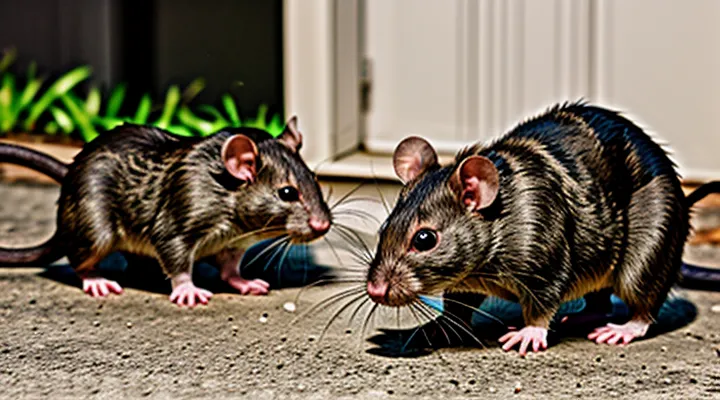
Why Rats Live in Groups
Safety in Numbers
Rats that form family groups gain measurable protection against predation. Individuals positioned at the periphery monitor the environment, allowing inner members to feed with reduced exposure. When a threat is detected, a rapid series of vocalizations alerts the entire cluster, prompting coordinated retreat or defensive aggression. This collective vigilance lowers the probability that any single rat will be captured.
Key advantages of group living include:
- Dilution effect: The chance of an individual being targeted declines as group size increases.
- Enhanced detection: Multiple sensory inputs raise the likelihood of early predator identification.
- Cooperative defense: Larger assemblies can confront intruders, delivering bites or aggressive postures that deter attacks.
Research demonstrates that colonies with stable social bonds exhibit higher survival rates than solitary counterparts. The shared responsibility for vigilance and defense creates a robust safety net that sustains population stability.
Resource Acquisition and Sharing
Rats organize the search for food, water, and nesting material around a cooperative framework that maximizes the survival of related individuals. Adult females typically dominate foraging routes, establishing burrow entrances that channel external resources toward the nest. Scent trails and ultrasonic vocalizations mark productive pathways, allowing offspring to locate supplies with minimal exposure to predators.
Acquisition strategies include:
- Opportunistic scavenging near human waste, exploiting predictable refuse cycles.
- Seasonal hoarding of grains and seeds in underground caches, protected by reinforced tunnel walls.
- Collective transport of bulky items, such as leaves or fabric, achieved through coordinated pulling motions.
Resource sharing operates through a hierarchy that balances dominance and kinship. Dominant members receive priority access to high‑quality food, yet surplus portions are deliberately distributed to juveniles and subordinates. This redistribution occurs via direct feeding, mouth‑to‑mouth transfer, or placement of edible items within reach of younger rats. The practice reinforces social cohesion and reduces the risk of starvation during scarcity.
Chemical signals regulate the timing of sharing events. Elevated levels of oxytocin‑like peptides accompany grooming sessions, prompting recipients to accept transferred food. Conversely, aggressive scent marking signals temporary restriction of resources, prompting subordinate individuals to seek alternative foraging sites.
Overall, the integration of targeted acquisition, strategic caching, and hierarchical sharing sustains the reproductive output and longevity of rat family groups.
Formation and Dynamics of Rat Families
Nest Building and Communal Rearing
Rats construct nests that serve as central hubs for offspring development and group cohesion. The structures consist of layered materials—soft fibers, shredded paper, and plant debris—compressed into compact chambers. Nest placement favors concealed locations such as corners of burrows, under debris piles, or within wall voids, providing protection from predators and environmental fluctuations.
Communal rearing operates through coordinated parental investment. Both the breeding female and affiliated adults participate in feeding, grooming, and temperature regulation of the young. This collective care reduces individual energetic costs and enhances pup survival rates. Key behaviors include:
- Synchronous huddling to maintain optimal thermal conditions.
- Rotational feeding, where multiple adults retrieve food and deliver it to the nest.
- Cooperative grooming, which removes parasites and stimulates pup development.
The shared nest environment facilitates social learning; juveniles observe adult handling of food and predator cues, accelerating skill acquisition. As pups mature, they gradually assume responsibilities within the nest, contributing to maintenance and defense. This progressive integration reinforces group stability and prepares individuals for future breeding roles.
Hierarchical Order within the Group
Rats organize their social units around a clear dominance hierarchy that governs access to resources, mating opportunities, and nest sites. The dominant individual, typically the oldest or most aggressive female, exerts priority over food and preferred sleeping chambers. Subordinate members defer to this leader, reducing intra‑group conflict and enhancing overall stability.
Key characteristics of the hierarchy include:
- Rank determination: Aggressive encounters and scent marking establish relative positions; repeated victories reinforce higher status.
- Resource allocation: Dominant rats consume the majority of food portions, while subordinates receive leftovers, influencing growth rates and reproductive output.
- Reproductive control: The top female often suppresses estrus in lower‑ranking females through pheromonal signals, limiting breeding to the dominant pair.
- Conflict mitigation: Subordinates display appeasement behaviors such as grooming and vocalizations to avoid escalation, maintaining cohesion.
The structure remains fluid; challenges by ambitious individuals can trigger rank reshuffling, after which the new leader assumes control over the same functions. This dynamic yet orderly system ensures efficient exploitation of the environment and promotes the survival of the group.
Communication and Social Cues
Rats maintain complex family structures through a repertoire of vocalizations, scent markings, and tactile signals. Ultrasonic chirps convey alarm or food discovery, while low‑frequency squeaks mediate aggression and submission. Scent glands on the flank and forepaws deposit pheromones that identify kin, establish dominance hierarchies, and synchronize reproductive cycles. Whisker contact during grooming reinforces social bonds and transmits information about health status.
Key communication modalities include:
- Auditory cues – ultrasonic calls for predator alerts; broadband squeaks for conflict resolution.
- Chemical signals – urine and glandular secretions that encode individual identity and reproductive readiness.
- Tactile interactions – allogrooming and nose‑to‑nose touches that strengthen affiliative relationships.
These mechanisms enable rapid coordination of foraging, nest defense, and offspring care, ensuring group cohesion and adaptive success. «Effective exchange of signals reduces the likelihood of intra‑group aggression and optimizes resource allocation.»
Reproduction and Lifespan in Colonies
Breeding Patterns
Rats organize reproduction around tightly knit family units, where breeding activity shapes group structure and population growth.
Mating occurs primarily during the early dark phase, with dominant females attracting multiple males. This system results in overlapping litters and frequent paternal presence within the nest.
Key characteristics of rat breeding patterns include:
- Litter size ranging from three to twelve pups, influenced by maternal condition and resource availability.
- Gestation period of approximately twenty‑three days, enabling rapid turnover of generations.
- Seasonal peaks in temperate regions, aligning births with periods of abundant food.
Female rats exhibit extensive maternal care, providing warmth, grooming, and milk for the first three weeks. In many colonies, subordinate females assist by retrieving food and protecting the nest, a behavior termed communal nursing.
Offspring remain in the natal group for up to six weeks, after which dispersal reduces competition and facilitates gene flow between neighboring colonies. This dispersal pattern maintains genetic diversity while preserving the stability of the original family group.
Parental Care
Rats exhibit a well‑defined system of parental care that ensures offspring survival within the family unit. The mother constructs a nest from shredded material, positions it in a secure location, and maintains a stable microenvironment through regular grooming. Nursing begins shortly after birth; lactation provides high‑energy milk containing essential proteins and lipids, and pups receive feedings every 1–2 hours during the first week.
Weaning occurs around post‑natal day 21, when juveniles transition from milk to solid food. During this period, the mother gradually reduces nursing frequency and encourages independent foraging by placing food near the nest. Grooming continues throughout weaning, facilitating thermoregulation and parasite control.
Male participation is limited but can influence pup development. Observations indicate occasional paternal behaviors such as:
- Guarding the nest perimeter against intruders.
- Delivering food items to the nest during periods of maternal absence.
- Engaging in social play with older juveniles, which may enhance motor skills.
Overall, the coordinated actions of the mother, supplemented by occasional paternal input, create a structured environment that supports rapid growth and preparation for independent life.
Lifespan and Mortality Factors
Rats that form family groups typically reach adulthood within five weeks and live between twelve and twenty‑four months under natural conditions. In laboratory colonies, where nutrition, temperature, and disease exposure are controlled, individuals may survive up to three years. The duration of life is strongly linked to the stability of the social unit; disruption of the group often accelerates decline.
Mortality in these social systems is influenced by several recurring factors:
- Predation by birds, snakes, and mammalian carnivores.
- Parasitic and bacterial infections, especially those transmitted through close grooming.
- Intra‑group competition for food, leading to starvation in subordinate members.
- Environmental extremes such as flooding or severe cold, which impair thermoregulation.
- Genetic deterioration from repeated breeding among close relatives, raising the incidence of congenital defects.
Stress hormones rise when hierarchy is contested, weakening immune response and shortening lifespan. Access to nesting material and shelter reduces exposure to predators and harsh weather, thereby extending the average longevity of group members. Monitoring these variables provides insight into the overall health and reproductive success of rat families.
Challenges and Adaptations in Group Living
Disease Transmission
Rats living in family units share nests, food stores, and grooming activities, creating conditions that facilitate the spread of pathogens. Direct contact between individuals transmits bacteria, viruses, and parasites through saliva, urine, and feces. Close proximity also enables aerosolized particles to move rapidly within burrows, increasing exposure risk.
Key mechanisms of «disease transmission» in these groups include:
- Bite wounds and aggressive encounters that introduce blood‑borne agents.
- Mutual grooming that transfers ectoparasites such as fleas and mites.
- Shared feeding sites where contaminated food and water serve as reservoirs for enteric microbes.
- Overcrowded nesting chambers that concentrate airborne spores and viral particles.
Environmental factors such as humidity, temperature, and nest material composition influence pathogen survival, thereby affecting infection rates among related individuals. Monitoring these variables provides insight into the dynamics of health threats within rat family structures.
Competition for Resources
Rats organized in family groups experience continuous competition for limited food, nesting material, and shelter. Individuals vie for access to stored provisions, especially during periods of scarcity. Dominant members often secure priority at feeding sites, while subordinate rats adjust their foraging patterns to avoid direct confrontations.
Competition intensifies when external resources decline. Typical responses include:
- Increased territorial patrols around food caches
- Frequent displacement of nest occupants to claim optimal bedding
- Accelerated recruitment of additional foragers from within the group
Social hierarchy determines the distribution of benefits. Alpha individuals exert control through aggressive displays, such as biting or rapid chases, which suppress rival access. Subordinates compensate by exploiting peripheral food sources or by forming temporary alliances to challenge dominant control.
Resource pressure also influences reproductive output. Females in lower‑rank positions may delay breeding or reduce litter size, allocating energy toward survival rather than offspring production. Conversely, high‑ranking females produce larger litters, supported by preferential access to nourishment.
Overall, competition for essential commodities shapes group cohesion, hierarchy stability, and reproductive strategies within rat family units. The dynamic balance between aggression and cooperation ensures that the colony adapts to fluctuating environmental conditions.
Adaptations to Urban Environments
Rats thriving in cities exhibit specialized traits that support cohesive family units while exploiting human‑dominated habitats. Dense building structures, underground utilities, and refuse piles provide abundant shelter and food sources, enabling groups to maintain stable nests and continuous breeding cycles.
Key adaptations include:
- Selection of concealed nesting sites such as wall voids, sewers, and abandoned burrows, which protect offspring from predators and environmental fluctuations.
- Omnivorous diet flexibility, allowing consumption of discarded food, organic waste, and opportunistic scavenging, thereby reducing dependence on seasonal resources.
- Accelerated reproductive timing, with shorter gestation periods and larger litters, ensuring rapid population replenishment in high‑mortality urban settings.
- Enhanced olfactory and auditory signaling, facilitating coordinated movement, territory defense, and hierarchical organization within colonies.
Social cohesion is reinforced by tactile grooming and vocal exchanges that convey status and reproductive readiness. These interactions minimize conflict, streamline resource allocation, and strengthen group resilience against disturbances such as pest control measures.
Collectively, these adaptations enable rat families to persist across diverse metropolitan landscapes, maintain high population densities, and exploit the dynamic opportunities presented by human activity.