
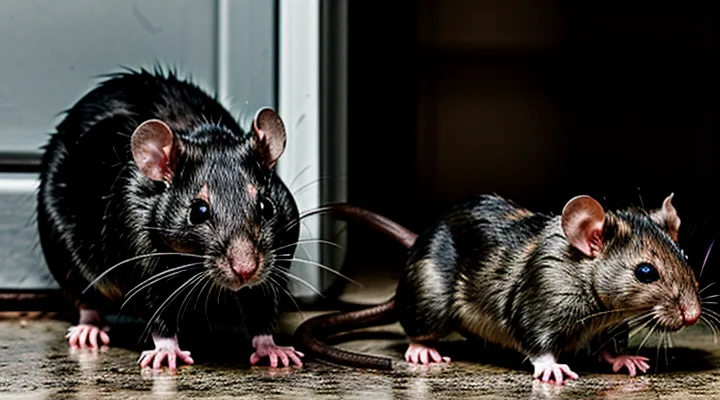
The Social Fabric of Rats
Understanding Rat Companionship
The Importance of Social Bonds
Rats maintain complex affiliative networks that regulate stress, immune function, and learning. When a familiar partner disappears, the surviving individual exhibits altered grooming patterns, reduced exploration, and heightened vocalizations, indicating a direct link between social disruption and behavioral change.
Neurochemical measurements show decreased oxytocin and dopamine activity after loss, mirroring the physiological response observed in other mammals. Restoration of these pathways occurs when the rat forms a new bond, demonstrating the reversible nature of the deficit.
Key observations from laboratory studies include:
- Increased latency to approach novel objects within 24 hours of companion removal.
- Elevated plasma corticosterone levels persisting for several days.
- Reestablishment of normal social play after introduction of a new conspecific, accompanied by normalization of hormone concentrations.
These findings underscore that the continuity of social connections is essential for rat welfare, influencing both immediate coping mechanisms and long‑term health outcomes.
Recognizing Individual Rats
Rats exhibit distinct physical and behavioral traits that allow researchers and caretakers to differentiate individuals within a group. Facial markings, fur coloration, and body size provide immediate visual cues. Subtle variations in whisker length, tail scar tissue, or ear notch patterns create reliable identifiers when animals are observed repeatedly.
Behavioral signatures further separate individuals. Each rat develops a unique pattern of exploration, grooming, and social interaction. Frequency and pitch of ultrasonic vocalizations differ among members, offering a non‑visual method for distinction, especially in low‑light environments.
Standard identification techniques include:
- Permanent ear tags: metal or plastic tags attached to the ear margin, visible during handling.
- Microchip implantation: subdermal RFID chips read by scanners, providing a permanent digital record.
- Temporary fur dyes: non‑toxic, short‑term coloration applied to specific patches for short‑term studies.
- Photographic cataloging: high‑resolution images of facial features and body markings compiled in a reference database.
Accurate individual recognition is essential for monitoring grief‑related behaviors after a companion’s death. It enables precise tracking of changes in activity levels, social withdrawal, or increased grooming, thereby informing welfare interventions and scientific conclusions about coping mechanisms in rats.
Behavioral Responses to Loss
Immediate Reactions to a Companion’s Death
Searching Behavior
Rats that lose a familiar partner exhibit a distinct pattern of searching that reflects their social attachment. After the companion’s disappearance, individuals increase locomotor activity directed toward the area where the partner was previously located. This movement is not random; it consists of repeated, focused approaches to the empty nest or cage divider, interspersed with pauses that suggest assessment of the environment.
Key characteristics of the search include:
- Repeated visits to the former partner’s shelter, often lasting longer than visits to other zones.
- Elevated rearing and sniffing behaviors directed at the empty space, indicating heightened olfactory investigation.
- Persistent circling around the perimeter of the partner’s former territory, suggesting a spatial memory component.
- Temporal clustering of searches, with the highest frequency occurring within the first 24 hours post‑loss and gradually declining thereafter.
Neurobiological data link this behavior to activation of the medial prefrontal cortex and the ventral hippocampus, regions associated with social memory and stress processing. Pharmacological blockade of oxytocin receptors reduces the intensity of the search, implying that the peptide modulates the drive to locate a missing conspecific. Likewise, elevated corticosterone levels correspond with the peak of searching activity, supporting a stress‑related motive.
Experimental protocols typically involve pairing rats for several days, then removing one without physical injury. Researchers record movement trajectories using video tracking and quantify search bouts by defining a “search episode” as any continuous period of directed movement toward the empty compartment lasting more than five seconds. Data consistently show that rats discriminate between an empty space and a neutral empty cage, spending significantly more time investigating the former.
The persistence of searching behavior suggests an adaptive function: by actively seeking a lost partner, the survivor maximizes the chance of reuniting with a valuable social ally, thereby preserving group cohesion and resource sharing. The gradual reduction of searches aligns with a shift from immediate reunion attempts to acceptance of the new social configuration.
Changes in Activity Levels
Rats exhibit measurable shifts in locomotor and exploratory behavior after the death of a cage mate. Activity monitoring shows an initial decline in wheel running, open‑field crossings, and nest‑building within the first 24 hours. This reduction correlates with heightened stress hormone levels and decreased dopamine turnover in the striatum.
Subsequent days often reveal a rebound in activity, sometimes exceeding baseline levels. The pattern typically follows:
- Day 1–2: marked hypoactivity, reduced rearing, limited foraging.
- Day 3–5: gradual increase in spontaneous movement, renewed interaction with enrichment objects.
- Day 6 onward: activity stabilizes at or above pre‑loss levels, indicating adaptive compensation.
Variability depends on age, sex, and prior social hierarchy. Younger, subordinate rats tend to recover faster, while dominant individuals may sustain prolonged hypoactivity. These trends provide reliable indicators for assessing grief‑related behavioral changes in laboratory rodents.
Altered Grooming Habits
Rats that lose a cage mate exhibit measurable shifts in self‑maintenance routines. Observations reveal a reduction in the frequency and duration of fur‑licking episodes, accompanied by irregular timing of grooming bouts. These changes correlate with heightened cortisol levels, indicating stress‑induced disruption of normal hygienic cycles.
Typical alterations include:
- Decreased overall grooming time, often falling below 30 % of baseline activity recorded during stable pairings.
- Preference for brief, localized strokes rather than comprehensive body sweeps.
- Increased latency before initiating grooming after exposure to novel objects or environments.
- Emergence of repetitive paw‑scratching that replaces former fur‑cleaning patterns.
The modified behavior serves as a reliable indicator of bereavement‑related stress in laboratory rodents. Monitoring grooming metrics provides researchers with a non‑invasive method to assess emotional disturbance following the loss of a social partner.
Long-Term Adjustments and Coping Mechanisms
Social Reintegration
Rats that lose a cage mate exhibit a period of altered social behavior before rejoining the colony. Initial responses include reduced grooming of conspecifics, increased latency to approach unfamiliar rats, and heightened vigilance in the home cage. These changes typically last 24–48 hours, after which activity levels normalize and the animal resumes regular affiliative interactions.
Reintegration proceeds through three observable phases:
- Withdrawal: Decreased contact, avoidance of communal nesting sites, and lower ultrasonic vocalizations.
- Adjustment: Gradual increase in exploratory sniffing, renewed participation in food‑sharing and grooming bouts.
- Stabilization: Restoration of baseline social hierarchy, consistent engagement in group play and mutual grooming.
Neurochemical measurements reveal a transient rise in corticosterone and a dip in oxytocin‑like peptides during withdrawal, followed by a rebound in dopamine signaling as social contacts resume. Environmental enrichment, such as additional nesting material and novel objects, shortens the withdrawal phase by providing alternative stimuli that reduce stress.
Laboratory protocols that monitor social reintegration after partner loss can improve welfare assessments and refine models of grief‑related behavior. Quantifying the duration of each phase, together with hormonal profiles, offers reliable indicators of recovery and informs interventions aimed at mitigating prolonged social deficits.
Formation of New Bonds
Rats respond to the loss of a cage‑mate by seeking social interaction that mitigates stress and restores normal activity patterns. The formation of new bonds involves several observable processes.
- Increased exploratory behavior toward unfamiliar conspecifics, often accompanied by sniffing and tail‑rattling, signals readiness to engage.
- Rapid initiation of allogrooming reduces cortisol levels and promotes affiliative contact.
- Preference for shared nesting material emerges within hours, indicating a shift toward cooperative shelter use.
- Vocalizations with higher ultrasonic frequencies accompany the first physical contacts, reinforcing pairwise recognition.
Neurochemical measurements confirm elevated oxytocin and dopamine concentrations during these interactions, correlating with reduced anxiety markers. Hierarchical adjustments occur as the newcomer integrates, with dominant individuals displaying restraint to prevent aggression, while subordinates exhibit submissive postures that facilitate acceptance.
Long‑term observations show that rats establishing a new companion maintain higher activity scores and lower incidences of stereotypic behaviors compared with isolated individuals. The capacity to create fresh social ties thus constitutes a primary mechanism for coping after the death of a familiar partner.
Persistence of Grief-Like Behaviors
Research on laboratory rodents repeatedly demonstrates that individuals exhibit prolonged behavioral changes after the removal of a familiar cage mate. These changes include reduced exploration, altered feeding patterns, and increased vocalizations that persist for weeks. The consistency of these responses across strains and experimental settings indicates a stable phenomenon rather than an isolated stress reaction.
Observations reveal several specific patterns that qualify as grief‑like behavior:
- Repeated attempts to locate the missing companion, such as lingering near the former partner’s cage and persistent investigative sniffing.
- Sustained decrease in social interaction with novel conspecifics, suggesting a selective withdrawal rather than a general anxiety response.
- Elevated grooming of the empty space previously occupied by the partner, accompanied by heightened corticosterone levels that remain above baseline for an extended period.
Neurobiological analyses link these behaviors to lasting alterations in the limbic system. Functional imaging shows reduced activation in the nucleus accumbens and heightened activity in the amygdala, mirroring affective disturbances observed in other species. Pharmacological blockade of oxytocin receptors attenuates the persistence of the behaviors, implicating the oxytocinergic pathway in the maintenance of the response.
Longitudinal studies confirm that the behavioral signatures do not fade uniformly. In some cohorts, a partial recovery of normal activity occurs after several months, yet a subset retains heightened vigilance and altered stress hormone profiles indefinitely. The durability of these patterns supports the interpretation that rats possess a measurable, enduring response to the loss of a social partner.
Physiological and Psychological Impacts
Stress Responses in Bereaved Rats
Hormonal Changes
Rats experience a rapid increase in circulating corticosterone within minutes of detecting a conspecific’s death. This glucocorticoid surge reflects activation of the hypothalamic‑pituitary‑adrenal (HPA) axis and correlates with heightened vigilance and reduced exploratory behavior.
Simultaneously, plasma oxytocin concentrations decline, indicating diminished social bonding signals. Lower oxytocin levels accompany reduced grooming of the deceased partner and a temporary decrease in affiliative interactions with remaining cage mates.
Vasopressin exhibits a delayed rise, peaking several hours after the loss event. Elevated vasopressin supports water balance and may modulate stress‑induced aggression toward other rats sharing the environment.
Prolactin, a hormone linked to parental and nurturing behaviors, shows a modest increase during the first day post‑loss. This rise may facilitate compensatory caregiving directed toward surviving littermates or environmental enrichment objects.
A concise overview of these hormonal dynamics:
- Corticosterone: immediate rise, HPA activation, stress marker.
- Oxytocin: rapid decline, reduced social attachment.
- Vasopressin: delayed elevation, potential influence on aggression.
- Prolactin: modest increase, possible enhancement of caregiving tendencies.
These endocrine shifts collectively shape the behavioral adjustments rats display after the death of a cage companion, guiding the transition from acute stress to longer‑term coping strategies.
Impact on Immune Function
The loss of a familiar conspecific triggers a measurable decline in rat immune competence. Acute bereavement elevates circulating corticosterone, suppressing lymphocyte proliferation and reducing natural‑killer cell activity. Chronic exposure to elevated stress hormones maintains this suppression, leading to lower antibody titers after vaccination and delayed clearance of bacterial challenges.
Physiological changes observed after companion death include:
- Decreased splenic CD4⁺/CD8⁺ ratios, indicating impaired helper‑to‑cytotoxic T‑cell balance.
- Reduced expression of Toll‑like receptor 4 on macrophages, diminishing pathogen recognition.
- Lower serum concentrations of immunoglobulin G and IgM, reflecting compromised humoral defense.
Behavioral alterations, such as reduced grooming and social withdrawal, further exacerbate immune deficits by limiting exposure to environmental microbes that normally stimulate immune training. When a surviving rat is re‑introduced to a new partner, cortisol levels decline within 48 hours, and immune markers partially recover, though full normalization may require weeks.
These findings underscore a direct link between social loss and immune dysregulation, suggesting that the emotional state of laboratory rodents can influence experimental outcomes related to infection, inflammation, and vaccine efficacy.
Evidence of Empathy and Emotional Contagion
Observing Other Rats' Distress
Rats exhibit measurable changes when a familiar conspecific dies, and these alterations become evident through the behavior of surviving individuals. Direct observation reveals heightened vigilance, increased grooming of the deceased’s remains, and reduced exploration of the shared environment. Researchers have recorded a rise in ultrasonic vocalizations that differ in frequency and duration from baseline calls, indicating emotional perturbation.
Typical distress indicators include:
- Persistent pausing at the location of the corpse
- Repeated nose‑to‑nose contact attempts with the absent partner’s scent marks
- Elevated corticosterone levels measured in blood samples collected within hours of the loss
- Decreased latency to adopt defensive postures when approached by unfamiliar rats
Comparative analyses show that rats housed in enriched cages display more pronounced social searching behavior than those in barren conditions, suggesting environmental complexity amplifies the perception of loss. Moreover, the magnitude of physiological stress correlates with the duration of the prior social bond, as demonstrated by longer corticosterone elevation in pairs that cohabited for several weeks versus brief acquaintances.
Longitudinal monitoring confirms that the initial surge in distress behaviors gradually declines, with a return to baseline activity patterns typically occurring after several days. This temporal profile aligns with documented adaptation processes in other social mammals, underscoring the capacity of rats to adjust to the absence of a companion while retaining memory of the prior relationship.
Shared Stress Responses
Rats exhibit a suite of physiological and behavioral changes when a cage mate dies, reflecting shared stress responses that extend beyond the individual experiencing loss. Elevated corticosterone levels appear within minutes, indicating activation of the hypothalamic‑pituitary‑adrenal (HPA) axis. Concurrently, heart rate and respiration accelerate, mirroring acute stress patterns documented in laboratory measurements.
Behavioral manifestations include:
- Increased self‑grooming, often repetitive and directed toward the fur of the deceased companion.
- Reduced exploratory locomotion, measured by decreased distance traveled in open‑field tests.
- Heightened vocalizations, particularly ultrasonic calls associated with distress.
- Altered social interaction, such as prolonged proximity to the empty enclosure or increased aggression toward unfamiliar conspecifics.
Neurochemical analyses reveal amplified release of norepinephrine in the locus coeruleus, supporting heightened arousal. Simultaneously, serotonin turnover declines, correlating with depressive‑like states observed in subsequent forced‑swim assessments. These neuroendocrine shifts are amplified when multiple rats are housed together, suggesting that stress signals propagate through social networks.
Social buffering can mitigate some effects. Rats that receive continued tactile contact from surviving peers display faster normalization of corticosterone and quicker resumption of normal feeding patterns. However, the protective influence diminishes if the surviving group is reduced to a single individual, emphasizing the importance of social context for stress regulation.
Experimental replication across strains confirms that shared stress responses are robust, with consistent patterns emerging in both Sprague‑Dawley and Long‑Evans populations. The convergence of hormonal, autonomic, and behavioral data provides a comprehensive picture of how rats collectively cope with the loss of a companion.
Factors Influencing Coping
Individual Rat Personality
Differences in Resilience
Rats display a spectrum of resilience when a cage‑mate dies, shaped by biological and environmental variables. Younger individuals often recover faster than older rats, likely because neuroplasticity declines with age. Female rats typically exhibit more pronounced social buffering, seeking contact with remaining peers, whereas males may increase solitary foraging or territorial patrols.
Key factors influencing resilience include:
- Genetic background – certain strains possess heightened stress‑axis regulation, reflected in lower corticosterone spikes after loss.
- Social rank – dominant rats retain access to resources and maintain grooming routines, mitigating anxiety; subordinates experience heightened withdrawal.
- Previous exposure – rats that have endured prior separations develop adaptive coping patterns, such as increased nest building or exploratory behavior.
- Environmental enrichment – complex habitats provide stimuli that distract from grief, reducing immobility in open‑field tests.
Physiological markers support these behavioral differences. Resilient rats show rapid normalization of heart‑rate variability and maintain stable levels of brain‑derived neurotrophic factor (BDNF). Conversely, less resilient individuals exhibit prolonged elevation of stress hormones and reduced synaptic plasticity in the hippocampus.
Overall, resilience is not uniform; it emerges from an interaction of age, sex, genetics, hierarchy, experience, and habitat complexity. Identifying these variables enables targeted interventions—such as enrichment or social support—to bolster recovery after the loss of a companion.
Predisposition to Anxiety
Rats exhibit individual differences in baseline anxiety that shape their response to the loss of a cage mate. Genetic predisposition, early‑life stress, and housing conditions determine the intensity of anxious behavior, which in turn influences coping mechanisms after bereavement.
Elevated anxiety levels manifest as:
- increased thigmotaxis (preference for walls) during open‑field tests,
- heightened ultrasonic vocalizations when isolated,
- prolonged immobility in forced‑swim assessments.
When a companion dies, rats with higher innate anxiety show:
- slower return to normal locomotor activity,
- reduced social investigation of unfamiliar conspecifics,
- amplified corticosterone spikes measured 30 minutes post‑loss.
Conversely, rats with lower anxiety recover baseline activity within 24 hours and maintain normal grooming patterns. Experimental data suggest that the anxiety phenotype predicts the duration of depressive‑like states after partner removal, providing a measurable link between personality traits and grief‑related behavior in rodents.
Environmental and Social Context
Availability of Other Companions
Rats that lose a familiar partner often exhibit changes in activity, vocalization, and stress hormone levels. The presence of additional social partners can mitigate these effects, providing opportunities for renewed affiliative behavior and reduced anxiety.
- Conspecific cage mates introduced within 24 hours restore normal grooming patterns and decrease corticosterone concentrations.
- Human handlers who engage in regular handling sessions supply tactile stimulation that lowers freezing responses during open‑field tests.
- Heterospecific companions, such as domesticated mice, occasionally elicit exploratory play but may not fully substitute for lost conspecific bonds.
Empirical studies show that rats housed singly after a companion’s death display heightened locomotor activity and increased ultrasonic distress calls. When paired with a new partner, these metrics converge toward baseline levels observed in continuously paired groups. The effectiveness of replacement companionship correlates with the duration of prior bonding and the similarity of the new partner’s social cues.
Stability of the Enclosure
The physical integrity of a rat enclosure directly influences the surviving animal’s behavioral response after losing a cage mate. A stable structure prevents accidental escapes, reduces exposure to predators, and maintains a consistent micro‑environment, thereby limiting additional stressors that could compound grief‑related anxiety.
When the enclosure remains intact, the remaining rat can rely on familiar spatial cues, such as nesting sites and hiding places, which support routine activities and encourage exploration. Consistent barrier conditions also preserve scent markings that help the rat re‑establish territorial boundaries without the added uncertainty of a compromised habitat.
Conversely, any damage to the cage—broken bars, loose panels, or altered layout—disrupts established patterns, triggers heightened vigilance, and may provoke stereotypic behaviors. Prompt repair and reinforcement of the enclosure sustain environmental predictability, facilitating a smoother adjustment period for the bereaved rodent.
Research and Ethical Considerations
Studying Grief in Animal Models
Methodological Challenges
Studying the behavioral and physiological responses of rats after the loss of a cage‑mate presents several methodological obstacles.
- Defining loss: researchers must decide whether removal, euthanasia, or death of the companion constitutes a comparable event, each option influencing stress levels differently.
- Baseline establishment: accurate pre‑loss measurements are required to detect change, demanding repeated sampling without habituation effects.
- Control conditions: appropriate comparison groups (e.g., solitary housing, sham removal) are essential to isolate the impact of bereavement from general disruption.
- Behavioral quantification: grief‑related behaviors (e.g., reduced exploration, altered social grooming) lack standardized scoring systems, leading to inter‑observer variability.
- Physiological markers: cortisol, heart rate, and neurochemical assays must be timed precisely; fluctuations due to circadian rhythms can confound interpretation.
- Sample size: high individual variability in stress responses necessitates larger cohorts to achieve statistical power, increasing resource demands.
- Ethical constraints: inducing loss raises welfare concerns, requiring strict justification and adherence to institutional protocols.
Addressing these challenges involves rigorous protocol design, validation of behavioral indices, and transparent reporting of experimental parameters.
Ethical Treatment of Research Animals
Research involving rodents that experience the loss of a cage mate demands strict adherence to ethical standards that safeguard welfare while enabling scientific insight. Institutional review boards require justification of the study’s necessity, demonstration that alternative models cannot address the question, and a clear plan to minimize distress. Protocols must specify humane endpoints, such as observable signs of severe depression, weight loss exceeding 15 % of baseline, or self‑injurious behavior, prompting immediate intervention or euthanasia.
Key elements of ethical practice include:
- Environmental enrichment: provision of nesting material, tunnels, and objects that encourage natural foraging and exploration, reducing baseline stress levels.
- Social housing considerations: maintenance of stable group compositions, gradual introduction of new companions when replacement is unavoidable, and monitoring of hierarchy to prevent aggression.
- Pain and anxiety mitigation: application of non‑pharmacological interventions (e.g., increased handling, scent cues from familiar conspecifics) and, when necessary, administration of anxiolytics approved for rodent use.
- Transparent reporting: detailed description of housing conditions, loss events, and welfare assessments in publications, enabling reproducibility and peer evaluation.
Compliance with the Guide for the Care and Use of Laboratory Animals and relevant national legislation (e.g., the Animal Welfare Act) ensures that the scientific value of studying bereavement in rats does not compromise the moral obligation to treat them humanely. Continuous refinement of methods, based on emerging data about rodent affective states, strengthens both ethical integrity and the reliability of experimental outcomes.
Implications for Pet Rat Owners
Supporting Bereaved Pet Rats
Rats experience measurable stress when a cage‑mate dies, exhibiting reduced activity, altered grooming, and decreased food intake. Prompt, targeted care can alleviate these effects and promote recovery.
- Maintain a stable environment: keep temperature, lighting, and cage layout unchanged to reduce additional stressors.
- Provide enrichment that encourages natural foraging and exploration, such as cardboard tunnels, chewable wood, and puzzle feeders.
- Offer a varied diet with fresh vegetables, high‑protein treats, and ample water to counter appetite loss.
- Monitor health daily; seek veterinary assessment if weight drops more than 10 % or if respiratory signs appear.
- Introduce a new companion only after the bereaved rat shows consistent eating, grooming, and normal activity for at least two weeks; choose a similarly sized, temperament‑compatible individual.
- Allow the rat solitary time in a quiet area for a few hours each day to process loss, then gradually increase social interaction.
Consistent observation and adjustment of these measures support emotional stability and physical health in rats mourning a companion.
Recognizing Signs of Distress
Rats exhibit measurable behavioral and physiological changes when a cage mate is lost. Observers can identify distress through a consistent set of indicators.
- Reduced activity levels; the animal spends more time immobile or in the corner of the enclosure.
- Decreased grooming; fur appears unkempt and patches of dirt remain.
- Altered feeding patterns; intake drops or, conversely, becomes erratic.
- Vocalizations shift to higher-pitched or more frequent squeaks during handling.
- Elevated respiratory rate and heart rhythm detectable with non‑invasive monitoring.
- Increased aggression or, alternatively, heightened submissiveness toward other rats.
In addition to these signs, a rat may display repetitive pacing along the perimeter of the cage, a behavior rarely observed under stable social conditions. Changes in body weight, measured weekly, often correlate with the onset of mourning behavior. Monitoring these parameters provides a reliable framework for assessing emotional turmoil in rats after the loss of a companion, enabling timely intervention and supportive care.