
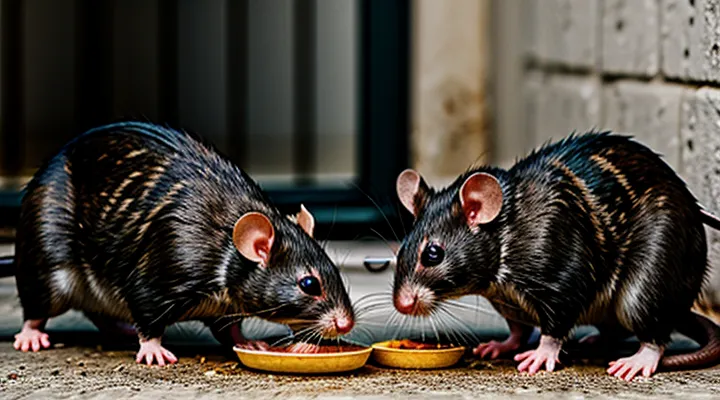
Understanding Rat Dietary Needs
Factors Influencing Food Intake
Rat Species and Size
Rats vary considerably in species and body size, which directly affects the amount of food they consume each day. The most common species encountered in research and urban environments are the brown rat (Rattus norvegicus) and the black rat (Rattus rattus). Both species display a wide weight range that correlates with their daily caloric needs.
- Brown rat (Rattus norvegicus) – adult weight typically 250–500 g; daily intake ≈ 15–30 g of standard laboratory chow, representing 5–6 % of body mass. Larger individuals may require up to 35 g.
- Black rat (Rattus rattus) – adult weight typically 150–300 g; daily intake ≈ 10–20 g of comparable diet, also about 5–6 % of body mass. Smaller specimens may eat as little as 8 g.
- Polynesian rat (Rattus exulans) – adult weight 60–120 g; daily intake ≈ 4–8 g, maintaining the same proportional requirement.
- Giant rice field rat (Rattus argentiventer) – adult weight up to 600 g; daily intake can reach 35–45 g, reflecting increased metabolic demand.
Wild-caught rats exhibit greater variability due to seasonal food availability and habitat conditions. In temperate zones, winter diets shift toward higher‑energy seeds and insects, prompting a modest increase in daily consumption. In tropical environments, continuous fruit and grain access sustains a relatively stable intake.
Metabolic rate scales with body mass according to the allometric equation (k \times M^{0.75}), where (M) is body weight. Consequently, a rat that doubles its weight does not double its food requirement; intake rises by roughly 68 % of the weight increase. This principle explains why larger species, such as the giant rice field rat, do not consume proportionally more food than smaller counterparts.
Understanding species‑specific size ranges enables accurate prediction of daily food consumption, essential for laboratory diet formulation, pest‑control planning, and ecological modeling.
Age and Activity Level
Rats consume food in amounts that correlate directly with both their developmental stage and their level of physical exertion. Neonatal pups rely primarily on maternal milk and ingest less than 2 g of solid food per day during the first week after weaning. Juvenile rats (3–6 weeks old) increase intake to roughly 10–12 g per day, reflecting rapid growth and higher metabolic demands. Adult specimens (8 weeks and older) stabilize at 15–20 g of standard laboratory chow, with variations of ±2 g depending on strain and body weight.
Activity level modifies these baseline figures. Rats that are housed in enriched environments, provided with running wheels, or subjected to regular forced‑exercise protocols typically increase consumption by 10–25 % relative to sedentary counterparts. Conversely, animals kept in low‑stimulus cages may reduce intake by up to 15 % without adverse health effects, provided nutrient density remains adequate.
Key quantitative relationships:
- Age 1–2 weeks: ≤ 2 g/day (milk‑driven)
- Age 3–6 weeks: 10–12 g/day (growth phase)
- Age ≥ 8 weeks, low activity: 15–18 g/day
- Age ≥ 8 weeks, high activity: 18–25 g/day
These patterns illustrate that younger rats require minimal solid food, while mature rats adjust consumption proportionally to the energy expended during locomotion and exploration.
Environmental Conditions
Rats adjust their daily food intake according to several environmental variables. Temperature exerts a direct influence: cooler environments increase metabolic demand, prompting higher consumption, whereas warm conditions reduce the need for calories. Humidity levels affect water balance; low humidity can lead to increased dry‑matter intake to compensate for evaporative loss, while high humidity may suppress appetite.
Lighting cycles shape feeding patterns. A regular light‑dark schedule synchronizes circadian rhythms, resulting in predictable peaks of consumption during the dark phase. Irregular or continuous illumination disrupts these rhythms, often causing reduced overall intake.
Cage density and space availability alter stress levels. Overcrowding elevates cortisol, which can suppress appetite, whereas adequate space promotes normal feeding behavior. Bedding type also matters: absorbent, low‑dust substrates minimize respiratory irritation, supporting stable consumption rates.
Key environmental factors and their typical effects on daily rat food intake:
-
Ambient temperature:
• 18‑22 °C → baseline intake
• Below 18 °C → increase 10‑20 %
• Above 26 °C → decrease 5‑15 % -
Relative humidity:
• 40‑60 % → stable intake
• <30 % → moderate rise in dry feed consumption
• >70 % → slight reduction -
Light‑dark cycle:
• 12 h light/12 h dark → consistent nocturnal feeding
• Constant light → irregular, often lower intake -
Housing density:
• ≤4 rats per standard cage → normal consumption
• >6 rats per cage → decrease 5‑10 % -
Bedding quality:
• Low‑dust, absorbent material → maintains intake
• High‑dust or scented bedding → possible drop in consumption
Maintaining optimal temperature, humidity, lighting, space, and bedding conditions ensures that rats meet their expected daily nutritional requirements without unintended fluctuations.
Food Availability and Quality
Rats adjust their daily intake according to the quantity of food that can be accessed. When food is abundant, individuals typically consume between 10 and 15 grams of dry matter per day, depending on body size and metabolic demand. In scarcity, consumption drops sharply, and rats may increase foraging activity to locate additional sources.
Quality of the diet directly influences the amount ingested. High‑protein, nutrient‑dense foods enable rats to meet caloric requirements with smaller volumes, reducing overall feed consumption. Conversely, diets low in essential nutrients compel rats to eat larger quantities to obtain sufficient energy, often leading to excess intake of filler components such as cellulose.
Key factors that modify intake related to availability and quality include:
- Energy density: Higher caloric content per gram lowers the mass required for daily needs.
- Protein proportion: Adequate protein supports growth and reproduction, reducing compensatory overeating.
- Palatability: Attractive flavors and textures increase voluntary consumption, especially when alternatives are limited.
- Seasonal fluctuations: Natural cycles affect both the presence of food and its nutritional composition, prompting adaptive changes in feeding behavior.
Understanding these variables allows precise estimation of rat food consumption under varying environmental conditions and informs the design of controlled feeding protocols.
Typical Daily Food Consumption
Average Intake for Common Rat Species
Brown Rats (Rattus norvegicus)
Brown rats (Rattus norvegicus) typically consume between 15 and 30 g of solid food per day, which translates to roughly 5–10 % of their body mass. Energy intake averages 45–70 kcal, depending on diet composition and activity level.
Key factors influencing consumption:
- Body size: Adults weighing 300–500 g require more food than juveniles; intake scales with mass.
- Sex: Males generally eat slightly more than females, reflecting larger average size.
- Environment: Wild individuals ingest a varied diet (seeds, insects, waste) and may consume up to 35 g daily during periods of abundant resources. Laboratory‑raised rats on standard chow typically eat 20–25 g.
- Reproductive status: Pregnant or lactating females increase intake by 30–50 % to support fetal growth and milk production.
- Temperature: Cold environments raise metabolic demand, prompting a 10–15 % increase in food consumption.
In captivity, a standard laboratory diet of 18 % protein provides the necessary nutrients when offered ad libitum; rats self‑regulate intake to meet energy needs, usually reaching the 20–25 g range within 24 hours. Wild rats exhibit more fluctuation, with seasonal peaks when food is plentiful and declines during scarcity.
Black Rats (Rattus rattus)
Black rats (Rattus rattus) are small, nocturnal rodents that thrive in urban and rural settings. Their body mass typically ranges from 70 g to 200 g, influencing the quantity of food they require each day.
- Average daily consumption: 3 %–5 % of body weight in fresh matter, equating to roughly 2 g–10 g of food per individual.
- Food types: grains, fruits, insects, and human waste; the proportion of each varies with availability.
- Seasonal adjustment: higher intake during colder months to sustain thermoregulation; lower intake when temperatures rise and metabolic demand drops.
- Age factor: juveniles consume up to 8 % of body weight, adults settle near the lower end of the range.
- Habitat impact: rats in densely populated areas with abundant refuse may exceed typical limits, reaching 12 g–15 g per day.
Metabolic rate, reproductive status, and competition dictate these values. Understanding the daily food requirements of black rats aids in population management and disease control strategies.
Water Consumption
Rats typically drink between 30 ml and 45 ml of water per day, which corresponds to roughly 5 %–10 % of their body weight. Water intake scales with the amount of solid food consumed; when the diet is dry, rats increase their drinking volume to maintain hydration, whereas moist or high‑fat feeds reduce the required water.
Key factors that modify daily water consumption:
- Dietary moisture content – dry pellets trigger higher intake; semi‑moist or gel diets lower it.
- Ambient temperature and humidity – higher temperatures raise evaporative loss, prompting additional drinking.
- Activity level – increased locomotion or thermogenic processes elevate fluid needs.
- Physiological state – growth, lactation, or illness can cause marked variations in fluid balance.
Monitoring water consumption alongside food intake provides a reliable indicator of metabolic health and can reveal early signs of disease or stress in laboratory and pet rats. Adjusting diet moisture and environmental conditions helps maintain stable hydration without compromising nutritional goals.
Consequences of Overfeeding and Underfeeding
Health Risks of Excessive Food
Obesity and Related Diseases
Rats typically consume food equivalent to 5–10 % of their body weight each day, which translates to roughly 15–20 g of standard laboratory chow for an adult male. Precise measurement of this intake allows researchers to manipulate caloric density and monitor resulting weight changes. When caloric intake exceeds energy expenditure, rats develop excess adipose tissue, mirroring human obesity patterns.
Elevated body fat in rats correlates with a range of metabolic disturbances:
- Insulin resistance and hyperglycemia, modeling type 2 diabetes.
- Dyslipidemia, characterized by increased triglycerides and low‑density lipoprotein cholesterol.
- Hypertension, reflecting cardiovascular strain.
- Non‑alcoholic fatty liver disease, evident through hepatic lipid accumulation.
- Inflammatory markers such as C‑reactive protein and tumor necrosis factor‑α, indicating systemic inflammation.
Controlled feeding protocols enable investigators to isolate the impact of specific nutrients. High‑fat or high‑sugar diets, combined with measured daily consumption, accelerate weight gain and precipitate the diseases listed above. Continuous monitoring of food intake ensures that observed pathologies result from dietary manipulation rather than uncontrolled variables.
Data on rat consumption inform translational research. By establishing dose‑response relationships between caloric excess and disease onset, scientists can predict human risk thresholds and evaluate therapeutic interventions under reproducible conditions.
Impact on Behavior
Rats that consume a larger proportion of their caloric needs each day display heightened exploratory activity. Increased intake accelerates locomotor speed, reduces latency to approach novel objects, and intensifies social interaction within groups. Conversely, limited daily feeding suppresses motivation to investigate, prolongs grooming bouts, and elevates anxiety‑like responses in open‑field tests.
Key behavioral effects linked to daily food quantity:
- Activity level: High caloric supply correlates with longer travel distances and more frequent rearing.
- Risk assessment: Well‑fed individuals show reduced hesitation when encountering unfamiliar environments.
- Social dynamics: Adequate nutrition promotes dominant behaviors and frequent affiliative contacts; scarcity triggers avoidance and submissive postures.
- Cognitive performance: Sufficient daily nutrients improve maze learning speed and memory retention; deficit impairs trial completion.
These patterns arise from metabolic signaling pathways that modulate neurotransmitter release and brain plasticity. Adjusting the amount of food provided to laboratory rats therefore directly shapes their behavioral phenotype, influencing experimental outcomes and welfare considerations.
Dangers of Insufficient Food
Malnutrition and Weakness
Rats require a consistent intake of calories and nutrients to maintain physiological functions. When daily consumption falls below the minimum energy threshold—approximately 10 % of body weight in laboratory conditions—energy deficits emerge rapidly. Insufficient protein, vitamins, or minerals exacerbate the shortfall, leading to measurable declines in body mass and organ performance.
Key indicators of malnutrition in rats include:
- Reduced body weight gain or weight loss exceeding 5 % of initial mass within a week.
- Diminished muscle tone, observable as decreased grip strength and slower locomotion.
- Altered fur condition, with pallor or brittleness reflecting protein deficiency.
- Impaired immune response, evidenced by increased susceptibility to opportunistic infections.
Physiological consequences of chronic under‑nutrition manifest as:
- Decreased basal metabolic rate, conserving energy but compromising thermoregulation.
- Attenuated growth of skeletal muscle fibers, resulting in weakness and reduced endurance.
- Disruption of hepatic glycogen stores, causing hypoglycemia during fasting periods.
- Hormonal imbalance, particularly reduced leptin and insulin levels, which further depress appetite regulation.
Experimental protocols that restrict rat diets to less than 70 % of the established daily requirement typically record a 30–40 % reduction in voluntary activity and a marked decline in exploratory behavior. Conversely, restoring adequate nutrition within 48 hours reverses most weakness symptoms, though full recovery of muscle mass may require several weeks of balanced feeding.
Accurate measurement of daily intake, coupled with nutrient profiling, is essential to prevent malnutrition‑induced weakness and to ensure reliable data in studies that depend on stable physiological baselines.
Increased Aggression
Rats that display heightened aggression typically consume more calories than their non‑aggressive counterparts. Studies measuring average daily intake show that a standard laboratory rat eats roughly 15–20 g of laboratory chow, providing about 30–35 kcal per day. Aggressive individuals often increase this amount by 10–25 %, reaching up to 25 g and 45 kcal daily.
The excess intake correlates with elevated levels of neuropeptides such as orexin and vasopressin, which modulate both appetite and territorial behavior. Higher glucose availability fuels rapid brain activity, reinforcing aggressive responses during social encounters. Conversely, food restriction can suppress aggression, indicating a direct link between nutrient intake and behavioral intensity.
Practical outcomes for researchers and pest managers include:
- Monitoring food provision to control aggression levels in experimental colonies.
- Adjusting feeding schedules to reduce conflict in captive populations.
- Using caloric restriction as a non‑chemical method to mitigate aggressive outbreaks in urban rat infestations.
Best Practices for Feeding Rats
Recommended Diet Components
Commercial Rat Pellets
Commercial rat pellets are formulated to supply a balanced mix of protein, fat, fiber, vitamins and minerals in a single, easy‑to‑measure product. The standard composition contains approximately 18–20 % protein, 4–6 % fat and 5–7 % crude fiber, delivering about 3.5 kcal per gram.
Average laboratory or pet rats require roughly 3–5 % of their body weight in food each day. For a 300‑gram adult, the expected intake ranges from 9 to 15 grams of pellets. Juvenile rats, weighing 50–100 grams, typically consume 2–5 grams daily.
- 150 g adult: 5–7 g per day
- 300 g adult: 9–15 g per day
- 50 g juvenile: 1.5–2.5 g per day
- 100 g juvenile: 3–5 g per day
Consumption varies with several physiological and environmental factors:
- Activity level: highly active rats eat more to meet energy demands.
- Reproductive status: lactating females increase intake by up to 30 %.
- Ambient temperature: colder environments raise metabolic rate, prompting higher consumption.
- Health condition: illness or stress can suppress appetite temporarily.
Accurate feeding involves weighing the pellets, offering the calculated amount at the same time each day, and observing leftover feed. Adjust portions upward if weight loss or excessive hunger signs appear, and reduce them if rats gain weight rapidly. Regular monitoring ensures that the pellet diet meets the daily caloric requirement without overfeeding.
Fresh Fruits and Vegetables
Rats typically allocate a small portion of their total daily intake to fresh plant material. For an adult laboratory or pet rat weighing 300–350 g, the recommended amount of fresh fruits and vegetables ranges from 10 g to 20 g per day, representing roughly 3–5 % of body weight. This quantity supplies essential vitamins, minerals, and fiber without displacing the required balance of protein‑rich pellets or chow.
Suitable items include:
- Apples (core removed): 2–3 g per day
- Carrots (peeled, chopped): 2–3 g per day
- Leafy greens such as romaine lettuce or kale: 3–5 g per day
- Berries (blueberries, strawberries): 1–2 g per day
- Bell peppers: 1–2 g per day
When selecting produce, prioritize low‑sugar, low‑acid varieties and wash thoroughly to eliminate pesticide residues. Avoid toxic foods such as raw potatoes, onions, garlic, and citrus peels, as they can cause gastrointestinal distress or more severe health issues.
Monitor individual consumption; some rats may prefer certain flavors and adjust portions accordingly, ensuring that fresh plant matter never exceeds 15 % of total daily calories. Regular observation of stool consistency and body condition will confirm that the diet remains balanced.
Occasional Treats
Rats require a balanced diet to meet their nutritional needs, but occasional treats can be introduced without disrupting their regular intake. Treats should complement, not replace, the staple feed and must be offered sparingly to avoid excess calories and nutrient imbalances.
Typical treat options include:
- Small pieces of fresh fruit (apple, banana, berries) – no more than one teaspoon per day.
- Cooked vegetables (carrot, peas, broccoli) – limited to a few bite‑size morsels.
- Unsalted nuts or seeds – a single almond or sunflower seed at most.
- Commercial rodent treats – follow the manufacturer’s serving recommendation, usually one or two pieces weekly.
When adding treats, consider these guidelines:
- Limit total treat calories to less than 10 % of the rat’s estimated daily energy requirement.
- Introduce new foods gradually to monitor for digestive upset or allergic reactions.
- Ensure treats are free of added sugars, salts, or artificial flavorings.
- Store treats in a cool, dry place to prevent mold growth.
Providing occasional treats can enhance enrichment, encourage natural foraging behavior, and strengthen the bond between caretaker and animal, provided the frequency and portion size remain controlled.
Feeding Schedule and Portions
Free Feeding vs. Scheduled Meals
Rats typically consume between 15 and 25 grams of standard laboratory chow per day, a range that reflects variations in strain, age, and metabolic rate. The method by which food is presented—continuous access versus timed portions—significantly influences intake patterns, body weight stability, and experimental outcomes.
Free feeding provides unrestricted access to food, allowing rats to self‑regulate consumption. Advantages include:
- Naturalistic eating behavior, reducing stress associated with meal timing.
- Stable body weight when caloric density remains constant.
- Simplified husbandry, as no daily feeding schedule is required.
Potential drawbacks involve:
- Difficulty controlling precise caloric intake, especially in studies of obesity or metabolic disorders.
- Increased variability in individual consumption, which may obscure treatment effects.
Scheduled meals restrict access to defined intervals, commonly two to three times per day. Benefits comprise:
- Precise control of caloric load, essential for diet‑restriction protocols.
- Reduced inter‑animal variability in total intake, enhancing statistical power.
- Ability to synchronize feeding with experimental timelines, such as drug administration.
Limitations include:
- Possible stress response to food deprivation periods, influencing hormonal and behavioral measures.
- Risk of compensatory hyperphagia during allotted feeding windows, leading to overconsumption.
Choosing between continuous access and timed feeding depends on experimental priorities. Studies requiring exact caloric quantification or temporal alignment with other interventions favor scheduled meals, whereas investigations of natural feeding behavior or long‑term metabolic health may prefer free access. Researchers must balance the need for control against the physiological relevance of each feeding strategy.
Monitoring Consumption
Monitoring rat food consumption provides quantitative data essential for nutritional, toxicological, and behavioral studies. Accurate measurement enables correlation of intake with physiological outcomes and supports reproducibility across experiments.
Common techniques include:
- Weighing pre‑measured food portions before placement in cages and re‑weighing leftovers after a 24‑hour period.
- Using perforated feeders that allow uneaten fragments to fall into a collection tray, reducing spillage error.
- Employing automated dispensers that record the exact mass delivered to each animal, often linked to a data logger.
Advanced approaches incorporate:
- RFID‑enabled feeding stations that log individual animal visits, duration, and amount consumed.
- Video analysis systems that track feeding bouts and estimate intake by measuring bite frequency and pellet size.
- Metabolic cages equipped with balance sensors, providing continuous monitoring of food disappearance and excretion.
Data handling guidelines:
- Calculate average daily intake per rat by dividing total consumption by the number of animals and days observed.
- Normalize values to body weight (g kg⁻¹ day⁻¹) to facilitate inter‑subject comparisons.
- Record variables such as strain, sex, age, and ambient temperature, as they significantly influence consumption rates.
- Apply statistical checks for outliers and verify that measurements remain within expected physiological ranges for the specific rat model.
Recognizing Signs of Improper Feeding
Behavioral Indicators
Changes in Activity
Rats adjust their food consumption in direct response to variations in locomotor and exploratory activity. When placed in enriched cages with tunnels, wheels, and nesting material, average intake rises by 10‑20 % compared with standard laboratory housing. Conversely, confinement to small, barren enclosures reduces movement and lowers daily caloric intake by a comparable margin.
- Elevated nocturnal activity increases meal frequency; rats typically feed 4‑6 times per night instead of 2‑3 times during periods of low activity.
- High‑intensity bouts of running on wheels trigger a transient surge in food intake lasting 30‑45 minutes after exercise, reflecting rapid metabolic demand.
- Chronic stressors that suppress exploratory behavior—such as isolation or unpredictable lighting—produce a measurable decline in daily consumption, often accompanied by weight loss of 5‑10 % over two weeks.
- Seasonal changes that affect ambient temperature modify activity levels; colder environments prompt shivering thermogenesis, leading to a 12‑15 % increase in food intake to sustain body heat.
These patterns demonstrate that any factor influencing rat activity—environmental enrichment, exercise equipment, stress exposure, or temperature—produces a predictable shift in daily food consumption. Researchers must account for activity‑related variability when designing experiments that measure nutritional intake.
Food Hoarding
Rats collect surplus food in concealed locations, a behavior known as hoarding. The practice reduces the need for continuous foraging and stabilizes nutrient intake during periods of scarcity.
Average laboratory rats consume 15–25 g of laboratory chow per day, corresponding to roughly 3–5 % of body weight. Wild individuals ingest comparable mass when food is abundant, but overall intake fluctuates with seasonal availability and competition.
Hoarded reserves alter apparent daily consumption. When a rat stores food, observed feeding events decline because the animal draws from its cache rather than the feeding station. Consequently, short‑term measurements that ignore stored supplies underestimate true caloric intake.
Factors influencing hoarding and intake:
- Food density: high‑calorie items are prioritized for storage.
- Habitat complexity: greater concealment opportunities increase hoarding frequency.
- Social hierarchy: dominant rats secure larger caches, affecting subordinate feeding rates.
- Environmental stability: predictable climates reduce the need for extensive reserves.
Physical Symptoms
Weight Fluctuations
Rats exhibit measurable changes in body mass that directly influence their daily caloric intake. An adult laboratory rat weighing 250 g typically consumes 15–20 g of standard chow per day, representing roughly 10 % of its body weight. When body mass declines by 5 %–10 % due to fasting, illness, or environmental stress, food consumption drops proportionally, often to 12–14 g per day. Conversely, a 10 % gain in weight—common during rapid growth phases or after high‑energy diet exposure—raises intake to 18–22 g daily.
Key determinants of weight fluctuation include:
- Energy density of the diet: High‑fat formulations increase caloric intake without a corresponding rise in bulk, accelerating weight gain.
- Ambient temperature: Cooler environments raise metabolic demand, prompting rats to eat 10 %–15 % more to maintain core temperature.
- Activity level: Enhanced locomotor activity or enrichment devices elevate daily consumption by 5 %–8 %.
- Physiological state: Pregnancy, lactation, and post‑weaning growth periods cause predictable weight increases and higher food requirements.
Monitoring weight trends offers a reliable proxy for estimating daily food needs. A stable weight within ±2 % over a week correlates with consistent intake, whereas fluctuations beyond this range signal metabolic or health alterations that require adjustment of feeding regimens.
Coat Condition
Rats that consume the recommended daily amount of food typically display a glossy, evenly colored coat. Adequate nutrition supplies essential fatty acids and proteins that support hair growth and skin integrity; deficiency often manifests as dullness, patchy fur, or excessive shedding.
Key indicators of coat health linked to intake include:
- Uniform coloration without gray or white patches
- Absence of visible skin lesions or scabs
- Consistent hair length and texture across the body
- Minimal loss of fur during routine handling
When intake falls below the optimal range, the body reallocates resources away from integumentary maintenance, leading to brittle hair and dry skin. Conversely, excessive consumption can cause obesity, which may predispose rats to skin infections that degrade coat quality. Monitoring coat condition therefore provides a practical, non‑invasive gauge of whether a rat’s diet meets its physiological needs.