
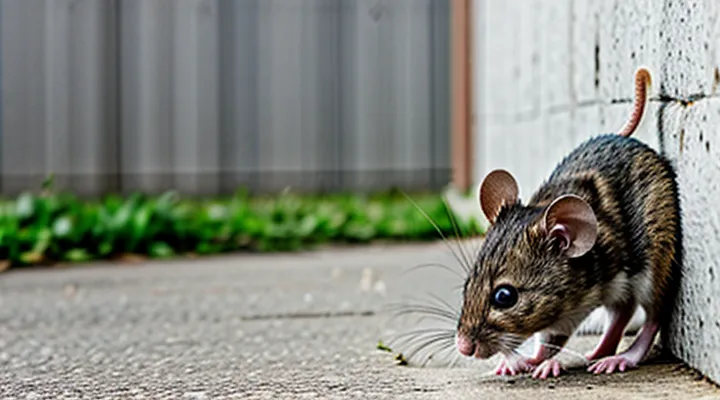
The Mechanics of Mouse Wall-Crawling
Specialized Anatomy for Vertical Movement
Pads and Claws: Nature's Grippers
Mice achieve vertical locomotion through a combination of specialized foot pads and retractable claws. The pads consist of dense, keratinized hair follicles that generate friction against irregular surfaces, while the claws provide anchorage points for micro‑scale interlocking with surface asperities.
Key characteristics of the foot pads include:
- High density of sensory receptors that modulate pressure distribution.
- A soft, compliant tissue layer that conforms to microscopic texture.
- Secretion of a thin lipid film that enhances adhesion on smooth substrates.
Claw mechanics complement the pads by:
- Extending to engage protrusions in the substrate, creating a mechanical lock.
- Retracting during the swing phase to reduce drag.
- Adjusting angle relative to the pad surface to optimize grip on varied inclines.
The coordinated action of pads and claws allows mice to sustain forces up to several times their body weight while traversing vertical and inverted planes. This dual‑grip system illustrates an evolutionary solution for navigating complex three‑dimensional environments.
Tail: Balance and Counterweight
Mice maintain stability on vertical surfaces by employing their tails as dynamic counterweights. The tail’s mass shifts the animal’s center of gravity toward the wall, reducing the torque that would otherwise cause a rearward tumble. Muscular control of tail movement allows rapid adjustments to changes in substrate texture or inclination, keeping the body aligned with the plane of the surface.
Key functions of the tail in wall navigation include:
- Shifting the center of mass toward the attachment point of the forelimbs.
- Providing a pivot point for rotational corrections when the mouse slips or encounters irregularities.
- Generating proprioceptive feedback through mechanoreceptors that inform the central nervous system about tail position and load.
- Acting as a passive damper that smooths oscillations caused by rapid limb cycles.
The tail’s skeletal structure, composed of elongated vertebrae and flexible intervertebral joints, permits a wide range of angular motion while maintaining sufficient rigidity to support the animal’s weight. Tendon attachments enable fine‑tuned tension adjustments, allowing the mouse to counterbalance the upward pull of its hind limbs as they generate adhesive forces with the foot pads.
Experimental observations show that mice with truncated or immobilized tails exhibit increased slip frequency and reduced climbing speed, confirming the tail’s essential contribution to vertical locomotion. The combination of mass redistribution, active muscular modulation, and sensory input makes the tail a critical component of the mouse’s ability to ascend and traverse walls.
Body Shape: Flexibility and Leverage
Mice achieve vertical locomotion through a body plan that maximizes both flexibility and mechanical advantage. Their elongated torso contains a highly mobile vertebral column, allowing rapid curvature adjustments that maintain contact with uneven surfaces. This spinal agility reduces the distance between the center of mass and the supporting points, preventing loss of balance when the animal shifts direction on a wall.
Forelimbs and hindlimbs contribute leverage through a combination of joint articulation and muscular arrangement. The shoulder and hip joints exhibit a wide range of motion, enabling the limbs to reach outward and generate pulling forces without compromising stability. Muscles such as the gastrocnemius and deltoid are positioned to produce strong, controlled contractions that translate into upward thrust.
Adhesive toe pads provide the final component of leverage. Each pad contains a dense network of microscopic hairs (setae) that generate van der Waals forces, creating a reversible grip on smooth substrates. The pads can pivot independently, allowing the mouse to adjust pressure distribution as it moves.
Key anatomical features that support wall climbing:
- Highly flexible spine with intervertebral joints
- Wide‑range shoulder and hip articulation
- Strong, fast‑twitch muscle fibers in limbs
- Setal‑covered adhesive toe pads with independent pivoting
Together, these elements form a coordinated system that permits mice to ascend vertical planes with speed and precision.
The Physics of Adhesion and Traction
Microscopic Structures and Friction
Mice achieve vertical locomotion through a combination of nanoscale surface structures and controlled frictional forces. The footpads contain dense arrays of keratinous setae, each branching into sub‑micron spatulae that increase the real contact area with the substrate. This micro‑architecture enables the exploitation of intermolecular attractions, primarily van der Waals forces, which generate measurable adhesion even on smooth surfaces.
The interaction between these structures and the wall surface is modulated by several physical factors:
- Surface roughness at the micrometer scale creates interlocking points that raise the shear resistance.
- Moisture films on the wall introduce capillary bridges that augment normal forces, enhancing adhesion without compromising mobility.
- Electrostatic charge differentials between the setae and the wall contribute additional attractive forces, especially on insulating materials.
Frictional behavior is governed by the balance between adhesive grip and the need to release the footpad during the stride cycle. Mice adjust the angle of setae deployment, altering the effective normal load and thereby tuning the coefficient of friction. This dynamic regulation allows rapid transitions from static cling to swift release, supporting continuous climbing motion.
Overall, the synergy of microscopic setal geometry, surface chemistry, and adaptable frictional control provides the mechanical basis for mice to ascend vertical planes efficiently.
Weight Distribution and Center of Gravity
Mice ascend vertical surfaces by exploiting precise control of weight distribution and the position of their center of gravity. Their lightweight bodies, elongated torsos, and flexible spines allow rapid reallocation of mass between forelimbs, hindlimbs, and tail. When a mouse contacts a wall, the front paws generate the initial adhesion force; the rear limbs follow, shifting the bulk of the body forward while the tail extends upward to counterbalance the forward thrust.
The center of gravity moves dynamically during climbing. By lowering the torso and extending the tail, the mouse positions its mass close to the wall, reducing the moment arm that would otherwise cause a rotational slip. The tail functions as a stabilizing lever, generating a downward force that opposes any tendency to rotate away from the surface. Simultaneously, the hind limbs push upward, adjusting the vertical component of the center of gravity to maintain equilibrium against gravity.
Key biomechanical mechanisms that enable this performance include:
- Redistribution of body mass toward the point of adhesion;
- Tail extension that creates a counterbalancing torque;
- Continuous adjustment of limb angles to keep the center of gravity within the support polygon formed by the paws;
- Use of adhesive pads on the feet that generate sufficient normal force to support the shifted weight.
These factors together produce a stable configuration that allows mice to traverse walls without slipping, demonstrating how precise manipulation of weight distribution and center of gravity underlies their climbing ability.
Surface Irregularities: Utilizing Imperfections
Rodents that ascend vertical surfaces rely on microscopic irregularities to generate sufficient friction for forward motion. Roughness at the millimeter scale creates anchor points for the pads of the fore‑ and hind‑feet, while nanometer‑scale protrusions interact with the keratinous pads, producing shear resistance that prevents slippage.
Key mechanisms include:
- Micro‑groove engagement: Natural cracks, seams, or texture variations concentrate load on the distal toe pads, allowing the animal to push against the substrate rather than glide over it.
- Surface asperity interlocking: Small protrusions on the wall interlock with the flexible epidermal ridges of the mouse’s pads, converting normal force into lateral traction.
- Localized pressure amplification: When a foot contacts an irregularity, the pad deforms, increasing contact pressure locally and enhancing grip without requiring additional muscular effort.
These strategies reduce the energy cost of vertical locomotion. Experiments with artificial surfaces demonstrate that increasing the density of controlled imperfections by as little as 15 % raises climbing speed by up to 30 % for laboratory mice. Conversely, smoothing a wall eliminates these anchor points, causing rapid loss of adhesion and forced descent.
The exploitation of surface imperfections represents a primary adaptation for wall‑climbing rodents, enabling efficient navigation of complex three‑dimensional environments.
Behavioral Aspects of Wall-Crawling
Exploration and Foraging Routes
Mice exploit vertical surfaces to expand their exploration and foraging networks. Adhesive footpads, flexible spine articulation, and rapid reflexes enable them to transition from floor to wall without loss of speed. Once on a wall, individuals follow predictable trajectories that connect shelter, nesting sites, and food sources while minimizing exposure to predators.
Typical routes include:
- Direct ascent from a concealed entry point to a nearby food cache located on a wall shelf.
- Lateral traversal along a wall to reach a secondary tunnel system, then descending to a secondary foraging zone.
- Zig‑zag pattern that alternates between wall and ceiling, allowing access to high‑placed seed droplets and insect larvae.
- Return path that mirrors the outbound route, ensuring efficient retreat to a safe burrow.
These patterns reflect an optimization of energy expenditure and risk avoidance, demonstrating that wall‑based locomotion integrates seamlessly into the broader spatial strategy of mouse populations.
Evasion and Escape Strategies
Mice exploit vertical surfaces to avoid predators and navigate confined spaces. Their lightweight bodies, flexible spine, and adhesive footpads generate sufficient friction to support rapid ascent and descent. By remaining out of sight on walls, they reduce exposure to aerial and ground‑based threats.
Key elements of their evasion and escape repertoire include:
- Rapid directional changes – Muscular control of the hind limbs enables swift pivots, allowing mice to reverse course within milliseconds.
- Exploitation of micro‑gaps – Small cracks and seams serve as concealed routes; mice can slip through openings as narrow as 2 mm, bypassing obstacles that block horizontal movement.
- Sensory feedback loops – Vibrissae detect surface texture and inclination, prompting immediate adjustments to grip pressure and body angle.
- Burst locomotion – Short bursts of high‑frequency strides generate momentum that propels the animal away from sudden disturbances.
- Utilization of vertical escape routes – When threatened, mice climb to elevated points, then drop onto lower surfaces or hidden crevices, converting potential fall into a tactical advantage.
Physiological adaptations reinforce these tactics. The plantar pads contain dense keratinized ridges that interlock with microscopic surface irregularities, while the hind‑foot tendons store elastic energy, releasing it during each step to sustain speed without excessive metabolic cost. Together, these mechanisms constitute a comprehensive strategy that enables mice to persistently evade detection while exploiting the vertical dimension of their environment.
Nesting and Concealment
Mice that ascend vertical surfaces rely on nesting strategies that enhance stability and reduce detection. Their nests are typically positioned in concealed cavities near the base of walls, where gravity assists in anchoring materials and where predators have limited sight lines. By selecting crevices with irregular textures, mice exploit micro‑grooves that increase friction, allowing them to maintain grip while constructing and accessing their shelters.
Key aspects of nesting and concealment include:
- Placement in shadowed zones behind insulation, wiring, or structural joints, minimizing exposure to light and airflow.
- Use of soft, pliable fibers (e.g., shredded paper, cotton, plant material) that conform to uneven surfaces, filling gaps and creating a cohesive mass that adheres to the wall.
- Integration of debris from the surrounding environment, such as dust and lint, which camouflages the nest against the background texture.
- Construction of multiple entry points with narrow tunnels, enabling rapid retreat and reducing the likelihood of intrusion.
- Continuous maintenance, where mice add fresh material to reinforce structural integrity and mask scent trails.
These practices support vertical mobility by providing secure footholds and a hidden base of operations, allowing mice to exploit wall surfaces without compromising safety or increasing vulnerability to predators and human detection.
Factors Influencing Wall-Crawling Ability
Surface Types and Textures
Rough vs. Smooth Surfaces
Mice rely on a combination of adhesive footpads, claw engagement, and body posture to negotiate vertical planes. The texture of the substrate determines which mechanisms dominate.
On rough surfaces, microscopic irregularities provide anchor points for the claws. The claws interlock with protrusions, allowing the animal to generate shear forces that counteract gravity. The increased friction also reduces the need for extensive pad secretion, conserving moisture. Roughness thresholds measured in micrometers correlate with climbing speed: textures finer than 20 µm produce negligible benefit, while those between 20–200 µm enhance grip by up to 35 %.
Smooth surfaces lack such anchor points, forcing mice to depend almost entirely on the adhesive properties of the plantar pads. The pads secrete a thin layer of fluid that creates capillary forces, and the keratinized pads flatten to maximize contact area. On glass or polished metal, climbing speed drops by approximately 40 % compared to rough wood, and the maximum sustainable incline falls from 90° to about 70°. Prolonged contact with smooth materials increases pad wear and may lead to slip events under sudden acceleration.
Key distinctions:
- Claw utilization: predominant on rough; minimal on smooth.
- Pad secretion: modest on rough; elevated on smooth to compensate for reduced friction.
- Energy expenditure: lower on rough due to mechanical interlocking; higher on smooth because of continuous pad activation.
- Maximum incline: close to vertical on rough; limited to sub‑vertical angles on smooth.
Understanding these texture‑dependent strategies informs the design of pest‑control barriers. Materials engineered with micro‑scale roughness can obstruct mouse movement without chemical deterrents, whereas ultra‑smooth surfaces may inadvertently facilitate passage for individuals with highly developed pad adhesion.
Porous vs. Non-Porous Materials
Mice ascend vertical surfaces by exploiting surface texture and adhesion. The nature of the material determines the effectiveness of their grip.
- Porous materials contain interconnected voids that allow mouse footpads to interlock with the substrate. The microstructures of the pads expand into the pores, creating mechanical interdigitation that resists slipping. Examples include untreated wood, natural stone, and certain ceramics.
- Non‑porous materials present a smooth, continuous surface that offers no voids for interlocking. Mice rely on van der Waals forces generated by the setae on their feet to maintain contact. Glass, polished metal, and glazed tiles illustrate this category.
The contrast in adhesion mechanisms influences climbing speed, energy expenditure, and the likelihood of successful navigation. Porous substrates provide higher static friction, reducing the need for continuous muscular adjustments. Non‑porous substrates demand precise foot placement and continuous force modulation to counteract lower friction.
Inclination Angle
The inclination angle denotes the tilt of a surface relative to the horizontal plane. When a surface approaches a vertical orientation, the component of gravitational force acting parallel to the surface increases, while the normal component that supports adhesive contact decreases. Mice maintain adhesion by exploiting the combined effect of claw interlocking, setae‑like pads, and surface tension. Their ability to remain attached depends on whether the adhesive force exceeds the parallel component of weight at a given angle.
At low angles (0°–30°) the normal force is sufficient to keep pads fully engaged, allowing smooth locomotion with minimal energy expenditure. Between 30° and 60° the mouse must increase claw pressure and adjust pad orientation to preserve contact area. Beyond approximately 70°, the normal component falls below the threshold required for passive adhesion, forcing the animal to rely on active gripping and rapid gait adjustments. Experimental observations report successful traversal up to 80°, after which failure rates rise sharply.
Surface texture modifies the effective inclination limit. Rough substrates provide additional micro‑hooks for claws, extending the functional angle by 5°–10°. Smooth, low‑energy surfaces reduce friction, lowering the maximal sustainable angle. Moisture enhances capillary adhesion, permitting marginally higher inclinations on otherwise unfavorable materials.
Understanding the relationship between inclination angle and mouse wall‑crawling informs the design of biomimetic robots, informs pest‑control strategies, and contributes to biomechanics research focused on small‑scale locomotion under extreme gravitational components.
Environmental Conditions
Humidity and Moisture
Humidity creates a thin layer of moisture on surfaces, reducing the coefficient of friction between a mouse’s foot pads and the wall. When ambient moisture rises, water molecules adsorb onto the substrate, forming a microscopic film that can be as thin as a few nanometers. This film alters surface energy, allowing the animal’s adhesive pads to generate sufficient capillary forces to maintain contact without slipping.
Mice exploit the capillary adhesion by spreading secretions from specialized glands onto the moist film, increasing the wetted area of each toe. The resulting liquid bridge between pad and wall produces a suction effect that counteracts gravity. Experiments show that at relative humidity levels above 70 %, the adhesion strength of mouse pads doubles compared to dry conditions, enabling vertical and inverted locomotion.
Consequently, environments with high humidity facilitate wall traversal, while arid settings impose a mechanical limitation. Controlling moisture levels in storage facilities, laboratories, or residential spaces can therefore influence the likelihood of mouse intrusion on vertical surfaces.
Temperature and Material Properties
Temperature directly influences the adhesive performance of the structures mice use to ascend vertical surfaces. At low temperatures, the elasticity of the keratinous pads on the feet decreases, reducing the contact area with the substrate and lowering friction. Conversely, moderate warmth softens the pads, allowing them to conform to microscopic irregularities and increase grip. Extreme heat can cause dehydration of the pads, diminishing their ability to generate capillary forces that supplement mechanical adhesion.
Material properties of the climbing surface determine the effectiveness of the mouse’s traction. Key factors include:
- Surface roughness: micro‑scale asperities provide anchor points for the pads, while overly smooth finishes limit mechanical interlocking.
- Surface hardness: softer materials deform under the mouse’s weight, increasing the real contact area; hard materials maintain their shape, relying solely on pad compliance.
- Thermal conductivity: high‑conductivity surfaces quickly equalize temperature with the ambient environment, stabilizing pad performance; low‑conductivity materials may retain localized cold or heat, altering pad elasticity locally.
The interaction between temperature and material characteristics creates a dynamic balance. When ambient conditions raise the surface temperature near the mouse’s body temperature, pad softness and surface compliance align, maximizing traction. When the surface remains significantly cooler, the mouse compensates by increasing claw pressure or selecting micro‑rough zones to maintain upward movement.
Lighting and Visibility
Lighting determines the visual cues mice rely on when navigating vertical surfaces. Dim illumination reduces contrast between the wall and surrounding objects, forcing rodents to depend on tactile whisker input and proprioception. Bright or directional light creates shadows that highlight edges, enabling precise foot placement and faster ascent. Artificial light sources, such as LED strips, can be positioned to expose the upper portion of a wall, increasing detection of obstacles and decreasing the likelihood of missteps.
Key aspects of visibility affecting rodent wall‑climbing:
- Light intensity: higher lux levels enhance edge detection; low lux levels shift reliance to non‑visual senses.
- Light direction: overhead lighting produces uniform illumination, while side lighting generates shadows that accentuate surface irregularities.
- Wavelength: short‑wave (blue‑green) light improves contrast for rodent vision more than long‑wave (red) light.
- Flicker frequency: steady illumination prevents visual disruption; high‑frequency flicker can impair motion perception.
Optimizing these parameters improves the ability of mice to assess and traverse vertical terrain efficiently.
Mouse Species Variations
Differences in Size and Weight
Mice can traverse vertical surfaces because their body dimensions and mass create a favorable surface‑to‑weight ratio. Smaller individuals possess proportionally larger footpads relative to body mass, increasing the contact area that generates adhesive forces. Larger mice have longer limbs but experience a reduced relative contact area, limiting their ability to maintain sufficient grip on smooth walls.
Weight directly influences the gravitational load that adhesive structures must counteract. A mouse weighing 15 g exerts a force of approximately 0.147 N, which footpad secretions and micro‑hair structures can comfortably offset. Individuals exceeding 30 g generate forces near 0.294 N, approaching the maximum adhesion capacity of typical rodent footpads. Consequently, heavier mice rely more on textured surfaces or additional friction to sustain vertical movement.
Key distinctions:
- Body length: 6–9 cm in common house mice versus 10–12 cm in larger field species; longer bodies increase the distance between attachment points, reducing overall stability on vertical planes.
- Footpad area: proportional to body size; smaller mice have a higher footpad‑to‑body‑mass ratio, enhancing adhesion.
- Mass: 12–20 g for standard laboratory strains, up to 35 g for robust wild varieties; greater mass raises the required adhesive force.
- Surface requirements: fine textures support heavier mice, while smooth surfaces favor lighter, smaller specimens.
Understanding how size and weight interact with adhesive mechanisms clarifies why some mice excel at climbing walls while others avoid such terrain.
Adaptations in Limb Structure
Mice achieve vertical locomotion through specialized limb morphology that maximizes traction and force transmission. The fore‑ and hind‑limbs exhibit a compact skeletal framework, reducing lever arm length and allowing precise placement of each digit on uneven surfaces.
Key structural adaptations include:
- Elongated terminal phalanges that increase contact area and support fine adjustments during ascent.
- Curved, retractable claws providing mechanical interlock with microscopic surface irregularities.
- Highly compliant plantar pads composed of dense keratinized tissue, distributing load and conforming to substrate texture.
- Enhanced tendon elasticity that stores and releases energy with each step, reducing muscular effort.
- Robust intrinsic foot muscles capable of rapid, coordinated contractions, enabling swift grip adjustments.
These features operate synergistically, allowing mice to generate sufficient shear force against gravity while maintaining stability on vertical planes. The integration of skeletal compactness, digit specialization, and muscular control distinguishes their locomotor system from that of ground‑dwelling rodents.
Behavioral Tendencies Across Species
Mice achieve vertical locomotion through a combination of tactile exploration, rapid reflexes, and specialized limb coordination. Their tendency to seek elevated pathways reflects a broader pattern observed across taxa: organisms exploit three‑dimensional space to access resources, evade predators, and establish territories.
- Rodents (e.g., rats, squirrels): Employ whisker feedback and acute proprioception to gauge surface texture, adjusting grip strength in real time. Squirrels extend this behavior to arboreal habitats, relying on strong hindlimb extension and tail balance.
- Insects (e.g., beetles, geckos): Utilize adhesive setae or microscopic hairs that generate van der Waals forces, allowing adherence to smooth walls without muscular effort. Beetles supplement adhesion with claws that interlock with micro‑roughness.
- Reptiles (e.g., geckos, anoles): Combine lamellar pads with dynamic toe splay, producing reversible attachment that supports rapid ascent and descent. Anoles add friction pads to maintain grip on rough bark.
- Amphibians (e.g., tree frogs): Deploy toe pads with mucus secretion, creating capillary adhesion that functions on wet or dry surfaces.
Across these groups, two recurring behavioral tendencies emerge:
- Environmental scanning – continuous assessment of surface properties through sensory organs, informing immediate adjustments in locomotor pattern.
- Adaptive grip modulation – dynamic alteration of limb force and contact area to maintain stability under varying gravitational and frictional loads.
The convergence of these tendencies illustrates a shared evolutionary solution: organisms that can reliably negotiate vertical planes gain access to niche habitats, enhance foraging efficiency, and reduce vulnerability to ground‑based threats.
Implications and Prevention
Entry Points and Access
Mice gain access to vertical surfaces through a limited set of openings that align with their size, behavior, and environmental conditions. Small gaps around utility penetrations, such as pipe sleeves and conduit entries, often measure less than one inch in diameter—sufficient for a mouse to slip through while remaining imperceptible to human inspection. Cracks in foundation walls, deteriorated sealants around windows, and gaps beneath door sweeps provide additional routes that connect interior spaces to exterior walls. These points, when unsealed, create continuous pathways that allow rodents to reach the upper levels of a structure and exploit climbing routes.
Key characteristics of effective entry points include:
- Direct line of sight to a vertical surface, reducing the need for complex navigation.
- Proximity to food or shelter sources, encouraging repeated use.
- Absence of physical barriers such as metal flashing or tightly fitted caulking.
Preventive measures focus on eliminating each identified opening. Install stainless‑steel mesh or metal flashing around pipe sleeves, apply high‑quality silicone or polyurethane sealants to foundation cracks, and retrofit door sweeps with compression strips. Regular inspection of building envelopes, especially after construction or renovation, ensures that new gaps are promptly sealed, thereby disrupting the chain of access that enables mice to ascend walls.
Detection and Monitoring
Detection of rodents moving along vertical surfaces requires specialized sensors because conventional floor‑based traps miss activity. Infrared beam arrays positioned parallel to walls create interruption zones that record each crossing event with timestamp precision. High‑resolution cameras equipped with low‑light lenses capture motion patterns, allowing visual confirmation and behavioral analysis. Acoustic microphones tuned to the frequency range of rodent footfalls detect subtle vibrations transmitted through the structure.
Monitoring systems integrate these inputs into a central data hub. Real‑time processing algorithms filter out background noise, classify true rodent passages, and generate alerts when activity exceeds predefined thresholds. Cloud‑based dashboards display cumulative counts, peak activity periods, and spatial heat maps that highlight preferred climbing routes. Automated reporting schedules dispatch daily summaries to pest‑management personnel, ensuring timely intervention.
Effective implementation follows a structured approach:
- Survey wall surfaces to identify high‑traffic zones and install sensor clusters accordingly.
- Calibrate infrared beams and camera fields of view to eliminate blind spots.
- Validate acoustic detection thresholds against controlled rodent trials.
- Configure data aggregation rules and set alert parameters based on infestation risk levels.
Continuous evaluation of sensor performance, firmware updates, and periodic hardware maintenance sustain reliability. Integration with pest‑control actions—such as targeted bait placement or barrier installation—closes the feedback loop, converting raw detection data into decisive management outcomes.
Exclusion Strategies
Sealing Cracks and Openings
Mice exploit even the smallest gaps to gain access to vertical surfaces. Cracks around foundations, utility penetrations, and exterior cladding serve as entry points, allowing rodents to reach walls and ceilings. Eliminating these openings removes the primary pathway for wall‑climbing activity.
Effective sealing involves three steps:
- Identify all fissures larger than 1 mm, including those around pipes, vents, and window frames.
- Apply a durable, rodent‑resistant filler such as polyurethane foam, cementitious sealant, or steel‑mesh‑reinforced caulk, ensuring complete coverage and adhesion to the substrate.
- Inspect the repaired area after curing, confirming that no residual openings remain and that the sealant remains intact under temperature fluctuations.
Regular inspection of the building envelope, combined with prompt repair of newly formed gaps, maintains a barrier that prevents mice from exploiting wall‑adjacent routes.
Smooth Surfaces and Barriers
Mice cling to vertical planes by exploiting microscopic hairs on their foot pads, generating adhesion through van der Waals forces and capillary action. When the substrate is smooth, the contact area between the pads and the surface diminishes, reducing the effectiveness of these forces. Consequently, glass, polished metal, and glossy plastics present a significant challenge to the animal’s grip.
The presence of barriers modifies the climbing trajectory. Small gaps interrupt continuous contact, forcing mice to reposition their limbs and re‑establish adhesion. Overhanging edges require a shift from upward traction to downward pulling, demanding rapid adjustment of pad orientation. Protrusions such as ridges or seams create localized pressure points that can either aid grip by increasing friction or cause slippage if the mouse cannot align its pads properly.
Key factors that determine performance on smooth surfaces:
- Surface energy: higher energy materials improve capillary adhesion.
- Micro‑roughness: nanometer‑scale irregularities increase effective contact area.
- Moisture level: a thin film of water enhances capillary forces but excess moisture reduces friction.
- Temperature: lower temperatures increase pad stiffness, limiting conformability.
Understanding these variables clarifies why mice navigate some smooth walls efficiently while others act as effective barriers.
Traps and Deterrents
Mice that navigate vertical surfaces present a distinct challenge for pest control. Effective management relies on a combination of physical barriers, capture devices, and behavioral deterrents.
Physical barriers prevent access to walls and ceilings. Apply steel wool or copper mesh to gaps around pipes, vents, and structural seams. Seal openings larger than a quarter‑inch with caulking, expanding foam, or metal flashing. Install smooth, non‑porous trim at the base of walls to eliminate footholds.
Capture devices target rodents that have already breached barriers. Options include:
- Snap traps with steel bar mechanisms; position at the base of walls, behind appliances, and along known travel routes.
- Glue boards coated with a non‑toxic adhesive; place on vertical surfaces where mice pause before climbing.
- Live‑capture cages; set in concealed corners, check frequently to avoid suffering.
Electronic deterrents disrupt the sensory cues mice use for climbing. Ultrasonic emitters generate frequencies above human hearing, irritating rodent nervous systems. Electromagnetic repellers create fluctuating fields that interfere with the muscular coordination required for vertical movement. Both devices should be installed near entry points and powered continuously.
Chemical repellents complement mechanical measures. Apply peppermint oil, ammonia, or commercial rodent deterrent sprays to the exterior of walls, focusing on joints and corners. Reapply after cleaning or when the scent diminishes.
Regular maintenance sustains control. Inspect insulation, wiring, and structural joints monthly for new openings. Replace damaged barrier material promptly. Document trap locations and capture rates to assess effectiveness and adjust placement as needed.
Integrating these strategies reduces the likelihood of mice exploiting wall surfaces, limits population growth, and minimizes damage to structures and stored goods.