
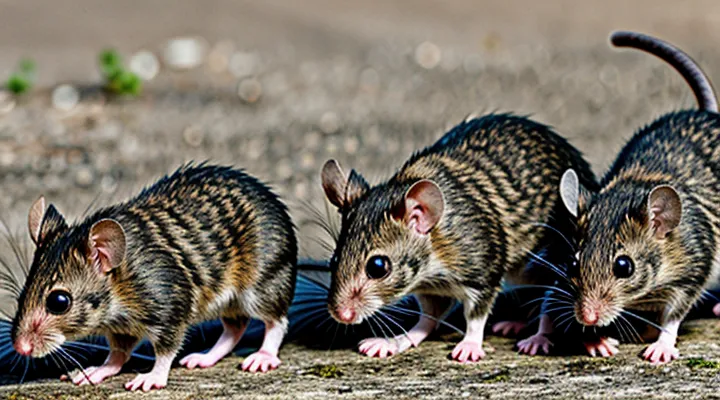
The Reproductive Cycle of Mice
Estrous Cycle and Ovulation
The estrous cycle in laboratory mice lasts approximately four to five days and consists of four distinct phases that regulate fertility. During proestrus, ovarian follicles enlarge under rising follicle‑stimulating hormone, and estrogen concentrations peak. Estrus follows, marked by the release of a mature oocyte; this ovulatory event occurs spontaneously without a preceding luteinizing hormone surge, a pattern known as induced ovulation. Metestrus features the formation of the corpus luteum and a rapid decline in estrogen, while diestrus maintains luteal function and prepares the uterus for potential implantation.
Ovulation in mice is tightly coupled to the estrous cycle. A single ovulation typically yields one to two ova, reflecting the species’ strategy of producing multiple litters with modest litter size. The timing of mating relative to estrus determines fertilization success; sperm can survive in the female reproductive tract for up to 24 hours, whereas the oocyte remains viable for only a few hours after release.
Key characteristics of the mouse reproductive schedule:
- Cycle length: 4–5 days
- Ovulation: one to two ova per estrus
- Fertilization window: ≤24 hours post‑estrus
- Luteal phase: ~14 days, supporting early embryonic development
Understanding these physiological parameters clarifies how mice achieve the high reproductive output observed in rodent populations, balancing rapid cycle turnover with limited ovulation per cycle.
Gestation Period and Litter Size
Mice complete gestation in roughly 19–21 days, a period that remains consistent across most laboratory strains and common wild species. Embryonic development proceeds rapidly: implantation occurs within two days after mating, organogenesis is largely finished by the end of the second week, and the pups become fully viable by the third week. This short prenatal phase enables multiple breeding cycles within a single year.
Litter size varies with species, environmental conditions, and maternal health. Typical ranges are:
- Laboratory Mus musculus: 6–8 pups per litter, occasional extremes of 4–12.
- House mouse (wild): 5–10 pups, with occasional larger litters in resource‑rich habitats.
- Deer mouse (Peromyscus maniculatus): 3–7 pups, reflecting a more conservative reproductive strategy.
- Meadow vole (Microtus pennsylvanicus): 4–9 pups, often influenced by seasonal food availability.
Key determinants of litter size include:
- Maternal age – younger and older females tend to produce smaller litters.
- Nutritional status – adequate protein and caloric intake correlate with higher offspring numbers.
- Seasonal cues – longer daylight periods and abundant food can increase litter size in wild populations.
The combination of a brief gestation and flexible litter size equips rodents with the capacity for rapid population growth under favorable conditions.
Factors Influencing Litter Size
Species and Strain Variations
Mice exhibit considerable variation in litter size across species and genetic strains, reflecting adaptive reproductive strategies within the rodent order. Wild Mus musculus populations typically produce 4–7 pups per litter, with occasional extremes of 2 or up to 9 in resource‑rich environments. In contrast, field mice such as Peromyscus maniculatus average 3–5 offspring, while larger rodents like the deer mouse (Peromyscus deer) rarely exceed 4 per litter.
Laboratory strains demonstrate even broader ranges due to selective breeding for specific phenotypes:
- C57BL/6: average 5–6 pups; occasional litters of 8 under optimal husbandry.
- BALB/c: 4–5 pups; lower maximal litter size (7) compared with outbred stocks.
- Swiss Webster (outbred): 6–8 pups; high variability, with some litters reaching 10.
- CD‑1 (ICR): 7–9 pups; consistently among the largest litters reported for Mus musculus.
- FVB/N: 5–7 pups; moderate variability linked to maternal age.
Factors influencing these differences include maternal body mass, estrous cycle length, and environmental conditions such as temperature and nutrition. Strain‑specific hormonal regulation, particularly variations in prolactin and luteinizing hormone secretion, modulates ovulation rate and embryonic implantation efficiency, thereby shaping litter size outcomes.
Understanding species‑level and strain‑level disparities is essential for designing reproductive studies, interpreting population dynamics, and optimizing breeding protocols in both ecological research and biomedical contexts.
Environmental Conditions
Environmental factors exert direct influence on the reproductive output of laboratory and wild mice. Ambient temperature regulates estrous cycle length; temperatures between 20 °C and 26 °C shorten the interval between litters, whereas exposure to temperatures below 15 °C prolongs gestation and reduces litter size. Photoperiod determines hormonal rhythms; long-day conditions (≥14 h light) accelerate sexual maturation and increase the number of pups per litter, while short-day exposure delays puberty and depresses fecundity.
Nutrient availability controls both ovulation rate and embryonic survival. High‑protein diets elevate serum luteinizing hormone, resulting in larger litters, whereas protein deficiency leads to embryonic resorption and smaller broods. Caloric restriction reduces litter size by up to 30 % and extends the inter‑birth interval.
Humidity affects neonatal viability. Relative humidity of 50–70 % maintains optimal pup thermoregulation; extreme dryness (<30 %) increases mortality, prompting mothers to wean earlier and produce fewer offspring.
Population density modulates stress hormones. Crowded housing elevates corticosterone, suppressing gonadotropin release and decreasing litter size. Conversely, moderate social interaction stimulates prolactin secretion, enhancing milk production and supporting larger litters.
Key environmental variables and their reproductive consequences:
- Temperature: 20–26 °C → shorter estrous cycles, larger litters; <15 °C → prolonged cycles, smaller litters.
- Photoperiod: ≥14 h light → earlier sexual maturity, increased pup numbers; ≤10 h light → delayed maturity, reduced litter size.
- Nutrition: High protein/calorie → elevated ovulation, larger litters; deficiency → embryonic loss, smaller litters.
- Humidity: 50–70 % → optimal pup survival; <30 % → higher mortality, reduced litter size.
- Density: Moderate → hormonal balance, larger litters; high → stress‑induced suppression, smaller litters.
Understanding these parameters enables precise manipulation of reproductive performance in research colonies and informs conservation strategies for wild rodent populations.
Maternal Age and Health
Maternal age exerts a measurable influence on the reproductive output of laboratory and wild rodents. Younger females (approximately 6–8 weeks old) typically produce litters ranging from five to eight pups, while females beyond ten weeks of age show a gradual decline in both litter size and offspring viability. The reduction correlates with diminished ovarian reserve, increased incidence of embryonic resorption, and prolonged inter‑litter intervals.
Health status directly modulates this age‑related trend. Key factors include:
- Nutritional adequacy: Sufficient protein and micronutrients sustain follicular development and support uterine environment; deficits lower embryo implantation rates.
- Pathogen load: Chronic infections elevate inflammatory cytokines, impairing oocyte quality and increasing neonatal mortality.
- Body condition: Excessive adiposity interferes with hormonal regulation, whereas underweight conditions limit energy reserves for gestation and lactation.
- Parity history: First‑time mothers often experience higher pup mortality than experienced breeders, reflecting physiological adaptation to repeated reproductive cycles.
Collectively, these variables shape the reproductive strategy of rodents by balancing the number of offspring against the probability of successful rearing. Optimal breeding programs therefore prioritize breeding females in the prime age window (8–10 weeks) and maintain stringent health standards to maximize litter size and pup survival.
Reproductive Strategies of Rodents
High Reproductive Rate as a Survival Tactic
Rodents achieve population stability primarily through a rapid reproductive output that compensates for high mortality rates. Females reach sexual maturity within six weeks, can conceive shortly after weaning, and produce multiple litters each breeding season.
- Average litter size: 5–8 pups for the common house mouse, up to 12 for larger species such as the deer mouse.
- Gestation period: 19–21 days, allowing several reproductive cycles per year.
- Inter‑litter interval: 21–30 days, depending on resource abundance and environmental conditions.
This strategy aligns with r‑selection theory, where organisms invest in quantity over parental care. Short gestation and frequent breeding enable swift recovery after predation events, disease outbreaks, or habitat disturbances. High fecundity also ensures that a subset of offspring will encounter favorable microhabitats, increasing the likelihood of gene propagation.
Population models demonstrate exponential growth when mortality remains below a threshold of approximately 30 % per generation. Consequently, rodent infestations can reach critical densities within a few months, emphasizing the need for proactive control measures that disrupt breeding cycles rather than relying solely on lethal interventions.
Parental Investment and Offspring Survival
Mice produce litters ranging from four to twelve pups, a strategy that maximizes reproductive output under conditions of high predation and resource fluctuation. The sheer number of offspring does not guarantee population stability; survival rates hinge on the quality and quantity of parental investment.
- Gestation lasts approximately 19–21 days, delivering well‑developed neonates capable of thermoregulation after a brief period of maternal warming.
- Females construct nests using shredded material, providing thermal insulation and concealment from predators.
- Lactation supplies protein‑rich milk for 21–28 days; milk composition changes from high‑fat colostrum to balanced nutrient profiles as pups mature.
- Weaning occurs around day 21, after which mothers reduce direct care but may continue to guard the nest site.
Enhanced maternal care correlates with lower early‑life mortality. Studies report that pups receiving uninterrupted nursing achieve 85–90 % survival to weaning, compared with 60–70 % for litters experiencing nest disruption or reduced milk provision. Adequate nest temperature accelerates growth, shortening the vulnerable pre‑weaning interval and decreasing exposure to pathogens.
Rodent reproductive systems balance litter size against investment intensity. Species that allocate extensive resources per offspring, such as certain voles, produce smaller litters but achieve higher juvenile survival. Conversely, mice maintain large litters while relying on brief, intensive maternal care to offset the elevated risk inherent in a high‑output strategy. This trade‑off shapes population dynamics across diverse habitats.
Adaptations to Diverse Environments
Mice adjust their reproductive output to match the ecological constraints of each habitat. In temperate zones, short breeding seasons and fluctuating food supplies lead to a strategy of rapid gestation and frequent litters, each containing a moderate number of pups. In arid or high‑altitude regions, limited resources and harsher climates favor fewer, larger offspring that receive greater maternal investment, enhancing survival prospects.
Key physiological and behavioral modifications support these divergent strategies:
- Seasonal breeding cycles – Hormonal shifts synchronize estrus with periods of maximal food availability, reducing the risk of offspring starvation.
- Lactational flexibility – Mothers can extend nursing duration when environmental conditions deteriorate, allowing pups to reach a more robust developmental stage before weaning.
- Nest site selection – Construction of insulated burrows or utilization of existing cavities mitigates temperature extremes, improving pup thermoregulation.
- Resource allocation – Females modulate egg size and yolk composition in response to nutrient abundance, influencing neonatal vigor.
Population studies demonstrate that litter size correlates with ambient temperature, precipitation patterns, and predator density. In environments with abundant shelter and low predation pressure, mice produce larger litters, exploiting the reduced mortality risk. Conversely, high predation zones trigger a shift toward smaller litters with increased parental vigilance, optimizing the balance between offspring quantity and survivability.
Overall, mouse reproductive systems exhibit plasticity that aligns fecundity with the specific demands of diverse ecosystems, ensuring species persistence across a wide range of environmental conditions.
Comparing Mouse Reproduction with Other Rodents
Hamsters: A Case Study
Hamsters illustrate the variability of rodent reproductive output. Female Syrian hamsters (Mesocricetus auratus) typically produce litters of 6‑12 pups after a 16‑day gestation. Dwarf species such as the Campbell’s dwarf hamster (Phodopus campbelli) average 4‑6 offspring per litter, with gestation periods of 18‑21 days. Both groups reach sexual maturity by 4‑6 weeks of age, enabling multiple breeding cycles within a single year.
Reproductive frequency distinguishes hamsters from many murine species. In controlled environments, Syrian hamsters can generate two to three litters annually, while dwarf hamsters may produce up to five, given their shorter estrous intervals and the absence of a strict breeding season. Male hamsters attain fertility concurrently with females, eliminating the need for delayed male maturation observed in some rodent taxa.
Key reproductive parameters for hamsters:
- Litter size: 4‑12 pups, species‑dependent
- Gestation length: 16‑21 days
- Sexual maturity: 4‑6 weeks
- Potential litters per year: 2‑5, contingent on photoperiod and housing conditions
These metrics demonstrate that hamsters, though smaller than many mice, can achieve comparable or higher reproductive rates under optimal conditions, highlighting the diversity of breeding strategies among rodents.
Rats: Similarities and Differences
Rats belong to the Muridae family and share many reproductive characteristics with other small rodents, yet distinct parameters define their breeding output.
Typical litter size for the common laboratory rat (Rattus norvegicus) ranges from five to twelve pups, exceeding the average mouse litter of three to seven. This larger clutch results from increased uterine capacity and a longer gestational development of embryos.
Gestation lasts approximately twenty‑three days, slightly longer than the mouse’s nineteen‑day period. After delivery, a female rat can become fertile again within 48 hours, allowing up to six litters per year under optimal conditions. Mice achieve a similar annual frequency but often produce slightly more cycles due to a shorter post‑partum estrus interval.
Parental care exhibits notable differences. Rat mothers construct extensive nests, provide prolonged pup grooming, and wean offspring around twenty‑four days after birth. Mouse mothers tend to wean earlier, at about fifteen days, and allocate less time to nest building.
Key comparative points:
- Litter size: rats 5‑12 pups > mice 3‑7 pups.
- Gestation: rats ≈ 23 days > mice ≈ 19 days.
- Breeding interval: rats ≈ 48 h post‑partum ≈ mice ≈ 24‑48 h.
- Weaning age: rats ≈ 24 days > mice ≈ 15 days.
These quantitative distinctions influence population dynamics. Larger litters and extended parental investment enable rat colonies to expand rapidly in resource‑rich environments, whereas mice rely on higher reproductive turnover to maintain numbers under fluctuating conditions.
Guinea Pigs: Unique Reproductive Traits
Guinea pigs (Cavia porcellus) exhibit several reproductive characteristics that set them apart from other rodent species. Their relatively long gestation period, moderate litter size, and continuous breeding capacity contribute to a distinct population growth strategy.
The gestation lasts 59–72 days, considerably longer than the 19–21 days typical for many small rodents. Litter size averages 2–4 pups, with occasional litters of up to six. This moderate output balances the extended developmental period with the need for viable offspring.
Sexual maturity is reached at 4–6 weeks for females and 8–12 weeks for males. Females display an induced estrus, capable of conceiving shortly after giving birth, allowing back‑to‑back litters under optimal conditions. No strict breeding season limits reproduction; ambient temperature and photoperiod have minimal impact.
Parental investment is notable. Mothers provide intensive thermoregulation, grooming, and milk production for the first three weeks. Weaning occurs around 21 days, after which juveniles become independent. The combination of prolonged maternal care and relatively low litter numbers results in slower but steady population increase compared with rapidly reproducing rodents.
Key reproductive traits of guinea pigs:
- Gestation: 59–72 days
- Litter size: 2–4 pups (up to 6)
- Female maturity: 4–6 weeks
- Male maturity: 8–12 weeks
- Induced estrus enabling successive pregnancies
- Extended maternal care lasting three weeks
These attributes define a reproductive model that prioritizes offspring survivability over sheer quantity, illustrating the diversity of reproductive strategies among rodents.
Ecological Impact of Mouse Reproduction
Population Dynamics and Fluctuations
Mice produce large litters, typically ranging from five to twelve pups per breeding event. The high reproductive output creates potential for rapid population growth, but actual numbers fluctuate in response to environmental constraints.
Key drivers of population change include:
- Breeding frequency: Females can conceive within 24 hours after weaning, allowing multiple litters per year.
- Juvenile survival: Mortality rates rise sharply when food is scarce or predation pressure increases.
- Resource availability: Abundant seeds and grains boost litter size and weaning success; scarcity triggers reduced fecundity.
- Density‑dependent regulation: As population density rises, competition for nesting sites and mates limits further expansion.
- Seasonal cycles: Warmer months extend breeding periods, while colder periods shorten them, leading to seasonal peaks and troughs.
Mathematical models that integrate these variables predict exponential growth under optimal conditions, yet real‑world observations show cyclical patterns. Peaks often follow periods of abundant rainfall or crop surplus, whereas crashes coincide with predator outbreaks, disease epizootics, or habitat disruption. Understanding these dynamics enables more accurate forecasts of rodent population trajectories and informs pest management strategies.
Role in Ecosystems as Prey and Pests
Mice reproduce rapidly, producing several litters each year with an average of 5‑8 pups per litter. This high fecundity sustains large populations that serve as a primary food source for a wide range of predators, including owls, hawks, snakes, foxes, and domestic cats. Predator reliance on mouse biomass influences population cycles and energy flow within terrestrial ecosystems.
- Small mammals such as shrews and weasels depend on mouse abundance for survival and reproductive success.
- Raptors exploit seasonal mouse surges to increase breeding output.
- Reptilian and amphibian species obtain essential protein from mouse prey, supporting growth and development.
Simultaneously, mouse populations intersect with human activities, creating pest pressures that affect agriculture, food storage, and public health. Their feeding habits damage crops, contaminate grain silos, and compromise structural integrity of buildings. Moreover, mice act as reservoirs for pathogens, facilitating transmission of hantavirus, leptospirosis, and salmonellosis to humans and livestock.
- Crop losses can reach 10‑25 % in regions with unmanaged mouse infestations.
- Grain contamination rates increase by up to 30 % when mouse activity is unchecked.
- Disease incidence correlates with mouse density in urban and rural settings.
The dual function of mice—as abundant prey and as persistent pests—links reproductive capacity to ecosystem dynamics and human economic concerns. Effective management requires integrating predator conservation with targeted control measures to balance ecological benefits against agricultural and health risks.
Human Interactions and Management Strategies
Human activity influences rodent population dynamics through direct and indirect interventions. Domestic environments provide abundant shelter and food, encouraging rapid breeding cycles. Agricultural fields attract commensal species that exploit stored grains, increasing contact with crops. Laboratory facilities maintain controlled colonies for research, requiring strict reproductive monitoring to prevent overpopulation and preserve genetic integrity.
Management approaches address these interactions with targeted measures:
- Environmental sanitation: removal of food residues, sealing entry points, and regular waste disposal reduce habitat suitability.
- Mechanical exclusion: installation of fine-mesh barriers and trap systems limits ingress into structures.
- Chemical control: application of rodenticides follows integrated pest management protocols, emphasizing dosage accuracy and resistance monitoring.
- Biological regulation: introduction of natural predators, such as barn owls, or use of sterilizing agents curtails reproductive output without extensive chemical reliance.
- Genetic strategies: development of gene‑drive technologies aims to suppress fertility genes in wild populations, subject to ecological risk assessments.
Effective implementation combines multiple tactics, adapts to local conditions, and incorporates ongoing population surveillance to maintain rodent numbers below thresholds that threaten health, food security, and research integrity.