
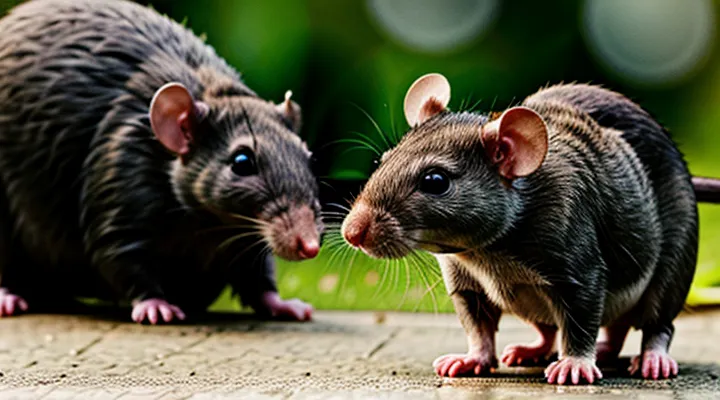
What Defines a Dumbo Rat?
Unique Ear Placement and Shape
Dumbo rats possess ears that sit markedly lower on the skull than those of typical laboratory or pet rats. The pinnae originate near the cheekbones, creating a conspicuous, drooping silhouette that distinguishes them from the upright ear position found in standard specimens.
The shape of Dumbo rat ears differs in several measurable ways:
- Surface area: approximately 30‑40 % larger, providing a broader auditory membrane.
- Curvature: pronounced outward bend gives a rounded profile, whereas regular rat ears remain relatively flat.
- Thickness: cartilage is thicker, supporting the lowered attachment and preventing collapse.
These anatomical variations result from selective breeding aimed at enhancing the ear’s visual prominence. The altered placement and enlarged, curved pinnae affect the animal’s silhouette, acoustic properties, and grooming behavior, setting Dumbo rats apart from their conventional counterparts.
Physical Distinctions
Ear Morphology and Size
Dumbo rats possess markedly enlarged pinnae that extend laterally from the head, whereas typical laboratory rats display compact ears positioned higher on the skull. The cartilage framework of Dumbo ears is expanded, allowing a broader, more flexible surface that captures sound waves over a larger area. In regular rats, the auricular cartilage is thinner, resulting in a tighter, less protruding ear structure.
Key morphological distinctions include:
- Length: Dumbo pinna averages 20–25 mm from base to tip; regular rat ear measures 12–15 mm.
- Height: Vertical height of Dumbo ears reaches 15–18 mm; standard rats average 8–10 mm.
- Surface area: Enlarged Dumbo ears provide approximately 1.8 cm² of acoustic membrane, nearly double the 0.9 cm² found in typical rats.
- Attachment point: Dumbo ears attach near the mandibular region, creating a low‑set appearance; regular rats attach near the temporal bone, resulting in a higher placement.
The expanded auricular cartilage in Dumbo rats also contains a higher density of elastic fibers, contributing to increased pliability. Regular rats exhibit a denser collagen matrix, which maintains ear rigidity and limits lateral spread. These structural variations influence auditory reception, thermoregulation, and tactile perception, distinguishing Dumbo rats from their conventional counterparts.
Head Shape Variations
Dumbo rats possess a markedly flattened cranial profile. The skull roof is expanded laterally, creating a low‑lying dome that accommodates the characteristic large, low‑set ears. The facial bones are positioned more ventrally, resulting in a shortened snout and a broader nasal aperture.
Regular rats exhibit a more tapered skull. The cranial vault rises sharply, forming a pronounced dome. The snout extends further forward, and the ears originate higher on the head, giving a streamlined silhouette.
Key morphological distinctions:
- Cranial height: Dumbo rats – reduced; standard rats – elevated.
- Skull width: Dumbo rats – widened across the temporal region; standard rats – narrower.
- Ear attachment: Dumbo rats – lateral and low; standard rats – dorsal and higher.
- Snout length: Dumbo rats – shortened; standard rats – elongated.
These variations affect head‑to‑body proportion, visual field placement, and the mechanical leverage of jaw muscles, distinguishing the two phenotypes at both anatomical and functional levels.
Body Build and Proportion
Dumbo rats possess a markedly broader skull and enlarged, low‑set ears that dominate the head’s silhouette. The ear cartilage extends laterally, creating a flatter cranial profile compared to the rounded skull of conventional laboratory or pet rats. This modification shifts the center of mass forward, influencing balance and the way the animal navigates narrow passages.
The torso of a Dumbo rat is slightly more compact, with a reduced rib cage depth that shortens the overall body length while maintaining the same vertebral count. Limb proportions remain consistent with regular rats; however, the forelimbs appear relatively longer due to the shortened torso, giving the impression of a more slender silhouette.
Key proportional differences:
- Head: wider, flatter, ears positioned lower and larger.
- Skull‑to‑body ratio: increased head volume relative to torso.
- Rib cage: shallower, reducing overall length.
- Forelimb appearance: comparatively longer because of torso reduction.
Behavioral and Temperamental Aspects
Perceived Docility and Friendliness
Dumbo rats are frequently described as calmer and more approachable than their standard counterparts. Their distinctive ear placement, which lowers the center of gravity, appears to reduce startled reactions and encourages a steadier posture during handling. Observations from breeders and laboratory technicians indicate that these rats tolerate prolonged contact with humans without displaying the rapid escape behaviors typical of ordinary rats.
Key aspects of perceived docility and friendliness include:
- Response to handling: Dumbo rats often remain motionless or gently explore when lifted, whereas regular rats may exhibit frantic scrambling or vocal distress.
- Interaction with unfamiliar environments: When introduced to new cages, Dumbo rats typically investigate slowly, showing fewer signs of anxiety such as excessive grooming or freezing.
- Social bonding: These rats tend to form attachments with caretakers more readily, maintaining close proximity and seeking physical contact.
Scientific assessments attribute these behaviors to a combination of genetic selection for calmer temperament and the physical advantage provided by larger, lower-set ears, which may enhance auditory processing and reduce hypersensitivity to sudden sounds. Consequently, the perceived friendliness of Dumbo rats emerges from both innate traits and reinforced handling practices that capitalize on their naturally subdued reactions.
Activity Levels Compared
Dumbo rats, a phenotype of the domestic laboratory rat distinguished by enlarged, low‑set ears, have been the subject of several locomotor studies. Their anatomical differences influence balance and sensory input, which in turn affect patterns of movement compared with standard laboratory rats.
Measurements of spontaneous activity in home cages reveal consistent differences:
- Horizontal locomotion: Dumbo rats travel an average of 12 % less distance per hour than regular rats.
- Vertical activity: climbing and rearing events occur at roughly 30 % lower frequency in Dumbo rats.
- Exploration of novel objects: time spent investigating new items is reduced by about 15 % for Dumbo rats.
- Rest‑activity cycles: periods of immobility are extended by approximately 20 % in Dumbo rats, while active bouts are shorter in duration.
These quantitative distinctions suggest that the enlarged ear morphology of Dumbo rats correlates with a modest overall reduction in activity levels across multiple behavioral domains.
Health Considerations
Common Ailments in Dumbo Rats
Dumbo rats, distinguished by their large, low-set ears, exhibit a health profile that overlaps with standard laboratory rats but includes several conditions linked to their unique anatomy. The ear cartilage’s increased mass predisposes them to ear infections and dermatitis, while the altered skull shape can affect dental alignment, leading to malocclusion.
Common ailments in Dumbo rats include:
- Ear infections – bacterial or fungal invasion of the external canal, often presenting with swelling, discharge, and scratching.
- Dermatitis – skin irritation around the ears and facial folds, caused by moisture accumulation or allergic reactions.
- Malocclusion – uneven tooth wear due to skull deformation, resulting in difficulty chewing and weight loss.
- Respiratory issues – heightened susceptibility to nasal congestion and sinusitis, stemming from reduced nasal cavity volume.
- Spinal deformities – curvature of the vertebral column occasionally observed, potentially leading to gait abnormalities.
Early detection relies on regular visual inspections, monitoring of grooming habits, and prompt veterinary assessment when symptoms appear. Preventive measures such as maintaining a dry environment, providing appropriate chew toys, and scheduling routine dental checks reduce the incidence and severity of these conditions.
Genetic Predispositions and Breeding Practices
Dumbo rats possess a distinctive ear phenotype caused by a specific genetic variation that differs from the normal ear structure of standard laboratory rats. The mutation, often referred to as the “dumbo” allele, affects cartilage development and results in enlarged, low‑set ears. This allele is inherited in an autosomal recessive pattern; individuals must receive two copies to display the trait, while carriers remain phenotypically normal.
Selective breeding amplifies the dumbo allele by pairing carriers or homozygous individuals. Breeders maintain separate lines for Dumbo and regular rats to preserve genetic integrity. Key practices include:
- Confirming genotype through DNA testing before mating.
- Avoiding excessive inbreeding to reduce the incidence of recessive health issues unrelated to ear morphology.
- Rotating breeding pairs to maintain heterozygosity in the broader colony.
- Monitoring offspring for ear development and associated vestibular function, as the mutation can influence balance.
These genetic and breeding strategies produce a stable population of Dumbo rats while minimizing unintended health complications, thereby establishing a clear genetic divergence from typical rat strains.
Care and Ownership Differences
Housing Requirements
Dumbo rats require cages that provide more vertical clearance than those used for standard rats because their enlarged, low‑set ears are prone to injury when the cage roof is too low. A minimum floor area of 2 sq ft per animal and a height of at least 12 inches prevent ear compression and allow comfortable movement.
Bedding must be soft, low‑dust, and free of sharp particles. Aspen shavings, paper–based substrates, or compressed wood pulp meet these criteria. Avoid cedar or pine, which can irritate the respiratory system and exacerbate ear‑related infections.
Temperature control is critical. Both varieties thrive at 68–74 °F (20–23 °C), but Dumbo rats are more sensitive to drafts due to their ear morphology. Position cages away from ventilation openings and maintain stable humidity between 40 % and 60 % to reduce skin and ear canal dryness.
Enrichment items should be stable and low to the ground. Plastic tunnels, chew blocks, and hammocks that do not require the rats to climb high reduce the risk of ear trauma. Rotate toys regularly to prevent boredom while ensuring each item remains securely anchored.
Cleaning schedule influences health outcomes. Spot‑clean daily, replace soiled bedding weekly, and perform a full cage sanitization monthly using a mild, non‑abrasive disinfectant. Rinse thoroughly to avoid chemical residues that could irritate sensitive ear tissue.
Socialization Needs
Dumbo rats require consistent interaction with conspecifics to maintain normal behavior patterns. Isolation leads to increased stress markers, reduced grooming, and heightened aggression. Regular rats exhibit similar responses, but their larger body mass often masks early signs of distress, making routine observation essential for Dumbo individuals.
Key aspects of socialization for Dumbo rats:
- Daily handling sessions lasting 5–10 minutes to habituate to human contact.
- Cohabitation with at least one compatible cage‑mate; solitary housing increases the risk of stereotypic behaviors.
- Exposure to varied environmental enrichment (tunnels, chew toys, climbing structures) to promote exploratory activity and prevent dominance hierarchies from becoming entrenched.
- Gradual introduction of new rats, using neutral neutral zones and short supervised encounters before full cage integration.
Compared with standard rats, Dumbo specimens display a heightened sensitivity to auditory and tactile stimuli due to their enlarged ear pinnae. Consequently, handling should be gentle, with minimal sudden movements, to avoid startle responses that can impair bonding. Regular rats tolerate brief, abrupt contacts more readily, but excessive roughness still compromises welfare.
Effective socialization programs for Dumbo rats incorporate the following protocol:
- Initiate handling within the first week of life, increasing duration incrementally.
- Pair juveniles with peers of similar age and size; avoid mixing with markedly larger rats to prevent bullying.
- Rotate enrichment items weekly to sustain novelty and prevent habituation.
- Monitor behavior daily for signs of withdrawal, excessive vocalization, or self‑injury; adjust group composition or handling frequency accordingly.
Adhering to these guidelines ensures that Dumbo rats develop robust social skills, exhibit reduced stress, and maintain health comparable to their conventional counterparts.
Dietary Recommendations
Dumbo rats possess larger, more delicate ear cartilage and a slightly altered metabolic rate compared to standard laboratory rats. Their diet must accommodate these physiological traits while maintaining the nutritional profile required for healthy growth and reproduction.
- Provide a balanced grain mixture containing 18–20 % protein, 4–5 % fat, and 3–4 % fiber. High‑quality soy or casein sources deliver essential amino acids without overloading the digestive system.
- Include fresh vegetables such as carrots, broccoli, and leafy greens in daily rations. Limit water‑rich produce to 10 % of total vegetable weight to prevent excess moisture in the gut.
- Offer a modest amount of fruit (e.g., apple slices, berries) no more than 5 % of the overall diet, as sugar spikes can exacerbate ear cartilage sensitivity.
- Supply mineral blocks or fortified water containing calcium, phosphorus, and magnesium at ratios of 1.2 : 1 : 0.5 to support bone and cartilage development.
- Maintain a constant supply of clean, room‑temperature water; replace daily to avoid bacterial growth.
Monitor body condition weekly. Adjust protein levels upward by 1–2 % if weight gain stalls, and reduce fat content if excessive adiposity appears. Replace any spoiled food immediately to prevent gastrointestinal disturbances, which can be more severe in Dumbo rats due to their unique ear structure.
Origins and Genetics
The Discovery of the Dumbo Gene
The Dumbo phenotype in laboratory rats was first identified in the early 2000s when a breeding colony exhibited unusually large, low‑set ears and altered craniofacial structure. Genetic analysis of affected individuals revealed a mutation on chromosome 4 that disrupts the normal expression of the Dumbo (Dmb) gene, a regulator of extracellular matrix composition in the developing ear cartilage.
PCR amplification and sequencing confirmed a single‑base substitution in the promoter region, reducing transcriptional activity by approximately 70 %. Subsequent knockout experiments reproduced the phenotype, demonstrating causality. The mutation also interferes with the signaling pathway of fibroblast growth factor 8 (FGF8), which explains the concurrent changes in whisker length and facial musculature observed in the mutants.
Key milestones in the discovery process include:
- 2003: Observation of the ear anomaly in a C57BL/6J breeding line.
- 2005: Whole‑genome linkage analysis pinpointing the candidate region on chromosome 4.
- 2007: Identification of the promoter mutation and functional validation through CRISPR‑mediated editing.
- 2009: Publication of the complete genetic and phenotypic profile in Nature Genetics.
The elucidation of the Dumbo gene has provided a molecular framework for comparing the anatomical and physiological differences between Dumbo rats and standard laboratory strains, clarifying the genetic basis of their distinctive ear morphology and associated traits.
Breeding for Specific Traits
Breeders focus on heritable characteristics to create the distinctive phenotype of Dumbo rats. The primary target is the enlarged, low‑set ears, a trait absent in conventional laboratory or pet rats. Selecting individuals with naturally broader pinnae and pairing them repeatedly amplifies the alleles responsible for this morphology.
Genetic management involves three core actions:
- Identify breeding stock that exhibits the desired ear development and a stable temperament.
- Pair each selected male with multiple females that also display the trait, ensuring a diverse gene pool while maintaining the ear phenotype.
- Record litter outcomes, noting ear measurements, growth rates, and any health anomalies, then retain only those offspring that meet the established standards for further breeding cycles.
Health monitoring accompanies trait selection. The enlarged ear structure can predispose Dumbo rats to otitis and reduced hearing, so routine veterinary examinations focus on ear cleanliness, inflammation signs, and auditory response. Breeders also screen for common rodent ailments—respiratory infections, tumors, and dental issues—to prevent the propagation of deleterious genes.
The result of disciplined selective breeding is a stable line of rats that consistently present the hallmark ear shape, a calmer demeanor, and acceptable overall health, setting them apart from their regular counterparts.
Debunking Common Myths
Intelligence Levels
Dumbo rats exhibit cognitive performance that diverges from that of conventional laboratory rats. Studies employing maze navigation, operant conditioning, and object‑recognition tasks show a modest reduction in learning speed for the ear‑enlarged phenotype. In a standard T‑maze, Dumbo rats require approximately 12 % more trials to reach criterion performance than their typical counterparts, indicating slower acquisition of spatial cues.
Memory retention in Dumbo rats remains comparable to that of regular rats when assessed after short intervals (30 minutes to 2 hours). However, delayed recall tests (24 hours) reveal a slight decline, with success rates dropping by 5–7 % relative to standard rats. This pattern suggests that immediate working memory is unaffected, while long‑term consolidation may be marginally impaired.
Problem‑solving ability, measured through puzzle boxes and lever‑press sequences, aligns closely between the two groups. Both phenotypes solve novel tasks within similar trial ranges, demonstrating equivalent flexibility in adapting to new challenges. The primary distinction lies in the initial exploration phase; Dumbo rats display reduced exploratory vigor, which can lengthen the time before optimal strategies emerge.
Key observations:
- Learning speed: slower in Dumbo rats (≈12 % more trials)
- Short‑term memory: no significant difference
- Long‑term memory: slight reduction (5–7 % lower retention)
- Problem‑solving flexibility: comparable across phenotypes
- Exploratory behavior: diminished in Dumbo rats, influencing initial task engagement
These findings delineate a nuanced cognitive profile: Dumbo rats maintain core intelligence functions but experience modest deficits in acquisition speed and delayed memory consolidation.
Lifespan Expectations
Dumbo rats are a breed of fancy rats distinguished by oversized, low‑set ears, while standard rats refer to the common domestic or laboratory varieties. Both groups belong to the species Rattus norvegicus and share similar physiology, yet subtle genetic differences can influence longevity.
Typical lifespan expectations are:
- Standard pet rats: 2 – 3 years, with occasional individuals reaching 4 years under optimal care.
- Laboratory rats: 2 – 2.5 years, reflecting controlled environments and standardized diets.
- Dumbo rats: 1.5 – 2.5 years on average; a slight reduction compared to standard rats, attributable to the ear‑related genetic mutation that may predispose to ear infections and related health complications.
Key factors affecting lifespan for both types include:
- Nutrition quality – balanced diets extend health span.
- Housing conditions – spacious, clean cages reduce stress and disease.
- Veterinary care – early detection of respiratory or dental issues prevents premature death.
- Genetic health – breeding practices that avoid excessive inbreeding improve longevity.
Overall, while Dumbo rats generally live slightly shorter lives than their regular counterparts, proper husbandry can narrow the gap and support a healthy lifespan within the reported ranges.
Suitability as Pets
Considerations for First-Time Owners
First‑time owners of Dumbo rats must recognize that the breed’s distinctive ear placement creates specific care requirements. The larger, low‑set ears are more prone to injury, so cages need smooth surfaces and low‑profile accessories to prevent snagging.
Health considerations differ from standard rats. Dumbo rats often exhibit a slightly higher incidence of respiratory issues due to their compact skull shape. Regular veterinary check‑ups, combined with vigilant observation of breathing patterns, are essential to catch problems early.
Handling techniques should accommodate the delicate ear cartilage. Support the rat’s body with one hand while gently cradling the head with the other, avoiding pressure on the ears. Frequent, short handling sessions help the animal acclimate without stress.
Nutrition does not diverge dramatically from that of ordinary rats, but a balanced diet rich in fiber supports the breed’s digestive system, which can be more sensitive. Limit high‑fat treats and provide fresh vegetables daily.
Environmental factors influence wellbeing. Provide a spacious cage with multiple levels, but ensure ladders and ramps have wide, stable rungs to accommodate the broader head and ears. Bedding should be dust‑free to reduce respiratory irritation.
Key points for new owners:
- Choose a cage with smooth, rounded corners.
- Use soft, low‑profile enrichment items.
- Schedule monthly health inspections.
- Practice gentle, ear‑aware handling.
- Offer a high‑fiber, low‑fat diet.
- Keep the habitat clean and dust‑free.
Compatibility with Other Rats
Dumbo rats, identified by their enlarged, forward‑facing ears, exhibit social dynamics that differ from those of conventional pet rats. Their ear size does not impair communication; however, the altered head shape can affect how they interact physically within a group. When introduced to a colony, Dumbo rats typically accept the established hierarchy but may require a longer observation period to confirm stable placement. Their reduced agility in tight spaces can lead to occasional avoidance of densely packed nesting areas, prompting caretakers to provide ample floor space and open pathways.
Key considerations for mixed‑rat environments include:
- Space allocation: Provide at least 0.5 sq ft per rat; increase to 0.75 sq ft when Dumbo individuals are present to accommodate broader ear movement.
- Introductions: Conduct gradual, supervised introductions over several days, monitoring for signs of aggression such as biting or excessive grooming.
- Health monitoring: Observe for ear infections, which appear more frequently in Dumbo rats due to limited ventilation; isolate affected individuals promptly to protect the group.
- Dietary parity: Maintain identical nutrition across all rats; facial structure does not influence feeding behavior, so a shared diet prevents competition.
Overall, Dumbo rats integrate successfully with standard rats when environmental adjustments address their unique physical traits and when social integration follows a structured, observation‑based protocol.