
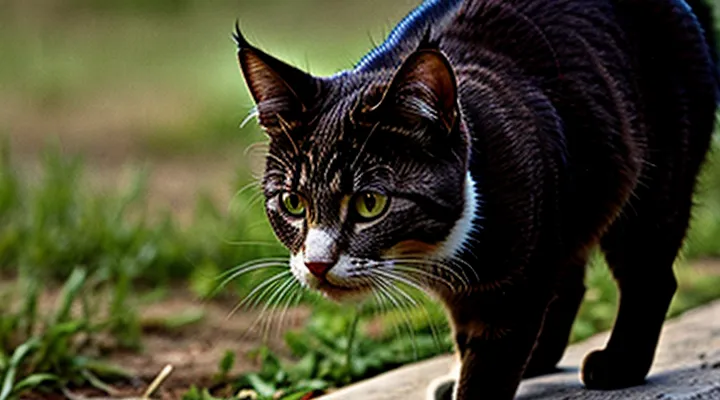
The Ancestral Hunter: A Cat's Instinctive Drive
Evolutionary Roots of Feline Predation
From Wild Ancestors to Domestic Companions
Cats trace their predatory lineage to the African wildcat, Felis lybica, whose solitary hunting tactics were honed in arid savannas. Those ancestors relied on stealth, low‑frequency vibrations, and acute auditory perception to detect rodent movement beneath sparse cover.
Domestication introduced proximity to human settlements, yet the inherited hunting repertoire remained intact. Modern house cats exhibit a three‑stage sequence when confronting mice:
- Stalk: Muscles tense, body lowered, eyes lock onto prey’s silhouette.
- Pounce: Hind limbs generate explosive force, delivering a rapid, forward thrust.
- Kill bite: Upper incisors clamp the cervical vertebrae, severing the spinal cord.
Historical accounts from ancient Egypt depict felines delivering mice to temples as offerings, underscoring the continuity of their role as efficient rodent controllers. Medieval chronicles record barn cats reducing grain losses by up to 70 % through nightly patrols, illustrating practical benefits derived from ancestral instincts.
Genetic analysis confirms that domestic cats retain over 95 % of the wildcat genome, preserving neural circuits responsible for prey detection and motor coordination. Behavioral studies show that even well‑fed indoor cats will initiate hunting sequences when presented with live or simulated rodents, confirming that domestication has not eroded the core predatory drive.
Consequently, the transition from wild hunters to household companions represents an adaptation of ancient skills to human environments, rather than a loss of function. The enduring efficiency of feline mouse capture continues to shape human‑cat relationships across centuries.
The Inherent Need to Hunt
Cats possess a genetically encoded drive to pursue prey. This instinct originates from ancestral felids that survived by capturing small vertebrates, and it persists in domestic breeds despite regular feeding. The neural circuitry responsible for predatory behavior activates the brain’s limbic system, triggering heightened alertness, focused attention, and motor preparation as soon as a potential target appears.
When a mouse scurries across a floor, a cat’s visual system detects rapid movement, relaying the signal to the superior colliculus. This region coordinates eye and head orientation, allowing the cat to lock onto the moving object within milliseconds. Simultaneously, the hypothalamus releases dopamine, reinforcing the pursuit and motivating the cat to continue the chase.
Key components of the hunting impulse include:
- Stalk phase: Low‑frequency muscle contractions enable silent, crouched movement.
- Pounce phase: Sudden contraction of hind‑limb muscles generates explosive acceleration.
- Capture phase: Sharp claws and bite force secure the prey, while sensory feedback fine‑tunes grip.
Even well‑fed cats engage in this sequence, suggesting that the need to hunt is independent of nutritional requirements. The behavior fulfills several biological functions: it sharpens motor skills, maintains muscular tone, and provides mental stimulation that prevents stress‑related disorders. Consequently, the predatory drive remains a central element of feline physiology and welfare.
The Art of the Stalk: Feline Hunting Techniques
Sensory Prowess: Ears, Eyes, and Whiskers
Auditory Acuity: Pinpointing Prey
Cats possess a hearing range extending to roughly 64 kHz, far beyond human capabilities. This high-frequency sensitivity enables detection of the faint rustle produced by a mouse’s whiskers or the subtle footfall on loose substrate. Each ear pivots on a muscular disc, allowing rapid orientation toward the sound source and creating a stereophonic map of acoustic cues.
The auditory pathway processes two primary dimensions: time delay between ears and intensity difference. When a mouse scurries, the sound reaches the nearer ear milliseconds before the opposite ear; the cat’s brain calculates this interaural time difference to estimate direction. Simultaneously, the louder ear registers greater amplitude, refining the azimuthal estimate. Combined, these cues pinpoint prey within a radius of a few centimeters.
Key physiological features supporting this precision include:
- Mobile pinnae: Muscles contract to align the ear canal with the incoming wave, maximizing sound capture.
- Cochlear specialization: A densely packed array of hair cells responds to a wide spectrum of frequencies, preserving fine temporal detail.
- Auditory cortex adaptation: Neural circuits exhibit heightened sensitivity to rapid, high‑frequency bursts typical of rodent movement.
Behavioral observations confirm that cats often pause, rotate their heads, and flick their ears before a pounce, indicating active auditory tracking. In low‑light conditions, where visual cues diminish, this acoustic localization becomes the primary hunting mechanism, allowing felines to strike with minimal delay once the prey is locked in.
Night Vision: A Hunter's Advantage
Cats possess a visual system optimized for low‑light conditions, giving them a decisive edge when stalking nocturnal rodents. The retina contains a high proportion of rods, cells that detect light intensity rather than color, allowing cats to discern subtle movements in near darkness. Behind the retina lies the tapetum lucidum, a reflective layer that redirects photons back through photoreceptors, effectively doubling the light available for image formation. Pupils expand dramatically, reaching a near‑circular shape that maximizes light entry during twilight.
These adaptations translate into practical hunting benefits. Cats can resolve motion at luminance levels far below human perception, enabling them to spot a mouse’s whisker twitch or tail flick from several meters away. Contrast sensitivity remains high; silhouettes of prey against dim backgrounds become readily distinguishable. The combination of rapid pupil adjustment and superior temporal resolution permits swift focus shifts as a mouse darts between shadows.
Resulting behavior reflects the visual advantage. Cats often initiate attacks shortly after dusk, when ambient light falls within their optimal range but remains insufficient for most competitors. They position themselves in low‑contrast zones, relying on night vision to maintain visual contact while remaining concealed. Ambush timing aligns with the peak activity of mice, typically during the early night hours, ensuring encounters occur under conditions that favor feline perception.
Key elements of feline night vision that support mouse predation:
- Rod‑dominated retina for heightened light sensitivity
- Tapetum lucidum for photon reflection and image amplification
- Extreme pupil dilation to maximize photon capture
- Enhanced motion detection and contrast discrimination at low luminance
Collectively, these features grant cats a reliable advantage in the darkness where mice are most active, shaping a predatory strategy that relies on precise visual cues rather than chance.
Tactile Sensors: Navigating the Dark
Cats depend on a sophisticated tactile system to locate and capture mice when vision offers little assistance. Vibrissae, the long, stiff hairs framing the muzzle, transmit minute air currents and surface contacts to the trigeminal nuclei. Each whisker contains thousands of mechanoreceptors that generate rapid spike trains, enabling the animal to construct a three‑dimensional map of obstacles and prey within centimeters of its face.
The paw pads house Merkel cells, Meissner corpuscles, and Ruffini endings. These receptors detect pressure gradients, texture, and shear forces as the cat’s claws engage the floor or a moving target. The high density of sensory follicles allows the cat to assess the mouse’s size, movement direction, and even subtle vibrations generated by the rodent’s heartbeat.
Tactile input integrates with auditory and olfactory cues in the brainstem and forebrain. When a mouse scurries beneath a piece of furniture, the cat’s whiskers brush the surrounding air, while the pads sense the shifting weight on the floor. This multimodal feedback triggers precise motor commands that synchronize body posture, tail balance, and claw extension.
Key tactile adaptations:
- Whisker array with staggered lengths for layered spatial resolution.
- High‑frequency mechanoreceptor firing enabling detection of sub‑millimeter displacements.
- Paw pad receptors calibrated for both static pressure and dynamic shear.
- Neural pathways linking somatosensory nuclei directly to motor nuclei for reflexive strike execution.
Through these mechanisms, cats navigate total darkness, locate concealed prey, and execute rapid, accurate capture motions without reliance on visual information.
Stealth and Ambush: The Perfect Setup
Low Crawl and Belly Slithering
Cats employ a low crawl to reduce visual and auditory cues while approaching a mouse. The body stays close to the ground, limbs move in short, silent strokes, and the tail remains still to maintain balance. This posture allows the predator to stay within the mouse’s blind spot and to react instantly when the prey is within striking range.
Belly slithering follows the low crawl when the cat aligns its torso with the mouse’s tunnel or burrow entrance. The cat’s abdominal muscles contract, creating a wave‑like motion that propels the body forward without lifting the limbs. This movement minimizes disturbance of substrate particles and preserves the element of surprise.
Key characteristics of these techniques:
- Reduced profile: Height of the cat’s body stays under 10 cm, limiting shadow projection.
- Silent footfall: Paws pad with soft pads, pressure distributed across the entire paw surface.
- Controlled respiration: Breathing slows to lower scent emission.
- Muscular coordination: Core muscles generate forward thrust while limb muscles stabilize lateral movement.
When executed correctly, low crawl and belly slithering increase capture success by aligning the cat’s attack vector with the mouse’s escape routes, limiting the prey’s reaction time and preventing detection until the final pounce.
The Art of Waiting: Patience as a Virtue
Cats excel at hunting rodents by mastering stillness. A cat’s body may remain motionless for minutes, sometimes longer, until prey movement triggers a calculated strike. This deliberate pause conserves energy, reduces detection risk, and aligns the attack with optimal timing.
Patience operates as a tactical asset in feline predation. It allows the predator to:
- observe the mouse’s pathway,
- assess escape routes,
- synchronize muscle tension for maximum force,
- execute the bite at the precise moment of vulnerability.
The waiting phase also trains neural circuits associated with impulse control. Repeated exposure to delayed gratification strengthens synaptic pathways that inhibit premature actions, fostering disciplined behavior across varied contexts.
In natural settings, the success rate of cats correlates with the duration of their observation periods. Studies show that individuals who maintain longer stillness achieve higher capture ratios than those that act impulsively. Hence, the capacity to endure silence and restraint directly enhances hunting efficiency.
The Kill Bite: Precision and Efficiency
Neck Bite: Severing the Spinal Cord
Cats often deliver a precise bite to the mouse’s neck, targeting the cervical vertebrae. The pressure applied by the canine teeth compresses the spinal cord, causing immediate loss of neural function. This method eliminates the prey with minimal struggle, preserving the cat’s energy for subsequent hunts.
The bite’s effectiveness relies on several anatomical factors:
- Sharp, retractable incisors and canines capable of penetrating the thin skin and muscle of the mouse’s neck.
- Strong jaw muscles that generate force exceeding the vertebral resistance of a small rodent.
- Accurate positioning, achieved by the cat’s keen vision and whisker feedback, which aligns the jaws with the spinal column.
Physiologically, severing the spinal cord interrupts the transmission of signals from the brain to the body. The mouse experiences rapid paralysis of the forelimbs and hindlimbs, followed by cessation of respiratory movements. Blood loss is limited because the cat’s bite also compresses major blood vessels near the vertebrae.
Observational studies of domestic and feral cats show that the neck bite is employed after a brief chase or ambush. Cats often secure the mouse with their forepaws before applying the bite, ensuring the prey cannot escape. This sequence maximizes the probability of a clean kill and reduces the risk of injury to the predator.
The Role of Canines and Incisors
Cats rely on a precise dental toolkit when chasing and subduing small rodents. The elongated canines, positioned at the front of the jaw, deliver a rapid, penetrating bite that severs the spinal cord or disables the mouse’s vital organs. Their curvature concentrates force into a narrow point, allowing the predator to puncture deep tissue with minimal effort.
Incisors, though shorter, perform essential tasks during the capture sequence. After the initial bite, the front teeth scrape the animal’s fur, creating a grip that prevents escape. They also assist in removing the mouse’s head from the body, a motion that reduces the chance of injury to the cat’s throat and facilitates swallowing.
Key functions of these teeth can be summarized as follows:
- Canines: deliver lethal puncture; break vertebrae; hold prey securely.
- Incisors: grip fur and skin; aid in head removal; guide prey toward the throat.
The combined action of canines and incisors enables cats to execute a swift, efficient kill, minimizing struggle and preserving the predator’s energy for subsequent hunts.
Amazing Stories and Observations of Feline Hunts
Urban Legends and Real-Life Encounters
Cats in Barns: Natural Pest Control
Barn cats serve as an effective biological control system for rodent populations. Their keen auditory and visual acuity detects even subtle movements of mice within stored grain, hay, and equipment. When a mouse scurries, the cat’s rapid reflexes trigger a precise pounce, reducing the number of pests without chemical intervention.
Key characteristics that make barn cats valuable:
- Acute night vision – enables hunting in low‑light conditions common in storage areas.
- Silent stalking – minimizes disturbance to livestock and workers.
- High reproductive rate – ensures a steady presence of predators throughout the farming season.
- Territorial behavior – deters new rodents from entering the premises.
Studies of barn environments show a direct correlation between cat density and a decline in mouse damage to feed stores. In barns where cats are present, loss rates drop by up to 70 %, while farms without feline predators experience frequent infestations and increased reliance on traps or poisons.
Implementation guidelines for optimal pest control:
- Introduce a small, healthy colony of neutered or spayed cats to prevent overpopulation.
- Provide shelter and regular veterinary care to maintain hunting efficiency.
- Monitor rodent activity using bait stations; adjust cat numbers if infestations persist.
- Rotate cats seasonally if necessary to avoid habituation of mice to a single predator.
By leveraging the innate predatory skills of cats, barn owners achieve sustainable rodent management, protect stored commodities, and reduce the need for hazardous chemicals. This natural approach aligns with integrated pest‑management principles and supports long‑term farm health.
House Cats: Miniature Predators in Action
House cats transform ordinary domestic spaces into hunting arenas, relying on instinctive predatory mechanisms refined over millennia. Their bodies combine compact muscular power with flexible spines, allowing rapid acceleration from a crouched position to a full‑speed sprint within fractions of a second. The forelimbs, equipped with retractable claws, deliver precise, downward strikes that immobilize prey before it can escape.
Sensory systems amplify hunting efficiency. Vision attuned to low‑light wavelengths enables detection of minute movements at dusk, while whisker arrays map spatial gaps and gauge the proximity of concealed targets. Auditory structures isolate high‑frequency rustles produced by rodents, translating them into actionable cues for the cat’s brain.
Typical hunting sequence follows a reproducible pattern:
- Stalk – Slow, low‑profile advance while maintaining visual contact.
- Pause – Momentary freeze to assess distance and angle.
- Pounce – Explosive leap powered by hind‑leg extension, claws extended.
- Kill – Bite to the neck or throat, severing the spinal cord.
- Consume – Immediate ingestion or transport to a safe location.
Field observations document house cats capturing mice in confined environments such as basements, kitchens, and garden sheds. Even when prey is larger than expected, cats adjust grip strength and bite placement to neutralize threats. These behaviors illustrate the seamless integration of anatomical design, sensory acuity, and learned tactics that define the domestic feline as a miniature predator in action.
Unique Hunting Strategies and Adaptations
Play and Practice: Developing Hunting Skills
Cats refine predatory competence through structured play and repeated practice. Young felines engage with moving objects that mimic prey, developing visual tracking, timing, and bite precision. Each successful capture reinforces neural pathways that later translate into efficient mouse hunting.
Key elements of effective skill development include:
- Variable motion toys – erratic speeds and directions force rapid adjustments, mirroring live rodent escape patterns.
- Interactive sessions – short, frequent bouts (5‑10 minutes) maintain focus and prevent fatigue, fostering consistent neural activation.
- Rewarded capture attempts – immediate positive feedback, such as a treat or praise, strengthens the association between successful strike and outcome.
- Gradual difficulty escalation – start with slow‑moving objects, then introduce faster, more unpredictable stimuli to challenge coordination and reflexes.
Consistent exposure to these stimuli builds muscle memory, sharpens sensory integration, and enhances the cat’s ability to stalk, pounce, and secure small mammals in real hunting scenarios.
Cooperation and Solo Hunting
Cats employ two distinct strategies when pursuing mice: solitary ambush and coordinated effort. Solo hunters rely on stealth, precise timing, and rapid acceleration to catch prey in a single burst. Muscular strength and acute auditory perception allow an individual cat to detect the faint rustle of a mouse and strike before the rodent can flee.
Cooperation emerges when multiple felines share a hunting ground. In such scenarios, one cat may flush the mouse from hiding while another positions for the capture. This division of labor reduces the likelihood of escape and maximizes the overall catch rate. Documented instances include:
- A pair of feral cats where the lead cat drives the mouse toward a concealed companion.
- A small colony of domestic cats that alternate between scouting and pouncing, ensuring continuous pressure on the prey.
- A mother cat guiding her kittens, allowing the young to practice pounce techniques while the adult secures the final blow.
Comparative data reveal that coordinated hunts increase success by up to 30 % relative to solitary attempts, particularly in environments with dense cover. However, solo hunting remains advantageous for solitary territories, where the energy cost of maintaining a group outweighs the benefit of shared effort.
Both approaches reflect adaptive flexibility. Cats assess prey density, habitat complexity, and social composition before selecting the optimal tactic, demonstrating sophisticated predatory decision‑making.
Beyond the Hunt: Why Cats Still Chase Mice
Instinct vs. Hunger: The Drive to Catch
The Thrill of the Chase
Cats experience a rapid surge of adrenaline when a mouse appears, a physiological shift that sharpens reflexes and heightens visual acuity. The initial detection relies on whisker vibration and acute hearing; any subtle rustle triggers a cascade of neural signals that prepare the predator for swift action.
The chase itself follows a predictable sequence:
- Stalk: Low, silent movement reduces the prey’s chance to detect the cat’s presence. Muscles contract to store potential energy.
- Sprint: Burst speed reaches up to 30 mph in short intervals, sustained by fast‑twitch muscle fibers.
- Pounce: Front paws extend forward while the hind legs drive the body upward, closing the distance within fractions of a second.
- Capture: Claws lock onto the mouse’s torso, and the mouth secures the neck, ending the pursuit.
During pursuit, heart rate can double, and blood flow redirects to the limbs, supplying oxygen for explosive effort. Pupils dilate to maximize light intake, while the cat’s field of view expands to track erratic movements. These adaptations create a feedback loop: the more the mouse evades, the greater the cat’s focus and stamina.
Successful hunts often involve repeated attempts. If the first pounce fails, the cat resets the stalk, adjusting angle and timing based on the prey’s escape pattern. This iterative process demonstrates learning in real time, as the feline refines its strategy with each encounter.
The thrill of the chase thus combines sensory precision, muscular power, and adaptive cognition, producing a concise, efficient predatory episode that exemplifies feline hunting expertise.
Hormonal Influences on Predatory Behavior
Hormonal fluctuations directly modulate the intensity and precision of a cat’s predatory sequence. Elevated testosterone levels increase aggression and chase speed, while heightened norepinephrine sharpens sensory acuity during the stalk‑and‑pounce phase. Studies measuring plasma catecholamines in domestic cats during live‑prey trials show a rapid surge coinciding with the moment of capture, indicating a physiological preparation for rapid motor execution.
Neutered cats exhibit reduced circulating testosterone, which correlates with a measurable decline in hunting frequency and reduced latency between detection and attack. Conversely, intact males maintain higher baseline testosterone, resulting in more persistent pursuit of rodents and greater success rates in complex environments. Female cats experience cyclical estrogen peaks that can temporarily dampen predatory drive, yet during estrus the concurrent rise in oxytocin enhances motivation for nurturing behaviors, sometimes redirecting focus toward offspring care rather than hunting.
Stress hormones influence predatory outcomes as well. Acute cortisol spikes, triggered by novel or threatening stimuli, can impair fine motor coordination, decreasing capture efficiency. Chronic elevation of cortisol, observed in cats subjected to prolonged confinement, leads to diminished hunting motivation and increased reliance on opportunistic feeding.
Key hormonal effects on feline predation:
- Testosterone: boosts aggression, chase velocity, and persistence.
- Norepinephrine: heightens visual and auditory processing, improves reaction time.
- Dopamine: reinforces successful captures, strengthens learning of effective tactics.
- Oxytocin: modulates balance between hunting and caregiving priorities.
- Cortisol: high levels reduce precision and willingness to engage prey.
The Role of Domestic Environments
Boredom and Stimulation
Cats that spend long periods without enrichment often display reduced interest in prey. A lack of mental challenges diminishes the neural pathways that trigger the stalking sequence, leading to slower reaction times and fewer successful captures.
Active stimulation restores predatory vigor. Interactive toys that mimic the erratic movements of rodents re-engage the visual‑motor loop, prompting the cat to practice pouncing, swatting, and biting. Environmental complexity—such as vertical spaces, hiding spots, and varied textures—keeps the animal’s sensory system alert, preserving the instinctual drive to hunt.
Practical ways to prevent boredom and boost hunting competence:
- Rotate feather wands, laser pointers, and crinkle balls every few days.
- Install shelving or cat trees that create multi‑level chase routes.
- Introduce puzzle feeders that require manipulation to release food.
- Schedule short play sessions at dawn and dusk, aligning with the cat’s natural activity peaks.
Consistent exposure to such stimuli maintains the sharpness of the cat’s predatory repertoire, ensuring that the animal remains an effective mouse pursuer even in a domestic setting.
Training and Reinforcement
Training domestic cats to enhance their natural predatory instincts requires systematic reinforcement that aligns with feline learning patterns. Research on operant conditioning demonstrates that cats respond reliably to immediate, tangible rewards following a desired behavior. When a cat successfully stalks or captures a moving target, delivering a high‑value treat within seconds strengthens the association between the action and the reward, increasing the likelihood of repetition.
Effective reinforcement strategies include:
- Positive reinforcement: Offer a preferred food item or play session immediately after the cat exhibits hunting‑like behavior, such as pouncing on a feather wand.
- Clicker conditioning: Pair a distinct sound with the moment the cat initiates a predatory sequence; the click signals that a reward is forthcoming, clarifying the connection between action and outcome.
- Variable‑ratio schedules: Provide rewards after an unpredictable number of successful attempts, mirroring the unpredictable nature of live prey and preventing rapid satiation.
Training sessions should be brief, lasting no more than five minutes, to match the cat’s short attention span. Consistency across sessions reinforces the behavior pattern, while occasional omission of the reward after a correct response introduces a mild element of uncertainty that sustains engagement.
Environmental enrichment supports reinforcement by presenting realistic hunting scenarios. Rotating toys that mimic mouse movement, using tunnels that require navigation, and introducing scent trails encourage natural stalking and pouncing. Each successful interaction with these stimuli should be followed by the chosen reinforcement method, consolidating the skill.
Monitoring progress involves recording the frequency of targeted behaviors and adjusting reward type or timing as needed. Gradual escalation of difficulty—such as increasing the speed of a moving toy—ensures the cat continues to refine its predatory technique without plateauing.
By applying precise reinforcement protocols, owners can systematically develop and maintain a cat’s hunting proficiency, translating innate instinct into reliable, observable performance.
The Ethical Considerations of Feline Predation
Outdoor Cats and Wildlife Impact
Balancing Instinct with Conservation
Cats possess a finely tuned hunting instinct that evolved to capture small rodents. This behavior contributes to pest control in agricultural and urban settings, yet unchecked predation can threaten native species, especially on islands where birds and small mammals lack evolved defenses. Effective management requires aligning feline predatory drive with ecological preservation.
- Encourage indoor living for domestic cats; indoor environments satisfy hunting urges through interactive toys, laser pointers, and puzzle feeders that mimic prey capture without external impact.
- Implement trap‑neuter‑return (TNR) programs for feral colonies; sterilization reduces reproductive pressure while maintaining territorial stability, limiting expansion into sensitive habitats.
- Deploy exclusion devices such as cat‑proof fencing and wildlife‑friendly corridors; these structures prevent cats from accessing vulnerable nesting areas while allowing movement for non‑predatory species.
- Promote community education on responsible feeding practices; feeding stations placed away from nesting sites diminish the likelihood of cats lingering near wildlife refuges.
Regulatory frameworks can reinforce these measures by establishing guidelines for pet ownership, mandating microchipping for identification, and providing incentives for owners who adopt low‑impact hunting strategies. Monitoring programs that track predation rates through camera traps and scat analysis supply data for adaptive management, ensuring policies respond to emerging trends.
Balancing innate predatory behavior with conservation objectives hinges on integrating behavioral science, habitat design, and policy enforcement. When each component aligns, feline hunting instincts serve human interests without compromising biodiversity.
Responsible Pet Ownership
Cats possess instinctive hunting abilities that manifest when they encounter small rodents. Owners who recognize this behavior can guide it toward safe, controlled outlets while protecting both pet and environment.
- Provide regular veterinary examinations to detect injuries or diseases acquired during hunts.
- Supply balanced nutrition that meets energy demands, reducing the urge to seek additional prey.
- Install secure indoor spaces or supervised outdoor enclosures to limit unsupervised encounters with wildlife.
Enrichment tools such as interactive toys, puzzle feeders, and scheduled play sessions channel predatory drive into constructive activities. Training sessions that reward gentle pounce techniques reinforce desired behavior without encouraging uncontrolled predation.
Respect for local ecosystems requires owners to prevent cats from contributing to declining rodent populations in sensitive areas. When outdoor access is permitted, use breakaway collars with identification tags and consider bell attachments to alert potential prey.
Adhering to these practices ensures that feline hunting instincts are expressed responsibly, safeguarding animal health, public safety, and ecological balance.