
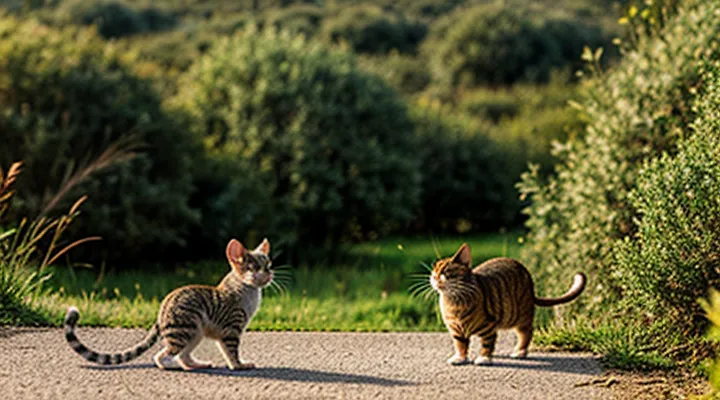
The Ancient Dance: Feline Predation and Rodent Prey
Evolutionary Roots of the Hunt
Ancestral Predators and Prey
The lineage of modern felids traces back to Miocene hunters whose skeletal structure combined powerful forelimbs, retractable claws, and forward‑facing eyes. Early members of the genus Felis exploited nocturnal activity patterns, enabling pursuit of small, burrowing rodents that had already developed rapid reproductive cycles and acute vibrissal sensing.
Rodent ancestors, represented by early murids, evolved compact bodies, reinforced skulls, and escape behaviors such as zig‑zag sprinting and vertical leaping. These traits formed a feedback loop: each incremental improvement in feline stealth or bite force prompted a corresponding refinement in prey evasion or vigilance.
Key evolutionary outcomes include:
- Enhanced visual acuity in predators, matched by heightened auditory detection in prey.
- Development of specialized dentition (carnassial teeth) in cats, countered by tougher enamel and gnawing efficiency in rodents.
- Behavioral timing: predators adopt crepuscular hunting; prey shift activity to periods of reduced predator presence.
Genomic analyses reveal signatures of selective pressure on genes governing muscle contraction, neural processing, and stress response in both groups. The resulting arms race maintains ecological balance, regulating population densities and influencing community structure across habitats ranging from savannas to temperate forests.
Co-evolutionary Arms Race
The predator‑prey interaction between felids and rodents illustrates a classic co‑evolutionary arms race. Each species generates selective pressures that drive reciprocal adaptations, producing a dynamic cycle of offense and defense.
Felines develop traits that enhance detection and capture. Sharp retractable claws, acute night vision, and flexible spine allow rapid acceleration and precise strikes. Muscular forelimbs generate the force needed to subdue agile prey, while a highly tuned auditory system isolates the faint rustle of a moving mouse.
Rodents respond with countermeasures that increase survival odds. Behavioral strategies include nocturnal foraging, erratic escape routes, and communal vigilance. Morphological defenses consist of enlarged auditory bullae for early predator detection, reinforced skeletal structures to withstand bites, and fur coloration that blends with the substrate. Reproductive adjustments, such as high litter sizes, compensate for elevated mortality.
The ongoing exchange can be summarized in a brief list:
- Sensory escalation: predators sharpen visual and auditory acuity; prey enhance detection thresholds.
- Locomotor refinement: cats improve sprint speed and maneuverability; mice evolve erratic, unpredictable movement patterns.
- Morphological innovation: felids lengthen canines and improve jaw mechanics; rodents develop stronger hind limbs and protective fur textures.
- Reproductive balance: predators increase hunting efficiency; prey raise fecundity to offset predation losses.
These intertwined developments generate a perpetual cycle: any advancement in feline predation capacity prompts a corresponding improvement in mouse evasion, which in turn spurs further feline adaptation. The result is a tightly coupled evolutionary trajectory that sustains the ecological equilibrium of the predator‑prey system.
Feline Hunting Strategies and Adaptations
Sensory Acuity: Sight, Sound, and Scent
The predator‑prey dynamic between felines and rodents hinges on the comparative performance of visual, auditory, and olfactory systems. Each sense determines detection distance, reaction time, and success probability during pursuit and evasion.
-
Vision
• Cats possess a high density of rod cells, enabling detection of low‑light movement at distances up to 20 m.
• Their forward‑facing eyes provide binocular overlap for precise depth perception, essential for judging a leap.
• Mice rely on a broader field of view but have limited acuity; motion detection occurs within a few meters, and detail resolution is coarse. -
Audition
• Feline hearing spans 48 Hz to 85 kHz, with peak sensitivity around 1 kHz, allowing perception of ultrasonic squeaks emitted by small rodents.
• Mice detect frequencies up to 100 kHz, yet their auditory localization is less precise than that of cats, making sudden sounds a reliable cue for predators.
• Both species exploit frequency gaps: cats filter high‑frequency rustles, while mice use low‑frequency ground vibrations to sense approaching threats. -
Olfaction
• Cats exhibit a vomeronasal organ and a scent‑processing region that can identify mouse pheromones from several meters away, guiding pursuit even in darkness.
• Mice possess a highly developed main olfactory epithelium, capable of discriminating predator odors and triggering immediate escape behaviors.
• Chemical trails left by mice serve as both navigation aids for conspecifics and detection cues for felines.
The integration of these sensory modalities creates a rapid feedback loop: visual cues initiate pursuit, auditory signals refine target tracking, and olfactory information confirms presence. Conversely, mice combine peripheral vision, acute hearing, and scent avoidance to maintain distance and select escape routes. The balance of sensory strengths and weaknesses defines the outcome of each encounter.
Stealth and Ambush Tactics
Stealth and ambush are fundamental components of predator‑prey interactions where felines pursue small rodents. The predator relies on minimizing visual and auditory signatures, reducing motion to a threshold undetectable by the prey’s sensory systems. Muscular control enables silent footfalls, while fur coloration provides background matching in low‑light environments. The prey’s detection radius narrows when the hunter aligns its body axis with the direction of ambient light, allowing the feline to close distance without triggering escape responses.
Ambush tactics exploit environmental structures and timing. The predator selects concealment sites—dense vegetation, debris, or shadows—where it can remain motionless until the prey enters a predefined strike zone. Execution follows a rapid, directed thrust powered by the hind limbs, delivering a bite to the neck or spinal region before the rodent can initiate flight. Success rates increase when the attack coincides with the prey’s foraging cycles, typically at dawn or dusk, when vigilance is reduced.
Key elements of stealth and ambush include:
- Spatial positioning that maximizes cover and minimizes exposure.
- Synchronization with prey activity patterns to exploit reduced alertness.
- Rapid acceleration and precise targeting to limit escape opportunity.
- Sensory suppression through low‑frequency movement and reduced scent release.
Physical Prowess: Agility and Strength
Cats rely on rapid acceleration, flexible spine, and retractable claws to close distances that mice can cover in a single bound. Muscular hind‑legs generate bursts of speed exceeding 30 mph, while the forelimbs deliver precise, forceful strikes. These adaptations enable a predator to convert a short chase into a capture before the prey can activate its escape circuitry.
Mice compensate with a contrasting set of physical traits. A lightweight skeleton and elongated hind‑feet produce leaps up to three times their body length, allowing sudden changes in direction. The vestibular system maintains balance during rapid rotations, and the tail functions as a counter‑balance during tight turns. This combination of agility and endurance prolongs the pursuit, increasing the likelihood of evading capture.
Key elements of physical prowess in this predator‑prey interaction include:
- Acceleration: Cats achieve peak velocity within the first few strides; mice sustain moderate speed over longer distances.
- Flexibility: Spinal articulation in felines permits stretch‑and‑launch motions; rodents exploit flexible joints for zig‑zag trajectories.
- Force generation: Claw penetration delivers decisive force; mouse musculature provides enough thrust to vault obstacles.
- Sensory integration: Vision and whisker feedback synchronize muscle output in both species, sharpening reaction times.
The dynamic balance between feline strength and rodent agility defines the outcome of natural hunts, illustrating how each participant’s biomechanics directly shapes survival chances.
Rodent Defensive Mechanisms
Evasion Techniques and Escape Routes
Predator‑prey dynamics in the wild drive a continuous refinement of escape behavior. Mice exploit sensory limits, structural complexity, and rapid locomotion to avoid capture, while felines adapt pursuit tactics to counter these measures.
- Immediate zigzagging disrupts the cat’s forward momentum and reduces the likelihood of a direct bite.
- Sudden bursts of speed (sprinting) exploit the predator’s slower acceleration, creating a temporal gap.
- Utilization of vertical space—climbing onto stems, rocks, or low branches—places the prey beyond the cat’s reach.
- Concealment within dense vegetation or burrows masks movement and interrupts visual tracking.
- Release of scent‑masking secretions diminishes olfactory cues that guide the hunter.
- Rapid directional changes coupled with pauses generate uncertainty, forcing the predator to reassess the target’s position.
Effective escape routes combine these tactics with environmental awareness, allowing the mouse to transition seamlessly from one defensive maneuver to the next until safety is achieved.
Reproductive Strategies to Counter Predation
In predator‑prey systems where felids hunt rodents, prey species have evolved reproductive adaptations that increase the likelihood of offspring surviving predation pressure.
High fecundity compensates for frequent loss of juveniles; many small mammals produce litters of 5–12 pups each breeding season. Early sexual maturity shortens the interval between generations, allowing populations to rebound quickly after predation spikes. Synchronized breeding concentrates births into short periods, overwhelming predators that cannot consume all newborns at once.
Egg or neonate concealment reduces detection. Species that nest in underground burrows, dense vegetation, or abandoned structures keep offspring hidden from visual hunters. Some rodents practice communal nesting, dispersing risk among multiple females and diluting predator focus.
Parental investment varies with predation intensity. Species facing high predation allocate more time to guarding and feeding young, while those in safer microhabitats rely on rapid weaning and independence. In environments where cats dominate, maternal behaviors such as frequent nest relocation and alarm vocalizations improve juvenile survival.
Collectively, these strategies—large litters, rapid maturation, breeding synchrony, cryptic nesting, and flexible parental care—form a reproductive toolkit that mitigates the impact of natural hunting on prey populations.
Behavioral Adaptations
Cats exhibit acute visual acuity adapted for low‑light conditions, allowing detection of minute movements at dusk and dawn. Their retinal structure contains a high proportion of rod cells, enhancing sensitivity to contrast rather than color. This adaptation supports stealthy approaches when prey is most active.
Mice rely on rapid auditory processing to locate approaching predators. Specialized hair cells in the cochlea detect frequencies generated by feline footfalls, prompting immediate flight or freeze responses. The auditory system is complemented by vibrissal sensors that convey tactile information about nearby airflow disturbances.
Feline hunting sequences involve three behavioral phases: pursuit, capture, and consumption. During pursuit, cats employ a crouched posture that minimizes silhouette and maximizes muscular storage for a sudden burst of speed. The capture phase utilizes precise bite placement on the neck to sever the spinal cord, reducing struggle time. Consumption follows with rapid ingestion of soft tissues, minimizing exposure to potential counter‑attacks.
Rodent evasion strategies include:
- Cryptic fur patterns that blend with substrate textures, reducing visual detection.
- Erratic zig‑zag sprint patterns that disrupt predator’s predictive tracking.
- Utilization of narrow burrow entrances that exceed the size of a cat’s torso, creating a physical barrier.
- Social alarm calls that trigger collective vigilance and coordinated escape.
Both species demonstrate learned modifications based on individual experience. Cats refine stalking routes after unsuccessful attempts, while mice adjust foraging times to avoid periods of heightened feline activity. These reciprocal behavioral adjustments sustain the dynamic equilibrium of predator‑prey interactions.
The Ecological Impact of Predator-Prey Dynamics
Population Control and Ecosystem Balance
Predator‑prey dynamics shape wildlife populations by removing individuals that are weak, diseased, or otherwise less likely to survive. This selective pressure limits prey abundance, preventing overconsumption of vegetation and reducing the risk of habitat degradation. In turn, predators receive a steady supply of food, supporting their reproductive success and longevity.
Key outcomes of this regulatory process include:
- Stabilized prey densities that align with the carrying capacity of the ecosystem.
- Enhanced genetic diversity among both predators and prey due to continuous natural selection.
- Reduced likelihood of disease outbreaks caused by overcrowding of susceptible species.
The balance achieved through natural hunting sustains ecosystem functions such as nutrient cycling, seed dispersal, and soil formation. When predator numbers decline, prey populations can surge, leading to vegetation loss, altered fire regimes, and diminished habitat quality for other organisms. Conversely, excessive predation can suppress prey to levels that threaten predator viability. Maintaining an equilibrium between these forces is essential for long‑term ecological resilience.
Natural Selection and Genetic Fitness
The predator‑prey interaction between felines and rodents provides a clear illustration of natural selection in action. Each encounter exerts pressure on both species, favoring traits that increase the likelihood of survival and reproduction.
Felines that possess acute vision, rapid reflexes, and a flexible spine can close the distance to a fleeing rodent more effectively. These attributes enhance hunting success, allowing individuals to secure more food and, consequently, produce more offspring that inherit the same advantages.
Rodents that exhibit heightened vigilance, swift bursts of acceleration, and the ability to navigate complex burrow systems avoid capture more often. Survivors pass these defensive characteristics to subsequent generations, gradually shaping the population’s overall fitness.
Key mechanisms driving this evolutionary process include:
- Differential reproductive output: individuals with superior hunting or evasion skills produce larger litters.
- Heritable variation: genetic differences underlying sensory acuity, muscle composition, and behavioral responses persist across generations.
- Environmental feedback: changes in habitat structure or prey availability modify selective pressures, prompting further adaptation.
Over many generations, the genetic composition of both predator and prey populations shifts toward configurations that optimize hunting efficiency for cats and escape proficiency for mice. The ongoing cycle of adaptation exemplifies how natural selection continuously refines genetic fitness within a tightly coupled ecological relationship.
Human Influence on Cat and Mouse Interactions
Human activity reshapes the natural predatory relationship between felines and rodents in several measurable ways. Domesticated cats receive regular meals, reducing their reliance on hunting and consequently decreasing predation pressure on local mouse populations. Supplemental feeding also alters hunting frequency, leading to a shift from opportunistic to occasional predation.
Urban development fragments habitats, limiting mouse access to traditional refuges while concentrating cats in smaller territories. This spatial compression intensifies encounters, yet the presence of human-provided shelters can protect rodents from detection. Likewise, waste management practices create abundant food sources for mice, supporting higher population densities that can sustain increased predation without immediate decline.
Control measures introduce artificial mortality factors. Traps, poison baits, and rodenticide applications directly remove mice, often compensating for reduced natural predation by cats. Conversely, veterinary interventions that sterilize or limit the mobility of pet cats diminish their hunting capacity, further influencing mouse survival rates.
Selective breeding of cats for reduced aggression or increased companionship produces phenotypes with lower predatory drive. Over generations, these traits can diminish the evolutionary pressure on mouse behavior, potentially slowing the development of anti‑predator adaptations.
Human attitudes toward wildlife shape policy and public behavior. Regulations that restrict outdoor cat access or promote responsible pet ownership directly modify interaction frequencies. Educational campaigns encouraging indoor confinement or the use of bell collars provide additional mechanisms for reducing predation events.
Key mechanisms of human influence
- Regular feeding of domestic cats
- Habitat fragmentation and urban density
- Waste generation supporting rodent populations
- Direct pest‑control methods (traps, poisons)
- Veterinary sterilization and behavioral selection
- Legislative and educational initiatives
Collectively, these factors produce a complex feedback loop: human actions alter cat behavior and mouse abundance, which in turn affect ecosystem dynamics and the persistence of natural hunting patterns.
Beyond Survival: Cultural and Anthropomorphic Interpretations
«Tom and Jerry» and Popular Culture
The animated series “Tom and Jerry” illustrates instinctual predator‑prey dynamics through exaggerated chase sequences that mirror natural hunting behavior. The cat, Tom, embodies the relentless pursuer, while the mouse, Jerry, represents the evasive quarry; each episode condenses the tension of real‑world chase into a compact visual narrative.
The program’s influence extends across several cultural domains:
- Film and television: recurring visual gags and timing patterns derived from the series appear in contemporary cartoons, live‑action comedies, and advertising spots.
- Music and sound design: the iconic “screech” of a cat’s claws and the rapid, staccato score have become reference points for composers crafting suspenseful or comedic scenes.
- Merchandising: global sales of figurines, apparel, and video‑game adaptations demonstrate the franchise’s commercial durability.
- Language: expressions such as “tom‑and‑jerry routine” serve as shorthand for any repetitive conflict between opposing parties.
Academic analyses cite the series as a case study in visual storytelling that conveys complex behavioral motifs without dialogue. The exaggerated physics and slap‑stick timing provide a clear, instantly recognizable template for depicting chase, making the cartoon a pedagogical tool in discussions of animal behavior and narrative structure.
Overall, “Tom and Jerry” functions as a cultural conduit that translates natural hunting instincts into a universally understood comedic form, shaping audience expectations of conflict and resolution across multiple media platforms.
Symbolic Meanings in Folklore and Mythology
The predator‑prey dynamic between felines and rodents has recurring symbolic significance in folklore and mythology. Cats often embody vigilance, independence, and the capacity to control chaotic forces, while mice represent vulnerability, resourcefulness, and the struggle for survival.
Across cultures, this relationship illustrates moral lessons and cosmological concepts:
- Balance of power – stories portray the cat as a guardian of order, confronting the mouse as a disruptive element that must be contained.
- Transformation – myths recount mice acquiring wisdom or magical abilities after evading capture, suggesting that adversity can foster growth.
- Duality – paired depictions emphasize the interdependence of predator and prey, reflecting the cyclical nature of life and death.
In ancient Egyptian belief, the cat was sacred, a protector of households and a symbol of divine judgment. Greek myths describe the mouse as a cunning adversary of the goddess Artemis, highlighting the tension between hunting and evasion. Asian folklore often features the cat as a spirit guide, while the mouse serves as a trickster figure that challenges authority.
These symbolic layers reinforce the natural hunting interaction as a metaphor for human experience, illustrating how societies encode ethical values, existential anxieties, and the perpetual negotiation between dominance and resistance.
The Human-Feline Bond and Pest Control
Domestic cats originated from Near Eastern wildcat populations that coexisted with early agricultural societies. Human settlements offered abundant rodent prey, while felines supplied a reliable predation service. This reciprocal arrangement established a long‑term interspecies relationship that persists across cultures.
Feline predation reduces rodent populations in residential and commercial environments. Evidence from pest‑management studies shows measurable declines in grain loss, disease vectors, and structural damage when cats are present. The effect is most pronounced in:
- grain storage facilities,
- urban apartment complexes,
- farms with open‑field storage,
- industrial warehouses with food processing.
Beyond direct predation, cats influence rodent behavior. Presence of felines triggers avoidance patterns, limiting rodent foraging range and reproductive activity. This indirect pressure complements the lethal impact and contributes to overall pest suppression.
Contemporary applications combine traditional cat‑based control with integrated pest‑management (IPM) protocols. Effective programs assess cat health, ensure humane treatment, and monitor rodent populations to adjust strategies. Documentation of outcomes supports the continued use of felines as a cost‑effective, environmentally low‑impact component of pest control.