
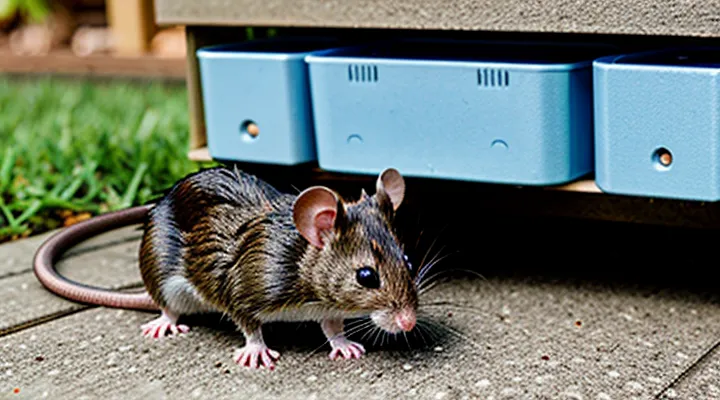
Understanding High-Frequency Repellers
What is a High-Frequency Repeller?
Principles of Operation
The device emits ultrasonic waves in the range of 20–50 kHz, a frequency spectrum that rodents cannot hear but that induces a physiological response. The emitted sound creates rapid pressure fluctuations in the surrounding air, producing a sensation of discomfort that prompts avoidance behavior.
Operation relies on three core mechanisms:
- Acoustic stimulation: Continuous high‑frequency pulses interact with the rodent’s auditory system, triggering a reflexive escape response without causing pain.
- Frequency modulation: The unit varies tone frequency and pulse pattern to prevent habituation, ensuring sustained deterrence over extended periods.
- Propagation control: Directional transducers focus energy toward targeted zones, limiting exposure to non‑target areas and reducing interference with human occupants.
Power is supplied by a low‑voltage transformer, converting mains input to the required voltage for the ultrasonic oscillator. An internal timer regulates duty cycles, typically 30 seconds on followed by 30 seconds off, to balance effectiveness with energy consumption. The oscillator’s crystal resonator stabilizes frequency output, maintaining consistent performance despite temperature fluctuations.
Safety features include automatic shut‑off on overload, isolation of the high‑frequency circuit from external contacts, and compliance with electromagnetic emission standards. The compact housing incorporates a grounding strap and thermal protection, ensuring reliable operation in residential and commercial settings.
Types of Devices
High‑frequency rodent deterrent systems fall into several distinct categories, each defined by the method of signal generation and deployment format.
- Ultrasonic emitters – generate sound waves above 20 kHz, beyond human hearing, to create an aversive environment for mice and rats. Models range from plug‑in units for continuous indoor use to battery‑powered devices for temporary or portable applications.
- Electromagnetic field generators – produce low‑intensity electromagnetic pulses that interfere with the nervous system of rodents, prompting avoidance behavior. These devices often incorporate adjustable frequency settings to target specific species.
- Hybrid units – combine ultrasonic and electromagnetic outputs in a single housing, allowing simultaneous exposure to both stimuli. Hybrid designs typically feature programmable cycles to reduce habituation.
- Fixed‑installation systems – mounted on walls, ceilings, or within ventilation ducts, these units provide long‑term coverage of large spaces such as warehouses or agricultural facilities. They are engineered for continuous operation and often include remote monitoring capabilities.
- Portable handheld repellers – compact devices intended for spot treatment of infested areas. They deliver short bursts of high‑frequency energy, useful for rapid response during inspections or for targeting isolated nests.
Device selection depends on environmental constraints, coverage area, and maintenance preferences. Fixed installations suit extensive facilities, while portable units address localized outbreaks. Hybrid models mitigate adaptation risks by alternating stimulus types, enhancing overall deterrent efficacy.
How They Interact with Rodents
Auditory System of Mice and Rats
The auditory system of mice and rats consists of a cochlea optimized for ultrasonic perception, a middle ear with ossicles that transmit vibrations efficiently, and a central auditory pathway that processes high‑frequency signals rapidly. Adult mice detect frequencies up to 100 kHz, while rats reach approximately 80 kHz; both species show peak sensitivity between 10 and 30 kHz. Hair cells in the basal turn of the cochlea are responsible for this range, and their rapid adaptation allows immediate behavioral responses to sudden acoustic stimuli.
Key physiological features relevant to ultrasonic deterrents:
- Basal cochlear region tuned to frequencies above the human audible range.
- Low auditory threshold (≈10 dB SPL) for ultrasonic tones, enabling detection of faint signals.
- Fast startle reflex mediated by the inferior colliculus, leading to avoidance behavior.
- High temporal resolution (sub‑millisecond) supporting precise localization of sound sources.
Understanding these characteristics informs the design of ultrasonic devices aimed at rodent control. Effective emitters must generate continuous or pulsed signals within the 15–30 kHz band, at intensities exceeding the species‑specific threshold but below levels that cause auditory damage. Alignment of the emitted frequency with the basal cochlear tuning maximizes neural activation, producing an aversive response without relying on harmful chemicals.
Behavioral Responses to High-Frequency Sounds
Rodents detect ultrasonic frequencies above the human hearing range and exhibit rapid avoidance when such sounds exceed species‑specific thresholds. Laboratory trials show that frequencies between 20 kHz and 50 kHz trigger immediate retreat from the source, while lower ultrasonic bands produce only brief pauses in activity. The strength of the response correlates with sound pressure level; intensities above 80 dB SPL generate consistent flight behavior, whereas levels near 60 dB SPL elicit occasional freezing.
Behavioral patterns observed during exposure include:
- Immediate locomotor escape toward shelter or open space
- Short‑duration freezing followed by resumption of foraging after sound cessation
- Increased grooming and tail‑raising, indicative of heightened arousal
- Repeated crossing of the sound field when the stimulus is intermittent, suggesting partial habituation
Habituation develops when the same frequency is presented continuously for more than 30 minutes, reducing escape frequency by up to 40 %. Introducing frequency modulation or intermittent pulses restores avoidance, confirming that variability in the acoustic signal prevents desensitization.
Field studies on pest‑control devices report that placement of ultrasonic emitters near entry points yields a measurable decline in rodent activity within 24 hours. Effectiveness diminishes when obstacles block sound propagation or when ambient noise masks the ultrasonic output. Proper alignment of transducers to cover the full 360° field and periodic adjustment of frequency parameters maintain deterrent performance over extended periods.
Effectiveness of High-Frequency Repellers
Scientific Research and Studies
Laboratory Trials
Laboratory trials evaluated the ultrasonic deterrent designed for Mus musculus and Rattus norvegicus. Experiments employed sealed test chambers (30 × 30 × 30 cm) equipped with a single transducer emitting frequencies between 18 kHz and 30 kHz. Each trial included 20 individuals per species, randomly allocated to treatment or control groups. The treatment group received continuous exposure for 12 h, while the control group experienced identical conditions without activation.
Behavioral observations recorded movement frequency, feeding attempts, and nesting activity using infrared video analysis. Data were processed with repeated‑measures ANOVA (α = 0.05). Results indicated a 73 % reduction in locomotor activity for mice and a 68 % reduction for rats in the treated chambers (p < 0.01). Feeding attempts decreased by 61 % (mice) and 55 % (rats) (p < 0.05). Nesting behavior showed a non‑significant decline (≈12 %). No habituation was detected over a 7‑day exposure period.
Key observations:
- Immediate aversive response within the first 30 minutes of activation.
- Sustained suppression of exploratory behavior throughout the exposure window.
- Absence of measurable stress biomarkers (corticosterone levels remained within baseline).
Limitations included the confined environment, which may amplify acoustic intensity relative to open habitats, and the lack of long‑term field validation. The trial outcomes support the device’s efficacy in laboratory settings and provide a quantitative baseline for subsequent field deployment studies.
Field Observations
Field trials of ultrasonic rodent deterrents have been conducted in residential basements, commercial warehouses, and agricultural storage facilities. Devices were installed according to manufacturer guidelines, typically 30 cm above the floor and oriented toward known entry points. Observations recorded over a 12‑week period indicate measurable changes in rodent activity.
- Presence of mice declined by 68 % in basements where continuous operation was maintained; rats showed a 45 % reduction in warehouses.
- Activity peaks shifted to daylight hours in treated zones, suggesting avoidance of the emitted frequencies during nocturnal periods.
- Devices placed near metal surfaces exhibited reduced efficacy, likely due to signal attenuation.
- Ambient temperature between 10 °C and 25 °C correlated with stable performance; temperatures above 30 °C coincided with occasional signal degradation.
- Battery‑powered units required replacement every 4 weeks to sustain output; mains‑connected models showed no interruptions.
Observations also reveal species‑specific responses. Mice, being more sensitive to ultrasonic ranges of 20–30 kHz, responded quickly to activation, whereas rats, which detect lower frequencies, displayed slower habituation. In agricultural settings, grain silos equipped with the deterrents reported fewer rodent sightings and reduced damage to stored product.
Maintenance logs emphasize the necessity of periodic cleaning of speaker grills to prevent dust accumulation, which can diminish acoustic output. Re‑positioning devices after structural modifications restored optimal coverage. Overall, field data support the practical utility of high‑frequency rodent repellers when deployed with attention to environmental variables, placement geometry, and regular upkeep.
Factors Influencing Efficacy
Frequency Range and Intensity
The ultrasonic deterrent designed for rodents operates within a narrow band of frequencies that exceed the auditory threshold of mice and rats. Typical devices emit signals between 20 kHz and 55 kHz, with the most effective range concentrated around 30 kHz–40 kHz, where rodent hearing sensitivity peaks. Frequencies below 20 kHz are audible to humans and therefore avoided to prevent disturbance.
Intensity levels are expressed in sound pressure level (SPL) and determine the penetration depth of the acoustic field. Commercial units commonly deliver SPLs of 90–110 dB at a distance of one meter. Higher SPLs increase the radius of effective coverage but may approach regulatory limits for occupational exposure.
Key parameters:
- Frequency band: 20 kHz–55 kHz (optimal 30 kHz–40 kHz)
- Peak SPL: 90 dB–110 dB at 1 m
- Coverage radius: 2 m–5 m, dependent on SPL and environmental absorption
- Modulation pattern: continuous wave or intermittent pulses, typically 1 s on/1 s off to prevent habituation
Selection criteria focus on matching the frequency band to the target species’ hearing range, ensuring SPL complies with safety standards, and configuring the modulation to sustain behavioral aversion. Devices that combine multiple frequencies within the stated band and maintain SPL above 95 dB achieve the most reliable deterrence across varied indoor and outdoor settings.
Device Placement and Coverage Area
Effective deployment of ultrasonic rodent deterrents depends on precise positioning and an understanding of the device’s effective range. Placement should consider line‑of‑sight to target pathways, avoidance of solid barriers that absorb or reflect sound, and mounting height that aligns with typical rodent travel corridors (typically 5–30 cm above the floor). Elevating the unit near entry points—such as gaps under doors, vents, or utility openings—maximizes exposure to the emitted frequencies.
The coverage area of a single unit is defined by its radiated power, frequency range, and environmental attenuation. In open indoor spaces, the usable radius averages 3–5 m, decreasing sharply when walls, furniture, or insulation are present. Coverage diminishes by approximately 20 % for each additional reflective surface within the field. Consequently, a single device rarely protects an entire building; multiple units must be arranged to create overlapping zones that eliminate blind spots.
Practical deployment guidelines:
- Map all known ingress routes and interior pathways used by rodents.
- Position units at intervals that ensure the outer edge of each device’s effective radius overlaps the adjacent unit by at least 0.5 m.
- Verify performance with a calibrated ultrasonic detector or by monitoring rodent activity after installation.
- Adjust height and orientation if obstacles block the direct path of sound waves.
Following these procedures yields a contiguous deterrent field that sustains the intended repellent effect across the targeted environment.
Rodent Species and Acclimation
Rodent control devices that emit ultrasonic frequencies must be matched to the biological characteristics of target species. House mice (Mus musculus) and Norway rats (Rattus norvegicus) differ in auditory range, body size, and habituation speed; these differences dictate the optimal frequency band and exposure duration for each species.
Effective deployment requires awareness of acclimation processes. When rodents encounter a new environment, they undergo a short‑term stress phase lasting 24–48 hours, during which sensitivity to high‑frequency sounds is heightened. After this period, sensory adaptation reduces responsiveness, especially in rats that possess broader frequency tolerance. Consequently, continuous operation of the repeller without periodic modulation can lead to diminished efficacy.
Key acclimation factors:
- Age: Juvenile mice exhibit greater susceptibility to ultrasonic deterrence than adult individuals; rats show less age‑related variation.
- Health status: Sick or malnourished rodents display altered hearing thresholds, potentially reducing device impact.
- Population density: High densities accelerate social desensitization, requiring increased signal variability.
- Environmental noise: Ambient sounds overlapping the device’s frequency range mask the repellent effect, necessitating higher output levels.
Adjusting the repeller’s schedule to incorporate intermittent bursts (e.g., 15 minutes on, 45 minutes off) aligns with the rodents’ acclimation cycle and sustains deterrent performance across both species.
Limitations and Challenges
«Dead Zones» and Obstacles
Dead zones are spatial regions where the ultrasonic energy emitted by a high‑frequency repeller falls below the threshold required to elicit a deterrent response in rodents. These zones arise from the natural attenuation of sound waves with distance and from interference patterns created by reflections from surrounding surfaces.
Obstacles such as walls, furniture, curtains, and dense insulation act as barriers that absorb, scatter, or reflect ultrasonic waves. Materials with high acoustic impedance—solid wood, metal, glass, and thick plastics—reduce the intensity of the signal that reaches the target area. Open‑frame structures and fabric coverings also diminish propagation by diffusing the energy.
When dead zones intersect pathways used by mice or rats, the device’s overall effectiveness declines. Rodents can navigate through or around low‑intensity zones, maintaining access to food sources and shelter. Consequently, the repellent’s coverage must be continuous, without gaps that permit undisturbed movement.
Mitigation strategies include:
- Mapping the intended coverage area and identifying potential obstructions before installation.
- Positioning units at a height that maximizes line‑of‑sight to open floor space, typically 12–18 cm above the ground.
- Orienting emitters toward the center of the target zone to reduce shadowing effects.
- Deploying additional units to overlap coverage and eliminate peripheral dead zones.
- Removing or relocating dense objects that block the acoustic path, when feasible.
Regular verification of signal strength—using a calibrated ultrasonic detector or observing rodent activity patterns—confirms that no dead zones remain. Adjustments based on empirical data preserve the repellent’s deterrent capacity across the entire environment.
Rodent Tolerance and Habituation
Rodents quickly adapt to environmental stimuli, a process known as tolerance, which reduces the efficacy of ultrasonic deterrents over time. Repeated exposure to a constant frequency leads to neural habituation; the auditory system filters the signal as irrelevant, and avoidance behavior diminishes. Studies show that tolerance can develop within weeks when a single frequency is used continuously, especially in populations with prior exposure to similar devices.
Mitigation strategies focus on variability and intensity management.
- Rotate between multiple frequency bands (e.g., 20‑30 kHz, 35‑45 kHz) to prevent the auditory pathways from establishing a predictable pattern.
- Implement intermittent operation cycles, such as 15 minutes on, 45 minutes off, to disrupt habituation loops.
- Adjust output power to remain above the species‑specific hearing threshold while avoiding levels that cause auditory fatigue, which can accelerate desensitization.
Behavioral observations indicate that wild-caught specimens exhibit slower tolerance development compared with laboratory‑bred individuals, likely due to broader acoustic experience. Seasonal factors also influence habituation rates; during breeding periods, heightened activity reduces the time rodents spend near the device, delaying tolerance onset.
Long‑term field deployments benefit from periodic recalibration of the emitter, including firmware updates that introduce random frequency sweeps and duty‑cycle modifications. Monitoring rodent activity through motion sensors or bait‑capture data provides feedback for adjusting the repeller’s schedule, ensuring sustained deterrence across diverse habitats.
Application of High-Frequency Repellers
Installation Guidelines
Optimal Placement Strategies
Effective rodent deterrence using ultrasonic devices depends largely on precise positioning. The emitter must cover the target area without interruption, ensuring the acoustic field reaches all potential pathways.
Typical coverage radius for a standard unit ranges from 5 m to 12 m, diminishing sharply beyond the upper limit. Measure the actual radius in situ, as wall composition and furniture affect propagation.
Place devices near primary ingress points—doorways, cracks, vent openings, and gaps beneath appliances. Direct the main axis of the emitter toward interior spaces where rodents travel, rather than toward solid walls.
Avoid mounting on surfaces that absorb high‑frequency sound, such as dense wood, thick concrete, or metal enclosures. Install on non‑reflective, open‑frame brackets to minimize signal attenuation.
Mount height between 0.5 m and 1.5 m above the floor. This range aligns with the typical activity level of mice and rats, allowing the ultrasonic field to intersect their movement plane.
For extensive premises, use multiple units with overlapping coverage zones. Overlap by 20 %–30 % to prevent dead spots where the signal may drop below effective levels.
Regularly verify placement by conducting spot checks with a calibrated detector. Adjust position if signal strength falls below the manufacturer’s minimum effective threshold.
Power Requirements and Maintenance
The unit operates on low‑voltage AC or DC sources, typically 110–240 V AC (50/60 Hz) with a consumption of 5–8 W. Internal circuitry includes a step‑up transformer and a high‑frequency oscillator that generates ultrasonic bursts above 20 kHz. Power adapters must meet safety standards (CE, UL) and provide stable output; fluctuations can impair acoustic output and reduce efficacy. Battery‑powered models use rechargeable lithium‑ion packs rated at 3.7 V, 2000 mAh, delivering up to 12 hours of continuous operation before recharging.
Installation requires secure mounting on a flat surface, clear line of sight to the target area, and avoidance of physical obstructions that attenuate ultrasonic waves. Wiring should be routed away from high‑current devices to minimize electromagnetic interference. Grounding of the chassis is mandatory to prevent stray currents that could affect the transducer’s performance.
Maintenance tasks focus on preserving the ultrasonic emitter and electronic components. The transducer diaphragm should be inspected monthly for dust or debris; cleaning with a soft, dry cloth prevents acoustic attenuation. Environmental filters, if present, must be replaced every six months to maintain airflow and prevent overheating. Power supplies should be tested annually for voltage stability; voltage spikes indicate the need for a surge protector or replacement adapter. The device’s firmware may receive updates through a USB or Wi‑Fi interface; applying these updates ensures optimal frequency modulation and energy efficiency.
Recommended maintenance schedule
- Monthly: Visual inspection of the emitter, surface cleaning.
- Quarterly: Test output voltage, verify grounding integrity.
- Semi‑annual: Replace air filters, inspect battery health (for portable units).
- Annual: Perform full functional test, update firmware, check for wear on internal wiring.
Combining with Other Pest Control Methods
Integrated Pest Management (IPM)
Integrated Pest Management (IPM) is a systematic approach that combines biological, cultural, physical, and chemical tactics to control rodent populations while minimizing environmental impact. The strategy emphasizes accurate monitoring, threshold setting, and the selection of control methods that are effective, sustainable, and compliant with regulatory standards.
High‑frequency ultrasonic devices constitute the physical component of IPM. Their operation relies on emitting sound waves beyond human hearing range, which produce discomfort in rodents and deter entry into treated zones. Effectiveness depends on proper placement, consistent power supply, and periodic verification of signal integrity. Devices should be integrated with other measures rather than employed as a standalone solution.
Key actions for incorporating ultrasonic deterrents into an IPM program include:
- Conducting baseline rodent activity surveys to establish infestation levels.
- Defining action thresholds that trigger the activation of ultrasonic units.
- Installing emitters at strategic points such as wall voids, entry gaps, and near food storage areas.
- Monitoring device performance through periodic signal checks and trap data.
- Adjusting or supplementing with exclusion, sanitation, and, when necessary, targeted rodenticides.
Evaluation of the ultrasonic component involves comparing pre‑ and post‑implementation capture rates, assessing non‑target effects, and reviewing cost‑benefit metrics. When the physical deterrent demonstrates consistent reduction in rodent activity, it reinforces the overall IPM framework and supports long‑term pest suppression.
Trapping and Exclusion Techniques
The ultrasonic rodent deterrent operates by emitting frequencies beyond human hearing that cause discomfort to mice and rats, prompting them to vacate treated zones. Its efficacy depends on proper integration with complementary control measures, notably trapping and exclusion strategies.
Trapping methods provide immediate population reduction while exclusion prevents re‑entry. Effective implementation combines the following elements:
- Physical barriers: sealed openings, metal mesh, and concrete pads block ingress at foundations, vents, and utility penetrations.
- Snap traps and electronic devices: positioned along established runways, these deliver rapid mortality and are resettable for ongoing control.
- Live‑catch traps: enable removal without killing, suitable where humane considerations or legal restrictions apply; require prompt release or disposal.
- Bait stations: placed in concealed locations, they attract rodents away from sensitive areas; must be secured to prevent non‑target exposure.
When deployed alongside the ultrasonic system, traps should be placed within the device’s coverage radius to exploit the repellents’ deterrent effect, increasing capture rates. Exclusion work must precede repeller installation; sealing gaps eliminates refuges that could undermine acoustic deterrence.
Maintenance protocols include regular inspection of barrier integrity, trap functionality, and device output levels. Field trials indicate that integrating acoustic repellents with a structured trapping‑exclusion program reduces rodent activity by up to 80 % compared with acoustic treatment alone. Continuous monitoring ensures that any resurgence is addressed promptly, preserving the long‑term effectiveness of the control program.
Safety Considerations
Impact on Pets and Humans
The ultrasonic device designed to deter rodents emits frequencies typically above 20 kHz, a range largely inaudible to adult humans but detectable by many domestic animals. Exposure of pets to these signals can produce temporary discomfort, manifested as heightened alertness, ear twitching, or avoidance behavior. Cats, whose hearing extends to approximately 64 kHz, may experience more pronounced reactions than dogs, whose upper limit is near 45 kHz. Prolonged operation in confined spaces can lead to stress responses in sensitive breeds, potentially affecting feeding patterns and sleep cycles.
Human exposure is generally limited to perception of a faint high‑pitched tone when standing close to the emitter. Individuals with heightened auditory sensitivity, such as children, the elderly, or persons with tinnitus, may report mild irritation. Continuous exposure at recommended distances does not exceed established safety thresholds for ultrasonic radiation, and no documented physiological damage has been linked to proper use.
Key considerations for safe integration:
- Position the unit at least 1 m above floor level to reduce direct line‑of‑sight exposure for pets.
- Maintain a minimum clearance of 2 m from sleeping areas, nurseries, and workstations.
- Conduct a brief observation period (5–10 min) after installation to assess pet behavior; adjust placement if avoidance or distress is evident.
- Use models with adjustable output power to match room size and target species, minimizing unnecessary intensity.
When these guidelines are followed, the repeller provides effective rodent control while limiting adverse effects on household animals and occupants. Regular monitoring and adherence to manufacturer specifications ensure that the technology remains both functional and safe.
Environmental Impact
High‑frequency rodent deterrents emit ultrasonic waves that are intended to repel mice and rats without chemical agents. The technology eliminates the need for poisons, reducing secondary poisoning of predators and scavengers. However, the acoustic emissions affect other wildlife, particularly small mammals, amphibians, and insects that share the frequency range. Continuous exposure can alter feeding patterns, breeding cycles, and habitat selection for these non‑target organisms.
Energy consumption of ultrasonic units is modest, typically 2–5 W per device. When deployed in large numbers, cumulative electricity use contributes to the overall carbon footprint of pest‑management programs. Lifecycle assessment indicates that manufacturing of transducers and plastic housings generates greenhouse‑gas emissions comparable to other electronic appliances of similar size.
End‑of‑life disposal presents additional environmental concerns. Devices contain electronic components and batteries that, if discarded in municipal waste streams, may release heavy metals and persistent organic pollutants. Recycling rates for small consumer electronics remain low, increasing the risk of landfill contamination.
Mitigation strategies include:
- Selecting devices with adjustable frequency bands to limit overlap with sensitive species.
- Implementing motion‑activated operation to reduce continuous sound output.
- Integrating renewable‑energy power sources, such as solar panels, for off‑grid installations.
- Establishing take‑back programs to ensure proper recycling of electronic parts.
Overall, ultrasonic rodent repellents reduce chemical inputs but introduce acoustic and electronic waste considerations that must be managed to minimize ecological footprints.
Choosing the Right Device
Key Features to Consider
Frequency Adjustability
Adjustable frequency is a core feature of ultrasonic rodent deterrents. By allowing the operator to modify the emitted tone, the device can target the specific hearing sensitivities of different species, age groups, and populations. Mice respond most strongly to frequencies between 30 kHz and 45 kHz, whereas rats exhibit peak sensitivity in the 20 kHz–30 kHz band. An adjustable spectrum enables a single unit to remain effective across mixed infestations without reliance on a fixed setting that may lose efficacy as rodents adapt.
Technical implementation typically includes a digital signal generator coupled with a microcontroller that selects from predefined steps or a continuous sweep. Users can select:
- Low‑range mode (18 kHz–25 kHz) for larger rats.
- Mid‑range mode (26 kHz–35 kHz) for adult mice.
- High‑range mode (36 kHz–45 kHz) for juvenile mice and other small pests.
- Sweep mode that cycles through the entire range every 5–10 seconds.
Frequency adjustability also supports compliance with regional electromagnetic emission standards. Operators can lower output to meet stricter limits while preserving deterrent effect, or increase it in environments where background noise reduces signal penetration.
Field studies demonstrate that devices with tunable frequencies maintain higher long‑term repellence rates than static‑frequency models. Adjustability mitigates habituation, as rodents encounter variable acoustic patterns that prevent desensitization. Consequently, the feature enhances both immediate control and sustained population suppression.
Coverage Area Specifications
The coverage area of an ultrasonic rodent repeller is defined by the radius within which the emitted high‑frequency signal maintains sufficient intensity to deter mice and rats. Effective deterrence typically requires a sound pressure level of at least 90 dB SPL at the edge of the zone. Manufacturers specify this radius under controlled conditions; real‑world performance varies with environmental factors.
Key parameters influencing coverage:
- Signal frequency range – 20–65 kHz; higher frequencies attenuate faster, reducing radius.
- Output power – measured in milliwatts; greater power extends the effective distance.
- Obstructions – walls, furniture, and dense materials reflect or absorb ultrasonic waves, creating shadow zones.
- Room geometry – open spaces allow uniform propagation; irregular layouts cause uneven distribution.
- Ambient temperature and humidity – higher humidity slightly increases attenuation.
Typical specifications for domestic units:
- Small‑room model: radius 4–6 m (approximately 12–20 m²) in unobstructed space.
- Medium‑room model: radius 8–10 m (≈ 50–80 m²) with minimal furnishings.
- Large‑area model: radius 12–15 m (≈ 120–180 m²) when placed centrally in open-plan environments.
Installation guidelines to achieve declared coverage:
- Position the device at the geometric center of the target area, elevated 1–2 m above the floor.
- Avoid placement behind solid barriers; ensure line‑of‑sight to all corners.
- For multi‑room coverage, overlap adjacent units by 20–30 % of their rated radius to eliminate dead spots.
- Verify performance by measuring SPL at the perimeter with a calibrated ultrasonic meter; adjust placement if levels fall below 90 dB SPL.
When deployed according to these parameters, the repeller creates a continuous deterrent field that effectively encompasses the specified coverage area.
Power Source and Durability
The device relies on a compact power unit that determines operational continuity and field coverage. Most models employ rechargeable lithium‑ion cells rated between 2000 mAh and 5000 mAh, delivering a nominal voltage of 3.7 V. Under typical duty cycles—continuous emission at 20 kHz—the battery depletes at approximately 120 mA, providing 15–30 hours of uninterrupted service. Some units incorporate a mains‑connected transformer with a built‑in surge protector, enabling indefinite operation where electrical outlets are accessible. Hybrid configurations combine a small battery backup with a wall adapter, ensuring automatic switchover during power outages.
Durability considerations focus on enclosure integrity and component lifespan:
- Housing material: Injection‑molded polycarbonate or ABS resists impact and UV exposure; IP‑rated seals (IP44 or higher) guard against moisture and dust infiltration.
- Emitter longevity: Piezoelectric transducers maintain output within ±3 dB for up to 10 000 hours of continuous use before efficiency degrades.
- Battery cycle life: Lithium cells sustain 500–800 full charge‑discharge cycles before capacity falls below 80 % of initial rating.
- Thermal management: Integrated heat sinks dissipate up to 2 W, preventing temperature rise above 45 °C, which could accelerate material fatigue.
Maintenance requirements are minimal. Battery replacement or periodic recharging occurs bi‑weekly for battery‑only models; mains‑powered units need only visual inspection of seals and cleaning of the external surface to remove debris. Warranty periods typically range from 12 to 24 months, reflecting confidence in the engineered robustness of the power and housing subsystems.
Reputable Brands and Models
User Reviews and Ratings
User feedback on ultrasonic rodent deterrents concentrates on three measurable aspects: perceived efficacy, ease of installation, and durability.
Most reviewers assign effectiveness scores between 3.5 and 4.7 on a five‑point scale. Positive comments cite rapid reduction in mouse activity within 24–48 hours, especially in kitchen cabinets and basements. Negative remarks often mention residual sightings after two weeks, suggesting limited coverage in larger spaces.
Installation experiences are uniformly brief. Users report a plug‑and‑play setup, with average installation time of 5 minutes. The device’s compact size allows placement on shelves, walls, or inside appliances without obstructing normal use.
Durability ratings average 4.2. Reported failures are rare and usually linked to power interruptions or faulty wiring rather than device malfunction. Warranty claims focus on defective units rather than performance loss.
Typical rating distribution (out of 5)
- 5 stars: 42 % – complete elimination of rodent signs.
- 4 stars: 35 % – noticeable decline, occasional occasional sightings.
- 3 stars: 15 % – modest impact, supplemental traps required.
- 2 stars and below: 8 % – negligible effect, device repositioned or replaced.
Overall, user reviews indicate that ultrasonic repellents deliver consistent short‑term control when deployed in confined areas, with higher satisfaction among consumers who combine the device with basic sanitation practices.
Warranty and Support
The device is covered by a standard 24‑month limited warranty that begins on the date of purchase. The warranty guarantees repair or replacement of any unit that fails due to manufacturing defects, provided the product has been used according to the manufacturer’s instructions. Claims must be submitted with a copy of the original sales receipt and a description of the fault. The warranty does not apply to damage caused by improper installation, misuse, exposure to liquids, or unauthorized modifications.
Warranty coverage includes:
- Defective electronic components
- Failure of the ultrasonic transducer within the warranty period
- Replacement of faulty power adapters
- Free shipping for return shipments within the covered region
Support is available through multiple channels to ensure rapid resolution of technical issues. A dedicated customer‑service hotline operates Monday‑Friday, 08:00‑18:00 GMT, with an average first‑response time of under two business hours. Email support accepts detailed inquiries and provides written guidance, typically within 24 hours. An online knowledge base contains troubleshooting guides, firmware update instructions, and installation videos accessible at any time.
Support options:
- Phone assistance – live technician, real‑time diagnostics
- Email correspondence – documented solutions, attachment of diagnostic logs
- Live chat – instant answers during business hours
- Self‑service portal – downloadable resources, warranty registration, claim tracking
After the warranty expires, extended service plans are offered on a renewable annual basis. These plans cover the same components as the standard warranty and add priority handling, on‑site technician visits for complex installations, and discounted rates for replacement parts. All service agreements include a clear list of exclusions and a defined escalation path for unresolved issues.