
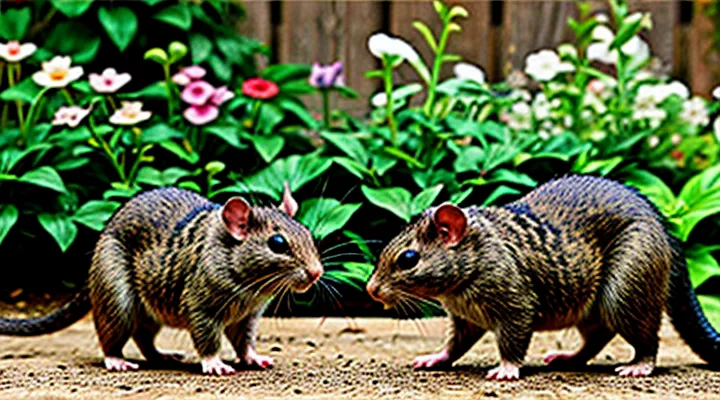
Understanding Ground Rats
Identifying Ground Rats
Physical Characteristics
Ground rats that inhabit garden environments are small to medium‑sized rodents, typically measuring 12–18 cm in body length, with an additional 8–12 cm tail. Their weight ranges from 30 g to 80 g, depending on species and seasonal food availability.
Fur is dense, coarse, and varies from gray‑brown to reddish‑brown, providing camouflage among soil and vegetation. The dorsal coat is usually darker than the ventral side, which is pale gray or white. Seasonal shedding may reveal a lighter undercoat during winter months.
Head morphology includes a short, blunt snout, large rounded ears, and prominent whiskers that aid in tactile navigation. Eyes are modestly sized, positioned high on the skull, offering a wide field of view while the animal remains low to the ground.
Limbs are robust, with five clawed toes on each foot. Hind feet are longer than forefeet, granting powerful leaping ability; a single, scaly, hairless tail assists in balance during rapid movements.
Key physical identifiers:
- Body length: 12–18 cm; tail length: 8–12 cm
- Weight: 30–80 g
- Fur color: gray‑brown to reddish‑brown, darker dorsally
- Head: blunt snout, large ears, long whiskers
- Limbs: strong fore‑ and hind‑feet, five claws per foot
- Tail: scaly, hairless, aids balance
These characteristics distinguish garden‑dwelling ground rats from other small mammals, facilitating accurate identification for monitoring and management efforts.
Behavioral Traits
Ground rats, commonly encountered in cultivated plots, exhibit distinct behavioral patterns that influence their impact on plant health and soil structure.
These rodents are primarily nocturnal, emerging after sunset to forage for seeds, seedlings, and root tissues. Their activity peaks during the early hours of darkness, reducing visibility of damage and complicating early detection.
Feeding behavior is opportunistic: individuals consume exposed fruits, chew tender shoots, and gnaw underground stems, often causing irreversible loss of young plants. Preference shifts toward high‑energy food sources, such as corn kernels and fruit remnants, when these are readily available.
Burrowing constitutes the core of their habitat use. Tunnels extend 15–30 cm below the soil surface, creating networks that provide shelter, escape routes, and storage chambers for food caches. Soil displacement from these passages leads to aeration but also to root exposure and increased susceptibility to drought.
Social dynamics are limited; ground rats operate mainly as solitary foragers, with occasional brief encounters during breeding season. Mating activities concentrate in spring, after which females construct nesting chambers lined with dry vegetation.
Territoriality is modest; individuals defend a foraging radius of approximately 5–10 m from a central burrow. Overlap between adjacent ranges occurs when food resources are abundant, prompting competitive displacement or temporary sharing of tunnels.
Key behavioral traits can be summarized:
- Nocturnal foraging schedule
- Opportunistic diet focusing on seedlings and seeds
- Extensive shallow burrow systems
- Predominantly solitary activity, with seasonal breeding aggregations
- Limited territorial defense within a defined foraging perimeter
Understanding these patterns is essential for designing targeted management interventions that disrupt feeding cycles, block tunnel entry points, and reduce habitat attractiveness.
Signs of Infestation
Ground rats leave clear evidence of their presence, allowing early detection before populations expand.
- Small, shallow burrows near the base of vegetable plants, often with a single entrance and a fan‑shaped mound of displaced soil.
- Fresh droppings, 1–2 mm long, dark brown to black, scattered along pathways, under mulch, or near feeding sites.
- Gnawed stems, leaves, or fruit showing clean cuts or ragged edges, especially at ground level.
- Visible tracks in moist soil or on low‑lying leaves, resembling tiny footprints with four toe marks.
These indicators correspond to direct damage: root systems become exposed, reducing water uptake and increasing susceptibility to disease; foliage loss diminishes photosynthetic capacity, slowing growth.
Inspection should focus on the perimeter of garden beds, under debris, and along irrigation lines. Use a hand lens to confirm droppings and examine burrow interiors for fresh soil and scent. Prompt identification of these signs enables targeted control measures before infestations reach economic thresholds.
Impact of Ground Rats on Gardens
Damage to Plants and Crops
Garden voles cause extensive injury to ornamental and edible plants. Their incisors continuously grow, prompting constant gnawing on tender tissues. The most common symptoms include:
- Severed or chewed seedling stems, leading to wilting and death.
- Exposed roots stripped of bark, which interrupts water and nutrient uptake.
- Hollowed leaf margins and perforated foliage, reducing photosynthetic capacity.
- Girdling of mature plant bases, resulting in crown collapse and eventual plant loss.
Repeated feeding on seedlings creates gaps in crop stands, forcing growers to re‑plant and increasing labor costs. Root damage predisposes plants to secondary infections by soil‑borne pathogens, further diminishing yields. In vegetable production, vole activity can reduce marketable harvest by up to 30 % in heavily infested plots. In fruit orchards, girdling of young trees slows trunk development, delaying fruiting for several seasons. The cumulative effect of tissue loss, weakened plants, and increased disease pressure translates directly into reduced economic returns for gardeners and commercial growers alike.
Burrow Systems and Soil Disruption
Burrowing rodents construct networks of tunnels that vary from shallow surface passages to deep chambers extending 30‑50 cm below the soil surface. Primary tunnels run horizontally, connecting multiple entrances and exits, while vertical shafts provide access to nesting chambers and food storage cells. The tunnels are reinforced by compacted soil and occasional use of plant roots, creating a semi‑stable framework that resists collapse under moderate moisture fluctuations.
The excavation activity displaces soil particles, reduces organic matter concentration, and interrupts the natural layering of the garden substrate. Consequences include:
- loss of topsoil fertility due to removal of nutrient‑rich layers,
- increased erosion risk on sloped beds as loose soil is more easily washed away,
- compromised root anchorage for ornamental and vegetable plants,
- altered water infiltration patterns that can lead to ponding or drought‑stress pockets.
Understanding the burrow architecture enables targeted interventions. Strategies focus on:
- locating active tunnel mouths and sealing them with metal mesh or concrete,
- applying soil‑binding agents in disturbed zones to restore cohesion,
- installing underground barriers that redirect tunneling away from high‑value crops,
- employing trap placements along primary tunnel corridors to reduce population pressure.
Effective management depends on recognizing the physical changes rodents impose on garden soils and addressing both the structural network and the resulting degradation of the growing medium.
Disease Transmission Concerns
Ground-dwelling rodents that inhabit garden beds often serve as carriers of pathogenic organisms capable of affecting humans, pets, and crops. Their close proximity to cultivated plants and frequent contact with soil creates a direct route for microbial transfer.
Common zoonotic agents associated with these mammals include:
- Leptospira spp. (leptospirosis)
- Salmonella enterica (salmonellosis)
- Hantavirus (hantavirus pulmonary syndrome)
- Yersinia pestis (plague)
- Various helminths (e.g., Trichinella, Toxocara)
Transmission occurs through several mechanisms. Contaminated urine or feces can infiltrate irrigation water, soil, and edible produce. Direct handling of infested vegetation or accidental ingestion of rodent droppings introduces pathogens into the gastrointestinal tract. Parasite eggs survive in moist garden debris, allowing infection of grazing animals and humans.
Effective disease mitigation requires integrated pest management:
- Eliminate shelter by removing debris, compost piles, and dense ground cover.
- Secure storage of feed and organic waste to deny food sources.
- Install physical barriers such as fine mesh around raised beds.
- Apply bait stations containing anticoagulant rodenticides according to local regulations.
- Conduct regular sanitation, including disinfection of tools and washing of harvested produce.
Implementing these measures reduces rodent populations, limits pathogen presence, and safeguards garden productivity and public health.
Prevention Strategies
Garden Maintenance Practices
Eliminating Food Sources
Ground-dwelling rats are drawn to any readily available nourishment. Seeds, fallen fruit, vegetable scraps, and exposed compost provide caloric incentives that sustain breeding cycles and increase population density.
To deny these incentives, implement the following measures:
- Collect and dispose of fallen fruit and vegetables daily.
- Store harvested produce in sealed containers or refrigerated units.
- Cover compost piles with tight‑fitting lids; add a layer of coarse mulch to discourage burrowing.
- Keep bird feeders away from planting beds; use feeder designs that prevent spillage.
- Remove garden debris, such as weeds and mulch that conceal food remnants.
Pet food should be placed on elevated platforms or inside locked containers. Irrigation systems must avoid creating damp, nutrient‑rich zones that attract insects, which in turn serve as secondary food for rats. Regularly inspect garden borders for seed heads or weed seeds that could drop and germinate, providing additional sustenance.
By systematically eliminating these nutritional sources, the habitat becomes unsuitable for rodent survival, reducing the need for more aggressive control methods.
Removing Shelter
Ground rats seek cover in garden debris, dense vegetation, and structural gaps. Eliminating these refuges reduces population stability and discourages re‑establishment.
Effective shelter removal includes:
- Clearing fallen leaves, grass clippings, and mulch that accumulate beneath plants.
- Pruning overgrown borders, hedges, and groundcover to expose soil.
- Filling burrow entrances with soil, sand, or fine gravel, then compacting the surface.
- Repairing cracks in garden walls, fences, and raised beds with mortar or expanding foam.
- Storing compost, firewood, and garden tools off the ground or in sealed containers.
Routine inspection and maintenance prevent new hiding places from forming. Implementing these measures alongside other control tactics creates an environment hostile to ground‑rat habitation.
Exclusion Techniques
Fencing and Barriers
Physical barriers interrupt the burrowing activity of garden rodents by creating a solid, impermeable edge around planting zones. A barrier must extend below the typical tunnel depth of the species, which ranges from 6 to 12 inches, and rise above the soil surface to prevent climbing.
Commonly used materials include:
- Galvanized hardware cloth with mesh size no larger than ¼ inch, welded to a frame and buried 12 inches deep;
- Heavy‑duty polyethylene sheeting, overlapped and weighted, suitable for temporary plots;
- Concrete curbing or brick edging, providing a permanent, rigid limit;
- Raised‑bed frames constructed from treated lumber, lined with hardware cloth on the interior side.
Installation guidelines:
- Excavate a trench along the desired perimeter, width matching the barrier thickness.
- Place the chosen material in the trench, ensuring continuous coverage without gaps.
- Backfill with compacted soil, tamping firmly to eliminate voids.
- At any entry points such as gates, fit a snugly hinged door or removable panel that maintains the barrier’s integrity when closed.
Maintenance tasks involve regular inspection for displaced sections, corrosion, or vegetation growth that could create openings. Prompt repair restores effectiveness and prevents re‑colonization. When combined with habitat‑reduction measures, fencing and barriers offer a reliable, low‑chemical method for managing garden rodents.
Sealing Entry Points
Effective control of garden rodents begins with eliminating the pathways that allow them to enter. Identify all potential openings in the foundation, raised beds, and irrigation systems. Focus on gaps larger than ¼ inch, as these accommodate the smallest individuals.
- Inspect the perimeter for cracks in concrete, brick, or stone; fill with hydraulic cement or expanding foam.
- Seal gaps around pipe sleeves, utility lines, and drainage outlets using steel wool followed by silicone sealant.
- Cover the bases of garden structures—trellises, sheds, and compost bins—with metal flashing or hardware cloth.
- Install mesh (¼‑inch or smaller) over vent openings and under raised beds; secure tightly to prevent sagging.
- Apply a continuous strip of weather‑resistant caulk along the joint where the garden bed meets the ground.
Regularly review the sealed areas after heavy rain or soil movement, repairing any new fissures promptly. Maintaining a closed perimeter reduces the likelihood of re‑infestation and complements other management strategies.
Control Methods
Non-Lethal Approaches
Live Trapping and Relocation
Live trapping provides a humane alternative to lethal control when dealing with garden-dwelling rats. Effective use of this method depends on proper trap selection, strategic placement, timely checking, and responsible relocation.
A typical live trap consists of a sturdy cage with a spring‑loaded door that closes when the animal enters to reach bait. Preferred models feature a smooth interior to prevent injury and a secure latch that cannot be triggered by the rat’s weight alone. Wire‑mesh traps allow ventilation and easy removal of captured individuals.
Key steps for successful capture:
- Choose bait that appeals to nocturnal rodents, such as peanut butter, dried fruit, or fresh vegetable scraps. Apply a small amount to the trigger plate to encourage entry.
- Position traps along established runways, near burrow entrances, or beside dense vegetation where rats seek cover. Place traps low to the ground, aligning the door with the animal’s natural path.
- Secure traps to the ground with stakes or sandbags to prevent displacement by wind or other wildlife.
- Check traps at least twice daily. Prolonged confinement increases stress and risk of injury.
- Wear thick gloves when handling the trap. Open the door away from the body, allowing the rat to exit quickly.
Relocation must follow local wildlife regulations; many jurisdictions limit the distance a captured animal may be moved. When permitted, release the rat at least 2–3 kilometers from the garden, preferably in a habitat that provides natural cover and food sources. Select a site away from residential areas, water supplies, and agricultural fields to reduce the likelihood of the animal returning or becoming a nuisance elsewhere.
After release, disinfect the trap with a mild bleach solution and inspect for damage before reuse. Maintaining a clean trap reduces the risk of disease transmission and improves capture rates in subsequent sessions.
Repellents and Deterrents
Ground rats cause significant damage to vegetable beds, ornamental plants, and soil structure. Effective management relies on substances and devices that discourage entry, feeding, and nesting.
- Chemical repellents: granular or liquid formulations containing capsaicin, mustard oil, or essential oils (e.g., peppermint, rosemary). Apply to perimeter and around vulnerable plants, reapply after rain or irrigation.
- Physical barriers: metal or plastic mesh with apertures no larger than 2 mm, buried 15 cm deep to block burrowing. Combine with raised beds or row covers for added protection.
- Ultrasonic emitters: devices that generate frequencies above 20 kHz, disrupting rodent hearing. Position at ground level, ensure unobstructed line of sight to cover the entire garden area.
- Predator cues: synthetic ferret or owl scent markers, placed near entry points. Replace regularly to maintain potency.
- Habitat modification: remove debris, trim low vegetation, and store compost in sealed containers to reduce shelter and food sources.
Integrating multiple deterrents enhances reliability. Begin with habitat modification, then install barriers, and supplement with chemical or electronic repellents as needed. Monitor activity weekly; adjust placement and concentration based on observed effectiveness.
Lethal Control Options
Snap Traps
Snap traps are mechanical devices that kill ground rats instantly by applying a rapid, forceful pressure to the neck or spine. The trap consists of a spring‑loaded bar, a trigger plate, and a holding platform. When a rat steps on the trigger, the spring releases, driving the bar downward with sufficient velocity to cause immediate fatal injury.
Effective deployment requires positioning traps near active runways, burrow entrances, or feeding sites. Bait such as fresh vegetable matter, grains, or small pieces of meat should be placed on the platform to attract the animal. The trigger plate must remain unobstructed, and the spring should be fully tensioned before each placement.
Advantages
- Immediate kill eliminates suffering and prevents disease transmission.
- No chemicals are introduced into the soil or surrounding plants.
- Reusable after cleaning and resetting.
Disadvantages
- Non‑target captures may occur if traps are not carefully placed.
- Requires regular inspection to reset after each kill.
- Handling dead rodents poses a biohazard risk if protective gloves are not used.
Safety measures include wearing thick gloves, securing traps away from children and pets, and disposing of captured rats in sealed containers before burial or incineration. Routine maintenance involves cleaning the spring mechanism, checking for corrosion, and replacing worn trigger plates.
Integrating snap traps with habitat modification—such as removing debris, sealing entry points, and maintaining clean garden beds—enhances overall control efficacy and reduces the likelihood of reinfestation.
Bait Stations
Bait stations provide a sealed, tamper‑resistant container for rodent anticoagulant or non‑chemical baits, limiting exposure to non‑target animals and children. The design typically includes a lockable lid, a bait compartment that can hold up to 100 g of product, and a weather‑proof seal to maintain efficacy through rain or frost.
Effective deployment requires strategic placement and regular monitoring. Position stations along established runways, near burrow entrances, and at the periphery of vegetable plots. Space stations 10–15 m apart to create overlapping zones of influence. Check stations weekly; replace depleted baits and record activity to assess population trends.
Key considerations for safe and efficient use:
- Choose a product rated for ground‑dwelling rodents, complying with local pesticide regulations.
- Install stations at least 30 cm above ground to deter burrowing mammals.
- Use gloves when handling baits and store unused portions in a locked container.
- Record GPS coordinates or garden map references for each station to facilitate systematic inspections.
When integrated with habitat modification—such as removing debris, trimming low vegetation, and sealing entry points—bait stations become a reliable component of an overall control program for garden ground rats.
Professional Pest Control Services
Professional pest control companies specialize in identifying, monitoring, and eliminating subterranean rodents that damage garden ecosystems. Technicians assess soil conditions, burrow patterns, and population density to determine the most effective intervention strategy.
Key components of a comprehensive service include:
- Inspection and mapping of active tunnels and entry points.
- Targeted baiting using rodent-specific formulations placed in protected stations.
- Trapping programs that employ snap or live traps calibrated for ground-dwelling species.
- Environmental modification such as soil aeration, mulching adjustments, and removal of attractants.
- Follow‑up verification to confirm eradication and prevent re‑infestation.
Integrated pest management (IPM) protocols prioritize minimal chemical use, focusing on mechanical controls and habitat alteration. When chemical treatments are necessary, certified applicators select low‑toxicity rodenticides and apply them according to strict safety standards to protect non‑target organisms and human occupants.
Clients receive detailed reports outlining findings, actions taken, and recommendations for long‑term garden maintenance. Regular service contracts ensure continuous monitoring, rapid response to new activity, and sustained protection of plant health and soil integrity.
Safety Considerations
Protecting Pets and Children
Garden-dwelling rodents pose a direct threat to pets and children through bites, disease transmission, and accidental ingestion of contaminated material. Their presence near play areas or pet pathways increases the likelihood of contact, making early detection and mitigation essential for household safety.
These mammals are small, brown‑gray, with a pointed snout, long whiskers, and a scaly tail that lies close to the ground. Tracks appear as a series of four‑toed prints spaced about 2‑3 cm apart, often accompanied by shallow burrows and droppings near vegetable rows or compost heaps. Recognizing these signs enables prompt action before populations expand.
Control measures must protect vulnerable family members while eliminating the rodents:
- Install low‑profile wire mesh (½‑inch gauge) around garden beds and raised planters; mesh prevents entry without exposing sharp edges.
- Apply rodent‑specific bait stations that lock securely, preventing pets or children from accessing toxic contents.
- Deploy motion‑activated ultrasonic devices set to frequencies uncomfortable for rodents but inaudible to most pets and humans.
- Encourage natural predators by installing birdhouses for owls or raptor perches; predation reduces rodent numbers without chemical intervention.
- Maintain garden hygiene: remove fallen fruit, store feed in sealed containers, and clear dense vegetation that offers shelter.
When using chemical treatments, select products labeled for use around children and animals, follow label dosage precisely, and keep treated zones fenced off until the material dries or degrades. Regular monitoring of trap placement, bait consumption, and habitat conditions ensures sustained protection for both pets and youngsters.
Handling and Disposal of Rats
When a garden becomes a habitat for ground‑dwelling rodents, immediate and safe removal is essential to prevent damage and disease. Proper handling begins with personal protection: wear thick gloves, a disposable mask, and long sleeves to avoid bites and exposure to pathogens. Use a sturdy container with a secure lid for any captured animal.
Capture methods fall into two categories. Live traps, such as snap‑freezer devices, allow removal without killing the rodent; place traps along established runways, bait with peanut butter or seed mix, and check them at least twice daily. Snap traps provide rapid lethal control; position them perpendicular to the wall, set the trigger just shy of the target’s weight, and locate them away from children and pets.
Disposal of deceased or captured rodents requires thorough sanitation. For a single carcass, double‑bag the animal in heavy‑duty plastic, seal tightly, and place in a municipal waste bin designated for animal disposal. When dealing with multiple specimens, consider burial at a depth of at least 12 inches, away from vegetable rows and water sources, then cover with soil and a layer of mulch. Alternatively, contact a licensed wildlife removal service for incineration or composting in a controlled facility.
After removal, clean the trap and surrounding area with a disinfectant containing at least 5 % bleach solution. Rinse surfaces, allow to dry, and apply a rodent‑repellent granule to deter re‑infestation. Maintain garden hygiene by removing fallen fruit, storing feed in sealed containers, and trimming vegetation that offers cover.
Key steps for safe handling and disposal
- Wear protective clothing and gloves.
- Choose appropriate trap type (live or lethal) based on management goals.
- Secure captured rodents in sealed containers.
- Dispose via double‑bagged waste, deep burial, or professional incineration.
- Disinfect equipment and the affected zone.
- Implement preventive sanitation measures.
Environmental Impact of Control Methods
Ground rats frequently damage garden crops, prompting the use of various control strategies. Each method alters the surrounding ecosystem, requiring careful assessment of its environmental consequences.
Chemical rodenticides disrupt soil microflora, reduce beneficial insect populations, and increase the risk of leaching into groundwater. Residual toxins persist in compost, limiting its suitability for organic cultivation. Non‑target wildlife, such as birds and small mammals, may ingest poisoned prey, leading to secondary poisoning.
Mechanical approaches—snap traps, live‑catch cages, and physical barriers—produce minimal chemical residues but can cause habitat fragmentation. Repeated soil disturbance from trap placement may impair root structures and encourage erosion. Discarded trap components, often plastic, add to garden waste if not properly recycled.
Biological interventions introduce natural enemies, including predatory birds, feral cats, and rodent‑specific pathogens. These agents help maintain predator–prey equilibrium, yet excessive predator densities can suppress other beneficial species. Pathogen applications risk mutating strains that affect non‑target rodents.
Integrated pest management (IPM) combines selective chemical use, habitat modification, and biological agents to reduce overall impact. Key practices include:
- Rotating control tactics to prevent resistance buildup.
- Applying the lowest effective dose of rodenticides, confined to bait stations.
- Installing mulch and dense planting to deter burrowing without harming soil structure.
- Monitoring predator activity to avoid over‑predation of beneficial fauna.
Adopting IPM minimizes ecological disruption while sustaining effective ground rat control in garden environments.